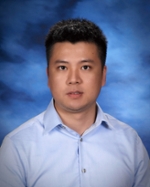
Guimu Guo is an Assistant Professor in the Department of Computer Science at Rowan University's College of Science & Mathematics. His research focuses on parallel and distributed computing techniques for large-scale graph mining problems, with applications in bioinformatics and transportation engineering. Ph.D. in Computer Science from University of Alabama at Birmingham M.Sc. in Computer Science from Tongji University Dr. Guo has published extensively in top-tier venues like VLDB, ICDE, and IEEE BigData. His work spans graph mining algorithms, parallel computing, and interdisciplinary applications in transportation and genomics. He actively mentors PhD and Master's students, offering fully funded positions. Key research trends include: Advancing GPU-accelerated graph decomposition techniques Developing distributed frameworks for subgraph querying and task concurrency Exploring parallel algorithms for frequent pattern mining and clique-like subgraphs Scientific Recognition: NSF CRII Award UAB Outstanding PhD Student Award Alabama GRSP Awards (Rounds 15 & 16) Teaching spans from foundational object-oriented programming to advanced graduate courses in parallel programming. His lab group has produced significant contributions to subgraph mining, transportation simulation, and genome assembly systems.
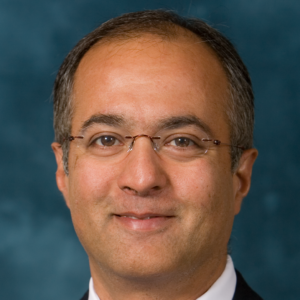
H. V. Jagadish serves as the Edgar F Codd Distinguished University Professor and Bernard A Galler Collegiate Professor of Electrical Engineering and Computer Science at the University of Michigan's College of Engineering. He directs the Michigan Institute for Data Science (MIDAS) and leads the NSF-funded Framework for Integrative Data Equity Systems (FIDES), following a career that included heading AT&T Labs' Database Research Department prior to joining Michigan in 1999. His academic foundation includes a Ph.D. from Stanford University, with prior appointments at AT&T Labs and the University of Illinois. Research spans database systems, data management, and data science, emphasizing data integration across heterogeneous sources and usability for non-technical users through schema design, natural language querying, and analytics with missing data. Current work focuses on equity, ethics, and fairness in AI, developing methods to identify and mitigate data inequities while ensuring societal benefits of data science. His white papers and National Academies presentations have shaped big data research agendas. Major honors include: Fellow of the ACM (2003) Fellow of the AAAS (2018) ACM SIGMOD Contributions Award (2013) David E Liddle Research Excellence Award (2008) Stephen S. Attwood Award Distinguished Faculty Award from the University of Michigan (2019) He has secured multiple NSF grants (IIS 0741620, IIS 1017296, IIS 1250880, 1741022, 1934565) supporting database usability and data equity research, mentored numerous graduate students, and created the widely adopted Data Science Ethics MOOC available on EdX, Coursera, and FutureLearn. His h-index of 96 reflects 200+ major publications and 38 patents. As MIDAS Director, he oversees university-wide data science initiatives while leading the EECS database research group and formerly directing the Software Systems Laboratory. His FIDES institute remains central to developing equitable data systems, with ongoing work expanding into AI policy frameworks.
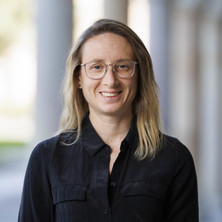
Dr. Anna Hatton is a Senior Lecturer at the School of Health and Rehabilitation Sciences , The University of Queensland. As Co-Director of the UQ Centre for Neurorehabilitation, Ageing and Balance Research and Associate Editor for Gait & Posture , she leads interdisciplinary research into sensory-based rehabilitation technologies. Her work bridges clinical practice with engineering innovation, focusing on footwear devices for balance enhancement. Research themes: novel textured/vibratory insoles , neurological gait analysis , age-related mobility Key funding: NHMRC IDEAS Grants , Bionics Queensland Challenge , Diabetes Australia , PA Research Foundation Her Young Tall Poppy Science Award (2016) recognizes contributions to plantar sensory stimulation. Current supervised projects explore bionic insole neurophysiology , combat sports injury prevention , and sport performance optimization . Media engagements focus on electromyography , sensorimotor function , and footwear interventions .
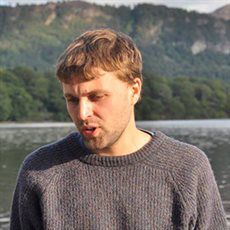
Amir Aryani is an Associate Professor at the School of Business, Law and Entrepreneurship , Swinburne University of Technology . He leads the Social Data Analytics (SoDA) Lab within the Social Innovation Research Institute , focusing on data-driven solutions for health and social challenges. His work involves large-scale cross-institutional projects with international collaborators including the British Library , ORCID , and NIH . Research Focus: Data modeling, real-time analytics, and information retrieval for social-good initiatives Collaborations: CERN, Data Archiving and Networked Services (DANS), and Global Information Systems (GESIS) His research explores data science applications in mental health, community resilience, and sustainable development. Key trends in his publications include: Mapping research to United Nations Sustainable Development Goals Developing hybrid expert-finding models using NLP and graph algorithms Creating interoperable research graphs for cross-platform discovery Assessing social impact of data projects in non-profit sectors Amir is actively involved in PhD supervision and has secured funding from Australian Research Council , National Health and Medical Research Council , and philanthropic foundations . He also contributes to community data projects through the SoDA Lab , which builds tools for social connection analysis and humanitarian response optimization.
Dr. Éric Hébrard is a Senior Lecturer in Astrophysics at the University of Exeter since 2018, with prior academic roles including NASA Goddard Senior Research Fellow and CNRS Research Associate. His work bridges planetary atmospheres, astrochemistry, and combustion modeling with expertise in 3D chemical simulations. PhD in Physics and Chemistry of Planetary Atmospheres, Université Paris 7 (2006) Magna cum laude Magistère Interuniversitaire de Chimie, ENS Paris (2003) Research focuses on: Exoplanetary atmosphere modeling (hot Jupiters, TRAPPIST-1e) Photochemical kinetics and UV absorption Coupling of atmospheric circulation and chemistry Cross-disciplinary combustion-atmosphere analogs Chemical validation strategies for model accuracy Scientific contributions include: NASA-funded research on organic-rich habitable zones Development of KIDA kinetic database for astrochemistry STFC Consolidated Grant for multi-dimensional chemical models Quantum chemistry integration for Titan atmosphere studies Awards: Higher Education Academy Fellowship (ASPIRE program) NASA Postdoctoral Fellowship (2015-2017) CNES Postdoctoral Fellowship (2007-2009)
Dr. Tom Matthews is an Associate Professor at the University of Birmingham , affiliated with the School of Geography, Earth and Environmental Sciences . His research focuses on global environmental change using macroecological , macroevolutionary , and biogeographical approaches , with a particular emphasis on island systems and bird communities . Education: DPhil, University of Oxford MSc (Distinction), University of Oxford BSc First Class Honors, University of Birmingham Research interests span island biogeography , conservation biogeography , and functional diversity in fragmented landscapes. His work investigates the impacts of human-driven extinctions , habitat fragmentation , and climate change on island ecosystems. Recent publications analyze bioTIME databases , AVONET datasets , and anthropogenic extinction cascades , highlighting trends in functional and phylogenetic diversity loss . Scientific contributions include authorship of two books: Species–Area Relationships (Cambridge University Press) and Island Biogeography (Oxford University Press). Awards include the NERC scholarship , Royal Geographical Society Awards , and Oxford’s Vice Chancellor’s Award . He supervises doctoral researchers in macroecology , island conservation , and global change biology , while teaching undergraduate modules in statistical ecology and conservation practices .
Michihiro Yasunaga is an Assistant Professor in the Department of Computer Science at Stanford University's School of Engineering. He received his PhD in Computer Science from Stanford, advised by Percy Liang, Jure Leskovec, and Chris Manning. Prior to his faculty position, he worked as a researcher at Google DeepMind and Meta. His research focuses on building LLMs and agents that assist humans in diverse tasks, with particular expertise in post-training techniques (RL, reward models, and evaluation), reasoning systems (AnalogicalReasoner), retrieval and tool use for LLMs (LinkBERT, QAGNN, DRAGON, REPLUG, HippoRAG), and multimodality (RA-CM3, Med-Flamingo, Transfusion). His work spans both theoretical foundations and practical applications of large language models. Yasunaga's publication record demonstrates significant contributions to the field of AI, with 15 recent articles (2023-2025) covering diverse aspects of language model development, evaluation, and application. His research shows a clear trajectory toward building more capable, efficient, and reliable multimodal AI systems, with particular emphasis on knowledge integration and robust evaluation frameworks. Among his notable achievements is the Best Paper Award at AAAI 2023 Deep Learning on Graphs Workshop for the DRAGON paper. He has also been deeply involved in major benchmarking efforts including HELM and HEIM, which provide comprehensive evaluation frameworks for language and vision-language models. Yasunaga actively contributes to the research community through service roles including Organizing Committee for the Workshop on Knowledge-Augmented Methods for NLP (ACL 2024), Workshop on Structured and Unstructured Knowledge Integration (NAACL 2022), and the Workshop on Scientific Document Summarization (SIGIR 2017-2020). He has also served on program committees for top conferences including NeurIPS, ICML, ICLR, ACL, EMNLP, CVPR, and ICCV from 2020-2025.
Dr. Alexander Artikis is an Associate Professor of Artificial Intelligence at the University of Piraeus and a Research Associate at the National Centre for Scientific Research (NCSR) "Demokritos". He leads the Complex Event Recognition (CER) group , focusing on symbolic and probabilistic approaches to event recognition and forecasting. University of Piraeus (2025–present) NCSR Demokritos (2017–present) Complex Event Recognition Group (2017–present) His research spans Artificial Intelligence and Distributed Systems , with a focus on: Complex Event Recognition (CER) : Developing logic-based systems for detecting events in real-time data streams Event Calculus : Creating probabilistic and incremental versions for runtime reasoning Multi-Agent Systems : Modeling norm-governed interactions Maritime Informatics : Applying CER to vessel trajectory analysis and fleet management Key publications reveal trends in: Neuro-symbolic forecasting models combining deep learning and logic-based reasoning Symbolic automata with memory for pattern detection Online learning techniques for dynamic event rule generation Tensor-based formalizations for efficient temporal reasoning Handling uncertainty in real-time maritime data streams Optimizing memory usage for scalable stream processing He contributes to open-source tools like RTEC (Run-Time Event Calculus) and holds a European patent on complex event forecasting. His work addresses challenges in: Proactive decision-making systems Knowledge Graph consistency Hybrid human-machine discovery of movement patterns Big Data analytics for time-critical applications
Fabrizio Falchi is a researcher at the Artificial Intelligence for Media and Humanities (AIMH) Lab of the Institute of Information Science and Technologies (ISTI) within Italy's National Research Council (CNR). He also maintains an associate position at the Biorobotics Institute of Scuola Superiore Sant'Anna. His work focuses on developing advanced multimedia retrieval systems, with the VISIONE platform being his most notable contribution, which has won international competitions including the Video Browser Showdown in 2024 and placed second in 2023. Falchi's educational background includes: Ph.D. in Information Engineering from University of Pisa (Italy) Ph.D. in Informatics from Faculty of Informatics of Masaryk University of Brno (Czech Republic) M.B.A. from Scuola Superiore Sant'Anna in Pisa His research spans deep learning, convolutional neural networks, deep features extraction, similarity search algorithms, distributed indexing systems, multimedia information retrieval, computer vision applications, and peer-to-peer systems. Falchi has made significant contributions to fine-grained visual understanding, cross-modal retrieval (particularly image-text matching), and robustness of deep learning systems against adversarial attacks. His work demonstrates a strong focus on practical applications of these technologies, particularly in video retrieval systems and safety monitoring solutions. Analysis of Falchi's recent publications reveals a strong focus on video and image retrieval systems, with the VISIONE platform being central to his work. His research shows increasing emphasis on fine-grained understanding in computer vision, cross-modal retrieval, and addressing practical challenges like cross-resolution face recognition. Recent work demonstrates innovation in making these systems more efficient through techniques like knowledge distillation (ALADIN) and leveraging virtual worlds for training data. His publications consistently bridge theoretical advances with practical applications in surveillance, safety monitoring, and multimedia search. Falchi's work has received significant recognition: Best paper award at CBMI 2024 for 'Is ClLIP the main roadblock for fine-grained open-world perception?' VISIONE 2024 won the Video Browser Showdown competition in Amsterdam VISIONE obtained second place at Video Browser Showdown 2023 in Bergen Best Paper Award for 'Learning Safety Equipment Detection using Virtual Worlds' at CBMI 2019 Falchi collaborates extensively with researchers at ISTI-CNR, particularly within the AIMH Lab. His work on VISIONE involves collaboration with Giuseppe Amato, Paolo Bolettieri, Fabio Carrara, Claudio Gennaro, Nicola Messina, Lucia Vadicamo, and Claudio Vairo. As co-chair of Ital-IA 2023, the 3rd National Conference on Artificial Intelligence, he plays an active role in the academic community. He is a member of ACM (since 2012), the Computer Vision Foundation, the Italian Association for Computer Vision Pattern Recognition and Machine Learning (CVPL), and the CINI Lab on Artificial Intelligence and Intelligent Systems. Falchi is a key member of the Artificial Intelligence for Media and Humanities (AIMH) Lab at ISTI-CNR, where he leads research on video retrieval systems. The lab has developed the award-winning VISIONE platform, which combines multiple scientific results in content-based video retrieval. His team focuses on developing systems that enable users to search for target videos using textual prompts, drawing objects and colors, or images as query examples. The lab's work demonstrates strong interdisciplinary collaboration, bridging computer science with practical applications in media, safety monitoring, and urban environments.
Miguel Mahecha is Professor of Environmental Data Science and Remote Sensing at the University of Leipzig, where he serves as Institute Head of the Institute for Earth System Science and Remote Sensing. He is also affiliated with the Remote Sensing Centre for Earth System Research, a collaboration between Leipzig University and the Helmholtz Centre for Environmental Research (UFZ). Mahecha is a member of the German Centre for Integrative Biodiversity Research (iDiv) and serves as Principal Investigator in the Centre for Scalable Data Analytics and Artificial Intelligence. Additionally, he is a Fellow of the European Laboratory for Learning and Intelligent Systems and co-spokesperson for the National Research Data Infrastructure for Earth System Sciences (NFDI4Earth). Full Professor for Modelling Approaches in Remote Sensing, University of Leipzig (since 03/2020) Research Group Leader: Empirical Inference in the Earth System, Max Planck Institute for Biogeochemistry, Jena (12/2012 - 03/2020) PostDoc, Max Planck Institute for Biogeochemistry, Jena (10/2009 - 11/2012) PhD in Environmental Sciences, ETH Zürich (06/2006 - 09/2009) Diploma in Geoecology, Bayreuth University (10/2000 - 04/2006) Mahecha's research focuses on understanding ecosystem responses to climate extremes and human-environment relationships during these events. He investigates macro-ecological dynamics and ecosystem functioning using data-driven methods and high-dimensional Earth observations. A key contribution is his co-development of the Earth System Data Cube concept, which integrates empirical methods with theoretical understanding to analyze complex Earth system interactions. His work spans biogeography, ecosystem functioning, and advanced data science methodologies for environmental monitoring. His recent publications demonstrate a strong emphasis on analyzing compound climate extremes, particularly heatwaves and droughts, and their impacts on ecosystems. Mahecha has pioneered methods using Earth System Data Cubes to integrate diverse environmental datasets, enabling novel insights into biosphere-atmosphere interactions. His research increasingly incorporates artificial intelligence and machine learning approaches to understand spatiotemporal patterns in ecological systems, with applications in real-time forest monitoring and biodiversity assessment. Fellow of the European Laboratory for Learning and Intelligent Systems Co-spokesperson for NFDI4Earth (National Research Data Infrastructure for Earth System Sciences) Mahecha leads multiple significant research projects including Digital Forest (real-time forest monitoring), NFDI4BioDiversity, and XAIDA (extreme events: AI for Detection and Attribution). His work receives funding from diverse sources including EU, DFG, and Stiftungen Inland. He collaborates extensively with the German Centre for Integrative Biodiversity Research (iDiv) and the Centre for Scalable Data Analytics and Artificial Intelligence. His research group, Earth System Data Science (ESDS), focuses on developing methods to extract valuable information from long-term environmental observations to understand coupled Earth system dynamics. At the Remote Sensing Centre for Earth System Research, Mahecha's ESDS group investigates how ecosystem functions respond to climate extremes, societal vulnerability to environmental hazards, and nonlinear interactions in coupled Earth systems. The group leverages citizen science data, remote sensing observations, and advanced computational methods to address pressing environmental questions.
Soraya de Chadarevian serves as Professor in the Department of History and the Institute for Society and Genetics at the University of California, Los Angeles, where she bridges historical scholarship with contemporary bioscience through rigorous analysis of material practices and cultural contexts in the life sciences. Her academic trajectory spans over three decades with significant contributions to understanding molecular biology's development and human heredity's evolution from the nineteenth century to present. Her educational foundation includes a PhD in Philosophy from the University of Konstanz, Germany, and an Advanced degree (Diplom) in Biology from the University of Freiburg, Germany, providing unique interdisciplinary perspective. These qualifications enabled her dual expertise in scientific practice and philosophical inquiry that defines her scholarly approach. De Chadarevian's research centers on the intricate relationship between scientific practice and cultural context in the life sciences, with particular emphasis on visual and material dimensions of molecular biology and chromosome research. She examines how laboratory techniques, archival practices, and data systems shape biological knowledge, exploring themes like the microscope's role in heredity studies, genetic evidence in historical narratives, and pandemic responses. Her work reveals how scientific concepts like the double helix or human genome emerge through complex negotiations between technical possibilities, institutional frameworks, and societal concerns. Analysis of her recent publications shows a decisive shift toward contemporary scientific challenges including pandemic responses, data-intensive biology, and ethical dimensions of genetic research. While maintaining deep historical perspective, her scholarship increasingly engages with urgent present-day issues such as biobanking, forensic genetics, and the societal implications of genomic databases, demonstrating how historical understanding informs current scientific controversies. Her scientific recognition includes: National Science Foundation Scholar Award (2015-2021) Walther Rathenau Program Fellowship Max Planck Institute for History of Science Fellowship Fellowship at La Villette Fellowship at École des Hautes Études en Sciences Sociales Hamburg Institute for Social Research Fellowship Churchill College Cambridge Fellowship Institute for Advanced Studies in the Humanities Fellowship Research funding has been consistently secured through competitive grants, most notably the six-year NSF award supporting her chromosome history project. She actively mentors students through UCLA's graduate programs in History and the Institute for Society and Genetics, teaching specialized courses on genetics and society while supervising research on science-society intersections. Her collaborative approach extends to co-editing special journal issues and organizing international research networks. Through sustained engagement with institutions like the Max Planck Society and Cambridge University, de Chadarevian maintains active participation in global scholarly communities. Her current work involves interdisciplinary teams examining data practices in contemporary biology and historical dimensions of pandemic responses, positioning her at the forefront of science studies' engagement with pressing societal challenges.
Dr. Ahmad Ghafarian is a Professor of Computer Science in the Mike Cottrell College of Business at the University of North Georgia (UNG), where he has served for over 20 years since 1996. He is a dedicated educator who emphasizes positive teacher-student relationships and has taught a wide range of undergraduate and graduate courses in computer science and cybersecurity. His educational background includes: Ph.D. in Computer Science, University of Glasgow, UK, 1982 M.S. in Computer Science, University of Glasgow, UK, 1974 B.S. in Mathematics, Ferdowsi University of Mashhad, Iran, 1970 Postdoctoral Studies in Information Security, University of Maryland University College, 2007 Graduate Certificate in Information Security, Purdue University, 2003 Dr. Ghafarian's research focuses on digital forensics and cybersecurity, with expertise in computer forensics, malware detection, cloud security, social media privacy, and SQL injection attacks. His work involves empirical studies of security tools and protocols, advancing forensic methodologies and security practices through rigorous experimentation and analysis. His publication record demonstrates a clear evolution from foundational computer science education topics in the 1990s to specialized cybersecurity research since the mid-2000s. Current work emphasizes memory forensics for social media platforms, ransomware detection mechanisms, connected vehicle security, and VoIP system vulnerabilities, reflecting his adaptation to emerging technological threats. No scientific awards were explicitly mentioned in the source material. Dr. Ghafarian has developed comprehensive curricula across 15+ graduate and undergraduate courses including cybersecurity capstones, network security, and computer forensics. His teaching innovations include semester-long projects, ethical case studies, and practical lab components using tools like Kali Linux. While specific grant funding isn't documented, his extensive publication record and curriculum development demonstrate sustained research engagement and academic leadership.
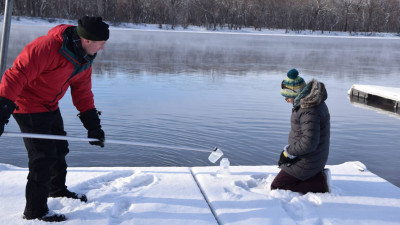
Lee Ferguson is a Professor of Civil and Environmental Engineering at Duke University, with additional appointments as Associate Professor in the Division of Marine Science and Policy. His research focuses on environmental analytical chemistry, particularly using high-resolution mass spectrometry to study per- and polyfluoroalkyl substances (PFAS) , microplastics , and endocrine disruptors . Ferguson Lab develops methods for contaminant detection in water systems and investigates chemical leaching from polymers. Ph.D. in Chemistry from Stony Brook University (2002) Former Assistant Professor at University of South Carolina (2003-2009) Recent work includes PFAS analysis in lithium-ion batteries, glyphosate detection in hard waters, and microplastic dye toxicity studies. Key publications explore urban watershed contamination, Sri Lankan drinking water CKDu links, and novel analytical methods for environmental pollutants. Applied Research Fellowship (2022), Kavli Frontiers of Science Fellow (2011) Testified before U.S. Senate on nanotechnology risks Co-founder of NC PFAS Testing Network As an advisor, he mentors Doctoral Candidates Patrick Faught and Anna Lewis , who investigate microplastic dyes and polymer additives. Lab research spans environmental fate of nanomaterials, contaminant bioavailability, and exposomics for health outcomes.
João Tovar Jalles serves as a Senior Associate Professor of Economics at the University of Lisbon's Lisbon School of Economics and Management (ISEG), with over 15 years of expertise spanning macroeconomics, public finance, and applied econometrics. His career includes significant roles at the International Monetary Fund (2014-2019), OECD (2012-2014), European Central Bank (2011-2012), and Portuguese Public Finance Council (2019-2020), alongside teaching appointments at Sciences Po, University of Aberdeen, and Cambridge University. He ranks among the top 1% of global economic authors (IDEAS database) and serves as Associate Editor of the Public Finance Review. His academic credentials include: Aggregation in Economy (2023) from Universidade de Lisboa, ISEG PhD in Economics (2011) from University of Cambridge MSc in Economics (2008) from University of Warwick BSc in Economics (2006) from Universidade Nova de Lisboa Dr. Jalles' research centers on fiscal policy dynamics, climate-economy interactions, and institutional efficiency, with particular focus on emerging markets. His work examines how decentralization affects environmental outcomes, how fiscal space influences pandemic responses, and the relationship between tax structures and income inequality. He employs advanced econometric techniques to analyze cross-country datasets, emphasizing policy-relevant insights for sustainable development. Recent publications (2024-2025) reveal a pronounced shift toward integrating climate risk into macroeconomic modeling, with 60% of his work now addressing environmental-fiscal linkages. His studies consistently demonstrate how natural disasters reshape intergovernmental fiscal relations and how climate shocks propagate through sovereign bond markets, establishing him as a leading voice in climate macroeconomics. Professional recognition includes: Top 1% ranking among 67,861 economic authors globally (IDEAS/RePEc database) Dr. Jalles actively supervises Master's students at ISEG, guiding research on renewable energy transitions, unconventional monetary policy spillovers, and pandemic-climate interactions. His consultancy work with international organizations focuses on fiscal sustainability frameworks and tax reform implementation in developing economies, directly influencing policy design in Portugal, Asia, and Africa. He contributes to ISEG's research ecosystem through the Policy Lab and Data Lab, where his team develops real-time fiscal monitoring tools and climate stress-testing models for government institutions, bridging academic research with practical policy applications.
Dr. Sasan Mahmoodi is an Associate Professor at the School of Electronic and Computer Science , University of Southampton. His research focuses on Medical Image Analysis , Biometrics , and Computer Vision , with applications in healthcare and security systems. Research Groups: Vision, Learning and Control; Institute for Life Sciences; Centre for Machine Intelligence His work spans deep learning , rule-based AI , and pattern recognition in medical imaging, including applications for neonatal brain injury prognosis and radiographic knee osteoarthritis classification. He also contributes to biometric technologies like facial profile recognition and gait analysis. Recent publications highlight his expertise in: Domain adaptation for biometric systems Infrared gait recognition databases Motion artefact correction in HRpQCT imaging Histopathology image segmentation using U-Net variants Dr. Mahmoodi supervises PhD students in computer science and human health development and collaborates on interdisciplinary projects involving machine learning and medical imaging.