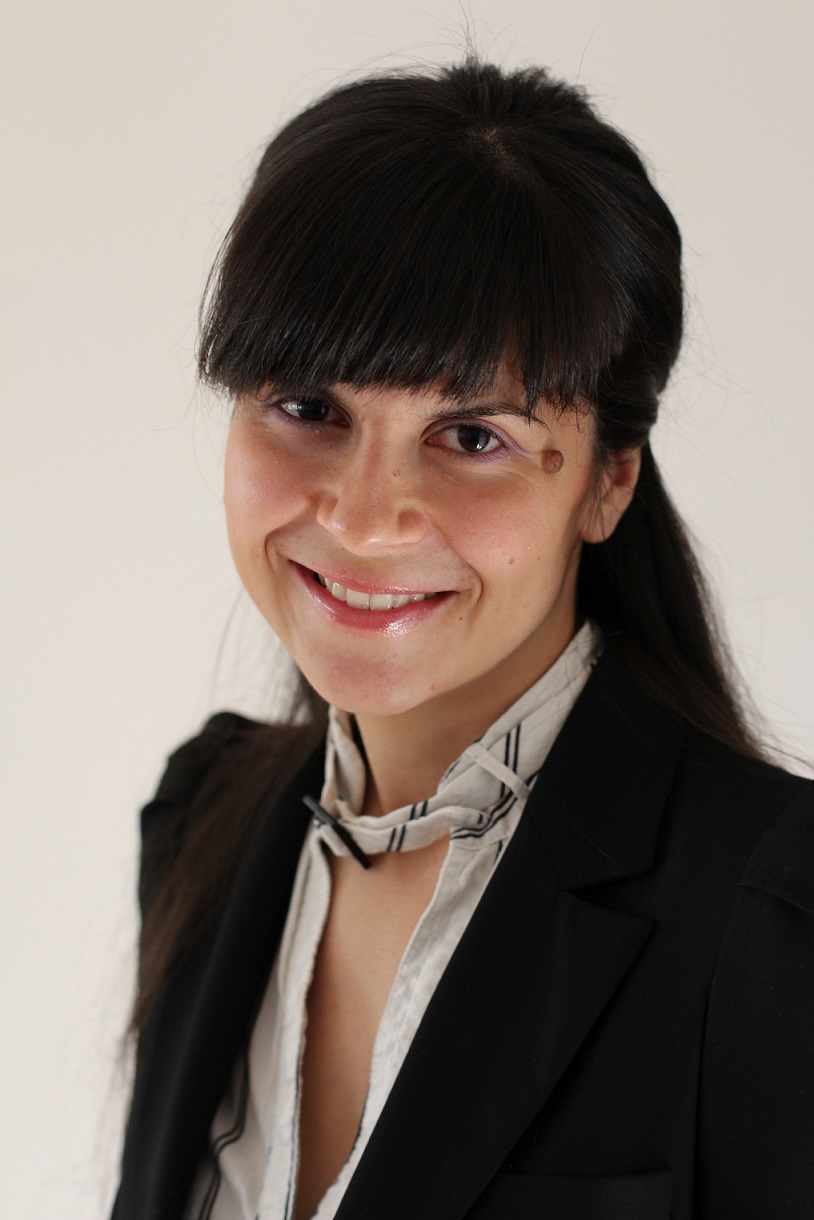
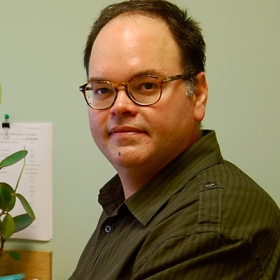
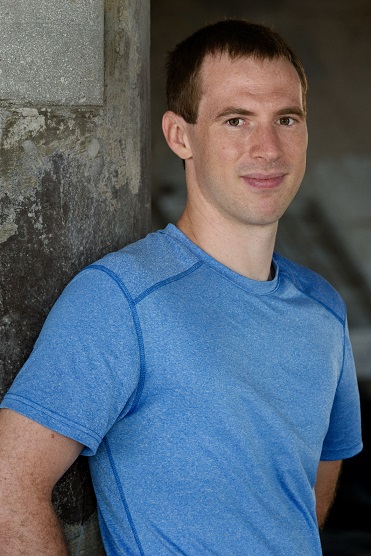
Professor Kewen Wang is a faculty member in the School of Information and Communication Technology at Griffith University , where he has been actively working in computational logic, knowledge representation, and their applications in artificial intelligence for over 30 years. His research has led to the development of novel logics, computer languages, and systems for knowledge representation and reasoning. Broad research areas: Computational Logic, Knowledge Representation, Artificial Intelligence, Programming, Knowledge Graphs, Explainable AI, Ontology Reasoning, Rule Learning Key contributions: RLvLR (scalable rule learner for KGs), TyRuLe (typed rule learning), Drewer (Datalog+- query engine), ALBERT+CCR (CommonsenseQA model), auction design algorithms His research has been widely cited in top venues like Artificial Intelligence , JAIR , ACM Transactions on Computational Logic , and conferences AAAI (Area Chair 2022-2025), IJCAI , KR . He has secured six ARC Grants (five Discovery, one Linkage) and smaller grants from NICTA, CSIRO, and Griffith University. Editorial roles: Area Chair for AAAI (2022-2025), Associate Editor for Journal of Web Semantics , TGDK Supervision: Has supervised over 15 PhD students including Hong Wu, Peng Xiao, and Pouya Omran Teaching: Courses in Intelligent Systems, Data Structures, Discrete Mathematics, and Robotics
Renata Borovica-Gajic is an Associate Professor in Data Analytics and an ARC DECRA Fellow at the School of Computing and Information Systems (CIS), University of Melbourne. She also serves as Associate Dean (Diversity and Inclusion) for the Faculty of Engineering and IT, demonstrating leadership in both research and academic community development. Her research lies at the intersection of database systems, machine learning, and artificial intelligence, with a vision of creating adaptive, self-driving database engines that optimize query execution in real-time. Her work spans learned indexes, query optimization, data quality, and data-driven traffic optimization, aiming to reduce costs and improve performance in data analytics. The recent publications reflect a strong trend toward integrating machine learning into core database operations—particularly through learned indexes, bandit-based tuning, and reinforcement learning for traffic systems. These works emphasize automation, provable guarantees, and real-time adaptation, showcasing a cohesive research agenda focused on intelligent, self-optimizing data systems. Her scientific excellence is recognized by numerous awards, including: L'Oréal-UNESCO for Women in Science Fellowship (2023) Victorian Young Tall Poppy (2024) Test of Time Award at SIGMOD 2022 Multiple Research and Teaching Excellence Awards from the University of Melbourne Google Research Inclusion Award (2021) She actively mentors PhD students and leads significant research projects funded by the Australian Research Council, Google, and Telstra. Her service includes roles as Associate Editor for SIGMOD Record, conference organization (e.g., aiDM, ADC, VLDB), and leadership in diversity and inclusion initiatives. She has also contributed to influential publications such as a chapter in the 7th edition of Database System Concepts . Her research lab focuses on AI-powered databases, traffic optimization via reinforcement learning, and self-healing data systems, positioning her at the forefront of next-generation data management.
Katherine Schofield , Professor of South Asian Music and History at King’s College London , specializes in Mughal India’s musical and cultural history (1570–1860). A viola-trained historian, she integrates Persian, Urdu, and visual sources to explore intersections of music, empire, emotions, and the supernatural. Head of Department of Music, King’s College London Fellow, Royal Asiatic Society & Royal Historical Society Affiliated Scholar, University of Cambridge Centre for South Asian Studies Visiting Professor, University of Pennsylvania Department of South Asia Studies Research interests span South Asian musicology, Mughal historiography, Sufism, and the social history of musicians. Her ERC-funded MUSTECIO project (€1.18M) examined music’s transformation during colonial transition in India and the Malay world. Her 2024 monograph Music and Musicians in Late Mughal India redefines the field as a finalist in the Prose Awards. Academic contributions include the documentary Songs of the Sufi (2023) and the edited volumes Tellings and Texts (2015) and Monsoon Feelings (2018). She currently studies Urdu ghazal singing under Vidya Rao. Honors include British Academy Mid-Career Fellowship (2018) and leadership roles on international boards like the Max Planck Institute. She mentors early-career researchers from Black and Global Majority backgrounds.
Gary Schindelman is a Professor of Biochemistry at Occidental College and a biological curator for WormBase at Caltech. He earned his B.S. from the State University of New York at Binghamton and his Ph.D. from New York University. Appointed in 2005, he also serves as a Department Co-Chair in Biochemistry. Email: schindelman@oxy.edu Office: Bioscience 208A Office Hours: Tuesday 9:45 – 11:45 a.m., Wednesday 1:00 – 2:00 p.m., and by appointment (Zoom or in person) Dr. Schindelman's research focuses on Biochemistry, Molecular Biology, Genomics , and Computational Biology , particularly in C. elegans and Arabidopsis models. His work spans enzyme kinetics, RNA biology, cellulose microfibril orientation, and bioinformatics tools for nematode research. He has contributed to WormBase, a key resource for nematode genomics, and explored ventral nerve cord functions in C. elegans behavior. His publications highlight expertise in genomic databases , phenotype ontologies , and plant cell expansion mechanisms . He received the Donald R. Loftsgordon Memorial Award for Outstanding Teaching in 2015. Dr. Schindelman teaches courses including Molecular Biology (BIO 221) , Principles of Biochemistry (BIO 322) , and Biochemistry I (BIO 349) , covering DNA/RNA/protein structure, enzyme function, intermediary metabolism, and biochemical techniques.
Kinan Dak Albab is an Assistant Professor at the Faculty of Computing and Data Sciences (CDS) at Boston University, where he joined in summer 2024. His research spans systems, cryptography, and programming languages, focusing on building practical tools for data privacy and compliance-by-construction. He has developed influential systems such as Sesame, K9db, and DP-PIR, which have been published in top venues like SOSP, OSDI, and USENIX Security. PhD in Computer Science, Brown University MS in Computer Science, Boston University (2020) BS in Computer Science, American University of Beirut (2015) Kinan's research centers on data privacy , secure computation , and systems security . He designs tools that allow developers to build applications that are privacy-compliant by construction. His work leverages systems design, cryptographic protocols, and language-level enforcement to reduce developer burden while ensuring strong privacy guarantees. He is particularly interested in GDPR compliance, private information retrieval, and usability of secure systems. His publications span high-impact areas including end-to-end privacy enforcement (Sesame), database systems with built-in privacy (K9db), and efficient private information retrieval (DP-PIR). These works combine systems performance with strong theoretical foundations, enabling real-world deployment in domains like wage gap analysis and public policy. Presidential Award for Excellence in Teaching, Brown University (2025) Teaching Excellence Award, Boston University (2020) Vivli and Microsoft datatheon Outstanding Graduate Submission (2019) Hariri Institute Graduate Fellow (2017–2020) Mark Sawaya Excellence Award, AUB (2015) 1st Place, ACM Lebanese Collegiate Programming Contest (2015) Kinan has advised and collaborated on real-world secure computation deployments, including a project with the Boston Women's Workforce Council and the Greater Boston Chamber of Commerce to measure wage gaps across over 100 companies. His work contributed to the formation of the startup nthparty and has been cited in the White House’s National Strategy on Privacy-Preserving Data Sharing, the UN Handbook on Privacy-Preserving Computation, and the European Commission’s report on Technological Enablers for Privacy. He is the lead developer of the JIFF framework for secure multi-party computation on the web and has created tools like Carousels for resource estimation in secure programs. He leads the ETOS group and is affiliated with multiparty.org , an initiative focused on advancing privacy-preserving technologies through open-source tools and real-world applications.
Dr. Andrea Flack is an Independent Emmy Noether Group Leader at the Max Planck Institute of Animal Behavior, Konstanz, Germany, and a Junior Group Leader at the Centre for the Advanced Study of Collective Behaviour, University of Konstanz. Her research focuses on understanding how ecological, environmental, and genetic factors shape migratory behaviors in birds, particularly white storks, and their evolutionary consequences. Current Positions: Independent Emmy Noether Group Leader, Max Planck Institute of Animal Behavior (2022–present) Junior Group Leader, Centre for the Advanced Study of Collective Behaviour (2020–present) Education: DPhil in Zoology (2009), University of Oxford Diploma in Biology (2009), Freie Universität Berlin Her work integrates cutting-edge technologies such as high-resolution GPS, accelerometers, and on-board cameras with experimental approaches like delayed-releases and cross-fostering to explore behavioral variation and its implications. Recent research highlights include social learning in migration and the impact of anthropogenic habitats on stork movement patterns. Key trends across her publications emphasize collective decision-making, environmental adaptation, and technological innovations in tracking. Notable contributions appear in journals like PNAS , Current Biology , and Journal of Applied Ecology . Scientific Awards: Emmy Noether Fellowship Dr. Flack collaborates extensively, utilizing Movebank for data integration and leading studies on avian collision risks and migration phenology. Her lab team includes researchers like William Fiedler and Emily Aikens , focusing on experimental designs and ecological modeling.
Stephen T. Parente, Ph.D., MPH, MS, is the Minnesota Insurance Industry Chair of Health Finance and a Professor in the Department of Finance at the University of Minnesota's Carlson School of Management. He also serves as Associate Dean of the Carlson Global Institute. Previously, he was Associate Dean of MBA and MS programs (2014–2017) and Director of the Medical Industry Leadership Institute (2006–2017). His government service includes roles as Chief Economist for Health Policy at the White House Council of Economic Advisers (2019–2021) and Senior Adviser to the Secretary for Health Economics at the U.S. Department of Health and Human Services. Education: BA in Health and Society, University of Rochester (1987) MS in Public Policy Analysis, University of Rochester (1988) MPH in Health Economics, University of Rochester (1989) PhD in Health Finance and Organization, Johns Hopkins University (1995) Research Interests: Dr. Parente specializes in health economics, health insurance design, health information technology impact assessment, medical technology evaluation, and policy micro-simulation. His work explores consumer-driven health plans, healthcare fraud detection via predictive analytics, international health system efficiency, and the economic implications of health reforms like the Affordable Care Act. He founded the Medical Valuation Laboratory to accelerate medical innovation translation. Publication Trends: Parente's recent articles focus on payment reform (e.g., site-neutral payments), healthcare pricing transparency, predictive analytics in Medicaid, workforce impacts of health policy, and international health system comparisons. His research consistently integrates economic modeling with empirical data analysis to evaluate cost, access, and efficiency in healthcare delivery and financing. Scientific Awards: Faculty Media Star Award (2010, 2005) Special Recognition, Pioneer Institute’s Better Government Competition (2009) Faculty Research Award (2006) Class of 1981 Faculty Member of the Year (2005) Delta Omega Honor Society (2002) John P. Young Student Prize (1993) Advising and Grants: Dr. Parente has advised 16 graduate students (5 PhD, 5 MS, 6 undergraduate theses). He secured major grants from Robert Wood Johnson Foundation, AHRQ, and DHHS, including studies on consumer-driven health plans ($1M+), health IT impact on quality ($500k), and Medicare policy simulation. His current research explores health savings accounts, medical innovation valuation, and fraud prevention analytics. Leadership: He directs the Medical Valuation Laboratory and serves as President of the American Society of Health Economists. Previous leadership includes Governing Chair of the Health Care Cost Institute and Board Member of Academy Health.
Peter Jax is a Full Professor at RWTH Aachen University , leading the Chair of Communication Systems . His research focuses on speech and audio processing , with expertise in active noise control , spatial audio , and machine learning applications for acoustic systems. Diploma in Electrical Engineering (1997), RWTH Aachen University PhD (2002), RWTH Aachen University Research areas include binaural direction-of-arrival estimation , MIMO acoustic system identification , and adaptive filtering for consumer and medical audio applications. Recent articles highlight innovations in ambisonics upscaling , noise control for UAVs , and data-driven uncertainty modeling in headphones. Scientific honors : Distinguished Member of Technicolor Fellowship Network (2010) Johann-Philipp-Reis Preis Borchers Medal E-Plus Award for Best Dissertation With over 25 patents in speech/audio processing and leadership roles in industry (Deutsche Thomson OHG, 2005–2015), he bridges academic research and industrial innovation.
Abolfazl Asudeh is an Associate Professor at the University of Illinois Chicago , affiliated with the Department of Computer Science and director of the Innovative Data Exploration Laboratory (InDeX Lab) . His work bridges data management, fairness, and AI. ACM and IEEE Senior Member VLDB Ambassador VLDB Endowment’s NSF Liaison Associate Editor for IEEE TKDE Research Interests focus on Algorithmic Fairness and Data-centric Responsible AI , with applications to ranking systems, LLMs, social networks, and misinformation detection. His work leverages Approximation Algorithms , Computational Geometry , and Randomized Methods to build efficient, fair systems. Scientific Awards : 2021: Google Research Scholar Award 2021: Communications of the ACM Research Highlight 2019: ACM SIGMOD Research Highlight 2020: VLDB Journal Special Issue on Best of VLDB 2017: ACM SIGMOD Most Reproducible Paper Grants include NSF IIS-2348919 (2024-2027) for fairness-aware data structures and NSF IIS-2107290 (2021-2024) for collaborative fairness research. Labs & Collaborations : Leads InDeX Lab with interdisciplinary teams, collaborating with institutions like University of Michigan, University of Texas at Arlington, and industry partners including Google and ACM.
Katja Hose is a Professor in the Department of Computer Science at Aalborg University's Technical Faculty of IT and Design. Her research focuses on Data, Knowledge and Web Engineering with specializations in AI for the People and Artificial Intelligence and Machine Learning. She maintains an active research profile with numerous publications and projects. Department of Computer Science Technical Faculty of IT and Design Aalborg University Research areas: Query Processing, Semantic Web, Linked Data, Knowledge Graphs Professor Hose's research interests center on knowledge representation, semantic web technologies, and AI applications. Her work spans from theoretical database systems to practical applications in healthcare, environmental assessment, and microbial data analysis. She has made significant contributions to knowledge graphs, large language models, and semantic search technologies, with particular emphasis on addressing hallucinations in AI systems and improving table search in semantic data lakes. Her recent publications demonstrate a strong trend toward integrating knowledge graphs with large language models, developing evaluation frameworks for AI hallucinations, and applying data science to diverse domains including healthcare and environmental sustainability. Her research bridges theoretical computer science with practical applications that address real-world challenges. NLP4KGC Best Paper Award (2023) ESWC 2023 Best Demo Award (2023) 2020 AMiner AI 2000 Most Influential Scholars AIME 2020 Best Paper Nomination (2020) ESWC 2019 Best Demo Award Nomination (2019) Professor Hose leads multiple significant research projects including ARISTOTLE (AI for clinical risk assessment), DarkScience (microbial data analysis), and the Poul Due Jensen Professorate in Big Data and AI. She has supervised numerous PhD students and collaborates extensively across disciplines, particularly in healthcare applications of AI and environmental assessment technologies. Her research has attracted substantial funding from sources like Villum Fonden and Danish E-infrastructure Cooperation. She is actively involved in several interdisciplinary research teams, including collaborations with microbiologists on microbial dark matter projects and with environmental scientists on digital environmental assessment systems. Her work on the ARISTOTLE project demonstrates strong connections between AI research and clinical applications, while her DarkScience project bridges computer science with microbiology.
László Lengyel is a Professor at the Budapest University of Technology and Economics (BME), affiliated with the Department of Automation and Applied Informatics . His work bridges theoretical and applied computer science, focusing on industrial automation, IoT systems, and model-driven engineering. Research interests include Model transformations and domain-specific languages IoT device management and multi-domain integration Software obfuscation and cybersecurity Graph algorithms and distributed computing (MapReduce) Real-time data analysis in manufacturing Automotive sensor networks His recent publications reflect expertise in model-driven IoT architectures , granule manufacturing automation , and MapReduce-based graph analysis , with a focus on industrial and automotive applications. He contributes to open-source frameworks like SensorHUB and explores gamification in driver behavior systems.
David R Cooper serves as an Assistant Professor of Research in the Department of Molecular Physiology and Biological Physics at the University of Virginia School of Medicine. His work focuses on developing data management systems for structural biology research, particularly in the field of X-ray crystallography. Dr. Cooper earned his BS in Biochemistry from Old Dominion University followed by a PhD in Biochemistry and Molecular Biology from Purdue University. His educational background provides the foundation for his current research in structural biology data systems. His primary research interest centers on data management and analysis for scientific endeavors, with specialization in X-ray crystallography. Dr. Cooper is currently developing a next-generation Laboratory Information Management System (LIMS) designed to track experimental procedures and parameters throughout the entire structural biology pipeline - from initial cloning to final structure deposition in the Protein Data Bank. His work addresses critical challenges in scientific reproducibility by ensuring protocols, data, and necessary metadata are properly documented and accessible. Analysis of Dr. Cooper's publication history reveals consistent contributions to structural biology data management, with particular emphasis on database development, validation tools, and visualization systems. His research spans bioinformatics, structural biology, and data science, with applications in macromolecular characterization and scientific reproducibility frameworks. Dr. Cooper maintains active research collaborations within the structural biology community, particularly with Dr. Wladek Minor's research group as indicated by his website (https://minorlab.org/person/dcoop/). His work supports the broader structural biology research enterprise through development of essential data infrastructure tools. His laboratory focuses on creating flexible systems capable of managing experimental samples and workflows for all stages of structural biology research. The LIMS development project represents a significant contribution to standardizing and improving data management practices in macromolecular structural analysis.
William Culhane is a Post-doctoral Research Associate working with the Large-Scale Distributed Systems (LSDS) research group at Imperial College London under Dr. Peter Pietzuch. His research focuses on big data processing in cloud computing environments, with expertise spanning distributed systems architecture, network-aware algorithms, and practical implementation of theoretical models. His academic credentials include: PhD in Computer Science from Purdue University (2015), Thesis: "Optimal 'Big Data' Aggregation Systems – From Theory to Practical Application" Masters in Computer Science from Purdue University (2011) BS in Computer Science and Engineering with Music minor from Ohio State University (2008), Cum Laude with Distinction Culhane's research program bridges theoretical computer science with practical systems implementation. His early work established mathematical models for optimal aggregation overlays, demonstrating how specific properties of aggregation functions guide theoretically optimal overlay construction. This evolved into practical systems like LOOM that implement these models for real-world big data processing. His current research on Meta-Dataflows (MDF) enables users to specify solution spaces of data analysis approaches and automatically discover optimal outcomes without code changes. The SquirrelJoin project addresses network skew in distributed joins by dynamically rerouting traffic to underutilized network segments. His publication record shows consistent progression from theoretical foundations (INFOCOM'15, SIGCOMM'14) to applied systems (VLDB 2017, Middleware'14) with practical impact. His professional trajectory includes significant industry exposure through a Google Techstop internship and research at Qatar University, where he explored anonymized database relations for third-party cloud processing. These experiences informed his approach to balancing theoretical purity with practical constraints in distributed systems design. Culhane has developed numerous open-source tools for the research community including LaTeX macros for consistent document formatting, Linux deployment scripts for distributed system management, and JavaScript interactive graphing utilities. These practical contributions demonstrate his commitment to improving research infrastructure beyond his primary publications.
Kenza Kellou-Menouer is a researcher affiliated with the ETIS Laboratory at ENSEA, France, and part of the MIDI research group . Her work focuses on schema discovery for Semantic Web data, data mining, and big data optimization. Research: Semantic schema discovery, clustering/classification algorithms, and association rules. Teaching: Semantic Web technologies, database design, algorithms, and programming languages (Java, C++, C#, C). Research Interests center on Semantic Web data integration, RDF schema inference, and hybrid machine learning approaches. She has contributed to scalable schema discovery systems and real-time profiling techniques for large datasets. Publications include work on schema inference tools (SchemaDecrypt++, HInT) and methodological frameworks presented at top-tier venues like VLDB (A*), ICDE (A*), SSDBM (A), and ISWC . Her research bridges theoretical advancements with practical implementations for RDF datasets. Community Contributions include organizing tutorials at the International Semantic Web Conference (ISWC) 2022 and developing educational materials for database and programming courses.
Associate Professor Marcus Jefferies is a faculty member at the University of Newcastle within the School of Architecture and Built Environment , specializing in Construction Management (Building) . He teaches courses including Contract Administration and Advanced Contract Administration.