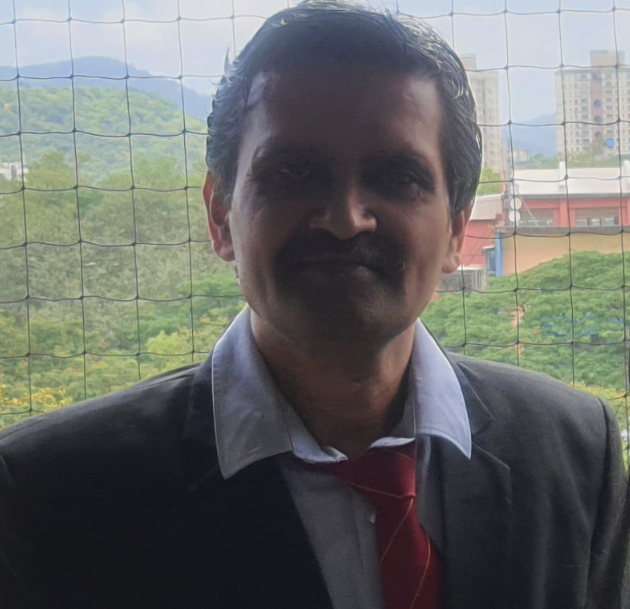
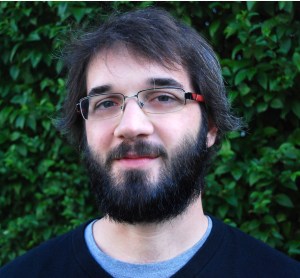
Rushikesh K. Joshi is a Professor in the Department of Computer Science & Engineering at the Indian Institute of Technology Bombay. His research focuses on computational models for programs, their structures and dynamics, including processes, interactions, concurrency, and distributed systems. He has taught advanced courses like CS 770 (Process Engineering), CS 787 (Language Engineering), and CS 757 (Design and Re-engineering). Research Interests: He specializes in software engineering, distributed systems, program analysis, and code refactoring. His work includes modular process modeling, trace language mining, and consistency models for business processes. He also explores objectification of procedural code through projects like Ox and AccessViz. Notable Projects: Anonymous Remote Computing (ARC), Filter Objects, Constore Graph Database, and Ox (objectification of Linux kernel structures). Funding sources include IBM, Microsoft, Infosys, and the Ministry of Information Technology. Scientific Contributions: His research has led to publications in IEEE Transactions, LNCS, and other venues. He has advised over 100 theses, including Ph.D. students Karnika Shivhare, Omkarendra Tiwari, and Vrinda Yadav.
Christos Zaroliagis is a Full Professor in the Department of Computer Engineering & Informatics at the University of Patras, Greece, where he serves as Head of the Intelligent Computing & Engineering Lab (ICE Lab). He is also a Senior Research Associate at the Computer Technology Institute & Press "Diophantus" in Patras. Previously, he held positions at the Max-Planck-Institut für Informatik in Saarbrücken, Germany, and the Department of Informatics at King's College, University of London, UK. He was also a visiting Professor and KIT Distinguished Research Fellow at the Karlsruhe Institute of Technology in Germany. Professor Zaroliagis specializes in algorithm engineering, optimization, decentralized computing, and cryptography & information security, with applications in large-scale networks and systems. His research has significant focus on mobility in smart cities, intelligent transportation systems, and big data analysis. He has published extensively in major international journals and conferences, and has served as editor for several academic journals including Algorithms, Journal of Discrete Algorithms, and ACM Journal of Experimental Algorithmics. His work spans both theoretical foundations and practical implementations, with numerous software libraries and systems developed under his leadership. His recent publications demonstrate continued innovation across cloud computing, intelligent transportation systems, decentralized computing, and big data analytics, showing a clear progression from foundational algorithm design to practical applications in smart city infrastructure. The research shows strong interdisciplinary connections between computer science, operations research, and urban planning. prize award 2012 for Academic and Scientific Excellence awarded by the Greek Ministry of Education KIT Distinguished Research Fellow Mercator Fellow Professor Zaroliagis leads the Intelligent Computing & Engineering Lab (ICE Lab), which has produced several significant software systems including PGL (graph algorithms library), ECC-LIB (cryptography library), Searchius (collaborative search engine), and iClone (social navigation system). His academic service includes heading the EURAXESS Services Center of the University of Patras and serving as National Contact Point for the FP7 PEOPLE Program - Mobility. He has been extensively involved in organizing international conferences and serving on program committees across computer science.
Manfred Soeffky serves as a Professor at the Berlin School of Economics and Law within the School of Economics and Law and Department of Economics and Business Administration, actively affiliated with the Institute of Quantitative Methods and Business Information Systems in Berlin, Germany. His research specializes in Business Mathematics and Statistics with concentrated expertise in Data Warehouse System Management, Multidimensional Data Analysis, and Knowledge Discovery and Data Mining. He investigates quantitative methodologies for corporate data infrastructure, focusing on data quality assessment, system architecture optimization, and practical implementation of business intelligence frameworks. Analysis of his 1999-2001 publications reveals consistent emphasis on data warehouse process management, ETL development, and knowledge management systems. His work demonstrates strong technical focus on data preparation techniques, operational data quality challenges, and portal-based enterprise integration solutions within business information systems. No information regarding scientific awards was documented in source materials. Specific details about student advising, research grants, laboratory teams, or current projects remain unreported in available documentation.
Lester I. McCann is a Professor of Practice in the Department of Computer Science at the University of Arizona, with his office located in GS 819. He earned his Ph.D. from North Dakota State University in 1994 and maintains active contributions to computer science research and education. Educational Background: Ph.D., North Dakota State University, 1994 Professor McCann's research centers on Computer Science education and database management systems. He developed innovative educational tools including "Graph Magic" for visualizing graph algorithms and "Guided slides" for tablet-based flexible lectures. His database work addresses relational algebra comprehension and concurrency control in high-performance computing environments, bridging theoretical concepts with practical pedagogy. His publication timeline from 1990-2008 reveals a strategic shift from foundational database research (multidatabase systems, concurrency control) toward educational technology development. This evolution highlights sustained commitment to enhancing computer science instruction through software tools, assignment design, and visualization techniques across algorithms, data structures, and database courses. Scientific Awards: No awards mentioned in the provided text. Available documentation contains no references to student advising relationships, research grants, or laboratory affiliations. His professional activities appear focused on classroom innovation and publication without indication of grant-funded projects or mentored graduate students in the source materials.
Milen Yordanov Petrov serves as Professor in the Department of Software Engineering at Sofia University's Faculty of Mathematics and Informatics. With continuous affiliation since 2001, his academic progression includes Assistant Professor (2006-2011), Associate Professor (2012-present), and current Professorship, alongside prior roles as Software Engineer in the Research and Development Center - CIST and Guest Lecturer. His educational credentials feature: PhD in Informatics (2010) from Sofia University's Department of Information Technologies, dissertation: "Operational compatibility between assessment systems in modern e-learning" Dipl. Eng. (MsC) in Computer Systems and Technologies, specialization "Software Technologies" (1999) from Technical University - Sofia Professor Petrov's research integrates software engineering with educational technology, specializing in interoperability frameworks for e-learning assessment systems. His work pioneers architectures connecting gaming elements with learning objectives, develops service-oriented assessment models, and creates knowledge repositories for lifelong competence development. Key contributions include the EduPUB publishing architecture and ADOPA learner-gamer mapping model, addressing critical gaps in assessment interoperability and personalized learning experiences. Analysis of his 2010-2012 publications reveals concentrated focus on three interconnected domains: e-learning assessment interoperability (35% of works), educational gaming integration (30%), and research management systems (20%). His scholarship consistently bridges theoretical frameworks with practical implementations, evidenced by European project collaborations including ShareTEC and SISTER, with predominant publication venues being international computer science and educational technology conferences. Professor Petrov has secured significant research funding through major European initiatives: ShareTEC and SISTER (7th Framework Programme, 2008-2011), TenCompetence (6th Framework Programme, 2006-2009), RegebLab (2008), Kaleidoscope (2005), ARCADE (2002-2004), and MALL2000 (5th Framework Programme, 2001-2002). His teaching portfolio spans Programming Fundamentals, Object-Oriented Programming, Data Structures, Java Server Technologies, and Network Programming. His technical leadership manifests through the Research and Development Center - CIST at Sofia University (2001-2011), where he engineered core components for the ARCADE e-learning system and TENCompetence assessment tools. Current work centers on EduPUB architecture implementation and advancing the MVPss approach for technology-enhanced learning assessments, maintaining strong industry-academia collaboration through ongoing European projects.
Jia Yu is a researcher affiliated with Arizona State University , Tempe, AZ, USA. Their work focuses on geospatial data management, database systems, and cluster computing frameworks like Apache Spark. They have collaborated extensively with Mohamed Sarwat and other researchers on projects such as GeoSpark , GeoSparkViz , and GeoSparkSim , contributing to scalable spatial data processing and visualization systems. Key research areas include Learned indexing mechanisms (e.g., GLIN) Microscopic traffic simulation Parallel and distributed data processing Interactive geospatial dashboards Column correlation exploitation for database efficiency Integration of visualization with backend data systems Recent publications (2014-2024) demonstrate expertise in geospatial analytics, database indexing, software testing, and Apache Spark-based systems. Notable projects include Turbocharging Visualization Dashboards , HERMIT Indexing , and Spindra Knowledge Graph Management . Work emphasizes both theoretical innovation and practical implementation for handling massive-scale spatial data.
Ruby Tahboub is a Teaching Assistant Professor at the Siebel School of Computing and Data Science, University of Illinois Urbana-Champaign (UIUC), since 2022. She previously served as a Visiting Assistant Professor at Purdue University (2019–2022). She holds an M.S. (2016) and Ph.D. (2019) in Computer Science from Purdue University. Her research focuses on query compilation, spatial databases, and high-performance computing, with notable contributions to Apache Spark optimization and educational tools like LIMO for programming education. She teaches courses such as Introduction to Data Mining (CS 412) and Introduction to Programming for Engineers and Scientists (CS 101). Ruby has received the Raymond Boyce Graduate Teacher Award (Purdue, 2016) and the Best Demo Award at ACM SIGSPATIAL (2015) for her work on LIMO. Her research spans database systems, compiler design, and distributed computing, emphasizing practical applications in both industry and education. Her work bridges theoretical advancements in query processing with real-world scalability challenges, particularly in spatial and heterogeneous workloads. She also advocates for innovative teaching methods to enhance programming literacy through interactive tools like map-based activities.
Dr Yanlong Zhang is a Senior Lecturer at Manchester Metropolitan University. He holds a PhD in Software Engineering and a PGCE in Higher Education, complemented by industry experience as an Assistant Engineer, Engineer, and Teaching Assistant. His research focuses on web engineering, including web measurement, security, and games design, with particular attention to software metrics and user interface design. Teaching responsibilities include undergraduate modules on web design and development, computer systems, game design, and human-computer interaction, as well as postgraduate courses in information systems. His work explores GUI generation using GANs, structural similarity in source code, and navigability metrics for websites. Research outputs span topics like melanoma classification via image similarity and quality analysis of software architectures. His publications demonstrate expertise in both theoretical frameworks (e.g., HASARD model) and applied systems (e.g., MEIC design). Office hours are Monday 10-11, 1-2, and Thursday 10-11. Proficient in English, Chinese, and basic Japanese/German, Dr Zhang contributes to education and industry through his roles as a Fellow and teaching-focused academic. His work bridges software engineering principles with practical web development challenges.
Stephen Blott is an Associate Professor at the School of Computing, Dublin City University. He holds a BSc in Computing Science from Glasgow University and a PhD from the same institution. Previously, he worked as a Senior Research Associate at ETH Zurich and as a Principal Investigator at Bell Labs in New Jersey. His research focuses on Unix/Linux systems, computer networks, container technologies, DevOps, and educational tools for computer science. Key areas include operating system optimization, network security protocols, container orchestration, and pedagogical innovations in computer science education. Publications show consistent focus on network security, data management, and computational efficiency. Recent work emphasizes internet infrastructure, privacy-preserving technologies, and biomedical informatics, with strong methodological foundations in simulation and algorithm design.
Rakesh Ranjan is a part-time Lecturer in the Computer Engineering Department at San José State University, teaching Enterprise Software Overview and Software Testing & QA courses. His industry expertise complements his academic role, where he focuses on cloud data services, big data analytics, and enterprise software platforms. Ranjan holds extensive industry experience as a Cloud Engineering Manager at IBM Silicon Valley Lab, where he leads development of data and analytics services for IBM Bluemix. With over 20 years in software development, he specializes in database technologies (DB2), cloud architectures, and large-scale system design. His textbook 'Enterprise Software Platform' covers middleware, cloud computing, big data, and emerging web technologies for software engineering students. At SJSU, Ranjan oversees innovative student projects applying Hadoop, MapReduce, and distributed systems to real-world problems. Student teams have developed solutions including social media sentiment analysis, distributed caching systems, real-time analytics platforms, and accessibility testing frameworks under his guidance.
Michael Castelle is an Associate Professor in the Centre for Interdisciplinary Methodologies (CIM) at the University of Warwick. His research bridges economic sociology, the history of computing, and science and technology studies. He examines how sociological, anthropological, and semiotic perspectives inform technological practices in databases, machine learning, and distributed systems. His work traces the sociotechnical evolution of software infrastructure underpinning modern marketplace platforms, including databases, transaction processing, and messaging middleware. Castelle holds a PhD in Sociology from the University of Chicago and a BS in Computer Science from Brown University. He taught courses on computing and society, programming for graduate students (using Python/R), and served as a teaching assistant in operating systems and algorithmic animation. His career includes software development roles in open-source civic tech, e-commerce, neurology visualization, 3D animation, and gaming. His research interests span the sociocultural implications of AI, critical theory in machine learning, and the historical interplay between technology and social structures. Recent articles explore AI ethics, gig economy labor dynamics, and the cultural life of machine learning.
Dr. Kasun De Zoysa is a Senior Lecturer at the University of Colombo School of Computing (UCSC), specializing in Computer Security and Cryptography. He holds a B.Sc. (First Class Honours) in Computer Science from the University of Colombo (1993–1997) and a Ph.D. in Computer Security from Stockholm University (1999–2004). His academic roles include coordinating the M.Sc. in Information Security program and advising the Center for Digital Forensic. Research Focus: Secure multi-party transactions, public key cryptography, web security, sensor networks, digital forensics, and ICT4D. Teaching: Undergraduate courses like Programming, Information System Security; postgraduate courses including Network Security, Digital Forensics, and Mobile Application Security. Notable projects include the TikiriDB sensor network framework, mobile ATM systems for developing countries, and wildlife monitoring via infrasound. He has published extensively on sensor networks, cybersecurity, and digital forensics in venues like IEEE MASS, REALWSN, and ICTer.
Vincenzo Gulisano is an Associate Professor in the Department of Computer Science and Engineering at Chalmers University of Technology. He holds a Ph.D. from the Technical University of Madrid and master's and bachelor's degrees from the University of Trieste. His research focuses on distributed systems, data streaming, and concurrent data structures with applications in cyber-physical systems such as Advanced Metering Infrastructures (AMI) and DDoS detection. He leads the Master Program in Computer Systems and Networks (MPCSN) and teaches courses like Operating Systems (EDA092/DIT400). His work emphasizes scalable and fault-tolerant stream processing frameworks like STRETCH and Erebus, which address challenges in real-time analytics and elastic resource management. Gulisano collaborates on projects integrating machine learning (e.g., IP-LSH-DBSCAN for parallel clustering) and cybersecurity (e.g., Metis for AMI intrusion detection). He has published widely in top-tier conferences like VLDB, Euro-Par, and IEEE TPDS, with contributions to stream synchronization, scheduling policies, and energy-sharing communities. Gulisano’s research bridges theoretical foundations and practical implementations, addressing scalability, determinism, and explainability in data-driven systems. His work often involves interdisciplinary collaborations, combining algorithms, hardware, and middleware design for efficient data processing in edge and cloud environments.
Prof. Hans-Arno Jacobsen is a full professor at TUM's Department of Informatics, holding the Chair of Application and Middleware Systems since 2012 via an Alexander von Humboldt Professorship. He previously worked at the University of Toronto in Computer Science and Electrical & Computer Engineering. His research integrates computer science, engineering, and information systems, focusing on middleware systems, event processing, and energy-efficient ICT solutions. Notable collaborations include work with Bell Canada, IBM, and Sun Microsystems. Education: Doctoral studies across Germany, France, and the USA, followed by postdoctoral research at INRIA Paris. His applied research explores FPGA integration into middleware architectures to enhance performance and energy efficiency. Scientific Awards: Alexander von Humboldt Professorship (2012) Research Trends: Recent publications emphasize database indexing (BE-tree), adaptive content routing, and distributed SOA architectures for business processes. His work bridges theoretical computer science with industrial scalability challenges. No listed grants or advisees are explicitly mentioned in the text, though his industry partnerships suggest significant collaborative projects. His lab focuses on middleware innovations for modern hardware environments.
Eleftheria Katsiri is a researcher with extensive contributions to computer science , focusing on sensor networks , middleware systems , and serious games . Her work bridges privacy-preserving machine learning with IoT applications in healthcare and environmental monitoring. Collaborations with Alexandros Gazis, Pavlos S. Efraimidis, and other researchers highlight her interdisciplinary approach. Key publication venues: Frontiers Robotics AI , ICR , CoRR , Communications of the ACM Research trends since 2022 include federated learning for health apps, blockchain middleware, and edge intelligence for air quality monitoring. Her articles demonstrate expertise in abstract reasoning, sensor data fusion, and scalable middleware design. No formal awards or academic appointments are mentioned in available data.