Babak Falsafi is a Full Professor at the School of Computer and Communication Sciences (IC) at EPFL, leading the Parallel Systems Architecture Laboratory (PARSA). He is a renowned expert in computer architecture, datacenter systems, and cloud-native server design. His research focuses on post-Moore era computing, emphasizing heterogeneous architectures, energy efficiency, and scalable IT infrastructure. Falsafi is the founder of EcoCloud, an EC-sponsored industrial-academic consortium investigating sustainable information technology. He holds ACM and IEEE fellowships, a Sloan Research Fellowship, and has contributed to major projects like Optimus Prime (data transformation acceleration), AstriFlash (flash-based online service systems), and Midgard (virtual memory re-design). His work spans hardware-software co-design, memory systems, and security. Falsafi advises numerous PhD students and collaborates with industry partners such as Google and Cavium. Key achievements include pioneering scalable multiprocessor architectures, snoop filters in IBM BlueGene, and spatial memory streaming in ARM cores. His lab develops open-source tools like QFlex for server simulation. He frequently presents at top conferences (HPCA, ISCA, MICRO) and chairs workshops on post-Moore infrastructure. Teaching roles include leading courses in computer architecture and parallel systems across multiple EPFL departments (SIN, EDIC, SSC, SMA). His work addresses datacenter challenges like the 'data tax' and mitigating latency through specialized accelerators.
Florian Kerschbaum is a Professor and NSERC/RBC Industrial Research Chair in Data Security at the Cheriton School of Computer Science, University of Waterloo. His research focuses on data security and privacy, applied cryptography, and confidentiality in data science. Research interests span data collection/preparation management, secure multi-party computation, homomorphic encryption, differential privacy, and machine learning robustness/privacy. His work develops cryptographic solutions for practical data management challenges in distributed systems.
Fabian Suchanek is a full professor at Institut Polytechnique de Paris, specifically affiliated with Télécom Paris. He leads research in the Data, Intelligence, and Graphs (DIG) team within the Computer Science department. His academic career focuses on bridging artificial intelligence with structured knowledge representations. Suchanek's research interests span artificial intelligence, knowledge bases, and natural language processing, with particular emphasis on knowledge graph construction , rule mining , knowledge-based language models , and explainable AI . His work demonstrates how structured knowledge can enhance machine learning systems, particularly large language models, by providing factual grounding and interpretability. The research group he leads develops practical systems that address real-world knowledge management challenges. His recent publications showcase a strong trajectory in knowledge-intensive AI, with notable contributions to knowledge graph completion, rule mining techniques, and neural approaches to knowledge base validation. The research demonstrates increasing integration between symbolic and neural approaches to AI. Best Student Paper Award at KR 2024 for work on contextual reasoning Best Demo Award of IJCAI 2024 for rule mining in knowledge graphs French Open Research Award for the YAGO project Best Paper Award of ESWC 2021 for Neural Knowledge Base Repairs Suchanek has secured significant research funding, evidenced by his active recruitment of PhD students for knowledge-based language model research. He has held visiting positions, including at Nanyang Technological University (June-September 2023), and is recognized internationally through keynote invitations such as the Singapore ACM SIGKDD Symposium 2023. He has deliberately stepped back from administrative duties at Institut Polytechnique de Paris to focus on research. His laboratory maintains strong industry connections through open-source software projects including the YAGO knowledge base, AMIE for rule mining, STACI for explainable AI, and several other tools that have become standard in knowledge representation research.
Professor Winston Hsu is a distinguished faculty member in the Department of Computer Science and Information Engineering at National Taiwan University, where he has served as a full professor since 2015. He is the co-director of the Communications and Multimedia Laboratory (CMLab) and founder of the MiRA (Multimedia indexing, Retrieval, and Analysis) research group. Additionally, he serves as the Founding Director for NVIDIA AI Lab at NTU, the first such lab in Asia. Professor Hsu received his Ph.D. in Electrical Engineering from Columbia University in 2007 under the supervision of Professor Shih-Fu Chang. Prior to his academic career, he was a founding engineer and research manager at CyberLink Corp., now a public image/video software company. National Taiwan University (2007-Present): Professor (2015-Present), Assistant/Associate Professor (2007-2015) MobileDrive (2021-2024): CTO and Vice President (Joint Venture between Foxconn and Stellantis) IBM TJ Watson Research Center (2016-2017): Visiting Scientist Microsoft Research Redmond (2014): Visiting Researcher Columbia University (2007): Ph.D. in Electrical Engineering Professor Hsu's research focuses on machine learning, computer vision, large-scale image and video search and recognition, and embedded AI. His work spans from fundamental research in visual recognition to practical applications in automotive systems, medical imaging, and e-commerce. He has pioneered work in disguised face recognition, low-resolution face hallucination, 3D model search, and virtual try-on systems. His current research emphasizes Embodied AI, integrating perception, action, and learning technologies for applications in automotive and robotics domains. His research group has produced numerous influential publications, particularly in top computer vision and multimedia conferences like CVPR, where they won first place in the Disguised Face Recognition competition in 2018. Their work spans diverse application areas including security, medical diagnostics, automotive systems, and e-commerce solutions, demonstrating strong translation from academic research to real-world impact. IBM Research Pat Goldberg Memorial Best Paper Award (2018) First Place, IARPA Disguised Faces in the Wild Competition (CVPR 2018) Best Brave New Idea Paper Award, ACM Multimedia 2017 NVIDIA AI LAB Award (First in Asia, 2016) First Place, MSR-Bing Image Retrieval Challenge (2013) World's Top 2% Scientists (2023) Professor Hsu actively mentors students and researchers, with his group consistently recruiting PhD students, postdocs, and research assistants. He has successfully bridged academia and industry through multiple collaborations, including his role as CTO at MobileDrive (a joint venture between Foxconn and Stellantis) from 2021-2024. His research has been supported by significant industry partnerships with Microsoft, IBM, and NVIDIA, as well as government grants from Taiwan's Ministry of Science and Technology. His laboratory, the Communications and Multimedia Laboratory (CMLab), maintains strong industry connections and focuses on cutting-edge research in visual AI. The lab has produced numerous award-winning projects and maintains active collaborations with global technology companies, particularly in the automotive and consumer electronics sectors.
Massimo Piccardi is a Professor of Natural Language Processing (NLP), Computer Vision, and Machine Learning at the University of Technology Sydney (UTS) , where he has been since 2002. He currently serves as the Head of the School of Electrical and Data Engineering and leads the Big Data Analytics program at the Global Big Data Technologies Centre. His research focuses on advancing NLP, machine learning applications in healthcare, and cybersecurity in IoT systems. He has authored over 200 journal papers and conference proceedings, secured significant ARC and CRC grants, and holds the IEEE Computer Society Distinguished Contributor Award (2022). Education & Professional Roles: Joined UTS in 2002, progressing from Associate Professor (2002–2007) to Professor (2008–present). Serves as Associate Editor for IEEE Transactions on Big Data and Editor for Artificial Intelligence in Medicine. Active in professional societies including IEEE, ACL, and ALTA (President, 2023–2024). Research Interests: Core areas include NLP (translation, summarization, adversarial attacks), healthcare informatics (clinical NLP, health service analysis), and cybersecurity (IoT security, privacy-preserving systems). Cross-cutting themes include generative models, cross-lingual systems, and ethical AI. Grants & Projects: Principal Investigator on ARC Discovery/Linkage projects and CRC grants. Recent projects include controllable machine translation (Amazon), privacy-preserving digital agriculture, and STEM innovation (ASTRID project with NBN Co). Labs & Collaborations: Leads the UTS Global Big Data Technologies Centre, collaborating on projects like adversarial NLP attacks, medical machine translation, and secure IoT frameworks.
Joy Arulraj is an Associate Professor in the School of Computer Science within the College of Computing at Georgia Institute of Technology. His research focuses on data systems, machine learning, and database systems, with a particular emphasis on video analytics and adaptive query processing. He leads the Data Systems and Analytics Group and is developing the EVA AI-Relational Data System. Dr. Arulraj's research interests span data systems, machine learning, database systems, video analytics, and adaptive query processing. His work centers on developing systems that efficiently process complex queries, particularly for video analytics and machine learning workloads. He has made significant contributions to GPU database systems, non-volatile memory database management, and adaptive query processing techniques. His research often bridges the gap between theoretical database principles and practical implementations for modern hardware architectures. His recent publications show a strong trend toward video analytics systems, adaptive query processing for machine learning workloads, and GPU-accelerated database systems. The EVA system represents a major focus of his recent work, providing end-to-end exploratory video analytics capabilities. His research also addresses fundamental database concepts like buffer management, query optimization, and storage management, adapting these principles for modern hardware and application requirements. Dr. Arulraj has advised numerous graduate students including Pramod Chunduri, Gaurav Tarkok Kakkar, Jiashen Cao, and Sayan Sinha. His graduated students have gone on to work at companies like ServiceNow, Meta Research, and the Korean Army. He actively teaches database system courses at Georgia Tech, including Database System Implementation (CS 4420/6422) and Advanced Database System Implementation (CS 4423/6423), where students build database systems from scratch using C++ and the BuzzDB framework. He maintains an active research program with consistent publication output across top database and systems conferences. His work spans from theoretical database principles to practical system implementations, with a recent emphasis on video analytics, machine learning integration with database systems, and leveraging modern hardware like GPUs and non-volatile memory for database applications.
Alexandra Boldyreva is a Professor at the Georgia Institute of Technology, holding joint appointments in the School of Cybersecurity and Privacy and the School of Computer Science. She serves as Associate Chair for Graduate Studies in the School of Cybersecurity and Privacy and coordinates the Information Security Master’s program in the College of Computing. Her affiliations include the Institute for Information Security & Privacy (IISP), the Algorithms, Combinatorics and Optimization (ACO) program, and the Algorithms and Randomness Center (ARC). She earned her Ph.D. in Computer Science from the University of California, San Diego, and holds bachelor’s and master’s degrees in applied mathematics from St. Petersburg State Technical University, Russia. Her research focuses on cryptography and information security, with notable contributions to encryption methods, authentication protocols, and privacy-preserving systems. Boldyreva’s work emphasizes provable security analysis of protocols like FIDO2 and TLS 1.3, as well as searchable encryption and data privacy techniques. Her recent studies include secure communication channel establishment, leakage quantification in encryption systems, and applications of fuzzy search in encrypted databases. She has received Test of Time Awards for foundational contributions to cryptography. Boldyreva leads initiatives in cybersecurity education and has secured grants for research in secure communication protocols and human-computing approaches to key exchange. Her interdisciplinary collaborations span computer science, mathematics, and privacy engineering.
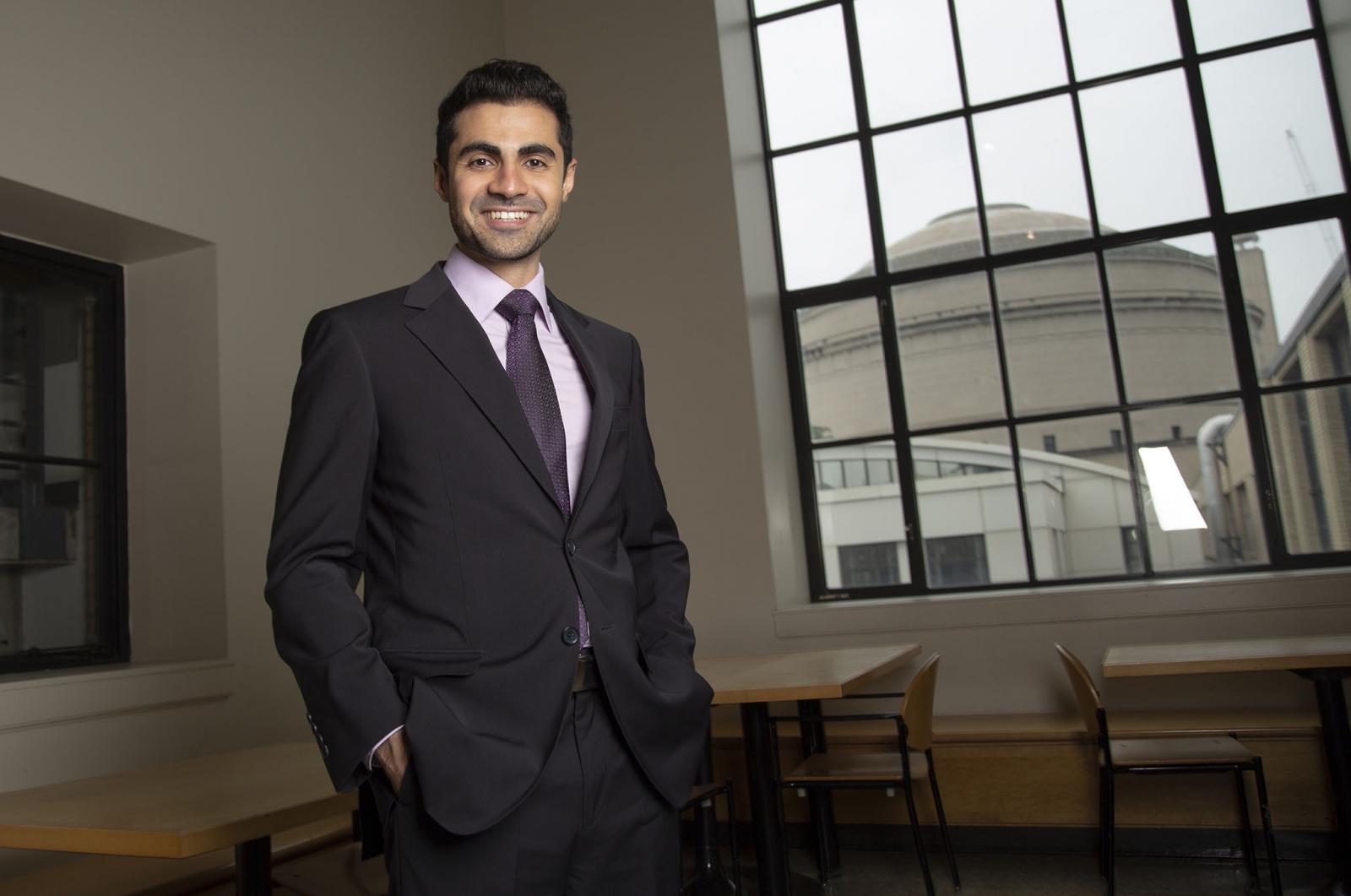
Navid Azizan is the Alfred H. (1929) and Jean M. Hayes Career Development Assistant Professor at Massachusetts Institute of Technology (MIT), holding dual appointments in the Department of Mechanical Engineering (in Control, Instrumentation & Robotics) and the Schwarzman College of Computing's Institute for Data, Systems & Society (IDSS). He is also a Principal Investigator in the Laboratory for Information & Decision Systems (LIDS), and a faculty member of the MIT Statistics and Data Science Center, the Center for Computational Science and Engineering, and the Operations Research Center. Dr. Azizan received his PhD in Computing and Mathematical Sciences from the California Institute of Technology (Caltech) in 2020, his MSc in Electrical Engineering from the University of Southern California in 2015, and his BSc in Electrical Engineering with a minor in Physics from Sharif University of Technology in 2013. Prior to joining MIT, he completed a postdoc at Stanford University's Autonomous Systems Laboratory and was a research scientist intern at Google DeepMind. His research spans the intersection of machine learning, systems and control, mathematical optimization, and network science. Dr. Azizan's work focuses on developing principled learning and optimization algorithms for reliable intelligent systems, with applications to autonomy and sociotechnical systems. His research has significant implications for creating trustworthy AI systems that can operate effectively in complex, uncertain environments. Dr. Azizan's recent publications demonstrate a strong focus on uncertainty quantification, reliable AI systems, constrained optimization, and control-oriented learning. His work bridges theoretical foundations with practical applications, particularly in autonomous systems where safety and reliability are paramount. His research group has made notable contributions to areas including neural network verification, multi-agent reinforcement learning, and adaptive inference techniques for large language models, with several papers featured on MIT News and selected for oral presentations at top conferences. Alfred H. (1929) and Jean M. Hayes Career Development Professorship (2025-present) Frank E. Perkins Award for Excellence in Graduate Advising (2025) List of Outstanding Academic Leaders in Data from the CDO Magazine (2024, 2023) Amazon Science Hub Research Award (2023) Outstanding UROP Faculty Mentor (2023) Esther and Harold E. Edgerton (1927) Career Development Chair (2022-2025) Information Theory and Applications (ITA) Gold Graduation Award (2020) Dr. Azizan has been recognized for his excellence in graduate advising, receiving the Frank E. Perkins Award for Excellence in Graduate Advising in 2025. During the pandemic, he founded and co-organized the 'Control meets Learning' virtual seminar series, connecting researchers across disciplines. His work has attracted significant research funding from industry partners including Google, Amazon, and MathWorks, supporting both fundamental research and practical applications in reliable intelligent systems. The Azizan Lab at MIT brings together researchers from mechanical engineering, computer science, and applied mathematics to tackle challenges at the intersection of learning and control. The lab emphasizes both theoretical foundations and practical implementations, with a particular focus on developing algorithms that provide guarantees of performance and safety. Current research directions include uncertainty quantification in AI systems, constrained optimization for neural networks, and control-oriented learning for autonomous systems, with applications spanning robotics, transportation, and complex sociotechnical systems.
Zachary Ives is the Adani President's Distinguished Professor and Department Chair of the Computer and Information Science Department at the University of Pennsylvania. He holds affiliations with the ASSET Center for Safe, Explainable and Trustworthy AI, the Warren Center for Network and Data Science, the Center for Neuroengineering and Therapeutics, and serves as a Distinguished Research Fellow at the Annenberg Center for Public Policy. His research focuses on data integration and sharing, data provenance and trustworthiness, and machine learning systems. He develops data science platforms at the intersection of databases, machine learning, and distributed systems, with applications in Web question answering and scientific domains like genetics and neuroscience. His work addresses fundamental challenges in integrating heterogeneous data, ensuring trustworthy results, and facilitating collaborative data science. His recent publications demonstrate a strong focus on data lakes, learned database systems, fine-grained provenance, and question answering systems. These works span top conferences including SIGMOD (where his paper was selected as Best Paper in 2024), VLDB, ACL, and PODS, showing the breadth of his contributions across database systems, natural language processing, and data management. NSF CAREER award recipient Fellow of the ACM Christian R. and Mary F. Lindback Foundation Award for Distinguished Teaching IEEE Technical Committee on Data Engineering Education Award SIGMOD Best Paper Award ICDE 2013 ten-year Most Influential Paper award As Department Chair, Ives has overseen significant departmental growth, hiring 25 new faculty since 2018. He advises numerous PhD students and postdocs, and maintains extensive collaborations across Penn and with external institutions. His research has been funded by NSF, NIH, DARPA, Google, Amazon, and other organizations. He has developed courses including NETS 212 'Scalable and Cloud Computing' and teaches Big Data Analytics. His research group, the Penn Database Group, works on projects including data lake management, data provenance, and collaborative data science platforms. His work with neuroscientists on seizure prediction has received significant attention, including a competition with 504 teams achieving 82% accuracy.
Sainyam Galhotra is an Assistant Professor in the Department of Computer Science at Cornell University. His research focuses on developing data science tools for trustworthy analytics, integrating causal inference, data management, and machine learning to enhance robustness, explainability, and fairness in algorithmic systems. PhD: University of Massachusetts Amherst (2020), advised by Barna Saha B.Tech: Indian Institute of Technology Delhi (2014), advised by Amitabha Bagchi Postdoctoral Research: University of Chicago (Computing Innovation Fellow) His work spans artificial intelligence, causal inference, and responsible data science, emphasizing ethical algorithm design and reliable data integration. Recent publications highlight advancements in fair clustering, causal feature selection, and entity resolution frameworks. His research trends from 2023–2024 include contributions to spatio-temporal data correlation, community detection in geometric graphs, and distribution-aware dataset search. Key themes are fairness in machine learning, causal modeling, and scalable data management solutions. Computing Innovation Fellowship (2021) DAAD AInet Fellow (2021) ACM SIGMOD Entity Resolution Programming Contest Finalist (2021) Krithi Ramamritham Computer Science Scholarship (2019) BEST Paper Award in SIGSOFT FSE 2017 He actively seeks PhD or Master’s students interested in data science and trustworthy AI. Contact via email: sg@cs.cornell.edu .
Katja Hose is a Full Professor of Data Management at TU Wien's DBAI research unit, heading the Data Management and Knowledge-Driven AI Lab. She previously held a Poul Due Jensen Foundation Professorship at Aalborg University. Her research focuses on data and knowledge engineering, including graph databases, knowledge graphs, querying, analytics, and machine learning, with interdisciplinary applications in bioscience, healthcare, and environmental assessment. Education: PhD in Computer Science (Ilmenau University of Technology, 2009), Postdoc at Max Planck Institute for Informatics (2009–2012). Academic roles include Program Co-Chair for ISWC 2024 and EDBT 2023, and editorial board membership at VLDBJ and TGDK. She leads projects like TARGET (health virtual twins) and ARMADA (data management). Research Interests: Knowledge Graphs, Semantic Web, Big Data, Machine Learning, Data Integration, and Provenance Systems. Key contributions include SHACL shape extraction, conversational data analytics, and environmental knowledge graphs. Awards include the 2025 Distinguished Meta-Reviewer Award and 2024 Manfred Paul Award. Advising and Grants: Supervised students including E. Pürmayr (Diploma Thesis 2025). Active in EU projects (TARGET, ARMADA) and grant coordination. Labs/Teams: DMKI Lab at TU Wien, collaborating with interdisciplinary teams in healthcare and environmental science.
Seth Lewis Gilbert is a Professor and Head of the Department of Computer Science at the National University of Singapore (NUS), within the School of Computing . He holds the Dean's Chair Associate Professor title and focuses on algorithms for large-scale distributed systems , emphasizing scalability and fault-tolerance . His work spans wireless networks , contention resolution , dynamic networks , and blockchain protocols . Ph.D. in Computer Science, MIT (2007) M.S. in Computer Science, MIT (2003) B.S. in Electrical Engineering & Mathematics, Yale University (1999) His research explores trusted coordination in systems with untrusted and unreliable participants, addressing challenges like Byzantine agreement , load balancing , and contention resolution . He has pioneered formal frameworks for accountability in distributed protocols and developed novel algorithms for asynchronous task allocation . Recent publications include work on consensus protocols , leader election , and contention resolution , reflecting his focus on dynamic network environments . His research has earned recognition at venues like DISC, ICDCS, and CCS. Scientific Awards & Honors : Young Researcher Award (NUS, 2014) Faculty Teaching Excellence Award (2013/14, 2014/15, 2015/16) School of Computing Teaching Excellence Honour Roll (2016-2021) Best Paper Awards at DISC (2023, 2022), ICDCS (2022), IPDPS (2022) Best Student Paper Award at DISC (2022) He serves on the Steering Committee for DISC as Treasurer and has chaired program committees for DISC, OPODIS, and SPAA. His work bridges foundational algorithmic theory with practical applications in blockchains and dynamic networked systems .
Wing Lam is an Associate Research Scientist in the Department of Pharmacology at the Yale School of Medicine. He holds a BSc in Molecular Biology and a PhD in Biochemical Pharmacology from City University of Hong Kong, followed by postdoctoral training at Yale. His research focuses on developing traditional Chinese medicine (TCM) formulations as adjuvants for cancer therapy, notably YIV-906, which enhances chemotherapy efficacy and mitigates intestinal toxicity. Lam also pioneered the STAR database for herbal drug discovery and the Mechanism-Based Quality Control (MBQC) platform for botanical drug standardization. Education: BSc (Hons) Molecular Biology, City University of Hong Kong, 1995 PhD Biochemical Pharmacology, City University of Hong Kong, 1999 Postdoc, Pharmacology, Yale University, 1999-2002 His research interests span cancer pharmacology, TCM modernization, and mitochondrial toxicity mechanisms. Key projects include YIV-906’s role in enhancing anti-PD1 and CAR T-cell therapies, developing L-nucleoside analogs like troxacitabine, and investigating tylophorine analogs’ antitumor effects. Lam has co-chaired sessions at multiple Consortium for Globalization of Chinese Medicine (CGCM) meetings and contributed to patents on herbal drug formulations and quality control methods. Recent work explores YIV-906’s potential for inflammatory bowel disease (IBD) and phase II clinical trials for colon and liver cancers. Lam’s publications highlight synergistic drug interactions, mitochondrial DNA depletion mechanisms, and TCM’s evidence-based application in chronic diseases. His grants include studies on PHY906 as an adjuvant in rectal cancer therapy and collaborations with Yiviva, Inc. He maintains active roles in editorial boards, including a special issue on herbal drug quality control in Frontiers in Pharmacology . Lam’s lab is embedded within Dr. Yung-Chi Cheng’s group, focusing on translational pharmacology and botanical drug innovation.
Chen Li is a Professor in the Department of Computer Science at the University of California, Irvine (UCI), affiliated with the Donald Bren School of Information and Computer Sciences (ICS). He holds a Ph.D. from Stanford University and bachelor's and master's degrees from Tsinghua University. His research focuses on data management, including databases, query optimization, machine learning systems, and open-source tools like AsterixDB and Texera. He has received prestigious awards such as the NSF CAREER Award and IEEE Fellow recognition. Li is also a board member of the VLDB Endowment and the former Faculty Director of UCI's ICS Master of Computer Science Program. Education: Ph.D., Computer Science, Stanford University M.S. and B.S., Computer Science, Tsinghua University Research interests span next-generation databases, approximate query processing, and AI-driven data analytics. Notable contributions include the Texera system for collaborative data science workflows and the Apache AsterixDB project. He has led NIH-funded initiatives in diabetes research and pandemic prediction, emphasizing real-world applications of data science. Professional roles include PC co-chair of VLDB 2015, General Co-chair of SIGMOD 2027, and a visiting research scientist at Google. His awards highlight his impact in both academia and industry. Advising and mentoring are central to his career, with a focus on graduate education. He has pioneered outreach programs like DS4ALL to teach high-school students data science using Texera.
Madelon Hulsebos is a Researcher at CWI in Amsterdam, where she leads the Table Representation Learning (TRL) Lab and contributes to the Database Architectures group. She is also a faculty member of the European Laboratory for Learning and Intelligent Systems (ELLIS) Amsterdam unit. Her career bridges academia and industry, including a postdoctoral fellowship at UC Berkeley and prior industry experience in automating data analysis pipelines with ML. Education : PhD in Computer Science (University of Amsterdam, 2023), with research at Sigma Computing and MIT; Postdoctoral Fellow (UC Berkeley, 2024). Her research focuses on establishing tabular data as a key AI modality through Table Representation Learning , generative models for relational data, and robust systems for data analysis. Key interests include: Relational Table Embeddings LLMs for QA/text2SQL and data wrangling Retrieval over Data Lakes and Databases Agentic Systems for Data Science Democratizing insights from structured data Recent work highlights trends in benchmarking table retrieval (TARGET), semantic column detection (AdaTyper, Sherlock), and large-scale tabular data curation (GitTables, SchemaPile). These projects address challenges in metadata utilization, data lake search, and end-to-end systems for structured data. She has secured significant funding, including the NWO AiNed Fellowship Grant ($1M) for her 5-year DataLibra project. Madelon organizes workshops at NeurIPS , SIGMOD , and ACL , and reviews for top venues like VLDB and NeurIPS. Scientific Awards : NWO AiNed Fellowship Grant ($1M) She actively mentors students and collaborates on European AI initiatives, including monthly TRL seminars and workshops. Her lab's tools (GitTables, TARGET) are widely adopted for training foundation models on tabular data.