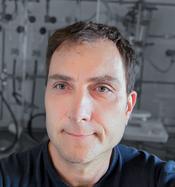
Ron C AnafiView profile
Associate Professor
Ron C Anafi serves as Associate Professor of Medicine (Sleep Medicine) at the Hospital of the University of Pennsylvania and holds key affiliations as Faculty Scholar at the Penn Institute for Bioinformatics, Co-Investigator at the Center for Subcellular Genomics, and member of both the Chronobiology and Sleep Institute and ITMAT. His work bridges computational biology with clinical sleep medicine within the Perelman School of Medicine. His educational trajectory includes a B.S.E. in Biomedical Engineering and Philosophy from Tulane University (1995), followed by a Ph.D. in Applied Mechanics (2002) and M.D. (2004) from the University of Minnesota. This dual training underpins his unique approach to circadian research. Dr. Anafi's laboratory pioneers computational methods to decode sleep and circadian influences on human physiology, focusing on neurodegeneration and cancer. By applying machine learning and systems biology to large-scale omics data, his team reconstructs molecular rhythms from cross-sectional human tissue databases—overcoming the critical barrier of limited longitudinal sampling in patients. His research demonstrates how circadian disruptions in ribosomal function link to Alzheimer's pathology and how tumor clock strength predicts breast cancer outcomes. Analysis of his 15 most recent publications (2022-2025) reveals intensifying focus on cell-type-specific circadian disruptions in neurodegenerative diseases, with significant expansion into cancer chronobiology and contactless sleep monitoring technologies. His methodological innovations like CYCLOPS enable rhythmic signal extraction across diverse tissues—from brain to skin—while increasingly integrating multi-omics layers to identify therapeutic targets. As mentor in the Genomics and Computational Biology and Neuroscience graduate groups, he guides students through rotation projects at his Translational Research Laboratories facility (Suite 2100, 125 South 31st Street). His research is supported by NIH grants investigating circadian mechanisms in Alzheimer's disease and cancer progression, with recent work exploring sex-specific metabolic impacts of circadian genes and non-invasive sleep monitoring.