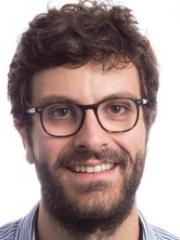
Zahra Gharineiat is an Associate Professor at the University of Southern Queensland , affiliated with the School of Surveying and Built Environment . She has over 8 years of tertiary teaching experience and 11 years of administrative responsibilities. Bachelor of Surveying (BSurv), University of Tabriz Master of Engineering Management (MEngMgt), University of Melbourne PhD, University of Newcastle Research Interests : Zahra specializes in Geomatic Engineering and Machine Learning , with a focus on applications like Unmanned Aerial Vehicles (UAVs) , LiDAR , Digital Twins , and Remote Sensing . Her work spans Earth Science Observations , Satellite altimetry , and Geodetic data capturing , integrating Computational Modelling and Geoinformatics for innovative solutions. Professional Affiliations : She is a member of the Surveying and Spatial Sciences Institute (SSSI) and the International Union of Geodesy and Geophysics (IUGG) . Her research affiliations include the Centre for Future Materials (CFM) , Institute for Advanced Engineering and Space Sciences (IAESS) , and Centre for Astrophysics (CA) .
Jon McCormack is a Professor jointly appointed in Monash University's Faculty of Art, Design & Architecture (MADA) and Faculty of Information Technology. He founded and directs SensiLab, a research facility focusing on computational creativity, human-machine interfaces, and generative systems. His work spans electronic media art, evolutionary music, and artificial life. McCormack holds a PhD in Computer Science from Monash University, along with degrees in Computer Science, Applied Mathematics, and Film/Television. Research interests include computational creativity, tangible interfaces, and cybernetic systems. Notable projects include 'Explainable Artificial Creativity' (ARC-funded) and 'Building 4.0 CRC,' addressing architectural innovation through AI. He has been recognized with awards for collaborative projects like the Blundstone Intelligent Footwear for Healthcare. McCormack's recent articles explore AI-driven art, generative systems, and interdisciplinary design. His work bridges artistic practice with technical innovation, emphasizing ethical and creative dimensions of human-AI collaboration. SensiLab serves as a hub for practice-based research in digital media and interactive systems. Education: PhD in Computer Science, Monash University (2004) Bachelor of Science (Honours), Computer Science/Applied Mathematics, Monash University (1987) Graduate Diploma in Film/TV, Swinburne University (1986) Bachelor of Science, Computer Science/Applied Mathematics, Monash University (1985) Key Projects: Lead investigator on 'Explainable Artificial Creativity' (2022–2026) Co-investigator in 'Building 4.0 CRC' (2020–2027), exploring AI-driven architectural design Awards: 2022 Designers Australia Award for Blundstone Footwear 2020 'On the Machine Condition' Prize McCormack's lab, SensiLab, fosters collaborations across disciplines, producing exhibitions, software, and theoretical frameworks for computational creativity. He actively supervises PhD students in practice-based research, emphasizing the intersection of art and technology.
Dr. Maxime Cordeil is a Senior Lecturer in Human Centred Computing at the School of Electrical Engineering and Computer Science, The University of Queensland. His research focuses on Virtual and Augmented Reality technologies for data interaction, interactive visualization systems, and AR interfaces for industry applications. He has authored over 60 publications in top-tier venues such as ACM CHI and IEEE VR, and was nominated as Australia's Field Leader in Computer Graphics in 2021 and 2022. Research Interests: Data visualization, immersive analytics, medical imaging, collaborative systems, and human-computer interaction. Current Projects: Includes embedded visualizations for sports performance, interactive machine learning in 3D environments, and mixed-reality applications in forensic science. PhD Supervision: Actively guiding students in topics like immersive gesture exploration, AR for digital health, and collaborative VR systems. His work bridges theory and practice, with tools like IATK (Immersive Analytics Toolkit) and the MADE-Axes hardware system. He collaborates with industry partners like Raytracer and CSIRO, focusing on applications in space exploration, underwater training, and remote operations. Awards: Multiple best paper recognitions at ISS and CHI, plus industry-driven research grants. Labs: Leads the Immersive Analytics research group at UQ, specializing in embodied interaction and spatial computing.
Professor Jinman Kim is a Professor in the School of Computer Science at the University of Sydney and Director of the Biomedical Data Analysis and Visualisation (BDAV) Lab. He also serves as Research Director of the Telehealth and Technology Centre at Nepean Hospital. His research focuses on machine learning applications in biomedical image analysis, visualization, and multi-modal data processing. Kim holds a PhD in Computer Science from the University of Sydney (2006) and has held roles including Senior Lecturer (2013), Associate Professor (2016), and Professor (2022). He is an Area Editor for Computer Methods and Programs in Biomedicine and actively contributes to AI-driven healthcare initiatives. His academic journey includes a Marie Curie Fellowship at the University of Geneva (2010) and leadership roles in projects like the ARC Training Centre in Innovative Biomedical Engineering. He co-leads the Digital Health Imaging initiative under the Faculty of Engineering’s Digital Science Initiative. Kim has developed teaching programs such as the Master of Digital Health and Data Science, co-taught with the Faculty of Medicine and Health. Research interests span AI in medical imaging, telehealth systems, and interdisciplinary biomedical engineering. His work includes advancements in PET/CT fusion, tumor segmentation, and medical visual analytics. Kim’s lab explores applications like AI in dental education, cutaneous lymphoma detection, and fair AI models for healthcare. Notable collaborations include the Telehealth Remote Monitoring System for chronic patients and contributions to datasets like the HRDC Challenge for hypertension classification. His labs prioritize translating AI innovations into clinical tools for improved healthcare accessibility and precision.
Professor Massimiliano Tani Bertuol is a distinguished academic specializing in economics at UNSW Canberra's School of Business, where he has served as Professor since 2015. His professional affiliations extend beyond UNSW as he is an Associate Investigator/Member at CEPAR; Ageing Futures; uDASH; AI Institute; and Cyber security (IFCYBER). Additionally, he maintains international connections as a Research Fellow at the Institute for the Future of Labor (IZA) in Germany since 2005, an Associate Member at Macquarie University's Centre for Workforce Futures since 2018, and a Research Fellow at the Global Labor Organization (GLO) in Maastricht since 2016. His educational background reflects a strong foundation in economics and business, having earned a PhD in Economics from the Australian National University (2003), a Master of Science in Economics from the London School of Economics (1992), and a Bachelor's degree in Business/Economics from Bocconi University in Milan, Italy (1989). His academic journey has positioned him as a leading researcher in human capital economics with international recognition. Professor Tani Bertuol's research centers on human capital development and its economic implications. His work examines how human capital can be fostered, efficiently transferred internationally through migration, and how it affects productivity, innovation, and economic growth at both firm and national levels. His research spans multiple regions including Australia, Europe, the US, Africa, and China, with particular focus on migration economics, labor market outcomes, and the economic impacts of education and skills. His current research agenda includes non-pecuniary incentives, behavioral/financial decisions in China, occupational licensing, language skills and economic assimilation, AI-human interactions in health contexts, and labor mobility and productivity. Analysis of his recent publications reveals significant interdisciplinary trends bridging economics with public health, environmental science, and technology. His work connects migration dynamics with economic outcomes, examines household financial behaviors through gender lenses, and investigates the complex relationships between environmental factors like air pollution and economic activities including education investment and entrepreneurship. More recent work explores AI applications in health and the economic implications of pandemic responses, demonstrating his ability to address contemporary challenges through rigorous economic analysis. 2023: UNSW ARC Postgraduate Council (Arc PGC) award for excellence in research supervision 2011: Vice-Chancellor Award for Teaching Excellence 2011: Faculty Award for Teaching Excellence for teaching economics Professor Tani Bertuol has successfully supervised 4 PhD students to completion, with 1 submitted dissertation and 5 currently under supervision. His active research program is supported by significant grant funding including an ARC Linkage Project (2023-27) on regional Australia's skills shortages and high-skill refugees' employment ($354,811), an ARC Discovery Project (2019-23) on migrant aging and wellbeing ($478,000), and a NUW Alliance grant (2021-23) on hearing screening and academic outcomes ($73,367). He serves as Associate Editor for Social Indicators Research and Higher Education Research & Development, contributing to scholarly discourse in his fields of expertise. His teaching portfolio includes courses in data analytics, finance, and professional executive education focused on cost-benefit analysis and data communication. He teaches ZBUS2333 Data Analytics and Visualisation, ZBUS8105 Finance and Investment Appraisal, and ZBUS8149 Introduction to Finance, demonstrating his commitment to developing the next generation of economics professionals with both theoretical knowledge and practical skills.
Dr. Michael (Miek) Dunbar is a Lecturer in Communication Design at RMIT University's School of Design , specializing in interaction and service design for regenerative futures. He co-leads the Greater Melbourne City Portrait initiative with Regen Melbourne, focusing on creating safe social and ecological urban frameworks. His work challenges anthropocentric data practices while developing digital public tools for urban decision-making. Key research areas include: Regenerative Design, More-than-human Data Sets, Collaborative Design Teams Teaching: Master of Communication Design program, Service Design, Work Integrated Learning His publications address urban data infrastructures, collaborative design methods, and regenerative practices. Projects like Australia's first Housing Monitor demonstrate his focus on civic data systems and urban sustainability. Current research explores: Relational ontologies in data visualization Multi-species sensing apparatuses Expanded participatory data governance
Bernhard Jenny is an Associate Professor at Monash University's Faculty of Information Technology, specializing in immersive visualization and geospatial data. He holds a PhD in Cartography from ETH Zurich and has held previous roles at Oregon State University and RMIT University. His research focuses on virtual reality (VR), augmented reality (AR), and cartographic innovations for geospatial data representation. Education: Doctor of Sciences in Cartography, ETH Zurich (2010) Postgraduate Certificate in Computer Science, ETH Zurich (2005) Master of Science in Surveying, EPFL (2000) Research Interests: Combines cartography, computer graphics, and human-computer interaction to explore VR/AR applications for geospatial data. Current work includes immersive analytics, terrain visualization, adaptive map projections, and storytelling with geospatial data. Recent Articles: Focus on ambient occlusion for terrain shading, grammars for immersive visualization transitions, and AR/VR interfaces for spatial data. Awards: Henry Johns Award (2007, 2011, 2012) ETH Medal (2010) Best Paper Honorable Mentions (ACM CHI, DIS) Grants & Projects: Leads initiatives like the 'Immersive Analytics' extension and 'National Geographic Relief Shading' project. Collaborates on neural networks for cartographic relief shading and sustainable development goals (SDGs). Labs & Teams: Heads the Embodied Visualisation Lab at Monash, focusing on immersive analytics and geovisualization tools.
Professor Christopher Fluke is a Professor at Swinburne University of Technology, holding a position within the Centre for Astrophysics and Supercomputing and serving as Director of the Advanced Visualisation Laboratory (AVL). His research focuses on advanced visualization technologies, human-AI teaming, and data-driven decision-making in space systems, public health, and defense contexts. Prof Fluke leads interdisciplinary collaborations with entities such as CGI Space, Defence and Intelligence Australia, and Propel Health AI. His work aligns with UN Sustainable Development Goals including Climate Action, Good Health, and Industry Innovation. Grants & Projects: Recent grants include leadership in SmartSat CRC projects on space system data fusion (2020–2023), and collaborations on carbon accounting using satellite data and digital health platforms. He also oversees the AVL, a key facility for visualizing complex scientific data. Awards: He has received the Vice Chancellor's Award for Excellence in Innovation and the David Allen Prize for contributions to astronomy education. His expertise extends to teaching roles in space technology and science communication. Labs & Teams: Directs the AVL, a国家级研究平台, and contributes to Swinburne's SmartSat initiatives. His research bridges astrophysics, AI, and real-world applications in health and defense sectors.
Jon Hronsky is an **Adjunct Professor** at the **School of Earth and Oceans**, The University of Western Australia. He is an active industry geoscientist, providing high-end consulting through his company **Western Mining Services** and co-teaching a globally successful course on Senior Exploration Management. He holds director roles in several ASX-listed companies and is a partner in **Ibaera Capital**, a mining-focused private equity fund. His research focuses on mineral systems thinking, exploration targeting, and integrating dynamic geological processes across scales. **Education**: PhD in Geology (Physico-chemical Controls on Ore-shoot Formation). **Research Interests**: Application of mineral systems theory to economic geology, process controls on ore deposition, and advanced mineral exploration technologies. His work emphasizes practical industry applications, with outputs feeding into consulting and vice versa. **Awards**: Awarded the **Order of Australia Medal (2019)** for services to the Australian mining industry, bridging academia and industry. **Grants & Projects**: Contributed to the **Integrated Visualisation of Large Volumes of GSWA Data: Groundwork for the Integrated Exploration Platform** (2013), focusing on geospatial data integration for mineral exploration.
Dr. Sicily Fung Fung Ting is a Lecturer at the School of Information Technology (SoIT), Monash University. She earned her Ph.D. in Engineering (2020) from Multimedia University, specializing in breast cancer classification and visualization using deep neural networks. Her research focuses on deep learning applications in medical image analysis, expert systems, and biomedical engineering. Notably, her work has been recognized with the 2020 WSIS Prize (Champion) and the 2023 FIT Dean's Education Excellence Award. Education: Ph.D., Engineering (2020), Multimedia University MEng.Sc., Visualisation for Early Brain Infarct Detection (2017), Multimedia University BEng (Hons), Electronics & Robotics (2014), Multimedia University Research Interests: Deep Learning for Medical Imaging Computer-Aided Detection (CAD) Telehealth Systems Biomedical Signal Processing Key Projects: FRGS 2022: RewardQNet Framework for Intracranial Aneurysm Segmentation GEMS 2025: AI-Driven Neuroimaging Tool for Aneurysm Detection Her publications span journals like Expert Systems with Applications and Computerized Medical Imaging and Graphics , with impactful contributions to breast cancer classification and brain lesion segmentation. She actively engages in academic outreach, including public lectures and industry collaborations.
Matthew Butler is an Associate Professor in the Department of Human-Centred Computing at Monash University's Faculty of Information Technology. His research focuses on Inclusive Technologies , particularly improving access to visual information for people who are blind or have low vision (BLV) through innovations like 3D printing, conversational agents, and multisensory interfaces. He has over 20 years of academic experience and held leadership roles including Deputy Dean (Education) and Associate Dean (Learning and Teaching). Education: PhD in Computing Education (Monash University, 2010) Graduate Certificate of Higher Education (Monash University, 2006) Bachelor of Engineering (Electronic and Computer Engineering, Monash University, 1996) Research Interests: Matthew’s work emphasizes participatory design with the BLV community, addressing challenges in data exploration, orientation/mobility, arts/culture access, and education . Key projects include accessible data visualization systems, inclusive museum experiences, and tactile navigation tools. His contributions align with UN Sustainable Development Goals related to education and disability inclusion. Grants & Projects: Accessible Data Exploration and Analysis for Blind People (Australian Research Council, 2023–2027) Inclusive Gallery Experiences: Bendigo Art Gallery Project (Helen Macpherson Smith Trust, 2019–2022) Co-leads the Monash Assistive Technology and Society Centre’s Education Pillar Awards: Senior Fellow of the Higher Education Academy Labs/Teams: Active contributor to Monash’s Assistive Technology and Society research initiatives, focusing on multisensory design for disability inclusion.
Thomas Chandler is an Associate Professor in the Department of Human Centred Computing at Monash University's Faculty of Information Technology. He specializes in 3D modelling, virtual environments, and digital heritage, with notable projects like the Visualising Angkor and Monash Country Lines Archive collaborations. His work bridges research and teaching, developing immersive curricula for humanities students. Education: PhD in IT (Monash, 2011), Graduate Certificate in Urban & Environmental Management (RMIT, 2013), and a BA(Hons) in Fine Arts & Archaeology (Melbourne, 1995). Research focuses on digital archaeology, virtual reality applications, and interdisciplinary projects in ecology and zoology. Key interests include 3D reconstruction, historical visualization, and interactive narratives. Recent articles explore ecosystem modelling in VR, archaeological visualization tools, and dragon lizard signalling simulations. Awards include the FIT Teaching Excellence Award (2020) and the Roy Rosenzweig Prize (2018). Leadership roles include Deputy Head of Department (2021–2022) and Director of Education for Human-Centred Computing. Active in over 18 research projects, including the ARC Centre for Indigenous and Environmental Histories. Collaborates with CSIRO, La Trobe University, and international partners.
Associate Professor Dirk H.R. Spennemann is a leading cultural-heritage scholar at Charles Sturt University , Australia, holding an appointment within the School of Agricultural, Environmental and Veterinary Sciences . He lectures and supervises in Cultural Heritage Management and Historic Ecology at the Albury-Wodonga campus. Education: Doctor of Philosophy (Prehistory), Australian National University, 1990 Master of Arts (Prehistory), Johann Wolfgang Goethe-Universität Frankfurt, 1982 Research Interests: Dirk’s work straddles two major domains. First, as a foremost authority on Micronesian history and heritage , he has conducted extensive fieldwork across the Indo-Pacific, producing over 400 peer-reviewed outputs. Second, he spearheads the emerging field of heritage futures , applying strategic foresight to anticipate how contemporary and emergent heritages—ranging from modernist architecture to space exploration and generative AI—will be valued and managed by future societies. Complementary strands include digital heritage, technological and space heritage, heritage policy, rural vernacular architecture, and the interplay between heritage and community mental health. His recent publications reveal a methodological expansion into sensory ethnography of tourism sites, citizen-science approaches to ecological monitoring, and digital-forensic techniques for born-digital heritage, reflecting a commitment to innovative, cross-disciplinary inquiry. Awards & Recognition: Partnership Stewardship Award for Cultural Resources, US National Park Service (2001) Governor’s Humanities Award for Excellence in Research and Publication, CNMI (2004) CSU Vice-Chancellor’s Award for Teaching Excellence (1995) CSU Vice-Chancellor’s Award for Research Excellence (1996) Supervision & Grants: Dirk is a registered principal supervisor for higher-degree research candidates in cultural heritage and environmental history. While specific grant amounts are not disclosed, his sustained productivity (334+ research outputs and 18 datasets since 2020) indicates robust ongoing funding and institutional support. Laboratories & Teams: He is affiliated with the Gulbali Research Institute and participates in cross-faculty research groups focusing on heritage futures and sustainable environments. Editorial roles include Associate Editor for Campus-wide Information Systems and Editorial Board member for Disaster Advances .
Dr. Agnes Haryanto is a Research Fellow in the Embodied Visualisation Group at Monash University's Faculty of IT. Her work focuses on improving healthcare quality through live-streaming clinical analytics and dashboards for accreditation. She holds a PhD from Monash University (2015) in Spatial and Graph Databases. Education: Doctor of Philosophy, Monash University Research interests span Big Data Management, Geospatial Databases, and Health Informatics. Her current projects include a digital health intervention for Emergency Department clinicians (2023–2026), funded by Australia's Department of Health and Aged Care. She has contributed to advancing spatial query optimization and clinical data warehouse systems. Collaborations involve interdisciplinary teams addressing SDGs like quality education and health equity. Teaching commitments include units like FIT3003 (Business Intelligence) and FIT5137 (Advanced Database Technology). Key projects include developing real-time clinical analytics systems to bridge gaps in healthcare data utilization. Her work aligns with UN SDG 3 (Good Health) and SDG 4 (Quality Education).
Professor Kate Seear is a leading Australian legal scholar at Deakin Law School, holding an Australian Research Council Future Fellowship. A practising solicitor with expertise in family and sexual violence law, she serves as Deputy Chair of Victoria’s Inquiry into Women’s Pain and co-editor of Contemporary Drug Problems . Her multidisciplinary work spans law, sociology, feminist theory, STS and posthumanism, focusing on drug policy, health, gender, stigma and multispecies justice. Education: PhD, Monash University LLB (Hons), Monash University BA (Hons), Monash University Admitted as Barrister & Solicitor, Supreme Court of Victoria & High Court of Australia (2003–present) Research Interests: Seear’s research interrogates how law governs alcohol and other drugs, health, gender and the body. She examines harm-reduction legal frameworks, drug-related stigma, overdose, hepatitis C, family violence, feminist lawmaking, legal ethics and emerging “post-human rights” approaches to drug policy. Her theoretical toolkit includes Science & Technology Studies, feminist, posthuman and new materialist thought. Publication Trends: Recent articles (2024-25) cluster around three themes: (1) gendered and posthuman critiques of drug policy (Colombian peace process, parliamentary scrutiny, “more-than-human rights”); (2) stigma and healthcare structures (EHR systems, space-time stigma, hepatitis-C complaint mechanisms); and (3) legal ontologies of drug use (narco-necropolitics, “dope-sick ontology”, rights assemblages). Outputs traverse law, sociology, health policy, criminology and feminist theory journals. Scientific Awards & Recognition: 2020 UK Socio-Legal Studies Association Theory & History Book Prize Monash Dean’s Award for Research Impact (2016, 2018, 2019) Monash Vice-Chancellor’s Research Impact Award (2019) Monash Faculty of Law Early Career Researcher of the Year (2015) Grants & Funding: Seear has secured over AUD 7.5 million in competitive funding. Highlights include a 2026-31 ARC Mid-Career Industry Fellowship (AUD 1.18 M) on a “Reform Collaboratory” for drug harms; an ARC Future Fellowship (2021-24, AUD 1.03 M) developing a world-first “post-human rights” drug-policy framework; and ARC Discovery projects on hepatitis-C discrimination and performance-enhancing drug injecting. Supervision & Teaching: She welcomes HDR candidates in socio-legal studies, drug law & gender, stigma, feminist legal theory, legal ethics and multispecies justice. She has supervised nine doctoral/masters projects to completion and currently co-supervises studies on GHB use in pregnancy and young women’s prescription stimulant use. She teaches units MLL427 and MLP720 at Deakin.