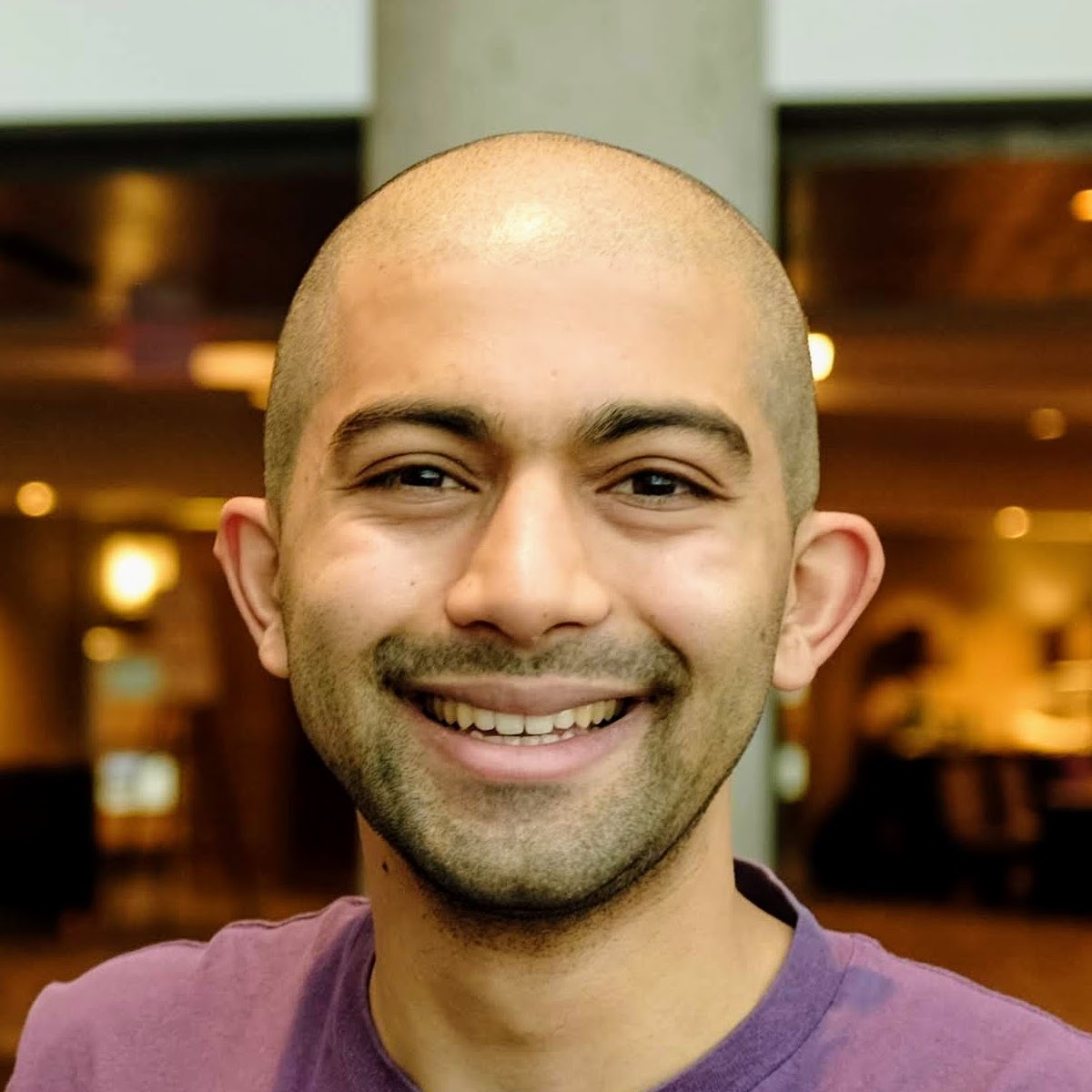
Antonio Carta is an Assistant Professor in the Department of Computer Science at the University of Pisa. His primary research focuses on Continual Learning (CL) with deep neural networks, particularly addressing challenges like catastrophic forgetting and knowledge consolidation in online settings. He leads the Computational Intelligence and Machine Learning (CIML) group and contributes to the Pervasive AI Lab (PAILab) . As the lead maintainer of the Avalanche library, he develops end-to-end tools for deep continual learning. His work spans applications in computer vision, NLP, and time series analysis. Research emphasizes distributed CL, efficient knowledge transfer, and replay-free methods. Teaching includes courses on Continual Learning, Collective Machine Intelligence, and Intelligent Systems at the graduate level. Publications highlight adaptive normalization, temporal ensembles, and domain-based Bayesian approaches in CL.
Panos K. Chrysanthis is a Professor of Computer Science at the University of Pittsburgh and an adjunct Professor at Carnegie-Mellon University and the University of Cyprus. He holds a BS in Physics with a Computer Science concentration from the University of Athens, Greece, and MS and PhD degrees in Computer and Information Sciences from the University of Massachusetts Amherst. He has been affiliated with the University of Pittsburgh since 1991, serving as Director of the Advanced Data Management Technologies (ADMT) Lab. His research focuses on database systems, mobile and pervasive data management, distributed computing, and real-time systems, with recent emphasis on data streams and energy-efficient data management for IoT and sensor networks. Chrysanthis has authored over 100 peer-reviewed publications, including a book on transaction processing and consistency in distributed databases. He has received the NSF CAREER Award (1995) and the University of Pittsburgh's Provost Award for Excellence in Mentoring (2015). He has held editorial roles at the VLDB Journal, IEEE TKDE, and DAPD, and has organized major conferences like ICDE and MDM. His work bridges theoretical database research with practical applications in urban informatics, healthcare, and sustainability. Chrysanthis has advised numerous students, contributed to grants focused on big data and healthcare analytics, and co-developed tools like the ADMT Lab's experimental platforms for urban mobility and congestion. He is a Senior Member of IEEE and an ACM Distinguished Scientist.
Ali C. Begen is a Professor in the Computer Science Department at Ozyegin University in Istanbul, Turkey. He is also the founder of Networked Media , a technology consultancy specializing in IP video solutions. Prior to academia, he was a Technical Lead at Cisco in San Jose, California, and has over 40 US patents in media transport protocols. Education: PhD in Electrical and Computer Engineering (Georgia Tech, 2006); BSc in Electrical Engineering (Bilkent University, 2001) Professional Recognition: Emmy® Award for Technology and Engineering (2022); ACM SIGMM Test of Time Paper Award (2022); SVTA Fellow (2023); IEEE Distinguished Lecturer (2016-2018) Research Focus: Begen’s work bridges low-latency live streaming , media-over-QUIC transport (MOQ) , and adaptive streaming protocols (DASH, WebRTC) . His recent research explores unifying real-time communication and content delivery under a single protocol to reduce complexity and improve scalability. Publications: Recent articles analyze bandwidth prediction , QUIC prioritization , and cross-protocol collaboration , reflecting a trend toward data-driven, network-aware media delivery systems. Honors: Emmy® Award (2022) ACM SIGMM Test of Time (2022) IEEE Distinguished Lecturer (2016, re-elected 2018) SVTA Fellow (2023) Royal Society Newton Fellowship (2019) Advising & Collaborations: Begen has served on thesis committees for over 15 PhD/MS students at institutions like Ozyegin University, University of Klagenfurt, and Koc University. He actively contributes to standards bodies (IEEE, ACM) and industry consortia like the Streaming Video Technology Alliance.
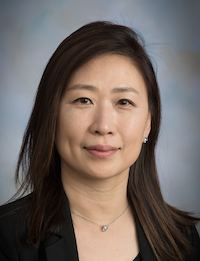
Xiaoqian (Tiffany) Zhang is an Assistant Professor in the Department of Computer Science at the University of Nebraska at Omaha (UNO) College of Information Science & Technology. Her work focuses on cloud computing, computer networking, and cybersecurity. Education: Ph.D. in Computer Science (University of Massachusetts Boston, 2023), MS in Mathematics (New York University, 2014), BA in Mathematics and Economics (Skidmore College, 2012) Her research explores cloud computing and networking with emphasis on machine learning and cybersecurity . Recent work addresses challenges in disaggregated storage systems , edge computing , and augmented reality . She received the DOE NNSA Joule Award (2022) for her scholarship. Her publications span topics including network congestion control , distributed file systems , and audio noise filtering . She teaches courses in cloud computing and computer networking .
Graham Cormode is a Professor in the Department of Computer Science at the University of Warwick. He has held research positions at Bell Laboratories and AT&T Labs-Research and leads major research projects in algorithms for big data. He is affiliated with the Centre for Discrete Mathematics and its Applications (DIMAP), the Warwick Institute for the Science of Cities (WISC), and the Alan Turing Institute (ATI). His research focuses on the data lifecycle , particularly data sketching , streaming algorithms , and privacy-preserving data analysis . He develops efficient summaries for massive datasets, enabling scalable analytics under constraints of space, time, and privacy. His work spans theoretical algorithm design and practical deployment, especially in differential privacy and distributed systems. His recent publications show a strong trend in private data release , quantile estimation , and interactive proofs for outsourced computation. He frequently publishes in top venues like PODS, VLDB, and STOC, demonstrating sustained impact in database theory and algorithms. Adams Prize, University of Cambridge (2017–2022) Royal Society Wolfson Research Merit Award - Small Summaries for Big Data (2014–2019) Cormode supervises PhD students and postdoctoral researchers, including Pavel Veselý and Michael Shekelyan. He has secured substantial funding from EPSRC, ERC, GCHQ, and industry partners like Microsoft and AT&T. His projects include Small Summaries for Big Data (ERC), FAIR (EPSRC), and ComPaTrIoTs . He is actively involved in organizing workshops and giving keynote talks, such as at PODC and DISC. He leads a research group focused on algorithms for big data , particularly within the ERC-funded “Small Summaries for Big Data” project. The team works on sketching, streaming, and privacy-preserving techniques, often in collaboration with DIMAP, WISC, and the Alan Turing Institute.
Dwi Rahayu is a Lecturer in the Department of Human Centred Computing at Monash University. She is a Chief Investigator in the 2025 project 'Integrating Equity, Diversity, and Inclusion (EDI) into ICT Education: A GenAI-Powered Approach to Curriculum Development' funded by the Australian Council of Deans of Information and Communications Technology (ACDICT). Her research spans smart energy systems, wireless sensor networks, data science, and educational technology. Her expertise contributes to UN Sustainable Development Goals, particularly in advancing equitable and inclusive education through technology. Research collaborations include work on multimodal analytics for team teaching, sentiment analysis of e-commerce reviews, and material science innovations in metallurgy. Key research trends include optimizing data routing in sensor networks, developing context-aware energy solutions, and leveraging large language models for topic and sentiment analysis. She has advised multiple projects involving energy management, healthcare practices, and corporate financial analysis. No scientific awards are explicitly mentioned in the provided texts. Her work also involves community-focused initiatives, such as improving web programming skills through Laravel frameworks and enhancing logical thinking via game development in adolescents. Projects often emphasize practical applications of technology in public administration and healthcare contexts.
Professor Michel MAROT is affiliated with Telecom SudParis, where he holds the position of Professor in the NeSS department. His research focuses on networking, wireless communication systems, performance evaluation, smart grids, and machine learning applications in telecommunications. MAROT has contributed to advancements in vehicular networks (VANETs/V2V), IoT architectures (LoRaWAN), and energy-efficient protocols for wireless sensor networks (WSNs). He has led studies on coalition formation in smart grids, reinforcement learning for policy optimization, and network resource management in 6G systems. Key research areas include optimizing network performance through cross-layer design, improving QoS in mobile and vehicular environments, and deploying intelligent reflecting surfaces (IRS) for 6G. His work frequently addresses challenges in mobility management, collision avoidance, and energy efficiency in distributed systems. MAROT has co-authored influential papers in journals like Neurocomputing, IEEE Transactions on Smart Grid, and IEEE Open Journal of the Communications Society. His research group (SAMOVAR/NeSS) develops practical solutions for real-world networks, including cold chain monitoring systems using sensor networks and DNS-based optimizations for SCHC protocols. MAROT’s recent work explores machine learning embedded in LPWAN sensors and mobility-aware resource allocation in LoRaWAN.
Sangmi Lee Pallickara is a Professor of Computer Science and the Clare Booth Luce Professor at Colorado State University. She is affiliated with the Department of Computer Science in the College of Natural Sciences. Her research is supported by major agencies including the National Science Foundation, Department of Homeland Security, ARPA-E, and NIFA, with ongoing projects in AI Institutes, Cyberinfrastructure, and CyberPhysical Systems. Research Interests: Her work focuses on Big Data systems for scientific applications, including scalable storage, retrieval, metadata management, predictive analytics, and interactive visualization. She applies these to domains such as agriculture, atmospheric science, environmental monitoring, and epidemiology. Her research integrates data science, distributed systems, and deep learning to enable scalable knowledge extraction from high-velocity, voluminous datasets. Publication Trends: Her recent publications emphasize scalable solutions for geospatial and spatiotemporal data, including efficient storage (e.g., ATLAS), visualization (e.g., Glance, Iris), and deep learning (e.g., Argus, CloudNet). There is a strong focus on real-world applications such as wildfire prediction, satellite data imputation, and precision agriculture, leveraging generative models, embeddings, and ensemble methods. Scientific Awards: NSF CAREER Award IEEE TCSC Award for Excellence in Scalable Computing Best Paper Award at IEEE/ACM UCC 2019 Best Paper Award at IEEE CLUSTER 2019 Best Paper Award at IEEE/ACM UCC 2014 Finalist for Best Paper Award at IEEE BDCloud 2018 Advising and Grants: She advises numerous Ph.D. and Master’s students, many of whom have gone on to careers in industry and academia. Her research is funded by the NSF (AI Institutes, CPS), DHS, ARPA-E, NIFA, and the Environmental Defense Fund. She also leads the SWiFT outreach program for K–12 STEM education. Labs and Teams: She leads a vibrant research group focused on Big Data systems, with students working on distributed storage, deep learning for satellite imagery, spatiotemporal analytics, and interactive visualization. The team collaborates with domain scientists in agriculture, climate, and public health.
Joseph M. Zurada is a Professor in the Department of Computer Information Systems at the University of Louisville's College of Business. He has held visiting scholar positions at Edith Cowan University (Perth, Australia) and the University of Alberta (Edmonton, Canada). His academic career spans decades, with recent publications focusing on computational intelligence and data analytics applications in business and manufacturing systems. Education: DSc (Technical Sciences, Informatics) from Polish Academy of Sciences; PhD (Computer Science Engineering) from University of Louisville; MS (Electrical Engineering) from Gdansk University of Technology Research interests center on soft computing methods , streaming data analytics , and decision support systems , particularly in business intelligence and manufacturing optimization. His technical work bridges theoretical neural systems with practical enterprise solutions. Recent publications (2019-2021) demonstrate consistent focus on data-driven decision making , with innovations in text classification , adverse event detection , and price prediction models using hybrid machine learning approaches. Scientific Awards Distinguished Research and Development Award (2017, 2011) Faculty Excellence Award (2017, 1998) President's Award (2017, 1981) Outstanding Scholarship Award (2017, 1996) As an educator, he teaches core courses in Data Mining , Machine Learning , and Infrastructure Technologies , contributing to graduate programs with his technical expertise.
Jason J. Jung is a Professor in the Department of Computer Engineering at Chung-Ang University, Seoul, Korea. His academic work focuses on knowledge engineering , social media analytics , and data mining within the Knowledge Engineering Laboratory. Research Interests : Computer Science, Social Knowledge, Data Modeling, Sentiment Analysis Projects : IoT-based cultural systems, real-time social event detection, transmedia storytelling models The 15 most recent publications (2014-2018) demonstrate expertise in social network analysis , multimodal data processing , and context-aware systems applied to urban services, cultural tourism, and digital storytelling. Key trends include real-time analytics , trust modeling , and collaborative frameworks for O2O services. Professional activities include editorial contributions, invited talks, and patent developments. Students at all levels (PhD/MSc/BSc) conduct research under his supervision at the Knowledge Engineering Laboratory. Personal interests include travel, film, painting, literature, and music.
Olivier Verscheure serves as the Executive Director of the Swiss Data Science Center (SDSC), a national R&D center organizationally hosted by both École Polytechnique Fédérale de Lausanne (EPFL) and ETH Zurich. He also holds multiple Adjunct Professor appointments at EPFL, specifically within the School of Computer and Communication Sciences (SIN and SSC) and the School of Engineering (SEL). His educational background includes: Ph.D. in Computer Science from École Polytechnique Fédérale de Lausanne (EPFL), June 1999 Verscheure's research focuses on the intersection of data science and real-world applications. His work centers on stream and big data mining, geospatial analysis, and large-scale data management. These technical capabilities are applied across diverse domains including personalized health and medicine, Intelligent Transportation Systems, telecommunications, smart building technologies, Smart Grid infrastructure, healthcare analytics, and waste water management systems. His approach emphasizes creating practical data science solutions that address complex challenges in these sectors while considering the constraints of real-world deployment. An analysis of his recent publication record reveals a strong focus on real-time data processing and analytics, particularly for transportation and urban systems. His work frequently addresses challenges in handling massive time series data, developing efficient architectures for low-latency analytics, and creating practical applications for smart city infrastructure. There's a clear progression from theoretical data science contributions to production-ready systems that can process billions of data points daily, demonstrating his ability to bridge research and practical implementation. His notable achievements include: Two IBM Outstanding Technical Achievement Awards Best Paper Award for his research Student Best Paper Award Verscheure has substantial experience in research leadership and mentoring. During his tenure at IBM, he managed the Exploratory Stream Analytics research group and led a technical and management team of approximately 40 people at the IBM Research lab in Ireland. He has served on PhD committees at major universities and published nearly 100 research papers that have garnered over 2,400 citations. His work has resulted in more than 40 US and international patents, demonstrating both academic and practical impact. As Executive Director of the Swiss Data Science Center, Verscheure oversees a distributed multi-disciplinary team working across domains including personalized health, transportation, earth and environmental science, social science and digital humanities, and economics. The center aims to federate data providers, data and computer scientists, and subject-matter experts around a cutting-edge analytics platform while addressing security and privacy issues. Under his leadership, the SDSC develops embedded data science support, offers end-to-end data science services, and fosters a community to share tools and knowledge in data science.
Cristina Emma Margherita Rottondi is an Associate Professor at the Department of Electronics and Telecommunications (DET) of Politecnico di Torino . She is a member of the Photonext Interdepartmental Center and contributes to research in telecommunications, computer music, and network optimization. Her work spans privacy-preserving protocols, smart grid communication, and low-latency audio streaming. Research Interests : Networked Music Performance, Optical Networks, Smart Grid Privacy, Machine Learning. Education : Not explicitly listed. Research Areas include: Smart Grid Privacy : Developing secure protocols for data aggregation and distributed energy optimization. Optical Network Design : Investigating machine learning-driven solutions and spatial division multiplexing. Networked Music Performance : Addressing latency and inclusivity in remote musical collaboration. Publication Trends highlight interdisciplinary work at the intersection of telecommunications , machine learning , and music technology . Recent articles focus on privacy-preserving smart grids , 5G-enabled musical IoT , and UDP packet trace datasets . Scientific Awards : 2020 Charles Kao Award Best Paper Awards at IEEE Online Greencomm (2014), DRCN (2017), and others N2Women Rising Star (2020) Advising includes PhD candidates working on networked music performance , accessible musical education , and medical wearable devices . She has contributed to national patents for inclusive audio hardware.
Christopher McCarthy is an Associate Professor in the Department of Computing Technologies within the School of Science, Computing and Emerging Technologies at Swinburne University of Technology. His research focuses on computer vision algorithms applied to robotics, intelligent transport systems, and assistive technologies, particularly for people with low vision. He serves as Stream Leader in Swinburne’s Innovative Planet Research Institute, leading the Intelligent Transport stream, and is a Chief Investigator in the Australian Cobotics Centre funded by the ARC. He has held research roles at CSIRO Data61, the Bionics Institute, and the University of Melbourne, contributing to bionic eye technology under the Bionic Vision Australia consortium. His research interests include: Computer Vision and AI for real-time systems Robot perception and navigation Assistive technologies for low-vision and blind users Intelligent transport systems and video analytics Human-machine interaction and cyber-human teams His recent publications reflect strong trends in deep learning, continual learning, and real-world deployment of vision systems in transport and healthcare. He has led numerous field trials and evaluations to assess system performance in real-world contexts. His work is highly interdisciplinary, combining computer science with engineering, medicine, and urban planning. Christopher McCarthy has received multiple awards, including: FSET Research Collaboration Award Excellence in Industry Engagement Special Commendation – VC Research Impact Finalist – National Disability Award in Technology Best Paper Award (IEEE) Excellence in Teaching (University of Melbourne) He has supervised over 20 HDR students in areas including robotics, AI, assistive tech, and transport analytics. He has led major research grants from ARC, Defence, SmartCrete CRC, iMOVE, and city councils. He also served as Academic Director for Work-Integrated Learning (2016–2023) and coordinated professional placements. His teaching includes core computer science units such as Computer Systems and Object-Oriented Programming. He maintains ongoing affiliations with: Bionics Institute (Honorary Member) Bionic Vision Australia (Affiliate) Data61 (Honorary Member) Royal Children's Hospital, Melbourne International Task Force for Vision Restoration Outcomes (Chair)
Soon Myoung Chung is a computer science researcher with significant contributions in the areas of cloud computing security, parallel data clustering, and GPU-accelerated algorithms. The publications indicate long-standing research activity spanning from 2002 to at least 2022, suggesting sustained academic engagement. While no formal institutional affiliation is provided in the scraped content, the depth and consistency of work imply a faculty or research-oriented academic role. The research interests center around cloud security , especially hypervisor vulnerabilities and isolation breaches, parallel and distributed clustering algorithms for large-scale data, and 3D shape analysis using orthogonal moments. These fields reflect a strong focus on algorithmic efficiency, security in virtualized environments, and pattern recognition. The most recent articles show a trend toward leveraging GPU acceleration for real-time data processing in crisis management and enhancing anomaly detection in time series data. Earlier works emphasize foundational methods in association rule mining, text clustering, and combinatorial fusion for feature selection. Collectively, the publications demonstrate expertise in both theoretical algorithm design and practical implementation in high-performance computing contexts. Although no scientific awards are mentioned in the provided texts, the body of work has accumulated over 1,800 citations, indicating influence in the field. There is no information available about students advised, grants received, or leadership roles. No labs or collaborative teams are referenced in the scraped material.
Laxman Dhulipala is an Assistant Professor in the Department of Computer Science at the University of Maryland, College Park, and a research scientist at Google Research in the Graph Mining team. He holds a Ph.D. from Carnegie Mellon University, advised by Guy Blelloch, and was a postdoctoral researcher at MIT with Julian Shun. Ph.D., Carnegie Mellon University Postdoctoral Research, MIT His research focuses on efficient parallel algorithms, particularly for graph processing and clustering. He explores theoretical and practical models of parallel computation aligned with modern hardware. His work spans parallel graph algorithms, computational geometry, and scalable systems for massive datasets. The recent publications demonstrate a strong trend in scalable and dynamic graph algorithms, with a focus on hierarchical clustering, connectivity, and benchmarking. Key themes include batch-dynamic updates, memory-efficient data structures, and practical parallel implementations for massive-scale problems. Many works appear in top venues such as SPAA, VLDB, NeurIPS, and SIGMOD. Best Paper Award at VLDB'25 Best Paper Award at SPAA'22 Best Paper Runner Up at VLDB'22 Distinguished Paper Award at PLDI'19 Best Paper Award at SPAA'18 Memorable Paper Award Finalist at NVMW'20 Honorable Mention, CMU SCS Dissertation Award Nominated for ACM Dissertation Award Dhulipala has advised and collaborated with numerous students and researchers, including Quinten De Man, Shangdi Yu, Jessica Shi, and others, contributing to influential projects such as Aspen, ParGeo, GBBS, and ParlayLib. He has received recognition for both theoretical and practical contributions to parallel computing. He teaches courses such as CMSC858N (Scalable Parallel Algorithms and Data Structures) and CMSC451 (Design and Analysis of Computer Algorithms). He is actively involved in building tools and frameworks for parallel algorithm development and evaluation, including benchmark suites and graph processing systems. His dual affiliation with academia and Google Research enables impactful, scalable research bridging theory and practice.