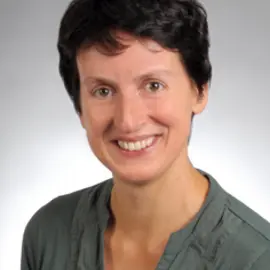
Beate Sick is a Professor at the Zurich University of Applied Sciences School of Engineering, specializing in Data Analysis and Statistics. Her work bridges machine learning, probabilistic modeling, and medical applications, particularly in stroke outcome prediction, uncertainty quantification, and statistical methods for healthcare.
Elena Gavagnin is a Senior Lecturer and Project Leader for Data Science at the ZHAW School of Management and Law's Institute of Business Information Technology. She holds a PhD in Computational Science from the University of Zurich, an MSc in Astrophysics from the University of Bologna, and a BSc in Physics from the same institution. Her work focuses on machine learning, predictive analytics, computational astrophysics, and AI applications in healthcare and technology. Research interests include data science foundations, multimodal AI systems, and radiation hydrodynamics. Notable projects include leading initiatives on AI-driven radiative transfer simulations for the Square Kilometre Array (SKAO), toxicity detection in video games, and webcam-based stroke rehabilitation assessment. Her work bridges astrophysics, healthcare, and information technology. Elena has authored/co-authored over 15 peer-reviewed articles, spanning topics from clinical movement analysis to NLP frameworks and computational astrophysics. Her collaborations include institutions like the University of Zurich and the University of Bologna. She has also contributed to educational initiatives, such as the CAS Higher and Professional Education at ZHAW. Her research emphasizes practical applications of data science, including clinical decision-making tools and ethical AI design. Projects like 'Tele-Assessment' and 'Digital Companion' highlight her focus on real-world healthcare solutions. Ongoing work includes generative deep learning for astrophysical simulations and stateful prompt orchestration in conversational systems.
Christoph Leuenberger is a Lecturer at the University of Fribourg, holding positions in the Department of Informatics and the Department of Physics, while also serving in the Dean's Office of the Faculty of Science and Medicine. His work bridges computational methods, population genetics, and ecological modeling. He specializes in statistical inference techniques, particularly Bayesian methods applied to genomic data and evolutionary processes. His research focuses on analyzing population trends, genetic diversity, and evolutionary dynamics across species. Key research interests include computational biology, population genetics, and the development of statistical tools for analyzing large-scale genomic datasets. He has contributed to studies on lactase persistence evolution, ancient DNA analysis, and predator population dynamics. His interdisciplinary approach integrates methods from computer science, mathematics, and ecology to address complex biological questions. Recent articles highlight his work in ecological monitoring, Bayesian inference for sex chromosome analysis, and evolutionary jump modeling in phylogenies. These studies underscore his expertise in bridging theoretical frameworks with practical data analysis in genetics and environmental science. No scientific awards or grants are explicitly mentioned in the provided information. He advises no students listed here but actively contributes to teaching and academic administration within the Faculty of Science and Medicine. Labs and teams associated with his work are not specified in the available data. His location is at PER 21 bu. C321, Bd de Pérolles 90, 1700 Fribourg, with contact details via email and ORCID.
Yves Flückiger is an Honorary Professor at the University of Geneva, where he earned his Ph.D. His research focuses on labor markets, unemployment policies, social protection, and the role of universities in resilient societies. He has extensively analyzed occupational segregation, informal employment, and the impact of globalization on labor dynamics. His work spans over three decades, with contributions to topics such as job search assistance efficacy, microfinance efficiency, and multidimensional poverty measurement. Key areas of expertise include public policy evaluation, socioeconomic disparities, and institutional strategies for higher education. Education: Ph.D., University of Geneva His research interests emphasize the interplay between economic structures and social outcomes. Recent studies highlight universities' evolving roles in addressing societal challenges and fostering resilience. Earlier work explored labor market segmentation, wage disparities, and the effects of European integration on Swiss employment. He has advised on policies related to decent work, informal economies, and educational reforms. Flückiger’s publications address both theoretical frameworks and applied analyses, often combining quantitative methods with case studies. His work on unemployment measurement and regional labor market disparities has influenced policy debates in Switzerland and beyond. He has collaborated on initiatives to improve efficiency in employment offices and microfinance institutions.
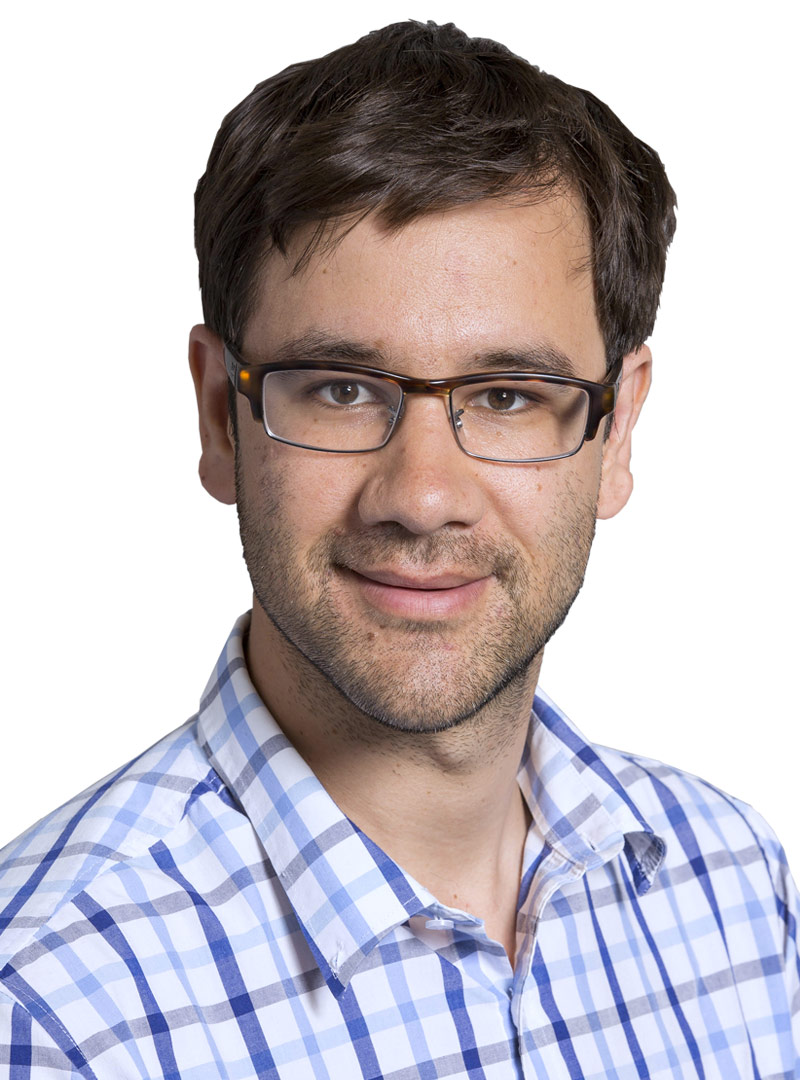
Christophe Dessimoz is a Professor at the University of Lausanne's Department of Ecology and Evolution, affiliated with the Swiss Institute of Bioinformatics (SIB). He holds a joint appointment with University College London (UCL), where part of his lab remains active. His academic journey includes a Master's in Biology (ETH Zurich, 2003) and a PhD in Computer Science (ETH Zurich, 2009). He has held roles at ETH Zurich, EMBL-EBI, and UCL before joining the Center for Integrative Genomics (CIG) as a Swiss National Science Foundation (SNSF) Professor in 2015. His research bridges computational methods and evolutionary biology, focusing on gene and genome evolution, orthology inference, and phylogenetic analysis. Key projects include the Quest for Orthologs consortium and the OMA database. He has developed tools like OMA Standalone, ALF, and Matreex, which aid in genomic analysis and visualization. His work has been recognized with awards such as the SIB Young Bioinformatician Award (2012), Google Faculty Award (2015), and EMBO Young Investigator (2016) status. His lab collaborates across disciplines, addressing questions like the conservation of membrane proteins and the evolutionary origins of eukaryotes. Ongoing projects explore AI ethics in life sciences and federated data querying for biomedical research. Publications highlight advancements in orthology benchmarking, phylogenetic tree inference, and applications of genomic data to medicine and evolutionary biology. His team includes PhD students, postdocs, and visiting researchers, fostering a collaborative environment for computational and experimental work.
Sergey Litvinov is a Researcher at ETH Zürich, affiliated with the Department of Structural Mechanics and Monitoring within the College of Civil, Environmental and Geomatic Engineering. His work focuses on computational and statistical models for biomedical and industrial applications, leveraging tools like C++, PyTorch, and cloud computing. He contributes to hierarchical Bayesian analysis on big data and probabilistic programming, emphasizing data-driven methodologies. Current projects include the DCoMEX initiative (Data-Driven Computational Mechanics at Exascale), aiming to advance large-scale computational frameworks for structural mechanics and monitoring. His research interests span computational mechanics, fluid dynamics, and machine learning applications, with a strong emphasis on hybrid numerical methods and high-performance computing for multiphase systems. He has no listed scientific awards or advisees. His contributions are centered on software development (e.g., Aphros and Mirheo ) for multiphase flow simulations and novel optimization techniques for inverse problems, particularly in biomedical and engineering contexts. Recent articles highlight his work on discrete loss optimization, reinforcement learning for flow control, and data-driven methods for tumor growth modeling and drug delivery systems. He is part of interdisciplinary teams addressing challenges in microfluidics, turbulence modeling, and biomedical applications, with a focus on scalable solutions for complex systems. His projects often involve collaboration with industrial and academic partners on computational models for real-world applications.
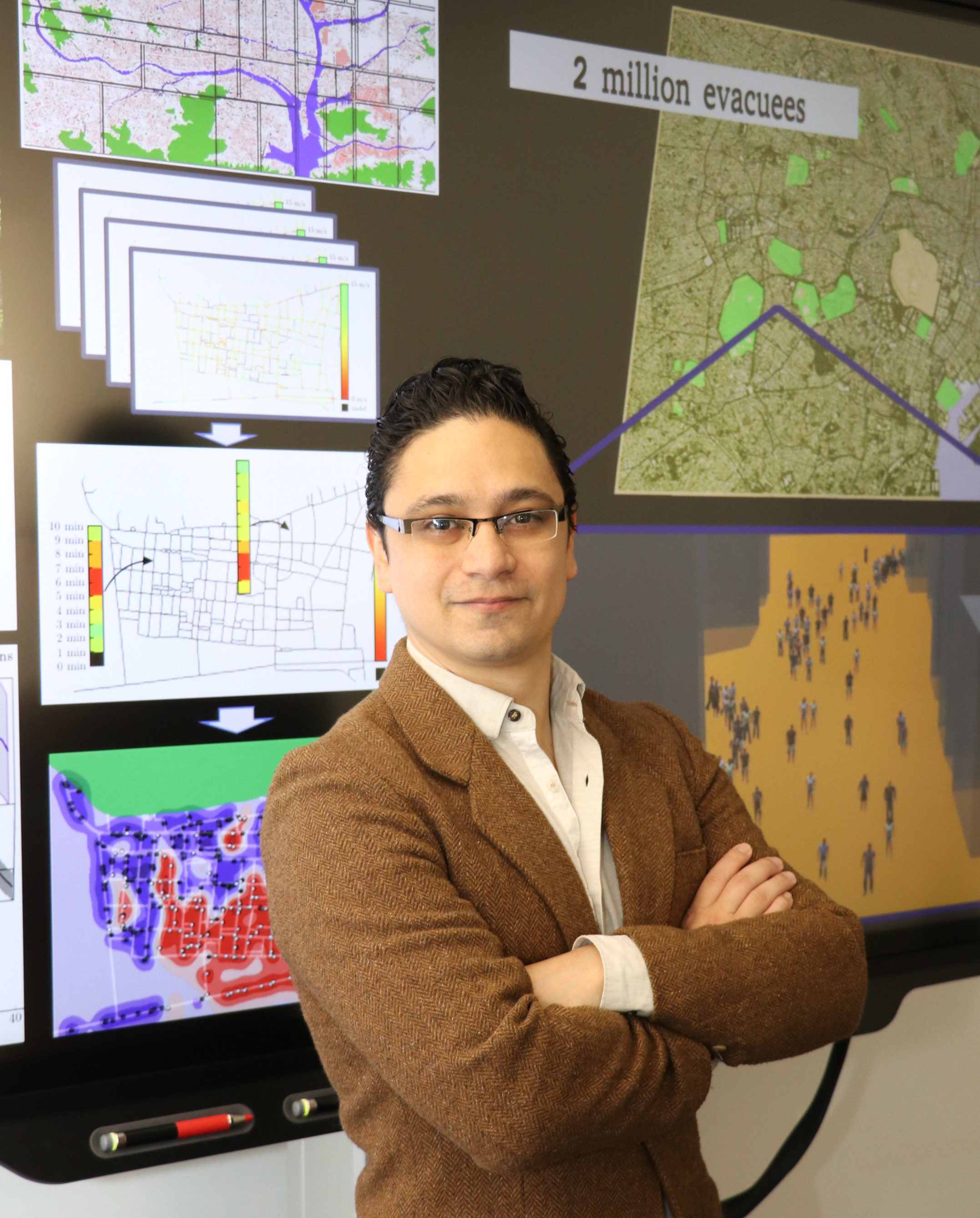
Leonel Aguilar Melgar is a Lecturer in the Department of Humanities, Social and Political Sciences at ETH Zürich, where he researches computational social science and human-computer interaction. His work develops AI/ML systems to model social phenomena, with applications in urban dynamics, environmental psychology, and digital health. Aguilar's research bridges data science and social systems through: Agent-based modeling of collective behavior Human-building interaction studies Digital support systems for public health Reproducible experimental frameworks He contributes to open-source projects including Easeml/AutoML for accessible machine learning and computational platforms for social simulation. Aguilar's publications demonstrate innovative approaches to studying wayfinding behaviors, evacuation dynamics, and parenting interventions in low-resource settings. Recent work advances digital twin technology and VR-based experimental methods. Honors include recognition as MIT Technology Review Innovator under 35 for Latin America (2020).
Prof. Bruno Sudret is a Full Professor of Risk, Safety, and Uncertainty Quantification at ETH Zurich's Department of Civil, Environmental and Geomatic Engineering. His research focuses on computational methods for uncertainty quantification, reliability analysis, and Bayesian approaches for model calibration. He has contributed to the development of the UQLab software framework and the UQWorld community platform. Before joining ETH Zurich in 2012, Sudret held roles at the University of Berkeley (postdoc), EDF R&D (researcher and group head), and Phimeca Engineering (Director of Research and Strategy). Education: Master's in Science from Ecole Polytechnique (1993), Master's and PhD in Civil Engineering from Ecole Nationale des Ponts et Chaussées (1996, 1999). His work emphasizes stochastic simulators, surrogate modeling, and reliability-based design optimization. He serves on editorial boards for journals like Reliability Engineering and Systems Safety and Structural Safety .
Michal Switalski is a Researcher affiliated with the Professorship for Landscape and Environmental Planning at ETH Zürich. He holds a PhD candidate status since 2018, focusing on integrating qualitative and quantitative methods in landscape planning. His work emphasizes the interplay between people and place, particularly in urban-rural gradients and peri-urban areas. Education: Master of Science in Spatial Planning and Infrastructure Systems (ETH Zürich, 2018) Master of Science in Architecture (ETH Zürich, 2012) Bachelor of Arts in Architecture (University of Sheffield, 2007) Research Interests: People-place relationships in landscape planning Rural-urban continuum dynamics Landscape aesthetics and preference modeling Land systems modeling with mixed-method approaches Key Projects: Leading the GLOBESCAPE research initiative Developing perception datasets for urban-rural gradients Exploring participatory methods like serious games for urban transformation Labs/Teams: Active within the Institute of Spatial and Landscape Development at ETH Zürich, contributing to interdisciplinary collaborations on sustainability and spatial policy.
Alessandro Favero is a Researcher and Doctoral Assistant at the École Polytechnique Fédérale de Lausanne (EPFL), affiliated with the Physics of Complex Systems Laboratory (PCSL) and the Signal Processing Laboratory 4 (LTS4). He is pursuing a Doctoral Program in Physics within the School of Basic Sciences (SB). His research focuses on the theoretical foundations of machine learning, particularly in diffusion models, neural network architectures, and computational complexity. Key research interests include the study of hierarchical data structures, compositional generalization in models, and the interplay between model architecture and learning dynamics. His work bridges machine learning and statistical physics, analyzing phenomena such as phase transitions in diffusion models and the behavior of infinitely-wide networks. Recent contributions explore topics like overparameterization effects, layer scaling techniques, and multimodal hallucination control. His publications emphasize understanding fundamental limitations and empirical phenomena in deep learning systems, with applications ranging from natural language processing to image analysis. While no awards or grants are explicitly listed, his active involvement in multiple EPFL labs highlights collaborative research efforts. He maintains an academic presence through his GitHub profile and the PCSL lab website.
Victor Boussange is a Postdoctoral Researcher at the Swiss Federal Institute for Forest, Snow and Landscape Research (WSL) and the Department of Environmental Systems Science (D-USYS) at ETH Zurich. His research focuses on integrating scientific machine learning with ecological and evolutionary modeling to understand complex systems dynamics. He holds a PhD in Environmental Sciences from ETH Zurich (2022) and an MSc in Energy and Environmental Sciences from INSA Lyon (2018). Primary affiliation: Dynamic Macroecology Group at WSL Secondary affiliation: D-USYS, ETH Zurich Research Interests: Development of hybrid mechanistic-machine learning frameworks to model ecosystem responses to disturbances, ecological connectivity analysis, and eco-evolutionary dynamics. His work emphasizes interpretable models and scalable computational methods. Publications highlight contributions to high-dimensional PDE solvers (HighDimPDE.jl), inverse modeling frameworks (PiecewiseInference.jl), and ecological connectivity prioritization (JAXScape). His work bridges theoretical ecology with computational tools for real-world applications like biodiversity conservation and climate change impact assessment.
Dr. Lukas Hörtnagl is a Researcher at ETH Zurich's Department of Environmental Systems Science (D-USYS), affiliated with the Professorship for Grassland Sciences. He holds a Ph.D. in Terrestrial Ecology and Limnology from the University of Innsbruck (2011), with postdoctoral research focused on biogenic volatile organic compound fluxes. Since 2018, he has served as a Data Scientist at ETH Zurich. His expertise centers on ecosystem-atmosphere gas exchanges, including CH4, N2O, CO2, and VOC fluxes. He contributes to major projects like ICOS-CH (Integrated Carbon Observation System Switzerland) and SwissFluxNet, leading long-term monitoring of carbon and water fluxes across ecosystems. His work integrates field measurements, remote sensing, and modeling to understand climate-ecosystem interactions. Key research themes include drought impacts on forest ecosystems, agricultural greenhouse gas mitigation, and methodological advancements in eddy covariance systems. He has published extensively on topics such as ecosystem respiration, carbon sequestration dynamics, and the physiological responses of plants to environmental stressors. Dr. Hörtnagl collaborates globally on initiatives like FLUXCOM-X and the FLUXNET network, emphasizing standardized data collection and cross-site comparisons. His research bridges applied and theoretical ecology, with implications for climate policy and sustainable land management.
Paul Scharnhorst is a researcher at École Polytechnique Fédérale de Lausanne (EPFL), focusing on energy systems, data-driven control, and building automation. His work bridges theoretical advancements in machine learning and practical applications in renewable energy integration and demand response. He has contributed to the development of uncertainty-aware modeling frameworks and open-source tools for benchmarking building controllers. Education: Completed a doctoral thesis in 2024 titled Quantifying the Unknown: Data-Driven Approaches and Applications in Energy Systems under supervision of Colin Neil Jones and Baptiste Schubnel at EPFL. Research emphasizes robust control methodologies, kernel-based learning, and energy flexibility coordination in decentralized systems. His tools, such as the Energym library, facilitate standardized testing of building control strategies using simulation models from EnergyPlus and Modelica. Key contributions include uncertainty quantification in battery models for buildings, deterministic error bounds in kernel regression, and learning-based predictive control with safety guarantees. Collaborations involve interdisciplinary teams addressing challenges in smart grid integration and building energy management.
Corsin Battaglia is an Adjunct Professor at ETH Zurich (Department of Information Technology and Electrical Engineering) and EPFL (School of Engineering, Institute of Materials), while directing the Materials for Energy Conversion laboratory at Empa. His research focuses on sustainable battery technologies including next-generation lithium-ion, sodium-ion, and post-lithium systems, as well as CO₂ electrochemical conversion to synthetic fuels. Education: Ph.D. in Physics from Université de Neuchâtel, followed by postdoctoral research at EPFL, UC Berkeley, and Lawrence Berkeley National Labs. Joined Empa in 2014. Research Interests: Advanced battery materials (electrolytes, electrodes) CO₂-to-fuel electrochemical processes Scalable battery manufacturing technologies Operando characterization techniques Publications: Over 200 peer-reviewed articles and 8 patents, focusing on electrolyte design, electrode fabrication, and electrochemical reaction mechanisms. Recent work emphasizes robotic automation in materials discovery and high-throughput experimentation. Leadership Roles: President of Swiss Battery Association (iBAT), member of Alistore-ERI, Swiss representative in Battery2030+, and founding member of Battery European Partnership Association. Advising: Current PhD students include Claudia Bissattini and Julia Lorenzetti; past advisees include Daniel Landmann and David Reber. Teaches courses on charge transport in energy systems at EPFL. Infrastructure: Empa lab specializes in advanced characterization tools like muon-induced X-ray emission (MIXE) and operando synchrotron X-ray scattering.
Nicolai Cramer is a Full Professor at École Polytechnique Fédérale de Lausanne (EPFL), leading the Laboratory of Asymmetric Catalysis and Synthesis (LCSA). He holds roles in multiple departments, including the School of Basic Sciences (SB) and the Institute of Chemical Sciences and Engineering (ISIC). His research focuses on metal-catalyzed enantioselective transformations and their application in synthesizing biologically active molecules. He is also the Manager of the Catalysis Hub - Swiss CAT+. Education: Studied chemistry at the University of Stuttgart (B.Sc., 2003; Ph.D., 2005). Postdoctoral research at Stanford University with Barry M. Trost and habilitation at ETH Zurich with Erick M. Carreira (2010). Joined EPFL in 2010 as Assistant Professor, promoted to Associate (2013) and Full Professor (2015). Teaching: Courses include Preparative Chemistry I, Structure and Reactivity, and Efficient Synthetic Routes Towards Bioactive Molecules. Supervised over 30 doctoral students. Labs/Teams: Leads the LCSA lab and the Swiss CAT+ initiative, advancing catalysis research and infrastructure.