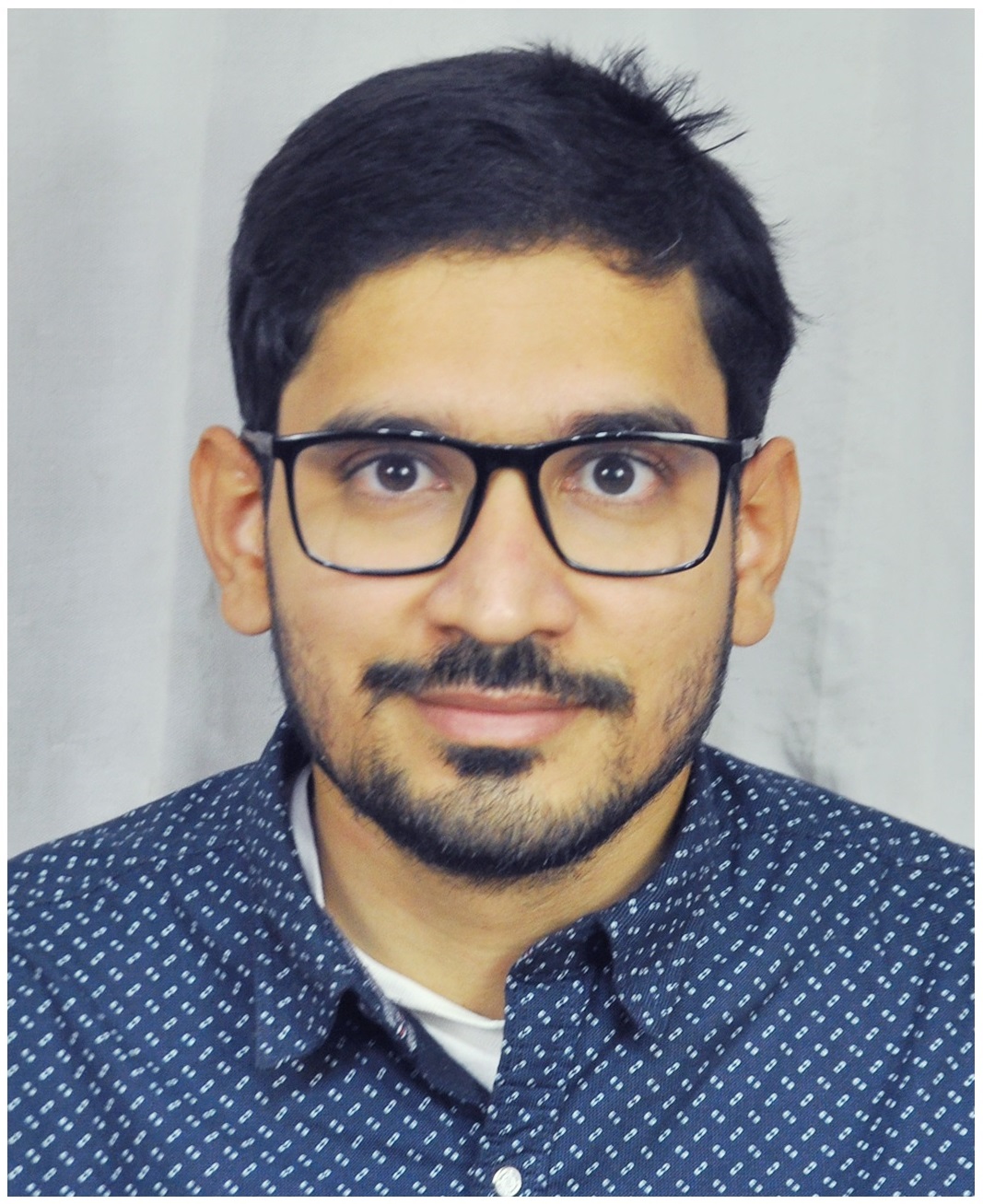
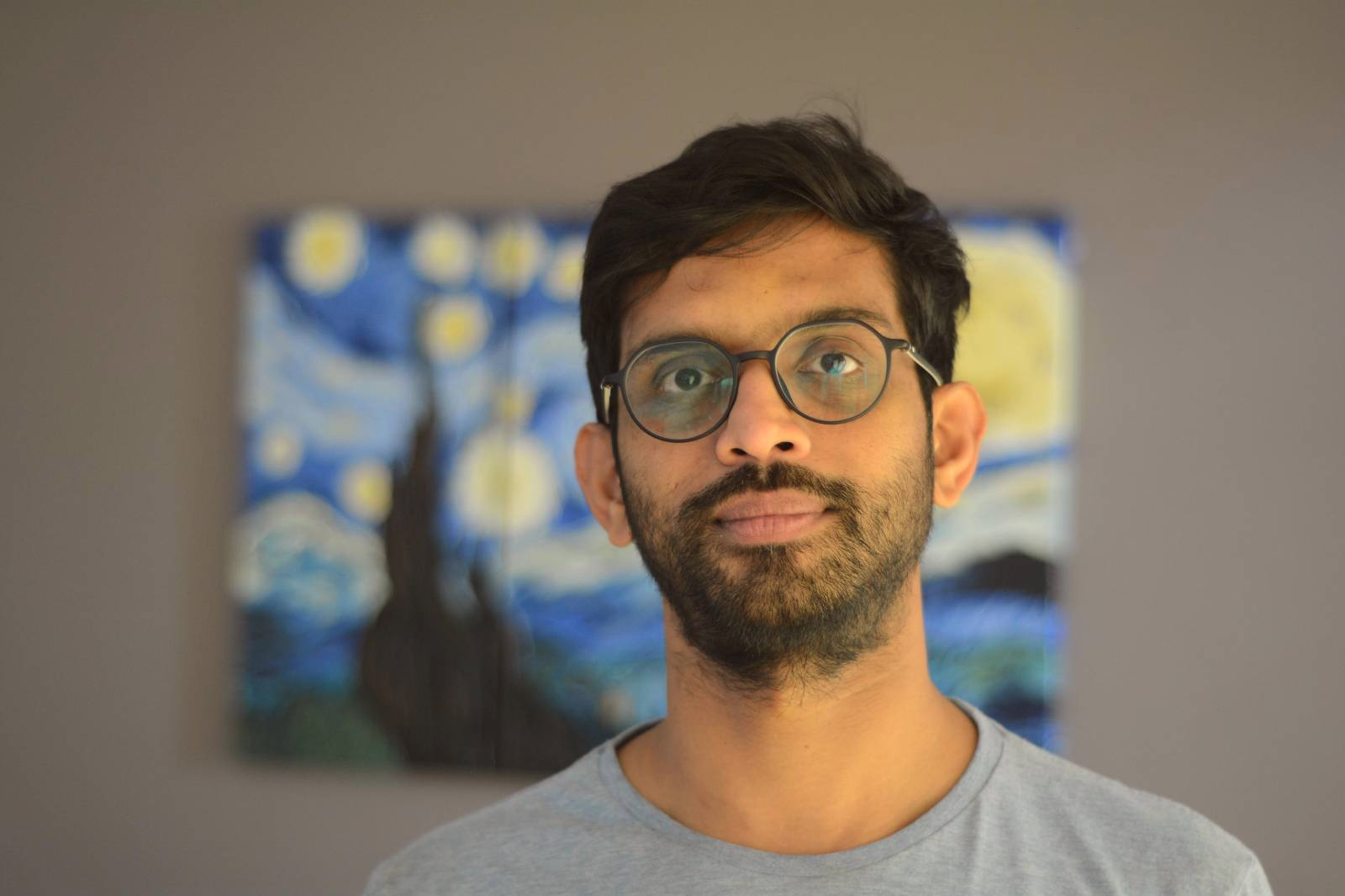
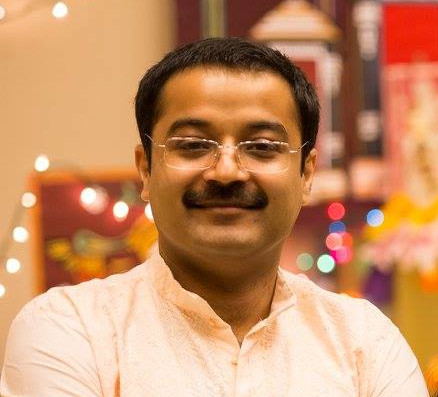
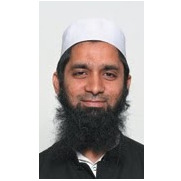
Sutanu Gayen is an Assistant Professor in the Department of Computer Science and Engineering at the Indian Institute of Technology Kanpur. His research focuses on theoretical aspects of machine learning, algorithms, and computational statistics. Designing algorithms for Bayesian networks and causality Complexity analysis of distribution learning Applications in high-dimensional statistical modeling His recent publications explore challenges in total variation distance computation, Gaussian tree models, and interventional distribution learning. Courses taught include advanced algorithms for machine learning and data structures. Research connects fundamental computational limits with practical statistical learning tasks.
Dr. Prerna Gautam serves as an Assistant Professor in the Department of Management Sciences at the Indian Institute of Technology Kanpur. Her academic career focuses on operations research and supply chain management, with particular expertise in inventory systems, sustainability, and waste management. She contributes significantly to both teaching and research within IIT Kanpur's School of Management framework. PhD in Operational Research, University of Delhi (2021) M.Phil. in Operational Research, University of Delhi (2015) M.Sc. from Kirorimal College, University of Delhi (2013) B.Sc. from Pandit Prithi Nath College, Chhatrapati Shahu Ji Maharaj University, Kanpur (2011) Dr. Gautam's research interests span Operational Research, Optimization, Sustainability, Waste Management, Service Operations Management, and Supply Chain Management. Her work demonstrates a strong commitment to developing sustainable production and inventory models that address environmental concerns while maintaining operational efficiency. She has made significant contributions to understanding the interplay between quality control, inventory management, and sustainability in complex supply chain systems. Her publication record reveals a consistent focus on sustainable operations research, with particular emphasis on inventory optimization for imperfect production systems, greening supply chains, and waste management strategies. The evolution of her research shows increasing sophistication in modeling approaches, incorporating factors like carbon emissions, price-sensitive demand, and preservation technologies. Her work bridges theoretical operations research with practical applications in sustainability-focused supply chain management. Dr. Gautam has been actively involved in professional organizations including the Operational Research Society of India (ORSI), Association of Inventory Academicians and Practitioners (AIAP), and Scientific Educational Research Society (SERS), contributing to the academic community through conference presentations and collaborative research. Prior to her current position, Dr. Gautam gained valuable teaching experience as Guest Faculty at the Faculty of Management Studies, University of Delhi, and as Visiting Faculty at Delhi School of Professional Studies and Research. She also served as a Project Associate at the India International Science Festival (IISF) 2020, demonstrating her commitment to science communication and outreach.
Raghavendra Achar is an Associate Professor at the School of Computer Engineering , affiliated with Manipal University in Manipal, Karnataka, India. He holds degrees in Computer Science and Engineering, including a PhD, and contributes extensively to research in technology-driven solutions. Education : BE (CSE), MTech (CSE), PhD (CSE) His research spans Cloud Computing , Machine Learning , and Medical Imaging , with a focus on optimizing cloud resources, developing fuzzy logic systems for medical diagnostics, and enhancing autonomous vehicle technologies. Recent works include: 2024: Cross-layer refinement network for autonomous vehicle localization 2023: Fuzzy logic-based OCT image analysis for diabetic macular edema 2020: Cloud provider selection mechanisms and VM placement strategies 2018: Energy-efficient cloud resource provisioning He collaborates across disciplines, particularly in Artificial Intelligence and Healthcare Technology , though no specific awards or grants are highlighted in the provided text.
Chethan Kamath is an Assistant Professor in the Department of Computer Science and Engineering at IIT Bombay, where he is a member of the Theory Group and Trust Lab. His primary research focus is on cryptography, particularly its foundations, with broader interests extending to theoretical computer science. His educational journey includes: PhD from IST Austria (2014-2020) under Krzysztof Pietrzak, with thesis titled "On the Average-Case Hardness of Total Search Problems" Master's in CS from IISc Bangalore (2010-2013) under Sanjit Chatterjee, with thesis titled "Constructing Provably Secure Identity-Based Signature Schemes" Bachelor's in CS from University of Kerala (2005-2009) at TKM College of Engineering, Kollam Dr. Kamath's research interests span the theoretical foundations of cryptography, with particular focus on secure computation, complexity theory, and cryptographic hardness assumptions. His work often bridges theoretical computer science with practical cryptographic applications, exploring the boundaries of what can be efficiently computed while maintaining security guarantees. His research frequently addresses fundamental questions about the relationship between cryptographic primitives and complexity classes, especially the PPAD and TFNP complexity classes. His recent publications demonstrate a consistent focus on foundational aspects of cryptography, with particular emphasis on secure computation (garbled circuits, Yao's protocol), proofs systems (proofs of work, proofs of exponentiation), and complexity-theoretic aspects of cryptographic primitives. A notable trend is his exploration of the connections between complexity classes like PPAD and cryptographic assumptions, as well as his work on verifiable delay functions and their underlying number-theoretic assumptions. His research often employs tools from algorithmic graph theory (treewidth, separators) to analyze cryptographic protocols. His notable scientific achievement includes: Azrieli Fellowship during his post-doc at Tel Aviv University Dr. Kamath actively mentors students and researchers, currently advising several PhD and MS students at IIT Bombay, often in collaboration with Sruthi Sekar. His service to the academic community includes extensive program committee memberships for major conferences including Crypto, Eurocrypt, and TCC, demonstrating his standing in the cryptographic research community. He has co-organized educational events like the "Introduction to Cryptography" school as part of the ACM India Summer School 2025 and the "Theoretical Foundations of Cryptography" school as part of the ACM India Summer School 2024. He leads research activities within the Trust Lab at IIT Bombay, which focuses on theoretical and applied aspects of cryptography and security. The lab actively recruits MS/PhD students and post-docs, with ongoing research in foundational cryptography and its applications to secure computation, verifiable delay functions, and complexity-theoretic aspects of cryptographic security.
Indian Institute of Technology Hyderabad (IITH)India
Abhinav Kumar is a Professor at Indian Institute of Technology Hyderabad , affiliated with the Department of Electrical Engineering, Department of Artificial Intelligence, and Department of Engineering Science. His research bridges Wireless Communication & Networking , Machine Learning , and Green Communication in emerging technologies like V2X , UAVs , and IoT . Education: PhD in Electrical Engineering from IIT Delhi (2013), Dual B.Tech/M.Tech from IIT Delhi (2009) Professional Roles: IEEE Senior Member, Editor of IEEE Transactions on Communications, Reviewer for multiple IEEE journals His research focuses on resource allocation in 5G networks, security in wireless systems, and machine learning applications for UAVs and mmWave radars. Recent projects include funded work on 6G integrated sensing, digital twin networks, and OTFS modems. Students under his guidance explore topics like QoE modeling , drone detection , and energy-efficient IoT protocols . Key publication trends combine machine learning with mmWave radar , VLC , and NOMA systems. He has co-authored over 25 journal articles since 2013, with a focus on 5G/6G , UAV communication , and edge computing . He leads the Wireless Communications and Networking (WiCoN) Laboratory , mentoring 25+ PhD and MTech students on projects ranging from smart triage systems to e-waste battery analysis . His lab has produced multiple IEEE Graduate Congress Best Thesis Award winners.
Indian Institute of Technology Hyderabad (IITH)India
Konda Reddy Mopuri is an Assistant Professor at the Indian Institute of Technology Hyderabad , leading the Data-Driven Intelligence & Learning Laboratory (DiL) . He holds a PhD from Indian Institute of Science, Bengaluru , where he worked under Prof. R. Venkatesh Babu. His research spans Artificial Intelligence , Deep Learning , Computer Vision , and Optimization , with recent work focusing on coreset selection , fairness in ML , and medical imaging . Awards include the IUPRAI Best Doctoral Dissertation Award and SPCOM Best Doctoral Dissertation Award in 2018, and the Young Alumni Achiever Award from IISc in 2022. Notable publications include work on data-free knowledge distillation , adversarial perturbations , and medical AI applications . He has advised students like Saumyaranjan Mohanty , Nikita Malik , and Naveen George , and teaches courses on Machine Learning and Deep Learning .
Swarnendu Biswas is an Assistant Professor in the Department of Computer Science and Engineering at the Indian Institute of Technology Kanpur. He teaches courses including Programming for Performance (CS 610), Analysis of Concurrent Programs (CS 636), and Compiler Design (CS 335), demonstrating his expertise across multiple areas of computer systems. His research interests center on Programming Languages, Compilers, Runtime Systems, and Parallel Software Systems. He leads the PROSPAR (Programming Languages and PARallel Systems) research group, which focuses on developing techniques to build efficient and correct parallel software through program analysis, compiler optimizations, and runtime systems. His recent publications reveal a strong trend in addressing fundamental challenges in parallel computing, with work spanning cache coherence, false sharing detection, data race analysis for GPUs, verification of neural networks, and thermal-aware management of heterogeneous systems. His research bridges theory and practice with significant contributions to both hardware and software aspects of parallel systems. His scientific achievements have been recognized through multiple prestigious awards: Google India Research Award 2021 Google Explore CSR 2022 Research Grant from Intel Corporation SERB Start-up Research Grant 2019 Google Cloud Platform Research Credits (2019, 2020) IITK Initiation Grant 2019 As an advisor, he mentors several PhD and MTech students working on cutting-edge research in parallel systems. His PROSPAR group has secured significant funding from industry and government sources, supporting innovative research in programming languages and parallel systems. The group actively collaborates with industry partners including Google and Intel, addressing real-world challenges in parallel computing. He leads the PROSPAR research group at IIT Kanpur, which brings together faculty, PhD students, and MTech researchers to tackle challenging problems at the intersection of programming languages, compilers, and parallel systems. The group maintains strong industry connections and focuses on practical solutions that can be deployed in real systems.
Subrahmanya Swamy Peruru is an Assistant Professor in the Department of Electrical Engineering at the Indian Institute of Technology Kanpur (IIT Kanpur). His research focuses on wireless networks, artificial intelligence, and probabilistic graphical models, contributing significantly to the field of network optimization and machine learning applications in communication systems. Dr. Peruru completed his educational journey with excellence: PhD in Electrical Engineering from Indian Institute of Technology Madras (2018) M.S. (by Research) from Indian Institute of Technology Madras (2018) B.Tech in Electronics and Communication Engineering from Sastra University (2011) Dr. Peruru's research interests lie at the intersection of wireless communications and artificial intelligence. His work primarily focuses on developing efficient algorithms for wireless network scheduling, leveraging reinforcement learning and graph neural networks to optimize network throughput and minimize delays. He has made significant contributions to CSMA (Carrier Sense Multiple Access) protocols, particularly in adapting them to SINR (Signal-to-Interference-plus-Noise Ratio) models using advanced approximation techniques from statistical physics. His research on probabilistic graphical models has enabled more efficient network resource allocation and has potential applications in 5G and beyond wireless systems. Dr. Peruru's interdisciplinary approach bridges theoretical computer science, electrical engineering, and machine learning to solve practical challenges in modern communication networks. His publication record demonstrates a consistent focus on wireless network optimization, with a recent shift toward incorporating machine learning techniques. Starting with foundational work on CSMA protocols and regional approximations (2015-2018), his research has evolved to include reinforcement learning (2023) and graph neural networks (2021) for network scheduling. This progression reflects the broader trend in networking research toward data-driven and AI-enhanced approaches. His work spans both theoretical contributions (approximation algorithms, convergence analysis) and practical implementations (scheduling algorithms with throughput guarantees). Dr. Peruru previously served as a Senior Research Engineer in the Machine Learning R&D team at Pramati Technologies, Chennai (2018-2020), where he likely applied his academic expertise to industry challenges before joining IIT Kanpur as faculty.
Indian Institute of Technology Hyderabad (IITH)India
Professor Zafar Ali Khan Mohammed is affiliated with the Department of Electrical Engineering at Indian Institute of Technology Hyderabad . His research spans advanced wireless communications, cyber-physical systems, and commensal radar technologies. Ph.D. from Indian Institute of Science, Bengaluru Visiting Professor at UC Irvine (2014), University of Southampton (2015) His research interests focus on: 6G Communication Systems Cyber-Physical Systems (CPS) Security Commensal Radar Applications Dynamic Spectrum Allocation Scientific Awards include: INAE Young Engineer Award (2006) Visvesvarya Young Faculty Research Fellowship (2015-2017) IEEE COMSOC/SP Chapter Appreciation Award (2013-2014) His projects involve JICA-funded M2Smart and multiple DST/DeiTy-funded initiatives in cognitive radio and CPS security. Publications highlight innovations in massive MIMO detection , cooperative spectrum sensing , and communication infrastructure sensing .