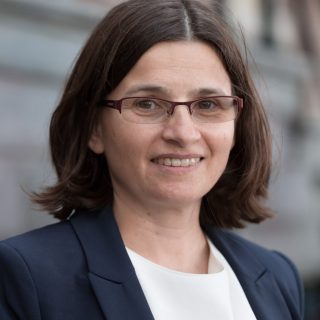
Paul Hübner is a Researcher affiliated with the Institute of Computer Science at the University of Heidelberg . His work focuses on source code and requirements traceability , software analytics , and knowledge management in requirements engineering . Education : Master's degree in Computer Science from the University of Ulm Key Research Areas : Traceability, Software Repository Analysis, Interaction Data Utilization His 14 publications (2012–2025) examine trace link creation using interaction logs, commits, and issue tracking systems. He has taught advanced software engineering courses at Heidelberg and collaborated extensively with Barbara Paech and others. Teaching Roles : Contributed to courses like "Introduction to Software Engineering" and "Software Practicum: Advanced Software Engineering" (2012–2018).
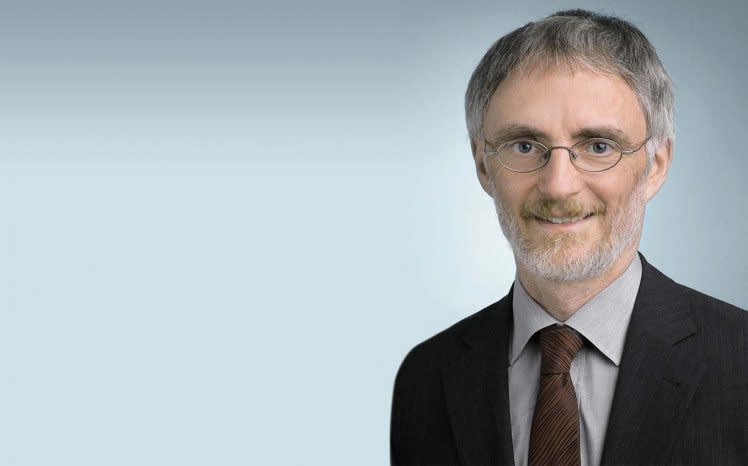
Daniel Pflugfelder is a Researcher at the Plant Sciences (IBG-2) department of the Institute of Bio- and Geosciences at Forschungszentrum Jülich. His work focuses on developing non-invasive imaging tools to study plant root systems, carbon dynamics, and water uptake using Magnetic Resonance Imaging (MRI) and Positron Emission Tomography (PET) . He is based in Jülich, Germany, and his research supports sustainable agriculture and bioeconomy goals. Expertise: Plant research, Magnetic Resonance, 3D Data analysis, Positron Emission Tomography, Root research His research integrates molecular, physiological, and ecological approaches to analyze plant-environment interactions and develop technologies for alternative biomass utilization. He has contributed to plant phenotyping tools like phenoPET and phenoVein , enabling precise studies of root architecture, carbon allocation, and water fluxes in crops such as sugar beet, maize, and wheat. Daniel's publications emphasize multimodal imaging techniques , particularly MRI-PET co-registration , to explore heterogeneous carbon distribution, root hydropatterning, and symbiotic interactions in legumes. His work addresses challenges in quantifying root water uptake, soil-root interactions, and climate adaptation strategies in agriculture. Key applications of his research include improving resource efficiency in crops and understanding plant responses to drought stress and warming scenarios. He has also contributed to computational tools for image processing and radiation therapy optimization in earlier works.
Dominik Hujo is a researcher at the Chair of Automation and Information Systems at the Technical University of Munich (TUM). He holds a Master of Science degree and contributes to advanced research in industrial automation and AI integration. His research focuses on industrial cyber-physical systems , digital twins , human-machine interaction , and AI deployment in manufacturing environments . His work emphasizes real-time requirements, embedded systems, and data management for production processes. Dominik's publications from 2023-2025 demonstrate expertise in multi-agent coordination , predictive maintenance , edge-cloud architectures , and SysML modeling for mechatronic constraints . Key application areas include construction machinery, gear assembly, and logistics systems. He actively collaborates with researchers like Prof. Birgit Vogel-Heuser and Marius Krüger on projects such as KI.Fabrik (AI Factory) and OpAI4DNCS (Operator-AI Interaction for Distributed Control Systems).
Kathrin Land is a researcher at the Chair of Automation and Information Systems at Technical University of Munich (TUM), working under Prof. Birgit Vogel-Heuser. Her research focuses on automation engineering, model-based development, and data-driven optimization of production systems. Key research areas include: Test case scheduling and prioritization Digital twins for industrial applications Technical debt management in automation OPC UA integration in construction robotics Recent publications highlight trends in: Automated test execution frameworks Process mining for production validation Data analytics in food industry separation processes Sanctioning mechanisms for multi-agent systems
Jan Laufer is a Research Associate at the Chair of Business Information Systems and Software Engineering within the Faculty of Computer Science at the University of Duisburg-Essen. He has been working in this position since October 2024, following previous research positions at the Chair of Software Systems Engineering at the same university from October 2023 to September 2024 (full-time) and January 2021 to September 2023 (part-time). His research focuses on Generative AI (GenAI) with special emphasis on real-world applications, physical interaction of AI systems with humans and environments (GenAI Embodiment), and Explainable AI. His earlier work centered on adaptive systems and data protection. He has contributed to significant projects including Dynabic (2024), FogProtect (2020-2022), and RestAssured (2018-2019). Laufer's publication record shows a clear evolution from data protection and adaptive systems toward GenAI and explainability. His recent work examines embodied generative AI, tax applications of AI assistants, and user studies on explainable reinforcement learning. His research bridges theoretical AI concepts with practical applications across multiple domains including legal technology, disaster response, healthcare, and security. Scientific Awards: Germany Scholarship (UDE-Stipendium) summer semester 2023 Germany Scholarship (UDE-Stipendium) winter semester 2020/2021 - summer semester 2021 (sponsored by Dr. Heinz-Horst Deichmann Foundation) Laufer has supervised numerous bachelor theses focusing on embodied generative AI applications across various domains including disaster response, water rescue, building security, and therapeutic interventions. His teaching activities include supervision of seminar papers on Generative AI applications and collaboration. He also serves as a member of the DLRG national squad since 2018.
Martin Brückner is a scientific collaborator at the Institute of Computer Science , affiliated with the Faculty of Mathematics and Natural Sciences at Humboldt University of Berlin . His contact details include the email brueckne@informatik.hu-berlin.de and phone number +49 30 2093-3064. Education: Dipl.-Inf. (equivalent to a Master's in Computer Science) Brückner's research interests span various fields within Computer Science , focusing on Bioinformatics , Data Analysis , Computational Biology , Software Engineering , and Algorithm Development . While specific publications are not detailed in the provided text, his work aligns with the computational and data-driven methodologies typical of his institute's focus. Advising: He has advised students such as Michael Piechotta , whose dissertation defense is scheduled for September 15, 2025. Affiliation Address: Rudower Chaussee 25, 12489 Berlin-Adlershof, Germany Postal Address: Unter den Linden 6, 10099 Berlin, Germany
Thomas Kosch serves as Professor at the Institute of Computer Science within the Faculty of Mathematics and Natural Sciences at Humboldt University of Berlin. His research group Human-Computer Interaction for Scientific Software develops innovative interfaces for scientific applications, with laboratory facilities at Rudower Chaussee 25, 12489 Berlin-Adlershof and administrative correspondence via Unter den Linden 6, 10099 Berlin. His research spans Human-Computer Interaction, Virtual/Augmented Reality, Artificial Intelligence, and Neurophysiological Computing. Key interests include cognitive augmentation through EEG/EMG systems, motor learning with electrical muscle stimulation, large language model integration in UX workflows, and privacy implications of tracking technologies. His work bridges theoretical HCI frameworks with empirical validation through controlled experiments involving physiological measurements and immersive environments. Analysis of his 15 most recent publications (all 2025) reveals three dominant trends: (1) Critical examination of LLM limitations through prompt-hacking and deceptive design studies, (2) Neurophysiological validation of cognitive phenomena using multimodal sensing (EEG/eye-tracking), and (3) Application-driven XR solutions for veterinary care, navigation, and motor assessment. These works consistently employ rigorous user studies with quantitative behavioral metrics. No scientific awards are documented in the provided materials, though his publication volume in top-tier venues (e.g., CHI, UIST) indicates significant field contributions. Professor Kosch actively supervises doctoral candidates, with at least one PhD defense (Michael Piechotta, Dipl.-Bio-Inf.) scheduled for September 2025. His research group likely secures competitive grants supporting equipment-intensive projects involving EEG systems, VR setups, and physiological sensors, though specific funding sources aren't detailed. The Human-Computer Interaction for Scientific Software group operates as an interdisciplinary hub combining computer science, cognitive psychology, and domain-specific applications. Current projects involve developing open-source tools like MorphoHaptics for medical imaging, MIRAGE for fall hazard detection, and Senscon for physiological sensing integration in VR controllers.
Christopher Lazik is a Researcher at Humboldt University of Berlin's Institute of Computer Science within the Faculty of Mathematics and Natural Sciences, specializing in the Software Engineering group. His work bridges technical innovation with human-centered design across emerging technology domains. His research focuses on Human-Computer Interaction, Software Engineering, and immersive technologies, with particular emphasis on Large Language Models for user experience design, value-aware software development, and empathic interfaces. Key themes include human factors in AI systems, psychological impacts of virtual environments, and safety applications of mixed reality, reflecting interdisciplinary engagement between computer science and social sciences. Recent publications (2022-2025) reveal a concentrated research trajectory on generative AI applications, with 6 of 8 papers published in 2024-2025. His work demonstrates strong alignment between technical implementation (e.g., mixed reality safety systems, workflow specification languages) and human behavior considerations, indicating a consistent focus on usability and societal impact of emerging technologies. No scientific awards were mentioned in the available documentation. There is no available information regarding student advising or research grants in the provided materials. Lazik operates within the Software Engineering research group at Humboldt's Institute of Computer Science, located at the Adlershof science park campus, contributing to the university's interdisciplinary research initiatives in human-centered computing.
M.Sc. Fabian Lehmann is a scientific collaborator at the Humboldt University of Berlin , affiliated with the Faculty of Mathematics and Natural Sciences and the Institute of Computer Science . His research focuses on knowledge management in bioinformatics and scientific workflows, particularly in areas like resource management, workflow scheduling, and energy-efficient computing. His recent work includes: Carbon-aware execution strategies for scientific workflows (2025) Runtime prediction techniques for heterogeneous infrastructures (2024-2022) Performance prediction and resource recommendation systems (2025-2022) Community-driven workflow standardization initiatives (2024-2022) Applications in environmental data analysis and earth observation (2023-2021) Contact: fabian.lehmann@informatik.hu-berlin.de Phone: 030 2093-41285 Address: Unter den Linden 6, 10099 Berlin
Nicole Schweikardt is a Professor at the Institute of Computer Science within Humboldt University of Berlin . Her research focuses on Theoretical Computer Science , particularly in Database Theory , Formal Logic , and Algorithmic Meta-Theorems . Academic Rank: Professor Contact: schweikn@informatik.hu-berlin.de Research Interests : Nicole investigates logical characterizations of database query languages, algorithmic meta-theorems for sparse graphs, and efficient enumeration techniques. Her work bridges formal logic, computational complexity, and practical database systems. Scientific Awards : 2018 ACM PODS Alberto O. Mendelzon Test-of-Time Award Recent Article Trends : Nicole's recent publications emphasize schema matching , spanner evaluation , first-order logic extensions , and query enumeration . Her work spans theoretical foundations (e.g., counting quantifiers, Hanf normal forms) and practical applications (e.g., event stream analysis, document compression).
Ivana Išgum is a Full Professor in AI for Medical Image Analysis at the University of Amsterdam, with appointments at the Amsterdam University Medical Center (Biomedical Engineering and Physics, Radiology and Nuclear Medicine) and the Faculty of Medicine (Informatics Institute). She leads the interfaculty research group Quantitative Healthcare Analysis (qurAI), bridging the Faculties of Medicine and Science. Her work integrates machine learning and deep learning to enhance clinical decision-making in radiology and cardiology. Her research interests include: Quantitative medical image analysis Coronary artery disease detection and prognosis Neonatal brain development quantification Real-time AI for intravascular imaging Cardiac arrhythmia prediction The 15 most recent publications highlight trends in cardiovascular risk stratification using multimodal data, advanced deep learning for coronary OCT/CT segmentation, and AI applications in fetal/abdominal imaging. Her work emphasizes trustworthy AI systems, image registration techniques, and multimodal data harmonization. She leads ongoing projects in AI for: Cardiovascular risk in breast cancer survivors Coronary artery analysis in high-end CCTA PAD progression prediction Dilated cardiomyopathy diagnosis Real-time intravascular OCT characterization Her lab (qurAI) focuses on clinical AI implementation, addressing challenges in data variability and real-time processing.
Hendrik Goßler is a Group Leader (Digitalization) and Senior Scientist at the Karlsruhe Institute of Technology (KIT), leading the 'Digitalization' group within the Institute for Chemical Technology and Polymer Chemistry. His work focuses on digitalization in research, including data management systems, automation of numerical simulations, and validation against experimental data. Goßler holds a Dr. rer. nat. (PhD) from KIT (2019), with a thesis on syngas production via partial oxidation in engines, and a Dipl.-Chem. (Master’s) in Chemical Engineering from KIT (2014). Research interests span catalysis, combustion technology, and computational modeling. His group develops tools like Adacta for traceable research data management and CaRMeN for reaction mechanism analysis. He has held visiting researcher positions at the Colorado School of Mines (2015, 2017), funded by DAAD stipends, collaborating with Prof. Robert J. Kee on fluid dynamics and engine-related projects. No scientific awards are listed, but his contributions include over 10 peer-reviewed publications since 2015. His work bridges experimental and computational methods, emphasizing automation and data-driven approaches in chemical engineering.
Ralf Kneuper is a Professor of Computer Science (with emphasis on business applications) at IU University of Applied Sciences since 2016. He serves as the acting supervisor for Software Development, IT Management, and IT Security programs. His professional career spans over 20 years in private sector quality management and freelance consulting, specializing in data protection, process improvement, and software quality assurance. Education: Studied mathematics in Mainz and Bonn, earned a PhD in Computer Science from the University of Manchester. Research focuses on process models (e.g., CMMI), IT security, business applications, and software engineering. He is a member of the management committee for the GI's 'Process Models for Business Application Development' think tank. Publications include books on CMMI and software processes, as well as peer-reviewed articles on process quality measurement and secure communication protocols. His work bridges academic research with industry practices in process optimization and governance.
Aram Kalhori is a Researcher at the Helmholtz Centre for Geosciences Potsdam (GFZ) , focusing on interdisciplinary environmental and climate science. His work integrates remote sensing and geodesy to study carbon dynamics in ecosystems such as peatlands and Arctic tundra. Key research areas include greenhouse gas emissions, permafrost degradation, and carbon sequestration strategies. He collaborates extensively on projects addressing climate mitigation, particularly in Germany's net-zero goals and global carbon cycle analysis. Research Interests: Remote Sensing, Geodesy, Climate Change, Carbon Cycle, Peatland Restoration, and Arctic Ecosystems. His work bridges field measurements, satellite data analysis, and computational modeling to understand environmental processes. Publications: Kalhori's research emphasizes temporally dynamic GHG emission factors in rewetted peatlands, Arctic soil moisture impacts on carbon sequestration, and carbon dioxide removal strategies. His recent work highlights the importance of interdisciplinary narratives for policy integration. Awards: No specific scientific awards listed, but his contributions to climate science and policy-relevant research are widely recognized. Labs/Teams: Collaborates with GFZ's Remote Sensing and Geodesy departments, and international initiatives like the Arctic Observatory Network. His datasets and software packages (e.g., GHG flux analysis tools) are publicly accessible through GFZ databases.
Jerry Zeyu Gao is a Professor at San Jose State University's College of Engineering, Department of Computer Engineering. He has affiliations with institutions like University of Auckland, University of Melbourne, and Xi'an Jiaotong University, reflecting a global research network. PhD in Computer Science and Engineering from University of Texas at Arlington (1995) Research focus: Software testing, AI, machine learning, and smart systems His research spans AI testing , mobile application quality assurance , and big data analytics for smart cities. Recent work includes autonomous vehicle testing , drone-based security systems , and encryption technologies . Publications highlight GUI testing , environmental data modeling , and reinforcement learning applications. Key trends include machine learning in test automation , smart city infrastructure , and data-driven environmental solutions . He has served as General Chair for IEEE CISOSE conferences and contributed to AI quality standards. His work involves collaborations with researchers across institutions, focusing on security , data quality , and urban sustainability . Notable projects: smart OCR testing , EV charging infrastructure analysis , and automated graffiti detection .