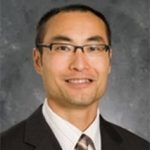
Jean-Marc Mac-Thiong is a Clinical Professor in the Department of Surgery at the Faculty of Medicine, University of Montreal, and a Regular Researcher at the Research Center of the Sacré-Coeur Hospital of Montreal. He practices as an Orthopedist at Sacré-Coeur Hospital. University: University of Montreal Faculty: Faculty of Medicine Department: Department of Surgery Research Affiliation: Sacré-Coeur Hospital Research Center Clinical Specialty: Spinal Trauma & Orthopedic Surgery Research Interests focus on spinal biomechanics, trauma care, scoliosis correction, and spinal cord injury outcomes. His work bridges clinical practice with quantitative analysis of spinal deformities and surgical interventions. Spine Biomechanics Sagittal Plane Alignment Pediatric Spinal Deformities Neurotrauma Biomarkers Implant Failure Analysis Outcome Prediction Models
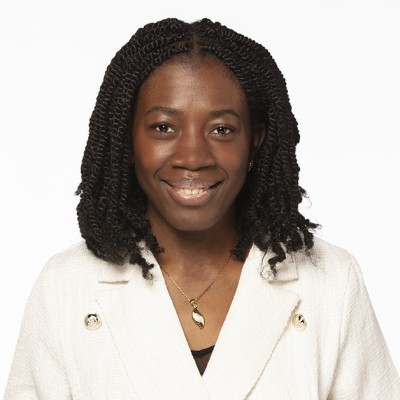
Emma Frejinger is a full Professor at the Department of Computer Science and Operations Research, Faculty of Arts and Science, Université de Montréal. She holds the Canada Research Chair in Demand-Driven Optimization of Transport Systems and the CN Chair in Railway Operations Optimization. Her work bridges operations research and statistical learning to solve large-scale transportation challenges. Ph.D. in Mathematics, École Polytechnique Fédérale de Lausanne, Switzerland Her research focuses on transportation network optimization , demand forecasting , and discrete choice modeling . She develops data-driven methodologies for railway operations, EV charging infrastructure, and traffic prediction, emphasizing scalability and real-world applicability. Recent publications highlight trends in integrating machine learning with combinatorial optimization , particularly for MIPs , competitive facility location , and stochastic transport systems . These works span freight logistics , urban mobility , and reinforcement learning applications . Scientific Awards: Two-time INFORMS Transport Science and Logistics Society best Ph.D. thesis award 2017 Grand Prix d'excellence en transport (freight category) She has supervised 21+ graduate students in topics ranging from locomotive routing to electric vehicle adoption , with projects funded by NSERC, FRQ, and industry partners like CN Rail and Purolator. Her lab affiliations include CIRRELT and OPTIM , focusing on simulation and optimization.
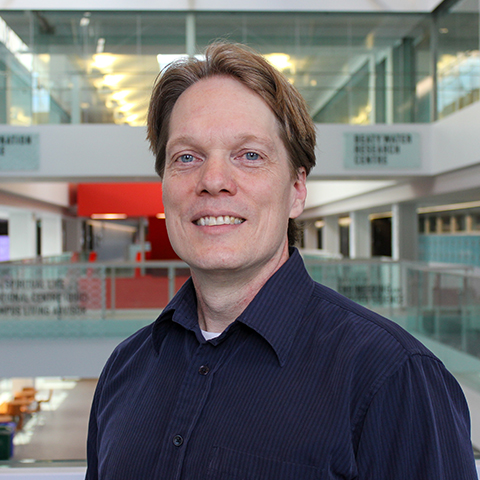
Alan Ableson serves as an Assistant Professor in the Department of Mechanical and Materials Engineering at Queen's University, Kingston, Ontario, with his office located in McLaughlin Hall, Room 330. His research expertise centers on large-class teaching methodologies and data-driven educational optimization , specifically focusing on improving delivery mechanisms for large-scale and online courses through statistical analysis and applied data mining techniques. He integrates quantitative approaches to enhance student engagement and learning outcomes in engineering education contexts.
Karim Tanveer is a Research Fellow at the University of Toronto's Dunlap Institute for Astronomy & Astrophysics and Department of Astronomy & Astrophysics. His work spans cosmology, galaxy evolution, and instrumentation for large-scale surveys like the Dark Energy Spectroscopic Instrument (DESI). Current research focuses on precision cosmology through emission-line galaxies, photometric redshift estimation, and the interstellar medium's dynamics, including Fermi bubbles and galactic nuclear outflows. Key Research Themes: Cosmological parameter estimation via DESI and CMB lensing Galactic nuclear wind and outflow gas mapping Target selection algorithms for spectroscopic instruments UV absorption studies of galactic structures Next-generation infrared surveys like NANCY Instrumentation & Data: He contributes to DESI's large-scale structure catalogs, target pipelines, and data validation processes. His work bridges observational techniques with cosmological constraints, emphasizing systematic error mitigation in parameter inference.
Dr. Mohammad Shushtari is an Assistant Professor in the Department of Mechanical, Industrial and Mechatronics Engineering at Toronto Metropolitan University. He maintains collaborative affiliations with the Toronto Rehabilitation Institute (Kite) and Harvard University's John A. Paulson School of Engineering and Applied Sciences. Education: 2024: PhD, University of Waterloo 2016: MSc, University of Tehran Research Expertise: Dr. Shushtari pioneers AI-driven wearable robotics for rehabilitation and human augmentation. His work spans clinical neurorehabilitation (Parkinson's, spinal injuries), elderly mobility enhancement, and industrial worker augmentation. Core technical domains include: Assistive prosthetics and exosuit design Human-robot symbiotic interaction Reinforcement learning for adaptive control Sensor fusion and neuromechanical modeling Awards & Recognition: NSERC Postdoctoral Fellowship Mitacs Accelerate Fellowship Research Leadership: Directs the Symbiotic Robotics Lab (SymBioRobotX) developing portable rehabilitation systems and validating clinical interventions. Current projects include low-cost balance therapy devices and adaptive FES techniques for spinal injuries. Student Supervision: Actively advises graduate students in robotics/AI, with industry-applicable research bridging academic and practical engineering domains.
Mohamed-Salah Ouali is a Full Professor in the Department of Mathematics and Industrial Engineering at Polytechnique Montréal, where he leads research at the intersection of industrial engineering, data science, and reliability engineering. He maintains active affiliations with the Institute for Data Valorization (IVADO), Poly-Industries 4.0 Laboratory, and the Interuniversity Research Centre on Enterprise Networks, Logistics and Transportation (CIRRELT). Professor Ouali's research focuses on reliability of industrial systems, statistical and Bayesian learning models, remaining life prediction, failure cause analysis, and maintenance optimization. His work bridges theoretical advances in machine learning with practical industrial applications, with particular expertise in developing interpretable models for predictive maintenance and risk assessment. Recent research has expanded into polygon generation techniques, causal reinforcement learning, and heterogeneous data fusion for industrial applications. His publication record shows consistent output with 55 publications through 2025, including significant contributions in Reliability Engineering and System Safety, Journal of Intelligent Manufacturing, and Engineering Applications of Artificial Intelligence. The research trends demonstrate an evolution from traditional reliability models to increasingly sophisticated AI-driven approaches for industrial systems. As an educator, Professor Ouali has supervised 10 PhD students and 13 Master's students, with the most recent completions in 2024 (PhD) and 2021 (Master's). His supervision spans topics in predictive maintenance, failure analysis, and industrial data analytics, with students frequently co-authoring publications in high-impact journals. His laboratory work through the Poly-Industries 4.0 Laboratory focuses on developing practical tools for industrial reliability and maintenance optimization, with strong connections to real-world industrial applications and partnerships.
Lévis Thériault serves as a Lecturer in the Department of Computer Engineering and Software Engineering within Polytechnique Montréal's Faculty of Engineering. He is also a member of the Institute for Data Valorization (IVADO), contributing to Montreal's AI research ecosystem. His academic credentials include a B.Eng., DESS from UQAC, M.Sc.A., and PhD coursework at Polytechnique Montréal. His research spans two dynamic domains: artificial intelligence applications in healthcare (notably the Marvin chatbot system for HIV treatment adherence) and innovative educational technologies for engineering education. Recent work focuses on conversational agents for patient self-management, digital learning environments, and active learning methodologies. His publication trend shows a strategic pivot toward health AI since 2020, with multiple presentations at International AIDS Conferences, while maintaining his educational technology research thread. Dr. Thériault actively supervises graduate students across multiple cohorts, with current advisees working on AI-driven clinical tools and educational software. His supervision record includes 14 professional Master's graduates between 2021-2024 and ongoing PhD and research Master's projects. Student theses demonstrate strong industry alignment, with implementations at organizations including Desjardins, Intact Assurance, and Criteo. Teaching responsibilities include core courses in operating systems, discrete structures, and software design, where he implements his research on active learning strategies. His 2020 publication on smartphone-based assessment for large engineering classes exemplifies his practical approach to educational innovation. The May 2022 press coverage of his AI solution for Alloprof's homework help platform highlights real-world impact of his educational technology research.
Michel C. Desmarais is a Full Professor in the Department of Computer Engineering and Software Engineering at Polytechnique Montréal, where he has been faculty since 2002. With a PhD in Psychology from Université de Montréal, his research bridges artificial intelligence, educational technology, and human-computer interaction. He holds affiliations with IVADO and LAMA-WeST research groups, and has held visiting positions at Sorbonne University, Eindhoven Technical University, and other European institutions. His research focuses on three interconnected pillars: 1) Cognitive modeling and educational data mining , developing algorithms for student knowledge assessment and adaptive learning systems; 2) AI-driven educational tools , including automated grading systems and peer instruction platforms; and 3) Recommendation systems and user modeling , particularly for personalized learning interfaces. His work consistently applies machine learning to solve practical challenges in technology-enhanced education. Analysis of his 150+ publications reveals strong trends in educational NLP (sentence similarity for short-answer grading), generative AI (LLM-generated code validation), and Bayesian modeling (Q-matrix refinement). Recent work increasingly focuses on transformer architectures and real-world educational datasets. He maintains an active supervision record, having graduated 35+ graduate students. Current PhD candidates work on NLP for educational applications (Bakhtiari, Kamdem) and AI for engineering (Wang). His teaching covers user interface design, recommender systems, and intelligent interfaces. Professional service includes editorial leadership (JEDM journal), conference co-chairing (UMAP 2017, EDM founding), and grant review panels for NSERC, MITACS, and EU programs. Industry experience includes prior roles as R&D Director at MVM Inc. and researcher at Montreal Computer Research Center.
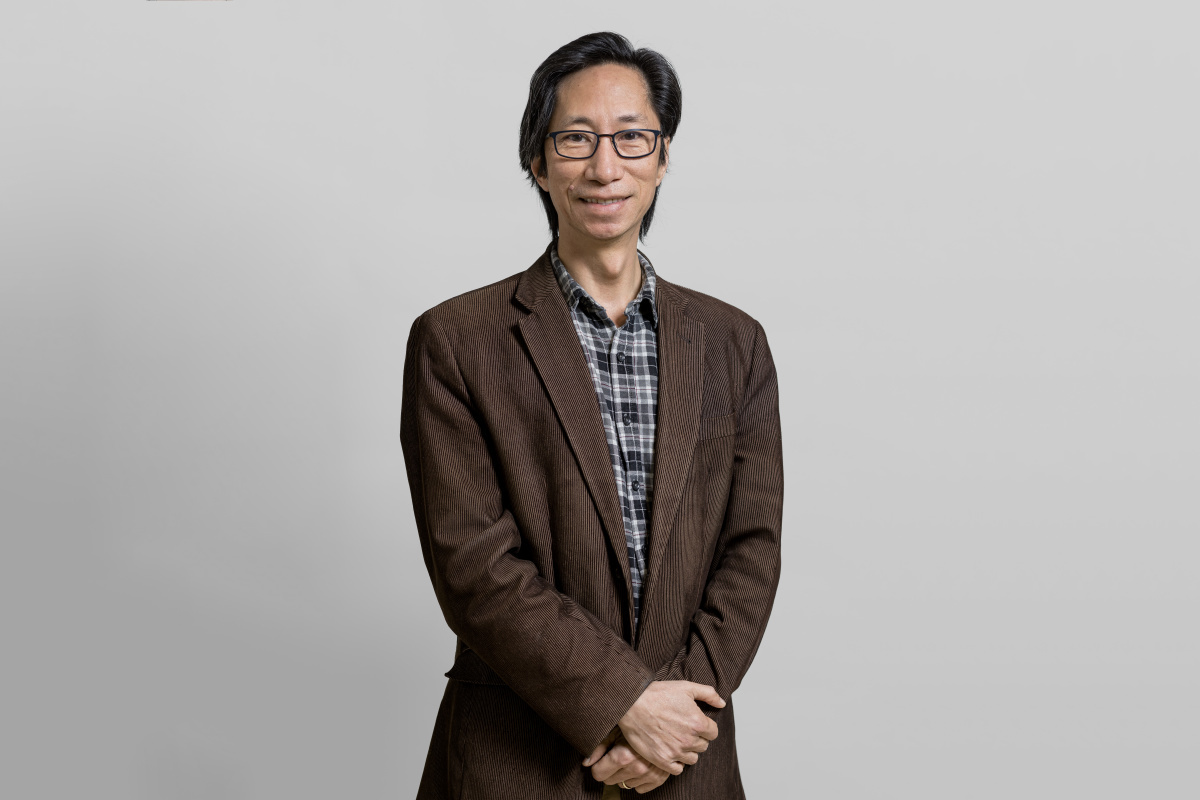
Tony Wong is a Professor in the Department of Systems Engineering at École de technologie supérieure (ÉTS), specializing in aeronautics, autonomous systems, and industrial automation. He holds affiliations with three key research laboratories: the Control and Robotics Laboratory (CoRo), LARCASE (Aeronautical Research), and SYNCHROMEDIA (Multimedia Communication). His work bridges theoretical optimization and practical applications, particularly in UAV design, renewable energy, and blockchain logistics. Research interests span: Aeronautics/Aerospace : Morphing wing optimization, computational fluid dynamics, UAV performance enhancement. Intelligent Systems : Robotic automation, machine learning for predictive maintenance, low-code industrial solutions. Sustainable Technologies : Hybrid energy systems, IoT for resource optimization, edge computing deployments. Dr. Wong mentors 47+ graduate students, with recent projects including wind-tunnel validations of morphing wings, AI-driven supply chains, and solar energy forecasting. His publication record (31+ journal articles since 2021) demonstrates consistent contributions to aerodynamic design and computational intelligence. While no awards are documented, his leadership in collaborative labs underscores institutional recognition. Laboratory engagements focus on experimental validation and industrial partnerships, utilizing ÉTS facilities like the Price-Païdoussis Wind Tunnel and advanced flight simulators. Current projects prioritize sustainability, including aerodynamic drag reduction and blockchain-enabled cost optimization.
Ange Adrienne Nyamen Tato serves as an Assistant Professor in the Department of Teaching and Learning Studies at Laval University's Faculty of Education. Her academic journey spans multiple institutions across Canada and Morocco, with a strong interdisciplinary background combining computer science, artificial intelligence, and educational theory. PhD in Computer Science (Artificial Intelligence) from University of Quebec at Montreal (UQAM), 2020 Master's degree in Computer Science from University of Quebec at Montreal (UQAM), 2015 Engineering degree in Information Systems from Mohammedia School of Engineers in Morocco, 2014 DEUST in Mathematics, Computer Science and Physics from Hassan II University, Morocco, 2011 Professor Tato's research focuses on the intersection of artificial intelligence and education, with particular expertise in generative AI applications for educational contexts, machine learning algorithms, intelligent tutoring systems, educational data mining, and serious game design. Her work addresses critical challenges in educational technology including transparency, assessment practices, and engagement issues that have limited the adoption of AI-powered learning tools. She is particularly interested in the ethical implications, environmental impact, and potential biases of AI in educational settings. Her recent publications demonstrate a consistent focus on developing sophisticated models for user behavior prediction, adaptive learning systems, and integrating pedagogical knowledge into AI frameworks. The research spans multiple domains including logical reasoning development, socio-moral reasoning, piloting training, and general educational applications of deep learning and knowledge tracing techniques. Professor Tato has secured significant research funding, including a $192,500 NSERC Discovery Grant for her project 'Optimizing Generative Artificial Intelligence for Education: Towards a Holistic Approach Integrating Teachers and Learners.' This five-year project aims to develop pedagogically aware large language models (PA-LLMs) that better serve educational purposes by integrating educational theories, human learning factors, and bias correction mechanisms. Principal Investigator for NSERC Discovery Grant ($192,500 over 5 years) PC Member for ICCE 2023 and 2024 conferences PC Member for EDM 2024 conference PC Member for AIED 2024 conference Professor Tato teaches graduate courses including TEN-7028 Games and Learning and TEN-7030 Digital Intelligence in Education: Opportunities and Challenges. She is currently accepting Master's students interested in AI applied to education. Her previous professional experience includes work as an Artificial Intelligence Specialist at Beam Me Up Augmented Intelligence (2018-2022) and a postdoctoral fellowship in Deep Learning applied to aeronautics in partnership with Bombardier and CAE (2020-2022).
Patty Zakaria serves as Associate Professor in the Master of Data Analytics program at University of Niagara Falls Canada, leveraging over two decades of expertise in international relations, research design, and policy analysis. Her work focuses on optimizing data-driven decision-making processes and driving strategic initiatives in anti-corruption and sustainable development governance. Her academic foundation includes a PhD in International Relations and Comparative Politics and Master of Arts in Labour and Industrial Relations from Wayne State University. This training underpins her methodological rigor in statistical analysis and field research across global contexts. Professor Zakaria's research centers on anti-corruption strategies, sustainable development governance, and AI applications for environmental sustainability. She employs advanced statistical software (SPSS, R, STATA) to analyze corruption dynamics and generational technology adoption patterns, with fieldwork conducted in Macedonia, Lebanon, and Croatia. Her current flagship project examines how millennials and Gen Z adopt AI for environmental solutions across global regions. Her significant contributions to the field are recognized through: Nomination for Minister’s Award of Excellence (2024) Nomination for Rising Star at Global University Systems (2022) OECD Research Edge winner for anti-corruption research (2018) Daimler Chrysler MAIR Grant (2006) As lead of the Patty Zakaria Research Group Limited, she directs projects including U.S. Department of State-commissioned anti-corruption indices and Transparency International consultancy. Her funding portfolio spans OECD initiatives, government contracts, and corporate partnerships like the GOTOX Inc. customer insights project. Students benefit from her practical approach that bridges academic research with real-world policy applications in the Master of Data Analytics program. The research group maintains active collaborations with international bodies including Transparency International, OECD, and John Jay College, producing policy reports that shape anti-corruption frameworks across the Western Hemisphere. Professor Zakaria's dual expertise in statistical methodology and field research creates unique opportunities for data-driven social impact.