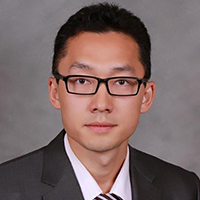
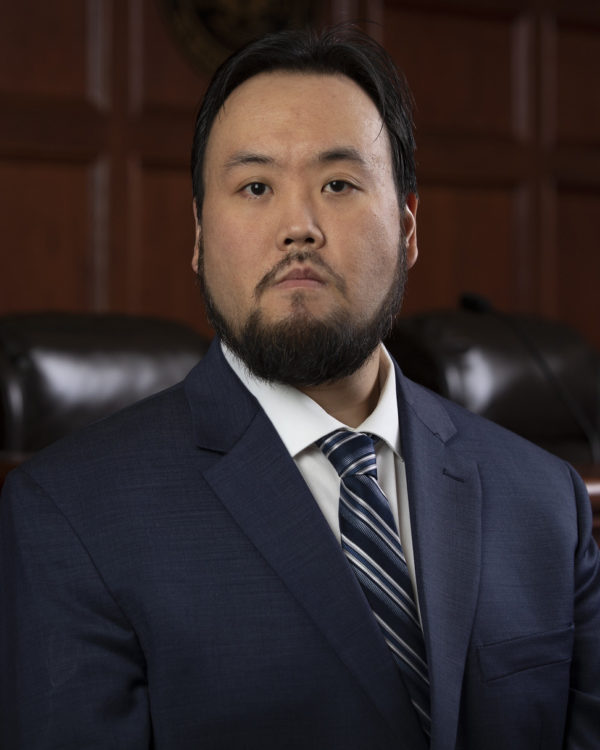
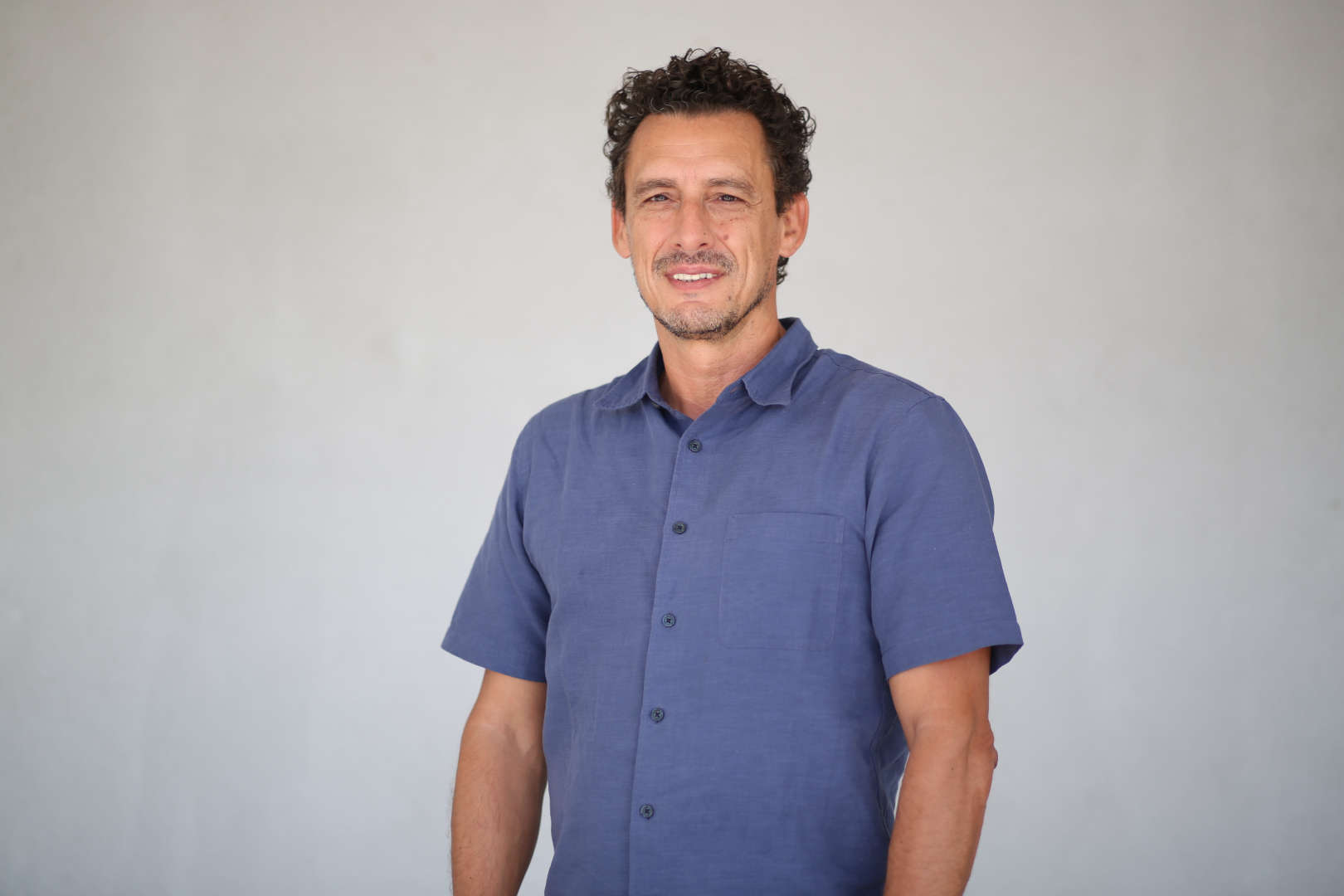
Lezgin Ay is an Assistant Professor in the Department of FIREL at the University of North Texas. His research focuses on market efficiency, financial regulation, and risk management, with particular attention to margin requirements and multifactor models in financial markets. He holds a position at the university's FIREL department without any part-time status noted. His recent work explores the interplay between regulatory policies and market behavior, as reflected in his 2023 articles on margin requirements and historical market efficiency trends. Earlier research from 2019 delves into multifactor models and risk-taking dynamics. No notable scientific awards or advisees are explicitly mentioned.
Prof. Dr. Stephan Kleuker is a faculty member at Osnabrück University of Applied Sciences , specifically within the Faculty of Engineering and Computer Science . He focuses on Software Development , Quality Assurance , and Theoretical Computer Science , with a particular interest in formal methods and practical software engineering education. Role: Chair of Software Development Contact: s.kleuker@hs-osnabrueck.de | Phone: 0541 969 3884 Research Interests Quality Assurance through Testing and Model Checking Formal Methods in Software Development Model-Driven Development and UML Business Process Modeling and Optimization Integration of Requirements Analysis with Quality Measures Teaching Current courses: Object-Oriented Analysis and Design, Software Quality Management, Theoretical Computer Science Focus on practical software development education with tools like Eclipse, Netbeans, and Apache Derby Projects Developed environments for teaching (e.g., 2 GB SEU package) Research on test automation, requirements modeling, and distributed Java programs Tools & Publications: Creator of tools like Interaction Board for Java beginners, and author of textbooks on Software Engineering with UML and Quality Assurance through Software Testing .
Abrar Qureshi is a Professor and Program Lead of the Computer Science & Software Engineering department at Harrisburg University of Science and Technology. His work focuses on software engineering education, embedded systems design, and cybersecurity applications. Dr. Qureshi leads initiatives to integrate hands-on learning through robotics and mobile development projects, emphasizing real-world industry alignment. His research spans formal methods for embedded systems, network anomaly detection, and requirement prioritization frameworks. Research interests include: Formal verification techniques for embedded software Data-driven approaches to network security Innovative pedagogical methods in software engineering education Optimization of test case selection in constrained environments Recent publications (2010-2016) demonstrate focus on: Wireless sensor network optimization Statistical intrusion detection systems UML formalization for real-time systems Fuzzy decision-making in requirement prioritization No scientific awards or grants are explicitly listed in the provided materials. Dr. Qureshi currently oversees the Computer Science & Software Engineering program curriculum and student capstone projects involving mobile and embedded systems development.
Yun (Tom) Liu is an Associate Professor of Mechanical Engineering at Purdue University Northwest, specializing in fluid mechanics and renewable energy. He earned his Ph.D. from Purdue University (2016) and joined PNW in 2017. His research focuses on bio-fluid mechanics, 3D flow visualization, and multiphase systems, with notable work on insect flight dynamics and wind turbine wakes. Education: Ph.D. in Mechanical Engineering, Purdue University, 2016 M.S. in Mechanical Engineering, University of Science and Technology of China, 2011 B.S. in Mechanical Engineering, University of Science and Technology of China, 2008 Research Interests: Combines experimental and numerical methods to study complex flows in biological systems, renewable energy, and industrial processes. Key areas include: Insect flight aerodynamics using Schlieren photography Wind turbine wake behavior and wind farm optimization Supercavitation and underwater propulsion systems Gas-stirred ladle furnace hydrodynamics Awards & Grants: NSF Major Research Instrumentation Grant (2019) Catalyst Grant Award ($7K), PNW (2018) Proposal Submission Grant, PNW (2020) Lab & Teams: Leads experimental fluid dynamics research using advanced techniques like PIV, Schlieren imaging, and neural network modeling. Collaborates on bio-inspired design and renewable energy systems.
Timothy T. Hsieh is an Associate Professor of Law at Oklahoma City University School of Law, specializing in Intellectual Property (IP), Technology Law, and Antitrust. He holds advanced degrees in Law and Electrical Engineering, including a J.D. from UC Hastings, an LL.M. in Law & Technology from UC Berkeley, and an M.S. in Electrical Engineering from UCLA. His research focuses on patent law, blockchain/AI legal frameworks, IP hybrids, and Asian American legal studies. Education: LL.M., Law & Technology (IP), UC Berkeley School of Law J.D., University of California Hastings College of the Law M.S. Engr., Electrical Engineering, UCLA B.S., Electrical Engineering & Computer Science, UC Berkeley Research interests include patent eligibility under 35 U.S.C. §101, FinTech advancements, AI governance, NFT legal frameworks, and the intersection of IP with antitrust, sports, and entertainment law. He has held roles as a patent examiner, litigation attorney, and judicial clerk at multiple U.S. District Courts. Award-winning publications span over 20 legal journals, including the Mississippi Law Journal and Berkeley Technology Law Journal . His writing explores cutting-edge topics like federal patent court reform, AI ethics, and blockchain IP management. Professional involvement includes leadership roles in the American Inns of Court, founding the Oklahoma Asian American Bar Association, and launching the Oklahoma Asian American Film Festival. He co-founded the Valerie K. Couch American Inn of Court, focusing on diversity in IP and tech law.
Wouter Joosen is a Professor at KU Leuven (Catholic University of Leuven) in Belgium, with an extensive research career spanning from 1988 to the present. His primary research focuses on cybersecurity, privacy, and secure software engineering, with significant contributions to threat modeling frameworks, particularly LINDDUN. Dr. Joosen's research interests center around privacy-enhancing technologies , security threat modeling , and machine learning applications in cybersecurity . His work bridges theoretical security concepts with practical implementations, focusing on real-world security challenges in cloud computing, authentication systems, and data protection. He has pioneered approaches to automate threat modeling processes and develop robust security mechanisms for modern distributed systems. His publication record shows a clear evolution from traditional software security in the 1990s-2000s to contemporary research on privacy-preserving machine learning, secure infrastructure as code, and advanced authentication systems. A notable trend in his recent work (2021-2025) is the integration of machine learning techniques to enhance security mechanisms while maintaining privacy constraints, particularly in access control systems and threat modeling frameworks. Dr. Joosen has collaborated extensively with researchers across Europe, particularly with Dimitri Van Landuyt, Davy Preuveneers, Danny Hughes, and Bert Lagaisse, indicating strong research group leadership and international collaboration. His research has significant practical applications in GDPR compliance, secure authentication, privacy-preserving technologies, and robust security frameworks for cloud-native applications. His work on OAuth 2.0 security, biometric authentication, and infrastructure security directly addresses current industry challenges in securing modern web applications and services.
Dr. Adekunle Afolabi is an Assistant Professor in the Department of Computer Science and Engineering at the University at Buffalo's School of Engineering and Applied Sciences. His research focuses on artificial intelligence applications in healthcare, particularly recommender systems for chronic disease management and connected health solutions. PhD in Computer Science (University of Eastern Finland, 2019) MSc in Computer Science (Obafemi Awolowo University, 2008) BSc in Computer Science (Obafemi Awolowo University, 2000) His expertise spans health informatics, software engineering, and digital storytelling, with a particular emphasis on translating AI research into practical healthcare solutions. Earlier work explored algorithm complexity metrics and healthcare information systems design in Nigerian contexts. Current research trends focus on real-time recommendation systems, patient data management, and technology solutions for aging populations. Publications from 2004-2020 demonstrate consistent contributions to healthcare informatics, with recent work emphasizing practical implementation frameworks and evaluation metrics.
António Lucas Soares is an Associate Professor at the Department of Informatics Engineering, Faculty of Engineering, University of Porto, and a researcher at INESCTEC. He coordinates the Center for Enterprise Systems Engineering and Cluster Industry & Innovation at INESCTEC. His expertise lies in Information Systems with a focus on Collaborative Networks and Knowledge Management in industrial contexts. He directs the Master's program in Information Science (FEUP/FLUP) and holds executive roles in international academic organizations. His research emphasizes socio-technical design, digital platforms, and Industry 5.0 applications in manufacturing and logistics resilience. Research Interests: Socio-technical systems design Knowledge representation frameworks AI-driven supply chain transformations Augmented Reality applications Logistics 5.0 technologies Publications (2024) highlight advancements in requirements management frameworks, cognitive digital twins, and Industry 5.0 logistics innovations. His work bridges technical solutions with human-centered operational needs in industrial ecosystems. Advising: Supervised 10+ theses on topics like Scrum adoption, digital twins, and circular economy ecosystems. Active in grant-funded projects addressing manufacturing resilience and supply chain digitalization. Labs/Teams: Leads the Enterprise Systems Engineering Centre at INESCTEC, fostering interdisciplinary research in industrial informatics and collaborative networks.
Dr. Sarah Bentley is an Assistant Professor at Northumbria University, part of the Faculty of Engineering and Environment. She holds a PhD in Mathematics from the University of Reading (2019) and a MMath from Durham University (2013). Her research focuses on space physics, space weather forecasting, and the application of machine learning to understand magnetospheric dynamics. She investigates ultra-low frequency (ULF) waves and their role in energizing Earth’s radiation belts, with a particular interest in developing predictive models for space weather impacts. Joined Northumbria as a Vice-Chancellor's Fellow in 2020. Current projects include STFC-funded research on solar and space physics, emphasizing radial diffusion and wave-particle interactions. Her work bridges computational methods and physical phenomena, leveraging AI to analyze large datasets from spacecraft observations. She supervises PhD students in topics like graph neural networks for magnetic field characterization and machine learning-driven space weather forecasting. Key contributions include probabilistic models for ULF wave prediction, radial diffusion benchmarking, and causal network analysis for space weather variables. She actively engages in EDI initiatives, advocating for neurodivergent inclusivity in academic environments.
Kyle Eyvindson is an Associate Professor at the Norwegian University of Life Sciences (NMBU) within the Faculty of Environmental Sciences and Natural Resource Management. His research focuses on the intersection of forest planning, stochastic programming, risk assessment, optimization, and ecosystem services. He develops decision support systems that address uncertainties in forest management while balancing ecological, economic, and social objectives.
Markus Boden is a Research Assistant at the Faculty of Civil and Environmental Engineering, Bauhaus-Universität Weimar. He specializes in Building Information Modeling (BIM), digital transformation of infrastructure authorities, and construction safety. His work focuses on BIM maturity models, automated quality inspection planning, and infrastructure policy analysis. He collaborates on projects like BIMwissT and DROHNIS B88. Education: Master of Science (M.Sc.) His research explores BIM applications in public infrastructure, ontology-based inspection methodologies, and digital transformation frameworks. He co-authored studies on thermal insulation inspection and BIM implementation in regulatory contexts. No awards or grants are explicitly listed. He is part of research teams investigating construction process control and machine-readable modeling requirements.
Christian Zehetner is a Professor at the University of Applied Sciences Wels, affiliated with the Research Center Wels Center of Excellence for Smart Production. His work focuses on advanced manufacturing technologies, digital twin integration, and smart production systems. He specializes in areas like piezoelectric actuation, predictive maintenance, and computational mechanics for metal forming processes. Research interests include: Integration of Digital Twin technology in product lifecycle management Data-driven adaptive strategies for industrial processes Prediction and control of material behavior during manufacturing Collaborative software frameworks for product development Key research contributions involve developing model-based adaptive approaches for sheet metal production and evaluating software tools for finite element analysis. His work bridges mechanical engineering principles with modern digital manufacturing solutions. He has collaborated on projects involving predictive maintenance systems and virtual assembly environments, emphasizing practical industrial applications. Current efforts focus on optimizing production workflows through real-time data integration and smart manufacturing methodologies.
Georg Hermann Richard Hackenberg is a researcher at the Research Center Wels, part of the University of Applied Sciences Wels. His work focuses on advanced manufacturing technologies, digital transformation in product development, and smart production systems. He has contributed to over 7 research outputs since 2018, with recent emphasis on digital twins, virtual assembly environments, and transportation systems optimization. His research interests include Digital Twin integration in Product Lifecycle Management (PLM), application of GitHub for collaborative product development, and simulation methodologies for on-demand transportation systems. He has pioneered virtual assembly techniques to address early-phase manufacturing challenges and explored innovative uses of dynamic programming in transportation design. Hackenberg has presented at international conferences and his work has been cited 2-5 times in Scopus-indexed publications. He has supervised 7 academic works, demonstrating his role in mentoring next-generation engineers. His research networks span across Europe, with collaborative projects focusing on Industry 4.0 applications. Current efforts emphasize bridging software development practices (e.g., GitHub) with traditional manufacturing processes to enhance product development efficiency.
Carmine Gravino is a Full Professor at the Department of Computer Science at the University of Salerno. His research focuses on software engineering, artificial intelligence (AI), and cybersecurity, with notable contributions to requirements engineering, functional size measurement, and AI-driven educational technologies. He leads initiatives in metaverse applications for education (e.g., SENEM) and has pioneered work on blockchain-based security in digital learning environments. His academic journey includes extensive exploration of AI in healthcare (e.g., diabetes prediction models) and cybersecurity methodologies. He actively contributes to international collaborations via Erasmus+ programs, fostering educational exchanges and research partnerships in software engineering and emerging technologies. Gravino’s publications emphasize practical solutions like RECOVER (requirements generation from stakeholder conversations) and Echo (use case quality enhancement via LLMs). His work bridges theoretical advancements with real-world applications, such as green computing optimizations using GPUs and model-driven development frameworks for web applications. He maintains a strong presence in academic service, overseeing teaching, research, and laboratory activities. His research agenda includes advancing explainable AI, ethical guidelines for emotion recognition systems, and fostering innovation in software quality assurance.
Francesco Varrato is a Lecturer at the EDCH-ENS unit and a Research Data Management (RDM) Specialist at École Polytechnique Fédérale de Lausanne (EPFL). He holds a PhD in Numerical Physics and a Master’s in Physics from Pisa University. His current role focuses on advancing RDM practices, including F.A.I.R. principles implementation, data management plan development, and collaboration with EPFL services like ReO, DPO, and external stakeholders. His research interests span RDM, soft matter physics, and colloidal systems. Research Highlights: Varrato’s work bridges academic and applied research, with recent contributions to RDM frameworks and historical studies on colloidal gels and fractal systems. His publications address data governance, open-source adoption, and material science. Teaching: He teaches Hands-on with Research Data Management in Chemistry , emphasizing practical RDM skills. His role also involves organizing workshops and guiding researchers in data documentation. Collaborations: Engages with EPFL’s Data Champions network and external organizations to promote data-driven practices. His interdisciplinary approach combines physics expertise with modern academic support methodologies.