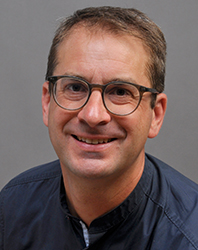
Joachim Rathmann is Adjunct Professor at Memorial University (Newfoundland, Canada) and Privatdozent at the University of Augsburg. He works at the Institute of Geography and Geology , Julius-Maximilians-Universität Würzburg, focusing on therapeutic landscapes , cultural ecosystem services , and environmental ethics . Current Projects : Leading DFG-funded research on urban forest health impacts (2022-2025), contributing to Environmental-Economic Landscape Assessment and Co-Environmental Virtue Ethics . Research Strengths : Integrates philosophy of nature with environmental psychology , exploring how deadwood perception and forest structures affect human well-being. Recent publications analyze 15 articles (2017-2024) covering climate change mitigation , AI in environmental protection , and therapeutic landscapes . The work combines empirical methods (GIS, physiological sensing) with theoretical frameworks (Heideggerian ethics, affordance theory). Key Collaborations : With Prof. Uwe Voigt (Philosophy), Prof. Elisabeth André (Human-Centered AI), and Dr. Christoph Beck (Climate Research). International Engagement : Participates in conferences across Canada , USA , France , and Belgium , fostering cross-disciplinary dialogue on anthropocene ethics .
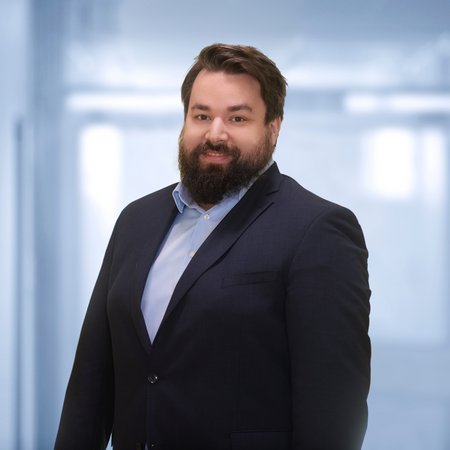
Tim Brée is a current research assistant at the Chair of Information Systems and Strategic IT Management at the University of Duisburg-Essen , Germany. He completed his Master of Science in Information Systems at the same university in 2019 and previously earned his Bachelor of Science there from 2013 to 2019. His academic career includes roles as a student assistant and tutor at the university’s faculty and dean’s office. Education: Master of Science in Information Systems, University of Duisburg-Essen (2019–present) Bachelor of Science in Information Systems, University of Duisburg-Essen (2013–2019) Brée’s research focuses on blockchain technology , data ecosystems , smart cities , and enterprise architecture management . He explores innovative applications of blockchain for inter-organizational data governance, urban data management, and collaborative frameworks in digital ecosystems. His recent publications emphasize bibliometric analyses of artificial intelligence in urbanization, blockchain integration in smart cities, and stakeholder collaboration in ports. These works bridge theoretical advancements with practical implementations, such as 3D prototypes for enterprise architecture visualization. Scientific Recognition: Nominated for the Best Theory Paper Award at the 42nd International Conference on Information Systems (ICIS) in 2021 Brée collaborates extensively within the Faculty of Computer Science , contributing to teams focused on strategic IT management and digital transformation. His work addresses both technical challenges and organizational readiness in adopting emerging technologies.
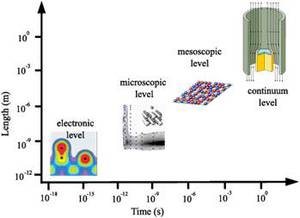
Markus Oeser is a full professor at the Chair and Institute of Highway Engineering, affiliated with the Federal Highway Research Institute (BASt). His research advances pavement technology, smart infrastructure, and sustainable materials through computational modeling and experimental characterization. Research Focus His work spans: Advanced asphalt materials (self-healing, inductive, nano-enhanced) Digital twins for real-time pavement monitoring Traffic flow modeling and AI-driven infrastructure management Sustainable recycling of construction waste Piezoresistive sensors for smart roads Publication Trends (2024-2025) Recent articles emphasize multi-scale modeling (atomic to structural levels), integration of AI/ML in pavement systems, and sustainability-driven material innovations. Dominant themes include nanomaterial-enhanced composites, digital twins for infrastructure, and traffic microsimulation. Affiliations & Infrastructure Leads research at BASt's highway engineering facilities, leveraging laboratories for materials testing, computational modeling, and full-scale pavement validation.
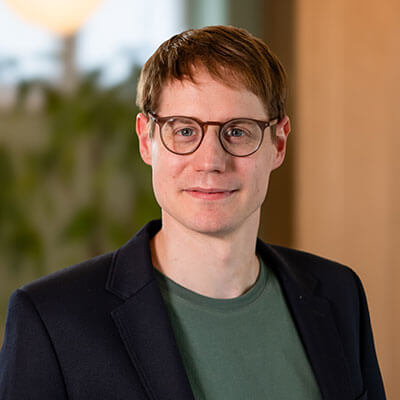
Jens Lemanski is an Associate Professor at the Philosophical Seminar of the University of Tübingen, with part-time roles as an Adjunct Professor at the University of Münster and a Researcher at Fernuniversität Hagen. His research spans Logic and Philosophy of Logic , Linguistic Communication , 19th Century German Philosophy , and Visualization in Mathematics . His work focuses on the historical and philosophical foundations of logic diagrams, including projects like Logic Diagrams in Kantianism (Fritz-Thyssen-Stiftung) and Gestures and Diagrams in Visual-Spatial Communications (DFG-priority programme). He has contributed extensively to understanding the evolution of logic from antiquity to modernity, emphasizing the role of diagrams in Euler-type systems , Byzantine logic , and Kantian thought . Lemanski co-edits Historia Logicae (College Publications) and serves as a Book Review Editor for History and Philosophy of Logic . His recent publications analyze the interplay between transcendental philosophy , formal logic , and AI-driven multimodal communication . He holds a PhD from Johannes Gutenberg University Mainz (2011) and contributes to conferences like Diagrammatic Representation and Inference (2024).
Yao Zhu is a Visiting Professor at the Chair of Information Theory and Data Analytics, RWTH Aachen University . His research focuses on advanced wireless communication systems, particularly in Edge Computing , Ultra-Reliable Low-Latency Communication (URLLC) , and Physical Layer Security , leveraging Finite Blocklength Codes for next-generation network optimization. Key research areas include: Optimization of resource allocation and task scheduling in distributed edge learning and fog computing environments Reliability and energy efficiency trade-offs in Industrial IoT and V2X networks Novel applications of NOMA (Non-Orthogonal Multiple Access) and short-packet communication for secure and fresh data transmission Integration of physical layer deception with semantic reliability models His work explores the interplay between telecommunications and computer science principles to address challenges in low-latency, high-reliability networked systems. The Chair of Information Theory and Data Analytics serves as his academic base, focusing on theoretical and practical advancements in data-driven communication frameworks.
Professor Zhixiong Guo is a distinguished faculty member in the Department of Mechanical and Aerospace Engineering at Rutgers, The State University of New Jersey. He serves as Editor-in-Chief for the Journal of Enhanced Heat Transfer and Heat Transfer Research, and has made significant contributions to thermal sciences and engineering. His research spans multiple domains including radiative heat transfer, ultrafast laser-tissue interactions, and nanoscale thermal phenomena. Professor Guo received his educational foundation at Tsinghua University in Beijing, China, where he earned a B.S., M.S., and Dr. Eng. in Engineering Physics. His academic excellence was evident as he graduated first in his class (1/28) for his B.S. and completed his M.S. one year ahead of schedule. He then pursued and completed his Ph.D. in Mechanical Engineering from Polytechnic University (now Polytechnic School of Engineering, New York University) in just two years. Professor Guo's research interests center on advanced heat transfer phenomena, with particular expertise in radiative transfer in participating media, ultrafast laser-tissue interactions, and nanoscale thermal transport. His work bridges theoretical modeling with practical applications in energy systems, biomedical engineering, and materials science. He has pioneered computational methods for solving complex radiation transfer problems and developed innovative optical sensing techniques using whispering-gallery mode resonators. Analysis of Professor Guo's recent publications reveals a strong focus on emerging thermal technologies, including machine learning applications in heat transfer prediction, nanofluid thermal properties, and advanced materials for thermal management. His work demonstrates a clear trajectory from fundamental radiative transfer research toward practical applications in energy efficiency, biomedical diagnostics, and advanced manufacturing. Professor Guo has received numerous prestigious honors including: Fellow of the American Society of Mechanical Engineers (ASME), 2011 Fellow of the American Society of Thermal and Fluids Engineers (ASTFE), 2021 Rutgers, The Board of Trustees Award for Excellence in Research, 2018 As Editor-in-Chief of two leading journals in the field, Professor Guo has significantly shaped the direction of thermal sciences research. His laboratory at Rutgers focuses on cutting-edge research in optical thermal sensing, ultrafast radiation phenomena, and advanced computational methods for heat transfer analysis. Current research directions include machine learning applications in thermal systems and novel approaches to energy conversion and storage.
Dr. Frédérick Madore is a Postdoctoral Research Fellow at the Leibniz-Zentrum Moderner Orient (ZMO) in Berlin, specializing in Islamic studies and digital humanities. His research focuses on Muslim intellectual networks, religious activism, and the intersection of secular governance in Francophone West Africa. He holds a PhD in History (with distinction) from Université Laval (2018) and has held roles including Banting Postdoctoral Fellow at the University of Florida and Part-Time Professor at the University of Ottawa. His work combines traditional historical methods with computational tools, notably leading the Islam West Africa Collection (IWAC), an open-access digital database analyzing Islamic print culture. Key publications include Religious Activism on Campuses in Togo and Benin (2025) and La construction d’une sphère publique musulmane en Afrique de l’Ouest (2016). His research explores themes such as student religious movements, digital media’s impact on Islamic discourse, and translocal networks in Benin, Burkina Faso, Côte d’Ivoire, and Togo. Madore’s digital humanities projects include IWAC’s sentiment analysis dashboards, NLP-driven topic modeling, and collaborations with institutions like the University of Florida. His work bridges historical scholarship with modern data visualization techniques, emphasizing accessibility and interdisciplinary approaches.
John Hughes is a Professor at Chalmers University of Technology. His research focuses on functional programming, software testing, and formal methods. He is a co-author of the Haskell programming language and a pioneer of QuickCheck, a property-based testing tool. His work bridges foundational theory with practical applications in software engineering. Research Interests: Development of functional programming paradigms and their applications Property-based testing and automated software validation Type systems and compiler optimization techniques Concurrency and parallelism in functional languages His publications span influential works like Why Functional Programming Matters (1989) and A History of Haskell (2007). He has contributed to open-source tools and frameworks widely used in academia and industry.
Seng Chee Tan is a prominent academic in the field of educational technology and learning sciences. He has been actively involved in researching the integration of artificial intelligence (AI) in education, collaborative learning practices, and knowledge-building pedagogies. His work spans over two decades, with a focus on understanding how technology can enhance teaching and learning processes through innovative methodologies and tools. Research Interests: AI in education, educational data mining, collaborative learning, knowledge-building frameworks, and technology-enhanced learning environments. Key Contributions: Pioneered studies on generative AI applications in education, teacher AI readiness, and mobile peer tutoring systems. Authored over 40 publications in journals like Computers & Education, IEEE Transactions on Learning Technologies, and the Journal of Learning Analytics. Recent work emphasizes leveraging AI to support sustainable student discourse and analyzing human-AI interactions in language learning. Tan has also contributed to editorial roles, including guest editorials on ChatGPT and generative AI impacts on education. His collaborations span institutions globally, focusing on scalable knowledge-building practices and teacher professional development. Notable projects include developing frameworks for evaluating MOOC completion factors, investigating technostress in digital learning, and creating culturally grounded peer tutoring applications. His research bridges theory and practice, offering actionable insights for educators and policymakers aiming to integrate emerging technologies into educational systems.
Kislaya Ravi is a Doctoral Candidate at the Technical University of Munich (TUM), affiliated with the Chair of Scientific Computing within the TUM School of Computation, Information and Technology. She holds an M.Sc. in Computational Science and Engineering from TUM and degrees in Mechanical Engineering from the Indian Institute of Technology (BHU). Her research focuses on multifidelity uncertainty quantification, Gaussian processes, sparse grids methods, machine learning, and stochastic optimization. Education: M.Sc., Computational Science and Engineering, Technical University of Munich (202X) M.Tech., Machine Design, Indian Institute of Technology (BHU) (20XX) B.Tech., Mechanical Engineering, Indian Institute of Technology (BHU) (20XX) Research Interests: Kislaya’s work bridges computational methods and stochastic systems, emphasizing efficient uncertainty quantification techniques in physics and engineering. She explores multifidelity approaches to enhance computational efficiency in complex simulations and data-driven modeling. Teaching and Advising: Core instructor for Scientific Computing II and Algorithms for Uncertainty Quantification . Supervised multiple Master’s and Bachelor’s theses on topics like black-box optimization, surrogate modeling, and plasma instability analysis. Publications highlight contributions to multi-fidelity Gaussian processes, No-U-Turn sampling, and kinetic modeling. Her work appears in journals like Machine Learning: Science and Technology and conferences such as SIAM CSE and MCQMC.
Prof. Georg Neugebauer is a Professor at RWTH Aachen University, specializing in cybersecurity, privacy-preserving protocols, and secure multi-party computation. His research focuses on developing frameworks for secure data reconciliation, enhancing information security management systems, and addressing cybersecurity challenges in AI, industrial systems, and smart environments. Research Interests: Secure Multi-Party Computation (MPC) Privacy-Preserving Systems Cybersecurity Education & Training Artificial Intelligence in Security Management Industrial IoT and Operational Technology (OT) Security Digital Forensics and Incident Response Recent work highlights a shift towards cybersecurity education initiatives (e.g., CampusQuest ), AI-driven security solutions, and addressing vulnerabilities in public AI tools. His frameworks like SMC-MuSe have advanced MPC applications for multi-set operations. His publications span conferences such as ARES, ICISSP, and AHFE, addressing topics from smart building protocol security to forensic triage tools. Collaboration with researchers like Schuba, Höner, and Meyer marks his interdisciplinary approach to solving real-world security challenges.
Stephan Fischer is a Professor of Human Resource Management and Organizational Consulting at Pforzheim University, leading the Institute for Personnel Research and contributing to the university's Human Resources Competence Center. He holds a doctorate in business administration and economics from the University of Trier, with research focusing on organizational agility, sustainability in HRM, and HR practices in SMEs. Education: Studied sociology, political science, and law at Heidelberg University under Prof. Lepsius and Prof. Weitbrecht. Earned his doctorate in business administration at Trier University under Prof. Sadowski. Research Interests : Agile organizations, sustainability in HRM, HR in the Mittelstand, organizational theory, potential management, and professionalization of HR. His work explores how organizational structures and leadership must evolve to foster agility and sustainability, with recent focus on ambidextrous innovation models and ESG reporting. Awards : Recognized as one of Germany's Top 40 Leading HR Heads in 2017 and 2019 for contributions to HR innovation and organizational transformation. Advisory Roles & Projects : Serves on advisory boards for firms like tts GmbH (digital transformation), HR Pioneers (agile organizations), and O&P Consult (organizational complexity). Leads research projects on ESG reporting, agile leadership metrics, and employee listening methods (EMOKIS project). Labs/Teams : Heads the Institute for Personnel Research at HS Pforzheim, collaborating with industry partners on applied HR studies and organizational effectiveness initiatives.
Dr. Shinichi Nakajima is a Senior Research Lead at the Technical University of Berlin, affiliated with the BIFOLD (Berlin Institute for the Foundations of Learning and Data) and the AIP – RIKEN Center of Advanced Intelligence Project . He leads the research group “Probabilistic Modeling and Inference” at BIFOLD. His academic journey includes a Master’s in Physics from Kobe University (1995) and a PhD in Computer Science from Tokyo Institute of Technology (2006). Prior to academia, he worked at Nikon Corporation (1995–2014) on statistical analysis, image processing, and machine learning. His research focuses on Bayesian inference , generative modeling , explainable AI , and quantum computing , with applications in computer vision, natural language processing, and scientific computing. Notable projects include developing NeuLat (a neural sampling toolbox for lattice field theories) and advancing techniques for symbolic XAI to enhance AI transparency. Dr. Nakajima has published extensively on topics such as diffusion models, federated learning, and physics-informed neural networks. His work bridges theoretical foundations (e.g., Bayesian learning) with practical applications in quantum computing and biomedical imaging. He actively contributes to open-source tools and collaborates with industry and academic institutions globally. Key technical achievements include improving sampling efficiency in quantum eigensolvers, enhancing brain source reconstruction via 3D neural networks, and developing anomaly detection systems using self-supervised autoencoders. His research emphasizes computational efficiency and robustness against adversarial attacks, leveraging Langevin dynamics and gradient-based optimization methods.
Prof. Dr. Matthias Scheffler is the Director of the Theory Department at the Fritz-Haber-Institut der Max-Planck-Gesellschaft. His research focuses on predictive multiscale modeling in catalysis and energy conversion, integrating electronic structure theory, kinetic Monte Carlo simulations, and machine learning. He leads a diverse team (25+ nationalities) exploring processes in catalysts and energy devices. Research Interests: Computationally modeling materials properties, electrochemical interfaces, and energy conversion. Specializes in density-functional theory (DFT), ab initio methods, and data science for accelerating materials discovery. Current projects include understanding electron spillover effects in electrocatalysis and developing self-driving labs for catalysis research. Recent Highlights: Pioneered the Automatic Process Explorer (APE) for atomic dynamics analysis, revealed quantum mechanical electron spillover in water interfaces, and secured funding renewal for the e-conversion Cluster of Excellence. Collaborates with institutions like TU Berlin, FZ Jülich, and Brown University. Labs/Teams: Heads the Theory Department with subgroups like Light-Matter Interactions (Dr. Matthias Kick) and Machine Learning Interatomic Potentials (Dr. Hendrik Heenen). Hosts retreats and international collaborations, including EU-funded projects and Humboldt Professorships.
Christoph Clephas is a Professor of Sports Science at the DHGS German University of Health and Sport since 2021, serving as site manager for the university's Hamburg campus. His academic journey includes a sports science degree (focus: competitive sports) from DHGS (until 2014) and a PhD at Kiel University (2016-2019), researching 'Performance variability as a prognostic factor in elite sports' using swimming as a case study. Professional Background Former national youth performance coach and head coach of a state-level swimming facility (2012) Academic leader at spomedis Verlag publishing house Key role in the German Olympic Sports Confederation's performance sport reform (2019–2021), managing scientific networks and liaising with training scientists at Olympic training centers Research Focus Clephas specializes in leadership governance within sports organizations, bio banding systems for youth athletes, and performance variability analysis in elite sports. His work bridges applied sport science with organizational structures, emphasizing evidence-based approaches to talent development and competitive success. Publications His recent work explores Olympic success prediction models, swimming performance metrics in adolescents, and paralympic start dynamics. He serves as a peer reviewer for international journals. Grants & Teams Active in collaborative projects with the German Sports Science Institute (BISp) and International Association of Trainers (IAT). His expertise supports national sports federation strategies through interdisciplinary research partnerships.