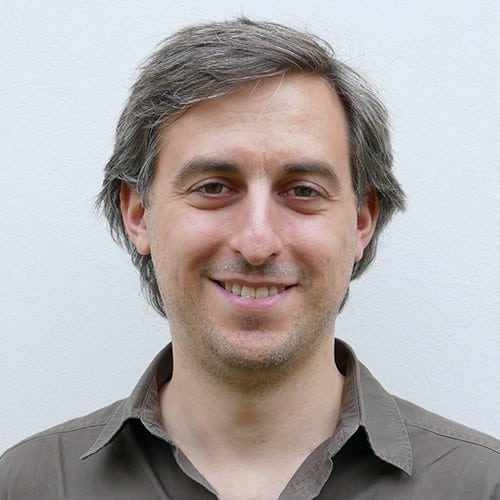
Alexander Arndt Pasgaard Xylander is a Post.Doc researcher at Aalborg University's Department of Health Science and Technology, affiliated with The Faculty of Medicine Public Health and Epidemiology. He holds a PhD in Biomedical Engineering and Neuroscience (2024) and a Master of Science in Public Health (2018). His research focuses on leveraging data-driven methods to improve healthcare equity, particularly in telemedicine and chronic disease management. Key areas include AI applications for telemonitoring, geospatial analysis of healthcare access, and machine learning for risk prediction in chronic heart failure patients. External positions include Subject Support Teacher at Olivia Danmark since December 2023. His work intersects biomedical engineering, public health, and machine learning, with notable contributions to synthetic data generation for medical signals and register-based cohort studies on healthcare utilization. Recent publications highlight innovations in interpretable AI models, telemedicine equity, and geospatial healthcare insights. No scientific awards are explicitly stated, but his research has garnered attention for its practical implications in public health policy.
Euan D. Lindsay, a researcher at Aalborg University in Denmark, focuses on the intersection of artificial intelligence and educational technology. His work explores the transformative potential of generative AI in academic feedback systems, learning analytics, and problem-based learning environments. A recurring theme in his research is the ethical and practical implications of automating educational processes. Research Interests: Lindsay’s scholarship spans Artificial Intelligence , Educational Technology , and Learning Analytics , with specific attention to generative AI applications, automated assessment tools, and pedagogical innovation in problem-based learning. He also investigates systemic reforms in higher education, particularly through the lens of academic leadership in Poland. Recent Work: In 2025, Lindsay published on generative AI ethics , Polish higher education reform , and student perspectives in AI-integrated classrooms. Earlier in 2024, his studies concentrated on automated assessment systems , learning analytics dashboards , and large language models for feedback . These contributions highlight his commitment to leveraging AI for scalable, data-driven educational improvements.
Søren Debois is an Associate Professor at the IT University of Copenhagen , specializing in the intersection of process technologies and IT security . His research focuses on technical solutions for trust between parties, including applications of blockchain to process management and declarative process models for legal-compliant municipal systems. He is a principal author on the DCR process modelling notation and architect of the DCR Workbench , contributing to the commercial dcrgraphs.net engine. He leads a work package in the Innovation Fund Denmark -funded EcoKnow project, aiming to align municipal case-management with legal compliance. A frequent expert in Danish media on IT security, he teaches Distributed Systems , Security I , and Security II at ITU. His accolades include the 2017 ITU Excellence in Teaching Award and a BPM '18 Best Paper Honorable Mention .
Gorm Bruun Andresen is an Associate Professor in the Department of Mechanical and Production Engineering at Aarhus University's College of Engineering. His research focuses on renewable energy systems, energy storage optimization, and climate change mitigation strategies. Specializes in energy system modeling Expert in Power-to-X technologies Investigates nuclear power's role in carbon-neutral systems Develops storage solutions for renewable integration Leads projects on European energy infrastructure His recent work analyzes the interplay between weather patterns and renewable energy production, exploring hydrogen storage systems, sector-coupled energy networks, and grid optimization strategies. He has contributed to multiple high-impact studies on decarbonization pathways and energy market participation models. Scientific Awards: Best Poster Award (2023) for Power-to-X integration research Active in both academic and practical energy transition initiatives, he led Aarhus University's student-employee rooftop photovoltaic project and participates in European energy system workshops. His research team explores storage technologies, market strategies, and climate impacts on energy design decisions.
Ulrich Doll is a Tenure Track Assistant Professor at the Department of Mechanical and Production Engineering, Aarhus University's College of Engineering. His research focuses on experimental fluid mechanics, laser-optical flow diagnostics, and turbomachinery flows. Key expertise: Flow distortion measurement, turbulent combustion, and machine learning integration Primary affiliation: Fluids and Energy section Techniques used: Filtered Rayleigh Scattering (FRS), Laser-Induced Fluorescence (LIF), CFD validation Recent work demonstrates trends in hydrogen fuel combustion , non-intrusive aero-engine diagnostics , and machine learning-assisted flow analysis . Publications span fluid dynamics, gas turbine technology, and nuclear safety radiation modeling.
Martin Dalgaard Ulriksen is an Associate Professor at Aarhus University's Department of Mechanical and Production Engineering, specializing in system dynamics and affiliated with the Mechatronics and Dynamics section. His work focuses on vibration theory, system identification, and control theory with applications in offshore structures and wind turbines. His research encompasses fault detection, parameter estimation, and digital twin technologies. Key projects include True Digital Twin (2024-2025) for wind turbine design and CP-SENS (2023-2026) for cyber-physical sensing in structural monitoring. Publications highlight methodologies like modal expansion, basis pursuit, and eigenstructure assignment for damage localization and system identification. Martin teaches vibration theory and system identification courses at both bachelor's and master's levels while supervising thesis projects. Current collaborations with researchers like D. Bernal demonstrate his emphasis on interdisciplinary approaches. Contact: mdu@mpe.au.dk | +45 93 50 88 66.
Michael Szell is Assistant Professor in the Department of Computer Science at the IT University of Copenhagen and External Faculty at the Complexity Science Hub Vienna. His interdisciplinary work bridges physics, mathematics, and computer science to study collective human behavior through large-scale data analysis and network modeling. Research Interests: His work centers on urban mobility, sustainability, and data visualization, with a focus on understanding how people interact with urban and online environments. Using computational and network-based methods, he investigates bicycle infrastructure, multimodal transport systems, sidewalk networks, and the social impacts of urban highways. His recent publications reveal a strong trend in urban sustainability and network science , particularly in optimizing bicycle networks and analyzing how urban design affects social connectivity. Articles in journals like Scientific Reports and PNAS highlight his impact in computational urban analytics. Award-winning developer of the massive multiplayer online game 'Pardus' Michael leads innovative research projects involving data-driven urban planning and has contributed to public discourse through media features and press highlights. His work often involves interdisciplinary collaboration and has practical implications for sustainable city development. He has developed interactive data visualization platforms and tools like BikeDNA for assessing cycling infrastructure.
Stefan Thurner is a Professor and Chair of Science of Complex Systems at the Medical University of Vienna, and President and co-founder of the Complexity Science Hub (CSH) in Vienna. He is also an external professor at the Santa Fe Institute. His work spans complex systems theory, network science, and applications in healthcare, economics, supply chains, and social dynamics. PhD in Theoretical Physics, TU Wien PhD in Economics, University of Vienna Habilitation in Theoretical Physics Postdoctoral positions at Humboldt University Berlin and Boston University Thurner's research focuses on the dynamics of complex adaptive systems, with applications in medicine (network medicine, comorbidity), financial and supply chain economics, systemic risk, social opinion dynamics, and healthcare resilience. He has published over 300 scientific articles and his work is widely covered in global media including The New York Times, BBC, Nature, and New Scientist. The recent 15 publications reflect a strong trend toward interdisciplinary applications of network science and complexity theory, particularly in healthcare (epidemiology, comorbidity, mental health), supply chain resilience, systemic risk modeling, and social dynamics. Key themes include the impact of shocks (pandemics, famines, war), network-based risk propagation, policy-relevant modeling, and data-driven insights into societal systems. Austrian Scientist of the Year (2017) Paul Watzlawick Ring of Honor (2021) Thurner leads major research initiatives at CSH, advising PhD students and collaborating with a wide network of researchers. He has been involved in forecasting models for pandemic response, supply chain risk assessment, election forensics, and policy recommendations for climate transition. His team leverages large-scale datasets from health registers, supply chains, and digital platforms to build predictive models of complex socio-technical systems. He advocates for data transparency and open science, particularly in public health and economic policy. Thurner leads the Complexity Science Hub, a multidisciplinary research institute focused on data-driven modeling of complex systems. The CSH team includes experts in network science, data analytics, economics, and public policy. The hub collaborates with national and international institutions, including the Austrian Central Bank (OeNB), and has spun off initiatives like Iknaio for forensic data analysis. Current projects include modeling societal metabolism, algorithmic fairness, and digital humanism.
Arthur Matsuo Yamashita Rios De Sousa is an Assistant Professor in the School of Computing at the Tokyo Institute of Technology, where he conducts interdisciplinary research bridging applied mathematics, statistical physics, and data science. His work focuses on the modeling and analysis of complex systems through stochastic processes, time series analysis, and network science. His primary research interests include: Applied Mathematics and Probability Theory Statistical Physics and Econophysics Complex Systems and Network Science Time Series Analysis and Forecasting Symbolic Dynamics and Entropy-Based Methods Power-Law and Heavy-Tailed Distributions His recent publications demonstrate a consistent focus on developing quantitative methods for analyzing financial time series, sales data, and other real-world complex systems. The articles span topics such as volatility modeling, network-based market analysis, multiscale entropy, and symbolic dynamics, reflecting a strong integration of theoretical physics and practical data science applications. Notable trends in his research include the use of entropy measures for regime detection, modeling of heavy-tailed phenomena in economics, and the application of complex networks to multivariate systems. These efforts contribute to both fundamental understanding and practical tools in econophysics and data-driven science. There are currently no listed scientific awards or honors in the provided text. Dr. Yamashita advises students in computational and quantitative research, particularly in areas related to data analysis of complex systems. While specific grant funding is not mentioned, his sustained publication record suggests active research support. He likely contributes to collaborative projects involving financial data modeling, nonlinear dynamics, and interdisciplinary applications of statistical physics. He is involved in academic events such as the Econophysics Colloquium and workshops at the Complexity Science Hub, indicating participation in international research networks focused on complex systems science.
Charlotte Ringsmose is a Professor at the Department of Culture and Learning, part of the Faculty of Social Sciences and Humanities at Aalborg University. Her work focuses on improving child well-being through effective leadership and quality enhancement in early childhood education and care (ECEC) settings. She leads initiatives such as Ledelse med mærkbar effekt for børnene and ViD: Vidensinformeret praksis i dagtilbud , emphasizing data-driven decision-making and organizational learning. Her research explores pedagogical practices, institutional development, and inclusive environments in daycare and afterschool programs. Collaborations with municipalities like Roskilde and Kolding highlight practical applications of her theoretical work. Key projects address leadership roles, spatial design impacts, and policy implementation in ECEC institutions. Ringsmose is a principal investigator in over 20 projects, including studies on preventive child welfare and professional development. Her activities span conferences, media engagements, and advisory roles, bridging academic research with practical educational needs. She co-leads the Collaborative Organizational Learning (CO-LEARN) initiative and contributes to the Laboratorium for praksisrettet dagtilbuds- og skoleforskning .
Sandra Burri Gram-Hansen is a Digitization Consultant at Aalborg University, affiliated with the Institute for Advanced Study in PBL and the Center for Digitally Supported Learning . Her work bridges Persuasive Technology , Computational Thinking , and Behavior Design , focusing on ethical digital solutions for societal challenges. Her research interests include: Persuasive Technology : Designing systems that ethically influence user behavior Computational Thinking : Developing frameworks for digital problem-solving Behavior Design : Exploring light/dark patterns in technology Digital Learning : Creating tools for educational empowerment In 2018, she received the Årets underviser på Kommunikation og Digitale Medier (Teacher of the Year in Communication and Digital Media) award. She has coordinated projects like SGO: Samskabende Grøn Omstilling (Collaborative Green Transition) and contributed to international conferences including Persuasive Technologies and CEUR-WS workshops.
Rolf Fagerberg is a Professor in the Department of Mathematics and Computer Science at the University of Southern Denmark (SDU). His research centers on algorithms, data structures, and their applications in computational biology and cheminformatics. His research interests include: Algorithms and data structures, particularly dynamic and geometric data structures Graph theory with emphasis on subgraphs, Yao graphs, and hypergraphs Algorithmic cheminformatics and modeling of chemical reaction networks Computational biology, including metabolic pathway analysis Theoretical computer science and discrete mathematics Recent publications highlight a strong trend toward interdisciplinary research combining computer science with chemistry and biology, particularly in modeling chemical reaction networks using hypergraphs and mixed-integer linear programming. His work also includes algorithmic solutions for palindromic subsequence problems and efficient extraction of reaction rules from large databases, reflecting a blend of theoretical and applied algorithm design. Rolf Fagerberg has served as senior coordinator on multiple research projects, including 'Algorithmic Cheminformatics' and 'Fundamental Data Structures', funded by the Danish Ministry of Higher Education and Research. He has also contributed to peer review and editorial work for major conferences such as the ACM Symposium on Parallelism in Algorithms and Architectures and the International Symposium on Experimental Algorithms. He has supervised PhD students and is actively involved in academic service, including membership in assessment committees at Aarhus University and IT University of Copenhagen. His research has received media attention, including coverage of a 'mathematical breakthrough' and applications in understanding intestinal systems in obesity.
Caroline Aggestam Pontoppidan is an Associate Professor in Accounting at Copenhagen Business School (CBS), specializing in Sustainable Development Goals (SDGs) , Integrated Reporting , and Public Sector Accounting . Her research explores the interplay between SDGs and integrated reporting in public and private sectors, global governance of public sector financial reporting, and institutional logics in international accounting practices. PhD in Accounting from CBS (2005) Former UNICEF professional (1997–2001) with expertise in project management (Prince2-certified) Focus on developing economies and transnational governance frameworks Her recent work includes establishing the PREMSED framework linking SDGs, measurements, and corporate reporting. Publications address topics such as IPSAS/EPSAS standards , non-financial reporting assurance , and sustainability integration in accounting education . She supervises research on public sector accounting, SDG implementation, and auditing profession dynamics. Caroline also holds a part-time teaching position at the University of Kristianstad since 2019, focusing on work-integrated learning models. She contributes to international conferences and peer-reviewed journals, emphasizing sustainability and accountability in public and private sector practices.
Haiyuan Wang is a Researcher at the Department of Energy Conversion and Storage at the Technical University of Denmark (DTU) . Their work focuses on atomic-scale modeling of materials for energy applications, particularly perovskite solar cells and quantum emitters in 2D materials. Research Interests Research spans Perovskite solar cell stability and defect passivation Quantum emitter engineering in 2D materials Machine learning for materials discovery Strain engineering in oxide membranes Electronic and vibronic coupling at interfaces Recent Publications Key contributions include 2025: Defect passivation in perovskite photovoltaics 2025: Room-temperature quantum emitters in α-MoO₃ 2024: Spatial conformation engineering for stable perovskite cells with methodologies ranging from first-principles simulations to data-driven approaches.
Riccardo Riva is a Special Consultant at the Department of Wind and Energy Systems at the Technical University of Denmark , specializing in wind turbine engineering and aeroelastic stability analysis. His work focuses on combining high-fidelity numerical modeling with machine learning for wind farm optimization, structural response prediction, and control system development. Key research areas: Wind turbine structural dynamics, surrogate modeling, and data-driven control systems Active supervisor in 4 PhD projects (2024-2027) related to wind farm co-design and structural modeling Recent publications address uncertainty propagation, vortex-induced vibrations, and multi-fidelity modeling approaches His research contributes to UN Sustainable Development Goals 7 (Affordable Energy) and 9 (Infrastructure Innovation). Current projects emphasize digital twin technology and floating offshore wind farm optimization.