Marco Badami is a Full Professor at the Department of Energy (DENERG) , Polytechnic of Turin. He serves as Scientific Director for national and EU-funded research projects in energy systems and has been a Course Lecturer for Energy Systems and Industrial Use of Energy since 2010. He supervises PhD students in Energetics and Electrical Engineering . Research Interests: His work spans energy systems optimization, machine learning applications for industrial energy efficiency, smart grids, cogeneration scheduling, blockchain-based energy data immutability, and predictive maintenance algorithms for photovoltaic plants. Current projects focus on AI-driven energy audits, optimized control systems for industrial microgrids, and digital twin architectures. Collaborations: He works with Trigenia Srl, Stogit SpA, and international institutions on commercial research contracts. His scientific contributions include 15+ publications on topics like LSTM forecasting for solar energy, deep reinforcement learning for multi-energy systems, and decentralized peer-to-peer energy trading platforms.
Falko Dressler is a Full Professor and Chair for Telecommunication Networks at the School of Electrical Engineering and Computer Science, Technische Universität Berlin. He holds a Ph.D. and M.Sc. in Computer Science from Friedrich-Alexander University of Erlangen-Nuremberg (1998-2003). His research focuses on next-generation wireless systems , distributed machine learning , edge computing , and applications in Internet of Things (IoT) , cyber-physical systems , and internet of bio-nano-things . Editorial roles: IEEE Trans. on Mobile Computing, Elsevier Computer Communications, IEEE/ACM Trans. on Networking Conference leadership: IEEE INFOCOM, ACM MobiSys, IEEE VNC Textbooks: Self-Organization in Sensor and Actor Networks (Wiley), Vehicular Networking (Cambridge) Recent publications highlight trends in Edge Computing Resilience and 6G Network Architecture , with a strong emphasis on Molecular Communication , Terahertz Band Synchronization , and Federated Learning in vehicular environments. Scientific contributions include multiple IEEE Fellow , ACM Fellow , and VDE ITG Prize 2023 recognitions. Advisory and professional activities include membership in the German National Academy of Science and Engineering (acatech), IEEE COMSOC Conference Council, and ACM SIGMOBILE Executive Committee. His work spans cooperative driving, ultra-low power sensor networks, and security in nano-communication systems.
Prof. Dr. Harald Ritz serves as Professor of Practical Computer Science, especially Business Informatics, at the Technical University of Central Hesse (THM) within the Department of Mathematics, Natural Sciences and Computer Science since 2003. He holds leadership roles as Chair of Examination Committees for B.Sc. and M.Sc. Business Information Systems and Spokesperson for the MNI department in the Business Informatics Working Group (AKWI). His educational background includes a Diplom in Business Informatics (Dipl.-Wirtsch.-Inform.) and doctorate (Dr. rer. pol.) from the Technical University of Darmstadt, following professional experience at SAP SI AG and a professorship at Heilbronn University of Applied Sciences. Ritz's research centers on AI-driven digital transformation for data-driven enterprises, with focus on the “Data to Decision” value chain encompassing Framing, Allocation, Analytics, and Preparation phases. His work integrates business intelligence, data warehousing, machine learning, and SAP ecosystems to address challenges in SME digitalization, operational IT management, and educational technology. Current projects emphasize AI applications in higher education, including intelligent tutoring systems and automated feedback mechanisms. Analysis of his 15 most recent publications reveals a consistent trajectory toward applied AI solutions in business contexts, particularly in intelligent chatbots for educational support, financial trading algorithms, and cloud-based data infrastructure. The research demonstrates increasing integration of no-code platforms, real-time analytics, and domain-specific AI applications across logistics, banking, and procurement sectors. No scientific awards were documented in the source materials. Professor Ritz actively supervises academic development through bachelor’s and master’s theses, doctoral research, and collaborative projects. Current initiatives include the “Winfy” AI chatbot (v4.0, 2025), AI-based feedback systems for educational content (Freiraum 2025 grant), the frits intelligent tutoring project with Prof. Kammer, and doctoral research on AI adoption in SMEs. His work bridges theoretical research with practical implementation in SAP environments and cloud platforms. He operates within THM’s MNI department infrastructure, collaborating through the Business Informatics Working Group (AKWI) and contributing to the Digital Classroom communication platform for online education.
Benedikt Fecher is a Scientific Advisor at the OrA project at CATALPA Graduate School , affiliated with the FernUniversität in Hagen . He leads the 'Knowledge & Society' program area at the Alexander von Humboldt Institute for Internet and Society (HIIG) since 2017. Research Interests include data-driven research, open science & open access, research infrastructures, science communication, and societal impact measurement. His work explores how digitization transforms academic practices and societal engagement. Publications highlight interdisciplinary approaches to societal impact assessment, digital education, and the role of open science in the social sciences. Recent studies focus on EdTech adoption during the pandemic and strategies for building sustainable research infrastructures. Labs & Teams : Fecher collaborates with the CATALPA research cluster, which emphasizes cross-institutional, solution-oriented interdisciplinary research.
Andreas Langenohl is a full Professor at the Institute of Sociology , Justus Liebig University Giessen , holding the Chair in General Comparative Studies. He has held fellowships at institutions like the Kulturwissenschaftliches Kolleg (Konstanz) and the Collaborative Research Center in Freiburg, and is an Extra-Ordinary Professor at North-West University (South Africa). PhD in Social Sciences (1999, magna cum laude ), Justus Liebig University Giessen M.A. in Sociology and Slavic Philology (1996, with highest honors ) His research spans economic sociology , financial market temporality , security studies , and cultural foundations of integration . He explores intersections of finance and politics, infrastructural security, and socio-temporal dynamics in economic theory. Recent work focuses on geoeconomic hegemony during the Ukraine conflict, pandemic security governance, and decentralized finance algorithms. Scientific Awards : Karl-Polanyi-Award (2010) for economic sociology Wolfgang-Mittermaier-Award (2007) for academic teaching Knowledge Unlatched Open Access selection (2020) Grants : He has secured multiple DFG and foundation grants for projects on financial infrastructures, securitization, and EU-Russia relations, including collaborations with institutions like Cornell University and the Einaudi Center for European Studies. Labs & Teams : Langenohl leads projects within the Collaborative Research Centre/Transregio 138 Dynamics of Security (Giessen & Marburg) and contributed to the Center of Excellence Cultural Foundations of Integration (Konstanz).
Seongjin Choi is an Assistant Professor in the Department of Civil, Environmental, and Geo-Engineering at the University of Minnesota, Twin Cities , where he began his role in January 2024. His research bridges Urban Mobility Data Analytics , Spatiotemporal Modeling , and Deep Learning to advance transportation systems. Affiliated with the Center for Transportation Studies , Minnesota Robotics Institute , and Data Science Initiative , he leads the Choi Research Group . Education: Ph.D., Civil and Environmental Engineering, Korea Advanced Institute of Science and Technology (KAIST), 2021 M.S., Civil and Environmental Engineering, KAIST, 2017 B.S., Civil and Environmental Engineering, KAIST, 2015 His research focuses on Urban Mobility Data Analytics and Deep Learning to optimize transportation systems. Key areas include: Spatiotemporal Data Modeling for forecasting and imputation Generative AI applications in transportation data Reinforcement Learning for Connected Automated Vehicles (CAV) Cooperative Intelligent Transport Systems (C-ITS) Recent publications in Transportation Science and Transportation Research Part C highlight his work on probabilistic traffic forecasting , deep generative models , and vision-language-action frameworks for autonomous systems. His methodologies often combine AI-driven analytics with real-time mobility optimization . Dr. Choi serves as: Associate Editor of The Journal of the Korean Society of Transportation (JKST) , 2023–Present Guest Editor for Journal of Advanced Transportation special issue on "Advanced Data Intelligence Theory and Practice in Transport 2023", 2023–2024 He actively seeks PhD students/postdocs for 2025 cohorts focused on machine learning for transportation challenges. Current projects include AI-enhanced traffic forecasting, CAV control, and urban air mobility (UAM) integration studies.
Federico Silvestro is a Full Professor at the University of Genoa , affiliated with the Naval, Electrical, Electronic and Telecommunications Engineering Department . His academic roles include being a Course Coordinator, Department Council Member, and Deputy Director of DITEN. His research focuses on Power systems stability and control Cybersecurity in energy networks Electric propulsion for marine applications Optimal energy storage and microgrid design Integration of renewable energy in maritime contexts Recent publications highlight trends in data-driven power system analysis , DC microgrid modeling , cybersecurity for virtual power plants , and advanced energy management strategies for maritime and port systems. Email: federico.silvestro@unige.it He leads the ENET-RT Lab , focusing on real-time power systems simulation and co-simulation platforms for marine and grid applications.
Dr. Christian Russ is a Senior Lecturer at the Institute of Business Information Technology , Zurich University of Applied Sciences (ZHAW), with expertise in digital transformation, IT leadership, and business-IT alignment. His work spans healthcare, education, and automotive sectors, focusing on agile IT governance and adaptive business models. Current roles: Program Director MAS IT-Leadership and TechManagement Key projects: ZHAW Digital Culture Assessment, Monitoring eCH Standards Research interests include digital transformation , agile IT , health informatics , and emerging technologies . Recent publications analyze post-pandemic organizational culture, medical AI regulation, and cloud infrastructure in healthcare. 2025: Organizational culture shifts during/after pandemic 2024: ML solutions in Swiss hospitals under MDR 2023: iPaaS cloud security in healthcare 2023: Agile transformation in non-profits Scientific recognitions: Best Paper Award at SMART 2018 "Educate to lead" award (Soroptimist International Europa, 2016) Active in the ZHAW Digital Health Lab, he leads projects on tech startup coaching, digital ecosystems, and IT governance. His teaching covers IT strategy, digital transformation, and enterprise service management at ZHAW.
Paolo Prandoni is a Lecturer at École Polytechnique Fédérale de Lausanne (EPFL) in the School of Computer and Communication Sciences (IC). He serves as a Scientist in the Audiovisual Communications Laboratory (LCAV) and teaches in the SSC-ENS and SIN-ENS units, focusing on signal processing theory and practical applications in audiovisual communications. He earned his PhD from EPFL after completing all prior education there, driven by childhood fascination with long-distance telephony. His doctoral work established foundations in communication systems that continue to inform his research. Prandoni's research spans audio/image processing, machine learning for media analysis, and DSP education. Key areas include computational photography (e.g., spectral imaging, stained glass rendering), speech quality assessment via transfer learning, music information retrieval (e.g., fingering prediction), and audience analytics through his company Quividi. His work consistently bridges theoretical signal processing with real-world implementation. Recent publications reveal a strategic shift toward machine learning integration in signal processing tasks, particularly non-intrusive speech assessment and lensless imaging reconstruction. Simultaneously, he advances DSP pedagogy through MOOC development and hands-on teaching tools using off-the-shelf hardware, emphasizing accessibility and practical skill development. No scientific awards are documented in the provided materials. He has advised PhD student Thanikachalam Niranjan (thesis: Image Based Relighting of Cultural Artifacts , 2016) and teaches Communication Systems and Computer Science courses. His educational impact extends through the open-access textbook Signal Processing for Communications (2008) and tools like MultiPub for maintainable online classes. Industry engagement includes Quividi co-founding (2006) and ongoing CSO role in attention analytics. As a core LCAV laboratory member, he collaborates on interdisciplinary projects including cultural heritage digitization, embedded signal processing systems, and real-time audience measurement, leveraging EPFL's infrastructure for both academic and commercial applications.
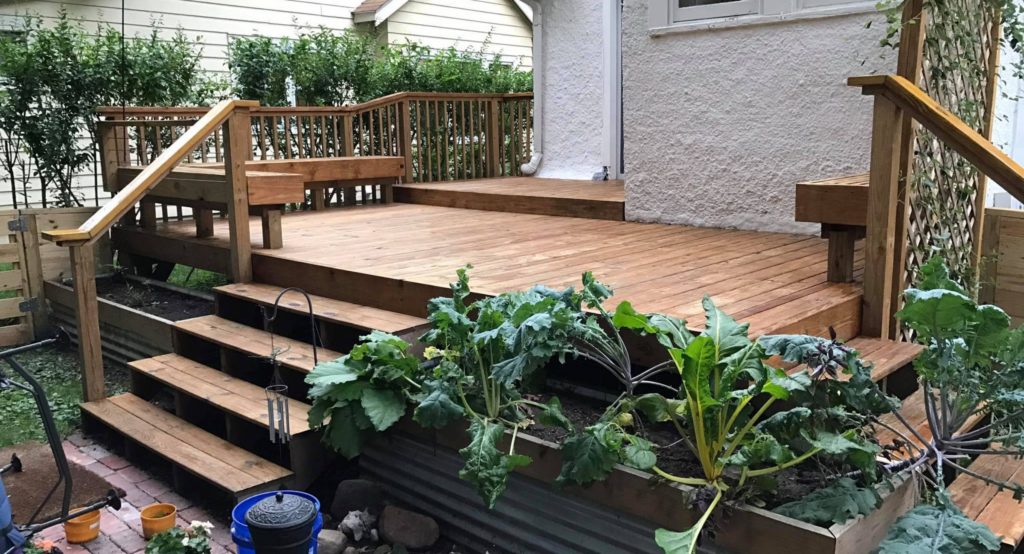
Keenan Gibbons is a Lecturer in Environment Sustainability and Development at the University of Michigan’s School of Environment, Art, and Society. A licensed landscape architect and urban design professional based in Detroit, he specializes in sustainable green infrastructure, parks, streetscapes, and innovative stormwater management strategies. With expertise in digital media, parametric modeling, and FAA-certified drone operations, he conducts research on urban heat island effects supported by the Landscape Architecture Foundation. Education Master of Landscape Architecture, Ball State University Bachelor of Science in Horticulture, Michigan State University His research interests integrate environmental sustainability with urban design , focusing on climate resilience through drone-based thermal imaging and low-impact construction . Publications highlight his work on UAV thermal disparity visualization and community-driven urban regeneration , including notable projects like Riverside Park Detroit . He received the LAF Deb Mitchell Research Grant for his heat wave visualization toolkit. Keenan’s projects include concrete-free construction for fences, decks, and planters, emphasizing reclaimed materials and DIY innovation . His work has been featured in CNN , The Weather Channel , and professional journals like MiASLA SITES . As an educator, he bridges environmental theory with hands-on design practice , often involving community stakeholders in his projects.
Lisa Grant Ludwig is a Professor in the Department of Population Health and Disease Prevention at the University of California, Irvine (UCI). She is a nationally recognized expert in earthquake science, focusing on translating geophysical research into policy for disaster risk reduction. Her work bridges seismology, public health, and policy implementation. PhD in Geology with Geophysics minor (Caltech) MS in Environmental Engineering Science (Caltech) BS in Applied Environmental Earth Science (Stanford) Dr. Ludwig's research centers on earthquake dynamics, particularly along the San Andreas Fault, advancing disaster resilience through innovative nowcasting techniques using AI and machine learning. Her publications demonstrate expertise in seismic hazard modeling, geodetic imaging, and community preparedness studies. Recent publications highlight AI-enhanced earthquake prediction (QuakeGPT), temporal-spatial nowcasting models, and applications of geodetic data for crustal deformation analysis. These works integrate machine learning with traditional seismological methods to improve hazard forecasting. President of Seismological Society of America NASA 2012 Software of the Year Medal Featured on Science magazine cover Congressional Testimony provider Active Federal Advisory Committee member Her interdisciplinary approach combines geophysics, public health policy, and computational science. Current projects focus on earthquake nowcasting, fault zone analysis, and developing accessible geospatial tools like GeoGateway for disaster response.
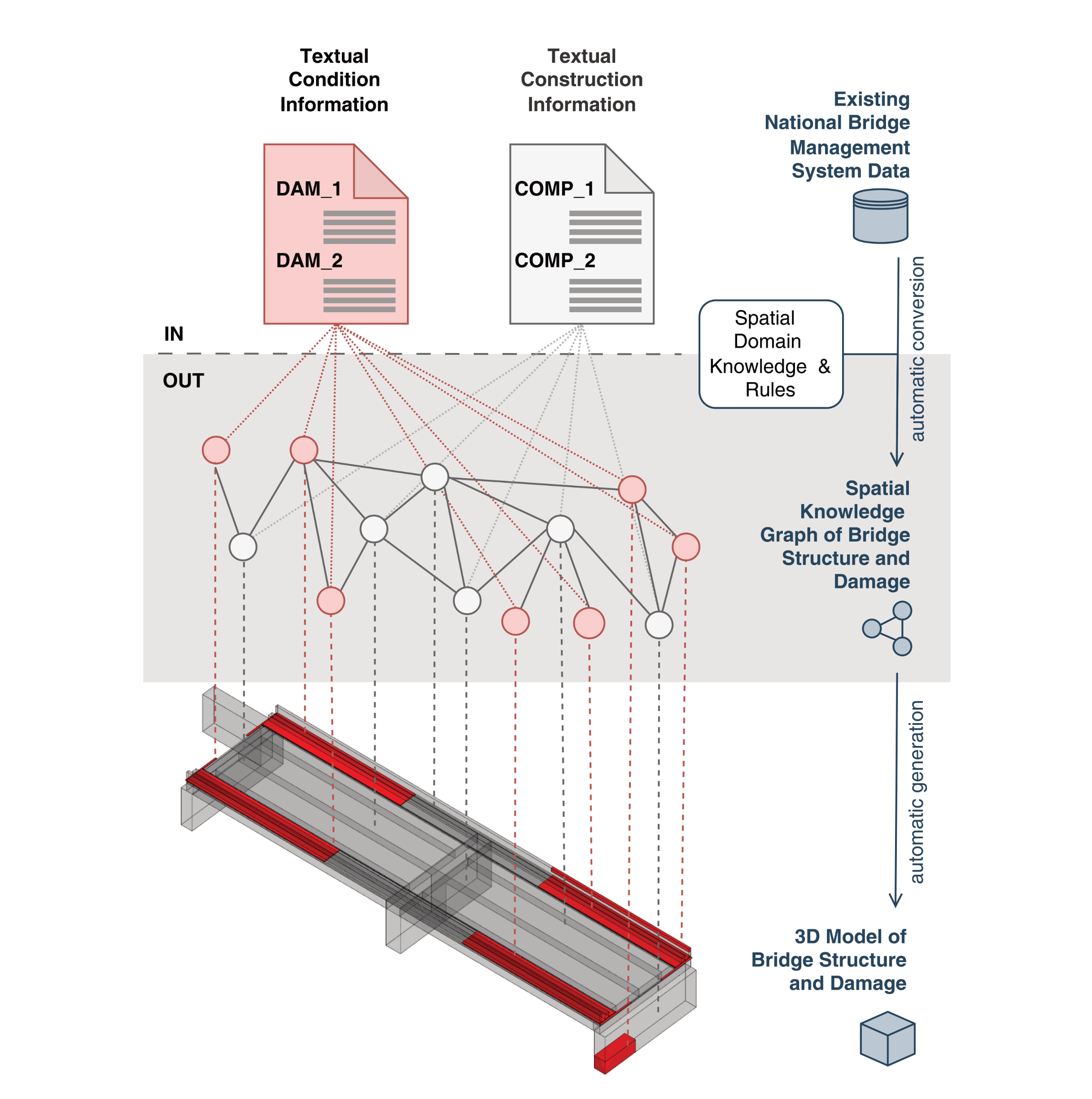
Prof. Dr. Jakob Beetz serves as a University Professor at RWTH Aachen University's Faculty of Architecture, leading the Design Computation (DC) research group. His work addresses critical challenges in sustainable built environments through digital innovation, focusing on integrating knowledge, information, and data across disciplines to reduce the sector's energy and material consumption—which accounts for over one-third of global totals—while advancing climate goals under the European Green Deal. His research spans Building Information Modeling (BIM), digital twins, and artificial intelligence, with emphasis on graph-based data federation, semantic web technologies, and large language models in construction. Key interests include evidence-based planning, parametric design optimization, building physics simulation, and networked knowledge modeling. Recent projects explore federated digital twin ecosystems for infrastructure management, intelligent damage assessment systems, and AI-driven solutions for wood structure preservation, directly contributing to sustainable development targets. Analysis of his 2024-2025 publications reveals a cohesive trajectory toward decentralized data environments and AI integration in Architecture, Engineering, and Construction (AEC). His work bridges theoretical foundations in knowledge representation with practical applications in bridge maintenance, road infrastructure, and timber construction, demonstrating consistent innovation in spatial data querying, federated issue management, and ontology-based process modeling. Prof. Beetz actively supervises PhD candidates, as evidenced by DC.Promotions 2024, and drives international collaboration through events like the Forum Construction Informatics 2025 and CIB W78 conferences. His research group engages with industry standards including Industry Foundation Classes (IFC) and Common Data Environments (CDEs), emphasizing open data principles and interoperability to transform construction workflows.
Miguel Mahecha is Professor of Environmental Data Science and Remote Sensing at the University of Leipzig, where he serves as Institute Head of the Institute for Earth System Science and Remote Sensing. He is also affiliated with the Remote Sensing Centre for Earth System Research, a collaboration between Leipzig University and the Helmholtz Centre for Environmental Research (UFZ). Mahecha is a member of the German Centre for Integrative Biodiversity Research (iDiv) and serves as Principal Investigator in the Centre for Scalable Data Analytics and Artificial Intelligence. Additionally, he is a Fellow of the European Laboratory for Learning and Intelligent Systems and co-spokesperson for the National Research Data Infrastructure for Earth System Sciences (NFDI4Earth). Full Professor for Modelling Approaches in Remote Sensing, University of Leipzig (since 03/2020) Research Group Leader: Empirical Inference in the Earth System, Max Planck Institute for Biogeochemistry, Jena (12/2012 - 03/2020) PostDoc, Max Planck Institute for Biogeochemistry, Jena (10/2009 - 11/2012) PhD in Environmental Sciences, ETH Zürich (06/2006 - 09/2009) Diploma in Geoecology, Bayreuth University (10/2000 - 04/2006) Mahecha's research focuses on understanding ecosystem responses to climate extremes and human-environment relationships during these events. He investigates macro-ecological dynamics and ecosystem functioning using data-driven methods and high-dimensional Earth observations. A key contribution is his co-development of the Earth System Data Cube concept, which integrates empirical methods with theoretical understanding to analyze complex Earth system interactions. His work spans biogeography, ecosystem functioning, and advanced data science methodologies for environmental monitoring. His recent publications demonstrate a strong emphasis on analyzing compound climate extremes, particularly heatwaves and droughts, and their impacts on ecosystems. Mahecha has pioneered methods using Earth System Data Cubes to integrate diverse environmental datasets, enabling novel insights into biosphere-atmosphere interactions. His research increasingly incorporates artificial intelligence and machine learning approaches to understand spatiotemporal patterns in ecological systems, with applications in real-time forest monitoring and biodiversity assessment. Fellow of the European Laboratory for Learning and Intelligent Systems Co-spokesperson for NFDI4Earth (National Research Data Infrastructure for Earth System Sciences) Mahecha leads multiple significant research projects including Digital Forest (real-time forest monitoring), NFDI4BioDiversity, and XAIDA (extreme events: AI for Detection and Attribution). His work receives funding from diverse sources including EU, DFG, and Stiftungen Inland. He collaborates extensively with the German Centre for Integrative Biodiversity Research (iDiv) and the Centre for Scalable Data Analytics and Artificial Intelligence. His research group, Earth System Data Science (ESDS), focuses on developing methods to extract valuable information from long-term environmental observations to understand coupled Earth system dynamics. At the Remote Sensing Centre for Earth System Research, Mahecha's ESDS group investigates how ecosystem functions respond to climate extremes, societal vulnerability to environmental hazards, and nonlinear interactions in coupled Earth systems. The group leverages citizen science data, remote sensing observations, and advanced computational methods to address pressing environmental questions.
Kavita Bala is the 17th Provost of Cornell University and a Professor of Computer Science. She previously served as the inaugural Dean of the Cornell Ann S. Bowers College of Computing and Information Science, leading its transition to a degree-granting college by 2025, and as Chair of Cornell’s Department of Computer Science. Her academic leadership includes expanding faculty, establishing research programs like the Bowers CIS Undergraduate Research Experience (BURE), and securing a new research facility for computing and information science. Education: B.Tech (IIT Bombay), M.S. and Ph.D. (MIT, Computer Science) Bala’s research focuses on computer vision, artificial intelligence, and computer graphics , with groundbreaking work in material and style recognition using deep learning. Her innovations in crowdsourced training data and differentiable rendering have advanced visual search technologies and translucent material modeling, powering her startup GrokStyle. She pioneered AI techniques applied to environmental monitoring through projects like MONITRS and AllClear , addressing Earth observation challenges. Her scientific awards include: American Academy of Arts and Sciences (2025) SIGGRAPH Computer Graphics Achievement Award (2020) IIT Bombay Distinguished Alumnus Award (2021) ACM Fellow (2019) SIGGRAPH Academy Fellow (2020) As Provost, Bala drives strategic initiatives like the Cornell AI Initiative , creating interdisciplinary minors in AI and AI in Society, and establishing the Schmidt AI in Science postdoctoral program. She co-chaired a task force for generative AI guidelines in education.
Dwight Houweling is an Associate Professor in the Department of Civil, Geological and Mining Engineering at Polytechnique Montréal . His expertise focuses on environmental engineering and wastewater treatment , particularly in nutrient removal, biological processes, and modeling. B.Sc. in Civil Engineering (Queen’s University) Ph.D. in Civil Engineering (Polytechnique Montréal) Industrial Postdoctoral Fellow at EnviroSim Assoc. Ltd. Research interests include municipal/industrial wastewater treatment , phosphorus/nitrogen removal , biofilm systems , mechanistic modeling , and sludge densification . His work bridges activated sludge optimization , membrane-aerated biofilms , and green wastewater solutions . Recent publications emphasize modeling frameworks for nature-based solutions , biofilm technology in retrofitting plants , and sludge characterization in lagoons . He collaborates with institutions like EnviroSim Assoc. Ltd. and contributes to the Laboratoire de génie de l'environnement (LGE) at Polytechnique Montréal.