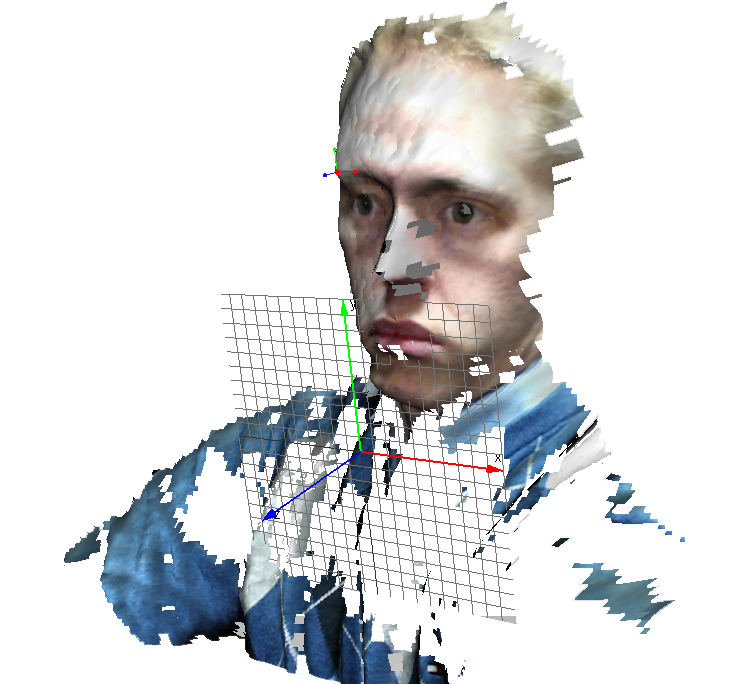
Dr. Gordon Carlson is an Associate Professor in the Department of Communication Studies at Fort Hays State University (FHSU), Kansas. He holds a doctorate in New Media Communication from the University of Illinois at Chicago and has taught at institutions in Oregon, Chicago, Hawaii, and Kansas City. His work focuses on new media’s intersection with rhetoric, emphasizing interactive, collaborative, and virtual technologies. Education: Bachelor's and Master's in Communication, Oregon State University Doctorate in New Media Communication, University of Illinois at Chicago Research Interests: His research explores how new media disrupt and converge with rhetorical frameworks. He leads the Institute for New Media Studies , which develops transdisciplinary projects like 3D visualization tools for education (e.g., livestock anatomy, human brain structures) and immersive platforms for emergency training, campus navigation, and mascot-driven outreach. Projects include Tiger Range (3D campus modeling), Virtual Library (immersive library exploration), and Virtual Victor (synthetic mascot communication). Grants & Projects: Modular Smart Classroom (IMLS grant, $61,889, 2018) A-Star (robot concierge for library navigation) Labs/Teams: He directs the Institute for New Media Studies, which collaborates across disciplines to create innovative educational and communication technologies. The institute’s work spans VR applications, AI-driven avatars, and pedagogical tool development.
Wasim Ahmad is a Senior Lecturer (Associate Professor) in Signal Processing and Machine Learning at the School of Engineering, University of Glasgow. He earned his PhD from the University of Surrey (2011) and held prior academic positions at the University of Hull (2013–2015) and the University of Surrey (2011–2013). He is part of the Communication, Sensing and Imaging (CSI) research group at Glasgow, focusing on applications of signal processing and machine learning in sound modeling, robot audition, healthcare technologies, and IoT-based systems. Education: PhD in Engineering from the University of Surrey (2011), followed by postdoctoral roles at Hull and Surrey before joining Glasgow in 2015. Research Interests: His work spans signal processing for assistive technologies, teleoperation systems, activity recognition, and IoT-enabled healthcare monitoring. He has pioneered projects like radar-based indoor navigation for visually impaired individuals and emotion recognition for human-robot interaction. Publications: Over 40 peer-reviewed articles, with recent focus on edge computing optimization, immersive VR education, and teleoperation interfaces. His work bridges theoretical advancements with practical applications in robotics, healthcare, and education. Grants: Recipient of the University of Glasgow Learning and Teaching Development Fund (2017–2018) for student-staff partnership in assessment innovation. Teaching: Leads courses on real-time systems, microelectronics, and programming, emphasizing hands-on engineering projects. Supervised MSc/PhD students in telerobotics and edge computing. Labs/Teams: Active contributor to the CSI group, collaborating on projects involving sensor networks and AI-driven systems.
Roles & Affiliations: Professor of Computer Graphics at the Department of Computer Science, University of Hong Kong (since 2020). Previously at University of Edinburgh (2006-2020), City University of Hong Kong (2002-2020), and RIKEN (2000-2002). Holds a BSc, MSc, and DSc in Information Science from the University of Tokyo. Research Interests: Focuses on physically-based animation, character animation, 3D modeling, cloth animation, and robotics. Recent work emphasizes machine learning integration into animation synthesis. Notable projects include MotionNet (3D motion reconstruction), neural state machines for character interactions, and fracture simulation with material points. Publications: Over 100 peer-reviewed papers spanning SIGGRAPH, Eurographics, and IEEE journals. Recent work emphasizes deep learning applications in animation, medical imaging analysis, and physics-based simulations. Key trends include neural networks for motion synthesis, transformer-based models for 3D gestures, and topology-aware shape reconstruction. Awards: Royal Society Industry Fellowship (2014), Google AR/VR Research Award (2017). Recognized for contributions to physically-based animation and medical imaging AI. Labs & Collaborations: Leads research groups in computer graphics and AI at HKU. Collaborates with institutions on robotics, VR/AR, and medical imaging projects. Active in organizing SIGGRAPH and Eurographics conferences.
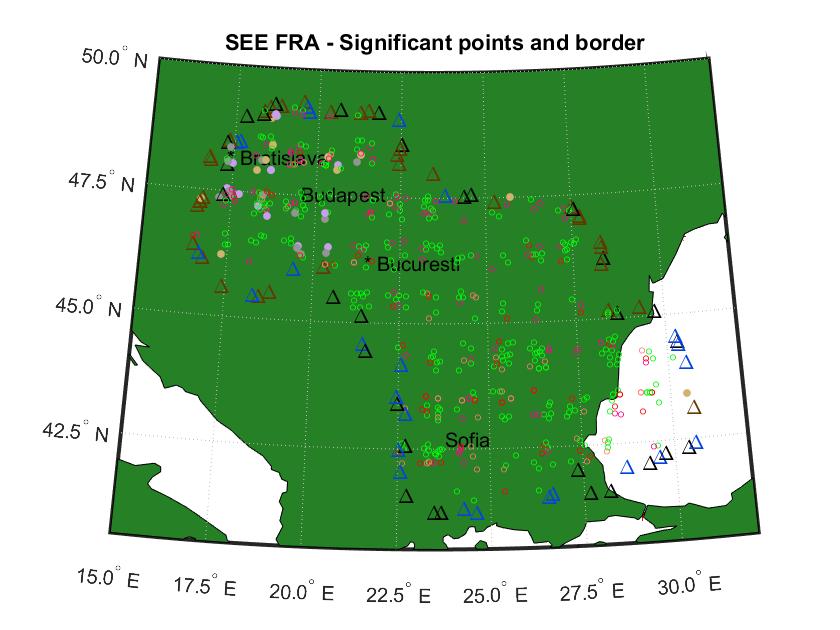
Peter Szabó is an Associate Professor at the Department of Aviation Technical Training , Faculty of Aeronautics , Technical University of Košice , Slovakia. He is actively involved in research at the intersection of mathematics, computer algebra, and aerospace engineering. Academic Affiliation: Technical University of Košice, Faculty of Aeronautics, Department of Aviation Technical Training Research Interests include: Mathematical modeling in aviation (Free Route Airspace, complex networks) Linear algebra and numerical methods with MATLAB/SageMath Calculus education and computational techniques Graph theory applications to air traffic systems Recent Article Trends highlight: Integration of calculus and numerical analysis for educational tools (2025) Mathematical axioms for airspace modeling (2022) Cloud computing in aviation research (2022) Linear algebra textbooks and computational exercises (2019) Advising : Mentored students on topics ranging from satellite stabilization to air traffic optimization.
Dr. Fabrizio Russo is a Research Associate in the Computational Logic and Argumentation group within the Department of Computing at Imperial College London's Faculty of Engineering. He obtained his PhD in Safe and Trusted AI from Imperial College in 2025, funded by the UKRI Centre for Doctoral Training (STAI). Previously, he spent six years in industry as Head of Data Science at 4most Europe, specializing in credit risk modeling. His research focuses on augmenting human decision-making through Causal Discovery , Computational Argumentation , and Explainable AI . He develops transparent techniques that integrate causality with machine learning to create contestable AI systems for high-stakes domains. Key interests include human-AI debate frameworks, knowledge injection in neural networks, and Shapley-based causal structure learning. Publications demonstrate sustained contributions to knowledge-driven AI , with recent works exploring argumentative causal discovery (2024), contestable neural networks (2023), and classifier explanation methods (2023). Research consistently combines formal reasoning with practical applications in trustworthy AI. Awards & Recognition: AISTATS 2023 Top-Reviewer Award Teaching & Service: Served as Graduate Teaching Assistant for Introduction to Machine Learning (2021-2022). Co-organizes the Explainable AI Seminars @ Imperial and contributes as reviewer for top conferences (ICLR, NeurIPS, ICML). Assistant Chair for XAI-FIN workshops at ICAIF (2022-2024).
Francesc Rodriguez Ferrer is an Associate Professor in the Department of Architecture and Construction Engineering at the University of Girona, specializing in Architectural Graphic Expression. He is affiliated with the Complex Systems Research Group (GSC), contributing to interdisciplinary research at the intersection of architecture and computational systems. His research focuses on architectural representation, digital modeling, and the application of complex systems theory in design and construction processes. These interests align with both his academic department and active research group, suggesting a strong engagement with innovative methods in architectural education and practice. The trends in his expected scholarly work emphasize visualization techniques, computational tools in architectural design, and systemic approaches to construction engineering. These domains reflect current advancements in digital architecture and engineering integration. Scientific awards: None listed. There is no public information regarding graduate student supervision, research grants, or funded projects. However, his affiliation with the Complex Systems Research Group implies potential involvement in collaborative research initiatives. He is a member of the Complex Systems Research Group (GSC), which likely involves interdisciplinary work connecting architecture, engineering, and systems thinking, possibly integrating data-driven design or generative modeling approaches.
Danielle Aubert is Professor of Practice in the Arts at the University of Chicago's Department of English, where her work bridges graphic design practice, writing, and critical analysis of production labor in print and digital media. Education: M.F.A., Yale University, 2005 Her research centers on the material conditions of graphic production, examining how software, equipment, and labor practices shape design outcomes within political movements and community contexts. She investigates typography's socio-political dimensions, print materiality, and the history of book production with emphasis on radical publishing traditions and reader interactions with texts. Her publications reveal consistent engagement with community-driven design practices and the politics of reproduction, spanning historical analysis of 1970s leftist printing cooperatives to contemporary digital media experiments. This trajectory demonstrates interdisciplinary methodology combining archival research, artistic practice, and critical theory. Awards: Fellow in the Creative and Performing Arts, Lewis Center for the Arts, Princeton University Kresge Award (2021) Aubert's pedagogy integrates studio practice with critical theory through courses like 'Graphic Design and Social Movements' and 'Advanced Typography,' emphasizing design's role in labor movements and technological evolution. Her co-curation of the 2021 Cranbrook Museum of Art exhibition demonstrates sustained collaboration with art institutions to contextualize design history within broader cultural narratives.
Jun Luo is an Associate Professor in the School of Computer Science and Engineering at Nanyang Technological University (NTU), Singapore. He earned his PhD in Computer Science from EPFL under the supervision of Prof. Jean-Pierre Hubaux and completed postdoctoral research at the University of Waterloo. He joined NTU in 2008 as an Assistant Professor and was promoted to Associate Professor in 2014. He served as Deputy Director of the Centre for Multimedia and Network Technology from 2010 to 2013. Education: PhD in Computer Science, Swiss Federal Institute of Technology in Lausanne (EPFL), 2006 MS in Electrical Engineering, Tsinghua University, 2000 BS in Electrical Engineering, Tsinghua University, 1997 Research Interests: Jun Luo's research focuses on mobile and pervasive computing, wireless networking, machine learning, and applied operations research. His primary research thrusts include: Contact-free Sensing Driven by Deep Learning : Leveraging RF, acoustic, and visible light signals for human activity recognition, respiration monitoring, and localization without wearable devices. Visible Light Communication and Sensing : Exploring LED-camera systems for data transmission, occupancy inference, and indoor broadcasting. Indoor and Outdoor Localization and Tracking : Developing systems using WiFi, geomagnetism, and crowdsourced data for precise positioning. Machine Learning for Mobile Networking : Applying deep learning and optimization to improve wireless network performance, mobile crowdsensing, and resource allocation. Publication Trends: His recent publications (2021–2023) demonstrate a strong focus on deep learning-enhanced sensing using RF and acoustic signals, particularly for health monitoring (e.g., respiration, heartbeat), multi-person tracking, and privacy-preserving techniques. He frequently collaborates with researchers in signal processing, computer vision, and networking, publishing in top venues like IEEE Transactions on Mobile Computing, MobiCom, and INFOCOM. His work emphasizes practical deployment on commodity devices and integration of sensing with communication systems. Scientific Recognition: IEEE Fellow Advising and Grants: Dr. Luo has advised numerous PhD and Master's students, as evidenced by the extensive list of student co-authors across his publications. He has led significant research projects in wireless sensor networks, mobile computing, and IoT systems, likely supported by competitive grants from Singaporean and international funding agencies. His role as Deputy Director of a research center indicates leadership in managing research teams and collaborative efforts. Labs and Teams: He leads a research group focused on mobile and distributed computing, deep learning, and computer vision. His team actively publishes in top-tier conferences and journals, working on projects involving RF sensing, acoustic platforms, visible light communication, and privacy-aware systems. The group collaborates with researchers both within NTU and internationally, particularly in Canada and China.
Martin Schörner is a Researcher at the Institute for Software & Systems Engineering within the Faculty of Applied Computer Science at the University of Augsburg, Germany, where he has been affiliated with the Chair of Software Engineering since 2019. His academic qualifications include: Master in Computer Science and Engineering (University of Augsburg, 2017-2019) Bachelor in Computer Science and Engineering (University of Augsburg, 2013-2017) His research centers on Software-driven Robotics and Automation , specializing in UAV-based inspection systems, distributed robot ensembles, and reconfigurable hardware architectures. His work bridges theoretical software engineering with practical robotics applications, focusing on autonomous navigation, emergency control systems, and semantic integration for industrial automation. Analysis of his 2020-2023 publications reveals a concentrated research trajectory in UAV inspection methodologies, featuring advancements in offline/online path planning, ROS 2 interfaces, and plug-and-play systems. Key thematic clusters include real-time route optimization for large-component inspection, emergency control architectures for UAV swarms, and semantic frameworks for hardware reconfiguration. No formal scientific awards or fellowships are documented in the available sources. While no student advisement records or specific grant funding details are publicly listed, his collaborative work with Prof. Wolfgang Reif and colleagues indicates active participation in institutional research initiatives. Current projects emphasize industrial automation through UAV ensembles and reconfigurable systems. He operates within the Software Engineering team at the Institute for Software & Systems Engineering (ISSE), which conducts fundamental and applied research under Prof. Reif's direction. The institute focuses on robotics software engineering, with applications in industrial inspection and autonomous systems development.
Valerio Della Scala è un Assistant Professor presso il Department of Architecture and Design (DAD) del Politecnico di Torino. La sua ricerca si concentra su urban design , architectural composition , e postwar reconstruction , con approcci innovativi che integrano GeoBIM e design-led methodologies . Collabora frequentemente con Roberto Dini e Silvia Lanteri in progetti di territorial regeneration , specialmente in contesti come Salemi (Sicilia) e Kosovo. Stato: Attivo Email: valerio.dellascala@polito.it Ricerca : Le sue pubblicazioni analizzano le intersezioni tra design practices e political processes , specialmente in contesti postbellici. Applica digital tools come GeoBIM per migliorare la sustainability assessment e collabora con laboratori come tdpLAB per sperimentare approcci multidisciplinari. Tendenze pubblicazioni : Focalizzate su urban regeneration (Salemi), postwar urbanism (Pristina), e digital sustainability (GeoBIM). Esplorano la performatività del architectural design nel risolvere sfide politiche, sociali, e ambientali. Laboratori : tdpLAB (DAD) Insegnamenti : Progetto dell'abitare sostenibile e inclusivo, Atelier Progettazione urbana
Paolo Marco Tamborrini serves as an External Lecturer and Education & Public Awareness Area Coordinator at the Department of Architecture and Design (DAD) of the Polytechnic University of Turin, while holding the position of Full Professor at another university. His academic work spans systemic design, communication design, and sustainable design, with significant contributions to design education and research. Dr. Tamborrini's research focuses on innovation as a dynamic force that responds to specific needs while reinterpreting relationships between people and their context. His work emphasizes quantitative and qualitative context analysis encompassing cultural, social, and economic aspects. He investigates sustainable design from the perspective of product design and systemic design in relation to complexity management, focusing on open, autopoietic systems that transform production outputs into sustainable resources. His communication research shifts from simple graphic design to visual narration of qualitative values and data, ultimately constructing interactive virtual realities that enhance understanding of complex phenomena. His research trends demonstrate a consistent focus on integrating communication, sustainability, and systemic design approaches. Recent publications reveal growing emphasis on data-driven design, territorial analysis, and creative contexts within sustainable innovation frameworks. His work increasingly explores how design can serve as both a sustainability tool and innovative product development methodology, with particular attention to open design networking dynamics. Lucky Strike Talented Design Award (2012) from Raymond Loewy Foundation Italy Premio Selezione ADI Design Index (2011) for Theoretical, Historical, Critical Research Publication Award for Intervention in favor of young researchers (2011) from Polytechnic of Turin Director of GRAPHICUS journal (2013-present) Dr. Tamborrini actively supervises PhD students including Sergio Degiacomi Garbero, Sofia Cretaio, Leonardo Moiso, and Cristina Marino, whose research spans data-driven design for sustainable fashion, gamified educational innovation, and data visualization for corporate resources. His substantial grant portfolio includes current projects through 2026, such as the Implementation Agreement with the Municipality of Turin (2024-2026), the "Pallett 4.0" logistics tracking system (2020-2021), and InnovaEcoFood (2020), reflecting his strong industry connections and applied research approach. His work demonstrates consistent integration of academic research with practical applications across multiple sectors.
Lenny Smith is a distinguished Professor of Statistics at the London School of Economics and Political Science (LSE) , where he also directs the Centre for the Analysis of Time Series (CATS) . Additionally, he serves as a Senior Research Fellow at Pembroke College, Oxford . With a PhD in Physics from Columbia University (1987), his career spans prestigious institutions including École Normale Supérieure, Warwick, and Potsdam University. Academic Roles: LSE Professor of Statistics, CATS Director, Pembroke College Senior Research Fellow Education: PhD in Physics (Columbia University, 1987); Undergraduate in Physics, Mathematics, and Computer Science (University of Florida) Research Focus: Climate modeling, ensemble forecasting, uncertainty quantification, chaos theory, and applications to disaster risk reduction Grants: Funded by ONR, NOAA, EPSRC, NERC, European Commission, and UK Research Councils Key Projects: NAPSTER (NERC), DIME and REMIND (EPSRC), THORPEX strategic planning Scientific Recognition: Royal Meteorological Society Fitzroy Prize (2003), Selby Fellowship (Australian Academy of Sciences) Students Supervised: Roman Frigg, David Stainforth, Emma Suckling, Falk Niehörster, H. Du, T. Maynard, S. Higgins, A. Jarman Media Presence: Quoted in Nature, New Scientist, BBC, Financial Times, and The Daily Telegraph Smith's work bridges rigorous mathematical analysis with practical applications, notably in climate change economics and weather risk management . His research on ensemble forecasting and probabilistic skill has shaped methodologies for evaluating climate models. He actively contributes to public science through his book A Very Short Introduction to Chaos and media appearances, emphasizing the importance of scientific uncertainty in policy decisions. His publications reveal a consistent focus on dynamical coherence , model error analysis , and weather derivatives , with recent work exploring multi-model cross-pollination and predictability limits . Smith's interdisciplinary approach combines nonlinear dynamics , statistical physics , and hydrological modeling to address real-world climate challenges.
Wei (Celia) Xu serves as Research Professor in the Computer Science Department at Stony Brook University and Computational Scientist/Trustworthy AI (TAI) Group Lead at Brookhaven National Laboratory's Computational Science Initiative, driving innovation in AI for scientific discovery across multiple domains. Her educational foundation includes a Ph.D. in Computer Science from Stony Brook University and dual M.S. degrees in Computer Science from Zhejiang University, establishing expertise in computational methods and visualization. Dr. Xu's research centers on developing explainable and trustworthy AI frameworks for scientific applications, with notable contributions in digital twins for simulation workflows, performance evaluation of quantum/classical computing systems, and visual analytics for X-ray imaging and climate science. Her work integrates GPU acceleration and virtual reality to enhance scientific data interpretation, emphasizing model interpretability and reliability in high-stakes domains. Analysis of her 15 most recent publications (2019-2025) reveals a strategic evolution toward trustworthy AI systems, with increasing focus on counterfactual explanations for medical diagnostics, digital twin implementations for ensemble simulations, and quantum state visualization—demonstrating cross-disciplinary impact in materials science, climate modeling, and high-energy physics. Her exceptional contributions have been recognized with prestigious awards: Best Paper Award, PacificVis (2025) Best Paper Award, IEEE SC/ISAV (2020) Honorable Mention Award, IEEE VIS (2018) Women@Energy Recognition (2014) Best Paper Award, Fully3D/HPIR (2009) Dr. Xu actively mentors through her TAI research group while securing sustained funding from DOE's Biological and Environmental Research (BER) program and SciDAC initiatives, complemented by Brookhaven National Laboratory internal projects (LDRD and NSLSII DSSI). She serves on program committees for SC, VIS, and AAAI conferences and has organized workshops including NYSDS and Fully3D, demonstrating leadership in advancing trustworthy AI methodologies for scientific communities.
Dr. Yijun Wang is a researcher affiliated with the Chinese Academy of Sciences, State Key Laboratory on Integrated Optoelectronics, and Institute of Semiconductors in Beijing, China. His work spans multiple disciplines including quantum key distribution, brain-computer interfaces, and machine learning applications in cybersecurity and biomedical imaging. Key Research Areas: Quantum cryptography, Neural signal processing, Transformer-based models, Network security, and Digital health systems. Recent publications highlight advancements in EEG authentication systems 2026 , radar-based activity recognition 2025 , and quantum communication security 2025 . His work demonstrates interdisciplinary expertise bridging theoretical algorithms and practical engineering solutions. Scientific contributions include: Developing attention mechanisms for image restoration 2025 Creating reliability-enhanced BCIs via graph-driven fusion 2025 Designing semi-supervised solvers for CAPTCHA breaking 2021 Dr. Wang's collaborations appear across journals like Pattern Recognition , IEEE Transactions , and conferences including AAAI 2025 , ICLR 2025 , and EMBC 2023 . Current projects integrate LLMs with digital phenotyping for hypertension management 2025 and explore self-taught reasoning mechanisms 2025 .
Meysam Goodarzi is a Lecturer at the Hertie School in Berlin, Germany, specializing in Data Structures & Algorithms within the Master of Data Science for Public Policy program. His research bridges computer science, economics, and probabilistic modeling, focusing on Bayesian inference, probabilistic graphical models, and optimization techniques. PhD in Computer Science (Humboldt University of Berlin) M.Sc. in Economics (Panthéon-Sorbonne University) His work emphasizes applications in data science and economics, particularly within AI-driven network optimization and 5G technology. He has contributed to EU Horizon 2020 projects, advancing synchronization, localization, and machine learning algorithms in telecommunications. Recent publications highlight his expertise in 5G networks , autonomous systems , and probabilistic modeling , with a focus on synchronization, localization, and communication-sensing integration. Articles span from 2024 to 2019, reflecting sustained contributions to 5G/6G research and AI applications. At Hertie School, he contributes to the Data Science Lab , integrating advanced computational techniques into public policy education. His interdisciplinary approach connects technical advancements in telecommunications with economic analysis and public sector applications.