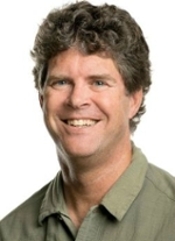
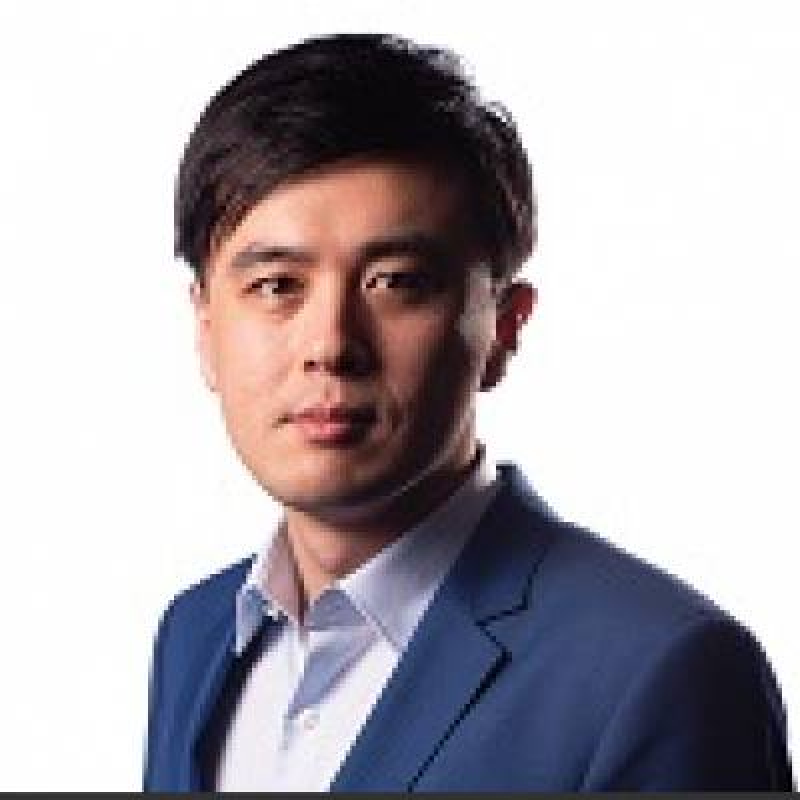
Michael Jong Kim is an Associate Professor at the Sauder School of Business, University of British Columbia, specializing in the Division of Operations and Logistics. His research focuses on dynamic programming, statistical learning, robust optimization, and the exploration vs exploitation trade-offs in sequential decision-making processes. BASc, M.Math, and PhD from the University of Toronto His work spans topics in stochastic optimization, supply chain dynamics, and information dissemination in uncertain environments. Publications highlight contributions to Bayesian inventory control, semi-Markovian system control, and variance regularization in optimization models. Dr. Kim teaches advanced business analytics courses, including Descriptive and Predictive Business Analytics and Advanced Predictive Business Analytics (MBAN) during the 2024-2025 academic year. He can be reached at mike.kim@sauder.ubc.ca or by phone at +1 604.822.8682.
Robert Wilson is an Associate Professor in the School of Psychology at Georgia Institute of Technology. His research focuses on computational cognitive neuroscience, reinforcement learning, decision making, and their applications in psychiatry and aging. Wilson leads a lab integrating computational modeling with behavioral experiments, neuroimaging, and neurostimulation to explore the algorithms underlying human cognition. He holds a Ph.D. in Bioengineering from the University of Pennsylvania (2009). Education: Ph.D. in Bioengineering, University of Pennsylvania, 2009 Research Interests: Wilson’s work spans computational models of decision making, reinforcement learning dynamics, and the neural mechanisms of explore-exploit trade-offs. His lab investigates phishing detection cognition, navigation strategies, and perceptual decision making, with recent studies on aging-related cognitive decline and psychiatric disorders. Publications: His recent work includes studies on computational models of exploration strategies, phishing susceptibility (PEST task), and aging effects on decision-making. Articles often bridge neuroscience and AI, such as applying reinforcement learning to large language models. Awards & Grants: While no formal awards are listed, his research has been supported by grants exploring computational psychiatry and neuroimaging. Labs & Teams: Wilson directs a multidisciplinary lab at Georgia Tech, collaborating with experts in AI, neuroscience, and clinical psychology to advance computational theories of the mind-brain relationship.
Elena Maria Baralis is a Full Professor at the Department of Control and Computer Science (DAUIN) at the Polytechnic University of Turin. She serves as Pro-Rector, member of the Board of Directors (without voting rights), member of the Academic Senate (without voting rights), and coordinator of the University's Permanent Observatory for Monitoring the Academic Sector. She chairs the Control and Computer Engineering Department and previously chaired the Computer Engineering School from October 2012 to October 2018. Her research interests focus on database systems and data mining, specifically explainable AI, bias detection in data analytics, and machine learning algorithms for big data. Her work spans various application domains including predictive maintenance, Industry 4.0, and healthcare. Recent publications demonstrate her expertise in speech processing, bias mitigation, and innovative neural network architectures like Kolmogorov-Arnold Networks. Her research output shows a clear trend toward addressing fairness and explainability in AI systems while exploring novel approaches to speech and language understanding. Professor Baralis has received significant recognition including becoming a Fellow of the Academy of Sciences of Turin in 2017. She has served as Editor-in-Chief for IEEE Internet of Things Journal (2016-2019) and Knowledge and Information Systems (2014-present). She actively mentors doctoral students including Claudio Savelli (researching Machine Unlearning), Eleonora Poeta, Giuseppe Gallipoli, Alkis Koudounas, and others. Her research is supported by numerous projects including AI4CTI (Artificial Intelligence for Cyber Threat Intelligence, 2025-2028), Smart manufacturing driven by Machine Learning in Industry 4.0 (2019-2020), and I-REACT (2016-2019).
Tom Rainforth is an Associate Professor of Statistical Machine Learning at the University of Oxford's Department of Statistics, leading the RainML Research Lab (rainml.uk). He holds a Tutorial Fellowship at Mansfield College and is Principal Investigator of the ERC Starting Grant 'Data-Driven Algorithms for Data Acquisition' (2024–2029). Previously, he held roles including a postdoc under Yee Whye Teh (2017–2019), Junior Research Fellow at Christ Church College (2019–2019), and Florence Nightingale Bicentennial Fellow (2020–2024). He earned his MEng in Mechanical Engineering from the University of Cambridge and his D.Phil from Oxford under Frank Wood and Michael Osborne, focusing on probabilistic programming and Monte Carlo methods. He briefly worked in Ferrari's Formula 1 team. Research Interests : Bayesian experimental design, probabilistic and data-efficient machine learning, active learning, deep learning (with a focus on probabilistic approaches), probabilistic programming, and Monte Carlo methods. His work emphasizes statistical efficiency and adaptive algorithms. Publications : Recent contributions span modern Bayesian experimental design, adaptive importance sampling (Daisee), and applications of probabilistic methods in LLMs and generative models. His research bridges theory and practice, addressing challenges in scalability and robustness. Awards : ERC Starting Grant (2024–2029), highlighting his leadership in foundational AI research. Advising & Grants : Supervises 15 graduate students, including work on Bayesian neural networks, generative flows, and experimental design. His ERC grant supports cutting-edge data-driven algorithm development. Labs & Teams : Directs the RainML Lab, which develops scalable Bayesian methods and probabilistic AI systems.
Mark Lewis is the Kennedy Chair in Mathematical Biology at the University of Victoria, holding joint appointments in the Departments of Mathematics and Statistics and Biology. His research focuses on spatial ecology and mathematical modeling, addressing ecological challenges such as animal movement, invasive species, and disease dynamics. Lewis earned his D.Phil. in Mathematical Biology from the University of Oxford and has been elected a Fellow of the Royal Society UK. His work integrates mathematical analysis, field studies, and interdisciplinary approaches to solve ecological problems. Current projects include modeling polar bear populations, cyanobacteria dynamics, and the impact of climate change on wildlife. Lewis supervises students across both UVic and his former University of Alberta lab. Education: D.Phil. in Mathematics (Mathematical Biology), University of Oxford Awards: Royal Society Fellowship, CRM-Fields-PIMS Prize, and Okubo Prize Key Research Areas: Animal movement modeling, aquatic ecology, wildlife disease, and invasive species management Publications highlight his contributions to understanding disease spread, parasite dynamics, and ecological responses to environmental changes. Lewis collaborates widely, applying mathematical tools to real-world conservation and health challenges.
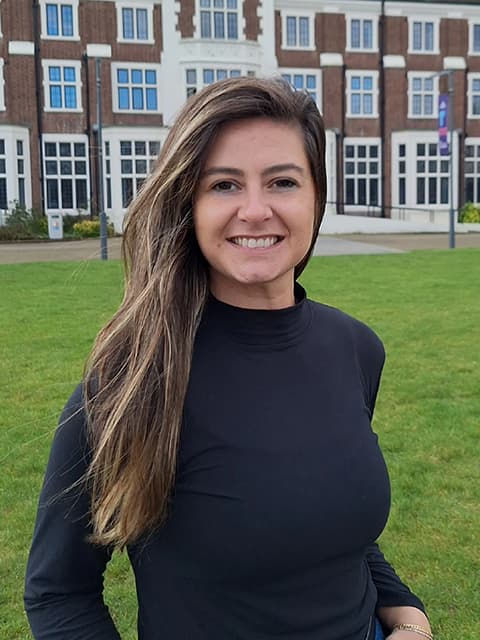
Sabrina Furtado is a Lecturer in Sport Management and Dean’s Associate Fellow at Loughborough University’s School of Sport, Exercise and Health Sciences. She holds a BSc, MSc, and PhD. Previously, she taught at the Federal University of Paraná and State University of Santa Catarina in Brazil, focusing on sport management, sports law, and entrepreneurship in the sports sector. Her research focuses on sports governance, strategic planning, and policy development in public and private sports entities. Key areas include Olympic and Paralympic federations, sports financing, and the impact of media representation on disability inclusion. She contributes to the Sport, Business and Society and Lifestyle for Health and Wellbeing research groups, as well as the Inteligência Esportiva Research Institute . Recent work analyzes governance structures in Santa Catarina municipalities, business intelligence applications in sports management, and modernization processes in Brazilian Olympic federations. Her publications span topics like Paralympic organizational roles, media stigma in disability sports reporting, and funding mechanisms for sports initiatives. No scientific awards are mentioned. Sabrina advises master’s students on sport management and policy but no grant details are provided. Her current projects aim to strengthen sports policies and enhance stakeholders’ engagement in the sport system.
Sebastian Raisch is a Full Professor of Strategic Management at the Geneva School of Economics and Management (GSEM), University of Geneva, where he also serves as Director of the Executive MBA program. He is affiliated with the Institute of Management and holds a Ph.D. from the University of Geneva. His academic work is deeply rooted in understanding how organizations balance stability and change, particularly in the face of digital transformation. Research Interests: His primary areas of expertise include strategic management, organizational ambidexterity, organizational paradox, artificial intelligence in organizations, and digital transformation. His research investigates the dynamics of corporate growth and decline, strategic renewal, and the integration of human and artificial intelligence in organizational decision-making. He is especially interested in how firms navigate tensions between competing demands such as exploration and exploitation, automation and augmentation, and stability and innovation. Publications and Trends: His recent publications (2023–2025) show a strong shift toward the role of artificial intelligence in management, with a focus on hybrid human-AI systems, ethical AI, and the strategic implications of AI adoption. Earlier works center on ambidexterity, paradox theory, and corporate turnaround, establishing him as a leading scholar in these domains. Scientific Awards: Strategic Management Society’s Best PhD Paper Award Emerald Publishing Group’s Citation of Excellence Award Journal of Management’s Scholarly Impact Award Editorial and Professional Service: Sebastian Raisch serves as Associate Editor at the Academy of Management Review and sits on the editorial boards of the Academy of Management Journal and the Strategic Management Journal . He has advised numerous doctoral students and supervised research projects on organizational innovation and digital strategy, though specific names are not listed in the provided materials. He has not received explicit mention of research grants, but his extensive publication record suggests active research funding. Labs and Research Teams: While no formal lab is mentioned, Raisch leads or contributes to research initiatives within the Institute of Management at GSEM, particularly in strategic management and digital innovation. He collaborates with scholars across Europe and the U.S., including notable co-authors like J. Schad, S. Krakowski, and M. Tushman.
Prof. Raffaello D'Andrea is a Full Professor at ETH Zürich's Department of Mechanical and Process Engineering, affiliated with the Institute for Dynamic Systems and Control. His research focuses on bridging digital and physical worlds through robotics, control systems, and autonomous systems. He has pioneered work in aerial robotics, swarm systems, tactile sensing, and soft robotics. His philosophy emphasizes solving 'easy' problems with scalable, robust solutions, prioritizing simplicity and replicability. Key research areas include UAV navigation, distributed control, tactile sensor design, and fault-tolerant systems. He has founded multiple organizations and led roles as CTO/CEO, emphasizing cross-disciplinary innovation. His work has commercial applications in logistics, healthcare, and automation, driven by a belief in technology's role in improving human life. Notable projects include the Cubli robotic cube, aerial vehicle swarms, and optical tactile sensors for robotics. His lab emphasizes collaboration and team leadership, aiming to translate theoretical insights into practical, scalable technologies. Scientific awards: None explicitly listed in the provided texts. Advising and grants: No students listed in the provided texts; grants information not detailed. Labs/Teams: Leads research at ETH Zurich's Institute for Dynamic Systems and Control, collaborating with industry and academic partners globally.
Prof. Dr. Gonzalo Guillén Gosálbez is a Full Professor at the Department of Chemistry and Applied Biosciences , ETH Zürich. He holds a PhD in Process Systems Engineering (UPC, 2005) and has held academic positions at Imperial College London (Reader), University of Manchester (Senior Lecturer), and Universitat Rovira i Virgili (Assistant/Associate Professor). His research focuses on Sustainable Chemical Processes , integrating life cycle assessment, optimization techniques, and planetary boundary analysis to evaluate and design low-carbon technologies. Current position: Full Professor, ETH Zürich (2019–present) Prior roles: Imperial College London (2016–2019), University of Manchester (2014–2016), URV Spain (2008–2014) Education: PhD (UPC, 2005), MEng/BEng (University of Murcia) His research explores CO2 valorization , green methanol synthesis , circular marine fuels , and planetary boundary compliance in energy and chemical systems. Recent work emphasizes machine learning for process modeling, single-atom catalysis , and decentralized ammonia production . Scientific contributions include 15+ peer-reviewed articles (2023–2025) in journals like Nature Chemical Engineering , ACS Sustainable Chemistry & Engineering , and Energy & Environmental Science . Key themes: Optimization of hybrid fossil/renewable carbon systems Environmental impacts of energy transitions Catalyst design for sustainable chemistry Life cycle assessment of emerging technologies Awarded UPC Top Doctoral Student Award and Top National Student Award , he combines process systems engineering with sustainability metrics to address global challenges in chemical and energy systems.
Animesh Garg is an Assistant Professor at the School of Interactive Computing at Georgia Tech, where he leads the People, AI, and Robotics (PAIR) research group . He holds a Senior Researcher position at Nvidia Research and has courtesy appointments at the University of Toronto and Vector Institute. Previously, he served as Chief Scientific Officer at Apptronik (2024-2025) and Senior Staff Research Scientist at Nvidia Research (2018-2024). Education : Ph.D. in Operations Research from UC Berkeley (2011-2016), MS in Computer Science and Industrial Engineering from Georgia Tech and University of Delhi. Research Focus : Building Generalizable Autonomy through Reinforcement Learning , Control Theory , and 3D Vision , with applications in Surgical Robotics , Self-Driving Labs , and Manufacturing . Key Article Themes : His recent work emphasizes Foundation Models for robotics, Differentiable Simulation , Language-Guided Autonomy , and Structured Inductive Biases in sequential decision-making. Scientific Awards : Stephen Fleming Early Career Professorship at Georgia Tech. Teaching : Courses on AI, Deep Reinforcement Learning, and Algorithmic Intelligence in Robotics at Georgia Tech. Labs & Collaborations : Affiliated with Institute for Robotics and Intelligent Machines (IRIM) and ML@GT at Georgia Tech; collaborates intensively with Nvidia Robotics.
Dr. Shan Lu is a Lecturer in Finance at the Department of Accounting and Finance, Kent Business School, University of Kent, since August 2021. He previously held positions at the University of Aberdeen and the University of Bradford and earned his PhD from the University of Aberdeen. Research interests: Financial derivatives, option pricing, and quantitative finance. His work focuses on volatility modeling, risk-neutral density estimation, and computational finance, with publications in journals such as the European Journal of Finance, Journal of Futures Markets, and Economics Letters. Teaching: Covers financial markets, derivatives, econometrics, and quantitative methods at undergraduate and postgraduate levels. Scientific awards: Fellow (FHEA) of Higher Education Academy Advising: Offers PhD supervision in topics aligned with his research interests, including financial derivatives and quantitative finance. He emphasizes collaboration on research ideas directly related to his expertise. Publications: Recent work explores volatility dynamics in VIX/VXX options, risk-neutral density extraction, and implied volatility forecasting, leveraging computational methods and empirical finance techniques.
Hao Liu is an incoming Assistant Professor of Machine Learning at Carnegie Mellon University and currently works as a research scientist at Google DeepMind. Previously, he completed his Ph.D. in Computer Science at UC Berkeley under the supervision of Pieter Abbeel. He also spent two years part-time at Google as part of the Google Brain team. His educational background includes: Ph.D. in Computer Science from UC Berkeley Hao Liu's research focuses on solving intelligence through deep learning, neural networks, and innovative learning objectives. His work spans multiple areas including large language models, reinforcement learning, world models, and attention mechanisms for long context processing. He has made significant contributions to making transformer models more efficient and capable of handling extremely long sequences through techniques like Ring Attention and Blockwise Transformers. His recent publications demonstrate a strong focus on extending the capabilities of language and vision models, particularly in handling long sequences and multimodal data. Key themes include attention optimization, tokenization efficiency, and alignment techniques. His work bridges theoretical advances with practical implementations for real-world AI systems, with multiple papers at top conferences including NeurIPS, ICML, and ICLR, often receiving spotlight or oral presentations. Hao is actively involved in open-source AI research, having contributed to projects like Koala and OpenLLaMa, which aim to make advanced language models more accessible to the research community. His work on RingAttention has been implemented as a Python package available on GitHub, demonstrating his commitment to practical implementations and community sharing.
Dr. Nienke Smit is an Assistant Professor in the Department of Education at Utrecht University's Faculty of Social and Behavioural Sciences. Her research focuses on scaffolding processes, adaptive teaching, and classroom observational research from a complex dynamic systems perspective. Specializes in teacher-student interaction Expert in adaptive instruction and observational methods Collaborates with Data Science department Develops tools for classroom observation Research interests include language learning and teaching , judgment and decision-making in education , and professional development of teachers . She leads projects like Eye Get It (joint attention in classrooms) and a replication study on adaptive instruction effectiveness. Her work applies dynamic systems theory to second language development and foreign language pedagogy. Recent publications address translanguaging in multilingual classrooms, replication studies , and process-oriented research . She teaches at Utrecht's Graduate School of Teaching and works on initiatives to reduce teacher shortages through improved training programs.
Dr. Jonathan Bright is a Senior Research Fellow and Associate Professor at the Oxford Internet Institute, University of Oxford , specializing in computational approaches to the social and political sciences. His research explores how digital technologies reshape political participation and how new data sources enhance governmental decision-making. Research Interests: Focused on social media, political behavior, computational social science, and big data , Bright’s work addresses digital governance, algorithmic bureaucracy, and the dynamics of political fragmentation online. His empirical studies span open government data usage, crowdsourced geographical information, and the impact of neighborhood effects on data completeness. Scientific Contributions: Leading studies on algorithmic governance in UK local authorities (2020) Investigating geodemographic biases in crowdsourced platforms like OpenStreetMap (2018) Mapping political fragmentation in social media ecosystems (2018) Grants & Collaborations: Funded by UK taxpayers, ESRC, and Google, his work intersects with projects on vaccine misinformation, hate speech monitoring, and digital economies. Formerly held positions as Research Fellow and Research Associate at OII from 2013 to present.
Prof. Dr.-Ing. Hakan Kayal serves as University Professor for Aerospace Engineering at the University of Würzburg, holding the Chair of Computer Science VIII (Space Technology) and chairing the Interdisciplinary Research Center for Extraterrestrial Studies (IFEX). His leadership bridges computer science and space systems engineering within the university's Institute of Computer Science. Research focuses on three synergistic domains: nanosatellite development for extraterrestrial missions (including the SONATE-2 6U platform demonstrating AI-driven onboard processing), scientific investigation of Unidentified Anomalous Phenomena (UAP) through the university's collaboration with the Federal Aviation Office, and spacecraft autonomy systems enabling higher mission independence. Current projects include the NEAlight mission (extended to develop the Apophis Interceptor concept for the 2029 asteroid flyby), VaMEx3-MarsSymphony for Mars exploration, and JMU Space Observatory initiatives. Publication trends reveal strong emphasis on asteroid defense strategies (particularly for Apophis), CubeSat-based UAP detection methodologies, and real-time AI processing in constrained space environments. His team actively engages students through ADS-B tracking, Meteosat App development, and Moon Base 2030 projects, while recent recognition includes co-authoring a landmark UAP review in Progress in Aerospace Sciences with 33 international scientists.