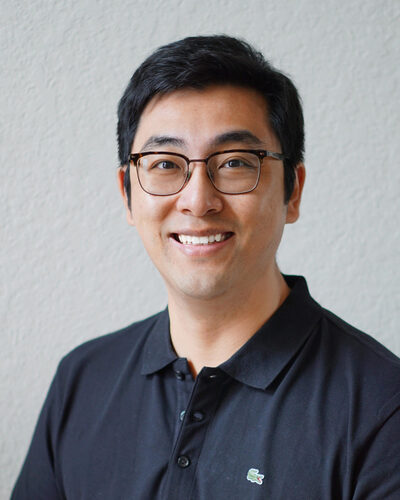
Prof. Tan Yap Peng is a Professor and Chair of the School of Electrical & Electronic Engineering at Nanyang Technological University (NTU), Singapore. He holds the President's Chair in Electrical and Electronic Engineering and serves as Associate Vice President (Lifelong Learning – Postgraduate Programmes by Coursework). His research focuses on multimedia analysis, computer vision, machine learning, and data analytics. He earned his B.S. from National Taiwan University and M.A./Ph.D. from Princeton University. He has led major initiatives including the INFINITUS Infocomm Research Centre and contributed to IEEE technical committees. His over 200 publications span image/video processing, neural network robustness, and cross-modal systems. Awards include IEEE Fellow status. Education: B.S. Electrical Engineering (NTU), M.A./Ph.D. (Princeton) Research interests emphasize interactive digital media, content-based analysis, and AI-driven solutions for visual and signal processing. His work addresses challenges in adversarial attacks, video generation, and low-light image enhancement. He has held editorial roles at IEEE Transactions and EURASIP journals. Conference leadership includes chairs for ICME and ICIP. His contributions bridge academia and industry through collaborative research networks.
Thomas Chadefaux is a Professor of Political Science at Trinity College Dublin, The University of Dublin. He holds a Ph.D. in Political Science from the University of Michigan and an M.A. from the Graduate Institute of International Studies in Geneva. Prior to his current role, he served as a Visiting Assistant Professor at the University of Rochester and a Postdoctoral Researcher at ETH Zurich. His research focuses on the predictability of interstate conflict, leveraging advanced statistical methods, machine learning, and big data (e.g., satellite imagery, financial markets, news archives). He investigates decision-makers’ anticipation of war risks, the dynamics of conflict escalation, and the application of early warning systems. His work bridges empirical analysis with theoretical insights from game theory, contributing to top journals like the American Political Science Review and advising institutions such as the German Department of Foreign Affairs and the EU. Key achievements include awards for best paper (American Political Science Review, 2018), best conference paper (Oxford, 2012), and best visualization (Journal of Peace Research, 2014). His methodologies emphasize time-series clustering and pattern-based approaches to improve conflict forecasts. Chadefaux collaborates internationally on projects like the VIEWS Prediction Challenge and employs innovative tools such as dynamic synthetic controls for causal inference. His research underscores the interplay between public and private information in diplomatic crises, with implications for policy and international relations.
Dr. Dan Ionescu is a Professor at the University of Ottawa's School of Electrical Engineering and Computer Science, Department of Electrical and Computer Engineering. He has been affiliated with the university since 1985, contributing extensively to teaching and research. His career includes visiting professorships at École Nationale Supérieure de Télécommunications (Paris) and Universitat Politècnica de Catalunya (Barcelona). He founded the Machine Intelligence Research Laboratory (1988) and the Network Computing and Control Research Laboratory (NCCT, 1999), which he currently directs. His research spans Artificial Intelligence, Machine Vision, Distributed Computing, Network Control, and Formal Methods. Notable contributions include methodologies in Expert Systems, Image Processing, Temporal Logic, and Network Management. His work has received industrial and governmental grants from CITO, Nortel, NSERC, and others. Recent research focuses on Web-based collaborative platforms (e.g., UC-IC, Watch-Together), Autonomic Computing, and AI applications in gesture control and 3D IR camera systems. Dr. Ionescu’s technical leadership includes pioneering the first distributed network management platform with industry partners and designing the NCIT*net 2 network architecture. His current interests include AI-driven solutions for cybersecurity, medical imaging, and IoT-enabled disaster response systems. He has advised numerous projects in AI ethics, quantum computing, and real-time control systems. His research trends emphasize interdisciplinary innovation, combining AI with healthcare (e.g., MRI analysis, deepfake detection), cybersecurity (GAN-based intrusion detection), and IoT (Salv AIoT platform). Collaborations with IBM CAS and Diatem Networks highlight his industry-academia integration. His legacy includes over 40 years of impactful contributions to computing and engineering education.
Dr. Ahmad Abdel Latif is an Assistant Professor in the Department of Electrical and Software Engineering at the University of Calgary. Previously, he served as a postdoctoral researcher at DASLab, Concordia University, and earned his Ph.D. in Software Engineering from Concordia under Dr. Emad Shihab. His master’s degree was obtained from King Fahd University of Petroleum and Minerals (KFUPM). His research focuses on software engineering advancements in artificial intelligence, including chatbots, software quality, and mining software repositories. Notable projects include analyzing dependency ecosystems (e.g., NPM, Maven) for security risks, developing AI-driven chatbots for code repositories, and exploring machine learning model management challenges. He also investigates ethical implications of AI-generated code and open-source collaboration dynamics. Dr. Latif teaches ENSF 381: Full Stack Web Development and actively publishes on topics such as vulnerability mitigation, LLM-based chatbots, and software bot detection. His work bridges technical innovation with practical applications in cybersecurity, open-source ecosystems, and AI integration.
Dr. Qiongkai Xu is a Lecturer in Natural Language Processing (NLP) at Macquarie University's School of Computing, with an honorary fellowship at the University of Melbourne. He holds a PhD in NLP from the Australian National University (ANU). His research focuses on auditing machine learning models, particularly addressing privacy/security issues in NLP/ML models and developing evaluation frameworks. Key areas include text watermarking, adversarial attacks, data leakage mitigation, and model authentication. Recent publications emphasize robustness against backdoor attacks, generative model watermarking, and healthcare applications of LLMs. His work bridges theoretical security advancements with practical NLP challenges. Awards: DAAD Scholarship (2022), Research Pitching Session Winner (MQ, 2022 & 2024) Grants: Leading the Climate Litigation Risk project on AI-driven greenwashing detection. Labs/Teams: Data Horizons Research Centre, Future Communications Research Centre, and Frontier AI Research Centre.
Roles and Affiliations: Sukhpal Singh Gill is a Lecturer (Assistant Professor) in Cloud Computing at Queen Mary University of London (QMUL), UK. He leads the GillNet Research Lab and is the Editor-in-Chief of the International Journal of Applied Evolutionary Computation (IJAEC) . He also serves as an Associate Editor for journals like IEEE IoT and Nature Scientific Reports. As Programme Director for MSc Advanced Computer Science and MSc Business Analytics, he contributes to curriculum development and education excellence. Research Interests: His research focuses on Cloud Computing, Edge AI, Internet of Things (IoT), and Energy Efficiency. He explores AI-driven solutions for resource management, security, and sustainable computing. Key areas include fog-edge integration, serverless computing frameworks, and healthcare applications. Publications and Impact: With over 200 peer-reviewed publications (including IEEE TCC, Elsevier JSS, and ACM TOIT), Dr. Gill has achieved 12,500+ citations and an H-index of 54 (Google Scholar). His work has been featured in IEEE Spectrum and Tech Monitor. Notable contributions include frameworks like HealthEdgeAI (healthcare systems), CloudAISim (cloud simulation), and EdgeAISim (edge computing modeling). Awards and Recognition: Recognized with the 2024 IEEE Outstanding Reviewer Award, Elsevier Editor’s Choice Award, and Queen Mary Education Excellence Award. He is a Fellow of the Higher Education Academy (FHEA). Teaching and Leadership: Teaches modules like Cloud Computing (Postgraduate) and Semi-structured Data Modeling. Leads the Networks and Systems Teaching Group (N&STG) and chairs academic misconduct panels. Advocates for inclusive curriculum design and intercultural development in higher education. Labs and Collaborations: The GillNet Lab develops next-generation systems for EdgeAI, CloudAIBus, and CloudAISim. Collaborates with institutions like Lancaster University, The University of Melbourne, and industry partners on fog-cloud IoT ecosystems.
Karen Butler-Purry is a Professor of Electrical & Computer Engineering at Texas A&M University, holding the Raytheon Company Professorship. She is affiliated with the Power System Automation Laboratory and the College of Engineering. Her research focuses on intelligent systems for power distribution automation, fault diagnosis, and renewable energy integration. She completed her B.S. at Southern University (1985), M.S. at UT Austin (1987), and Ph.D. at Howard University (1994). Her work emphasizes cyber-physical systems, smart grid security, and microgrid resilience. Recent research includes AI-driven grid restoration, cybersecurity frameworks for distribution systems, and self-healing shipboard power systems. She has pioneered methods for transformer lifespan prediction and unbalanced load management in distributed networks. Publications span over three decades, with notable contributions to IEEE journals and conferences. Her educational initiatives include the Texas A&M System AGEP Alliance and LSAMP programs, advancing underrepresented minority participation in STEM academia. She leads interdisciplinary projects at the intersection of power systems, machine learning, and equity-focused academic workforce development. Labs/Teams: Principal Investigator in the Power System Automation Laboratory, collaborating with industry partners like Raytheon. Active in curriculum development for digital systems education through initiatives like the Enrichment Experiences in Engineering (E³) program.
Mohammed Shafae is an Assistant Professor in the Department of Systems and Industrial Engineering at the University of Arizona, where he has been serving since 2018. He is also a member of the Graduate Faculty, contributing to advanced research and mentorship in engineering disciplines. Education: PhD in Industrial and Systems Engineering, Virginia Tech, Blacksburg, Virginia, United States MS in Industrial and Systems Engineering, Virginia Tech, Blacksburg, Virginia, United States MS in Production Engineering, Alexandria University, Alexandria, Egypt BS in Production Engineering, Alexandria University, Alexandria, Egypt His research centers on cyber-physical systems security , smart manufacturing systems , and data-driven quality control , with a strong emphasis on leveraging manufacturing data for process monitoring, modeling, and securing machining and additive manufacturing systems. His work integrates statistical process monitoring, machine learning, and advanced metrology to enhance manufacturing resilience and efficiency. His recent publications (2022–2025) reflect a clear trend toward securing Industry 4.0 systems, with a focus on digital twin security, attack detection in machining, and anomaly detection in additive manufacturing using photodiode and thermal data. He also explores futuristic applications such as in-situ lunar manufacturing using regolith-based materials. Scientific Awards: First Place in the ASCEND Propel Pitch Competition (AIAA, Fall 2020) Virginia Tech Teaching Excellence Award (Spring 2017) Harold Schneikert Graduate Fellowship (Spring 2016) David H. Burrows Graduate Fellowship (Fall 2015) Best Track Paper Award (IEOM 2012) Prize for Excellence in Senior Design Project (Cairo, 2009) Dr. Shafae actively mentors graduate students, co-authoring numerous publications with advisees in areas such as cybersecurity, additive manufacturing, and process monitoring. While specific grant details are not listed, his research is clearly funded through competitive fellowships and likely external grants given the volume and quality of his outputs. He has no listed labs or teams in the provided text, but his collaborative work suggests active participation in research groups focused on smart manufacturing and cybersecurity.
Dr. Anatoliy Gruzd is a Professor and Canada Research Chair (Tier 2) in Privacy Preserving Digital Technologies at the Department of Information Technology Management, Faculty of Communication and Design, Toronto Metropolitan University. He also serves as Director of Research at the Social Media Lab, where he leads interdisciplinary research on social media, online communities, misinformation, and information privacy. His research explores how digital platforms shape communication, information sharing, and public discourse, with a strong focus on computational methods to analyze social media data. He has received major funding from Canada’s Tri-Council agencies (SSHRC, NSERC, CIHR), CFI, and the World Health Organization, underscoring the societal relevance of his work, especially during the global infodemic. Social Media Online Communities Misinformation and Infodemics Information Privacy Digital Technologies Data Stewardship The 15 most recent publications reflect a consistent focus on understanding digital risks such as misinformation, algorithmic bias, online violence, and privacy challenges. These works span disciplines including public health, computer science, communication, and ethics, often using network and behavioral analysis to uncover patterns in large-scale social media data. His research trend emphasizes societal impact, policy relevance, and interdisciplinary collaboration. Canada Research Chair in Privacy Preserving Digital Technologies, Tier 2, 2020 Open Access Wall of Fame Award, Toronto Metropolitan University Library, 2020 Member, Royal Society of Canada College of New Scholars, Artists and Scientists, 2017 Canada Research Chair in Social Media Data Stewardship, Tier 2, 2015 Best Paper Award, Internet, Policy & Politics Conference, Oxford, 2014 Dr. Gruzd has secured substantial research grants as Principal Investigator from SSHRC, NSERC, CIHR, CFI, WHO, and Global Affairs Canada. His projects include studying privacy-preserving technologies, anti-social behavior online, infodemic management, and online violence against women. He actively mentors students and collaborates with international researchers, though specific advisees are not listed. His leadership in the Social Media Lab fosters innovation in digital methods and ethical data practices. The Social Media Lab, under his research direction, functions as a hub for interdisciplinary scholarship on digital society, bringing together researchers from communication, computer science, public health, and policy. The lab conducts cutting-edge research on misinformation, platform governance, and digital well-being, often in partnership with public and international organizations.
Itay P. Fainmesser is an Associate Professor at the Johns Hopkins Carey Business School and holds a courtesy appointment in the Department of Economics at Johns Hopkins University. His research focuses on economic theory, social networks, trust, cooperation, and digital privacy, with significant contributions to understanding consumer profiling, influencer marketing, and data governance in the digital economy. His primary research interests include Economic Theory , Social Networks , Trust and Cooperation , Influence , Social Media , and Privacy . He explores how digital platforms collect and use consumer data, the welfare implications of data misuse, and the design of regulatory policies to protect users. His work bridges economics, business strategy, and public policy, with applications in health data, market design, and AI ethics. The recent articles highlight a strong trend in digital privacy , information design , and market regulation . His research analyzes how companies use consumer data for profiling and pricing, the societal costs of data breaches, and the role of government intervention. Themes include consumer welfare, regulatory design, ethical data use, and the impact of AI on market dynamics. Many papers involve collaborative work with Andrea Galeotti and Ruslan Momot, reflecting a consistent interdisciplinary approach. 2025 Johns Hopkins Discovery Award for Patient-Centered Biospecimen Market Design Finalist, MSOM Service SIG Best Paper Award 2023 for Digital Privacy Fainmesser advises PhD and master’s students, including Xudong Zheng, and collaborates on federally and institutionally funded research projects. He is actively involved in academic service, co-organizing the Conference on Social and Political Economics and engaging with policymakers and the public through media outlets, podcasts, and public talks. His work has implications for antitrust authorities, digital regulators, and health policy makers. He is a key participant in research teams focusing on data markets, privacy, and health data policy, often collaborating with scholars across disciplines at Johns Hopkins and other institutions. His labs and research groups emphasize theoretical modeling, policy analysis, and real-world applications in digital markets and public health.
Xiaolu Zhang is currently a Professor in the Information Systems and Cybersecurity department at the University of Texas at San Antonio (UTSA), affiliated with the College of AI, Cyber and Computing. Her research focuses on digital forensics, cybersecurity, and emerging technologies like IoT and blockchain. Specializes in Digital Forensics, IoT Security, and Privacy in Virtual Environments Active in Mobile Application Forensics, Cloud Storage Forensics, and Blockchain Forensics Her recent publications highlight trends in Metaverse privacy challenges, advanced forensic techniques for mobile and cloud platforms, and automated knowledge-sharing systems for IoT investigations. She also contributes to digital forensic education through experiential learning frameworks.
Sarah McHale is a Senior Lecturer in Computer Science at Edge Hill University (EHU). She holds a PhD in 'An IoT Approach to Personalised Remote Monitoring & Management of Epilepsy' (2020), along with a PGCE in Information Technology (1998), an MSc in Management of IT (1996), and a BA in Business Computing (1995). Her research focuses on IoT applications in healthcare, including remote patient monitoring via smart devices like EEG, ECG, and wearable sensors. She explores semantic web ontologies and cluster analysis to refine personalized healthcare solutions. Her educational background includes teaching roles at Edge Hill and FE sectors. Current projects include the HydrateME initiative (2024–2025), a machine learning-driven hydration management tool. Research interests span cybersecurity in IoT, vehicular networks, and sustainable AI frameworks. Education: PhD in IoT for Epilepsy Monitoring, Edge Hill University (2020) MSc Management of IT, University of Sunderland (1996) BA Business Computing, University of Sunderland (1995) Research awards include contributions to cybersecurity, vehicular IoT security, and medical IoT systems. She leads modules like Computer Systems Architecture and Information Security Management. Her grants include the HydrateME project focusing on machine learning for hydration monitoring. She collaborates with NHS trusts and institutions like the University of Sunderland on healthcare IoT solutions.
Dr. Paul de Vrieze is a Principal Academic in Web Systems and Technologies at Bournemouth University's Faculty of Science and Technology, Department of Computing and Informatics. He is the coordinator of the EU H2020 FIRST project and leads research in enterprise information systems, digital twins, and Industry 4.0. His work contributes to the UN Sustainable Development Goals, particularly Quality Education, Decent Work and Economic Growth, Industry Innovation and Infrastructure, and Reduced Inequalities. Education: PhD in Information Systems, Radboud University Nijmegen, 2006 MSc in Information Systems Management, Tilburg University, 2002 His research focuses on the design and implementation of complex enterprise information systems, especially in supporting and automating business processes, with a strong emphasis on cross-organizational and collaborative systems. He investigates resilience, interoperability, and service-oriented architectures in virtual factories and digital twins. His recent work applies these concepts in industrial contexts, particularly under Industry 4.0. The 15 most recent publications show a strong trend toward digital twin technologies, predictive maintenance, federated simulation, and compliance in collaborative networks. These works are deeply rooted in computer science and industrial engineering, with applications in smart manufacturing, supply chain resilience, and sustainable production. Scientific Awards and Recognitions: Panel Member, Guardian round table on cloud computing, 2012 Dr. de Vrieze has supervised multiple PhD students to completion, including Olaolu Sofela, John-Paul Kasse, Oluwetoyin Fakorede, Go Sang, and Rushan Arshad. He has secured grants from the European Commission (H2020, Horizon Europe), National Natural Science Foundation of China, British Council, and internal Fusion Funding. His current major grant is the Sustainable Production of High Entropy Alloys from Secondary Metals (Horizon Europe MSCA, starting 2026). Labs and Research Teams: He is central to the EU H2020 FIRST project team, which focuses on virtual factories and interoperation supporting business innovation. He collaborates extensively with Prof. Liang Xu and researchers across Europe and China. He is also involved in the Service Computing Research group at Bournemouth University.
David Palma is an Associate Professor at the Department of Information Security and Communication Technology , Faculty of Information Technology and Electrical Engineering , Norwegian University of Science and Technology (NTNU). His research focuses on next-generation networking paradigms, including intent-based networking , knowledge-driven management , and IoT device automation . Key research interests include: Human-centric Internet of Things (IoT) Ontology-based network management Cloud/Edge/Fog computing for IoT Arctic and satellite communication 5G integration in smart grids His recent publications (2024-2019) highlight trends in knowledge graphs for network compliance, XR applications in critical sectors, UAV-based emergency networks , and 5G-enabled smart grid protection . Articles also explore Arctic connectivity via satellite swarms and energy-efficient IoT management.
Dr. sc. hum. Richard Zowalla is a researcher at the Faculty of Computer Science, Heilbronn University, specializing in health informatics and software engineering. He works at the Interdisciplinary Center for Machine Learning (ZML) and focuses on health web analysis, text mining, and open source software. Education: Doctorate in human sciences (Dr. sc. hum.), dissertation on German health web data analysis (2022) Research interests include health information systems, focused web crawling, text mining, and software quality management in agile environments. His work bridges healthcare and computer science through data-driven analysis of online medical resources. Publication trends show expertise in health web readability, multilingual health data comparison, and AI-driven service innovation. His articles emphasize practical applications of machine learning and data visualization in healthcare contexts. Teaching: Software Lab (2016-2025), Advanced Programming Techniques (2020-2024), Database Internship (2014-2025), Distributed Systems (2016-2017) Labs & Teams: Active member of the Interdisciplinary Center for Machine Learning (ZML) at Heilbronn University, contributing to collaborative research in health data analysis.