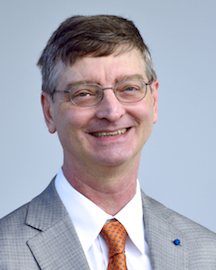
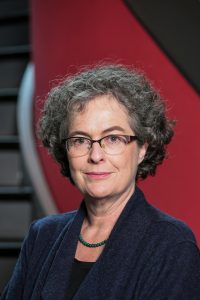
Dan Edelstein is the William H. Bonsall Professor of French at Stanford University, with courtesy appointments in History and Political Science. He serves as Faculty Director of Stanford Introductory Studies and as a University Fellow in Undergraduate Education. Department of French and Italian Stanford Introductory Studies Humanities + Design Research Lab Center for Spatial and Textual Analysis (CESTA) His research spans eighteenth-century French literature, political thought, and digital humanities, focusing on natural rights, revolutions, and Enlightenment ideologies. He has led groundbreaking projects like Mapping the Republic of Letters and Writing Rights , leveraging tools like Palladio and Data Pen for network analysis. Scientific awards include the 2009 Oscar Kenshur Book Prize, the Walter J. Gores Award (2006), and the Dean's Distinguished Teaching Award (2011). He has directed the Stanford Summer Humanities Institute and co-directs the Humanities Core program.
Rudy Hirschheim is a Professor at the Stephenson Department of Entrepreneurship & Information Systems within the E.J. Ourso College of Business at Louisiana State University. He previously held faculty positions at the University of Houston, Templeton College - Oxford, London School of Economics, and McMaster University, with visiting appointments at Monash University, University of New South Wales, University of Bayreuth, University of Jyvaskyla, University of Warwick, and University of Paris-Dauphine. PhD in Information Systems, London School of Economics (1985) MS in Computer Science, University of Toronto (1974) BCom in Business Administration, University of Toronto (1975) His research interests span outsourcing, management of information systems, research methods, and philosophical issues in research. His recent publications focus on agile software development, crowdsourcing, social justice in IT, service-oriented architecture maturity, and theoretical critiques of the IS discipline. He emphasizes methodological rigor and philosophical foundations in information systems research. Key scientific awards include the LEO Award for lifetime achievement (2013), two honorary doctorates (University of Oulu, 2006; University of Bern, 2012), and Fellow status from the Association for Information Systems (2007). He has also received multiple best paper awards and LSU's Rainmaker Award (2012).
Jodi Schneider is an Associate Professor at the University of Illinois Urbana-Champaign , with affiliate appointments at the Beckman Institute , Health Care Engineering Systems Center , European Union Center , and Center for Health Informatics . She directs the Information Quality Lab and focuses on the science of science through argumentation and evidence analysis. PhD in Informatics (National University of Ireland, Galway) M.S. in Library and Information Science (UIUC) M.A. in Mathematics (UT-Austin) B.A. in Liberal Arts (St. John's College) Her research examines how scientific controversies persist through citation patterns, the role of knowledge brokers in public policy, and information quality in biomedical contexts. She has developed semantic frameworks for micropublications and knowledge maintenance in digital libraries. Recent publications include citation integrity studies in Scientometrics , retraction indexing in STI Conference , and argumentation mining in Human Language Technologies . Collaborative projects span institutions like Harvard Radcliffe Institute and RWTH Aachen . NSF CAREER Award IMLS Early Career Award Senior Member, Association of Computing Machinery Marie Curie Fellow She advises graduate students in information quality and knowledge representation , with funding from the Alfred P. Sloan Foundation , NIH , and European Commission . Her lab develops tools to combat scientific misinformation and improve public health informatics .
Rachel Pottinger is a Professor in the Department of Computer Science at the University of British Columbia within the Faculty of Science. She has been at UBC since 2004, progressing from Assistant Professor to Associate Professor in 2012 and to full Professor in 2021. She is affiliated with research centers including CAIDA (Centre for Artificial Intelligence Decision-making and Action) and DFP (Designing for People), and is part of ICICS (Institute for Computing, Information and Cognitive Systems). Her research focuses on data management, particularly semantic data integration, metadata management, and making data more accessible and understandable to users. She leads the Data Management and Mining Lab and has supervised numerous doctoral and master's students. Her work addresses three main areas: helping people understand and explore their data, managing data not well supported by databases, and coordinating data across multiple databases. Her recent publications demonstrate strong trends in database usability, data provenance visualization, query recommendation systems, and building information modeling integration. Her work bridges theoretical database concepts with practical human-centered applications, particularly in making complex data systems more accessible to non-expert users. UBC Computer Science Department Faculty Teaching Award 2013 Computer Science Department Teaching Award 2010 CS Department Teaching Award Denice Denton Emerging Leader Award 2007 Pottinger has supervised numerous PhD and Master's students, with research focusing on data provenance, database usability, and data coordination. She has been involved in significant research projects related to data lakes, open data navigation, and query recommendation systems. Her current research explores table annotation and discovery in data lakes, query refinement for aggregation queries, and query prediction based on past user behavior. She is actively involved in the academic community, serving as Secretary-Treasurer for SIGMOD, on the VLDB Journal editorial board, and as a member of the Computing Research Association's Board of Directors. She previously served as General Co-Chair of SIGMOD 2020 and as Associate Head for the Undergraduate Program of the Department of Computer Science from 2018-2020.
Duncan Wilson is a Professor of Connected Environments at the Bartlett Centre for Advanced Spatial Analysis (CASA) at University College London. His work bridges academia and industry, focusing on IoT, AI, and spatial analysis to enhance understanding of built and natural environments. Current role: Professor of Connected Environments at UCL Education: PhD in Artificial Intelligence and Machine Vision (UCL, 1997), BEng (Hons) in Electrical Engineering (Loughborough University, 1993) Research interests include: Cognitive computing at the network edge Extraordinary sensory systems for data capture Spatial reasoning and digital twins IoT for healthcare and biodiversity Edge AI and TinyML Recent articles span digital twin development , IoT for biodiversity monitoring , and smart healthcare infrastructure . He has received recognition for collaborative R&D approaches during his directorship at Intel's Sustainable Connected Cities institute. Teaching: Leads MSc Connected Environments and modules on IoT ethics, AI on microcontrollers, and sensor network deployment Projects: IoT Living Lab at UCL, Project Hercules for eye clinic analytics, and Shazam for Bats environmental monitoring Professional activities: Former Director of Intel Collaborative Research Institute (2012-2018), ex-member of Smart London Board (2017-2022)
Prof. Dr. Wolfgang Nejdl is a Professor at the Institute for Data Science within the Faculty of Electrical Engineering and Computer Science at Leibniz University Hannover. He serves as Executive Director of the L3S Research Centre and Leibniz Forschungszentrum Inclusive Citizenship. Web Science Information Retrieval Artificial Intelligence Deep Learning His recent research focuses on AI applications in medicine , multimodal data fusion , and ethical AI systems . Projects include CAIMed (AI in Causal Medicine) and DAISEC (AI & Cybersecurity). His publications span conferences like AAMAS, WWW, and SIGIR. Notable awards include membership in the National Academy of Science and Engineering (acatech) . Former students hold positions at institutions like Stanford, TU Dresden, and ETH Zürich. Current projects involve climate resilience AI , federated learning for healthcare , and quantum-inspired data science .
Professor Barry Porter is a faculty member at Lancaster University in the School of Computing and Communications . His research focuses on emergent software platforms that address software complexity through component models , meta-software platforms , and machine learning . Key areas include distributed systems, cloud integration with sensor nodes, green computing, and real-time visualization. Research Interests : Runtime adaptation in complex systems Self-assembling software architectures Machine learning for code optimization Distributed emergent systems at scale Green computing for multi-core environments Edge-cloud continuum integration Recent Publication Trends : His 2025 work explores genetic improvement for software using speciation algorithms , program geometry projection , and multi-agent decision frameworks . Earlier studies (2022-2024) investigate edge-cloud systems , neural transfer learning , and ecosystem curation in emergent software. Supervision & Projects : He supervises PhD student Ben Craine and leads projects like B-EGI (Bio-Enhanced Genetic Improvement) and BBC Prosperity Partnership for media delivery. Collaborations span environmental IoT, multi-agent learning, and fog computing. Labs & Groups : Affiliated with the Lancaster Intelligent, Robotic and Autonomous Systems Centre , Centre of Excellence in Environmental Data Science , and the Distributed Systems group.
Sudin Bhattacharya is an Associate Professor at the BioMolecular Science Gateway, Michigan State University, with affiliations in the Genetics & Genome Sciences Program and Cell & Molecular Biology Program. His research bridges computational biology and toxicology to understand complex biological systems. Email: sbhattac@msu.edu Research Interests Dr. Bhattacharya specializes in systems toxicology, focusing on computational modeling of gene regulatory networks, single-cell transcriptomics, and molecular dynamics in response to environmental toxicants. His work examines how chemical exposures disrupt cellular pathways and contribute to disease mechanisms. Article Trends His recent publications emphasize: Single-cell and single-nucleus RNA sequencing for toxicological profiling Computational models of circadian rhythms and intercellular communication Dose-dependent responses to environmental chemicals like TCDD and heavy metals Mechanistic studies of adipose tissue remodeling and hypertension Applications of machine learning in chemical risk assessment Integrative approaches to liver metabolism and disease modeling Scientific Contributions Dr. Bhattacharya has pioneered multiscale modeling of biological systems, particularly in hepatic and vascular contexts. His work on the aryl hydrocarbon receptor and PPARα signaling networks has advanced predictive toxicology frameworks.
Matteo Brunelli is Associate Professor of “Mathematical Methods of Economics and Actuarial and Financial Sciences” at the University of Trento , Department of Industrial Engineering, and Adjunct Professor (docent) at Lappeenranta University of Technology , Finland. He is nationally habilitated as Full Professor in Italy and has held long-term visiting positions at Berkeley, Turku, Auckland, JAIST and Binghamton. Education: Ph.D. (Doctor of Science) in Information Technologies, Åbo Akademi University, Finland, 2011 – graded Eximia cum laude approbatur M.Sc. in Economics, University of Trento, 2007 – grade 110/110 cum laude B.Sc. in Economics, University of Trento, 2005 Research focus: Brunelli’s work sits at the intersection of multi-criteria decision analysis , operations research and computational optimisation . He develops axiomatic foundations and algorithms for pairwise comparison matrices , consistency indices , the best-worst method and fuzzy preference relations , and applies them to energy planning, sustainable inventory, maintenance scheduling, 3-D printer selection, and blockchain governance. His 2023-2025 articles reveal intensified interest in uncertainty modelling (Dempster-Shafer theory), bi-objective optimisation of inventory and maintenance, and group decision protocols that integrate probabilistic or active-learning components, demonstrating both methodological depth and practical relevance. Scientific awards & grants: Academy of Finland Postdoctoral Researcher grant (€254 670, 2014-2017) Claudio Dematté Research Grant (€19 000, 2008) Teacher of the Year Award, Aalto University (2013 – both Spring & Autumn semesters) Bernard Roy Award 2021 for outstanding contribution to Multiple Criteria Decision Aiding (under-40 category) Supervision & funding: While specific doctoral students are not listed, Brunelli currently supervises graduate theses at Trento and has continuously held competitive national grants. His Academy of Finland project “Consistency of valued preference relations for decision analytics methods” financed three years of full-time research and international collaboration. Editorial & community roles: He serves on the editorial boards of International Journal of General Systems and Mathematical and Computational Applications , and acts as area editor for Journal of Multi-Criteria Decision Analysis , positioning him among the key gatekeepers of the MCDA community.
Yan Chen is a Professor of Computer Science at Northwestern University's Robert R. McCormick School of Engineering and Applied Science. He leads the Northwestern Lab for Internet and Security Technology (LIST) and the Center for Ultra-scale Computing and Information Security. His research focuses on cybersecurity, network measurement, and distributed systems security. Chen holds a Ph.D. from UC Berkeley (2003), M.S. from SUNY Stony Brook, and B.E. from Zhejiang University. Research interests include securing networking systems, intrusion detection, cloud-native platforms, and mobile security. Notable awards include the DOE Early CAREER Award (2005), Air Force Young Investigator Award (2007), and ACM ASPLOS'18 Most Influential Paper Award. His work has been cited over 17,000 times with an h-index of 62 (2024). Key contributions include the LIST lab's advancements in APT detection, provenance tracking in microservices, and security frameworks like FlowCog. He advises numerous Ph.D. students and has graduated over 20 researchers now in academia and industry.
Agnes Horvat is an Associate Professor of Communication (with a courtesy appointment in Computer Science) at Northwestern University. She directs the Technology and Social Behavior (TSB) joint doctoral program between the McCormick School of Engineering and the School of Communication, and leads the Lab on Innovation, Networks, and Knowledge (LINK). Her research focuses on human-centered computing, network science, and AI's impact on information production/sharing in digital platforms. She has received NSF CAREER, CRII, and collaborative awards as PI. Her work examines algorithmic bias in online spaces, AI-assisted creativity (e.g., LLMs in biomedical writing and music), and collective intelligence dynamics. Media coverage includes Nature , Washington Post , and Le Monde . Her advisees have won prestigious fellowships like the Northwestern Presidential Fellowship and best paper awards at top conferences. Research interests include: (1) algorithmic bias in social media and crowdfunding, (2) AI-driven creativity expansion, (3) network structures of scientific attention, and (4) opinion dynamics in online discussions. Current projects explore LLMs' role in scientific writing and music composition, while past work analyzed gender disparities in scholarly self-promotion and retraction paper attention patterns. Grants: NSF CAREER Award (202?), NSF CRII (202?), Collaborative Grant (202?) Labs/Teams: LINK Lab (focusing on innovation networks), TSB Program (interdisciplinary engineering/communication PhD)
Kerry Fang is an Associate Professor in the Department of Urban & Regional Planning at the University of Illinois Urbana-Champaign. Her research focuses on economic development, land use policy, and their socio-environmental consequences, with interdisciplinary methods spanning economics, statistics, geography, sociology, and computer science. She examines global contexts including the U.S., China, Australia, and Russia. Education: PhD, Urban and Regional Planning and Design, University of Maryland, College Park (2018) MA, Land Management, Zhejiang University (2013) BA, Land Management, Zhejiang University (2011) Research Interests: Corruption in economic development projects Land use programs for coastal resilience Text-mining of planning literature Her work bridges theory and practice, addressing questions like regional inequality and policy efficacy in job creation and innovation. Her recent articles explore topics such as communication networks in development projects, minority-owned business data utilization, and integrating urban data science into economic development curricula. These contributions highlight interdisciplinary approaches to urban challenges. No scientific awards were explicitly mentioned in the provided text. Teaching and Advising: Teaches courses like UP 545: Economic Development Policy and Land Use and Environmental Planning. She advises students on topics intersecting economic development and spatial policy, though specific advisee names are not listed. Labs/Teams: No specific lab or team affiliations were detailed, though her work likely involves collaborations with interdisciplinary research groups.
William Gropp is the Grainger Distinguished Chair and Director of the National Center for Supercomputing Applications (NCSA) at the University of Illinois Urbana-Champaign. He holds a Ph.D. in Computer Science from Stanford University (1982) and has contributed extensively to parallel computing, software for scientific computing, and numerical methods for PDEs. His research focuses on high performance computing, programming models, and scalable algorithms. Education: B.S. Mathematics (Case Western Reserve, 1977), M.S. Physics (University of Washington, 1978), Ph.D. Computer Science (Stanford, 1982). Research Interests: Gropp's work spans HPC, parallel computing, and numerical methods. He co-developed the MPI standard and MPICH implementation, and contributed to the PETSc library. His current projects include the Delta and DeltaAI supercomputers, Illinois Computes, and exascale initiatives. Scientific Awards: AAAS Fellow (2018), ACM/IEEE-CS Ken Kennedy Award (2016), SIAM/ACM Prize (2015), and 2024 ACM Software System Award. Member of the National Academy of Engineering. Grants & Leadership: Director of NCSA, leader of the Midwest Big Data Hub, and contributor to NSF-funded projects. His teams support AI/ML infrastructure and exascale computing. He advises on HPC policy and serves on committees like the Computing Community Consortium. Labs/Teams: NCSA, Siebel School research groups, collaborations with DOE, NSF, and industry partners. His work drives advancements in cyberinfrastructure and computational science.
Andrea Tapia is an Associate Professor of Information Sciences and Technology at Pennsylvania State University. She holds a Ph.D. in Sociology from the University of New Mexico (2000). Her research focuses on the intersection of social theory, ICT, and crisis response, with a particular emphasis on leveraging social media for disaster resilience and humanitarian action. She has secured over $3.7 million in external funding, supervised 16 graduate committees (including 10 PhDs and 6 master’s theses), and authored over 40 journal articles, 60 conference papers, and 12 book chapters. Tapia is an elected leader in the American Sociological Association and the International Association for Information Systems for Crisis Response and Management. Her work directly influences UN policy, international relief organizations, and U.S. governmental initiatives. She has pioneered platforms like Aurorasaurus and contributed to frameworks for social media integration in emergency dispatch systems. Her research spans crisis informatics, crowdsourced early warning systems, and inter-organizational collaboration in humanitarian contexts. Notable achievements include developing methodologies for trust detection in social media data and analyzing disaster response coordination networks. Tapia has presented at 73 conferences, including 31 invited talks, and her scholarship emphasizes actionable insights for policymakers and practitioners. Tapia teaches 12 courses across undergraduate, Honors, and graduate levels, reflecting her commitment to education. Her current focus includes refining frameworks for social media data adoption in public safety answering points and advancing resilience analytics for cyber-physical-social systems. She leads interdisciplinary teams addressing challenges in disaster response, digital volunteering, and technology-mediated collaboration.
Sabine Süsstrunk is a Full Professor and Director of the Images and Visual Representation Laboratory (IVRL) at EPFL's School of Computer and Communication Sciences. She holds a BS in Scientific Photography from ETH Zürich, MS from Rochester Institute of Technology, and PhD from University of East Anglia. Her career includes positions at Hewlett-Packard Labs and Corbis Corporation. Her research explores computational imaging, computational photography, color processing, computer vision, and image quality. Key interests include near-infrared applications, multispectral imaging, and computational aesthetics. Her work bridges hardware and software solutions for imaging challenges. Publications demonstrate consistent focus on advancing generative models (diffusion models, neural cellular automata), 3D reconstruction (NeRF variants), and media integrity (DeepFake detection). Recent trends show increased emphasis on 3D vision, robustness in generative AI, and video analysis. Awards & Honors: IS&T/SPIE Electronic Imaging Scientist of the Year (2013) Raymond C. Bowman Teaching Award (2018) EPFL AGEPoly IC Polysphere Award (2020) 8 Best Paper/Demo Awards Fellowships: IEEE, IS&T, ELLIS, AIIA She leads the IVRL lab and advises PhD candidates while serving as President of the Swiss Science Council. Research is supported through competitive grants and industry collaborations.