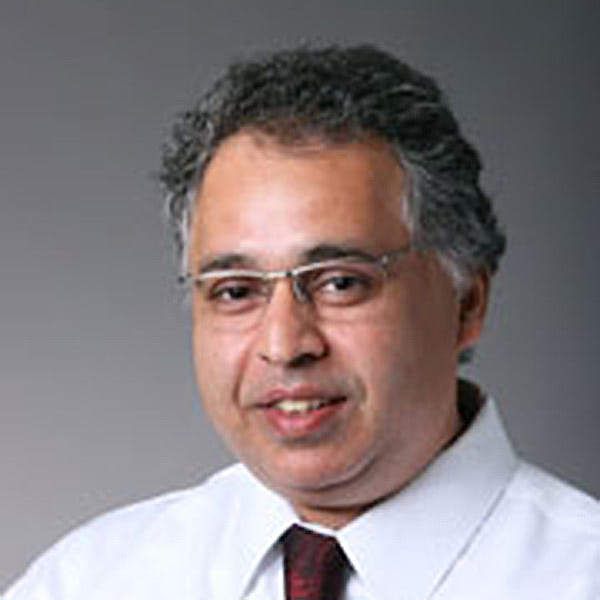
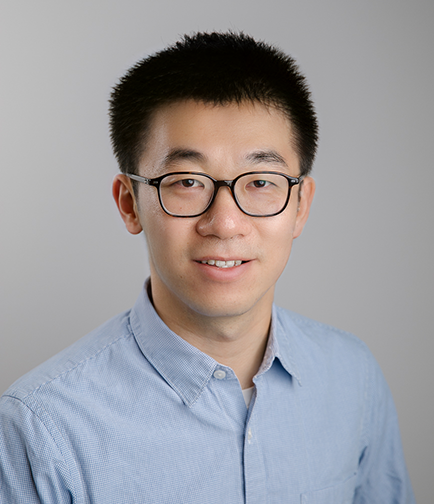
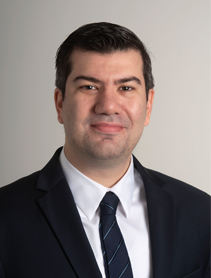
Urs Hengartner is an Associate Professor at the Department of Computer Science, University of Waterloo. His research focuses on information privacy, computer and network security with emphasis on smartphones, IoT, and machine learning-based authentication systems. He holds a Ph.D. (2005) and M.Sc. (2003) from Carnegie Mellon University, and a Diploma from ETH Zürich (1997). His work spans Adaptive security attacks on ML systems Implicit user authentication frameworks Privacy-preserving technologies for location and genomic data Secure authentication systems resilient to voice/spoofing attacks Recent publication trends show a strong focus on adversarial attack detection (e.g., watermarking evasion, diffusion model attacks) and context-aware authentication systems . His frameworks like MRAAC and SHRIMPS address multi-stage authentication challenges in mobile ecosystems. Key contributions include frameworks for evaluating multi-user authentication systems (SHRIMPS), risk-aware access control (MRAAC), and novel defense strategies against collaborative robot traffic fingerprinting. His work bridges security mechanisms with user-centric design principles.
Andrea Scott is an Associate Professor in the Department of Mechanical and Mechatronics Engineering at the University of Waterloo, Faculty of Engineering. Her research focuses on fluid dynamics, remote sensing, and machine learning applications in environmental systems. She holds a Doctorate in Mechanical Engineering from the University of Waterloo (2008) and has taught courses such as ME 351 (Fluid Mechanics) and SYDE 621 (Numerical Methods). Notable awards include the 2022 Outstanding Performance Award and 2021 Distinguished Performance Award from the University of Waterloo. Research interests span turbulence modeling, data-driven approaches, and physically inspired neural networks. Her work includes developing algorithms for sea ice concentration estimation, SAR imagery analysis, and fluid flow simulations. She collaborates with groups like the Vision and Image Processing Lab and the Remote Sensing of Environmental Change group. Current projects involve small object detection in remote sensing and graph neural networks for unstructured grid problems. Education: PhD, Mechanical Engineering, University of Waterloo, Canada (2008) MASc, Mechanical Engineering, McMaster University, Canada (2001) BASc, Mechanical Engineering, University of Waterloo, Canada (1999) Teaching responsibilities include undergraduate and graduate courses in fluid mechanics and systems engineering. She actively mentors students through the IEEE GRSS Women-to-Women Mentorship program and serves as an Associate Editor for the AGU Journal of Machine Learning and Computation. Her lab oversees over 20 current and past graduate students, focusing on topics like space debris tracking, AI-driven environmental modeling, and sea ice dynamics. Research outputs include over 40 publications in journals such as Physical Review Fluids and IEEE Transactions on Geoscience and Remote Sensing .
Kursat Kara is an Assistant Professor in the Department of Mechanical and Aerospace Engineering at Oklahoma State University (OSU), leading the Kara Aerodynamics Research Laboratory. He holds a Ph.D. in Aerospace Engineering from Old Dominion University (2008), and has held academic positions including Assistant Professor at Khalifa University (2010–2018), where he received the President’s Faculty Excellence Award for Teaching (2015). His research focuses on fluid dynamics, computational aerodynamics, hypersonic flows, quantum computing, and flow separation control using techniques like CFD and miniPIV. He has advised numerous graduate and undergraduate students, and collaborates on projects such as hypersonic boundary-layer stability, quantum computing for fluid dynamics, and urban wind field modeling for UAS navigation. Dr. Kara’s expertise spans experimental and numerical fluid dynamics, including work on sweeping jet actuators, boundary-layer transition, and aerodynamic design optimization. He is a member of AIAA (Senior), APS, and ASME, and has contributed to facilities like the $3.5M Khalifa University Low-Speed Wind Tunnel. His teaching includes courses on computational fluid dynamics, quantum computing, and unsteady aerodynamics. Recent research highlights include applications of machine learning in wind field prediction and interdisciplinary projects like interface learning for multiphysics systems. Scientific achievements include publications on hypersonic flow stabilization, quantum solvers for Burgers’ equation, and reduced-order models for urban wind simulation. His lab engages students from high school to PhD levels, emphasizing project-based learning and computational tools. Key collaborations involve NASA, the DOD, and industry partners like Sikorsky Aircraft Corp.
Laurie Gaskins Baise is a Professor and Chair of the Department of Civil and Environmental Engineering at Tufts School of Engineering, Tufts University. She leads the Geohazards Research Lab and directs the BSCE degree program. Her expertise lies in geotechnical earthquake engineering, seismic hazard mapping, and natural hazards mitigation. Education: Ph.D., University of California, Berkeley (2000) M.S., University of California, Berkeley (2000 and 1997) B.S.E., Princeton University (1995) Research Interests: Dr. Baise focuses on integrating predictive models with observational data to address geohazards like earthquakes and extreme wind events. Her work emphasizes regional seismic hazard mapping, liquefaction risk assessment, and rapid damage detection via remote sensing. She develops machine learning frameworks for post-disaster damage mapping and geospatial models for site response analysis. Labs/Teams: She directs the Geohazards Lab at Tufts, which collaborates on projects involving satellite imagery, geostatistical methods, and deep learning for hazard response. Recent work includes liquefaction modeling in Türkiye and Ukraine, wildfire spread forecasting, and ensemble-based seismic hazard assessments. Grants/Advising: Her research is supported by national and international grants. She mentors students in developing predictive models and remote sensing techniques for disaster resilience. Notable collaborations include work with the U.S. Geological Survey and global seismic networks.
Mustafa Hajij is an Assistant Professor in the Data Science program at the University of San Francisco. He holds a PhD in Mathematics from Louisiana State University, an MS in Computer Science, and completed postdoctoral training at University of South Florida and Ohio State University. Previously, he served as Assistant Professor at Santa Clara University and as an AI Research Scientist at KLA Corporation. His research develops foundational frameworks for topological deep learning, including cell complex neural networks and geometric learning architectures that operate beyond graph domains. He leads the NSF-funded project 'A Unifying Deep Learning Framework Using Cell Complex Neural Networks' (DMS-2134231, $547,626). Recent publications establish new paradigms for topological representation learning, including combinatorial complexes and simplicial networks, with applications in computational biology, 3D vision, and drug discovery. He organized the ICML Topological Deep Learning Challenges and develops open-source tools like TopoX for topological learning.
Raul Sanchez Reillo is a Full Professor at Universidad Carlos III de Madrid (UC3M), affiliated with the Grupo Universitario de Tecnologías de Identificación (GUTI). His research focuses on biometric systems, mobile authentication, and security technologies. Key areas include presentation attack detection, vein recognition, and ECG biometrics. He leads projects involving smartphone-based biometric solutions, 3D printed markers, and standards development for biometric interoperability. Research interests span multiple modalities: fingerprint authentication, dynamic signature verification, gait recognition, and vascular biometrics. He emphasizes usability and accessibility in mobile environments, exploring ergonomics and user interaction challenges. His work integrates machine learning (transformers, RNNs) with hardware solutions like FPGA-based systems. Publications highlight innovations in spoofing detection, medical applications (ECG/vein analysis), and low-cost hardware implementations. He contributes to European standards (BioAPI, Hand Data Interchange Format) and evaluates security practices for R&D compliance with EU data protection regulations. Current initiatives include enhancing biometric systems for critical infrastructure security and improving accessibility for elderly users. Active in interdisciplinary collaborations, he leads the Mobile Pass project evaluating user interaction in biometric systems. His lab (GUTI) develops open testing methodologies for biometric performance under Common Criteria and environmental stressors. Recent work addresses vulnerabilities in mobile fingerprint sensors and the ethical implications of biometric-as-a-service models.
Gita Reese Sukthankar is a Professor in the Department of Computer Science at the University of Central Florida (UCF) , where she directs the Intelligent Agents Lab . Her research focuses on activity and plan recognition , with applications in multi-agent systems, robotics, and human-robot interaction. She earned her Ph.D. from the Robotics Institute at Carnegie Mellon University and joined UCF in fall 2007. Research Interests: Her work spans activity recognition , intent inference , multi-agent coordination , and human-robot teams . She has applied these techniques to domains such as adversarial games (e.g., military simulations, Unreal Tournament), assistive technologies, and cooperative robotics. Her research integrates AI, machine learning, and probabilistic models to understand and predict complex team behaviors. Publication Trends: Her publications emphasize spatio-temporal modeling , probabilistic graphical models (e.g., HMMs, CRFs) , and multi-agent plan recognition . She frequently publishes in top venues like AAMAS, AAAI, and ICRA, with a focus on robust recognition of team behaviors, transfer learning, and real-world AI applications. Scientific Awards: NSF CAREER Award (2009) AFOSR Young Investigator (2009) ONR Summer Faculty Fellow (2008) UCF Faculty Excellence for Doctoral Mentoring (2012) CECS Dean's Research Professorship (2013) AAAI Senior Member (2021) ACM and IEEE Senior Member Advising and Grants: She mentors graduate students in AI and robotics and has led research funded by DARPA, AFOSR, and ONR. Her lab develops systems for intelligent agents that can understand and collaborate with humans. She has served on numerous program committees and editorial boards, including ACM Transactions on Autonomous and Adaptive Systems . She teaches courses such as Intelligent Systems , Robotics , and Machine Learning , and has been recognized for both research and teaching excellence. Labs and Teams: She leads the Intelligent Agents Lab at UCF, which focuses on data-driven social informatics and AI for human-agent teams. Her group collaborates with researchers in robotics, computer vision, and cognitive science to build adaptive, intelligent systems.
Professor Dino Sejdinovic is a faculty member in the School of Computer and Mathematical Sciences at the University of Adelaide, part of the Faculty of Sciences, Engineering and Technology. Previously, he held positions as Lecturer and Associate Professor at the University of Oxford's Department of Statistics (2014–2022). His academic qualifications include a PhD in Electrical and Electronic Engineering from the University of Bristol (2009) and a Diplom in Mathematics and Theoretical Computer Science from the University of Sarajevo (2006). His research focuses on the intersection of statistical methodology and machine learning, encompassing large-scale nonparametric methods, robust machine learning, multiresolution data fusion, and measures of dependence. He has contributed to kernel methods, Bayesian inference, causal discovery, and applications in climate science, quantum computing, and social science data analysis. Education: PhD in Electrical and Electronic Engineering, University of Bristol (2009) Diplom in Mathematics and Theoretical Computer Science, University of Sarajevo (2006) Sejdinovic's work emphasizes bridging theoretical foundations with practical applications, such as cloud type classification using vision transformers and machine learning-driven quantum device optimization. His recent publications explore topics like kernel-based causal inference, Bayesian neural networks, and uncertainty quantification in statistical models. Advising and grants: Eligible to supervise Masters and PhD students in machine learning and statistics, though specific grants or student advisees are not explicitly listed in the provided texts.
Sohail K. Mirza, MD, MPH is a Professor of Engineering at Dartmouth College's Thayer School of Engineering, specializing in biomedical engineering and orthopaedic surgery. His dual roles as a clinician and researcher focus on spinal biomechanics, surgical innovation, and healthcare policy. He received a BA in Physics from Colorado College (1985), an MD from the University of Colorado (1989), and an MPH from the University of Washington (2005). Research Interests: Dr. Mirza's work bridges clinical practice and engineering, with a focus on improving spinal surgery outcomes through advanced imaging techniques (e.g., intraoperative stereovision), reducing surgical overuse via policy analysis, and developing evidence-based guidelines for lumbar fusion procedures. His innovations include systems for pain measurement post-surgery and handheld stereovision tools for surgical navigation. Awards & Recognition: 2014 American Academy of Orthopaedic Surgeons Kappa Delta Award 2002/2008 University of Washington Service Excellence Award 1998 Cervical Spine Research Society Award Grants & Collaborations: His research has been supported by the National Institutes of Health and the Dartmouth College NSF I-Corps. He collaborates with biomedical engineers like Keith Paulsen and clinicians such as Roberts DW on projects like image-based registration for spine surgery. Labs & Teams: Leads the Spinal Surgery Innovation Lab at Thayer School, focusing on translating engineering solutions into clinical practices. Co-directs the Dartmouth Center for Surgical Innovation.
Dr. Dong Gong is a Senior Lecturer and ARC DECRA Fellow (2023-2026) at the School of Computer Science and Engineering (CSE), UNSW. He holds an adjunct position at the Australian Institute for Machine Learning (AIML), University of Adelaide. His research focuses on machine learning challenges in dynamic environments, including continual learning, foundation models, generative models, and applications in interdisciplinary areas like mining and agriculture. Research interests include learning with non-ideal supervision, foundation model adaptation, generative models, and interdisciplinary problems combining CV/ML with domain-specific applications. His work often addresses real-world scenarios such as mineral exploration and soil trait analysis using CV/ML technologies. Outstanding Reviewer: NeurIPS 2018 Outstanding Area Chair: ACM MM 2024 ARC DECRA Fellowship (2023-2026) Advising and grants: Actively supervises PhD/MPhil students in computer vision and ML. Collaborates with industry and government on research projects. Utilizes advanced infrastructure like UNSW's Katana supercomputing cluster and Gadi (NCI). Labs/Teams: Involved in interdisciplinary research groups at UNSW CSE and AIML, focusing on dynamic learning paradigms and real-world applications of AI.
Hannu Hyyppä is a Research Director and Project Employee at Aalto University's Department of Built Environment, affiliated with the MeMo research group. He leads the Research Institute of Measuring and Modelling for the Built Environment, focusing on advanced laser scanning, 3D modeling, and geoinformatics. His work spans interdisciplinary collaborations across engineering, geography, and arts, with a strong emphasis on applications in cultural heritage preservation, urban planning, and environmental monitoring. Education: Doctoral degree (D.Sc.) in Engineering and Technology, Helsinki University of Technology (2000) Licentiate degree in Engineering and Technology, Helsinki University of Technology (1989) Master's degree in Engineering and Technology, Helsinki University of Technology (1986) Research Interests: Laser scanning technologies, point cloud utilization in forestry and urban mapping, virtual reality for cultural heritage, and sustainable infrastructure modeling. His expertise includes photogrammetry, geographic information systems (GIS), and decision support systems for environmental management. Recent Contributions: Over 550 publications and 30+ active projects, including the Centre of Excellence in Laser Scanning Research (2014-2019) and the Pointcloud project (2015-2021). His work advances applications in autonomous road inspection, 3D cultural reconstructions, and smart city technologies. Awards: Recipient of the 2019 Kansallinen avoimen tieteen palkinto for innovative open science contributions. Grants & Leadership: Principal Investigator for projects like DICA (Digital Cultural Heritage) and ToToRo (Automatic Road Inspection). Active in organizing workshops and international conferences on 3D technologies and laser scanning. Labs/Teams: Oversees the MeMo group and collaborates with national organizations like the Finnish Geospatial Research Institute. Develops tools for real-time 3D mapping and virtual environments.
Jure Leskovec is a Professor of Computer Science at Stanford University, affiliated with the Stanford AI Lab, Machine Learning Group, and the Center for Research on Foundation Models. He holds academic appointments in the Department of Computer Science and is a member of Bio-X, the Institute for Human-Centered Artificial Intelligence (HAI), and the Wu Tsai Neurosciences Institute. Leskovec earned his BSc from the University of Ljubljana (2004), PhD from Carnegie Mellon University (2008), and postdoctoral training at Cornell University. His research focuses on social networks, data mining, machine learning, and computational biomedicine, with contributions to graph neural networks, drug discovery, and AI applications in healthcare. His work has been applied to combat the COVID-19 pandemic and integrated into products at major tech companies. Leskovec’s publications reflect his expertise in network analysis, medical AI, and biological systems. His recent work includes foundational contributions to graph neural networks (e.g., PyG) and medical AI frameworks. His research has garnered numerous awards, including the Microsoft Research Faculty Fellowship and ICDM Research Contributions Award. Leskovec advises numerous doctoral and postdoctoral researchers, contributing to over 200 publications. His interdisciplinary collaborations span computational biology, healthcare analytics, and social systems, with a focus on leveraging AI to address real-world challenges.
Maria Paz Linares Herreros is a Lecturer at the Universitat Politècnica de Catalunya (UPC), affiliated with the School of Mathematics and Statistics (FME) and the Department of Statistics and Operations Research. She is a member of the IMP (Information Modeling and Processing) research group and collaborates with inLab FIB on intelligent transportation systems. Research interests: Transportation systems, smart cities, traffic simulation, data-driven modeling, environmental impact assessment Specializes in applying machine learning and simulation to urban mobility challenges Her recent publications focus on: Parking availability prediction using deep learning Traffic emission modeling linked to urban policies Dynamic ride-sharing system optimization Integration of IoT data in transportation planning Scientific recognition: Recipient of the IV International Award on Transport Infrastructure Management Research (2018) Active contributor to projects like CitScale and Virtual Mobility Lab Collaborator in European initiatives like KIC Urban Mobility
Dr. Hakki Erhan Sevil is an Associate Professor in the Department of Intelligent Systems and Robotics at the University of West Florida, within the Hal Marcus College of Science and Engineering. He holds a Ph.D. in Mechanical Engineering from the University of Texas at Arlington and has extensive research experience in robotics, intelligent systems, and autonomous control. His work spans theoretical and applied domains, focusing on resilient and intelligent robotic systems. Ph.D., Mechanical Engineering, University of Texas at Arlington M.S., Mechanical Engineering, Izmir Institute of Technology B.S., Mechanical Engineering, Izmir Institute of Technology Dr. Sevil's research interests lie at the intersection of robotics, artificial intelligence, and control systems. He specializes in autonomous navigation, fault detection and isolation (FDI), multi-agent coordination, computer vision, and bio-inspired computational methods. His work emphasizes real-world implementation in unmanned and self-sustained systems, particularly in challenging environments. His recent publications and projects highlight a strong trend toward intelligent, resilient, and distributed robotic systems. Themes include entropy-based behavior modeling for UAV swarms, assistive robotics for household tasks, post-disaster damage assessment using aerial vision, and advanced guidance for GPS-denied navigation. These reflect a multidisciplinary approach combining machine learning, control theory, and robotics engineering. 2024 Faculty Excellence in Teaching Award, UWF 2024 Faculty Excellence in Undergraduate Research Mentoring Award, UWF DURIP Grant ($478,000) from ONR (with IHMC) USDA Grant ($728,000) with New Mexico State University US Air Force SBIR/STTR Grant ($110,000) with Catalano Aerospace AFWERX Funding for Distributed Behavior Research Dr. Sevil actively mentors Ph.D. and M.S. students and leads the Sevil Research Group, which has secured multiple internal and external grants from NSF, NASA, ARL, ONR, and USDA. He has served as PI and Co-PI on funded projects and advises student teams that have won national awards. His lab, the Intelligent Systems and Robotics Lab, is highlighted in university communications and national challenges. The group collaborates with IHMC, NMSU, and industry partners, fostering innovation in autonomous systems. The Sevil Research Group operates within the Intelligent Systems and Robotics Lab at UWF, conducting cutting-edge research in autonomous navigation, swarm intelligence, and resilient robotics. The lab collaborates with the Institute for Human and Machine Cognition (IHMC), New Mexico State University, and private aerospace firms. It supports student-led projects, participates in national robotics challenges, and maintains active GitHub repositories for open research dissemination.
Emtiyaz Khan is a Researcher at the RIKEN Center for AI Project in Tokyo, Japan. His work focuses on Bayesian deep learning, optimization, and variational inference methods. He leads research on the Bayesian Learning Rule framework, which bridges deep learning optimization with Bayesian principles. His research interests include developing scalable Bayesian methods for large neural networks, uncertainty quantification in deep learning, optimization algorithms (natural gradients, variational inference), and applications to foundation models. Key areas are efficient adaptation methods, model sensitivity analysis, and Bayesian principles for deep learning. Khan's publications demonstrate strong focus on Bayesian deep learning, optimization techniques, and uncertainty estimation, with applications ranging from large-scale models (GPT-2, ImageNet) to theoretical foundations of variational inference. He leads the Team Approx-Bayes research group focused on approximate Bayesian inference methods and maintains collaborations through JST CREST-ANR and Kakenhi grants.