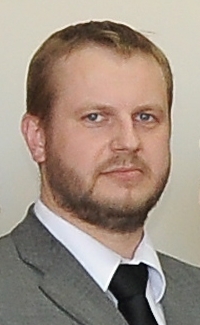
Tadas Žižiūnas is a researcher at the Faculty of Communication , Vilnius University , specializing in the intersection of 3D technologies , artificial intelligence , and cultural heritage preservation . His work focuses on developing automated systems for monitoring urban heritage, applying advanced digital methods to historical artifact analysis, and integrating spectroscopy with 3D modeling in archaeological contexts. Academic Qualification: PhD (2019) in cultural heritage research, Vilnius University Key research areas include digital urban heritage practices , AI-driven preservation tools , and 3D technology applications in archaeology . His publications demonstrate a consistent focus on technological innovation in heritage management, with projects funded by the European Regional Development Fund (2018–2022). His recent work explores democratization of heritage conservation through 3D scanning and AI, while earlier contributions examined spectroscopy for historical document analysis and augmented reality for preserving genius loci in urban settings. Notable projects include the Automated Heritage Monitoring of Urbanised Areas initiative, which combines AI with 3D digitization to assess risks to cultural assets.
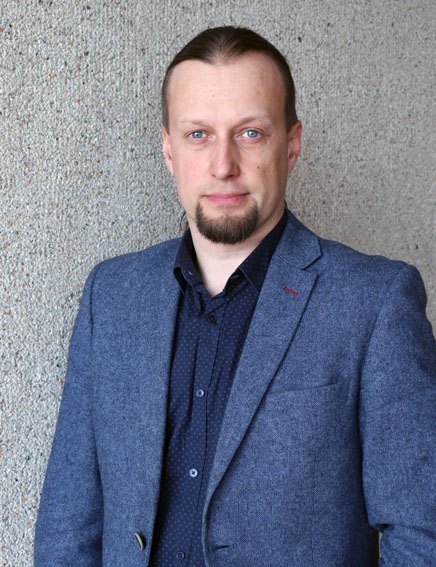
Justas Gribovskis is an Assistant Professor at the Department of Organizational Information and Communication Research , Faculty of Communication, Vilnius University. He holds a PhD (2021), Master's (2013), and Bachelor's (2006) degrees in Communication and Information fields from Vilnius University. His research focuses on knowledge management systems, business process optimization, big data analytics, and digital archiving. Education: 2021 – PhD, Vilnius University: Thesis on 'The influence of knowledge management on value creation in business processes' 2013 – Master's in Information Management, Faculty of Communication 2006 – Bachelor's in Communication and Information, Faculty of Communication Research Highlights: 2020-2023: Researched in the project 'Connective Digital Memory at the Margins' (ESF-funded), led by Dr. Costis Dallas, focusing on cultural identity and digital curatorial practices Developed models for evaluating knowledge-business process integration (2020) Explored big data-driven user knowledge creation (2018) Teaching: Courses include Information Marketing, Modern ICT, and Business Management Systems. Awards: No specific awards listed, but active in national and international conferences presenting on topics like blockchain in organizations and big data. Grants: Participated in the ESF-funded project (2020-2023) totaling €200k+.
Kristina Aldošina is a Senior Lecturer at ISM Business and Economics University since 2006, specializing in teaching Applied Mathematics, Mathematical Analysis, Programming, and related subjects. She holds a Master's degree in Mathematics and a teaching qualification in Mathematics and IT education. Her work focuses on integrating classical mathematical concepts with modern business and economic challenges through innovative teaching methods. Publications include co-authored textbooks such as 'Foundations of Static and Dynamic Optimization in Economics' (2021) and 'Economics and Finance Problems with Solutions' (2018), designed for students and educators. She actively participates in international teaching collaborations and teacher development programs, and has received multiple awards from ISM and the University. Her teaching philosophy emphasizes critical thinking and student engagement, often starting sessions with open-ended questions. She designs practical, industry-relevant problems to bridge classical mathematics and contemporary business needs, ensuring relevance for students' future careers.
Artūras Raila is a Professor at the Department of Photography and Media Arts of the Vilnius Academy of Arts (VDA). His work spans interdisciplinary art, photography, media installations, and environmental art. He has led projects like Power of the Earth and Kortlægning af København , exploring geo-energy structures and cultural landscapes. His exhibitions include solo shows at the Allenheads ACA (UK), Contemporary Art Center (Vilnius), and group participations across Europe. Education: Formal training details not explicitly stated, but extensive exhibition history from 1989 onwards indicates advanced academic background. Awards: Hansabank Art Award, Schering Stiftung Scholarship, Westerly Trust Scholarship. Research focuses on bio-location, environmental energy mapping, and cultural heritage through art. Recent works include MEDIARAMOS Symposium (2025) and Ūmėde festival (2021). His installations often blend technology with natural phenomena, creating immersive experiences. Grants/Residencies: Allenheads ACA residency (2007), Berlin residencies (2006), and collaborations with institutions like Design Innovation Center at VDA. Active in academic administration, Raila contributes to curricula development in media arts and has advised on interdisciplinary studies.
Dr. Simonas Čepėnas is an Assistant Professor at the ISM University of Management and Economics. He holds a PhD in Foreign Affairs from the University of Virginia (UVA), an MA in Government and Foreign Affairs from Southern Illinois University Carbondale, and a BS in Economics from ISM with a double degree from BI Norwegian Business School. His research focuses on comparative authoritarianism, interstate conflict, political economy, and game theory applications in governance. Teaching areas include International Relations, Political Economy, Data Analytics, and AI applications. He has presented research at the American Political Science Association (APSA) Annual Meeting and other international conferences. Prior to academia, he worked as a researcher at PPMI and EESC. Education: PhD (UVA), MA (SIU Carbondale), BS (ISM + BI Norway) Research interests span transboundary conflict economics, political institutions in authoritarian regimes, and the intersection of AI with governance strategies. His publications analyze topics such as firm survival in crises, electoral strategies, and sustainability leadership models.
Prof. Tomas Krilavičius is the Dean of the Faculty of Informatics at Vytautas Magnus University (VMU) and Head of the Artificial Intelligence Laboratory at the Research Institute for Natural Sciences and Technology. He earned his PhD in 2006 from the University of Twente in the Netherlands with the thesis "Hybrid Techniques for Hybrid Systems". His research focuses on applications of artificial intelligence, data visualization, and language technologies in domains such as defense, logistics, financial technology (fintech), and insurance technology (insurtech). In addition to his academic roles, he serves as: Vice President of the INFOBALT Association Board member of UAB kevin EU Member of the Lithuanian Artificial Intelligence Association Member of the Kazimieras Simonavičius University Council Lithuanian representative in the NATO Science and Technology Organization (STO IST) He actively contributes to startup development, organizes international conferences, leads scientific projects, and played a key role in shaping the Lithuanian Artificial Intelligence Strategy.
Roma Kačinskaitė is a Professor at the Department of Mathematics and Statistics within the Faculty of Informatics at Vytautas Magnus University. Her research focuses on analytic number theory, probability theory, and gender equality policies in education. Doctor of Sciences (2002) ORCID: 0000-0003-2656-1052 Scopus ID: 6504101661 Her work spans zeta function theory (Riemann, Hurwitz, Matsumoto classes), joint universality theorems, and computational mathematics. Recent supervised theses explore topics like: ICT integration in calculus pedagogy Discrete universality theorems for zeta function classes Functional independence of periodic zeta functions Public-key cryptographic algorithms Computer-assisted evaluation of Hurwitz zeta function values Student advising emphasizes mathematical olympiads, zeta function analysis, and computational methods. Publications reflect interdisciplinary approaches combining pure mathematics with educational innovation and cryptographic applications.
Dr. Donatas Narbutis is an Associate Professor at the Institute of Theoretical Physics and Astronomy (ITPA), Faculty of Physics, Vilnius University. His research spans astrophysics and computational methods, with a focus on machine learning applications to star cluster analysis and multi-modal imaging. Research Interests: Astrophysics, Data Visualization, Machine Learning Teaching: Data Analysis with Python, Fundamentals of Astrophotometry, Advanced Data Analysis for Masters and PhD students Leadership: Program Committee member for the International Conference on AI in Finance
Prof. habil. dr. Gintautas Dzemyda is a leading Lithuanian computer scientist, Professor and Senior Researcher at Vilnius University Institute of Data Science and Digital Technologies (VU DMSTI), and Head of the Cognitive Computing Group . He is simultaneously affiliated with the Institute of Mathematics and Informatics (MII) in Vilnius, where he has built an internationally recognized scientific school in visual data analysis. Education & Qualifications 1984 – Candidate of Technical Sciences (PhD equivalent), thesis on “Problem Structure Analysis – a Tool for More Effective Optimization”. 1997 – Habilitation Doctor of Technical Sciences, dissertation on “Isolation of Necessary Knowledge to Improve Optimization Efficiency”. 1992 – Associate Professor, Institute of Mathematics and Informatics, Vilnius. 1998 – Professor, Kaunas University of Technology. Research Interests Prof. Dzemyda’s research integrates data science, artificial intelligence, optimization, and cognitive computing . Core topics include dimensionality reduction, multidimensional data visualization, neural-network–based analytics, parallel and distributed computing, multi-criteria decision support, and advanced AI applications in medicine (ophthalmology, cardiology, oncology). His work has pioneered Lithuanian capabilities in visual analytics and large-scale data exploration. Publication Trends Across 270+ refereed works and 2 Springer monographs (2013, 2023), recent outputs (2021–2025) emphasize geometric multidimensional scaling for big-data visualization, deep learning for pancreatic-cancer detection on CT images, reinforcement learning for autonomous navigation, and fraud-detection techniques for highly imbalanced financial datasets. These contributions appear in Springer LNCS/LNNS, Informatica, Journal of Global Optimization, Engineering Applications of Artificial Intelligence , and other top venues. Awards & Recognition Lithuanian State Science Prize (2001 & 2021) Honorary Doctor of the University of Latvia (2019) Knight's Cross of the Order “For Merit to Lithuania” (2007) Doctoral Supervision & Committees He has mentored 28 doctoral graduates (15 direct, 13 through academic descendants) and currently supervises: Dalia Breskuvienė – Classifier training-set optimization Modestas Motiejauskas – Emotion recognition in photographs Victor Bulava – Machine-learning methods for cyber-incident early detection He also chairs or serves on doctoral and habilitation committees at VU, KTU, VGTU, VMU and MII. Laboratory & Projects As Head of the Cognitive Computing Group , Prof. Dzemyda coordinates several national and EU projects, including the current Lithuanian Research Council grant “Geometric Method for Multidimensional Scaling” (S-MIP-20-19, 2020-2022) and the SMART programme project “CognitiveSTATS” (2021-2023) focused on combating misinformation during pandemics. His team develops open-access tools for large-scale data visualization and contributes to the MIDAS national research-data archive.
Assoc. Prof. Dr. Gintautas Tamulevičius serves as Director of the Institute of Data Science and Digital Technologies at Vilnius University. His primary affiliation is with the Image and Signal Analysis Group, where he contributes as a Senior Researcher and Chief Researcher in projects. Doctor of Science in Technology (2008) Pedagogical Title: Associate Professor (2014, Vilnius Gediminas Technical University) Active in IEEE Computer Society and Signal Processing Society Dr. Tamulevičius specializes in speech signal processing, with research spanning three core domains: Speech Modeling : Autoregressive/linear prediction, nonlinear fractal modeling, non-parametric approaches Recognition Systems : Deep learning-based methods, Hidden Markov models, Wave-U-Net architectures Quality Assessment : Voice phonation evaluation, vocal fold condition analysis using acoustic methods His publication trends show strong focus on: Deep learning applications for speech processing 2D feature space analysis for recognition tasks Fractal dimension-based emotion classification Language preservation through technological development Human-centered AI applications Biomedical signal processing As an educator, he has taught: Digital Signal Processing (VGTU 2012–present) Speech Signal Processing (VGTU 2008–present) Data Visualization (VGTU 2015) User Interface Design (VU 2018–present) Audio Signal Processing (VU 2020–present) His editorial contributions include reviewing for: Informatica IEEE Access Neurocomputing Baltic Journal of Modern Computing Nonlinear Analysis: Modeling and Control IEEE Journal of Biomedical and Health Informatics International Journal of Applied Mathematics and Computer Sciences He has supervised doctoral research including: Daniel Zakševski (2023–2027): Deep learning models for speech enhancement Monika Danilovaitė (2020–2026): Voice quality assessment methods Tatjana Liogienė (2012–2016): Multistage speech emotion classification
Prof. Dr. Virginijus Marcinkevičius is a Professor at Vilnius University , serving as the head of the Smart Technologies Research Group and the Artificial Intelligence Laboratory within the Institute of Data Science and Digital Technologies . He is also a Senior Researcher , Project Lead Researcher , and Group Leader . Based in Vilnius, Lithuania, he has been instrumental in advancing research in machine learning , artificial intelligence , cybersecurity , and natural language processing . Research Interests: Machine Learning & AI Cybersecurity & Threat Detection Natural Language Processing Hyperspectral Imaging & Remote Sensing Autonomous Systems & Robotics Big Data & Cloud Computing His work spans both theoretical and applied aspects, including IoT security , visual analytics , and intelligent decision support systems . Recent projects include the development of propaganda detection systems , hyperspectral unmixing algorithms , and autonomous driving agents . Doctoral Supervision: He has supervised 19+ PhD students and 5+ consultants , covering topics from machine learning in cybersecurity to neural machine translation and autonomous UAV navigation . Projects & Grants: He has led or contributed to 15+ national and EU-funded projects , including: CognitiveSTATS – COVID-19 data literacy platform Propaganda and Disinformation Research – ML-based detection DAMIS – Data mining system for national research Raštija 2 – Lithuanian language resource integration Publications: He has authored or co-authored 60+ peer-reviewed publications in journals like IEEE Access , Informatica , Frontiers in Psychology , and Machine Vision and Applications . Professional Memberships: He is a member of the Lithuanian Computer Society , Lithuanian Mathematical Society , and Lithuanian Operations Research Society .
Dr. Rasa Karbauskaitė is a Researcher at the Cognitive Computing Group within Vilnius University's Institute of Data Science and Digital Technologies . She holds a Doctor of Computer Science degree (2010) and specializes in multidimensional data visualization, dimensionality reduction, and intrinsic dimension estimation. Her work combines geometric and statistical methods to analyze high-dimensional datasets. PhD: Computer Science (2010), focusing on local structure preservation in multidimensional data visualization Advanced Training: B2.1 English language course (2016) Research interests include: Fractal dimension analysis for speech emotion classification Manifold learning and topological preservation Optimization of maximum likelihood estimators for dimensionality reduction Geodesic distance applications in data structure analysis Nonlinear data projection algorithms Scientific contributions show a focus on Developing visualization quality assessment frameworks Advancing dimensionality reduction techniques Fractal-based feature selection for emotion recognition Comparative analysis of intrinsic dimension estimation methods Parameter optimization in manifold learning algorithms Awards : Lithuanian Academy of Sciences Young Scientists' Research Prize (2011) Professional Roles : Managing Editor of the Informatica journal Participant in international conferences like Data Analysis Methods for Program Systems (2011-2015) Contributor to IEEE proceedings and specialized workshops
Dr. Gerda Ana Melnik-Leroy serves as Senior Researcher at Vilnius University's Institute of Data Science and Digital Technologies, specializing in the Cognitive Computing Group. Her interdisciplinary work bridges cognitive science, linguistics, and data analytics with significant contributions to understanding human factors in decision-making and language processing. Her academic credentials include: Doctorate in Cognitive Sciences (2019) PhD studies at École Normale Supérieure's Laboratory of Cognitive Science and Psycholinguistics, Paris (2016-2019) Master of Cognitive Science (cognitive psychology major) from École Normale Supérieure, Paris (2014-2016) Melnik-Leroy's research examines cognitive biases in data visualization, second language phonetic acquisition, and synthetic speech perception mechanisms. She investigates how exponential growth misinterpretation affects decision-making and explores perceptual differences between congenitally blind and sighted individuals in speech processing contexts. Her methodological approach combines behavioral experiments with computational modeling to address real-world cognitive challenges. Analysis of her 15 most recent publications (2019-2025) reveals two dominant research trajectories: (1) Cognitive bias mitigation in data visualization, particularly regarding exponential growth misinterpretation and graph design optimization, and (2) Cross-modal speech processing, including L2 phonetic training efficacy and synthetic speech evaluation across diverse user populations. These streams demonstrate consistent integration of cognitive theory with practical data science applications. Within the Cognitive Computing Group, Melnik-Leroy contributes to interdisciplinary collaborations that advance human-centered computing. Her experimental work informs both theoretical models of cognition and applied solutions for educational technology and accessible human-computer interfaces, maintaining active research output through university-affiliated projects at Akademijos St. 4, Vilnius.
Martynas Sabaliauskas is an Associate Professor and Researcher at the Cognitive Computing Group , Institute of Data Science and Digital Technologies , Vilnius University , Lithuania. His research focuses on multidimensional scaling, geometric optimization, data visualization, and prime number theory. His research interests include: Multidimensional Scaling (MDS): Developing geometric approaches for efficient data dimensionality reduction and visualization. Prime Number Theory: Investigating properties of the Riemann zeta function, prime sequences, and fractal structures. Computational Mathematics: Designing algorithms for complex mathematical problems with applications in data science. Recent publications reflect a strong focus on geometric MDS techniques, visualization of complex mathematical structures, and computational approaches to number theory. Notable works include studies on the Riemann zeta function's zeros, fractal visualizations, and efficient algorithms for large-scale data analysis. Contact Information: Address: Akademijos St. 4, room 617, Vilnius, Lithuania Phone: +370 5 210 9305
Gediminas Navickas is a Lecturer at Vilnius University's Institute of Data Science and Digital Technologies (DMSTI) within the Faculty of Mathematics and Informatics, specializing in the Image and Signal Analysis Group. His work bridges academic research with practical applications in Lithuanian language technologies. His primary research focuses on automatic Lithuanian speech recognition, speech signal processing, speech synthesis methods and algorithms, and speech synthesis quality assessment. Navickas has made significant contributions to developing speech technologies specifically for the Lithuanian language, addressing the challenges of resource scarcity compared to more widely spoken languages. His work demonstrates strong interdisciplinary connections between computer science, linguistics, and cognitive science. Navickas's publication record reveals a consistent trajectory of innovation in speech technology, with recent work emphasizing cognitive approaches to evaluating synthetic speech, particularly examining differences in perception between blind and sighted users. His research has evolved from foundational work on neural network architectures for speech synthesis to comprehensive studies on speech corpus development and accessibility applications. He has been instrumental in major EU-funded projects including the LIEPA series (2013-present), which have developed comprehensive speech recognition and synthesis systems for Lithuanian. These projects have produced practical applications ranging from educational robots to voice-controlled mobile services and assistive technologies for the visually impaired. Member of Lithuanian Computer Society (LIKS) Council Member of IEEE organization Active participant in COST actions including UniDive and Multi3Generation Navickas regularly engages with the public through media appearances on LRT radio and television, where he explains complex speech technology concepts to general audiences. His science communication efforts demonstrate a commitment to making technical research accessible and relevant to Lithuanian society.