Dietrich Kammer serves as Professor of Technical Visualization at Dresden University of Applied Sciences' Faculty of Computer Science/Mathematics, holding Germany's first dedicated professorship in this field established to address growing demands for innovative visualization methods in human-computer interaction. His teaching emphasizes project-based learning grounded in solid theoretical foundations, focusing on virtual/augmented reality technologies and comprehensible user interfaces across programs including Media Informatics and Geomatics. His research centers on transforming abstract data into interactive visual representations through technical visualization, employing creative techniques like metaphor production and morphological analysis. Key focus areas include tangible user interfaces, elastic displays, and multimodal interaction systems designed to enhance user experience with complex datasets. He explores how customized graphical interfaces can make otherwise unmanageable data volumes visually interpretable and actionable. Analysis of his 2021-2025 publications reveals dominant research themes in elastic display technology, tangible interaction, and information visualization. Notable trends include adaptive visual assistance systems for smart factories (AVISAR), dynamic vibrotactile feedback mechanisms, and AI applications in metadata acquisition and learning analytics. His work consistently bridges theoretical frameworks with practical industrial and educational implementations. No specific details regarding student advising or research grants appear in available materials, though he advocates for student-led project development in his pedagogical approach. He directs the Technical Visualistics Working Group, which functions as an interdisciplinary platform for developing innovative interaction and visualization solutions through collaborative research and development initiatives.
Prof. Dr. Magnus Gaul serves as Professor and Chair of Music Education and Music Didactics at the University of Regensburg within the Faculty of Philosophy, Arts, History and Social Sciences. He has held this position since 2013 following his appointment to the W3-Professorship, after previously serving as Professor for Music Didactics at the Hochschule für Musik und Theater Rostock from 2008-2013. His academic leadership extends to coordinating teacher education programs for primary, middle, and high schools, serving as ERASMUS coordinator for music education, and administering music aptitude tests for teaching positions. Gaul's educational trajectory features international breadth with studies completed at the University of Regensburg, Goethe-Universität Frankfurt/Main, and the Conservatory in Cremona, Italy. Key academic milestones include: 2001: Doctorate in Musicology at University of Regensburg with thesis "Music Theater in Regensburg in the first half of the 19th century" 2003-2006: Additional studies in Germanistics and Music Education at Goethe-Universität Frankfurt/Main 2007: Habilitation in Music Education at Goethe-Universität Frankfurt/Main with empirical study "Music Lessons from a Student's Perspective" 2009: Qualification as professor in music education His research program demonstrates remarkable thematic coherence while evolving toward increasingly applied educational contexts. Core research interests include music education methodology, language acquisition through music (notably the SPRING program - "SPRache lernen durch sINGen"), time perception processes in musical learning contexts, and inclusive educational approaches for diverse student populations. His methodological approach combines qualitative data collection techniques including interviews, classroom observations, group discussions, and video technology analysis. Recent publications reveal growing emphasis on digital learning environments and time management aspects in contemporary music education. Gaul has developed distinctive expertise in applying qualitative-hermeneutic and quantitative-analytical approaches to classroom research, particularly regarding student perspectives on music instruction. Analysis of Gaul's publication record reveals a clear scholarly trajectory from historical music theater research toward increasingly applied educational studies with practical classroom implications. His work consistently bridges theoretical foundations with practical teaching applications, with notable thematic clusters including music-mediated language acquisition (SPRING program), time perception in musical learning, inclusive education approaches, and interdisciplinary connections between music education and other academic domains. The publications demonstrate methodological diversity, combining qualitative hermeneutic approaches with quantitative analytical techniques, reflecting his commitment to comprehensive understanding of music education phenomena. Gaul has supervised numerous academic advisees across various teacher education programs and secured funding for multiple research initiatives including the SPRING language acquisition project and studies on time perception in musical learning. His collaborative work extends to partnerships with cultural institutions including the Norddeutsche Philharmonie Rostock and Volkstheater Rostock during his tenure in Rostock, and more recently with various schools in Regensburg focusing on inclusive education processes, migration contexts, and SPRING implementation. He has coordinated multiple continuing education programs for music teachers across German federal states including Bavaria, Hesse, and Mecklenburg-Western Pomerania. Active research teams under Gaul's direction include the SPRING research group examining music-mediated language acquisition, projects investigating time perception in musical learning contexts (notably his 2022 publication "Vom Umgang mit der Zeit bei Kindern"), and interdisciplinary collaborations exploring connections between music education and special educational needs. His international research network includes collaborations with institutions in England, France, Italy, Lebanon, Austria, Spain, and the Czech Republic through ERASMUS programs and international workshops. Current projects focus on digital time management in music education (2024 publication) and creating spatial opportunities for musical education (2021 publication).
Dr. Iuliia Alieva serves as a postdoctoral researcher at the Department of Computational Social Science within the Institute of Social Sciences at the University of Stuttgart. Her interdisciplinary work integrates computational methodologies with social science inquiry to analyze digital information ecosystems, with particular emphasis on geopolitical conflict zones and societal crises. Her research portfolio spans critical domains including: Computational Social Science Network Science and Analysis Disinformation and Propaganda Research Social Media Analytics Journalistic Framing Mechanisms Political Communication Dynamics Analysis of her 2021-2024 publications reveals concentrated investigation into Russian information operations on Twitter, especially regarding Ukraine invasion narratives. Her methodological approach consistently combines network analysis, natural language processing, and mixed-methods frameworks to dissect propaganda architectures, anti-war counter-narratives, and media coverage patterns across geopolitical events. Collaborative work with Kathleen Carley's research group forms the backbone of her empirical investigations. Dr. Alieva demonstrates active academic engagement through scheduled 2025 teaching appointments for courses on mis/disinformation and AI-society interactions. No scientific awards or formal student advisement relationships were documented in source materials. Her research emerges from collaborative computational social science teams applying network science to contemporary challenges including election integrity, pandemic communication, and state-sponsored information warfare.
Prof. Günter Neumann is a Professor of Computational Linguistics at Saarland University and a Research Fellow at the German Research Center for Artificial Intelligence (DFKI) . He has over 30 years of experience in research software development, with a focus on language technology , information extraction , and question answering systems . PhD in Computer Science (1994) and Venia Legendi in Computational Linguistics (2004) from Saarland University Visiting researcher at Stanford , CMU , and MIT His research spans computational linguistics , artificial intelligence , and their applications in defence , healthcare , and education . He leads projects like AtLaS (AI-based NLP for low-quality data in defence), PRECISE4Q (predictive modeling in stroke medicine), and iREAD (personalized reading apps). Recent publications focus on low-resource language retrieval , cross-lingual transfer , and graph-based reasoning in biomedical domains. He has participated in numerous program committees (ACL, AAAI, LREC) and contributed to advancements in multilingual question answering , knowledge graph reasoning , and medical text de-identification . He has collaborated with institutions like Fondazione Bruno Kessler , econob , and NICE Systems . Current tools developed with his team power semantic search services for Informationsdienst Wissenschaft and the Deutsche Allianz Meeresforschung portal.
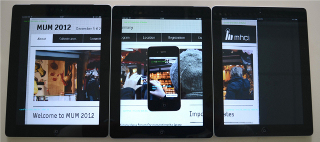
Dr. Ming Li is a researcher at RWTH Aachen University , focusing on interdisciplinary research spanning Human-Computer Interaction (HCI) and Geotechnical Engineering . His work on mobile devices and augmented reality has led to practical applications like MobileVideoTiles for multi-device video display and ACTUI for tangible interfaces using commodity hardware. Email: mingli@informatik.rwth-aachen.de In 2012 , he contributed to Dynamic Tiling Display and Segway AR-Tactile Navigation , emphasizing visual synchronization and vibro-tactile feedback. His recent publications (2020–2025) pivot toward soil mechanics , foamed concrete , and machine learning applications in geotechnical modeling, including Bayesian optimization for soil parameter calibration and multiscale fracture modeling for composites. He received the Best Paper Award at MUM12 . His work explores both mobile technologies and civil engineering materials , suggesting a broad technical scope.
Prof. Dr. Martin E. Müller is a Professor in the Department of Computer Science at Bonn-Rhein-Sieg University of Applied Sciences, specializing in the mathematical and theoretical foundations of informatics. His research bridges abstract algebraic structures with practical computational applications, particularly in knowledge representation and reasoning systems. Dr. Müller's primary research interests include Algebraic Logic , Modal Logic , Relational Algebra , Universal Algebra , and Logic Knowledge Discovery (also known as explainable machine learning). His work demonstrates how theoretical mathematical frameworks can provide robust foundations for practical computational problems, particularly in the areas of rough set theory, formal concept analysis, and inductive logic programming. He approaches machine learning through logical structures, emphasizing transparency and explainability in AI systems. Analysis of his publication record shows a consistent scholarly trajectory from 1994 through 2023, with increasing emphasis on applying formal logical methods to contemporary machine learning challenges. His work spans theoretical foundations of computing, relational methods in program semantics, and practical applications in user modeling and knowledge discovery. Recent publications demonstrate growing interest in making machine learning more interpretable through logical frameworks. Among his professional recognitions is the Seahorse award from 1975 . Dr. Müller serves as a reviewer for numerous academic journals and conferences and is an active member of several professional associations in computer science and logic. Dr. Müller has led significant research projects including PARIA (2004-2008), which developed the PACME architecture for concurrent processes; Rela-X (2010-2019), which implemented libraries for efficient relation calculus with the R-Lang programming language; and the ongoing COMPARE project (2024-) focusing on pairwise multidimensional comparisons for survey analysis. His current work with the 'Sets, Structures, Semantics' project (2018-) aims to create a comprehensive resource on discrete mathematics and logics. His research group maintains strong international collaborations, particularly with researchers in the relational and algebraic methods community, including notable figures like Tony Hoare, Peter Höfner, Peter Jipsen, and Bernhard Möller. The Rela-X project established a productive student working group environment that produced both theoretical insights and practical software tools for relational calculus visualization.
Maurice D. Mulvenna is a Researcher at the School of Computing and Mathematics, Ulster University , focusing on Artificial Intelligence, Digital Health, and Human-Computer Interaction . His work explores the application of AI in mental wellbeing, assistive technologies for dementia care, and usability testing methodologies. Research Themes : AI for Wellbeing, Ambient Assisted Living, Machine Learning in Healthcare, IoT for Elderly Care, Sentiment Analysis Recent Articles : 2025 study on AI's impact on mental health; 2024 work on employee wellbeing platforms; 2023 papers on chatbots and IoT lighting solutions for dementia His collaborations span Raymond R. Bond, Siobhan O'Neill, and Chris D. Nugent , with publications in journals like Behavior & Information Technology and conferences such as ICT4AWE and ECCE . While no explicit awards are listed, his contributions include co-editing conference proceedings and advancing ethical-by-design frameworks. Labs/Teams : Involved in projects like SenseCare (2016) for emotional wellbeing visualization and UX-Handle (2017) for usability analytics. His work bridges technical innovation with user-centered approaches in healthcare and digital platforms.
Huber Flores is a Professor in the Department of Computer Science at Aalto University's School of Science, specializing in pervasive computing, mobile sensing, and sustainable technology applications. His research bridges the gap between theoretical computer science and real-world environmental challenges through innovative applications of drone networks, thermal imaging, and AI systems. His research interests focus on Pervasive Computing , Mobile Sensing , Drone Networks , Environmental Monitoring , AI Applications , and Sustainable Computing . Flores develops systems that leverage everyday interactions and low-cost sensing to address environmental sustainability challenges, particularly in plastic pollution monitoring, urban air quality assessment, and resource optimization. His work on thermal dissipation sensing modalities represents a novel approach to human-environment interaction understanding. Analysis of his recent publications shows a strong trend toward integrating large language models with multi-sensor data for context reasoning, while maintaining focus on practical environmental applications. His research consistently addresses scalability challenges in city-scale autonomous drone deployments and sustainable computing through e-waste repurposing. Flores has received no explicitly mentioned scientific awards in the available literature, though his high publication volume in top-tier venues demonstrates significant recognition within the pervasive computing community. His collaborative work spans multiple international institutions, with frequent co-authorship patterns indicating strong connections with Petteri Nurmi, Sasu Tarkoma, Pan Hui, and Mohan Liyanage. His research has secured funding supporting work on drone networks, environmental monitoring systems, and AI robustness frameworks, though specific grant details aren't provided in the source material. Flores leads research on the SPATIAL architecture for AI trustworthiness, LIZARD for plastic litter monitoring, and SEAGULL for underwater plastics analysis, demonstrating his focus on applying computing to pressing environmental challenges through innovative sensing approaches.
Elena Spörer is a researcher at the Chair of Computer Science Education at Technische Universität München (TUM) . Her work focuses on data literacy, debugging processes, code quality in K-12 education, and pedagogical approaches to quantum computing. She contributes to curriculum development and teacher training initiatives.
Dr. Michael Aye is a Postdoc researcher at the Institute of Geological Sciences, Freie Universität Berlin, within the Department of Planetary Science and Remote Sensing. His work focuses on planetary science, particularly Martian polar regions, CO2 jet-driven processes, and remote sensing data analysis. Specializes in Martian seasonal activity, araneiform morphology, and Saturn ring dynamics Develops open-source software tools for planetary data (e.g., PlanetaryPy, SpiceyPy) Contributes to citizen science projects like Planet Four He conducts laboratory experiments to validate Martian polar processes under JPL DUSTIE chamber conditions and creates software solutions for analyzing Cassini UVIS data. His publications span planetary data calibration, machine learning applications, and comparative studies of seasonal phenomena across multiple solar system bodies.
Bernhard Saske serves as a Research Associate at the Chair of Virtual Product Development within Dresden University of Technology, where he has been affiliated since completing his mechanical engineering studies in 2002. Holding a doctorate (Dr.-Ing.) earned in 2008 for research on 'Augmented Reality in Maintenance,' he specializes in virtual and augmented reality applications integrated with product lifecycle management systems. His academic credentials include: Master's degree in Mechanical Engineering from Dresden University of Technology (2002) Doctorate (Dr.-Ing.) from Dresden University of Technology (2008) focusing on Augmented Reality in Maintenance Saske's research centers on digital transformation in engineering workflows, with core expertise in virtual/augmented reality implementation, product lifecycle management (PLM), and model-based systems engineering (MBSE). Recent investigations address generative AI applications in CAD processes, sustainable product development frameworks, and component reuse optimization in industrial plant design. His work consistently bridges theoretical methodologies with practical industry implementation challenges. Analysis of his 2023-2025 publications reveals a strategic shift toward artificial intelligence integration in engineering design, particularly generative models for CAD and computer vision systems. Concurrently, his research maintains strong emphasis on sustainability-driven PLM strategies and MBSE adaptation for circular economy principles, reflecting evolving industry priorities in resource efficiency and digitalization. Scientific Awards: No documented awards, fellowships, or major honors were identified in the source materials. Dr. Saske actively contributes to collaborative research projects within the Chair of Virtual Product Development, frequently co-authoring with Prof. Paetzold-Byhain and interdisciplinary teams. While specific student supervision is unrecorded, his publications indicate mentorship roles in conference papers and journal articles. Project funding appears aligned with German academic-industry partnerships focused on digital engineering solutions, though grant details remain unspecified. As a core member of the Chair of Virtual Product Development, Saske operates within a research ecosystem dedicated to advancing virtual prototyping, digital twin technologies, and immersive maintenance solutions. The chair maintains active industry collaborations to implement VR/AR methodologies in real-world manufacturing and product development contexts across European industrial partners.
Debayan Chatterjee is a doctoral researcher (WiMi) at the Institute of Geological Sciences, Freie Universität Berlin, specializing in sedimentary systems. His research focuses on understanding long-term river lateral migration dynamics, floodplain evolution, and valley widening processes through interdisciplinary approaches combining remote sensing, analog modeling, and geospatial data analysis. Education: M.Sc. in Remote Sensing, GeoInformation, and Visualization (Universität Potsdam, 2020–2025); M.Sc. in Geophysics (IIT Kharagpur, 2017–2019); B.Sc. in Physics (St. Xavier’s College Ranchi, 2013–2016) Current Work: Investigates river bank erosion controls using global erosion rate datasets, remote sensing techniques, and landscape evolution experiments Methods: Structure-from-Motion photogrammetry, digital topography analysis, analog modeling He is affiliated with the Tectonics and Sedimentary Systems group at Freie Universität Berlin and contributed to the newly funded TIPSY project in 2025. His technical expertise spans research and teaching assistantships at GFZ Helmholtz Centre for Geosciences and Universität Potsdam, as well as prior project work at India’s National Geophysical Research Institute. Key facilities he engages with include the Biomarker Lab, mineral separation labs, and geospatial software workshops. His research intersects sedimentary geology, geomorphology, and geoinformatics to address fundamental questions about landscape evolution.
Dr. Stefan Seegerer is an Associate Scientist in the Didactics of Computer Science group at the Department of Mathematics and Computer Science , Free University of Berlin. His work focuses on integrating computer science education with digital literacy and artificial intelligence. Research Projects: ENKIS (AI study programs), TrainDL (Data Literacy teacher training), DigiProMIN (digital professionalization for STEM teachers), and others.
Dr. Ralf Metzner serves as Deputy Head of Enabling Technologies and Team Leader of Plant Radiotracers at the Institute of Bio- and Geosciences (IBG-2: Plant Sciences), Jülich Research Centre. His leadership focuses on developing non-invasive imaging methodologies to study plant transport processes, with direct applications in sustainable agriculture and bioeconomy initiatives. Metzner's research centers on plant transport physiology, particularly the demand-driven allocation of photoassimilates between photosynthetic and non-photosynthetic organs. He pioneers the use of short-lived radiotracers (primarily carbon-11) coupled with Positron Emission Tomography (PET) and Magnetic Resonance Imaging (MRI) to visualize three-dimensional carbon dynamics in living plants. This approach overcomes traditional limitations in studying phloem transport, enabling real-time observation of carbon flow under various environmental stresses including drought and disease. Analysis of his recent publications (2022-2025) reveals three dominant research trajectories: development of the phenoPET plant-dedicated scanner system, investigation of carbon allocation patterns in response to biotic/abiotic stresses, and exploration of plant-microbe interactions in the rhizosphere. His work consistently bridges plant physiology, imaging technology, and agricultural science to address climate adaptation challenges. Metzner leads the Plant Radiotracers team that operates specialized imaging infrastructure including the phenoPET scanner and integrated MRI-PET systems. This facility enables non-invasive 3D analysis of root systems in soil environments, supporting Jülich Research Centre's mission to develop sustainable plant production solutions through advanced phenotyping technologies.
Prof. Dr. Pascal Jürgens is a faculty member and Managing Director of the Department II, Media Studies at the University of Trier . His research pioneers Computational Communication Science , focusing on computer-based methods to understand digital societies, algorithmic influence, and media effects modeling. Recent work explores news consumption dynamics, representation in media, and critical analyses of digital structural changes. Research Interests: Development of computational methods for analyzing text, image, and behavioral data Algorithmic curation's impact on public agenda fragmentation Quantitative approaches to media effects and opinion dynamics Challenges in digital journalism and news recommendation systems Longitudinal studies of media representation Contact: juergens@uni-trier.de