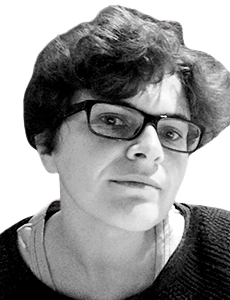
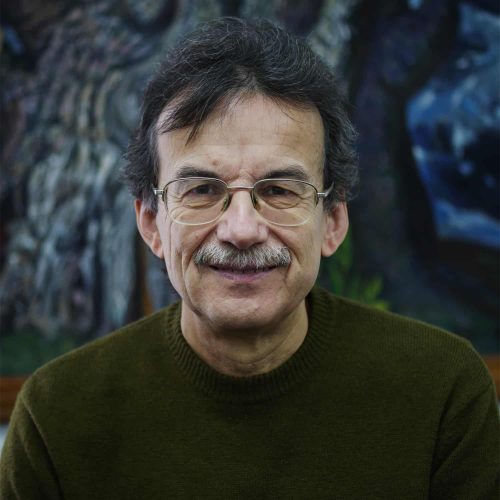
Ginés Carreto Picón serves as a Research Fellow within the Department of Electrical and Computer Engineering at Aarhus University, Denmark, specializing in the Signal Processing and Machine Learning research group. His work focuses on developing computationally efficient AI solutions for resource-constrained environments. His research expertise spans machine learning, signal processing, and artificial intelligence of things (AIoT), with emphasis on creating high-performance sequence processing models through continual learning frameworks, dimensionality reduction, and low-rank approximation techniques. These approaches significantly reduce energy consumption while maintaining model accuracy for edge deployment. His publication on visual fingerprinting for sequential data demonstrates his focus on interpretable pattern recognition methods. Current work centers on the 2024-2027 PhD project developing lightweight AI architectures specifically optimized for IoT devices, aiming to expand feasible AI applications in constrained computational environments. He actively contributes to the Signal Processing and Machine Learning laboratory's research ecosystem, advancing methodologies for practical implementation of efficient AI systems in real-world edge computing scenarios.
Anders Kristian Munk is a Professor at DTU Management, Technical University of Denmark, based in the Department of Technology, Management and Economics within the Division for Technology and Business Studies. His research focuses on the critical intersection of technology and society through Science and Technology Studies (STS) and advanced digital methodologies. His primary research domains include: Generative AI integration in social research Digital methods development (notably data sprints) Controversy mapping of sociotechnical issues Computational ethnography and network analysis Critical examination of data imaginaries Urban studies through computational visual methods Recent publications (2023-2025) demonstrate a strategic pivot toward generative AI applications, with significant contributions in developing AI-native research frameworks like synthetic interlocutors and irreductionist mapping. His work uniquely bridges STS theory with practical tool development, exemplified by Gephisto for critical network analysis. Key application areas span public health (e.g., inflammatory bowel disease trend analysis in Africa), cultural industries (film audience analytics), and urban studies (pandemic place attachments). Prof. Munk co-developed the data sprint methodology for collaborative controversy mapping and has contributed to major projects including Climaps and EMAPS. His interdisciplinary approach combines social science rigor with computational innovation through partnerships across computer science, design, and domain-specific fields. Current work emphasizes ethical AI integration and methodological adaptation for complex sociotechnical challenges.
Kristian Tangsgaard Hvelplund is an Associate Professor with the Department of English, Germanic and Romance Studies at the University of Copenhagen's Faculty of Humanities. His academic work centers on translation studies, with a particular emphasis on cognitive processes in translation and dubbing translation. Translation cognition and automaticity Eye-tracking and keystroke logging methodologies Media translation and dubbing Translation process modeling Hvelplund's research combines theoretical and applied approaches, utilizing experimental methods to analyze translation quality and cognitive resource allocation. Recent publications explore emotional dimensions in translation, post-editing workflows, and methodological innovations in cognitive translation studies. His work demonstrates strong interdisciplinary connections across Translation Studies , Cognitive Science , Applied Linguistics , and Human-Computer Interaction . Methodologically, he focuses on Eye-tracking , Process modeling , and Quantitative translation analysis . As a dedicated educator, Hvelplund supervises BA, MA and PhD students in translation studies while maintaining active participation in international academic collaborations.
Emanuela Marchetti is an Associate Professor at the Department of Mathematics and Computer Science , University of Southern Denmark. Her work bridges STEAM education, computational thinking, and playful learning methodologies. Key research areas: Data Privacy in Education, Human-Robot Interaction, Transmedia Literacy Projects: Taxonomies (2025), SPADATAS Handbook (2025), LabSTEM (2020-2022) Research Interests focus on integrating creativity into STEM through art-science collaborations, as seen in the Taxonomies project. Her recent work explores GDPR education via game design, AI's role in co-creative learning, and social robotics for welfare contexts. Publication Trends show interdisciplinary exploration of data fragility, digital tools for education, and ethical technology design. Articles span computational thinking through card games, AI emotion-based assessment, and GDPR gamification. Contact: emanuela@sdu.dk | Phone: 65 50 10 36
Danielle Wilde is a Professor at the University of Southern Denmark (SDU) within the Department of Business and Sustainability , IEB Esbjerg , and SDU Climate Cluster . She serves as an Adjunct Professor at RMIT University and contributes to the EU COST Action 16229 as a Committee Member for Denmark. Her work bridges participatory design with ecological and social sustainability, focusing on wicked problems through bottom-up stakeholder engagement. PhD in Design from Monash University (2012) MA in Design Interaction from Royal College of Art (2003) Her research explores human-microbiome relations , more-than-human design , and food system transformation , particularly through living labs . Recent projects like SCC Elite Centre for Post-Anthropocentric Climate Action and SDU Food Cluster highlight her interdisciplinary approach. She received the SCC Fast track award (2025) for her climate action work. Key article trends include participatory methodologies for ecological data , experimental approaches to microbiome engagement , and design fiction for food futures . Her work often intersects with wearable technology , decollaborative practices , and environmental citizenship frameworks . Scientific Awards SCC Fast track award (2025) She contributes to teaching courses like Exploring Design , Multi-stakeholder Innovation , and Design Specialisation B , with previous supervision of Master’s thesis projects. Current collaborations span climate action , food system innovation , and bio-digital interaction across European institutions.
Patrizia Paggio serves as an Associate Professor and Senior Researcher within the Department of Nordic Studies and Linguistics at the University of Copenhagen's Faculty of Humanities, concurrently holding a full professorship at the University of Malta's Institute of Linguistics and Language Technology since September 2011. Her scholarly work centers on the intricate relationship between verbal and nonverbal communication modalities, with international recognition for advancing methodologies in multimodal analysis. Academic Background: PhD in Computational Linguistics from the University of Copenhagen (1997), dissertation: "The Treatment of Information Structure in Machine Translation" Professor Paggio's research program investigates how gestures, head movements, and other nonverbal cues interact with spoken language to construct meaning in natural communication. She has pioneered methodologies for constructing and analyzing multimodal corpora, while maintaining technical expertise in machine translation systems, grammar engineering, and content-based querying frameworks. Her theoretical work spans formal syntactic structures, discourse phenomena, information packaging, and ontological representations for linguistic data, consistently bridging computational methods with linguistic theory. Analysis of her recent publications (2020-2025) reveals a sustained focus on computational approaches to nonverbal communication, particularly the automatic detection and annotation of head movements and gestures in both physical and digital environments. Key contributions include the GEHM Zoom corpus for online interaction analysis, eye-tracking studies of emoji processing, and diachronic modeling of historical language change. Her work strategically integrates eye-tracking, corpus linguistics, and machine learning techniques, establishing her at the convergence of linguistic theory, cognitive science, and artificial intelligence applications. Professional Leadership: Coordinator of the international GEHM (Gestures and Head Movements in Language) research network Organizer of MULTIMODAL CORPORA 2018, 4th European/Nordic Symposium on Multimodal Communication, and LREC2022 Workshop on People in Vision, Language and the Mind
Lars Hvam is a Professor in the Department of Civil and Mechanical Engineering at the Technical University of Denmark (DTU), where he specializes in Engineering Design and Manufacturing Systems. His research is deeply rooted in product configuration, modular architectures, and mass customization, with applications across diverse industries including naval engineering, logistics, and jewelry manufacturing. Research Interests: His work focuses on improving engineering processes through digital tools such as configurators and digital twins. Key areas include product architecture, systems engineering, logistics service design, and data-driven optimization of manufacturing systems. He actively explores how configurators can extend product offerings into services and enhance operational efficiency. Publication Trends: His recent articles (2025) highlight a strong emphasis on practical applications of configuration systems, decision modeling in engineer-to-order environments, and the integration of augmented reality with digital twins for operator training. These works span disciplines such as industrial engineering, computer science, and supply chain management, reflecting an interdisciplinary approach. Scientific Contributions: While specific awards are not listed, his extensive publication record and leadership in major research projects underscore his impact in the field. Advising and Grants: He supervises several PhD students in projects related to modular architecture, logistics, and configurator implementation. His team is involved in both active and completed research initiatives, indicating sustained funding and academic leadership. Labs and Research Teams: He collaborates closely with Professor N. H. Mortensen and other researchers within DTU’s engineering design group, contributing to a robust research network focused on industrial problem-solving and innovation.
Yurij Holovatch is a Professor and Chief Researcher at the Institute for Condensed Matter Physics (ICMP) of the National Academy of Sciences of Ukraine in Lviv, where he founded the Laboratory for Statistical Physics of Complex Systems. He is a co-founder and co-director of the L4 collaboration and the International Doctoral College in Statistical Physics of Complex Systems, linking ICMP with the Universities of Leipzig (Germany), Coventry (UK), and Lorraine (France). He is also a full member of the National Academy of Sciences of Ukraine. Research Interests: His work focuses on phase transitions and critical phenomena in structurally disordered magnets, scaling of macromolecules and conformational properties of complex polymers, complex networks (ordering, stability, spreading), and increasingly extends into digital humanities and human migration . His research bridges theoretical physics with data-driven modeling of social and urban systems. Publication Trends: His recent publications (2023–2024) reveal a sustained focus on critical behavior in disordered systems using Monte Carlo simulations, exact and asymptotic analysis of models like the Potts and Blume-Capel models, and innovative applications of statistical physics to collective decision-making, transportation networks, and migration. These works reflect a strong interdisciplinary trend, integrating physics-based modeling with data analytics and social science questions. Davydov Prize for studies in theoretical and biological physics (2020) Honorary Ambassador of Lviv (2020) Visiting Professor (Honorary), Coventry University (since 2018) Advising and Grants: As co-director of the International Doctoral College, he plays a central role in training PhD students in statistical physics across Ukraine, Germany, UK, and France. He organizes the annual Ising Lectures workshop in Lviv since 1997, fostering international collaboration. He serves as editor of the book series Order, Disorder and Criticality (World Scientific), with Volume 7 published in 2023. Labs and Teams: He founded and leads the Laboratory for Statistical Physics of Complex Systems at ICMP Lviv. He co-directs the L4 collaboration and the International Doctoral College, which function as cross-institutional research and educational networks integrating theoretical and computational physics across Europe.
Marco Pizzolato is an Associate Professor in the Department of Applied Mathematics and Computer Science at the Technical University of Denmark (DTU), specializing in Visual Computing with a focus on Magnetic Resonance Imaging (MRI), particularly diffusion MRI and biophysical modeling. He is also affiliated with the inter-departmental Microstructure & Plasticity (MAP) research group and has held visiting positions at the University of Verona, EPFL, and DRCMR. His educational background includes a PhD in Signal and Image Processing from INRIA Sophia Antipolis, a Master’s in Bioengineering from the University of Padua, and a Bachelor’s in Biomedical Engineering from the same institution. He previously served as an Assistant Professor at DTU and was a postdoctoral researcher under the Marie Curie COFUND Eurotech programme. Dr. Pizzolato's research centers on image and signal denoising, inverse problems, optimization, diffusion MRI, tractography, and Monte Carlo simulations. He actively contributes to the development of microstructural models for brain imaging, with applications in neurodegenerative diseases and brain connectivity. His work aligns with UN Sustainable Development Goals, particularly in advancing education and health through imaging technology. The recent publications reflect a strong trend in advancing diffusion MRI techniques, including ACID imaging, microscopic propagator modeling, myelin integrity mapping, and multi-scale white matter organization. These works emphasize biophysical accuracy, model validation, and integration across imaging modalities and species. Magna Cum Laude , ISMRM 2020 Magna Cum Laude , ISMRM 2022 First Place , Macaque Validation Challenge at ISBI 2018 First Place (Overall and HCP) , IronTrack Challenge 2019 (MICCAI) MICCAI Student Travel Award 2015 He has supervised PhD students such as Thøgersen, T. L. and Corral Bolaños, M. in projects related to microstructure MR imaging and myelin mapping. He has also been involved in significant grants and collaborative projects, including the Multimodal Microstructure-Informed Connectivity (MMINCARAV) initiative between Inria and EPFL, and the Sinergia consortium for Brain Communication Pathways . He co-organized multiple international events, including the MICCAI CDMRI workshops and challenges (2019–2021), and the ESMRMB Leaps in Microstructure Imaging workshop (2024). Dr. Pizzolato is an active member of the scientific community, serving as an editor for MICCAI workshop proceedings, a reviewer for major journals and conferences, and an invited speaker at ISMRM 2025. He leads and participates in several ongoing research projects at DTU focused on quantitative imaging, myelin mapping, and MRI-based connectivity, demonstrating sustained research leadership and external funding success.
John Paulin Hansen is a Professor at the Technical University of Denmark (DTU), affiliated with the Department of Technology, Management and Economics under the Technology and Business Studies school. His research focuses on human factors, human-computer interaction, and assistive technologies, particularly in gaze interaction and rehabilitation robotics. He holds a Ph.D. from Aarhus University (1992) and has led research groups at institutions like Risø National Laboratory and the IT University of Copenhagen. His work emphasizes improving quality of life for individuals with motor disabilities through innovations like The Eye Tribe and GazeIT lab initiatives. Research Interests include: Eye-tracking technology and gaze interaction systems Exoskeletons and AR interfaces for stroke rehabilitation Human digital twins in healthcare Telepresence robotics accessibility Brain-computer interfaces (BCI) Key Achievements: Founded EU’s COGAIN network, co-created The Eye Tribe startup (acquired by Facebook/Oculus), and leads the GazeIT lab supported by the Bevica Foundation. His projects address sustainable development goals through inclusive technology solutions. Awards: Vanførefondens Forskerpris 2018 Multiple Best Paper Awards (2019–2022) Reviewers' Favourite Best Paper Award at DESIGN2022 Advising & Grants: Mentor to startups like The Eye Tribe and Orbital (acquired by GN Audio). Current projects include EU Horizon 2020 Rehyb initiative for AR exoskeleton interfaces and Human Digital Twin applications in rehabilitation. Labs/Teams: GazeIT lab pioneers assistive tech innovations, collaborating with LEGO and Serious Games Interactive. Active in developing inclusive design pedagogy and digital twin methodologies for healthcare.
Jesper Ole Jensen is a Senior Researcher at Aalborg University's Department of the Built Environment, affiliated with The Faculty of Engineering and Science. He holds a PhD in Lifestyle, Housing, and Resource Consumption (2001) from Aalborg University and a Civil Engineering degree (1990) from the Technical University of Denmark. His research focuses on sustainable urban development, energy retrofitting of historic buildings, housing policy innovation, and socio-technical transitions in the built environment. He has held external positions at the Technical University of Denmark from 1991–2006. Key research areas include: Climate-resilient housing solutions Conflict resolution between energy efficiency and heritage preservation Alternative housing models (co-living, micro-housing) Pandemic impacts on housing use Policy instruments for energy retrofitting He has led/coordinated 40+ research projects, including the RESPOND initiative analyzing pandemic impacts on urban life (2022–2026), and contributed to 165+ publications. His work addresses UN SDG 11 (Sustainable Cities) and SDG 7 (Affordable Clean Energy). Current affiliations include the Sustainable Cities and Everyday Practice Research Group and Center for Design, Innovation and Sustainable Transitions.
Mohammad Naser Sabet Jahromi is an Assistant Professor at the Department of Architecture, Design and Media Technology, Aalborg University, Denmark. He is affiliated with the Visual Analysis and Perception Centre for AI Ethics, Law and Policy. His research focuses on explainable AI (XAI), biometrics, machine learning, and ethical AI applications in legal and medical domains. He actively participates in interdisciplinary projects like REPAI: Responsible AI for Value Creation (2023-2027), which explores AI ethics, computational discourse analysis, and value-driven AI systems. His educational background is not explicitly detailed in the provided text, but his research trajectory indicates strong expertise in computer science and AI systems. Key research interests include interpretable machine learning models, privacy-preserving biometric systems, and AI applications in asylum adjudication and educational assessment. Recent work emphasizes developing XAI frameworks like SIDU-TXT for NLP, verifying machine unlearning mechanisms, and automating large-classroom assessments. His projects bridge technical AI advancements with societal implications through collaborations with legal and ethical scholars. Notable contributions include datasets evaluating XAI methods in medicine and methodologies for transparent AI decision-making. He has participated in conferences such as ICPR 2024 and JURISIN 2023, showcasing interdisciplinary research impact.
Hans Martin Kjer is an Associate Professor in the Department of Applied Mathematics and Computer Science at the Technical University of Denmark (DTU), where he is affiliated with the UltraSound and Biomechanics group within the Visual Computing Center and the Center for Fast Ultrasound Imaging. His research bridges engineering and medical imaging, with a strong emphasis on developing and validating advanced ultrasound techniques for biomedical applications. Research Interests: His work focuses on super-resolution ultrasound imaging, microvascular analysis, 3D reconstruction of biological structures, and image registration. He applies computational methods to improve the resolution and accuracy of ultrasound, particularly in renal and lymph node vasculature imaging. His research contributes to the UN Sustainable Development Goals in health and well-being through innovative diagnostic tools. Publication Trends: Over the past several years, Kjer has consistently published in high-impact journals and conferences in biomedical engineering and imaging. His recent work emphasizes the validation of super-resolution ultrasound against micro-CT, realistic 3D blood flow simulation, and the application of AI in enhancing imaging resolution. These studies reflect a strong trend toward quantitative, reproducible, and clinically relevant imaging solutions. Scientific Contributions: While no specific awards are listed, his leadership in major research projects and frequent collaborations with leading experts in ultrasound (e.g., Jørgen Arendt Jensen) underscore his significant role in the field. Advising and Funding: Kjer serves as a supervisor and principal investigator in several funded research initiatives, including AI for Extreme Super-Resolution CT , 3DIM: 3D Imaging Center , and QIM: Center for Quantification of Imaging Data from Max IV . He mentors PhD students and collaborates across disciplines, contributing to both biomedical and materials science imaging projects. Laboratories and Teams: He is an integral member of the Center for Fast Ultrasound Imaging and the Visual Computing Center at DTU. These teams focus on cutting-edge ultrasound technologies, image processing algorithms, and multimodal imaging integration, positioning Kjer at the forefront of computational biomedical imaging in Denmark.
Hamzah Ziadeh is a PhD Fellow at Aalborg University's Department of Architecture, Design and Media Technology within The Technical Faculty of IT and Design. His research focuses on Human-Machine Interaction, particularly in Brain-Computer Interfaces, Social Robotics, and Healthcare Technology. He is affiliated with the Human Machine Interaction section and contributes to interdisciplinary projects. His research interests include adaptive learning systems using passive BCI, social robots' impact on user agency, and interventions to reduce food waste via mobile gaming. He explores data-driven healthcare interfaces for chronic disease management, emphasizing dashboards and AI in patient care. Ziadeh has actively participated in projects like RES-Q+ (2022–2026), enhancing stroke care through international registries, and AZV (2022–2024), leveraging mobile apps for patient outcomes. He contributed to IRENE (2018–2023), improving stroke care networks via data visualization. His work bridges technology and human behavior, aiming to improve healthcare outcomes and sustainable practices through innovative interface designs.
Henrik Lauridsen Lolle is an Associate Professor at the Department of Politics and Society, Aalborg University, within The Faculty of Social Sciences and Humanities. His research focuses on welfare state dynamics, rural and urban quality of life, and subjective well-being. He has participated in numerous interdisciplinary projects, including the European Values Study and the Nordic model analysis. Key research interests include rural-urban disparities, social policy, and quantitative methodologies. He has contributed to over 50 publications, with recent work emphasizing rural quality of life in Denmark and methodological advancements in social science research. Lolle is involved in grants such as the Rockwool Foundation-funded European Values Study and Sapere Aude initiatives. He has supervised one PhD student and actively participates in academic peer review and editorial activities. Notable projects include investigating generalizability in survey data (Rockwool Foundation) and micro-perspectives on the Nordic welfare model (Independent Research Fund Denmark). His work often bridges comparative policy analysis with empirical data exploration.