Jingrui He is an Assistant Professor in the Computer Science Department at Stevens Institute of Technology, with primary research focuses on statistical machine learning and large-scale data mining. Her work spans theoretical algorithm development and practical applications in diverse domains. University: Stevens Institute of Technology Department: Computer Science Department Academic Rank: Assistant Professor Research interests include: Heterogeneous machine learning techniques Rare category analysis and detection Social network analysis Public safety applications Traffic analytics Multimedia processing Virtual metrology in semiconductor manufacturing Publishing trends show consistent contributions to machine learning, data mining, and graph-based methods across multiple domains including semiconductor manufacturing, social networks, and multimedia. She has collaborated with researchers from Stevens Institute of Technology, IBM, and Carnegie Mellon University on both theoretical and applied problems.
Dr. Ivan Duric is a Research Fellow at the Department of Agricultural Markets, Agricultural Marketing and World Agricultural Trade, Leibniz Institute of Agricultural Development in Transition Economies (IAMO), Halle (Saale), Germany. Since October 2008 he has led and contributed to numerous international research projects focusing on digital transformation, trade policy, and value-chain analysis in agriculture and food systems. Education: Doctorate (Dr.) “summa cum laude” in Agricultural Economics, Faculty of Agriculture, Martin Luther University Halle-Wittenberg. Research Interests: Dr. Duric’s core expertise lies at the intersection of digital technologies and agri-food economics . His work explores how machine learning, blockchain, and immersive analytics reshape agricultural value chains, enhance transparency, and improve competitiveness. He continually investigates price transmission mechanisms , the impact of trade policy shocks (e.g., export bans, import restrictions), and pathways to strengthen food security in transition and emerging economies. Across more than forty peer-reviewed articles and policy briefs, a clear trend emerges: rigorous empirical assessment of how policy interventions and digital innovations jointly determine market outcomes—from wheat-to-bread chains in Serbia to salmon value networks spanning Norway, France and Poland. Awards & Recognition: Doctoral degree awarded “summa cum laude” (highest distinction), Martin Luther University Halle-Wittenberg. Grants & Collaborative Projects: Dr. Duric has co-ordinated or served as senior researcher in major EU and German-funded initiatives including AGRICISTRADE, AgriDigital, AGRIIMMERSE, VALUMICS, SecureFood, GERUKA, eTrust-Food, DITAC, GTRS, STARLAP, TAAST, UaFoodTrade , and the IAMO XR Lab . These projects investigate global grain trade, digital platform adoption, consumer trust, resilience of food systems, and immersive data analytics. Labs & Teams: He is a founding member and scientific lead of the IAMO XR Lab , where virtual-reality and immersive analytics are leveraged to visualize and interpret complex agricultural market data, creating new avenues for stakeholder engagement and policy dialogue.
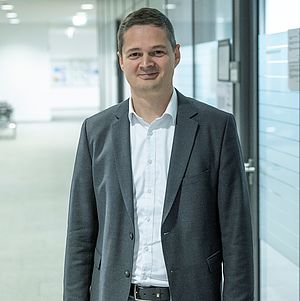
Christoph Heinzl is a Professor of Cognitive Sensor Systems at the University of Passau since September 2022. He leads the Knowledge-based Image Processing research group at the Fraunhofer Development Center X-ray Technology (EZRT) . His academic background includes a PhD in Informatics and a Habilitation in 2022 , both from TU Wien . Research Focus: Scientific visualization, visual analytics, immersive analytics, virtual/augmented reality, machine learning, and X-ray computed tomography (XCT). Key Trends: Development of novel visualization techniques for complex volumetric data (e.g., dynamic volume lines, visual coherence frameworks), parameter space analysis, and cross-virtuality collaboration tools. Applications: Aerospace component inspection, defect analysis in composites (CFRP, GFRP), porosity quantification, and 4DCT time-series exploration.
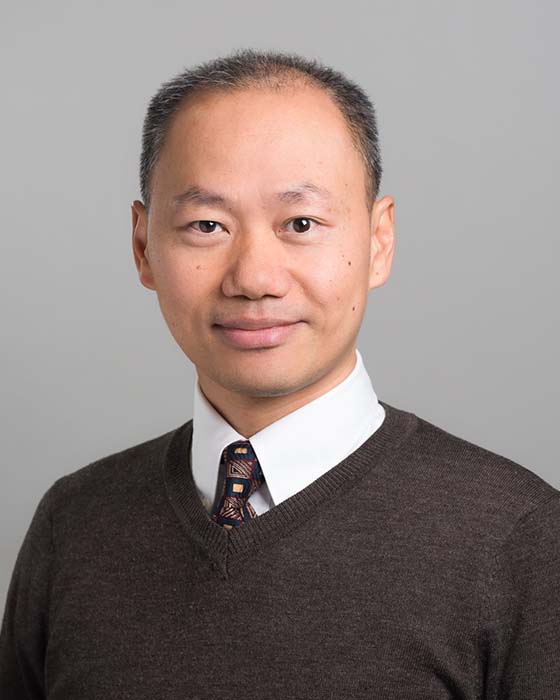
Professor Ben Liang is a faculty member at the Department of Electrical and Computer Engineering , University of Toronto, holding the L. Lau Chair . He has served on editorial boards of IEEE Transactions on Mobile Computing , IEEE Transactions on Wireless Communications , and Wiley Security and Communication Networks . His research focuses on networked systems , mobile communications , and distributed machine learning , with applications in wireless network virtualization, edge computing, and resource optimization. He explores stochastic scheduling , computation-communication co-design , and multi-resource fair allocation . Key publication trends: Wireless federated learning (2024-2025) Network virtualization and MIMO systems (2022-2025) Online distributed optimization (2023-2025) Stochastic resource management (2020-2024) Scientific Awards: Fellow of IEEE Best Paper Award, ACM MSWiM 2013 INFOCOM 2010 Finalist Ontario ERA Award 2007 IFIP Networking 2005 Best Paper Intel Foundation Graduate Fellowship 2000 Polytechnic University valedictorian 1997 Affiliated with IEEE , ACM , and Tau Beta Pi , he teaches courses like ECE368: Probabilistic Reasoning and ECE421: Machine Learning , emphasizing stochastic networks and random processes .
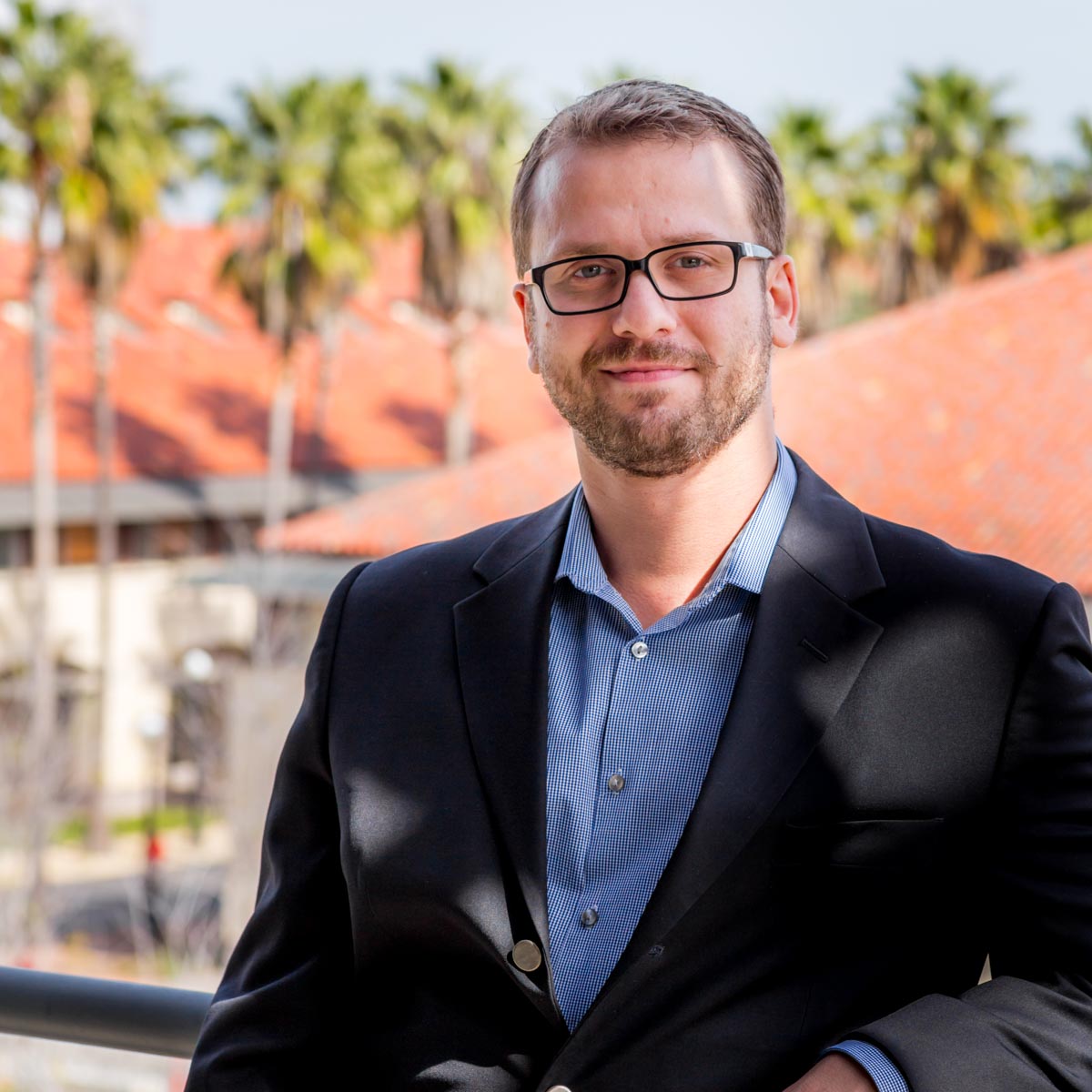
Baris Kasikci is an Associate Professor in the Paul G. Allen School of Computer Science & Engineering at the University of Washington. Previously (2017-2023), he was a Morris Wellman Assistant Professor in the Electrical Engineering and Computer Science Department at the University of Michigan. His research focuses on building efficient and trustworthy computer systems through innovative combinations of approaches from systems, computer architecture, and programming languages. Dr. Kasikci received his PhD in Computer Science at EPFL and has held research positions at Microsoft Research Cambridge, Google, Intel, and VMware. His work addresses critical challenges in system reliability, security, and performance in increasingly complex software ecosystems. His research interests center on improving the efficiency of datacenter applications and machine learning systems, analyzing and fixing failures, and enhancing hardware security. His lab develops techniques for automated bug detection, formal verification of distributed systems, and building systems support for heterogeneous hardware architectures. Recent projects include Whisper (profile-guided branch misprediction elimination), Huron (taming false sharing), and Agamotto (automatic detection and repair of bugs in persistent memory applications). Analysis of his recent publications shows a strong trend toward optimizing large language model serving, hardware security, and performance optimization for modern heterogeneous architectures. His work bridges traditional systems research with emerging AI infrastructure needs, particularly in efficient LLM serving, security vulnerabilities in modern hardware, and performance optimization for heterogeneous computing environments. NSF CAREER award Microsoft Research Faculty Fellowship Intel Rising Star Award VMware Early Career Faculty Grant Google Faculty Award Roger Needham PhD Award (best PhD thesis in computer systems in Europe) Patrick Denantes Memorial Prize (best PhD thesis at EPFL) Best Paper Award at OSDI'18 Best Paper Award at MICRO'22 Dr. Kasikci has advised numerous PhD students who have gone on to prestigious positions in academia and industry, including Tanvir Ahmed Khan (Assistant Professor at Columbia University), Akshitha Sriraman (Assistant Professor at CMU), and Jiacheng Ma (AMD). His research has been supported by significant grants from NSF, DARPA, Intel, Google, Microsoft, VMware, and Amazon. His lab, the EfesLab, focuses on building tools and techniques that make computer systems more reliable, secure, and efficient. The EfesLab, led by Dr. Kasikci, brings together postdocs, PhD students, and undergraduate researchers to tackle fundamental challenges in systems reliability and performance. The lab has developed numerous influential tools including Whisper, Huron, and Agamotto that address critical performance and reliability issues in modern computing systems. Current research directions include efficient LLM serving, security of emerging hardware technologies, and automated debugging techniques.
Sairaj Dhople is the Oscar A. Schott Professor in the Department of Electrical and Computer Engineering at the University of Minnesota. His research focuses on renewable energy systems, particularly modeling and control of grid-connected inverters, power-system reliability, and distributed energy resources. University: University of Minnesota Department: Electrical and Computer Engineering Academic Rank: Professor His work spans power systems, power electronics, and control theory, with recent publications examining grid-forming inverters, stability analysis, and hybrid computing solutions for optimization problems. Key research themes include: Equivalent-circuit modeling for renewable systems Large-signal stability assessment inverter-based resources Grey-box system identification of power networks Interoperability standards for grid-forming technologies Scientific awards include the Institute for Advanced Study Faculty Fellowship (2018). Current projects funded by the National Science Foundation and U.S. Department of Energy explore analog/hybrid computing and universal interoperability for grid-forming inverters (UNIFI Consortium). His Dhople Research Group investigates power-system architecture and sustainability challenges.
Dr. Andy Nguyen is a Senior Lecturer in Structural Engineering at the University of Southern Queensland, within the School of Engineering. He is an active researcher and educator, specializing in the Structural Health Monitoring (SHM) of critical civil infrastructure such as bridges, buildings, and transport tunnels. Bachelor of Engineering (BEng), NUCE, 1999 Master of Engineering (MEng), NUCE, 2003 Doctor of Philosophy (PhD), Queensland University of Technology (QUT), 2014 Dr. Nguyen's research is at the forefront of integrating advanced technologies into civil engineering. His primary focus is on developing and deploying sophisticated SHM systems that utilize sensors, data analytics, and machine learning to provide real-time insights into the structural integrity of ageing infrastructure. His work aims to enable proactive maintenance, extend the lifespan of structures, and enhance public safety. He has successfully implemented monitoring systems on major bridges and high-rise buildings in Queensland and New South Wales, with systems capable of even detecting distant earthquake events. His research interests span Structural Health Monitoring, Machine Learning for Engineering, Damage Detection, Finite Element Model Updating, Sustainable Building Materials like bamboo, and the application of AI for automated condition assessment of transport infrastructure. The analysis of his recent publications reveals a strong and consistent research trajectory centered on the application of data-driven and AI methods to solve practical problems in civil infrastructure. His work frequently combines signal processing techniques (like Stockwell Transform) with deep learning models for tasks such as crack detection in concrete and pavement. He also conducts significant research on model updating for complex structures like cable-stayed and arch bridges, using vibration data and optimization algorithms. The integration of machine learning for overload classification and the development of cost-effective, automated monitoring systems are key trends in his recent output. Advanced Queensland Fellow (2024-2027) Dr. Nguyen is actively involved in research supervision and collaboration. He is currently supervising several postgraduate students on projects related to AI-powered condition assessment, bamboo as a sustainable building material, and railway track design. He receives research funding from the Queensland Government through his Advanced Queensland Fellowship. His research has direct practical applications, as evidenced by his public engagement, such as writing for The Conversation on safeguarding ageing bridges, and his work with the Australian Network of Structural Health Monitoring. Dr. Nguyen's work embodies the development of a next-generation 'Living' Laboratory for engineering education, where research, teaching, and real-world infrastructure monitoring are integrated. His current projects involve creating smart, automated fault detection systems and advancing 'digital twin'-based monitoring platforms for infrastructure.
Dr. Franceli Cibrian is an Assistant Professor in the Department of Electrical Engineering and Computer Science at Chapman University's Fowler School of Engineering. Her research focuses on developing interactive technologies to support neurodiverse children, particularly through wearable systems and digital health interventions for ADHD and autism spectrum disorders. Education: Ph.D. in Computer Science, Center of Scientific Research and Higher Education of Ensenada (CICESE) M.S. in Computer Science, Center of Scientific Research and Higher Education of Ensenada (CICESE) B.S. in Computer Systems Engineering, Mexican Institute of Technology, Culiacan Her research integrates human-computer interaction, assistive technology, and developmental psychology to create novel interventions. Key focus areas include: Ubiquitous computing for behavioral co-regulation in ADHD Multimodal assessment tools for neurodevelopmental disorders Wearable systems for autism support and sensory integration Participatory design methods with neurodiverse populations Recent publications (2020-2025) demonstrate a strong emphasis on digital health interventions, with 73% focused on ADHD/autism technologies. Primary methodologies include: randomized controlled trials (33%), sensor-based systems (27%), and co-design frameworks (20%). Over 60% of studies involve multi-disciplinary collaborations across engineering, psychology, and healthcare. Dr. Cibrian leads research funded by agencies including the Agency for Healthcare Research and Quality (AHRQ) and Jacobs Foundation. Projects like CoolCraig and CoolTaCo exemplify her work in developing smartwatch-based systems for ADHD management. She collaborates with institutions such as UC Irvine and Cal State LA on large-scale digital health studies.
Caroline Lequesne (HDR) is a Lecturer in Public Law at the Faculty of Law and Political Science , University of Côte d'Azur. She conducts research within the Law, Economics, Management (GREDEG) group and co-manages the EDEN team under the PNCR (Norms, Competition, and Regulation) division. Her work focuses on algorithmic law, data governance, and digital welfare state policies. Master 2 Program Director in Algorithmic Law and Data Governance Specializes in public digital law and AI regulatory frameworks Active in surveillance technology analysis and digital inequality research Her publications address critical legal challenges in AI governance, digital welfare systems, and emerging technologies like Web3 and the Metaverse. She has contributed to key debates on French and European digital policy through articles in journals such as Revue française de droit administratif and Recueil Dalloz . Caroline Lequesne also participated in analyzing surveillance technology experiments during the 2024 Olympic Games. As co-manager of the EDEN team in the PNCR division, she contributes to interdisciplinary research on economic law and digital regulation frameworks.
Falko Dressler is a Full Professor and Chair for Telecommunication Networks at the School of Electrical Engineering and Computer Science, Technische Universität Berlin. He holds a Ph.D. and M.Sc. in Computer Science from Friedrich-Alexander University of Erlangen-Nuremberg (1998-2003). His research focuses on next-generation wireless systems , distributed machine learning , edge computing , and applications in Internet of Things (IoT) , cyber-physical systems , and internet of bio-nano-things . Editorial roles: IEEE Trans. on Mobile Computing, Elsevier Computer Communications, IEEE/ACM Trans. on Networking Conference leadership: IEEE INFOCOM, ACM MobiSys, IEEE VNC Textbooks: Self-Organization in Sensor and Actor Networks (Wiley), Vehicular Networking (Cambridge) Recent publications highlight trends in Edge Computing Resilience and 6G Network Architecture , with a strong emphasis on Molecular Communication , Terahertz Band Synchronization , and Federated Learning in vehicular environments. Scientific contributions include multiple IEEE Fellow , ACM Fellow , and VDE ITG Prize 2023 recognitions. Advisory and professional activities include membership in the German National Academy of Science and Engineering (acatech), IEEE COMSOC Conference Council, and ACM SIGMOBILE Executive Committee. His work spans cooperative driving, ultra-low power sensor networks, and security in nano-communication systems.
Benedikt Fecher is a Scientific Advisor at the OrA project at CATALPA Graduate School , affiliated with the FernUniversität in Hagen . He leads the 'Knowledge & Society' program area at the Alexander von Humboldt Institute for Internet and Society (HIIG) since 2017. Research Interests include data-driven research, open science & open access, research infrastructures, science communication, and societal impact measurement. His work explores how digitization transforms academic practices and societal engagement. Publications highlight interdisciplinary approaches to societal impact assessment, digital education, and the role of open science in the social sciences. Recent studies focus on EdTech adoption during the pandemic and strategies for building sustainable research infrastructures. Labs & Teams : Fecher collaborates with the CATALPA research cluster, which emphasizes cross-institutional, solution-oriented interdisciplinary research.
Federico Silvestro is a Full Professor at the University of Genoa , affiliated with the Naval, Electrical, Electronic and Telecommunications Engineering Department . His academic roles include being a Course Coordinator, Department Council Member, and Deputy Director of DITEN. His research focuses on Power systems stability and control Cybersecurity in energy networks Electric propulsion for marine applications Optimal energy storage and microgrid design Integration of renewable energy in maritime contexts Recent publications highlight trends in data-driven power system analysis , DC microgrid modeling , cybersecurity for virtual power plants , and advanced energy management strategies for maritime and port systems. Email: federico.silvestro@unige.it He leads the ENET-RT Lab , focusing on real-time power systems simulation and co-simulation platforms for marine and grid applications.
Mercedes Herrero de la Fuente is a Professor at Antonio de Nebrija University's School of Communication and Arts in Madrid, specializing in Journalism and Media Innovation. Holding a PhD in Information Sciences from Complutense University of Madrid, she coordinates the doctoral program in Innovation in Digital Communication and Media while leading research through the INNOMEDIA Research Group. Her academic affiliations include active participation in multiple national research projects funded by Spain's Ministry of Science and Innovation. Her research focuses on the intersection of digital technologies and communication, with particular emphasis on data journalism, transmedia narratives, disinformation combat strategies, and gender representation in media. Recent work explores augmented reality applications in journalism, accessibility for people with disabilities in the audiovisual sector, and women's leadership in media production. She has conducted research fellowships at Cornell University, Radboud Universiteit, Salford University, and Charles University. Herrero de la Fuente has published extensively in high-impact journals, with her most recent work examining AI applications against electoral misinformation, women creators in streaming platforms, and immersive journalism technologies. Her research demonstrates consistent focus on emerging media technologies and their societal implications, particularly regarding inclusion and verification practices. As an educator, she previously directed Nebrija University's Master's in Digital and Data Journalism (2016-2021) and Master's in Television Journalism (2015-2020), while currently teaching in both undergraduate and graduate programs. Her professional background includes eight years as a producer for TELEMADRID News, providing practical industry experience that informs her academic work.
Waël Jaafar is a Professor in the Department of Software Engineering and IT at École de technologie supérieure (ETS), a constituent school of the Université du Québec system in Montreal, Canada. His research spans multiple critical domains in modern communications and computing infrastructure, with a particular focus on next-generation wireless networks and intelligent systems. Dr. Jaafar holds a B.Eng. from Sup'Com Tunisie, and both M.Sc.A. and Ph.D. degrees from Polytechnique Montréal. His academic background provides a strong foundation for his interdisciplinary research that bridges theoretical concepts with practical engineering solutions. His research interests center around wireless communications systems, with particular emphasis on 5G/6G networks, UAV communications, space telecommunications, and machine learning applications for networking. He has developed significant expertise in federated learning techniques for distributed networks, cybersecurity applications for next-generation mobile systems, and edge computing architectures. His work frequently explores the intersection of communication theory, artificial intelligence, and network security, with applications ranging from industrial IoT to public safety communications. Analysis of his recent publications reveals a strong trend toward integrating artificial intelligence with wireless networking infrastructure, particularly focusing on UAV-assisted communications, federated learning approaches for distributed networks, and security enhancements for 5G/6G systems. His research demonstrates increasing emphasis on practical implementation challenges including energy efficiency, communication overhead reduction, and reliability in non-ideal network conditions. As an academic supervisor, Dr. Jaafar actively mentors numerous graduate students across various projects. He currently supervises doctoral candidates working on blockchain-enhanced security for 5G networks, green network slice orchestration, and federated learning approaches for Open RAN architecture. His master's students are engaged in diverse topics including LiDAR-based power line monitoring, multimodal behavioral authentication, and 5G/6G security using AI techniques. Dr. Jaafar is affiliated with two prominent research laboratories at ETS: LASI (Computer System Architecture Research Laboratory) and LACIME (Communications and Microelectronic Integration Laboratory). At LASI, he contributes to research in AI-based systems engineering, resource orchestration in edge/cloud environments, and intelligent network design. Through LACIME, he engages with broader communications research spanning from microelectronic components to complex communication systems, with particular focus on wireless networks and signal processing applications.
Tanya Gupta is a Lecturer in the Department of Chemistry and Biochemistry at the University of Oregon , College of Arts and Sciences. With a PhD in Chemical/Science Education from Iowa State University, she specializes in student-centered inquiry-based teaching and technology integration in chemistry education. Education : PhD (2012) and MEd (2007) in Science Education from Iowa State University; MSc (2000) in Inorganic Chemistry and BSc (1998) in Chemistry Honors from Indian institutions Tanya’s research focuses on enhancing student retention through inquiry-based pedagogy , simulations , and collaborative learning . Her work addresses Diversity, Equity, Inclusion & Access (DEIA) in STEM education, with expertise in instructional design models like ADDIE, SAM, and Kirkpatrick. She has taught at multiple institutions, including Iowa State University and Grand Valley State University, delivering both large-enrollment and graduate-level courses through face-to-face, hybrid, and distance education platforms. Tanya’s publications and book chapters highlight her contributions to technology integration in chemistry education, game-based learning , and social media applications for student engagement. Her work spans curriculum development, educational research, and professional development for science educators.