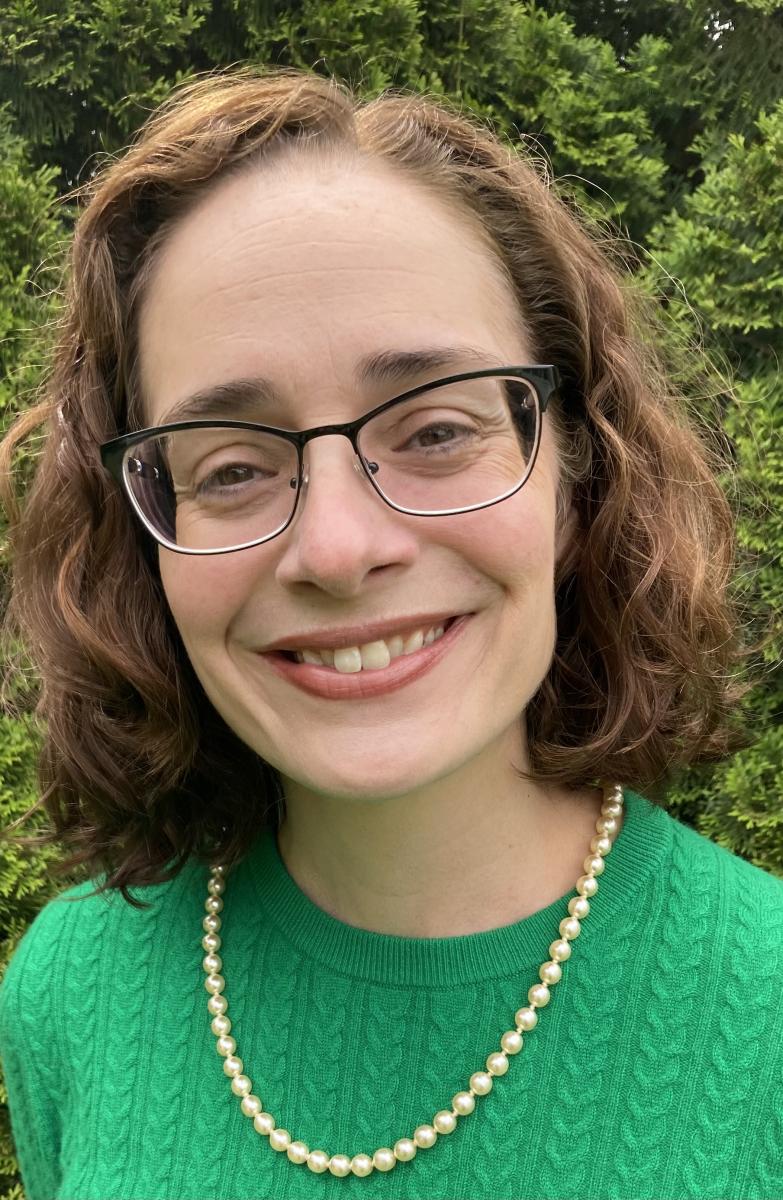
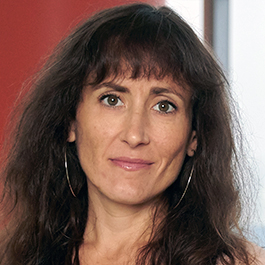
Jessica Forrest is an Associate Professor in the Department of Biology at the University of Ottawa, affiliated with the Faculty of Science. Her research focuses on evolutionary ecology, particularly plant-pollinator interactions, climate change impacts on pollinators, and the ecological consequences of phenological shifts. She studies native bees, their interactions with plants, and how agricultural practices can benefit from native bee ecology. Her work spans field studies in natural and agricultural landscapes, emphasizing pollinator conservation and climate adaptation. Notable projects include investigations into bee nesting habitat enhancement in orchards, the effects of drought on alpine bees, and the role of floral traits in pollinator attraction. Research Themes: Pollination ecology, climate change biology, bee behavior, and agricultural sustainability. Labs/Teams: Leads the Forrest Lab at the University of Ottawa, involving graduate and undergraduate students in field and lab-based studies. Her recent work highlights the importance of Asteraceae pollen in protecting mason bees from brood parasites and the complex effects of temperature on bee reproductive success in high-elevation habitats. Students advised include Lydia, Michelle, Natasha, Roisin, Tovah, and others, with projects ranging from bee cognition to agricultural pollination systems. The Forrest Lab collaborates widely, addressing applied and theoretical questions in pollinator ecology.
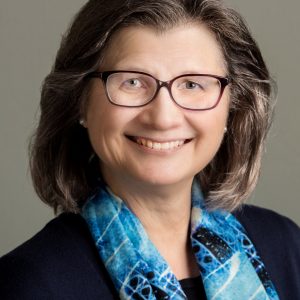
Sarah Ryan is an Associate Professor at the University of North Texas (UNT), specializing in Law Librarianship, Empirical Legal Research, and Social Science methodologies. Her work bridges legal practice, education, and interdisciplinary research, with a focus on statutory reform, veterans' law, and human subjects research ethics. She holds a J.D. from Quinnipiac University, a Ph.D. from Ohio University, and advanced degrees in Library Science and Public Affairs. Education: J.D., Quinnipiac University Ph.D., Ohio University M.L.S., Texas Woman's University M.A., Ohio University B.A., Capital University Her research interests include: Empirical legal methodologies for policy analysis Interdisciplinary approaches to energy and education equity Legal frameworks for end-of-life planning Ethical research practices in human subjects studies Recent publications highlight her work in big-data rhetoric, judicial authority under US legislation, and global energy-education linkages. She has contributed to debates on IRB processes, NGO activism, and pedagogical innovations in legal research training. No scientific awards are explicitly mentioned in the profile. Her advising and grant activities remain unspecified, though her extensive publication record suggests active involvement in collaborative research teams. Professional links include UNT’s FIS Profile.
Katherine Miller, PhD, is an Assistant Professor in the Department of Health Policy and Management at the Johns Hopkins Bloomberg School of Public Health. She is affiliated with the Center for Health Services and Outcomes Research (CHSOR), the Roger and Flo Lipitz Center to Advance Policy in Aging and Disability, and the Hopkins Business of Health Initiative. Additionally, she serves as an Investigator at the VA Partnered Evidence-Based Policy Resource Center and Associate Director of the VA Caregiver Support Program Partnered Evaluation Center, highlighting her strong engagement in veteran and public health policy research. Her research applies an economic lens to evaluate public policies affecting long-term care, with a focus on aging, disability, and caregiver support. Key areas include: Impact of policies on formal and family caregivers Workforce outcomes in long-term care settings Disparities in care by rurality Quality of care mechanisms such as turnover Patient outcomes across long-term care environments Her recent publications through 2025 span high-impact journals and cover aging-in-place, caregiver economic burden, antipsychotic use in dementia, and the effects of increased spending on home-based services. The body of work reflects a cohesive focus on health policy evaluation, caregiver well-being, and health equity, particularly among vulnerable older adults and veterans. Her scientific honors include: Delta Omega Honor Society (2022) Best Overall Abstract, Conference on Caregiving Research (2022) Finalist, HSRproj Research Competition, AcademyHealth (2020) Jean G. Yates Public Health Policy Award (2014) Dr. Miller has served as Principal Investigator and Co-Principal Investigator on multiple federally funded research projects, including grants from the National Institute on Aging and the U.S. Department of Veterans Affairs. These projects examine the mediating role of state policies on dementia caregivers and the impacts of the pandemic on young caregivers. While her advisees are not explicitly listed, her leadership roles suggest active mentorship of graduate students and postdoctoral researchers. She is also involved in major collaborative networks with institutions such as the University of Pennsylvania and VA research centers.
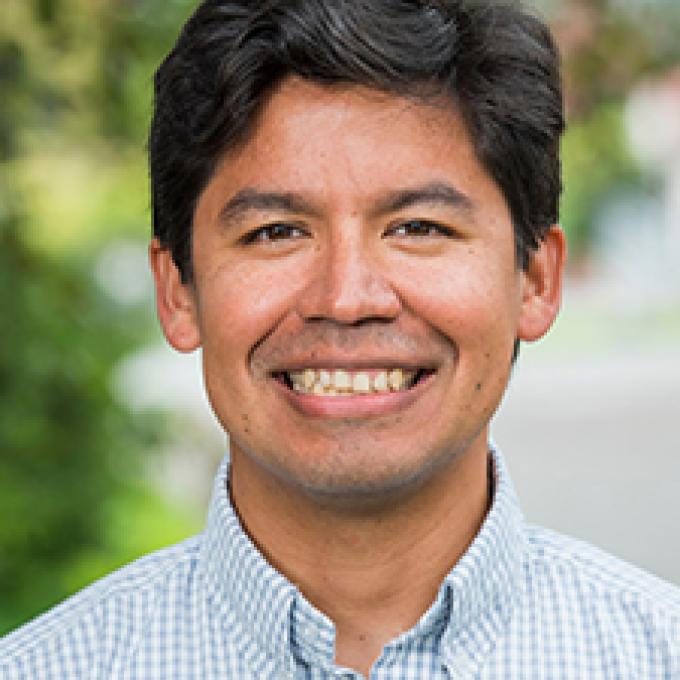
Maryellen L. Giger, Ph.D. is the A.N. Pritzker Distinguished Service Professor of Radiology, Committee on Medical Physics, and the College at the University of Chicago. She serves as Vice-Chair of Radiology (Basic Science Research) and was the immediate past Director of the CAMPEP-accredited Graduate Programs in Medical Physics/Chair of the Committee on Medical Physics. Her career spans over 30 years of pioneering research in computer-aided diagnosis, machine learning, and deep learning applications in medical imaging. Dr. Giger's research focuses on computational image-based analyses for cancer risk assessment, diagnosis, prognosis, and response to therapy, particularly in breast cancer, lung cancer, prostate cancer, lupus, bone diseases, and more recently, COVID-19. Her work has evolved from developing computer-aided diagnosis systems to utilizing 'virtual biopsies' in imaging genomics association studies for discovery. She has made significant contributions to quantitative imaging, radiomics, and AI applications in medical imaging, with emphasis on translating research into clinical practice. Her publication record shows a clear trajectory from foundational work in computer vision for medical imaging to cutting-edge AI and deep learning applications. The recent publications demonstrate her leadership in large-scale collaborative efforts like the Medical Imaging and Data Resource Center (MIDRC), focus on health equity through AI analysis, and expansion into diverse applications including gynecological imaging, lung cancer screening, and trauma assessment. Her work consistently bridges technical innovation with clinical relevance. Dr. Giger has received numerous prestigious honors including membership in the National Academy of Engineering, the William D. Coolidge Gold Medal (the highest award from AAPM), and being named one of the 50 most impactful medical physicists in the last 50 years. She is a Fellow of multiple professional societies including AAPM, AIMBE, SPIE, SBMR, and IEEE. Her 2019 TIME magazine recognition for QuantX, the first FDA-cleared machine-learning-driven system for cancer diagnosis, highlights her translational impact. As an educator and mentor, Dr. Giger has guided over 100 graduate students, residents, and medical students throughout her career. She has secured substantial research funding including NIH R01 grants and serves as contact PI for the NIH NIBIB-funded & ARPA-H-funded Medical Imaging and Data Resource Center (MIDRC). Her leadership extends to former presidencies of the American Association of Physicists in Medicine and SPIE, and she was the inaugural Editor-in-Chief of the SPIE Journal of Medical Imaging. Dr. Giger co-founded Quantitative Insights, Inc. through the University of Chicago's New Venture Challenge, which developed QuantX - the first FDA-cleared AI system for cancer diagnosis. She leads the Medical Imaging and Data Resource Center (MIDRC), a critical resource for AI development in medical imaging that received the 2023 DataWorks Prize. Her research laboratory bridges engineering, physics, and clinical medicine to develop and validate quantitative imaging biomarkers and AI tools for precision medicine.
Valeria Bruschi is a Researcher at the Department of Information Engineering (DII) within the Faculty of Engineering at Università Politecnica delle Marche (UNIVPM) in Ancona, Italy. Her academic profile was last updated on April 13, 2024, and she maintains her office at the Engineering Faculty on via Brecce Bianche, with contact information including phone +39 071-220-4486 and email v.bruschi@staff.univpm.it. Dr. Bruschi's research spans multiple domains within audio and signal processing, with particular expertise in spatial audio systems, automotive human-computer interaction, and biomedical signal applications. Her work bridges theoretical signal processing techniques with practical implementations across diverse fields including automotive safety systems, hearing aid technology, sleep medicine, and agricultural monitoring. She has made significant contributions to head-related transfer function (HRTF) processing, real-time audio enhancement algorithms, and innovative monitoring systems that utilize acoustic signals for various applications. Analysis of Dr. Bruschi's recent publications reveals a strong trajectory in developing practical audio processing solutions with real-world applications. Her work shows increasing integration of machine learning techniques with traditional signal processing approaches, particularly in areas like driver monitoring systems, snoring detection and cancellation, and spatial audio rendering. A notable trend is her focus on creating lightweight, real-time implementations suitable for embedded systems and practical deployment scenarios, while maintaining high performance standards. Her research consistently demonstrates interdisciplinary collaboration, connecting audio engineering with fields as diverse as automotive safety, sleep medicine, and agricultural technology. Dr. Bruschi actively contributes to advancing audio engineering through her research on equalization techniques, noise reduction systems, and immersive audio technologies. Her work on pulse compression techniques for hearing aid distortion measurement represents an important contribution to audiological assessment methodologies. Her publication record demonstrates consistent scholarly output with increasing impact across multiple application domains, reflecting her ability to translate theoretical signal processing concepts into practical engineering solutions.
Lukasz Szpruch serves as Professor at the University of Edinburgh's School of Mathematics and Programme Director for Finance and Economics at The Alan Turing Institute. He leads the FAIR research programme on responsible AI adoption in financial services and co-investigates the UK Centre for Greening Finance & Investment (CGFI), directing partnerships with the National Office for Statistics, Accenture, Bill & Melinda Gates Foundation, and HSBC. He maintains affiliations with the Oxford-Man Institute for Quantitative Finance. His research focuses on probability theory , stochastic analysis , and theoretical machine learning , with current investigations into deep learning foundations, mean-field models, reinforcement learning, game theory, multiagent systems, and computational optimal transport. These theoretical frameworks are rigorously applied to financial economics problems including market dynamics, risk modeling, and regulatory compliance, emphasizing mathematical precision in AI system design. Recent publications reveal a strategic shift toward responsible AI deployment in finance , addressing large language model governance, synthetic data privacy, and non-asymptotic sampling theory. His work consistently bridges abstract mathematics with financial sector applications, particularly through the FAIR programme's industry collaborations that translate theoretical advances into practical frameworks for trustworthy AI adoption. As Principal Investigator of FAIR and CGFI co-Investigator, Szpruch manages significant research funding streams focused on AI ethics in financial services and sustainable finance. His academic leadership drives cross-sector initiatives where theoretical research directly informs regulatory policy development and industry best practices, though specific student mentoring details remain unspecified in source materials. Szpruch operates at the nexus of three critical research ecosystems: the FAIR programme's industry partnerships, CGFI's sustainability-focused finance research, and the Oxford-Man Institute's quantitative finance initiatives. These interconnected teams combine mathematical rigor with real-world financial applications, developing frameworks for AI assurance, green finance metrics, and synthetic data validation that address systemic challenges in modern financial systems.
Professor Ross King is a faculty member at the University of Cambridge, affiliated with the Department of Chemical Engineering and Biotechnology. His research focuses on the automation of scientific discovery, machine learning applications in biology and chemistry, and DNA computing. Developed the first autonomous 'Robot Scientist' systems (Adam, Eve, Genesis) capable of hypothesis generation, experimental design, and execution using AI Pioneer in DNA computing, demonstrating the first physical Nondeterministic Universal Turing Machine (NUTM) 35+ years of expertise in machine learning, particularly relational learning for complex biological/chemical data Organizer of the international 'Nobel Turing Grand Challenge' for AI scientists His work in computational biology spans eukaryotic cell modeling, cancer signaling pathways, and AI-driven drug discovery for neglected tropical diseases like malaria and Chagas disease. The Genesis system aims to automate 10,000 simultaneous closed-loop experiments using micro-chemostats to model cellular complexity. The DNA computing research demonstrates exponential theoretical advantages over classical and quantum computing architectures for NP-complete problems, utilizing Thue string rewriting systems and polymerase chain reaction techniques. This work has significant implications for computer science, physics, and practical computing resource utilization. King's machine learning contributions include active learning strategies for compound selection in drug design and meta-learning approaches to optimize ML applications in bioinformatics and chemoinformatics.
Giomara Lárraga Maldonado is a Postdoctoral Researcher at the Faculty of Information Technology within the University of Jyväskylä , Finland. She contributes to the Multiobjective Optimization Group and is affiliated with the Decision Analytics utilizing Causal Models and Multiobjective Optimization (DEMO) thematic research area. Research Focus: Interactive Multiobjective Optimization, Evolutionary Computation, Explainable AI Key Areas: Preference integration, Decomposition-based methods, Human-Computer Interaction for decision support Her recent work explores explainability frameworks (e.g., LIME integration), phase-specific algorithm configuration, and semantic distance studies for visualization. She collaborates with researchers like Kaisa Miettinen and Giovanni Misitano. She has contributed to conferences such as GECCO, PPSN, and AAMAS, with publications emphasizing open-access availability. The R-XIMO framework (2022) highlights her work on explainable systems.
Luo Mai is an Assistant Professor at the University of Edinburgh's School of Informatics , with an upcoming promotion to Associate Professor (UK Reader) in August 2025. He leads the Large-Scale Machine Learning Systems Group and co-leads the UK EPSRC Centre for Doctoral Training in Machine Learning Systems and an ARIA Project on Scaling AI Compute by 1000X . PhD in Computer Science (Imperial College London, 2018) MRes in Advanced Computing (Imperial College London, 2012) His research focuses on the intersection of computer systems , machine learning , and data management . Key contributions include award-winning systems like WaferLLM (wafer-scale LLM inference), Tenplex (elastic ML), and ServerlessLLM (serverless LLM serving), published at top venues (OSDI, SOSP, ICML, NeurIPS, JMLR). Recent publications demonstrate trends in GPU-based distributed systems , LLM optimization , and adaptive machine learning . His team has developed groundbreaking open-source projects including TensorLayer , TorchOpt , and ServerlessLLM . Awarded Microsoft Research StarTrack Scholar (2024) , secured ARIA grant (2024) with Imperial College & Cambridge University, and received Google Fellowship during PhD (2012-2016). As an educator, he designed Edinburgh's popular Machine Learning Systems course (150+ students). His group supervises multiple PhD students including Yao Fu (recognized as 2024 Rising Star in ML & Systems) and Leyang Xue .
Assoc. Prof. Savaş DURMUŞ is affiliated with Kafkas University , where he has held the position of Associate Professor in the Department of International Trade and Logistics since 2021. He previously served as a Department Head (2019–present) and Deputy Institute Director (2012–2015). His academic journey includes a PhD in Economics (2007–2011) and MSc in Business Administration (2001–2004) from Turkish institutions. Education : PhD, Economics, Celâl Bayar University (2007–2011) MSc, Business Administration, Selçuk University (2001–2004) BA, Business Administration, Atatürk University (1988–1993) Research Interests focus on Development Economics , Macro Economics , and Business Cycles , with a strong emphasis on empirical analysis of economic policy, international trade, and financial systems. His work spans topics like tourism economics, energy sector performance, and regional development. Scientific Contributions include 15+ peer-reviewed articles (2020–2024) on themes such as financial development, Dutch disease, and Industry 4.0. He has co-authored studies on tourism’s impact on growth and cross-country analyses of economic complexity. Editorial Work includes roles as editor for international books like Banka ve Finansal Sistem (2016) and Analysis of Economics Applications (2023). He has collaborated extensively with academics such as Dilek Şahin (27 joint publications) and Hasan Ayaydın (17 joint publications).
Prof. Dr. Ulrich Kleinekathöfer is a Full Professor of Theoretical Physics at Constructor University (formerly Jacobs University Bremen) in the School of Science. His research focuses on computational physics and biophysics, particularly on light-harvesting complexes, membrane transport, and quantum dynamics in biological systems. He leads the Computational Physics and Biophysics research group and coordinates the MSCA Doctoral Training Network "PhotoCaM". His educational background includes: PhD from Max-Planck-Institut für Strömungsforschung, Göttingen (1996) Diploma in Physics from Universität Göttingen (1993) Habilitation in Physics from Technische Universität Chemnitz (2002) Prof. Kleinekathöfer's research spans multiple areas of computational biophysics and theoretical physics. His primary interests include excitation energy transfer in light-harvesting complexes , molecular transport through membrane channels and nanopores , and quantum dynamics in open systems . His group develops and applies advanced computational methods including molecular dynamics simulations, quantum chemistry calculations, and machine learning approaches to study these phenomena. A significant portion of his work focuses on photosynthetic systems, particularly how energy is transferred and converted in natural light-harvesting complexes, with implications for renewable energy technologies. His recent publications demonstrate a strong trend toward integrating machine learning with traditional computational methods, particularly in the fields of quantum chemistry and molecular dynamics. There's a clear focus on multifidelity approaches that balance computational efficiency with accuracy. His work spans from fundamental quantum dynamics to applied research on antibiotic transport mechanisms, showing remarkable breadth while maintaining depth in computational methodology development. His notable recognition includes: Tan Chin Tuan Exchange Fellowship, NTU Singapore (2019) Prof. Kleinekathöfer has supervised numerous PhD students and postdoctoral researchers, with a current group comprising several PhD candidates and research associates. His research is supported by multiple funding sources including the Deutsche Forschungsgemeinschaft (DFG), European Union through MSCA Doctoral Network PhotoCaM, and previously through the Innovative Medicines Initiative "Translocation" and Marie Curie Training Program "Translocation". His collaborative network spans internationally, with partnerships at institutions in Germany, USA, Greece, and Switzerland. The Computational Physics and Biophysics Group operates within Constructor University's research infrastructure, utilizing high-performance computing resources for their simulations. The group maintains active collaborations with experimental groups to validate and inform their computational models, creating a strong interdisciplinary research environment focused on understanding fundamental biophysical processes at the molecular level.
Wayne A Fuller is a Research Professor at Iowa State University , specializing in survey methodology and sampling statistics. His work focuses on advanced techniques for handling missing data, small area estimation, and measurement error models, with applications to agricultural surveys and public health research. Education: PhD in Statistics from Iowa State University Research Interests: Fuller's work bridges theoretical and applied statistics through: Development of fractional hot deck imputation methods Bootstrap techniques for variance estimation Small area prediction under constrained models Measurement error correction in health and agricultural data Time series analysis with autoregressive components Integration of administrative data with survey samples Publication Trends: His recent work emphasizes computational approaches to small area estimation (2016-2025), including bootstrap prediction intervals and benchmarking techniques, alongside methodological advancements in imputation and measurement error correction (2004-2015). Contact: Email: waf@iastate.edu Phone: 515-294-5830 Location: Ames, Iowa
Jose Marin Jarrin is an Associate Professor in the Department of Fisheries Biology at Cal Poly Humboldt's College of Natural Resources. Originally from Ecuador, he holds a B.Sc. in Biology from the University of Guayaquil (2002), an M.Sc. in Marine Biology from the Oregon Institute of Marine Biology (2007), and a Ph.D. in Fisheries Science from Oregon State University (2012). Before joining Cal Poly Humboldt, he served as a Senior Fisheries Ecologist at the Charles Darwin Foundation (2016-2018), a Prometeo Research Fellow at Escuela Superior Politecnica del Litoral in Ecuador (2015-2016), and completed postdoctoral research at Central Michigan University (2013-2015). Dr. Marin Jarrin's research focuses on high-use and data-limited fisheries species, with particular emphasis on providing vital early and adult life history data for fishes and crustaceans. His work examines impacts from local fishery pressures and climate change, primarily through the lens of tropical Eastern Pacific ecosystems, especially the Galapagos Islands, and temperate systems along the California coast. He leads the Marine Fisheries Ecology Lab and has developed innovative approaches to studying sandy beach surf zones as critical habitats for juvenile fish species. His research spans multiple methodologies including otolith analysis, population dynamics, trophic ecology, and collaborative fisheries management approaches. Analysis of Dr. Marin Jarrin's recent publications reveals a strong focus on Galapagos Island fisheries, with significant attention to species life history parameters, impacts of climate variability, and marine protected area effectiveness. His work bridges temperate and tropical systems, connecting research in Northern California with Ecuadorian and Galapagos waters. A notable trend is the increasing emphasis on community-based and collaborative research approaches, particularly with tribal communities along the North Coast of California and artisanal fishers in Ecuador. His publications demonstrate expertise in both field ecology and advanced analytical techniques for fisheries assessment. Dr. Marin Jarrin actively mentors graduate students, with several recent theses focusing on surf zone ecology, fisheries management, and species life history. His teaching portfolio includes courses in Ichthyology, Fisheries Science Communication, US and World Fisheries, Advanced Ichthyology (with specialization in Sharks and Rays), Marine Fish Ecology, and Techniques in Fisheries Biology. His research program has secured funding for projects including the Sandy Beach Surf Zone MPA project and the Northern California Tribal Fisheries Collaborative, demonstrating his commitment to applied fisheries science that directly informs management decisions.
Suzanne Mason is a Professor of Emergency Medicine at the School of Medicine and Population Health , University of Sheffield, and a Consultant in Emergency Medicine at Sheffield Teaching Hospitals Trust. Her career spans over three decades, with a focus on evaluating complex interventions in urgent and emergency care, particularly for older adults and frail populations. Education: MBBS (1990), FRCS, FFAEM, MD (Emergency Medicine) Key Research Areas: Emergency care systems, clinical decision-making, geriatric emergency care, health informatics, and multi-centre mixed-methods studies Her research has directly influenced emergency care delivery, including studies on exit block in EDs , trauma networks , and digital ambulance records . She has led major projects such as Connected Health Cities (2016–2018) and RADOSS (risk prediction for seizures). Grants include £1.4 million from NIHR and £692,206 from the Department of Health . Scientific awards include an MD from Royal College of Surgeons Research Fellowship and leadership roles in NIHR-funded initiatives . She has pioneered collaborative models for ambulance services , care home integration , and frailty screening in EDs. Her work bridges clinical practice, policy evaluation, and digital innovation, with over 150 publications and mentorship in BMJ Open and Emergency Medicine Journal editorials.
Brenna Argall is an Associate Professor at Northwestern University with joint appointments in the Departments of Computer Science, Mechanical Engineering, and Physical Medicine & Rehabilitation . She is also a Faculty Research Scientist at the Shirley Ryan AbilityLab , the nation’s premier rehabilitation hospital. Her research focuses on robotics autonomy, machine learning, and human rehabilitation , particularly in developing assistive and rehabilitation robotics that utilize shared control and interface-aware intelligence to enhance user autonomy. Education: Ph.D. in Robotics (2009), Carnegie Mellon University M.S. in Robotics (2006), Carnegie Mellon University B.S. in Mathematics (2002), Carnegie Mellon University Research Interests: Argall's work sits at the intersection of robotics, artificial intelligence, and rehabilitation . Key themes include trust-based control systems, dynamic autonomy allocation, and human-in-the-loop machine learning . Her lab, the Assistive & Rehabilitation Robotics Laboratory (argallab) , develops semi-autonomous wheelchairs, robotic arms, and adaptive control systems tailored to users’ physical and cognitive abilities. Projects emphasize customizable shared control, intent inference, and human-robot collaboration . Article Trends: Recent publications highlight advancements in shared autonomy, interface-aware robotics, and human-robot co-adaptation . Key areas include 7-DoF robot arm teleoperation, eye gaze tracking for control, high-dimensional body-machine interfaces, and trust-based dynamic control allocation , reflecting her lab’s focus on user-centric AI and rehabilitation technology . Scientific Awards: NSF CAREER Award (2016) Crain's Chicago Business 40 under 40 (2016) NSF Convergence Accelerator Phase 1 & 2 Awards (2022, 2024) AIMBE College of Fellows (2023) Office of Naval Research (ONR) Grant Advising & Grants: Argall advises students in the Masters of Science in Robotics program and has secured significant funding from NSF, NIH, and ONR for projects on self-driving wheelchairs, intent disambiguation, and trust-aware autonomy . Labs & Teams: As founder and director of the argallab , she leads a multidisciplinary team at the Shirley Ryan AbilityLab . The lab’s mission is to advance human ability through robotics autonomy , focusing on motor-impaired users and human-robot co-adaptation .