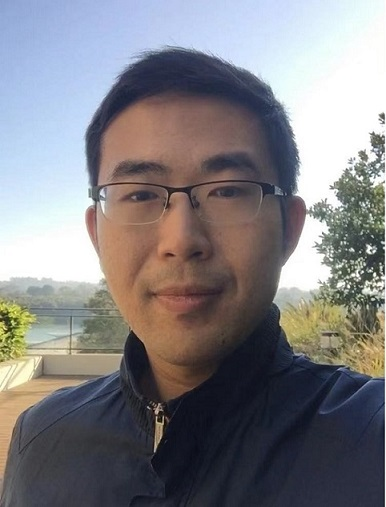
Anjin Liu is a Researcher at the Centre for Artificial Intelligence , Faculty of Engineering and Information Technology , University of Technology Sydney . His research focuses on Concept Drift , Adaptive Data Stream Learning , Multi-stream Learning , Machine Learning , and Big Data Analytics . His work addresses challenges in nonstationary environments through innovative methods like evolving gradient boosting , ensemble diversity optimization , and dynamic drift detection . He develops real-time systems for applications such as train carriage load prediction in collaboration with Sydney Trains. Scientific Contributions: Proposed EI-kMeans for drift detection via cluster-based histograms Developed Fuzzy Decision Trees to handle uncertainty in stream learning Advanced Multi-stream aggregation techniques for improved generalization He is available for Masters Research or PhD student supervision and has received funding for real-time transportation analytics projects.
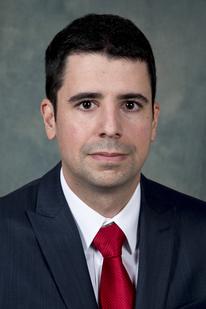
Dimosthenis Kifokeris is an Associate Professor and Docent in Construction Production and Management of Construction Projects at Chalmers University of Technology's Department of Architecture and Civil Engineering, where he also serves as the Coordinator for Artificial Intelligence. His research bridges construction engineering with digital technologies and organizational theory, focusing on how emerging technologies can transform traditional construction practices. His research interests span construction informatics (particularly machine learning, blockchain/DLT, IoT, and BIM), lean construction, constructability, and sustainable, circular, and regenerative production processes. He approaches these topics through interdisciplinary lenses including labor process theory, labor theory of value, organizational theory, and data science. His PhD thesis utilized supervised and unsupervised machine learning to appraise project constructability through risk analysis. Dr. Kifokeris has led or participated in Swedish and international research projects totaling over 57 million SEK, funded by Formas, SBUF, Vinnova, CMB, and Horizon Europe. His work demonstrates how digital technologies can address longstanding challenges in construction information management, safety analysis, and production processes. He holds significant leadership positions in the international construction research community, serving as Secretary of the Board of the European Council on Computing in Construction (EC3), a Board member of Construction Researchers on Economics and Organisation in the Nordic Region (CREON), and leader of the thematic group Byggprocess och Förvaltning in Sveriges Bygguniversitet (SBU). He chaired the EC3 2022 PhD Summer School in Rhodes and will chair the Thesis-in-Three competition at the EC3 2025 Conference in Porto. His recent publications reveal a strong trajectory toward integrating artificial intelligence with construction management, particularly focusing on how large language models can transform accident analysis and how blockchain can create more transparent and trustworthy information environments throughout the built asset lifecycle. His work represents a unique synthesis of technical innovation and critical organizational perspectives.
Eleazar Leal serves as an Associate Professor in the Swenson College of Science and Engineering at the University of Minnesota Duluth, where he advances research and education in database systems and high-performance computing. His academic work bridges theoretical computer science with practical data-intensive applications. His research program focuses on optimizing database technologies for modern hardware architectures, with particular emphasis on: Spatial database systems for geographic information processing Real-time analytics in stream database environments Parallel algorithm design for multicore processors GPU acceleration techniques for database operations Scalable data mining methodologies Hardware-aware query optimization These interconnected research areas address critical challenges in big data processing, enabling efficient handling of complex spatial and temporal datasets through innovative hardware-software co-design approaches. Dr. Leal maintains active collaborations with industry partners to translate theoretical advances into practical database solutions, with ongoing work exploring the integration of machine learning techniques into next-generation database engines. Professional correspondence should be directed to eleal@d.umn.edu or via telephone at +1 218 726 8452, with appointments scheduled exclusively through email consultation.
Professor Mizuho Iwaihara is affiliated with Waseda University's Faculty of Science and Engineering and Graduate School of Information, Production, and Systems. Her research focuses on database systems, web information retrieval, text mining, security/privacy, and social media analysis. She has led significant projects on Wikipedia edit history analysis, knowledge graph construction, and privacy-preserving frameworks. Key research areas: Database Query Processing, Web Information Systems, Text Mining, Knowledge Management, Social Media Her recent publications address semantic analysis of collaborative content, topic evolution tracking, and privacy behavior modeling. Over 85 papers with 349 citations reflect her impact in database and social media research. Scientific achievements include: Best Demo Award (2014) for WikiReviz Best Paper Award (2008) at IFIP e-Business Conference EC-Web2006 recognition Grants from Japan Society for the Promotion of Science (JSPS) span multiple projects on knowledge graph development, social content analysis, and privacy-preserving systems. She supervises numerous graduate students and leads the Data Engineering Laboratory at Waseda University.
Isabel Valera is a full Professor in the Department of Computer Science at Saarland University in Saarbrücken, Germany, and an Adjunct Faculty member at the Max Planck Institute for Software Systems (MPI-SWS). She is also a fellow of the European Laboratory for Learning and Intelligent Systems (ELLIS), contributing to the Robust Machine Learning Program and the Saarbrücken AI & ML (Sam) Unit. Department of Computer Science, Saarland University Adjunct Faculty, MPI for Software Systems ELLIS Fellow, Robust ML Program Sam Unit, Saarbrücken AI & ML She obtained her PhD and MSc from Universidad Carlos III de Madrid, followed by postdoctoral research at the University of Cambridge and MPI for Software Systems. She previously led an independent research group at MPI for Intelligent Systems in Tübingen and held the Humboldt Post-Doctoral Fellowship and Minerva Fast Track Fellowship. PhD in Machine Learning, Universidad Carlos III de Madrid, 2014 MSc in Multimedia and Communications, Universidad Carlos III de Madrid, 2012 Telecommunications Engineering, Technical University of Cartagena, 2009 Her research centers on developing machine learning methods that are flexible, robust, interpretable, and fair, particularly for heterogeneous, temporal, and high-stakes decision-making systems. She emphasizes applications in medicine, psychiatry, and social domains such as hiring, bail, and lending. Her methodological contributions include Bayesian nonparametric models, latent feature modeling, and temporal point processes. Her recent publications reflect a strong focus on fairness, robustness, and interpretability in machine learning. Key themes include latent feature modeling for mixed data types, clustering temporal event streams, source separation, and fair classification. Her work bridges theoretical innovation with practical applications across healthcare, social networks, and policy-relevant domains. Scientific awards and recognitions include: Humboldt Post-Doctoral Fellowship Minerva Fast Track Fellowship (Max Planck Society) ELLIS Fellow She has been actively involved in teaching and dissemination, delivering tutorials at NIPS and MLSS on temporal point processes and social network analysis. She has also supervised research assistants and mentored junior researchers. Her research has been supported through prestigious fellowships and institutional affiliations. She leads the development of open-source tools such as GLFM, HDHP, and iFDM, promoting reproducibility and accessibility in machine learning research. She is affiliated with the following labs and research groups: Max Planck Institute for Intelligent Systems (former group leader) Max Planck Institute for Software Systems (adjunct, postdoctoral) ELLIS Sam Unit (Saarbrücken AI & ML) Robust Machine Learning Program (ELLIS)
Varish Mulwad is a Senior Scientist at GE Research with 14 years of experience in algorithm development and knowledge graph construction from structured/unstructured data. He holds a Ph.D. and M.S. in Computer Science from the University of Maryland, Baltimore County (UMBC), where he worked under Prof. Tim Finin and collaborated with Prof. Anupam Joshi, and a B.E. in Computer Engineering from University of Mumbai. Ph.D. & M.S. in Computer Science (UMBC) B.E. in Computer Engineering (University of Mumbai) His research focuses on semantic interpretation of tabular data through linked data frameworks, information extraction from unstructured text, and knowledge graph population using probabilistic reasoning and graphical models. He has pioneered domain-independent systems for table interpretation and developed novel methods for cloud SLA automation and cybersecurity threat detection via social media analysis. Recent work trends include: Context-aware web table annotation Relational table representation learning Linked data generation from spreadsheets Pre-training/fine-tuning paradigms for web tables Application of semantic web standards to cybersecurity He has led 3-4 member project teams in developing production-ready solutions, contributed to 19 peer-reviewed publications, and secured 7 patents with 900+ citations. During his academic tenure at UMBC's Ebiquity Research Lab, he co-developed the TABEL framework for table semantics inference and produced the first interactive system for meta-analysis report generation from linked data.
Roger Granada is a researcher at the Department of Computer Science, Pontifical Catholic University of Rio Grande do Sul, Brazil, with a focus on computer vision, semantic web technologies, and deep learning. His work spans synthetic data generation, face recognition systems, ontology alignment, and activity recognition in video streams. Key Research Areas: Face recognition, 3D modeling, synthetic data analysis, semantic relation extraction, and information retrieval Notable Collaborations: Works extensively with institutions like SIBGRAPI, WACV, and CVPR Recent Trends: His 2023-2025 publications emphasize synthetic data applications for biometric systems, diffusion models for 3D face generation, and privacy-preserving recognition techniques. These works often integrate cross-modal analysis and contextual constraints. Academic Contributions: Granada has co-authored 55+ publications since 2006, including journal articles in Information Fusion , conference papers at AAAI, IJCNN, and SIBGRAPI. His 2015 PhD thesis evaluated taxonomic relation extraction methods.
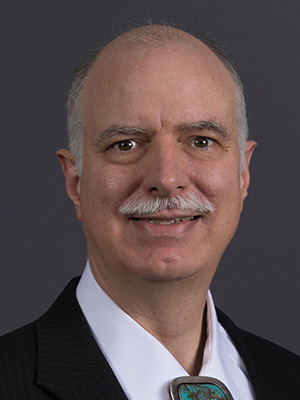
Inge Li Gørtz is a Professor in the Department of Applied Mathematics and Computer Science at the Technical University of Denmark (DTU), where she leads research in algorithms and data structures. She is affiliated with the Algorithms, Logic and Graphs section and has been a principal investigator on externally funded research projects. She also serves as chairman of the Danish Society for Computer Science since 2009. Research Interests: Her work centers on the design and analysis of algorithms, with a focus on approximation algorithms, pattern matching, graph algorithms, and compressed data representations. She investigates efficient query processing, string indexing, and algorithmic challenges in highly repetitive data, including applications in bioinformatics and data streams. The recent publications highlight a strong trend in theoretical and practical algorithm design, particularly in string indexing, compressed automata, and dynamic data structures. These works span venues like SOFSEM and STACS, emphasizing innovations in sublinear query time, sliding window models, and memory-efficient representations. Postdoc stipend from Carlsberg Foundation (2006–2008) for 'Approximation of Transportation on Demand Problems', kr 865,183 Advising and Grants: She actively supervises multiple PhD students on projects such as biomedical image segmentation using graph cuts, hierarchical compression of DNA data, and dynamic graph algorithms. She has served as main or co-supervisor in several funded PhD projects. She has been principal investigator on a Carlsberg Foundation grant and has participated in multiple Danish Council for Independent Research projects. Labs and Teams: She is a core member of the Algorithms, Logic and Graphs (ALG) section at DTU, contributing to a vibrant research environment focused on theoretical computer science and algorithmic problem solving.
Colin McCowan is Professor of Health Data Science at the University of St Andrews' School of Medicine, where he works within the Population and Behavioural Science Division and the Sir James Mackenzie Institute for Early Diagnosis. He also holds an Honorary Professor position at the University of Glasgow's Institute of Health & Wellbeing. Previously, he served as Professor of Health Informatics at the University of Glasgow from November 2012 to December 2018. McCowan's research focuses on health data science and clinical epidemiology, particularly the use of routinely collected health data for epidemiological studies and clinical trial support. His work spans multiple clinical domains including cancer, healthcare acquired infections, cardiovascular disease, multimorbidity, and elderly care. He has been instrumental in developing data infrastructure services, notably co-running the West of Scotland Safe Haven with NHS Greater Glasgow and Clyde, and previously working at the Health Informatics Centre in Dundee. His recent publications demonstrate expertise in analyzing multimorbidity patterns, COVID-19 health disparities, cancer screening interventions, perinatal outcomes, and nutritional biomarkers for cardiovascular disease. McCowan leads significant research initiatives including the capacity building work stream of the Farr Institute and serves as one of the Scottish leads for training within Health Data Research UK (HDR UK). Published 160 research outputs across diverse health data science domains Developed 8 major datasets including EAVE-II data dictionary Currently leads 4 active research projects with Chief Scientist Office and Wellcome Trust McCowan actively supervises postgraduate research students and contributes to advancing health data science methodology while addressing critical public health challenges through innovative use of routinely collected health data.
Prof. Ahmet Cosar is a faculty member in the Department of Computer Engineering at the Middle East Technical University (METU), Ankara, Turkey. He holds a PhD in Computer Science from the University of Minnesota (1996), an MS in Computer Engineering from Bilkent University (1988), and a BS in Computer Engineering from METU (1986). His research focuses on distributed database design, query optimization, evolutionary algorithms, computer networks, and cloud computing. He leads the Intelligent Data Analysis Group (IDAG) and teaches courses such as CENG 240, CMPE 275, and CENG 280. Education: PhD, Computer Science, University of Minnesota, 1996 MS, Computer Engineering, Bilkent University, 1988 BS, Computer Engineering, METU, 1986 Research Interests: Query optimization in distributed databases Evolutionary algorithms (e.g., genetic algorithms, particle swarm optimization) Cloud computing and data warehouse design Machine learning applications in cybersecurity Wireless sensor networks and data fusion Publications: Over 50 peer-reviewed articles in journals like Computers & Industrial Engineering and Neurocomputing , focusing on optimization algorithms, cloud resource allocation, and machine learning techniques. Recent work includes island-parallel metaheuristics for graph coloring and reinforcement learning for adaptive interventions. Advising & Grants: Supervised over 30 graduate students (PhD and MS) in areas like evolutionary algorithms, cloud databases, and sensor networks. Active in research grants related to distributed systems and big data. Labs/Teams: Leads the Intelligent Data Analysis Group (IDAG), collaborating on projects in optimization, machine learning, and cloud computing.
Dr. Hadi Tabatabaee Malazi is an Assistant Professor at the University of College Dublin (UCD), leading the Sustainable Orchestration in Computing Continuum (SOC² Lab). He holds an Orcid identifier (0000-0002-2960-6896) and has extensive academic experience across institutions like Maynooth University, Shahid Beheshti University, and Trinity College Dublin. His research focuses on sustainable computing, edge-cloud continuum orchestration, AI/ML deployment (e.g., LLMs), and energy efficiency. He is a Senior Member of IEEE, serves as an Associate Editor for IEEE Access, and chairs the COST Action CA22151 (CYPHER) on decarbonizing energy-intensive industries. Education: PhD (2012): University of Isfahan (Computer Engineering) MSc (prior to 2012): University of Isfahan Research Visit (2010-2011): Delft University of Technology Research Interests: Sustainable edge-cloud systems, AI-driven workload optimization, carbon-aware resource management, distributed LLMs, and IoT interoperability. Key contributions include over 20 journal articles in IEEE, Elsevier, and Springer venues, with topics ranging from vehicular network security to smart city event processing. Professional Activities: Committee member of COST Action CA22151, IEEE Access Associate Editor, and Technical Program Committee member for IEEE conferences. Authored certifications on research leadership and research integrity from Epigeum. Labs/Teams: SOC² Lab (UCD), leading projects on edge-cloud sustainability and AI application deployment.
Donald Wunsch II is the Mary K. Finley Missouri Distinguished Professor and Director of the Kummer Institute Center for Artificial Intelligence and Autonomous Systems at Missouri S&T. He also directs the Applied Computational Intelligence Laboratory. His academic career includes roles at Texas Tech University and industry positions at Boeing, Rockwell International, and others. He holds a Ph.D. in Electrical Engineering from the University of Washington, an Executive MBA from Washington University in St. Louis, and additional certifications in Nonprofit Management. Research interests focus on neural networks, fuzzy systems, evolutionary computing, and applications in AI, robotics, and bioinformatics. Notable contributions include work on unsupervised learning, reinforcement learning architectures, and adaptive resonance theory. Awards include the IEEE Neural Networks Pioneer Award (2023), INNS Gabor Award (2015), and Ada Lovelace Service Award (2019). He has advised numerous Ph.D. students across Computer Engineering, Electrical Engineering, and related fields. Leadership roles include service on the NSF’s Program Director panel, St. Patrick’s School Board, and multiple academic and professional society boards. His labs and initiatives emphasize interdisciplinary AI integration and policy development.
Francesca Condino serves as Associate Professor of Statistics (SECS-S/01) at the University of Calabria's Department of Economics, Statistics and Finance since 2020, following her tenure as Researcher from 2012. She teaches graduate courses including Multivariate Data Analysis and Statistical Methods for Business Strategies within the Statistics for Data Science and Data Science for Business Analytics programs. Her academic qualifications include: Bachelor's degree with honors in Statistical and Actuarial Sciences from University of Calabria (2002) Master's in Economy and Statistics of Territory from G. Tagliacarne Institute, Rome (2003) Ph.D. in Statistics from University 'Federico II' of Naples (2010) Condino's research centers on dynamic classification algorithms, copula-based dependence modeling, and novel probability distributions. She develops statistical frameworks for analyzing income/consumption data, hydrological phenomena, and medical diagnostics, with particular expertise in density-valued symbolic data classification and spectral biomarker analysis. Her methodological innovations bridge theoretical statistics with applications in economic policy and clinical neuroscience. Analysis of her recent publications reveals three dominant research streams: economic inequality studies using Lorenz curves and share-density clustering; medical diagnostics through FTIR spectroscopy and multivariate analysis for multiple sclerosis/epilepsy; and theoretical contributions to unit interval distributions and copula-based modeling. Her work demonstrates consistent interdisciplinary collaboration between statisticians, economists, and medical researchers. No scientific awards were documented in the provided materials. Her research has been supported by CNR research grants (2004-2010), Calabria Region funding (2008), and University of Calabria research assignments (2012). Teaching experience spans 23 years across multiple institutions, complemented by national scientific qualification for Associate Professorship (2017). She contributes to the 'Statistica & Demografia' research group and utilizes the departmental Statistical Informatics Laboratory for computational work.
Howard J. Hamilton is a Professor at the Department of Computer Science, Faculty of Science, University of Regina. His research spans Data Mining, Machine Learning, and Human-Computer Interaction. University of Regina Department of Computer Science Faculty of Science Research Interests: Hamilton focuses on Data Science , Machine Learning , Speech Recognition , and Augmented Reality applications in healthcare. His recent work includes the My Daily Routine (MDR) system using HoloLens for dementia care and blockchain-based IoT security mechanisms. Scientific Contributions: He has co-authored 15 recent papers on topics spanning Time Series Forecasting , GANs for Game Design , and Smart Grid Security . His work has been presented at top venues like IEEE ICC, ICAART, and IEEE VR. Awards: Recipient of the Best Paper Award at INTENSIVE'12 and Second Place Best Paper at FLAIRS'99. Student Training: As a supervisor, he has mentored over 30 graduate students and project assistants in Computer Science and related fields, including Ph.D. candidates in Multi-Agent Systems and AI for Cooperative Games .
Professor Simeon Simoff is Dean of the School of Computer, Data & Mathematical Sciences at Western Sydney University , with a career spanning institutions like University of Technology Sydney , University of Sydney , and Middle East Technical University . His work bridges Artificial Intelligence , Data Mining , and Virtual Worlds , focusing on visual analytics and human-computer interaction . Qualifications: PhD, Moscow Power Engineering Institute MScEng, Moscow Power Engineering Institute BScEng, Moscow Power Engineering Institute Research Interests include AI interpretability , data sonification , and immersive environments , as evidenced by projects like Visual Data Mining (Springer, 2008) and FriendZone Smart Living Space (2010-2011). His 15 most recent publications (2014-2021) span genomics visualization , RFID healthcare applications , and 3D virtual agent design . Awards & Leadership: Founding Director of the Institute of Analytics Professionals of Australia Editor of ACS Conferences in Research and Practice in Information Technology (CRPIT) series Associate Editor for ASCE's Journal of Computing in Civil Engineering Projects include Waves of Words (2018-2022, Australian Research Council) and Deep Learning of Complex Genomics Data (2016-2017, Cancer Institute NSW), with collaborations across Sydney Children's Hospital Network and Intersect Consortium .