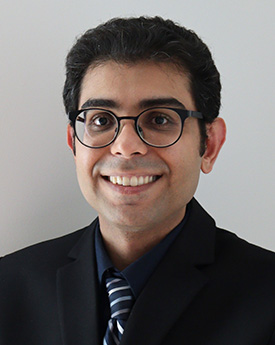
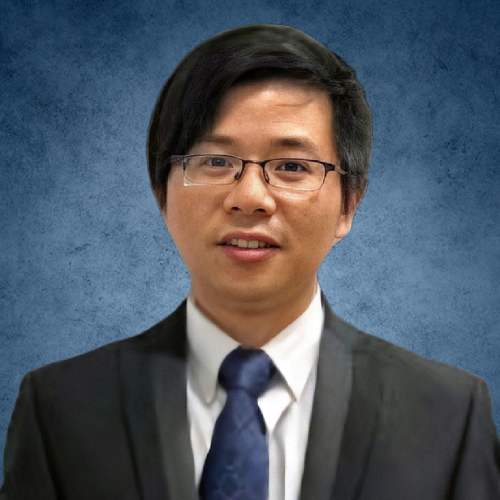
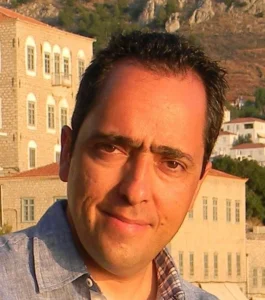
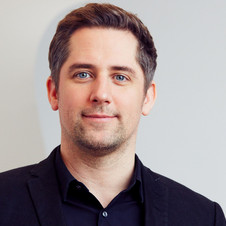
S. Boumerdassi is a researcher at the CEDRIC Laboratory of Conservatoire National des Arts et Métiers (CNAM) . He has been actively involved in interdisciplinary research spanning networking , machine learning , image encryption , and IoT systems since the early 2000s. His work has focused on security protocols, energy efficiency in data centers, and anomaly detection frameworks. Key Research Areas: Networking: VANETs, LoRaWAN, network anomalies, and edge computing. Security: Blockchain oracles, cryptographic protocols, and wireless sensor network security. Machine Learning: Applications in network optimization and sustainable agriculture. Image Encryption: Chaotic maps, DCT coefficients, and grain algorithms. Recent Publications highlight his contributions to federated learning, anomaly detection, and mobility models. Leadership and Collaboration He has co-organized conferences like Mobile, Secure, and Programmable Networking and contributed to edited volumes on machine learning and IoT. His collaborations include researchers from Springer, IEEE, and institutions across France, Italy, Spain, and Canada.
Dr. Elvis Dartey Okoffo is a Research Fellow at the Queensland Alliance for Environmental Health Sciences (QAEHS) within The University of Queensland's Faculty of Health, Medicine and Behavioural Sciences. His research focuses on developing innovative analytical methods to characterize and monitor environmental and human exposures associated with plastics pollution. His research interests center on plastic pollution analysis, with expertise in microplastics, nanoplastics, and biodegradable plastics. He has pioneered novel sampling approaches and analytical techniques for monitoring plastics in diverse environmental samples including drinking water, wastewater, biosolids, seafood, marine sediments, compost, and food systems. His work leverages advanced technologies such as pressurized liquid extraction, ultrafiltration, and pyrolysis gas chromatography coupled with mass spectrometry to provide insights into plastic distribution, abundance, and ecological impacts. Okoffo's recent publications demonstrate a strong focus on methodological development for plastic quantification, environmental monitoring across diverse matrices, and understanding pollution pathways. His work spans from fundamental analytical chemistry to applied environmental monitoring, with particular emphasis on Australian ecosystems including Moreton Bay and wastewater treatment systems. As an associate advisor, Dr. Okoffo supervises multiple PhD students working on projects related to specialized hyphenated methodologies for plastic quantification, microplastics in water systems, microplastic inputs from ships, degradation levels affecting quantification, and nanoplastics characterization. His research is supported by grants from Central Queensland University, Minderoo Foundation, and the Australian Academy of Science. His laboratory work focuses on developing and validating analytical methods for plastic detection across various environmental matrices, with particular expertise in pyrolysis-GC-MS techniques. The research team collaborates extensively with environmental scientists, marine biologists, and public health experts to address the multifaceted challenges of plastic pollution.
Professor Damien Batstone is the Centre Director of the Australian Centre for Water and Environmental Biotechnology at The University of Queensland. His research focuses on environmental biotechnology and resource recovery, including renewable energy from biomass, production of commodity chemicals from renewable sources, and the water-energy-food nexus. He specializes in anaerobic conversion processes for bioenergy production and high-value product recovery from waste streams. Professor Batstone's research spans multiple areas including wastewater treatment optimization, nutrient recovery, microbial ecology in anaerobic systems, and phototrophic biotechnology. His work integrates experimental approaches with advanced modeling techniques to develop sustainable solutions for waste valorization and environmental protection. Analysis of recent publications reveals strong emphasis on advanced wastewater treatment systems, anaerobic digestion optimization, phototrophic bacteria applications, and computational modeling of bioprocesses. Research frequently employs innovative reactor designs, microbial community analysis, and process intensification strategies to enhance resource recovery efficiency. Professor Batstone leads significant research initiatives funded by national and international agencies, including: Biosolid flow, separation and activity in anaerobic lagoons (Australian Research Council, 2018–2020) Additives for low-cost emissions reduction in piggeries (Australian Pork, 2024–2027) FNA-based technology to enhance wastewater treatment economics (Australian Research Council, 2014–2017) Efficient CO and CO₂ Conversion to Biopolymers (Australian Research Council, 2019–2023) Sewer monitoring and management in the digital era (Australian Research Council, 2024–2029) He leads the Anaerobic and Environmental Biotechnology research group developing technologies for waste conversion and resource recovery. The group specializes in phototrophic bacteria cultivation, anaerobic digestion modeling, and development of novel bioreactor configurations for industrial applications.
Dr. Reza Andalibi is a Lecturer in Chemical Engineering at Lancaster University's School of Engineering. With a diverse academic and industrial background spanning Iran, the United States, Switzerland, and the United Kingdom, he brings a wealth of experience to his role, combining theoretical knowledge with practical applications in chemical engineering and materials science. His educational journey includes: Initial studies at Sharif University of Technology in Iran Academic experience at Pennsylvania State University in the US PhD completion at the Paul Scherrer Institute and EPFL in Switzerland Postdoctoral research at Cambridge University in the UK (2019) Dr. Andalibi's research expertise centers on the development and application of in-silico tools spanning molecular to macroscopic scales. His work bifurcates into two primary streams: Materials Research: Focusing on data analytics and predictive modeling for sustainable product development, particularly in the design and discovery of surfactant molecules with applications in pharmaceuticals, polymers, and biomolecules. Process Research: Concentrating on computer-aided tools for pharmaceutical manufacturing, production of formulated products, and product performance testing, including multiscale simulation of chemical processes and development of end-to-end digital twins. Analysis of Dr. Andalibi's publication record reveals consistent focus on surfactant chemistry, deep eutectic solvents, and nanoparticle synthesis, with recent work emphasizing pharmaceutical applications. His research demonstrates progression from fundamental materials characterization to applied process development, showing strong interdisciplinary connections between chemical engineering, materials science, and computational modeling. Dr. Andalibi has gained valuable industry experience through roles at Siemens and Unilever, complementing his academic background with practical industrial perspectives. This blend of academia and industry has honed his skills in materials and process modeling and simulation, fostering a deep understanding of both fundamental and applied research.
Dr. Timenko Artur Valentynovych serves as Senior Lecturer at Zaporizhia National Technical University's Department of Computer Systems and Networks within the Faculty of Computer Science and Technologies. Holding a specialist degree in Computer Systems and Networks (2010), he maintains active roles in both teaching and research. His educational background includes graduation from Zaporizhia National Technical University in 2010 with specialization in Computer Systems and Networks. Professional development is evidenced through continuous research output and curriculum development activities. Research focuses on Internet of Things , computer networks , and neural networks , with particular emphasis on protocol verification, device interoperability, and embedded system optimization. Recent work explores semantic chatbots for IoT management, air quality monitoring systems, and MQTT protocol compatibility analysis. His methodology integrates formal verification techniques with practical hardware implementation. Publication trends from 2020-2024 reveal consistent contributions to IoT infrastructure (45%), network protocols (30%), and AI applications (25%). Key journals include Shipbuilding & Marine Infrastructure and Scientific Notes of Vernadsky University. Research demonstrates strong industry relevance with applications in smart homes, environmental monitoring, and critical systems. Teaching responsibilities encompass Python programming basics, computer network design, IoT fundamentals, and wireless technologies. His laboratory guidelines for Embedded Computer Systems and IoT disciplines reflect practical, hands-on pedagogy. Current projects involve developing automated temperature control systems and network anomaly detection using hybrid neural networks. Professional activities include active participation in Ukrainian academic conferences and international collaborations through ZNTU's research infrastructure. His work contributes to the university's strategic focus on digital innovation and sustainable technology development.
Dr. Yufei Yuan is a Professor in Information Systems at the DeGroote School of Business, McMaster University. Holding a Ph.D. in Computer Information Systems from the University of Michigan and a B.S. in Mathematics from Fudan University, he is a leading scholar in Information Systems research. Role : Wayne C. Fox Chair in Business Innovation (2002-2008) Recognition : Faculty Research Excellence Award (2009), Professional Achievement Award (2011), and inclusion in Who’s Who in Canada (since 2004) Research Focus Dr. Yuan's research spans Artificial Intelligence, Big Data Analytics, Information Security, and Healthcare Systems . Current projects examine: Conversational agents' impact on employee job identity AI-driven home healthcare for older adults Risk analysis for security breaches and misinformation Social commerce dynamics in live streaming platforms Academic Contributions His work appears in top-tier journals like MIS Quarterly and Management Science, with funding from NSERC and SSHRC grants. Key themes include: Digital trust and privacy Emergency response systems Human-AI collaboration Mobile commerce innovation Awards Wayne C. Fox Chair in Business Innovation Faculty Research Excellence Award Professional Achievement Award (Fairchild Television) Inclusion in Who’s Who in Canada Dr. Yuan actively mentors students, fostering real-world problem exploration. His lab leads research on conversational agents, pandemic management systems, and digital trust mechanisms.
Zhong Chen is an Assistant Professor in Data Science and Machine Learning at the School of Computing, Southern Illinois University (SIU), where he serves as Director of the Learning, Optimization, and Analysis from Data Lab (LOAD Lab). He holds a Ph.D. in Computer Science from Wuhan University of Technology and has previously worked as a Research Assistant Professor at the University of Kansas Medical Center and as a Computational Scientist at Xavier University of Louisiana. His research focuses on data-centric AI, Large Language Models, machine learning, deep learning, big data mining, online optimization, and anomaly detection, with applications in healthcare and medical physics. His work addresses fundamental challenges in handling streaming data with varying feature spaces, imbalanced classification problems, and developing interpretable AI systems for medical applications. Chen's recent publications demonstrate expertise in online learning frameworks, sparse representation techniques, and applications in healthcare domains including cancer treatment, patient outcome prediction, and medical imaging. His research combines theoretical innovation with practical applications in medical physics and bioinformatics. Excellence Reviewer Award of the 29th ACM SIGKDD Conference on Knowledge Discovery and Data Mining (KDD'23) Outstanding Reviewer Award (top 10% of reviewers) of the 31st ACM SIGKDD Conference on Knowledge Discovery and Data Mining (KDD'25) Chen serves as Associate Editor for Medical Physics and Editorial Member of Computational Biology and Bioinformatics. He is actively involved in the academic community as Program Committee member for major AI conferences including AAAI, IJCAI, KDD, and ECML-PKDD. He has advised numerous research projects and served on thesis committees at SIU, with a focus on developing the next generation of data scientists and AI researchers. His LOAD Lab at SIU focuses on foundational innovation in artificial intelligence and machine learning with emphasis on online optimization, machine learning techniques, and applications in big streaming data, bioinformatics, and medical physics.
Carlos Alario Hoyos is an Associate Professor in the Department of Telematic Engineering at Carlos III University of Madrid, affiliated with the School of Engineering. His work bridges telematics and educational technology, focusing on learning analytics, generative AI, and digital learning environments. Current role: Associate Professor Research groups: GAST (Telematic Applications and Services), NETTEC (Network Technologies) Research interests include: AI-driven educational tools MOOC analytics and quality assessment Chatbot-based programming assistance Behavioral modeling in online learning Automated literature review systems Recent publications (2025-2024) analyze: Student performance prediction models Generative AI integration in education Micro-credentials and digital recognition Hybrid learning environments Telepresence classroom impacts Real-time educational analytics
Ekaterina Gilman, D.Sc. (Tech), is a Researcher at the University of Oulu's Center for Ubiquitous Computing, Faculty of Information Technology and Electrical Engineering. She is supported by the Academy of Finland and has collaborated with Northern Finland Biobank Borealis and the Centre for Health and Technology. Her research spans Data Analytics Ubiquitous Computing Machine Learning Internet of Things Smart Environments with applications in intelligent urban environments, stream reasoning, and wireless communications. Recent publications highlight trends in Edge computing architectures Concept drift detection Social distancing monitoring Well-being measurement Smart city data challenges . She has participated in projects funded by the European Regional Development Fund, Business Finland, Academy of Finland, and EU Horizon 2020. She serves as a reviewer and organizer in scientific communities and has over 30 publications.
Professor Theodoridis Ioannis is a distinguished faculty member in the Department of Informatics at the University of Piraeus, where he serves as Director of the Data Science Laboratory within the School of Information and Communication Technologies. With a career spanning over two decades, he has established himself as a leading expert in data management and analysis. His research interests focus on Data Science, particularly in databases, big data management, data mining, and geoinformatics. Professor Theodoridis has made significant contributions to spatial database systems, time series analysis, and distributed data processing. His work bridges theoretical foundations with practical applications in areas such as smart cities, mobility analytics, and scientific data management. His publication record demonstrates consistent research productivity with over 100 peer-reviewed articles in top-tier venues, accumulating more than 10,000 citations. His research output shows a clear evolution from foundational database techniques toward contemporary challenges in big data analytics, machine learning integration, and privacy-preserving methods. Member of editorial board of ACM Computing Surveys (since 2016) Reviewer for numerous international journals and conferences Active participant in data management conference committees Professor Theodoridis has secured significant research funding through Horizon 2020 projects, serving as project coordinator and research team leader since 2001. His work demonstrates strong industry and academic collaboration, with applications spanning multiple domains. He has also co-authored three influential monographs in his field. He leads the Data Science Laboratory, which serves as a hub for interdisciplinary research at the intersection of database systems, machine learning, and domain-specific applications. The laboratory fosters collaboration between computer scientists, domain experts, and industry partners to address real-world data challenges.
Thomas Roulet is Professor of Organisational Sociology and Leadership at Cambridge Judge Business School, University of Cambridge, and Fellow and Director of Studies in Psychology & Behavioural Science at King’s College, Cambridge. He is an active researcher, educator, and consultant focusing on how individuals and organisations can lead social change and adapt to evolving workplaces with an emphasis on wellbeing. Education MSc – Audencia Business School MPhil – Sciences Po Paris MA – University of Cambridge PhD – HEC Paris Research Interests Roulet’s work centres on three interconnected themes: Organisational Stigma & Social Evaluation: Examining how organisations and individuals cope with negative social evaluations such as stigma, scandals, and disapproval. Institutional & Social Change: Investigating the micro-dynamics of institutional transformation, including activism, grand challenges, and the role of discourse. Wellbeing & Mental Health at Work: Developing evidence-based strategies to foster employee wellbeing, prevent burnout, and embed mental-health considerations into leadership practice. Methodologically, he draws on qualitative, quantitative, and mixed-method designs, often integrating insights from sociology, psychology, and management. Research Output Trends Over 2022-2025, Roulet has produced a prolific stream of publications addressing grand societal challenges—from climate communication and caste-based inequities to hybrid working and AI’s impact on governance. His recent work increasingly emphasises practical implications for managers and policy makers, reflecting a commitment to actionable scholarship. Scientific Awards & Honours Fellow, Academy of Social Sciences (2024) Mid-Career Fellow, British Academy (2023) Pilkington Prize for Teaching Excellence, University of Cambridge (2023) Cambridge Judge Teaching Award, MBA Leadership (2021) Runner-up, George Terry Book Award, Academy of Management (2021) Young Global Leader, World Economic Forum (2024) Named among Poets & Quants ‘40 under 40’ best business school professors (2020) King’s College London University-wide Teaching Award (2018) Advising, Grants & Service Roulet regularly consults for public and private organisations on workplace dynamics, M&A culture integration, and wellbeing strategy. He served as trustee of the Society for the Advancement of Management Studies (SAMS) since 2020 and sits on editorial boards including Academy of Management Review , Organization Science , and Journal of Management Studies . He is Senior Editor at Organization Studies and co-editor of essays at Journal of Management Studies . From 2017-2019 he was co-editor-in-chief of the open-access journal M@n@gement . Labs & Initiatives In 2021 he co-founded the King’s Entrepreneurship Lab with Kamiar Mohaddes to broaden entrepreneurial education across Cambridge colleges beyond the Business School.
Hager Saleh is a Postdoctoral Researcher at the Insight Research Centre for Data Analytics, University of Galway, Ireland, and an Assistant Professor at the Faculty of Computers and Artificial Intelligence, Hurghada University, Egypt. She specializes in developing machine learning and deep learning models for applications in climate change, healthcare, and energy. Her expertise spans artificial intelligence, Explainable AI (XAI), transformer models, multimodal/generative AI, natural language processing, database management, image processing, streaming data analytics, and time series analysis. Research Focus: Multimodal models for disease detection and early diagnosis, deep learning, machine learning, data analysis, data science, transformer models, natural language processing, database management, image processing, streaming data analytics, time series analysis, real-time applications, Explainable AI (XAI), feature selection/engineering, optimization methods, and multi-task learning applications. She previously worked as a Senior Machine Learning Engineer at PaxeraHealth and has built an extensive international research collaboration network, contributing to high-impact journals.
Professor Nils Wlömert holds the Chair of Marketing at WU Vienna University of Economics and Business, where he leads the Institute for Retailing & Marketing. His research examines how digital platforms, emerging technologies, and business model innovations reshape markets and consumer behavior, particularly in music and media industries. Key research areas: Quantitative Marketing, Platform Economics, User-Generated Content, Social Media, Content Distribution His work investigates the complex relationships between streaming services and music revenue, platform regulation effects, and social media's impact on content demand. Notable findings include the dual role of UGC platforms in stimulating or cannibalizing revenue, and the development of NADE (Natural Affect DEtection) for advanced emotion analysis from text using emojis. Scientific contributions include: Best Paper Award (2016) for empirical work on Spotify's market entry Published in top journals: Journal of Marketing, Marketing Science, International Journal of Research in Marketing Current projects explore social media boycotts, playlist curation effectiveness, and privacy regulation impacts on advertising. He collaborates with researchers across Europe and the U.S., employing quasi-experimental designs and big data analysis to address critical industry questions.
Francesco Sanna Passino is an Associate Professor in Statistics at the Department of Mathematics, Imperial College London. His research focuses on Bayesian statistical methods for dynamic networks, latent variable models, and event-time data analysis. PhD in Statistics, Imperial College London (2021) MSc in Statistics, Imperial College London (2017) BSc in Statistics, University of Glasgow (2016) Laurea in Scienze Statistiche, University of Bologna (2016) His work spans dynamic network modeling, latent structure inference, and applications in cybersecurity, social networks, and urban mobility systems. Key methodologies include Bayesian inference , model-based clustering , and topic modeling . Applications extend to cybersecurity , music streaming , and bike-sharing systems . The 15 most recent publications emphasize dynamic network analysis using Bayesian frameworks, time series modeling, and applications to financial trends, cybersecurity, and mobility systems. Topics include changepoint detection, latent factor models, and synthetic data generation. He co-organizes the 2025 NetStat Workshop on 'Statistics and Machine Learning for Networks' and organizes an RSS webinar on cybersecurity methods.
Luke Mathieson is a Senior Lecturer and Deputy Head of School (Teaching and Learning) in the School of Computer Science at the University of Technology Sydney. His academic career spans theoretical computer science with a focus on computational complexity and its applications. Dr. Mathieson's educational background includes a PhD in Theoretical Computer Science from Durham University, a Masters and Postgraduate Diploma in Higher Education from Macquarie University, and dual Bachelor's degrees in Computer Science (Honors) and Science (Chemistry) from the University of Newcastle Australia. His research interests are centered on parameterized complexity and its applications, extending to various areas of complexity theory, algorithmics, quantum computing, graph theory, and related mathematics. A major theme of his research is the complexity of graph editing problems, a topic in which he specializes. His recent work bridges theoretical complexity with practical applications in AI education, network science, and quantum computing. Dr. Mathieson has taught an extensive range of computer science subjects, particularly focusing on the theory of computation, computational complexity, and algorithmics. At UTS, he teaches or has taught subjects including Data Structures and Algorithms, Applications Programming, Computing Science Studio, Theory of Computing Science, Programming, and Advanced Algorithms. He serves as the Course Director for the Bachelor of Science in Information Technology suite of degree programs and the Course Coordinator for the IT Core. Senior Lecturer, University of Technology Sydney, School of Computer Science (2022-present) Lecturer, University of Technology Sydney, School of Computer Science (2021-2022) Scholarly Teaching Fellow, University of Technology Sydney, School of Computer Science (2017-2021) Research Associate, University of Newcastle Australia, Centre for Information Based Medicine (2014-2017) Adjunct Lecturer, Macquarie University, Department of Computer Science (2014) Postdoctoral Fellow, Macquarie University, Department of Computer Science (2011-2013) Research Associate, University of Newcastle Australia, School of Electrical Engineering and Computer Science (2010-2011) His research demonstrates consistent productivity across theoretical computer science with notable contributions to parameterized complexity and network controllability. Recent publications show an expanding scope incorporating quantum computing applications and educational technology innovations. The QB-suite: a framework for quantum algorithm design and benchmarking (2024-2027) National Industry PhD Program: Improving biosecurity through livestock history recording (2024-2028) Random Number Generation and Analytics for Client Understanding (2018-2019) He maintains active research collaborations across multiple institutions and is affiliated with the Faculty Centre for Quantum Software and Information (QSI) at UTS, reflecting his growing involvement in quantum computing research.