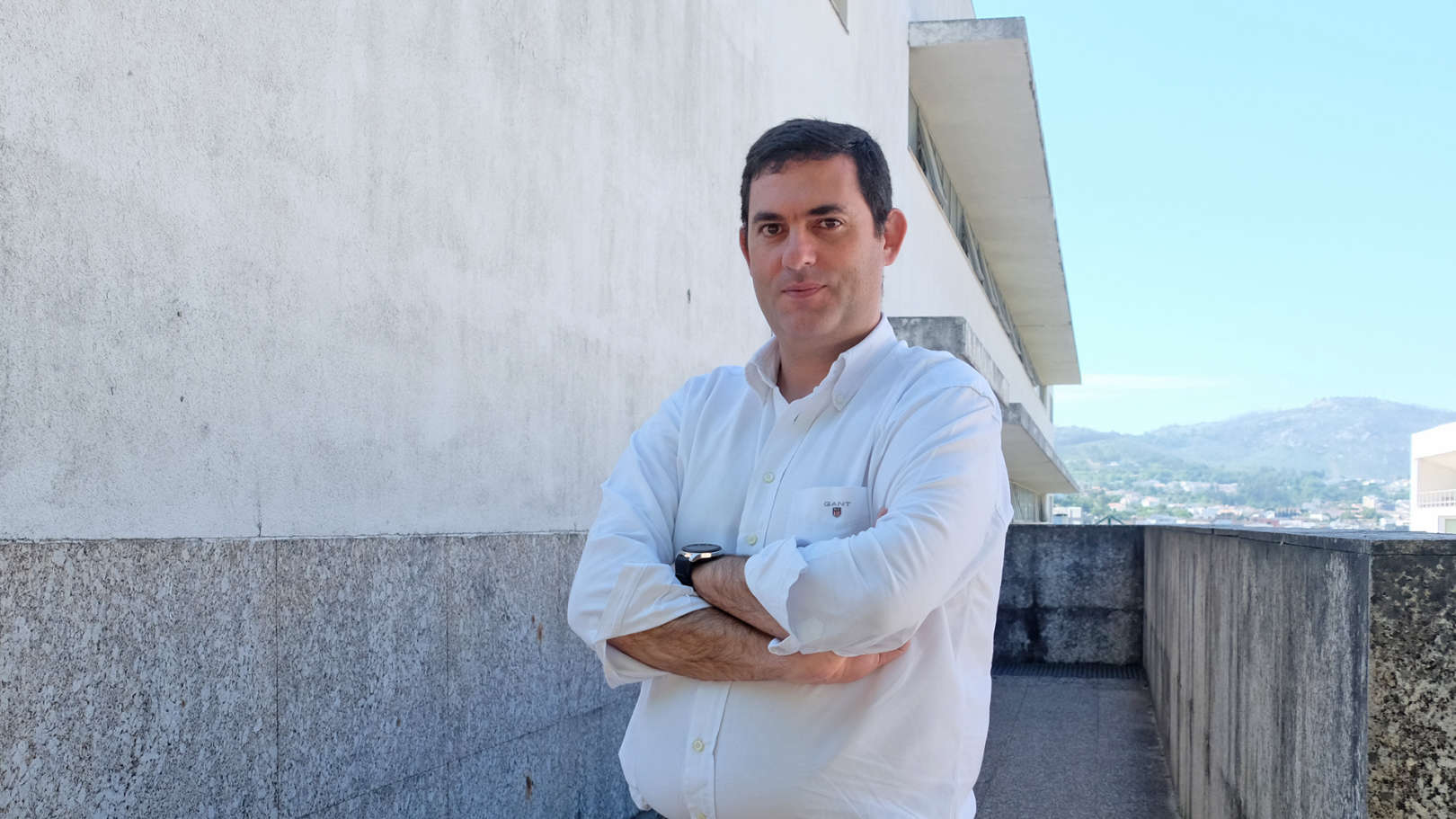
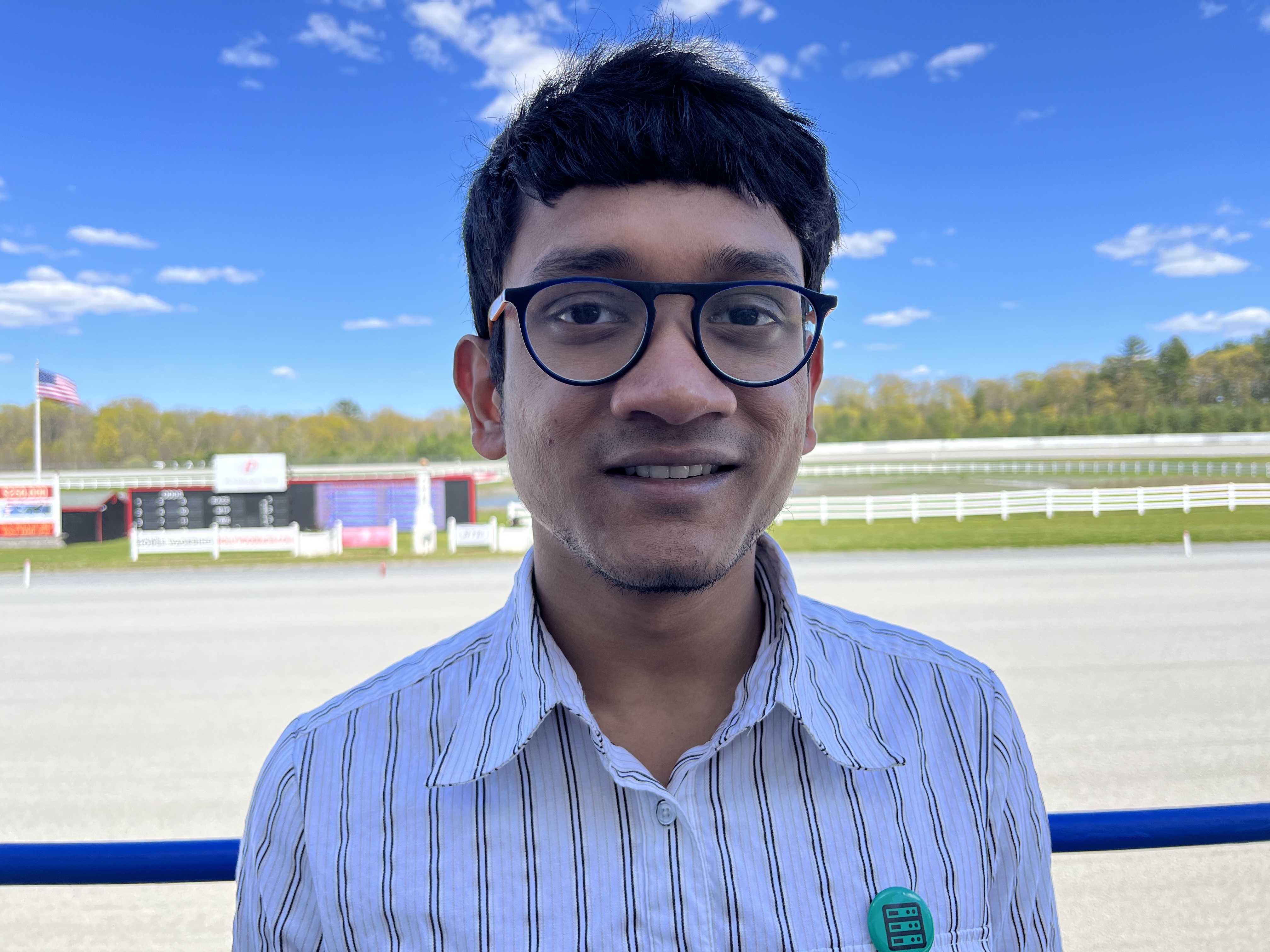
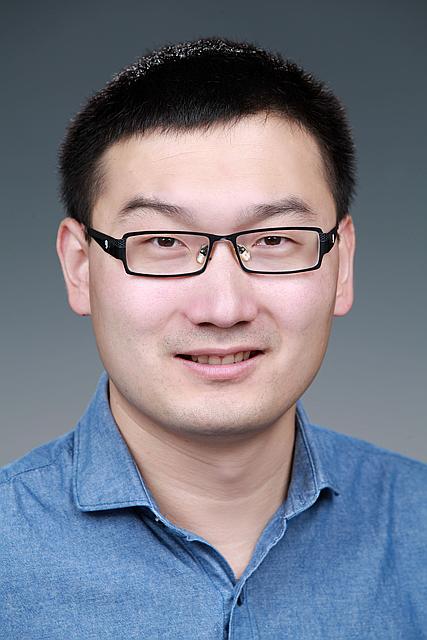
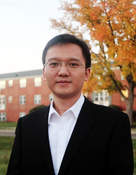
António Luís Sousa is an Assistant Professor at the Department of Informatics, University of Minho, and a Senior Researcher at HASLab/INESC TEC. He has served as Centre Coordinator since 2011, focusing on high-assurance software systems. His research emphasizes dependable distributed systems, cloud computing, and applications in healthcare informatics. He actively supervises graduate students, with recent theses addressing topics like cloud-based medical imaging systems, workflow engines, and IoT platforms for medical sensors. Research interests include distributed database systems, scalable cloud architectures, and AI-driven solutions for medical imaging. Notable projects involve GAN-based MRI generation in HPC environments and privacy-preserving DICOM systems using Kubernetes. His work bridges distributed computing with healthcare challenges, leveraging frameworks like ChainerMN and Apache HBase. Publications span medical imaging generation, IoT healthcare monitoring, and deep learning for ECG classification. He collaborates with institutions like INESC TEC and has advised over a dozen students. No scientific awards are explicitly mentioned, but his contributions highlight advancements in both theoretical and applied computing for healthcare.
Tobias Grosser is an Associate Professor in the Department of Computer Science and Technology at the University of Cambridge. His research focuses on rethinking performance programming by bridging the gap between developers and compilers. He holds a PhD from École Normale Supérieure Paris and has held positions including Reader at the University of Edinburgh and Ambizione Fellow at ETH Zurich. His research interests span compilers, programming language design, static/dynamic analysis, and the integration of machine learning into compiler development. He emphasizes making compilation more modular, automatic, and trustworthy, with applications in quantum computing, climate science, and open-source hardware. Key projects include xDSL (a Python-native compiler framework), LoopOpt, and the Open Earth Compiler for climate simulations. Recent publications highlight advancements in multi-level intermediate representations (IR), formal verification in MLIR, and performance optimization for GPUs and FPGAs. His work often addresses barriers between programmers and compilers, aiming for intuitive collaboration between developers and automated systems. Tobias mentors a dynamic team of PhD students, postdocs, and researchers, including notable contributors like Siddharth Bhat, Arjun Pitchanathan, and Mathieu Fehr. His lab focuses on compiler toolchains for domain-specific hardware accelerators, quantum computing ecosystems, and verified compilation techniques.
Rob H. Bisseling is a Full Professor in Scientific Computing at Utrecht University's Mathematical Institute and a visiting professor at ENS de Lyon's LIP laboratory (March–May 2024). He holds a BSc/MSc in Mathematics (cum laude) from the Catholic University of Nijmegen and a PhD in Theoretical Chemistry from the Hebrew University of Jerusalem. His research focuses on parallel algorithms, sparse matrix/tensor computations, and hypergraph partitioning, with applications in high-performance computing and numerical methods. He has authored a seminal textbook on parallel scientific computing and contributes to pedagogical resources like video lectures. During his visit to LIP, Bisseling collaborates with the ROMA team under Bora Uçar to advance parallel algorithms for large-scale irregular applications. His work includes developing tools like PMondriaan for sparse matrix partitioning and promoting knowledge transfer through lectures on BSP programming. He engages with researchers, PhD students, and engineers at LIP, extending collaborations to Lyon's Institut Camille Jordan and LabPhys for tomographic reconstruction and statistical physics modeling. His academic career includes roles at Royal Dutch Shell and as Utrecht University's Director of Education (2012–2015). He advocates interdisciplinary approaches, bridging computational methods with applied sciences and engineering challenges.
GANESH GOPALAKRISHNAN is a Professor of Computer Science at the University of Utah's School of Computing. His work focuses on formal verification of parallel/distributed systems, GPU programming, and numerical error analysis. He has contributed to tools like ISP for MPI verification, ARCHER for OpenMP race detection, and FLiT for floating-point consistency testing. His research spans theoretical foundations (e.g., concurrency models) and practical applications (e.g., GPU error analysis). Recent work includes advancing formal methods for mixed-precision computing and resilience in exascale systems. Notable projects include rigorous error estimation for floating-point operations and compiler-assisted verification techniques. Research Interests: Formal Verification of Parallel Systems | GPU & HPC Correctness | Floating-Point Numerical Analysis | Concurrency Bugs | Tools for Distributed Systems. Current work emphasizes hybrid approaches combining formal methods with dynamic analysis to address emerging challenges in heterogeneous computing architectures. Articles Trends: Recent publications (2020–2025) emphasize GPU verification (data races, error analysis), mixed-precision computing (matrix operations, tensor cores), and resilience in HPC systems. Tools like FPDetect and BinFPE highlight practical contributions to error detection in production runs. Workshops (DOE/NSF) indicate leadership in defining correctness strategies for exascale computing. Labs/Teams: Leads research groups focused on formal methods for parallel computing and numerical system reliability. Collaborations include Argonne National Lab, NVIDIA, and LLNL on verification tools and HPC correctness frameworks.
Rohan Basu Roy is an Assistant Professor (tenure-track) at the University of Utah, affiliated with the Kahlert School of Computing and the SCI Institute. His research focuses on optimizing parallel and distributed computing systems, including cloud, serverless, and HPC environments, with an emphasis on sustainability and cost-effectiveness. He holds a Ph.D. in Computer Engineering from Northeastern University, advised by Prof. Devesh Tiwari. Affiliations: University of Utah (Kahlert School of Computing), SCI Institute. His research interests include scheduling algorithms, energy efficiency, and environmental sustainability in computing systems. He has pioneered open-source tools like GreenMix and ECOLIFE , widely adopted in the systems research community. Awards: ACM-IEEE CS George Michael Memorial HPC Fellowship (2023), MLCommons ML and Systems Rising Star (2023), Northeastern University Excellence in Research Award (2023). Rohan has served as a program committee member for top-tier conferences (ASPLOS, HPCA, SC) and co-chaired tracks such as AI/ML for Systems at HiPC 2025. He has also delivered invited talks at Google Brain and ParslFest 2023.
Samuel Kounev is a Professor and Chairholder of the Chair of Software Engineering (Computer Science II) at the University of Würzburg's Department of Computer Science. He has held leadership roles, including Faculty Dean (2019-2021) and Head of the Department of Computer Science (2016-2017). His research focuses on software engineering, performance engineering, and autonomic computing, with contributions to cloud computing, cybersecurity, and machine learning. He actively participates in international conferences, including co-chairing the ACM/SPEC International Conference on Performance Engineering (ICPE) and leading initiatives like the DFG Research Unit SOS and bidt Consortium Project ROOT. His work emphasizes real-time systems, benchmarking, and interdisciplinary applications in earth observation and healthcare. Education: Not explicitly listed in provided text. Research Interests: Software Engineering, Performance Engineering, Autonomic Computing, Cloud Computing, Cybersecurity, Machine Learning, High-Performance Computing. His recent articles explore topics like homomorphic encryption, time series forecasting, and AI in healthcare. He is an editorial board member of journals like Elsevier's Performance Evaluation and co-founder of the ICPE and ACSOS conferences. Awards and recognitions are listed on separate pages, but his leadership roles and extensive conference involvement highlight his academic impact.
Nikolas Herbst is a Professor and Chair of Software Engineering at the Department of Computer Science, University of Würzburg. He leads research in Software Performance Engineering, High-Performance Data Processing, and Autonomic Computing. His work focuses on Cloud and Serverless Computing, Elasticity, and Time Series Analysis. He currently serves as JMU Chief Information Security Officer (CISO) and holds leadership roles in SPEC Research Groups and ICPE Steering Committees. Education: PhD in Computer Science (Karlsruhe Institute of Technology, 2018) Master of Computer Science (Karlsruhe Institute of Technology, 2012) Research Interests: His lab develops tools like CHAMELEON, TELESCOPE, and BUNGEE for cloud elasticity and performance analysis. He emphasizes benchmarking, resource demand estimation, and self-aware systems. Recent projects include real-time forest monitoring (ROOT) and serverless scientific computing (SOS). Teaching: Teaches Operating Systems, Performance Engineering & Benchmarking, and Self-Aware Computing at both undergraduate and graduate levels since 2012. Awards: 10 Year Most Impact Paper Award (ACM/SPEC ICPE 2023) SPEC Kaivalya Dixit Distinguished Dissertation Award (2019) IBM PhD Fellowship (2014) Grants & Projects: Coordinates DFG-funded projects like bidt-ROOT (2023–2026) and SOS (2025–2029). Leads development of open-source tools for cloud performance analysis, including WCF (Workload Classification & Forecasting).
Erik Elmroth is a Professor at the Department of Computing Science, Umeå University. He leads research in distributed systems, cloud/edge computing, and autonomous resource management, directing a 30+ member research group. His leadership includes transformative roles as department head (2009-2021) and Deputy Director at High Performance Computing Center North (HPC2N). Elmroth serves on executive committees for the SEK 6.2B Wallenberg AI program (WASP) and SEK 390M eSSENCE initiative, and leads multiple Kempe Foundation projects. Research interests center on: Autonomous control of cloud/edge infrastructures Software-defined systems and federated clouds AI-driven resource optimization High-performance computing architectures Robust machine learning for distributed environments His publications emphasize adaptive cloud systems, anomaly detection, and federated learning, with consistent focus on scalability and resilience in edge/cloud deployments. Awards and honors: Member of Royal Swedish Academy of Engineering Sciences (IVA) Nordea Scientific Prize (2011) SIAM Linear Algebra Prize (2000) National HPC Lecturer appointment He has supervised 40+ PhD students and secured major grants including the Swedish Research Council's second-largest award for the Cloud Control project. Elmroth founded the Control Workshops series and co-founded Elastisys AB, a cloud security firm with 50+ employees recognized as Umeå's Spin-off Company of the Year.
Josep Lluís Berral García is an Associate Professor in the Department of Computer Architecture at the Barcelona School of Informatics (FIB), Polytechnic University of Catalonia · BarcelonaTech (UPC). He is actively engaged in teaching and research, with a strong focus on Artificial Intelligence, Cloud Computing, and sustainable computing practices. He leads innovative educational initiatives and is affiliated with the CROMAI research group and the Barcelona Supercomputing Center (BSC-CNS). Research Interests: Artificial Intelligence and Deep Learning Cloud and High-Performance Computing Resource Orchestration and Management Sustainable and Ethical AI AI Education and Pedagogy His recent research and teaching projects center on integrating sustainability and ethical responsibility into AI education, using active learning methodologies. The trend in his work shows a consistent focus on optimizing computing resources through AI, particularly in cloud and HPC environments, with increasing emphasis on environmental impact and responsible innovation. Scientific Awards: UPC Award for Quality in University Teaching 2025 (Teaching Initiative for Newly Recruited Professors) Advising and Grants: While specific students are not listed, his leadership in competitive R&D+i projects and innovation initiatives indicates active supervision and grant-funded research. His involvement in multiple competitive and non-competitive R&D projects demonstrates sustained funding and research leadership. Labs and Teams: He is a key member of the CROMAI (Computing Resources Orchestration and Management for AI) research group at UPC and maintains a strong collaborative link with the Barcelona Supercomputing Center (BSC-CNS), leveraging the MareNostrum supercomputing infrastructure for AI and systems research.
Bin Ren is an Assistant Professor in the Department of Computer Science at the College of William & Mary, where he has been a faculty member since Fall 2016. He holds a Ph.D. in Computer Science and Engineering from The Ohio State University (2014) and was a postdoctoral research associate at Pacific Northwest National Laboratory from 2014 to 2016. Research Interests: His work centers on high-performance computing, compiler techniques, and machine learning systems, with a focus on enabling real-time and energy-efficient deep neural network execution on mobile and edge devices. He explores compiler optimizations, DNN pruning, neural architecture search, and GPU memory management to improve system performance and efficiency. Publication Trends: His recent publications (2023–2025) reveal a strong focus on compiler-aware deep learning systems, mobile and edge AI, and performance optimization across heterogeneous platforms. Key themes include DNN acceleration, memory efficiency, real-time inference, and hardware-software co-design. His work frequently appears in top-tier venues such as ASPLOS, SC, CVPR, and PLDI. Scientific Awards: NSF CAREER Award, 2021 Best Paper Award, SC 2020 Best Student Paper Nomination, SC 2020 Jeffress Trust Award, 2020 ISLPED Design Contest First Place, 2020 Student Cluster Reproducibility Challenge Paper, SC 2019 Best Paper Award, CGO 2013 SIGPLAN Research Highlights, 2013 Advising and Grants: Bin Ren has advised numerous Ph.D. and master’s students, many of whom have co-authored influential papers. His research has been supported by competitive grants, including the NSF CAREER Award. He actively mentors students in areas of parallel computing, compiler design, and machine learning systems. He has also received funding from the Jeffress Trust Awards and other sources to support interdisciplinary research. Professional Service: He has served in leadership roles such as Program Co-Chair for PPoPP'25 and HIPS'21, Track Co-Chair for ICPP'24 and HiPC'24, and Artifact Evaluation Co-Chair for PPoPP'24 and ALENEX'25. He is a frequent reviewer for top journals and conferences including TPDS, TACO, NeurIPS, and SC. Teaching: He teaches courses such as CS304 (Computer Organization) and CS642 (Compiler Techniques for High Performance Computing), contributing to both undergraduate and graduate education in systems and programming. Lab and Team: His research group focuses on system-software co-design for efficient AI deployment. Collaborators include researchers from institutions like Pacific Northwest National Laboratory and The Ohio State University. His team works on real-world applications in healthcare, autonomous systems, and scientific computing.
Dr. Xiaoyi Lu is an Associate Professor in the Department of Computer Science & Engineering at the University of California, Merced (UC Merced), where he founded and directs the Parallel and Distributed Systems Laboratory (PADSYS Lab). He is affiliated with the AgAID Institute since 2023 and has authored over 170 publications, including ten Best Paper Awards or Nominations (e.g., SC 2019, IPDPS 2024). His research outcomes like OpenDOTA and MVAPICH2-Virt are used by hundreds of organizations globally. Research Interests: He focuses on scalable parallel systems for HPC, Big Data, AI, Cloud, and Edge Computing, leveraging advanced technologies like RDMA/PMEM/NVMe/GPU/DPU. His work bridges high-performance computing with applications in precision agriculture, biostatistics, and digital twin technology. Article Trends: Recent publications emphasize DPU offloading, compression-optimized collective communication, error detection in HPC, and scalable Bayesian group testing. Topics span GPU clusters, NVMe-over-Fabrics, and adaptive networks for LLM training, reflecting his expertise in heterogeneous architectures and distributed systems. Scientific Awards: NSF CAREER Award (2024) Amazon Research Award (2023) Google Research Award (2022) Meta Faculty Research Award (2022) Multiple Best Paper Nominations Professional Activities: He serves as Associate Editor for Frontiers in High Performance Computing and organizes tracks at SCAsia and HiPC. His leadership in PADSYS Lab drives innovation in systems for social good.
Petr Taborsky is a postdoctoral researcher affiliated with the Department of Applied Mathematics and Computer Science at the Technical University of Denmark (DTU). His work focuses on artificial intelligence, machine learning, and computational methods within the Cognitive Systems group. Research interests include Bayesian inference , deep learning generalization , and graph-based learning , with applications in high-performance computing and federated learning . Key contributions involve developing the Bayesian Cut method for clustering and analyzing gradient noise in AI models. Recent publications highlight trends in European HPC/AI collaboration (2025) Bayesian graph cut techniques (2022) Statistical modeling in machine learning (2021)
Raul Castro Fernandez is a prominent researcher in data management and database systems, with a focus on data discovery, integration, and marketplaces. He has collaborated extensively with leading institutions and researchers, contributing to projects like Data Station and Nexus for secure data sharing. His work bridges theoretical innovation with practical implementations in cloud optimization, differential privacy, and LLM-driven data tools. Key Contributions : Data market frameworks, LLM applications in databases, differential privacy platforms Collaborators : Yue Gong, Samuel Madden, Michael Stonebraker, Eugene Wu, Kyle Chard Research Themes Fernandez explores automated metadata management for data catalogs, spatiotemporal data sharing with privacy guarantees, and LLM-based data discovery . His work on stateful stream processing (e.g., SABER system) and cost optimization in cloud analytics shows technical depth. Recent Trends 2023-2025 publications highlight his pivot toward LLM applications in data management, including tabular data representation and hypothesis assessment tools. He also investigates sustainability in HPC through carbon credit systems.
Elisavet Kozyri is an Associate Professor at UiT The Arctic University of Norway's Department of Informatics within the Faculty of Science and Technology, where she conducts research in computer security and information flow control. Her office is located in Realfagbygget A232 in Tromsø. Her research focuses on: Information flow properties and enforcement mechanisms Privacy-preserving technologies and GDPR compliance Reactive information flow systems Formal methods for security verification Diversity and inclusion in computer science education She leads the Better Balance in Informatics (BBI) project and participates in the Cyber Security Group (CSG). Her publications demonstrate a consistent focus on information flow control, privacy enforcement, and security formalization, with recent expansion into educational equity research. Analysis shows strong emphasis on: Formal modeling of security properties (60% of publications) Practical implementation of privacy frameworks (25%) Educational initiatives in computer science (15%) Teaching responsibilities include: Advanced Computer Security (2023-2025) Computer Security (2022-2025) Computer Communication (2022) Professional activities include: IEEE Computer Security Foundations Symposium PC member (2021-2026) Deputy Representative to Informatics Europe (2023-present) EUGAIN Management Committee member (2022-2024)
Pedro Javier García García is a Professor at the Department of Computer Systems, Universidad de Castilla-La Mancha, Spain. His work focuses on high-performance interconnection networks, congestion control, and routing algorithms for large-scale systems. Research Themes: High-Performance Computing (HPC), Congestion Management, Adaptive Routing, Fat-Tree Networks, Network Simulation, Quality of Service (QoS) Publication Trends: Recent articles address congestion control in Dragonfly/Slim Fly networks, hybrid routing strategies, energy-efficient interconnects, and scalable simulation frameworks for exascale/big-data architectures.