Professor George Buchanan is a leading researcher in human-computer interaction and digital libraries at RMIT University . His work bridges information science, digital humanities, and health informatics, focusing on usability in sensitive contexts like healthcare and misinformation. Deputy Dean, Research at RMIT University Former Director, University of Melbourne iSchool Research Interests: Digital information interaction Health and aging informatics Disinformation analysis Mobile interface design Digital library systems Key Contributions: Developed mobile web usability benchmarks, spatial hypertext tools, and thermal feedback interfaces. Currently seeking PhD students for 2025 projects on digital browsing and view change dynamics. Awards: Over twenty best paper awards and Honorary Life Fellow of the Royal Society of Arts. Advising: Accepting Masters/PhD supervision in information interaction and digital health domains.
Jack Davis is an Assistant Professor at the University of Waterloo, specializing in statistics education and sports analytics. He holds a Teaching Stream appointment within the Faculty of Mathematics. His professional background includes roles as a machine learning post-doctoral fellow at Sportlogiq (focused on NHL hockey analysis) and as a statistical consultant at Big River Analytics. Davis has conducted research on network analysis applications, including disease transmission networks and citation networks in Supreme Court of Canada decisions. At the University of Waterloo, he co-founded the University of Waterloo Analysis Group for Games and Sports (UWAGGS), which develops tutorials for analyzing and visualizing data across sports like hockey, soccer, lacrosse, horse racing, and eSports. His work emphasizes practical data analysis methodologies for sports performance and decision-making.
Kimbal Marriott is a Professor in Computer Science at Monash University, affiliated with the Clayton School of Information Technology and the Department of Human Centred Computing. He leads the Monash Assistive Tech and Society (MATS) Centre. Previously, he served as Head of the Department of Human-Centred Computing. His research focuses on accessible technologies for visually impaired individuals, leveraging mixed reality, AI, tactile displays, and 3D printing. He holds a PhD (1989) and B.Sc. (Honours) from the University of Melbourne, with prior experience at IBM TJ Watson Research Center. Key projects include 'Accessible Data Exploration and Analysis for Blind People' (ARC-funded) and 'Enabling Accessible, Inclusive Playgrounds for Children with Vision Impairment'. Awards include IEEE InfoVis 2015 Best Paper and Honorable Mention (2016). He teaches units such as FIT5147 (Data Exploration) and FIT1049 (IT Professional Practice). His work aligns with UN SDGs related to education and accessibility. Recent articles emphasize tactile displays combined with conversational agents, commodity technology for accessibility in cultural institutions, and immersive analytics workflows. His book *The Golden Age of Data Visualization* explores historical and technological advancements in the field.
Manolis Savva is an Associate Professor in the School of Computing Science at Simon Fraser University and holds the Canada Research Chair in Computer Graphics. He specializes in 3D scene analysis, generative methods for 3D content, and computer graphics for AI. His research bridges computer graphics, vision, and robotics. Education: Ph.D. (Computer Science, Stanford University, 2016), MS (Computer Science, Stanford, 2012), B.A. (Physics & Computer Science, Cornell, 2009). Research Interests: Human-centric 3D scene analysis, generative 3D content creation, AI-driven rendering, and applications in robotics. Key projects include Habitat (Embodied AI platform), ScanNet , and ShapeNet datasets. Recent Articles: Focus on articulated object modeling, 3D scene synthesis, and AI-driven visualization. Notable work includes SceneMotifCoder (generating object arrangements) and R3DS (panoramic scene understanding). Awards: CHCCS Early Career Award (2022), ICLR 2023 Outstanding Paper Award, ICCV 2019 Best Paper Nomination, and SGP 2020 Dataset Award (ScanNet). Lab/Teams: Leads research groups in 3DLG (3D Learning and Graphics) and GrUVi (Graphics and Vision). Collaborates on projects like AI Habitat and HomeRobot .
Zhendong Su is a full professor in the Department of Computer Science at ETH Zurich since August 2018. Previously, he held a full professorship at UC Davis from 2003 until June 2019. He earned his Ph.D. in Computer Science from UC Berkeley and dual Bachelor’s degrees in Computer Science and Mathematics from UT Austin in 1995. Affiliations: ETH Zurich: Full Professor (since 2018) UC Davis: Full Professor and Chancellor’s Fellow (2003–2019) IEEE Fellow, ACM Fellow, and Member of Academia Europaea His research focuses on programming languages, compilers, software engineering, computer security, and education technologies . Key contributions include compiler validation (e.g., Project Yin-Yang for SMT solvers and DBMS testing), testing tools like SQLancer, and educational innovations such as the Algot visual programming language. Recent work emphasizes secure AI (e.g., CipherSteal for TEE-shielded models) and compiler reliability (e.g., Artemis/Apollo for JIT validation). He has pioneered techniques like metamorphic testing and equivalence modulo inputs (EMI) for compiler validation, uncovering thousands of bugs in GCC/LLVM and SMT solvers. Awards: ICSE MIP Award (2022), ACM SIGSOFT Impact Paper (2018), NSF CAREER Award, and multiple industrial awards. His students have won IEEE TCSE Rising Star and SIGSOFT Impact Paper awards, securing roles at top universities and companies like Google and NVIDIA. Service: Steering committee member of ISSTA and ESEC/FSE, ACM Distinguished Speaker, and Associate Editor for ACM TOSEM. Program chaired ISSTA 2012 and co-chaired FSE 2016. Labs/Teams: Leads research groups on compiler validation, secure AI, and education technologies. Projects include Yin-Yang (SMT testing), SQLancer (DBMS fuzzing), and Algot (visual programming for education).
Hamid Mansoor is an Assistant Professor in the Department of Computer Science at the University of Manitoba. He holds a PhD in Computer Science from Worcester Polytechnic Institute under Prof. Emmanuel Agu, and was part of the DARPA-funded WASH project. His research focuses on data visualization, digital health, and smartphone-based behavioral analysis. He previously served as a Postdoctoral Fellow at the VIXI Lab, University of Victoria, Canada, under Prof. Miguel Nacenta. Education: PhD in Computer Science, Worcester Polytechnic Institute Research Interests: Interactive data visualization frameworks for health monitoring Mobile and ubiquitous computing for behavioral analysis Smartphone-sensed human behavior and health informatics Visual representation of text-based and sensor data Publications highlight trends in visual analytics for healthcare, including tools like ARGUS and INPHOVIS for detecting bio-behavioral disruptions and smartphone-based phenotyping. His work integrates machine learning with visualization to address challenges in health data interpretation. Awards: Best short paper honorable mention (EuroVis 2020) His contributions span academic collaborations in health informatics and mobile computing, with a focus on bridging theory and practical applications in healthcare technology.
Matt Easterday is an Assistant Professor in the Learning Sciences Department at Northwestern University's School of Education and Social Policy, co-directing the Delta Lab. He holds a PhD in Human-Computer Interaction from Carnegie Mellon University (2010), preceded by an MS in the same field and a BA in Psychology and Mathematics from Reed College. His research focuses on technology-enhanced civic education, aiming to develop evidence-based tools that foster informed citizenship capable of addressing societal challenges like climate change and inequality. Core areas include deliberation systems, cognitive games for policy analysis, and platforms like The Loft and NextGenIL for collaborative civic innovation. Easterday's work emphasizes design research methodologies, bridging theory and practice through frameworks like the 'Design Risks Framework' and 'Research Slices.' His projects integrate iterative design, participatory governance, and scalable learning networks to address real-world policy problems. Awards: Siebel Scholar, Searle Center Fellow, Ver Steeg Advising Award Labs/Teams: Delta Lab (civic tech innovation), The Loft (online learning platform) He advocates for human-centered design in education, advancing tools like Critiki for formative feedback and StandUp for professional coaching in project-based learning.
Lizi Liao is an Assistant Professor at the School of Computing and Information Systems , Singapore Management University (SMU) , specializing in Artificial Intelligence and Conversational AI . Her research bridges Machine Learning , Natural Language Processing , and Multimodal Systems , focusing on proactive dialogue systems, multimodal conversational search, and task-oriented interactions. Education : PhD in Computer Science (2019) from the National University of Singapore (NUS) , advised by Professor Tat-Seng Chua . Research Interests center on principles of human conversational understanding and machine implementation, particularly in proactive conversational agents , multimodal dialogue systems , and target-driven conversation planning . Key applications include emotional support systems , intelligent shopping assistants , and learning companions . Recent Publications (2024-2025) highlight her work on LLM-based proactive dialogue , multimodal emotion recognition , and dynamic graph modeling , often integrating NLP , Multimedia , and Knowledge Graphs . Collaborative projects with her CoAgent Lab team emphasize human-AI interaction and ethical response generation . Scientific Awards : Google South Asia & Southeast Asia Research Award 2023 Lee Kong Chian Fellow Teaching includes Visual Analytics for Business Intelligence (undergraduate) and Text Analytics and Application (graduate). She also serves as Associate Editor for TOIS and TOMM , and organizes tutorials at ACL , SIGIR , and WSDM .
Scott England is a Professor in the Department of Aerospace and Ocean Engineering at the College of Engineering, Virginia Polytechnic Institute and State University. He serves as the Project Scientist for NASA’s Ionospheric Connection Explorer (ICON), Co-Investigator for Global-scale Observations of the Limb and Disk (GOLD), and Participating Scientist for Mars Atmosphere and Volatile Evolution (MAVEN). Education PhD, University of Leicester (UK), 2005 MPhys First Class Honors, University of Leicester (UK), 2001 England’s research focuses on planetary atmosphere-space environment interactions, particularly gravity waves, atmospheric tides, and ionosphere-thermosphere coupling on Earth and Mars. His work integrates NASA mission data (ICON, GOLD, MAVEN) with numerical modeling to study thermal dynamics, wind systems, and solar flare impacts. Recent publications highlight his expertise in thermospheric gravity wave science, planetary wave-induced ionospheric variability, and Mars atmosphere studies using EMUS and IUVS instruments. Articles span topics like Seasonal variability of DE3/DE2 tides , Transient Martian hot oxygen corona , and Shock-induced plasma dynamics . Scientific Honors 2020 Dean's Award for Teaching Excellence 2016 RHG Exceptional Achievement for Mars Science As a professional leader, England served as Thermospheric Lead for the 2019 Planetary Mission Concept Studies Program and on the National Academy of Sciences Decadal Survey panel. He manages Virginia Tech’s participation in the Virginia Space Grant Consortium and has contributed to high-performance computing committees.
Gabriel A. Silva is a Professor in the Shu Chien-Gene Lay Department of Bioengineering at UC San Diego’s Jacobs School of Engineering, with a joint appointment as Assistant Professor in Ophthalmology. His research bridges neuroscience, theoretical physics, and applied mathematics to explore how the brain encodes and processes information, leveraging quantum logic and algorithms for advanced neural modeling. University: University of California, San Diego School: Jacobs School of Engineering Department: Shu Chien-Gene Lay Department of Bioengineering Academic Rank: Professor Joint Appointment: Assistant Professor in Ophthalmology Research Interests: Silva focuses on neural computation at cellular and network scales, aiming to abstract biological mechanisms into mathematical models that emulate brain-like processing. His work has implications for understanding neurological disorders, developing neural engineering nanotechnologies, and advancing AI systems through emergent complexity. Recent Article Trends: His publications span quantum-enhanced neural modeling, EEG-based disease detection, nonlinear dynamics in brain networks, and interdisciplinary applications of graph theory. Emerging themes include the integration of category theory for network analysis and AI optimization via emergence-promoting schemes. Labs & Teams: Affiliated with UC San Diego’s Institute of Engineering in Medicine, Silva leads research at the intersection of bioengineering, ophthalmology, and neural systems, fostering collaborations with neuroscience and quantum computing domains.
Helena Webb is a Visiting Lecturer in the Department of Computer Science at the University of Oxford, where she contributes to research and teaching within the Human Centred Computing theme. Her work bridges social science and computer science, focusing on responsible innovation, AI ethics, and user interactions with digital technologies. PhD in Social Sciences, University of Nottingham Bachelor’s in Social and Political Sciences, University of Cambridge Former Senior Researcher, University of Oxford Department of Computer Science Researcher at Work, Interaction and Technology (WIT) Research Centre, King’s College London (2009–2014) Her research interests include human-computer interaction, algorithmic fairness, privacy in smart homes, and ethical design of social robots. She specializes in qualitative research methods and interdisciplinary collaboration to understand how technology shapes and is shaped by social practices. She has led and contributed to major projects such as Digital Wildfire , UnBias , ReEnTrust , and RoboTIPS , all focused on responsible governance and design of digital systems. Her recent publications span topics from algorithmic accountability to ethical black boxes in robotics, reflecting a strong trend toward integrating ethical considerations into the technical design of AI and interactive systems. These works emphasize participatory design, transparency, and societal impact. Scientific Awards and Recognition: Named one of the Brilliant Women working in AI Ethics She actively supervises and co-supervises students, contributes to ethics education, and is involved in outreach and diversity initiatives at Oxford. She has also served on the Departmental Equality and Diversity Committee and the Research Ethics Committee. Helena is a member of the advisory board for the ReEnTrust project and continues to develop the ethical hackathon model with colleagues. Her work exemplifies a deep commitment to interdisciplinary, socially responsible research in computing.
Vijini Mallawaarachchi is a Research Fellow in Bioinformatics at Flinders University's Flinders Accelerator for Microbiome Exploration (FAME). His research focuses on developing computational methods for metagenomic analysis, particularly viral genome recovery from metagenomes. He holds a PhD in Computer Science from the Australian National University (2022) and a BSc in Computer Science and Engineering (Honours) from the University of Moratuwa, Sri Lanka (2018). Education: Doctor of Philosophy (Computer Science), Australian National University, 2018–2022 Bachelor of Science (Computer Science & Engineering, Honours), University of Moratuwa, 2014–2018 Research Interests: Metagenomics, algorithms for genome recovery, bacteriophage discovery, machine learning applications in bioinformatics, and software engineering for computational biology. His work emphasizes leveraging assembly graphs and computational models to analyze microbial communities and viral genomes. Grants & Awards: 2025: National Computational Merit Allocation Scheme Grant (Co-CI) - A$412,000 2025: ARC Discovery Projects Grant (Co-CI) - A$685,781 2024: Outstanding PhD Thesis Award (ABACBS) 2023: Australian Society for Microbiology Early Career Award Professional Engagement: Active member of ISMB, ISVM, ACM, IEEE, ABACBS, ASM, and RSE AU/NZ. Supervises HDR and Honours students in bioinformatics and computational biology. Labs & Tools: Leads projects at FAME, developed tools like GraphBin, Phables, and ConDiGA for metagenomic analysis. Collaborates on open-source initiatives like the cogent3 Python APIs.
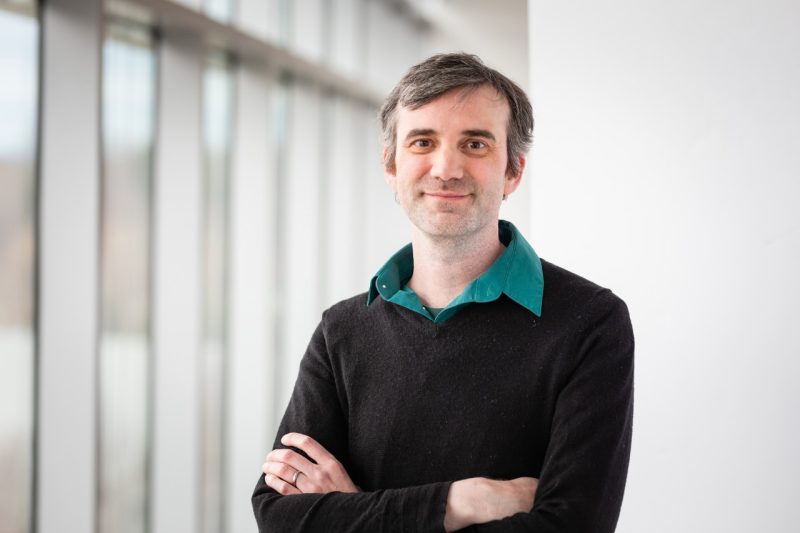
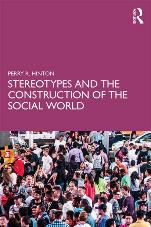
Perry Hinton is a Professor (Teaching Focused) in the Centre for Applied Linguistics at the University of Warwick, part of the Faculty of Social Sciences. He contributes to the interdisciplinary degree in Language, Culture and Communication, drawing on his expertise in psychology and cultural studies. University: University of Warwick School: Faculty of Social Sciences Department: Centre for Applied Linguistics Academic Rank: Professor Email: P.R.Hinton@warwick.ac.uk His research centers on the psychology of interpersonal perception, especially the interplay between cognition and culture. Key areas include stereotyping as a cognitive and cultural phenomenon and Western (particularly British) interpretations of Japanese culture, including media portrayals and anime. He also has a strong commitment to statistical education, having authored multiple textbooks on SPSS and data analysis. The recent publications reflect a consistent focus on cultural psychology, intercultural communication, and social representation. Themes include the construction of identity, media influence, cultural stereotypes, and cognitive biases in person perception. His work often takes a multidisciplinary approach, integrating insights from psychology, linguistics, and media studies. Perry Hinton has authored and co-authored several influential books in his field, particularly on stereotypes and statistical methods. While no formal scientific awards are listed, his sustained publication record in peer-reviewed journals and with major academic publishers (Routledge, Bloomsbury, Palgrave) indicates significant scholarly recognition. He has supervised or co-edited collaborative works, such as the 2023 volume on intercultural relations, suggesting advisory and mentoring roles. His career path includes positions at five British universities, progressing from lecturer to Head of Department, with extensive experience teaching psychology across disciplines including linguistics, education, and media studies. He joined Warwick's Centre for Applied Linguistics at the inception of its Language, Culture and Communication program in 2014. Hinton works within a multidisciplinary academic environment, contributing to a research culture that bridges psychology and applied linguistics. His collaborations, particularly with Troy McConachy, suggest active participation in intercultural research teams and scholarly networks focused on global communication and cultural understanding.
Nelly V. Litvak is a Full Professor in Algorithms for Complex Networks at Eindhoven University of Technology (Mathematics and Computer Science). She works on mathematical methods and algorithms for complex networks (social networks, WWW) using random graph models. She joined TU/e as a part-time professor in 2017 after being an Associate Professor at the University of Twente since 2012. Affiliations: 4TU Applied Mathematics Institute, Data Science Center Eindhoven, CTIT Industry Partners: ABN-AMRO Bank, Philips Lighting, Thales Editorial Role: Managing Editor of Internet Mathematics Her research focuses on extracting value from network data across three areas: (1) Information extraction and prediction, (2) Mathematical analysis of network characteristics, and (3) Efficient algorithms for incomplete network data. Key topics include PageRank, HITS algorithm, random graphs, homophilic networks, and network epidemiology. Recent work (2022-2025) spans network growth mechanisms, fairness in ranking algorithms, educational pedagogy, and pandemic forecasting dashboards. She contributes to SDGs through data-driven approaches to societal challenges. Teaching activities include course development at TU/e and earlier institutions, with innovative methods for computer engineering students' statistical understanding.
Dr. Leah Perlmutter is a tenure-track Assistant Professor in the Computer Science Department at Grinnell College, focusing on inclusive pedagogy and student belonging in post-secondary CS education. She earned her Ph.D. (2023) and M.S. (2020) in Computer Science and Engineering from the University of Washington, and her B.A. (2012) in Computer Science and Engineering from Colby College. Her research examines how course policies and teaching assistant interactions impact student inclusion in computer science, with a particular emphasis on resubmission opportunities and justice-centered approaches to teaching. Her work also includes human-robot interaction projects like GestureCalc (an eyes-free calculator for touchscreens) and EMAR (a social robot for emotional clarity support). Recent publications explore themes such as algorithmic ethics in education, student belonging in CS, and accessible interface design. She received the NSF Graduate Research Fellowship (2017) and the Outstanding Female Engineer Award (2018). At Grinnell, she teaches courses like Functional Problem Solving, Software Design, and Algorithms, Ethics, and Society.