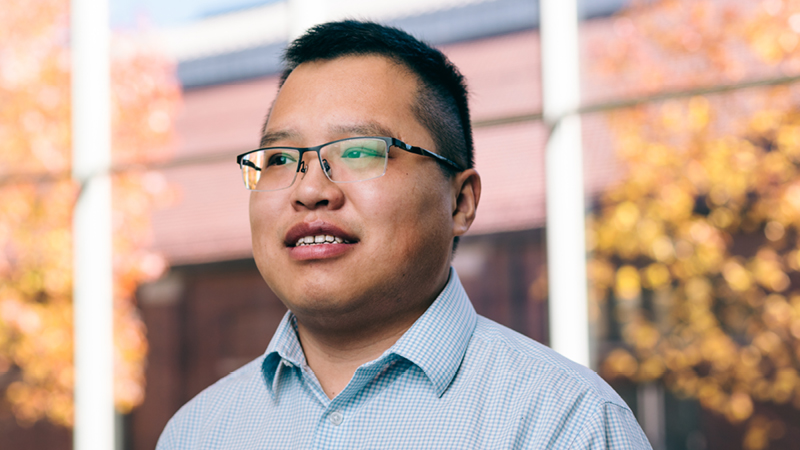
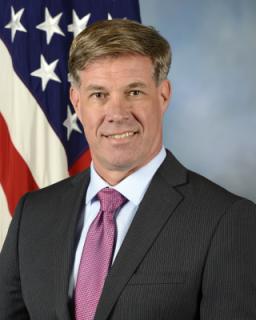
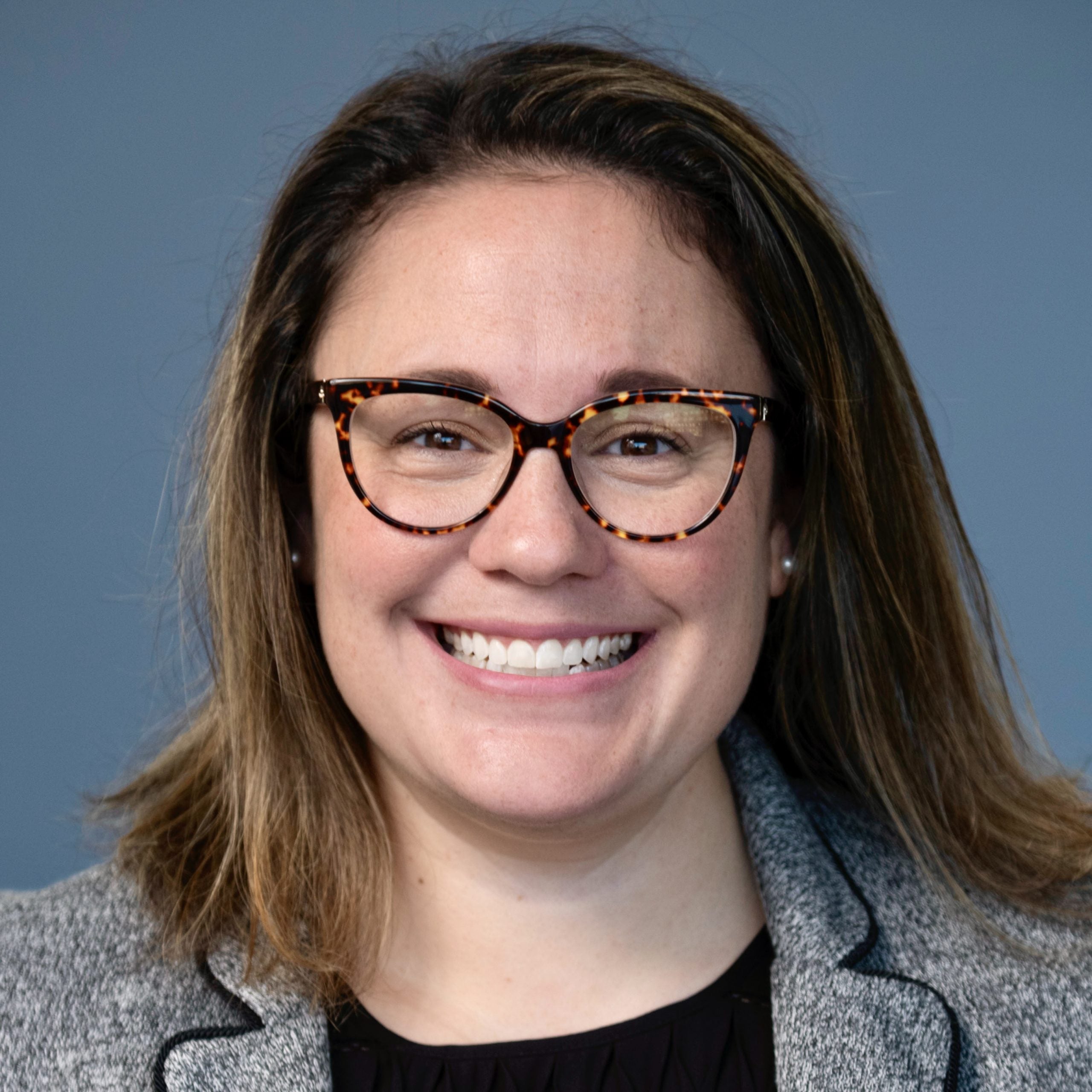
Jianguo Wang is an Assistant Professor in the Department of Computer Science at Purdue University, joining in Spring 2021. His research focuses on database systems for the cloud and large language models, including disaggregated databases and vector databases. He holds a PhD from the University of California, San Diego, and has worked at Zilliz (Milvus) and Amazon Web Services (AWS). Education: PhD in Computer Science (UC San Diego, 2019), MPhil (Hong Kong Polytechnic University), BSc (Zhengzhou University) Research interests include Disaggregated Databases, Vector Databases for Large Language Models, and cloud-native systems. Notable work includes OpenAurora (an open-source Amazon Aurora prototype) and contributions to Milvus. He has received grants like the NSF CAREER Award and honors such as the IEEE TCDE Rising Star Award. Advising a team of students in database systems and teaching courses like CS592 (Disaggregated Database Systems) and CS440 (Large-scale Data Analytics). Serves on program committees for SIGMOD, VLDB, and ICDE.
Alexander T. Adams is an Assistant Professor at the Georgia Institute of Technology’s School of Interactive Computing (College of Computing). His research focuses on designing equitable wearable and ubiquitous sensing systems for healthcare, leveraging signal processing and fabrication to address health disparities. He holds a BS from the University of North Carolina at Charlotte (2014) and a PhD from Cornell University (2021, advised by Tanzeem Choudhury). Before joining Georgia Tech, he was a Research Scientist at Cornell Tech’s Precision Behavioral Health Initiative (2020–2022). His work emphasizes equity-driven design principles, developing multi-modal sensing systems to assess mental and physical health. Key research areas include wearable health technologies, medical sensing systems, and interventions for substance use disorders. Recent projects involve smartphone-based diagnostic tools (e.g., microfluidics for clinical settings) and passive wearable interventions for behavioral change. Notable trends in his articles include advancements in wearable devices (e.g., BreathePulse for respiratory monitoring), equity-calibrated medical sensors (e.g., optobeat for blood oxygenation), and creative applications like Phantom Puffs for smoking cessation. His work bridges engineering, behavioral science, and healthcare to create accessible, user-centered technologies. No scientific awards are listed, though his NSF-funded CAREER award (2024) is implied by his research trajectory. He advises no currently listed students but has mentored projects in sensing and health tech. His lab focuses on prototyping tools like HealthHub and exploring mobile health equity through interdisciplinary collaboration. Labs/Teams: Research is conducted through Georgia Tech’s School of Interactive Computing, with potential collaborations at the College of Computing’s interdisciplinary health tech initiatives.
Yu-Ru Lin is an Associate Professor at the School of Computing and Information, University of Pittsburgh, and serves as Research & Academic Director at the Institute for Cyber Law, Policy and Security (Pitt Cyber). She leads the Pitt Computational Social Dynamics Lab (PICSO Lab) and holds secondary appointments in Political Science, Computer Science, and the Intelligent Systems Program. PhD in Computer Science from Arizona State University Postdoctoral research at Harvard University and Northeastern University Her research focuses on computational approaches for: Networked social dynamics High-dimensional social information summarization Trust and distrust propagation Misinformation detection Policy diffusion analysis Recent publications span 2014-2020, covering: Social media crisis response Graph visualization techniques Policy diffusion patterns Misinformation mitigation Temporal topic modeling Scientific support includes: National Science Foundation (NSF) awards Minerva/ONR funding AFOSR grant for distrust modeling DARPA Understanding Group Biases program As director of PICSO Lab, she leads interdisciplinary research teams on: Digital accountability Urban mobility patterns Health informatics via crowdsourcing Trust-influence dynamics
Kevin D. Ashley is a Professor of Law at the University of Pittsburgh School of Law. He is also a senior scientist at the Learning Research and Development Center and an adjunct professor of computer science at the University of Pittsburgh. His interdisciplinary work bridges artificial intelligence, legal analytics, and ethical reasoning. JD, Harvard Law School M.A. and PhD, University of Massachusetts BA, Princeton University His research focuses on computational modeling of legal reasoning , AI and ethics , legal text analytics , and case-based reasoning . He has pioneered AI applications for legal decision support, automated argumentation, and bias detection in legal corpora. Recent publications include studies on large language models in legal annotation, argument mining, and empirical legal analysis. His work has been supported by multiple National Science Foundation grants, emphasizing fairness in AI and access to justice. 2022 Codex Prize for Computational Law 2015 University of Massachusetts Outstanding Achievement Award 2002 AAAI Fellow for AI in Law contributions 2000 Chancellor’s Distinguished Research Award A former President of the International Association for Artificial Intelligence and Law, Ashley has held visiting roles at the University of Bologna, Stanford CodeX, and IBM Watson Research Center. He co-edits the journal Artificial Intelligence and Law and teaches courses on applied legal analytics.
Lexing Xie is a Professor in Computer Science at the Australian National University. He leads the ANU Computational Media Lab ( http://cm.cecs.anu.edu.au ) and the ANU Integrated AI Network. His work focuses on the intersection of machine learning, social media analysis, and multimedia understanding. Dr. Xie's research broadly focuses on innovative design and use of machine learning algorithms, especially on large-scale graph data and collective behaviour. His recent work spans several key areas: Popularity in social media -- understanding, predicting, and optimization Multimedia knowledge graphs, vision and language integration Humanising machine intelligence through better understanding of social dynamics His publications reveal a strong trend toward understanding information diffusion patterns in social media, particularly through visual content. He has made significant contributions to the study of visual memes, popularity prediction using point processes, and multimodal learning that connects vision with language. His work often bridges theoretical machine learning with practical applications in social media analysis. Dr. Xie has received recognition for his research, including an Honourable Mention at CSCW 2019 for his work on attention flow in online video networks. His research has been supported by collaborations with major institutions including IBM Research and Columbia University. As an advisor, Dr. Xie has mentored numerous students who have gone on to contribute significantly to publications in top-tier conferences. His lab, the ANU Computational Media Lab, serves as a hub for interdisciplinary research connecting computer science with social sciences.
Ram Rajagopal is an Associate Professor of Civil and Environmental Engineering and Electrical Engineering at Stanford University, and a Senior Fellow at the Precourt Institute for Energy. He leads the Stanford Sustainable Systems Lab (S3L), focusing on large-scale monitoring, data analytics, and stochastic control for infrastructure networks, particularly power systems. His research emphasizes renewable energy integration, smart distribution systems, and demand-side data analytics. Education: PhD in Electrical Engineering and Computer Sciences & MA in Statistics (UC Berkeley), MS in Electrical and Computer Engineering (UT Austin), and BEng in Electrical Engineering (Federal University of Rio de Janeiro). Research interests include power grid optimization, renewable energy systems, and data-driven approaches to infrastructure challenges. He has pioneered work in grid flexibility, distributed energy resources, and machine learning applications for energy systems. His lab develops technologies like Smart Dim Fuses and the EV-EcoSim platform for EV charging infrastructure optimization. Received NSF CAREER Award, Powell Foundation Fellowship, and Berkeley Regents Fellowship Over 30 patents and best paper awards Advises/founded companies in sensor networks, power systems, and data analytics Labs/Teams: Stanford Sustainable Systems Lab (S3L), Powernet Project. His work spans grid resilience, energy equity, and scalable energy solutions.
Andrés Buxó-Lugo serves as an Assistant Professor of Psychology at the University at Buffalo, where he directs the Language Processing and Computation Lab. His research investigates the cognitive mechanisms underlying language production, comprehension, and acquisition with a specialized focus on speech prosody—the rhythm, intonation, and intensity patterns in speech—and their role in human communication. His primary research interests include psycholinguistics, cognitive psychology, speech prosody, language production, language comprehension, language acquisition, and computational linguistics. He examines how listeners integrate diverse linguistic cues during speech processing, how individuals learn unfamiliar constructions like non-native pronunciations or novel prosodic patterns, and the cognitive basis of durational changes in speech. His work also explores how communicative context shapes prosodic production and how higher-level linguistic information aids prosodic structure parsing. Analysis of his 15 most recent publications (2019-2025) reveals consistent interdisciplinary work bridging cognitive science, linguistics, and computational modeling. Key trends include phonological representation studies, speech planning mechanisms, intonation adaptation across talkers, lexical representation structures, and the integration of input expectations in syntactic parsing. His research demonstrates significant methodological diversity, incorporating experimental paradigms, computational modeling, and acoustic analysis to unravel language processing complexities. As director of the Language Processing and Computation Lab at the University at Buffalo, Buxó-Lugo leads research initiatives focused on developing computational models of language processing while investigating the cognitive foundations of speech and prosody through empirical experimentation and theoretical innovation.
Joseph Felter is a Research Fellow at the Hoover Institution (Stanford University) and the William J. Perry Fellow at the Center for International Security and Cooperation. His career bridges academia, military service, and policy advising, with expertise in counterinsurgency, national security, and US-China relations. He coauthored the influential book Small Wars, Big Data: The Information Revolution and Modern Conflict (2018) and developed the Hacking for Defense curriculum to connect military needs with Silicon Valley innovation. Military Background: Former US Army Special Forces officer with combat deployments in Panama, Iraq, and Afghanistan. Served as commander of the COMISAF Counterinsurgency Advisory and Assistance Team. Academic Roles: Assistant Professor at West Point’s Department of Social Sciences, Adjunct Associate Professor at Columbia University’s School for International and Public Affairs, and current codirector of Stanford’s Empirical Studies of Conflict Project. Research Focus: Politically motivated violence, economic development in conflict zones, and defense innovation. His work appears in top journals like American Economic Review and Journal of Conflict Resolution . Policy Engagement: Key advisor on US defense strategy (2017–2019) and founder of BMNT, a Silicon Valley defense technology incubator. Currently serves on Spirit of America’s board. Scientific Awards: Recognized as a William J. Perry Fellow and US Army War College Fellow. His empirical conflict research informs both academic and policy debates.
Dr. K. Max Zhang is a Professor in the Sibley School of Mechanical and Aerospace Engineering at Cornell University. He is the director of the Energy and the Environment Research Laboratory (EERL) and a fellow at the Atkinson Center for a Sustainable Future. His research is deeply interdisciplinary, focusing on sustainable energy systems, air quality, and environmental justice, with significant impacts on policy and community development in New York and beyond. Ph.D., Mechanical Engineering, University of California-Davis, 2004 B.S., Thermal Engineering, Tianjin University, 1998 B.A., English Language, Tianjin University, 1998 Dr. Zhang’s research centers on the integration of energy and environmental systems. He investigates air pollution dynamics using advanced numerical models like CTAG, with applications in near-source pollution, indoor air quality, and environmental justice. His work on renewable energy systems includes designing sustainable solar farms and managing distributed energy resources such as heat pumps to enhance grid flexibility. He also leads a pioneering initiative to create the first statewide public IoT network in the U.S., enabling hyperlocal weather forecasting and microclimate monitoring. His recent publications reflect a strong trend toward agrivoltaics, peer-to-peer energy markets, and IoT-based environmental monitoring. These works demonstrate a consistent focus on data-driven modeling, community-scale energy solutions, and the integration of social considerations into technical systems. The keywords across his articles highlight expertise in sustainability, machine learning, air quality, and energy transition. Cornell Town-Gown Achievement Award (2022) Engaged Scholar Prize, Cornell University (2017) People's Choice Sign of Sustainability Award, Sustainable Tompkins (2016) Scientific and Technological Achievement Award, Environmental Protection Agency (2015) Fellow of the American Society of Mechanical Engineers Dr. Zhang is actively involved in mentoring students and securing research grants from agencies such as the National Science Foundation (NSF) and the New York State Energy Research and Development Authority (NYSERDA). His projects often involve interdisciplinary collaboration across eight Cornell colleges and 16 academic departments. He has led initiatives such as the Cornell Atkinson Academic Venture Fund projects and the development of a county-level energy roadmap for Tompkins County. He also teaches courses in engineering thermodynamics, future energy systems, and air quality, emphasizing experiential and community-based learning. Dr. Zhang leads the Energy and the Environment Research Laboratory (EERL) and collaborates with the Atkinson Center for a Sustainable Future. His lab functions as a hub for innovation in sustainable communities, combining advanced modeling with real-world applications. Through partnerships with community organizations, government agencies, and industry, his team develops science-driven solutions to urban and rural sustainability challenges.
Associate Professor Adam Irwin is an NHMRC Emerging Leadership Fellow and Associate Professor in Infectious Diseases at the University of Queensland (UQ) and Queensland Children’s Hospital. He holds positions within the UQ Centre for Clinical Research, Faculty of Health, Medicine and Behavioural Sciences. His work focuses on early sepsis recognition, antimicrobial stewardship, and pediatric infectious diseases. Dr. Irwin completed his medical degree at the University of Birmingham and his PhD in 2016 from the University of Liverpool’s Institute of Infection and Global Health. He has led initiatives like the Queensland Paediatric Sepsis Program, recognized with a Global Sepsis Alliance Award and Queensland Health Excellence Awards. His research spans sepsis pathway implementation, antimicrobial resistance trends, and rapid diagnostic tools. Notable grants include NHMRC funding for studies on multi-drug resistant infections and Children’s Hospital Foundation support for genomics and antimicrobial stewardship projects. He supervises PhD candidates in areas like bloodstream infections and molecular diagnostics. Dr. Irwin collaborates across institutions, contributing to projects such as the RAPIDS Study Group and the PAEDS surveillance network. Awards include the NHMRC Emerging Leadership Fellowship and recognition for sepsis program excellence. His work emphasizes translating research into clinical practice, improving outcomes for critically ill children through evidence-based protocols and innovative diagnostics.
Gretchen A. Macht is an Associate Professor in the Department of Mechanical, Industrial and Systems Engineering at the University of Rhode Island, College of Engineering. She specializes in Human Systems Engineering, with research emphasizing team performance, sustainability, electric vehicles, solar energy systems, and voting systems. Her work bridges engineering, ergonomics, and public policy. Her research interests focus on understanding and optimizing human-centered systems. She investigates team communication and performance through fuzzy cognitive maps and entropy modeling, develops sustainable design practices for products and energy systems, and analyzes user behavior in electric vehicles and solar installations. A significant portion of her research is dedicated to election systems, where she uses simulation to improve accessibility, safety, and efficiency of in-person voting, particularly during public health crises. Her recent publications span topics such as EV charging behavior, solar installation safety, voting simulation, and team dynamics. These works reflect interdisciplinary trends combining systems engineering, data analytics, ergonomics, and sustainability science. She frequently employs simulation, naturalistic data analysis, and human factors methodologies. Dr. Macht has secured substantial grant funding from organizations including the U.S. Election Assistance Commission, National Science Foundation, MIT, and Democracy Fund. She serves as Principal Investigator (PI) or Co-PI on projects related to election systems (e.g., SMILE, URI VOTES), ergonomic redesign of protective gear, and community solar development. She leads the SIS Lab and the URI VOTES initiative, fostering collaborative research on simulation and system design. Her lab supports graduate students in conducting impactful research at the intersection of engineering and societal challenges. Notable grants include: PI, MIT: “Voting in Person - White Paper” (2023) PI, US EAC: “SMILE 2.0” (2022) PI, Democracy Fund: “URI VOTES Pocket Guide Tool” (2022) Co-PI, NSF: “Election Science: Convergence Accelerator Workshop Proposal” (2021) PI, US EAC: “SMILE: Simulation Models for an Immersive Learning Environment” (2021) She has advised several graduate students, including Mehrsa Khaleghikarahrodi, Nicholas D. Bernardo Jr., and Tim Jonas, whose research aligns closely with her focus areas in EVs, elections, and team performance.
Martin T. Wells is the Charles A. Alexander Professor of Statistical Sciences at Cornell University, with joint appointments in the Department of Statistical Science, Department of Biological Statistics and Computational Biology, Department of Social Statistics, and as Professor of Clinical Epidemiology and Health Services Research at Weill Medical School. He serves as Editor-in-Chief of the ASA-SIAM Book Series and Co-Editor of the Journal of Empirical Legal Studies. Cornell University, Ithaca, NY Weill Cornell Medical College Research Interests span applied and theoretical statistics, Bayesian methods, biostatistics, clinical epidemiology, and computational biology. His work bridges disciplines like finance, legal studies, and health services research. Article Trends highlight advancements in Bayesian modeling, quantum cognition machine learning, tensor analysis, and misclassification correction, with applications in genomics, finance, and public health. Fellow of the American Statistical Association Fellow of the Royal Statistical Society Contributions include developing statistical software (e.g., rTensor), methodological innovations in clinical trials, and empirical legal studies on civil rights and the death penalty.
Roberto Berjón Gallinas is a Professor at the School of Computer Science, Deusto University. His research focuses on semantic technologies, internet of things, and data integration, with a strong emphasis on mobile applications and open data. He leads two research groups: ICS (Innovación en Ciencias Sociales) MARATON (Mobile applications, internet of things, data processing, semantic technologies, open data) His recent work includes developing smart tracking frameworks for IoT workflows and digital twins, event-driven architectures for IoT systems, and semantic integration solutions for university research. His projects often bridge technical innovation with practical applications in collaborative e-learning and spatial analytics. Key trends in his publications highlight advancements in IoT frameworks , semantic technologies for data integration, and real-time systems using BLE and open data. These works frequently intersect with collaborative e-learning , university transparency , and adaptive mobile platforms .
Felipe Csaszar is a Professor of Strategy and Chair of the Strategy Department at the University of Michigan's Ross School of Business. His research focuses on decision structures' impact on innovation, financial performance, and social outcomes, with particular attention to cognitive frameworks, organizational processes, and AI's role in decision-making. He holds a PhD and MA from the Wharton School, University of Pennsylvania. Education: PhD in Strategy, University of Pennsylvania (2009) MA in Strategy, University of Pennsylvania (2007) Research Interests: Strategic decision-making under AI integration Cognitive and structural drivers of innovation Organizational decision processes and design Formal modeling and empirical strategy research Editorial Roles: Senior Editor, Strategy Science and Management Science Former Editor, Organization Science Co-editor, Handbook of AI and Strategy Professional Experience: Prior role: Assistant Professor at INSEAD Previous career: CEO of an internet startup and Head of Research at an asset management firm Labs/Teams: Leading the Strategy Science division at INFORMS Co-chair of the SMS Behavioral Strategy division
Jeff Alstott is a Professor of Policy Analysis at the RAND School of Public Policy, serving as the Director of RAND's Center for Technology and Security Policy (TASP) . He holds a concurrent role as a Senior Information Scientist at RAND and directs a program on technology forecasting and improving R&D investment returns at the National Science Foundation. Previously, he held leadership roles in the U.S. government, including the White House as Director for Technology and National Security at the National Security Council and Assistant Director for Technology Competition and Risks at the Office of Science and Technology Policy. Prior to that, he was a program manager at IARPA, focusing on AI, biosecurity, and science forecasting, and has held academic and research positions at MIT, Singapore University of Technology and Design, the World Bank, and the University of Chicago. Education : Doctorate in complex networks from the University of Cambridge; MBA and bachelor's degrees from Indiana University. Alstott's research spans artificial intelligence , technology forecasting , complex networks , and science and technology policy . His recent publications focus on AI security , existential risk from advanced technologies , and collaborative frameworks for AI safety , reflecting his expertise in balancing technological innovation with national and global security. He has contributed to understanding AI model weight protection , cybersecurity challenges , and policy implications of emerging technologies . Alstott has received recognition for his work, including being part of an award-winning team on technology counterintelligence . His policy recommendations and technical research have informed federal strategies for responding to advanced technologies , emphasizing the need for proactive governance and cross-sector collaboration.