Luciano Castillo is a Professor at the School of Mechanical Engineering within the College of Engineering at Purdue University . His research spans turbulent boundary layers, wind energy, renewable energy integration, and bio-inspired engineering, with a focus on societal impacts such as energy-water nexus and social equality. Turbulent Flow Modeling with emphasis on initial conditions and micro-surfaces Wind Energy optimization and boundary layer interactions Renewable Energy Integration with water and thermal storage Biomedical Engineering applications in respiratory flow studies His recent publications explore robotics for classroom safety, mangrove-inspired erosion prevention, and renewable-powered desalination. Awards include the Alumni Distinguished Career Award (2023), ASME Fellow (2013), and multiple best paper awards. He leads initiatives like the US-Mexico Energy Corridor and contributes to interdisciplinary labs focusing on energy and societal challenges.
Amy G Froelich serves as Associate Professor and Director of Undergraduate Studies in the Department of Statistics at Iowa State University, where she has taught over 3,000 students since joining in 2000. Her academic leadership includes curriculum development for undergraduate statistics programs and oversight of degree requirements. Ph.D. in Statistics, University of Illinois, Urbana-Champaign (2000) B.S. in Secondary Mathematics Education, University of Illinois, Urbana-Champaign (1994) Dr. Froelich specializes in statistics education, psychometrics, and educational assessment with particular expertise in categorical data analysis and probability instruction. Her research develops innovative teaching methodologies for introductory statistics courses and focuses on training future secondary mathematics teachers through specialized curriculum design. She investigates how electronic assessments and resampling techniques enhance student learning outcomes in statistical reasoning. Her publication record (2008-2018) demonstrates consistent contributions to statistics pedagogy, emphasizing practical classroom applications, assessment design, and teacher preparation. Key themes include the development of engaging activities (e.g., M&M's weight analysis, iPod randomness testing), psychometric methods for educational measurement, and curriculum reforms for mathematics educators. Waller Education Award from the American Statistical Association (2010) Multiple teaching and advising awards at Iowa State University Dr. Froelich has secured significant research funding from the National Science Foundation, U.S. Department of Agriculture, and U.S. Department of Education to support her statistics education initiatives. As Director of Undergraduate Studies since 2018, she mentors students through curriculum development projects and advises on academic pathways in statistics. Her co-authorship of Business Statistics and Analytics in Practice (9th ed., 2019) extends her impact to textbook development.
Nikos Giatrakos is an Assistant Professor at the School of Electronic & Computer Engineering, Technical University of Crete, and a core member of the Software Technology and Network Applications Lab (SoftNet) . His work bridges Big Data systems, IoT, and advanced analytics, with a focus on real-time processing and scalable architectures. Previously, he served as a postdoctoral researcher at the same laboratory. Education PhD in Computer Science, University of Piraeus (2012) Postgraduate Diploma in Information Systems, Athens University of Economics and Business (2008) BSc in Computer Science, University of Piraeus (2006) Research Focus : Nikos specializes in software architectures for Big Data streaming, including Distributed Big Data Processing , Federated Machine Learning , Cloud-to-Edge Data Management , and Approximate Query Processing . His work has also advanced Complex Event Processing and Outlier Detection in decentralized environments. Scientific Contributions : His research has led to the DAG* workflow optimizer for IoT, the SuBiTO framework for real-time neural learning, and the INFORE approach for cross-platform analytics. He received the Best System Demonstration Award at ACM CIKM 2020 for INforE. Academic Leadership : Nikos teaches Object-Oriented Programming, Data Science, and Distributed Systems. He has supervised numerous European and national grants as Principal Investigator and served on program committees for top-tier conferences like SIGMOD, VLDB, and DEBS.
Carla Wilkin is a Professor of Accounting at Monash Business School, Monash University, Australia. She serves as Deputy Dean Accreditation and International and President of the Academic Board. Wilkin has previously held positions at the University of Melbourne and Deakin University. Her research spans corporate governance, IT governance, enterprise risk management, and accounting education. Key Research Areas: IT Governance, Professional Skepticism, ESG Reporting, Digital Transformation, PhD Supervision Leadership Roles: Vice President of Academic Board (2022–2023), Deputy Head of Department, PhD Coordinator Her work has been funded by the Australian Research Council, and she has published extensively in top journals like the Journal of Information Systems and British Accounting Review . Wilkin contributes to global academic governance through editorial roles and community engagement, including as Senior Editor of the Journal of Information Systems and Co-Chair of the Special Forum on Digital Transformation of ESG Reporting. Wilkin is a Fellow of CPA Australia and the Higher Education Academy. She has received multiple teaching awards, including Dean’s Commendations and the 2011 Australasian Conference on Information Systems Best Paper Award.
Dr. Suzanne Bartington is a Clinical Associate Professor in Environmental Health at the University of Birmingham's Department of Applied Health Sciences, where she leads interdisciplinary research at the intersection of air quality, climate change, and public health. As the UKRI Clean Air Champion for the Midlands to North of England, she translates £42.5 million UKRI Clean Air Programme research into actionable policy tools. Her educational background includes an MBBS from UCL (2012), PhD in Infectious Disease Epidemiology from UCL Institute of Child Health (2009), MSc in Modern Epidemiology from Imperial College London (2003), and BA in Medical and Veterinary Sciences from Cambridge (2002). She is also an Honorary Consultant in Public Health. Bartington's research focuses on developing clean air solutions with public health co-benefits, specializing in environmental epidemiology, transport studies, and policy evaluation. Her current portfolio includes NERC, NIHR, and EPSRC-funded projects examining air pollution exposure, sustainable transport, and climate-health linkages across global contexts including East Africa and Mongolia. Recent publications reveal strong trends in applying low-cost sensor networks for real-time air quality monitoring, evaluating policy interventions like Low Traffic Neighborhoods and Clean Air Zones, and analyzing health impacts of biomass fuels in low-income settings. Her work increasingly integrates machine learning techniques and whole-systems approaches to address complex environmental health challenges. As a doctoral supervisor, she mentors students in air pollution exposure assessment, transport intervention evaluation, and health equity impacts. Her leadership extends to major initiatives including the West Midlands Air Quality Improvement Programme (£5M NERC grant), OxAria Study, and TRANSITION Clean Air Network. Bartington directs the University of Birmingham Institute for Global Innovation Clean Air theme, supporting cross-disciplinary collaboration on global environmental challenges. Her team includes collaborators from nine UK universities and over 20 public and commercial sector partners, focusing on translating research into tangible health and policy outcomes.
Sotiris Christodoulou is an Associate Professor at the Department of Electrical and Computer Engineering within the College of Engineering at the University of Peloponnese. He also serves as a research associate at the 'Diofantos' Institute of Computer Technology and Publishing. His academic career spans multiple institutions where he has taught graduate and undergraduate courses across seven different universities since 2004. Dr. Christodoulou earned his B.A. in Computer Engineering and Informatics from the University of Patras in 1994 and completed his PhD in Web Engineering from the same institution in 2004. His educational background established the foundation for his extensive research career focused on web technologies and applications. His primary research interests include Web Engineering, Web Application Performance Optimization, Web Code Quality, Semantic Web technologies, Hypermedia Systems, and emerging Web 2.0 and Web 3.0 technologies. His work extends to Virtual Interactive Environments, 3D and Augmented Reality applications, and Spatial Hypertext systems. Christodoulou's research bridges theoretical web engineering principles with practical applications in cultural heritage, education, and urban infrastructure systems. His research output comprises over 45 publications in international journals, book chapters, and conferences, accumulating more than 450 citations. He has participated in over 23 European and National Research and Development Projects focused on web software technology, hypermedia applications, and 3D educational and cultural applications. Professional member of ACM Professional member of IEEE Member of organizing committees for over 15 international scientific conferences Reviewer for recognized international journals (ACM, IEEE, etc.) Christodoulou has extensive teaching experience across seven universities, specializing in programming languages, web software engineering, software quality, and data management. His research projects typically combine applied research with cutting-edge technology implementation for real-world problems in large organizational information systems. He maintains regular office hours at Building K, Office K2.02 at the University of Peloponnese, with appointments available on Mondays and Thursdays.
Travis Wheeler is an Associate Professor in the Department of Pharmacy Practice & Science at the University of Arizona. His work spans bioinformatics, computational biology, and algorithm development for genomic sequence analysis. Developed tools like HMMER and Dfam Research focuses on transposable elements, sequence alignment, and epigenetics Co-author of key works with Robert Finn, Sean Eddy, and colleagues Research Interests include machine learning applications in biological sequence annotation, drug discovery, and evolutionary genomics. His work bridges computational methods with biomedical applications. Notable Contributions : Advancing profile Hidden Markov Model (HMM) methodologies Creating community resources for transposable element research Developing alignment algorithms for biological sequences Collaborations include institutions like Institute for Systems Biology, Harvard University, and Montana State University.
Sinead O'Keeffe is a Research Fellow at the University of Limerick in the Faculty of Science and Engineering , specifically within the Department of Electronic and Computer Engineering . Her research bridges the technical domain of optical fiber sensor development with critical applications in radiation therapy and sports medicine. Primary Research Themes Medical radiation dosimetry using optical fiber sensors Brachytherapy dose monitoring systems Sports injury prevention in Gaelic football and running Mental health literacy in rural farming communities Key Technical Contributions Development of scintillation-based dosimeters Characterization of perfluorinated polymer fibers 3D printed sensor systems for clinical and rehabilitation applications Interdisciplinary Applications Prostate cancer radiotherapy dose measurement Mental health intervention programs for athletes Work-family conflict analysis in Irish farming Email: sinead.okeeffe@ul.ie
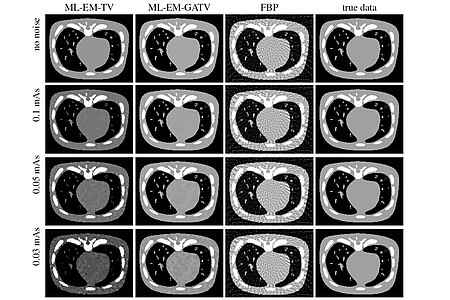
Jürgen Hesser is a Professor at the Mannheim Medical Faculty , Heidelberg University, specializing in Experimental Radiotherapy and Medical Imaging . His research focuses on solving inverse problems in imaging, particularly for CT reconstruction , brachytherapy planning , and low-dose imaging . Current affiliations: Clinic for Radiotherapy and Radiooncology, Mannheim University Hospital Collaborative ties: Interdisciplinary Center for Scientific Computing (IWR) and Center for Bioinformatics (ZITI) at Heidelberg University Research interests center on anisotropic total variation techniques for medical and industrial applications, including MR-guided interventions and real-time radiation therapy . His work has led to a 1000x speed improvement in brachytherapy planning algorithms. Recent publications highlight expertise in image reconstruction (CT/X-ray), noise optimization , machine learning for cancer classification, and big data management solutions. His methods are applied to both clinical and industrial imaging challenges. Additional contributions include scientific data infrastructure development and variance stabilization techniques for medical sensors. The research group maintains strong interdisciplinary links with Physics, Mathematics, and Computer Science faculties.
Dr. Carolina Euan is a Lecturer in Statistics at the School of Mathematical Sciences, Lancaster University, with affiliations to the Data Science Institute and STOR-i Centre for Doctoral Training. Her research focuses on time series analysis, spatio-temporal modeling, and their applications in environmental data science and brain data analysis. School of Mathematical Sciences Data Science Institute STOR-i Centre for Doctoral Training Biostatistics Research Group Centre of Excellence in Environmental Data Science Her work spans multiple disciplines: Environmental Data Science: Marine heatwaves, solar irradiance modeling, particle number size distribution Brain Data Analysis: Neural connectivity, brain signal clustering, coherence-based inference Statistical Methodology: Spatio-temporal extremes, spectral estimation, functional data analysis Recent publications demonstrate expertise in: 2025: Neural connectivity modeling, functional data analysis, particle distribution 2024: Virtual collaboration frameworks, precipitation regime modeling, spectral estimation 2023: Brain signal clustering, source apportionment, directional wave spectra Supervision includes: Kajal Dodhia: STOR-i (extreme sea temperatures) Jordan Hood: Bayesian modeling (COVID prevalence) Carla Pinkney: STOR-i
Dr. Christopher Hassall is an Associate Professor of Animal Biology at the School of Biology, University of Leeds , with research spanning entomology, climate change impacts, urban ecology, and conservation science. He leads the Hassall Lab and the BioDAR Project , which uses weather radar for biodiversity monitoring. Research Interests Quantifying insect abundance via weather radar (BioDAR/PestDAR/DRUID projects) Urban freshwater ecosystems and socio-ecological dynamics Evolution of insect camouflage/mimicry and flight behavior Climate change impacts on pollinators and invasive species Shadow diversity and extinction studies (Leverhulme DTP Co-Director) Scientific Awards Fellow of the Higher Education Academy Fellow of the Royal Entomological Society Advising : Supervises postgraduate researchers including Sicily Fiennes , Isabella Flowers , and Mx Solanum Foulstone , with a focus on interdisciplinary extinction studies and urban entomology.
João Guerreiro is a Visiting Assistant Professor at ISCTE-IUL (Instituto Universitário de Lisboa) with a PhD in Marketing from the same institution. He is affiliated with the Iscte Business School, where he teaches undergraduate and master's degree courses in marketing and decision support systems, applying data mining techniques to analyze large information sets. His research expertise spans three interconnected domains: Decision Support Systems - particularly in banking and insurance sectors where he has held executive positions Neuroscience Applied to Marketing - utilizing eye-tracking and studying autonomic emotional responses to consumer stimuli Corporate Social Responsibility - examining cause-related marketing and pro-environmental behavior in tourism Dr. Guerreiro's recent publications (2020-2023) reveal a strong emphasis on immersive technologies, with multiple studies on virtual reality applications in consumer behavior, augmented reality's impact on purchasing decisions, and cross-cultural differences in digital marketing effectiveness. His methodological approach frequently incorporates text mining, sentiment analysis, and neuromarketing techniques to uncover deeper consumer insights. His industry experience in decision support systems provides practical grounding for his academic work, creating a valuable bridge between theoretical marketing concepts and real-world business applications in financial sectors.
Sandra Pauletto is a Professor in Media Technology specializing in Media Production and a Docent in Sound and Music Computing at the Division of Media Technology and Interaction Design (MID), School of Electrical Engineering and Computer Science (EECS) at KTH Royal Institute of Technology. She joined KTH in 2019 after positions at the University of York and University of Huddersfield in the UK. Her work bridges the gap between artistic sound practices and technological innovation in the field of sonic interaction design. Pauletto holds a Physics degree (MPhys(Hons)) from Manchester and a Music degree in Classical Guitar from Conservatorio "G.Tartini" in Trieste, Italy. She completed her MSc and PhD in Music Technology at the University of York, UK, where her doctoral thesis focused on "Interactive non-speech auditory display of multivariate data." Her interdisciplinary background informs her approach to sound and media research. Her primary research interests focus on sound and music computing, media production, sound design, sonic interaction design, and sonification . She investigates how sound communicates both functional information (e.g., a car door shutting) and aesthetic qualities (e.g., the type of car) in interactive contexts. Her current projects apply these principles to sustainability challenges like energy consumption monitoring and environmental awareness, as well as health communication applications. She has developed methods that combine historical sound design practices with contemporary computing techniques to create more effective sonic interfaces. Analysis of her recent publications reveals a strong trend toward applying sound design to address societal challenges, particularly through projects like SonicFunc (developing sound design methods for everyday life) and SoniHED (Sonification of Health and Environmental Data). Her work increasingly incorporates interdisciplinary approaches, collaborating with experts in astronomy, environmental science, and public health to develop effective sonic interfaces for complex data. She has received funding for significant research projects including: The SonicFunc project (Principal Investigator), developing new sound design methods for the digital society The SCORe Project (Principal Investigator), using sonification to communicate public health risk data SoniHED: Conference on Sonification of Health and Environmental Data (funded by Wellcome Trust) Chronic health issues of adolescents project (funded by Centre for Chronic Diseases and Disorders) As an educator and mentor, Pauletto has served as Principal Supervisor for 5 completed PhD students and is currently Associate Supervisor for 1 PhD student. She has extensive teaching experience across all academic levels and has held management roles including Deputy Head of the MID Division at KTH and Programme Director for the MA/MSc in Postproduction with specialisation in Sound Design. She has also been a member of the Peer Review College for the UK Arts and Humanities Research Council and an expert reviewer for EU FP7 and H2020 programmes. She leads the SonicFunc research group which investigates sound function, aesthetics, and interaction in media production to create effective sonic interaction design for everyday life. Her team includes postdoctoral researchers like Rod Selfridge and PhD students working on projects related to sustainability, health communication, and innovative sound design methodologies. She has also organized multiple conferences including the SoniHED conference series and guest edited special journal issues on data sonification and sound design.
Marlene Ågerstrand is a Senior Lecturer at the Department of Environmental Science , Stockholm University . Her research focuses on the science-policy interface in chemical risk assessment and management, emphasizing how scientific data inform decision-making, the effectiveness of regulatory strategies, and the role of experts in policy development. She actively collaborates with ecologists, toxicologists, chemists, political scientists, and environmental lawyers. Key affiliations: International Panel on Chemical Pollution (IPCP) Board member Co-developer of the SciRAP web tool for structured chemical evaluations Member of the Baltic Sea Fellows interdisciplinary network Research Interests include improving environmental risk assessments of chemicals, science-policy interactions in chemical management, and pathways to a non-toxic circular economy. She specializes in qualitative methods like document analysis and stakeholder interviews. Recent Publications span environmental quality standards under the Water Framework Directive, essential-use concepts in REACH authorization, regulatory disparities in antimicrobial substance controls, and systematic review frameworks for endocrine disruptors.
Dr. Kirti Ruikar is a Reader in Digital Construction with 19 years of experience, specializing in applying digital technologies like BIM and AI to enhance safety, resilience, and performance in construction and infrastructure projects. She holds a BArch, MSc, and EngD, and is a Fellow of the Higher Education Academy (FHEA). As a University Special Envoy for India, she bridges international collaborations. Her research focuses on BIM integration for site safety and sustainability, Data-driven solutions for infrastructure projects, AI applications in construction safety, Public-Private Partnerships in developing countries, Enterprise systems optimization, and policy interventions in roadworks management. Notable projects include Data Lakes for Indian highways (collaboration with IIT Delhi), BIM-based safety frameworks for staircases and ladders, Social network analysis for knowledge management, and FCDO-funded automated construction safety systems. Her work spans over 150 publications, including 3 books and 50 journal papers, with a strong emphasis on Q1 journals. She has secured £1m+ in funding from Innovate UK, EPSRC, and international bodies. Collaborations include Asite, Arup, and Derby City Council. Her research outputs highlight trends in Industry 4.0 adoption, AI-driven safety systems, and leveraging data lakes for infrastructure resilience. She advocates for ethical innovation and cross-disciplinary collaboration to address global construction challenges.







.jpg?width=150&height=150&length=150&name=Joao%20Guerreiro%20(4).jpg)