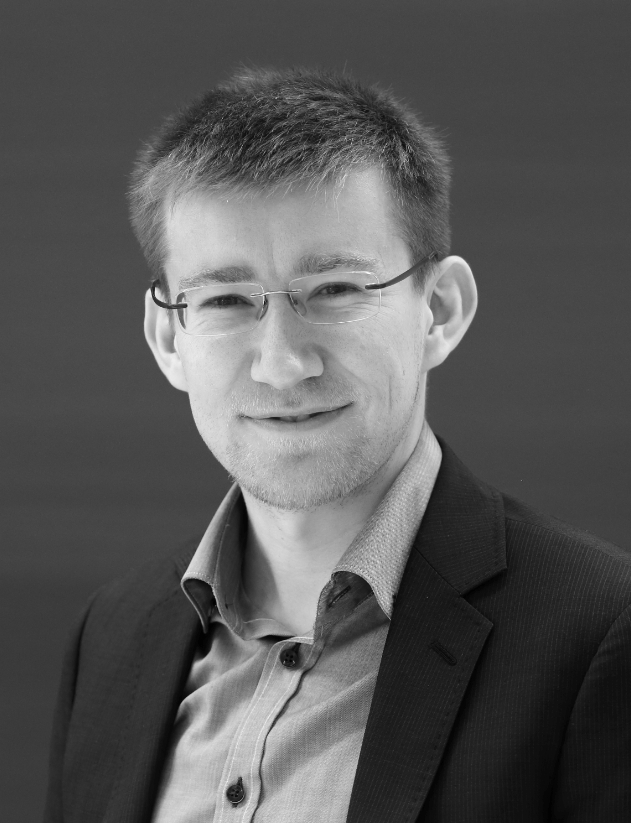
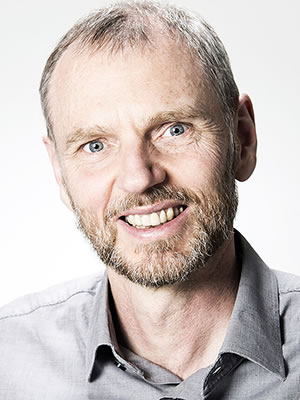
Prof. Dr. Claire Feldhusen is a Professor of Civil Law with a focus on IT Law at the Hamburg University of Applied Sciences , affiliated with the Department of Public Management in the School of Business and Social Sciences. Her teaching areas include Legal Methodology and Civil Law. Research Interests: Claire Feldhusen's work bridges Civil Law and Information Technology Law , with potential implications for Legal Informatics , Data Protection , and Digital Governance . Her affiliation with the Public Management department suggests interdisciplinary relevance to Public Administration and Administrative Law . Contact: Office located at Berliner Tor 5 (20099 Hamburg), Room 10.20. No email address provided in the text.
Elisabeth Kühn is a Research Scientist at the Helmholtz-Centre for Environmental Research (UFZ) in the Department of Conservation Biology & Social-Ecological Systems, based in Halle, Germany. She has been instrumental in establishing and maintaining the Butterfly Monitoring Germany program since 2005, contributing significantly to national and European biodiversity research efforts through extensive citizen science initiatives and long-term ecological studies. Her research focuses on butterfly conservation, pollinator ecology, and biodiversity monitoring with particular emphasis on how climate change and land management practices impact insect populations. Kühn has pioneered methodologies for integrating volunteer-based data collection with scientific research, demonstrating how citizen science can produce reliable long-term ecological datasets. Her work bridges the gap between academic research and practical conservation, with applications in grassland management, landscape planning, and policy development. Analysis of her recent publications reveals a strong focus on the intersection of traditional monitoring techniques with modern data science approaches. Her research increasingly addresses how landscape configuration and agricultural practices affect butterfly communities, with growing attention to European-wide collaborative efforts like the EuPPollNet database. Kühn's work consistently demonstrates the value of long-term monitoring data for understanding biodiversity trends and informing conservation strategies. Kühn has been deeply involved in coordinating the German Butterfly Monitoring scheme, which has become a model for citizen science projects worldwide. Her work includes developing protocols for transect counting, training volunteers, and ensuring data quality across thousands of monitoring sites. She has also been active in science communication, producing educational materials and field guides to engage the public with butterfly conservation.
Dr. Daria Kim is a Senior Research Fellow at the Max Planck Institute for Innovation and Competition since 2021, focusing on Intellectual Property Law , Regulatory Frameworks in Pharmaceutical Sectors , and Law and Economics of Innovation . Her career spans roles at prestigious institutions including the Chinese University of Hong Kong and the Munich Intellectual Property Law Center. PhD in Law from the University of Augsburg (2015-2021) LL.M. in Intellectual Property and Competition Law (2010-2011) M.A. in Linguistics from Indiana University of Pennsylvania (2007) Her research bridges Artificial Intelligence , Pharmaceutical Regulation , and Data Governance , with notable contributions to debates on AI inventorship , compulsory patent licensing , and EU clinical trial data policies . She has authored monographs such as Access to Non-Summary Clinical Trial Data Under EU Law (Springer, 2021) and co-edited volumes on pharmaceutical law. Recent publications analyze AI’s impact on inventorship standards , data usability under the EU Data Act , and emerging challenges in genome-edited product regulation . She has received accolades including the Otto Hahn Medal (2021) and Max Planck Institute scholarship (2015). Keynote speaker on IP law at the Max Planck Law Curriculum (2021) Contributor to international policy forums including the WTO TRIPS Agreement debates
Germán Oscar Johannsen is a Doctoral Student and Junior Research Fellow at the Max Planck Institute for Innovation and Competition since 2018, supervised by Prof. Dr. Josef Drexl. He holds an LL.M. in Intellectual Property and Competition Law from the Munich Intellectual Property Law Center (2016–2017), Postgraduate Diplomas from Universidad de Chile (2012, 2014), and a Bachelor of Laws from Universidad Católica de Chile (2003–2009). His work bridges competition law and digital economics, with a focus on data-driven markets, antitrust in Latin America, and intersections between regulation, democracy, and innovation. Education: PhD (in progress), Law (specializing in data economics and new technologies), Ludwig-Maximilians-Universität München LL.M., Intellectual Property and Competition Law, Munich Intellectual Property Law Center Bachelor of Laws, Universidad Católica de Chile Johannsen’s research explores competition law in digital economies, including algorithmic pricing, monopsony power affecting labor markets, net neutrality challenges under 5G, and antitrust frameworks for data-induced mergers. His work emphasizes Latin American contexts, feminist approaches to competition law, and the role of regulatory design in balancing fairness and innovation. Recent publications analyze EU-Merger Control in Big Data-Related Mergers (2019), Digital Platforms & Economic Dependence in Chile (2021), and Net Neutrality & Big Tech (2024), all addressing how traditional competition law must adapt to dynamic, data-centric markets. He organizes workshops on data sharing and digital policy (e.g., Data Sharing & Climate Action in Brazil , 2022) and teaches courses on Merger Control in the Data Economy and Exploitative Abuses in Digital Markets at Universidad Católica, Santiago, Chile. Johannsen is a member of ASCOLA, the Max Planck Law Forum Latin-America, and the Chilean Bar Association.
Müller B is a Professor at the Faculty of Medicine, RWTH Aachen University, specializing in clinical medicine with a multidisciplinary research focus spanning neuroscience, surgical innovation, and digital health applications. Their work bridges clinical practice and research across multiple medical specialties, with particular emphasis on patient safety, neurological disorders, and innovative healthcare delivery systems. Müller B's research interests encompass Clinical Medicine, Neuroscience, Surgical Research, Digital Health, Public Health, and Medical Informatics. Their work demonstrates a strong commitment to translational research, with studies ranging from basic science investigations of cellular mechanisms to large-scale clinical trials and public health interventions. Recent research has focused on neurological disorders, antibiotic stewardship, and the implementation of digital health technologies in clinical settings. Analysis of Müller B's recent publications reveals a strong trend toward interdisciplinary collaboration and translational research. The work spans from fundamental molecular neuroscience (RNA editing, microglia responsome) to practical clinical applications (migraine prevention, telemonitoring systems). A significant portion of the research addresses contemporary healthcare challenges, particularly the integration of digital technologies into medical practice and the optimization of clinical decision-making processes. Müller B has received recognition through numerous collaborative research projects, though specific awards are not detailed in the available publications. Their work appears in high-impact medical and scientific journals across multiple disciplines, indicating broad recognition within the academic community. Müller B actively collaborates with clinical teams, researchers, and healthcare institutions across Germany and Europe, particularly evident in the multi-center studies on surgical practices, neurological disorders, and pandemic response. Their research group appears to integrate clinical practitioners with data scientists and biomedical researchers to address complex healthcare challenges.
Andreas L. Fuchs is a Research Fellow at the Georg Eckert Institute (GEI) in the Digital Information and Research Infrastructure department. He has been affiliated with the GEI since 2007, except for a period from January 2016 to March 2017 when he worked at the German Historical Institute in Washington DC. Since 2018, he has additionally served as the institute's data protection coordinator. His educational background includes: Magister in Musicology, University of Regensburg (2011) Diplom in Catholic Theology, University of Regensburg (2003) PhD in Musicology, University of Göttingen (awarded circa 2014) Fuchs' research spans the intersection of musicology , religious studies , and history , with a focus on Jewish educational media and 19th-century cultural transformations. His dissertation examined synagogue song in Jewish reform movements, while his DFG-sponsored project 'Innovation through Tradition?' analyzed cultural shifts via Jewish educational materials. He has also pioneered digital research infrastructures through the edumeres.net platform. His publication record reveals dual thematic streams: historical analyses of Jewish educational media and Reformation-era schooling, alongside technical contributions to digital scholarship infrastructure. Early works (2011-2012) document edumeres.net's development as a collaborative research environment, while later publications (2017-2018) synthesize a decade of digital networking in textbook research and examine regional educational impacts of the Reformation. No scientific awards were documented in the source materials. Fuchs participated in the DFG-funded 'Innovation through Tradition?' project investigating 19th-century cultural transformations through Jewish educational media. The source materials contain no evidence of graduate student supervision. He has been integral to the edumeres.net team developing virtual research infrastructure for international textbook studies, and contributed to the 'Innovation through Tradition?' project team focusing on Jewish educational media during the Sattelzeit period.
Adam Doupé is a full professor at Arizona State University, specializing in cybersecurity and software security. His research focuses on automated vulnerability analysis, phishing detection, binary decompilation, and security in web technologies. Key research areas include: Cybersecurity Software Security Phishing and Fraud Detection Binary Analysis Automated Vulnerability Discovery His recent work explores large-scale phishing mitigation using machine learning (e.g., ScamNet), improving binary decompilation techniques (e.g., SAILR), and analyzing fraud browser detection via fingerprints. Trends show a strong emphasis on practical security tools, human-centric security analysis, and firmware vulnerability discovery. While no specific awards or grants are listed in the DBLP data, Doupé actively contributes to security education through frameworks like SENSAI and CTF-as-a-service. He collaborates extensively with researchers such as Yan Shoshitaishvili, Ruoyu Wang, and Tiffany Bao.
Prof. Dr.-Ing. Dirk Fröhling serves as Director of the Institute of Mechanical Engineering at Westfälische Hochschule Gelsenkirchen. He specializes in technical mechanics, mathematics education, and IT integration for industrial applications. Affiliation: College of Engineering, Department of Mechanical Engineering, Environment and Building Technology Research Focus: Service-oriented software architecture, GIS-SAP integration, finite element method His publications demonstrate expertise in: Engineering mechanics pedagogy (1996-2016) Enterprise system integration (2002-2005) Multilingual educational resources Mobile maintenance portal development He has developed specialized software tools including PDFCropService , ODE Module , and Hosts PrefPane for macOS environments.
Prof. Dr. Michael Miller is a faculty member at the University of Applied Sciences Gelsenkirchen in the College of Engineering and Natural Sciences , specializing in Mathematics and Computer Science. His academic work focuses on cryptology, security management, and operations research. Lectures: Fundamentals of Mathematics I/II, Data Analysis and Causality, Operations Research, Risk Management / Security Management Research Expertise: Cryptology (data protection, data security), Security Management (systematic risk analysis, safety concepts), Transport Optimization, Air Traffic Control (ATC) Projects: Sicherheitsmanagement (holistic security systems for high-risk industries), Cryptobook (educational resource)
Prof. Dr. Christian Hiepen is a faculty member at the Department of Engineering and Natural Sciences (FB 8) at Westfälische Hochschule, where he leads research in molecular cell biology, regenerative therapies, and biomedicine. He is affiliated with the Westfälisches Institut für Gesundheit and actively contributes to both teaching and research. His academic rank is Professor, and he is currently active with no indication of retirement or former status. His research focuses on understanding the molecular interactions of cells in health and disease, particularly in cardiovascular disorders and rare genetic diseases. He utilizes advanced 3D cell culture models such as organoids derived from induced pluripotent stem cells (iPSCs) to study disease mechanisms and develop new therapeutics. His work integrates molecular biology, biochemistry, cellular biomechanics, and engineering principles, with a special emphasis on BMP and TGFβ signaling pathways and their role in vascular biology and tissue regeneration. The recent publications highlight a strong trend in interdisciplinary research combining cell signaling, biomechanics, and tissue engineering. His team investigates how mechanical forces and genetic mutations interact to drive vascular pathologies, using cutting-edge techniques like confocal microscopy, microfluidic systems, and lab-on-chip technologies. The development and standardization of organoid models are central themes, reflecting a commitment to advancing alternative methods to animal testing (3R principles). Prof. Hiepen teaches a range of courses including Bioanalytics, Biomaterials and Tissue Engineering, Clinical Chemistry, and Cellular Biomechanics at both undergraduate and graduate levels. He mentors students and encourages interdisciplinary collaboration, particularly welcoming those interested in combining biology with engineering and computational methods in his research group. His laboratory employs a wide array of techniques, including qRT-PCR, Western blotting, immunocytochemistry, live-cell imaging, confocal microscopy, nanoindentation, and biosensor development. The integration of IT and algorithm development for data analysis underscores the computational dimension of his research. His work is published in high-impact journals such as Nature Communications, PLOS Biology, and Cells, demonstrating significant contributions to the fields of cell biology and biomedicine.
Clemens Heidinger is a Researcher at the Karlsruhe Institute of Technology associated with the IPD Böhm team under Chair of Prof. K. Böhm . His work focuses on data privacy, database security, and collaborative technologies. Research interests include: Anonymity frameworks for data comparability and transparency Secure exact-match queries in outsourced databases Privacy-aware folksonomies and metadata systems Web-based impact assessment tools for public policy Recent publications highlight his contributions to: Privacy-preserving database protocols Collaborative data protection mechanisms Policy analysis using Web 2.0 technologies Teaching activities since 2008 include: Database internships (Winter 2009/10, 2011/12) Seminars on data protection, networked society, and collaborative mechanisms Lecture exercises in data management
Dr. Stephan Kessler is a Scientific Staff member at the Karlsruhe Institute of Technology , affiliated with the Institute for Program Structures and Data Organization under the Faculty of Computer Science. His work focuses on privacy protection, energy-efficient computation, and data anonymization in smart grids. Expertise in Smart Grids , Privacy , and Wireless Sensor Networks Research emphasizes Pufferfish Privacy , Data Protection , and Time-Series Anonymization Active in Energy Consumption Data Analysis and Policy Compliance His publications span Computer Science journals and conferences like UIC 2015 , OJIS 2014 , and PUC 2013 , often addressing technical and strategic challenges in privacy-sensitive domains.
Dr. Philipp Terhörst is a Research Group Leader at Paderborn University, specializing in Responsible AI for Biometrics . His work focuses on fairness, privacy, explainability, and uncertainty in machine learning systems for biometric applications. Education: Ph.D. in Computer Science (2021) from Technical University of Darmstadt Previous Affiliations: Fraunhofer IGD (2017–2022), ERCIM Fellowship at Norwegian University of Science and Technology His research addresses critical ethical challenges in biometric AI, including demographic bias mitigation , privacy-enhancing technologies , and confidence-aware verification systems . Recent publications explore explainability frameworks, backdoor attacks, and fairness in deepfake detection. Scientific contributions have earned awards from the European Association for Biometrics and International Joint Conference for Biometrics . He actively participates in academic service as a reviewer for TPAMI, CVPR, and IEEE journals. Teaching: Offers courses in Human-Centered Machine Learning Collaborations: Member of Transregional Collaborative Research Centre 318 Management Programs: Alumnus of the BMBF-funded 'Software Campus' initiative
Dr.-Ing. Jens Teuscher is a senior lecturer and researcher at the Chair of Energy and High Voltage Engineering , Faculty of Electrical Engineering and Information Technology , Chemnitz University of Technology . His academic and research focus lies in decentralized energy systems, renewable energy integration, smart grids, and electromobility. Education: He holds a Doctor of Engineering (Dr.-Ing.) degree, awarded for his dissertation on Power flow-optimizing energy management of decentralized energy supply systems in future low-voltage grids (2015). Research Interests: His work spans across decentralized energy generation , renewable energy systems , electromobility , and intelligent low-voltage networks . He develops algorithms for energy management systems that optimize power flows and reduce losses in microgrids and smart grids. Teaching: He teaches a wide range of courses including Network Calculation and Protection Technology , Electrical Power Transmission and Distribution , High Voltage Engineering , and Sustainable Electricity Generation . Student Supervision: He actively supervises student theses and projects in the areas of decentralized energy, renewable energy, electromobility, and smart grids. Institutional Service: He has served on multiple university committees including the Faculty Council, Examination Board, Resource Commission, and Task Forces for Quality Management and New Teaching Methods.
Prof. Dr.-Ing. Kurt Sandkuhl serves as Professor and Chair of Business Information Systems at the Institute of Computer Science within the Faculty of Computer Science and Electrical Engineering at the University of Rostock. He concurrently holds the position of Dean of the Faculty and maintains active roles as Academic Advisor for the Business Information Systems Master's program, ERASMUS+ Coordinator, and member of the academic management of the Center for Entrepreneurship. His research centers on enterprise architecture, enterprise modeling, capability management, and digital business models, with significant contributions to knowledge-based systems, smart process management, and mobile/wearable information systems. Recent work demonstrates pioneering integration of artificial intelligence—particularly large language models—into enterprise modeling practices, addressing challenges in cybersecurity, sustainable business transformation, and public sector digitalization. Analysis of his recent publications reveals dominant trends in AI-augmented enterprise modeling, cybersecurity architecture for public administration, and circular economy transitions in manufacturing. His work consistently bridges theoretical modeling frameworks with practical implementations in SMEs, public transport, and energy management contexts, emphasizing usability and real-world impact. Prof. Sandkuhl advises the WIN M.Sc. program and coordinates international academic exchanges through ERASMUS+. His institutional leadership extends to the IT Initiative Mecklenburg-Vorpommern board and co-opted membership in the Interdisciplinary Faculty's Department of Ageing, while maintaining active affiliations with the German Computer Science Society and founding membership in the European Association for Software and Systems Technology. He directs the Business Informatics Enterprise Modeling Lab, which employs multi-touch tables and smart boards for participatory modeling research. The lab focuses on capability-driven enterprise architecture, digital business ecosystem design, and context-aware systems for quantified products, with notable projects in maritime dataspaces and demand-responsive public transport integration.