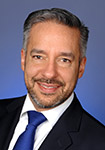
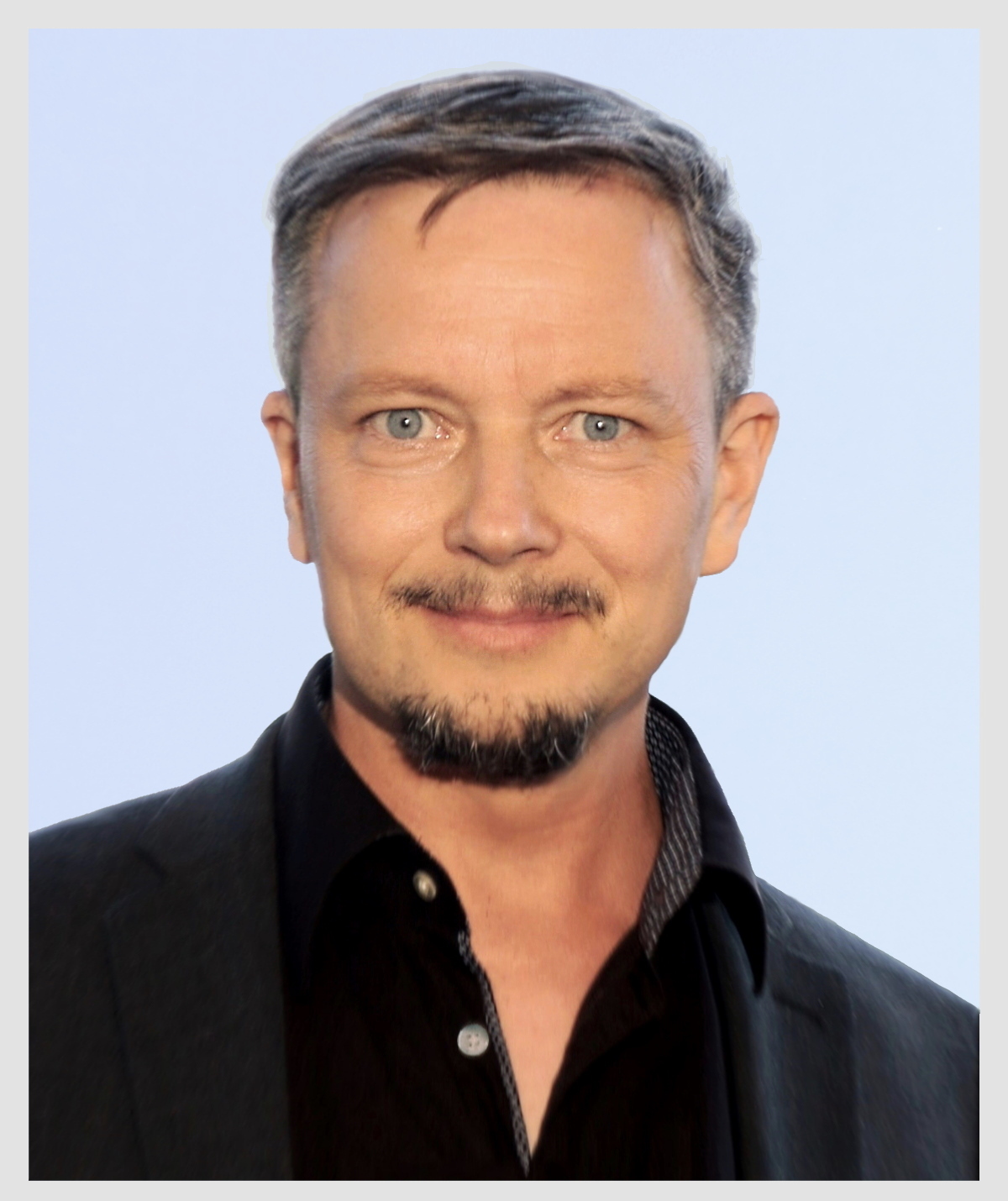
Enrique Iglesias is a Researcher in the Scientific Data Management group at Technische Informationsbibliothek (TIB) , focusing on Knowledge Graph Creation . He holds a Bachelor's and Master's in Computer Science from Universidad Simon Bolivar and University of Bonn , respectively. His work centers on developing SDM-RDFizer , an RML interpreter for optimizing knowledge graph pipelines. Current research interests include Data Integration Systems and Software Development for semantic data processing. Education : B.Sc. and M.Sc. in Computer Science Key Tools : Lead developer of SDM-RDFizer Research Sectors : Healthcare, energy, and general data ecosystems His publications (2020–2025) address knowledge graph scalability, neuro-symbolic AI integration, and domain-specific applications in healthcare and energy. While no explicit awards are listed, his work appears in journals like Energies and conference proceedings. Contact: enrique.iglesias@tib.eu .
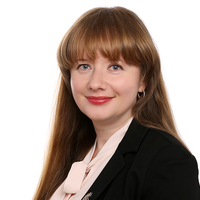
Philipp Rohde serves as a Researcher at the Scientific Data Management research group within the Leibniz Information Centre for Science and Technology (TIB) while pursuing his Ph.D. in Computer Science at Leibniz Universität Hannover. His work bridges academic research and practical implementation in knowledge graph technologies, with emphasis on query processing systems and data validation frameworks. Academic Background: Bachelor of Science (B.Sc.) in Computer Science, Leibniz Universität Hannover Master of Science (M.Sc.) in Computer Science, Leibniz Universität Hannover Research Focus: Rohde specializes in semantic data management with particular expertise in SHACL constraint validation during SPARQL query execution. His methodological contributions address critical challenges in knowledge graph reliability, including constraint propagation in distributed environments, healthcare data integration, and access control mechanisms. Recent work demonstrates innovative approaches to validate data constraints without compromising query performance through techniques like traversal optimization and runtime certification. Research Trends: Analysis of his publication history reveals a concentrated trajectory in knowledge graph validation technologies, with 85% of recent work (2021-2023) focused on SHACL-related constraint processing. His research increasingly intersects healthcare applications, as evidenced by the Knowledge4COVID-19 project, while maintaining strong foundations in distributed systems and semantic web standards. The emergence of certified query processing as a recurring theme indicates growing emphasis on verifiable data integrity in decentralized environments. Project Leadership: Rohde actively contributes to major EU-funded initiatives including: QualiChain (EU Horizon Europe): Developing blockchain-enhanced qualifications frameworks PLATOON (EU Horizon 2020): Creating energy data interoperability solutions P4-LUCAT (ERAMed): Advancing precision medicine for liver cancer iASiS (EU Horizon 2020): Building biomedical text-mining infrastructure Research Environment: As core member of TIB's Scientific Data Management group, Rohde operates within a specialized unit focused on scalable knowledge graph technologies. The team maintains strong connections with Leibniz Universität Hannover's computer science department, facilitating technology transfer between library science applications and academic research. Current infrastructure supports large-scale semantic processing through dedicated knowledge graph validation testbeds and healthcare data integration pipelines.
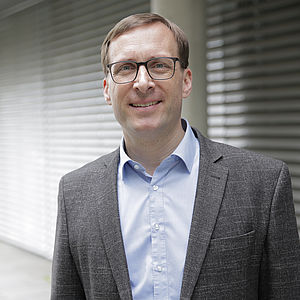
Prof. Dr. Alfred Stöber is a faculty member at the Nürtingen-Geislingen University of Applied Sciences (HfWU), specializing in Sustainable Management and Renewable Energy . His work intersects with corporate governance and applied agricultural research. He serves as the university's Data Protection Officer. Current faculty member at HfWU Academic focus on sustainability and energy systems Active in interdisciplinary research Contact: alfred.stoeber@hfwu.de
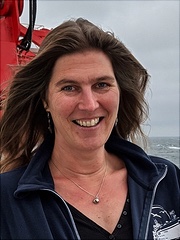
Iván Ruiz-Rube is a prolific researcher with a focus on Software Engineering , Educational Technology , and Human-Computer Interaction . His work spans augmented reality , chatbots , and domain-specific languages (DSLs) , aiming to democratize technology for non-experts and educators. Key Contributions : Tools for end-user development, frameworks for conversational agents, and methodologies for immersive educational VR/AR scenarios. Collaborations : Juan Manuel Dodero, José Miguel Mota, Antonio Balderas, and Rubén Baena-Pérez. Research Themes : • Enhancing educational experiences through mobile apps and VR/AR. • Innovations in DSLs and model-driven development . • Applying linked data and privacy-preserving techniques to web and software engineering. • Leveraging block-based programming for IoT education . Article Trends : His recent work emphasizes chatbots and end-user development (2024–2025), while earlier studies focus on DSLs and augmented reality in education (2018–2020). Biomedical applications (2021) and linked data (2010–2017) also appear frequently.
Dr. Emanuela Maio is a fixed-term researcher at the Department of Economics and Business of the University of Parma . She specializes in interdisciplinary legal studies intersecting food systems, technology, and comparative law frameworks. Her teaching portfolio spans both first and second cycle degrees in Economics and Management, focusing on European and Global Food Law, Italian and European Private Law, and Sports Law. She also contributes to the Sports and e-Sports Laboratory. Fixed-term researcher, Department of Economics and Business, University of Parma Teaching: European/Global Food Law (2018–2026), Italian/EU Private Law (2018–2026), Sports Law (2020–2022), Data Protection Law (2025) Her research explores emerging legal challenges in digital innovation (blockchain applications), autonomous technologies (civil liability for self-driving cars), and space law frameworks. Recent publications demonstrate her focus on regulatory harmonization across traditional and disruptive sectors.
Alexander Ghazvinian serves as a lecturer at Nürtingen-Geislingen University of Applied Sciences (HfWU) while maintaining his industry role as Chief Compliance Officer for APM Terminals, a Maersk Group company. Previously, he held senior compliance positions at Daimler AG and a US-based corporation, contributing to his cross-sector expertise. His academic focus centers on practical compliance frameworks with demonstrated specializations in: Foreign Corrupt Practices Act (FCPA) and UK Bribery Act implementation Global anti-corruption program design Export compliance and data protection regimes Competition law risk mitigation Business partner integrity due diligence Compliance training effectiveness measurement With nine years of multinational experience spanning mechanical engineering, automotive, logistics, and financial services industries, his work integrates EMEA, Russian, Japanese, and Chinese regulatory environments. His industry practice directly informs his academic contributions through real-world case studies in organizational compliance structuring and cross-cultural risk management.
Tetiana Paientko serves as a University Lecturer in the Department of Economics and Law at HTW Berlin, teaching core finance and accounting courses including Corporate Finance, International Financial Management, and Financial Reporting. Her academic profile bridges rigorous theoretical research with practical applications in financial markets. Her research program centers on: IFRS implementation and financial accounting standards Machine learning applications for stock price forecasting and capital markets Corporate governance mechanisms and M&A premium dynamics Tax competition impacts on income inequality in Central/Eastern Europe Corruption prevention frameworks and fiscal regulation Recent work examines geopolitical disruptions in financial markets, notably corporate self-sanctioning behaviors during the Russian-Ukrainian war. She actively disseminates findings through major international forums including the European Accounting Association Congress and CARF Luzern conferences, with presentation topics spanning M&A investment protection, split-rating effects on corporate bonds, and tax competition dynamics.
Nicolas Anciaux is a Professor at the French Institute for Research in Computer Science and Automation (INRIA), specializing in privacy-preserving data management systems. His research focuses on developing secure and privacy-respecting technologies for personal data management, with particular expertise in trusted execution environments, data minimization techniques, and privacy-by-design approaches. He has established himself as a leading researcher through numerous publications in top-tier venues including VLDB, SIGMOD, and EDBT, with a publication record spanning over two decades from 2001 to 2025. Dr. Anciaux completed his PhD in 2004 with a thesis on 'Database Systems on Chip' and his habilitation in 2014 on 'Privacy-respecting personal data management,' both from Versailles Saint-Quentin-en-Yvelines University. His academic journey shows a clear evolution from secure chip database management systems to comprehensive personal data protection frameworks. His research interests encompass database security, privacy-preserving technologies, trusted execution environments, personal data management systems, and privacy-by-design solutions. Anciaux's work uniquely bridges theoretical foundations with practical implementations, focusing on how individuals can maintain control over their personal data while still benefiting from data-driven services. His recent work has expanded into the intersection of privacy technologies with edge computing and large language models, addressing emerging challenges in these rapidly evolving domains. Analysis of his recent publications (2023-2025) reveals a strong focus on practical privacy-enhancing technologies that balance functionality with security. His work increasingly addresses the challenges posed by large language models and their privacy implications, while maintaining his longstanding expertise in secure database systems. Key themes include data minimization techniques, membership inference attack prevention, secure personal data processing at the network edge, and privacy-preserving frameworks for textual data processing. Dr. Anciaux has received recognition for his contributions to privacy-preserving database technologies, though specific awards aren't detailed in the available information. His work has influenced both academic research and practical implementations in secure data management. He has maintained long-term collaborations with researchers including Luc Bouganim (30 publications), Philippe Pucheral (41 publications), Iulian Sandu Popa (14 publications), Benjamin Nguyen (13 publications), and Guillaume Scerri (9 publications), suggesting leadership in a research group focused on secure data management. His Minimum Exposure Project demonstrates his commitment to practical privacy solutions that limit data collection in online forms. His laboratory work has focused on building practical implementations of privacy-preserving technologies, including the MILo-DB personal database system, GhostDB for secure querying, and Edgelet computing frameworks. These projects demonstrate his commitment to translating theoretical privacy concepts into usable technologies that can be deployed in real-world scenarios, including medical applications and smart city environments.
Dr. Per Holderberg is a Research Associate at the Institute of Social Sciences, University of Hildesheim, where he works in the Department of Sociology and the Methods Center. Since January 2025, he has served as Deputy Head of the Science Support Hub, providing consulting in quantitative research, survey methodology, and data tools such as unipark, f4transkript, and MAXQDA Analytics Pro. He is actively involved in teaching, research, and institutional service, including roles as Deputy Senate Commissioner for Data Protection and representative of the Postdocs Group on the Graduate Center Advisory Board. Ph.D. in Social Sciences Research Associate, University of Hildesheim (2015–present) Research Assistant, German Centre for Higher Education Research and Science Studies (DZHW), Hanover (2014–2015) Student Assistant, DZHW and Leibniz University Hannover (2010–2015) Dr. Holderberg's research centers on modern democratic theory, political participation, voter turnout, and the working conditions of academic staff. His work explores compulsory voting, generational differences in political engagement, and democratic deficits in university governance. He investigates how structural and institutional factors shape citizen and student participation, with a focus on inequality and democratic resilience. His recent publications examine universities as democratic socialization agencies, student representation, and the precarity of academic mid-level staff. These works reveal a consistent focus on democratic participation, institutional reform, and socio-political inequality. He frequently employs survey-based empirical methods, contributing to projects on citizen attitudes, student satisfaction, and electoral behavior. Germany Scholarship Didrik Pining Fellowship (visiting scholar at the University of Florence) Nomination for the 2020 Award for Outstanding Digital Teaching Dr. Holderberg has advised and collaborated closely with students and early-career researchers, particularly through his leadership in academic staff representation and postdoc advisory roles. He has led and contributed to third-party funded projects on university governance, student engagement, and academic working conditions. His institutional service includes roles in data protection, entrepreneurship, and academic democracy advocacy. He is a core member of the Methods Center at the University of Hildesheim, supporting researchers in quantitative methodologies and survey implementation. He is also an active member of several academic networks, including the German Political Science Association (DVPW), the Network for Good Work in Science (NGAWiss), and the Loccum Initiative of Critical Scientists (LI).
Professor Jan Hendrik Schumann serves as Vice President for Research at the University of Passau while holding the Chair of Marketing and Innovation since 2012. He directs the Institute of Market and Economic Research and serves as principal investigator for the DFG Research Training Group 2720 'Digital Platform Ecosystems (DPE)'. His extensive academic service includes being an Area Editor at the Journal of Service Research and a member of editorial boards for the Journal of Business Research and Psychology and Marketing. Professor Schumann's research primarily focuses on online marketing, customer relationship management, and service pricing within digital contexts. His work examines how data-based business models blur boundaries between consumers and companies, creating new exchange relationships. A significant portion of his research investigates secondary data use—how companies sharing consumer data with third parties affects consumer behavior and what psychological processes drive these reactions. His interdisciplinary approach combines marketing, psychology, and data science to understand consumer decision-making in digital ecosystems. His publications reveal a strong trend toward understanding consumer psychology in digital contexts, particularly examining emotional responses to data sharing, service innovations in platform ecosystems, and pricing strategies for digital services. Recent work increasingly focuses on sustainable technologies like electromobility, examining how to make these innovations user-friendly and widely adoptable. Finalist for Journal of Service Research Best Article Award (2010, 2019) Finalist for Best IJRM Paper (2016) Rigor and Relevance Award from Swiss Academy of Marketing Science (2017) Wharton Customer Analytics Initiative grant (2012) AMA SERVSIG Emerging Service Scholar Award (2019) SERVSIG Best Service Article Award (2023) Professor Schumann has supervised numerous doctoral candidates including Janina Garbas (whose thesis on innovative technology-driven business models was a finalist for two prestigious science awards) and Sebastian Schubach (recognized in Europe-wide competition for best marketing PhD theses). His research has been supported by significant grants including the Wharton Customer Analytics Initiative and DFG-funded projects. He leads the DFG Research Training Group 2720 as a central hub for international, interdisciplinary research on digital platform ecosystems. As director of the Institute of Market and Economic Research, Professor Schumann oversees multiple research teams working on projects including 'unIT-e2' (analyzing networked electromobility with over 12,000 charging processes), 'BDL Next' (developing bidirectional charging solutions), and the EU-funded UPSURGE project (focusing on sustainable urban development).
Dr. Jens Floeter is a Researcher at the University of Hamburg, Faculty of Mathematics, Computer Science and Natural Sciences, Department of Biology, Institute of Marine Ecosystem and Fisheries Sciences (IMF). He has been working as a Scientific Staff Member in the Fisheries Science research group under Prof. Dr. Christian Möllmann since November 2008. His research focuses on marine ecosystem dynamics, particularly examining the interactions between fisheries, offshore wind farms, and marine ecological processes in the North Sea and Baltic Sea regions. Dr. Floeter earned his doctorate (Promotion) in 2005 from the University of Hamburg with a dissertation titled "An investigation of key processes affecting trophic interactions in the North Sea fish assemblage and their significance for multi species fisheries assessment" at the Institut für Hydrobiologie & Fischereiwissenschaft. He completed his Diplom der Biologie in 1998 with a thesis on "Analyse und Modellierung der Nahrungsselektion von Nordseefischen" (Analysis and modeling of food selection by North Sea fish), and began his biology studies at the University of Hamburg in 1991. Dr. Floeter's research spans several interconnected areas within marine ecology and fisheries science. His primary focus is on understanding how offshore wind farms impact marine ecosystems, particularly examining pelagic effects, trophic interactions, and habitat changes. He investigates coupling of spatio-temporal scales in marine ecosystems, higher trophic level food web dynamics, and develops methods for multi-species fisheries assessment. His work often combines field observations with modeling approaches to address complex ecosystem questions. A significant portion of his research examines plankton habitats, predator-prey relationships, and the impacts of anthropogenic structures on marine communities. Analysis of Dr. Floeter's recent publications reveals a strong focus on the ecological impacts of offshore renewable energy infrastructure, particularly wind farms. His research spans physical oceanography (examining wind-wake effects and upwelling/downwelling), biological responses (plankton habitat identification, copepod behavior), and fisheries implications. He has increasingly incorporated advanced analytical methods including machine learning for plankton image classification and tensor decomposition for community ecology analysis. His work demonstrates a consistent trajectory of examining how human activities intersect with marine ecosystem dynamics, with growing emphasis on renewable energy infrastructure impacts. synKoFiMo (2015-2017): "Darstellung von Synergien im Kolk- und Fischmonitoring in Offshore-Windparks" (Demonstrating synergies in scour and fish monitoring in offshore wind farms) UNCOVER (2007): "UNderstanding the Mechanisms of Stock ReCOVERy" BECAUSE (2004-2007): "Critical Interactions BEtween Species and their Implications for a PreCAUtionary FiSheries Management in a variable Environment" LIFECO (2001-2004): "Linking hydrographic Frontal activity and ECOsystem dynamics in the North Sea & Skagerrak" SYCON (1999-2000): "Synthesis of North Sea research and development of a new research strategy" Dr. Floeter has extensive experience with field research methods, including work with high-speed towed multi-sensor vehicles (TRIAXUS, SCANFISH) for ecosystem monitoring. His research group collaborates with multiple institutions including the Helmholtz-Zentrum Geesthacht (HZG), Thünen Institute, and various international partners. His laboratory work focuses on analyzing marine ecosystem dynamics using a combination of field observations, remote sensing data, and computational modeling approaches to understand complex marine systems and inform sustainable management practices.
Dr. Anne-Nina Lörz is a Postdoctoral Researcher in Marine Ecosystem Dynamics and Management at the University of Hamburg's Department of Biology, Faculty of Mathematics, Computer Science and Natural Sciences. She works at the Institute of Marine Ecosystem and Fisheries Sciences, focusing on deep-sea research within the Ice-AGE project funded by the German Science Foundation (DFG). Her primary research interests encompass marine biodiversity, ecology and evolutionary systematics of marine Amphipoda, with specialization in deep-sea environments and integrative taxonomy. Her work leverages both morphological and molecular approaches to study crustacean diversity, particularly focusing on how environmental variables drive benthic community composition and species distributions in climatically sensitive regions like the North Atlantic. Lörz's publication record demonstrates consistent research output with 15 recent publications (2021-2024) spanning taxonomic descriptions, biogeographic analyses, and ecological studies of deep-sea amphipods. Her work shows strong international collaboration patterns, with research spanning Iceland, New Zealand, Antarctica, and the Arctic, reflecting the global nature of marine biodiversity studies. Her research has particular relevance for understanding how climate change affects deep-sea ecosystems. Lörz leads the Ice-AGE Amphipoda component, which has collected over 100,000 amphipod specimens from depths between 120-4500m across the North Atlantic. This work establishes crucial taxonomic baselines for monitoring biodiversity changes in regions facing significant environmental transformations. Her academic trajectory shows progression from her PhD research on Antarctic amphipods at the University of Hamburg (2003) through extensive work at New Zealand's National Institute of Water & Atmospheric Research (2003-2015), to her current postdoctoral position. She completed her habilitation at the University of Hamburg in 2020 on the biodiversity of deep-sea amphipods.
Prof. Dr. Dr. Albrecht Fritzsche is a faculty member at the School of Business, Economics and Society , Friedrich-Alexander University, Erlangen-Nuremberg (FAU). His research focuses on Information Systems , Digital Transformation , and Innovation Management , with a particular emphasis on Cyber-Physical Systems , Service Design , and Organizational Theory . Co-editor of the volume Rethinking Technology and Engineering (2023) Co-founder of the Innovating in the Open Lab book series (2020) Key contributor to the VeSiKi project on networked IT security for critical infrastructures His work explores the cultural and philosophical dimensions of technological innovation, including digital ethics , persuasive technologies , and the role of science fiction in shaping service design paradigms. Recent publications analyze value creation in digital ecosystems and the ontological foundations of paradox theory through Indian dialectics.
Dr. Blair R. Costelloe is a behavioral ecologist at the Max Planck Institute of Animal Behavior's Department of Collective Behavior, Konstanz. Their research bridges animal behavior with technology, focusing on drone-based observation and computer vision for studying wild ungulates and collective behavior. Current Projects: Herd Hover (drones for high-resolution behavioral data), WildDrone (autonomous conservation drones), and maternal behavior studies in Thomson’s gazelles. Past Work: Automated bat counting methods, warthog predation documentation, and fawn survival strategies. Expertise: Interdisciplinary methods, predator-prey dynamics, and scalable ecological monitoring. Recent publications highlight collaborations with computer scientists on machine learning applications in ecology. Awards include EU Marie Sklodowska Curie and Princeton University funding.
Prof. Dr. Sascha Buchholz is a Professor of Animal Ecology at the Institute of Landscape Ecology, University of Münster, where he leads research in biodiversity dynamics, urban ecology, and conservation biology. His work integrates field studies, citizen science, and interdisciplinary approaches to understand species interactions and ecosystem responses in urban environments. His research interests include urban ecology, biodiversity conservation, invasion ecology, novel ecosystems, and biotic interactions, with a focus on arthropods such as spiders, bees, and carabid beetles. He investigates how urbanization affects species diversity, community structure, and ecological functions, and explores strategies for enhancing urban biodiversity. His recent publications highlight trends in urban biodiversity, pollinator ecology, and the use of citizen science for ecological monitoring. Research themes include habitat suitability modeling, the impacts of artificial light and urban green spaces on wildlife, and the role of urban refugia for endangered species. He frequently publishes in high-impact journals such as Global Change Biology , Scientific Reports , and Urban Ecosystems . Member, Friedrich Ebert Foundation (expert and liaison lecturer since 2011) He has been involved in multiple funded research projects related to biodiversity monitoring in Berlin and agroforestry, supported by organizations such as the Senatsverwaltung für Umwelt Berlin and Vattenfall Wärme Berlin AG. He mentors students and collaborates widely, including with Dr. Nadja Pernat and Dr. Hilke Hollens-Kuhr. His teaching includes courses on animal ecology, biodiversity monitoring, and environmental statistics. He is actively engaged in science communication, exemplified by the podcast 'Irgendwas mit Naturschutz', and promotes inclusive conservation science and public awareness of ecological issues.