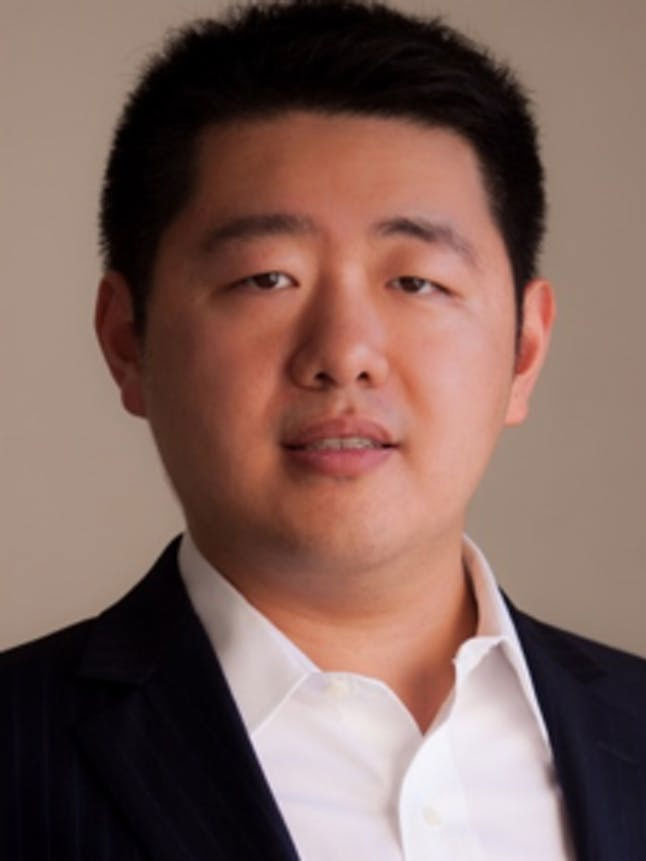
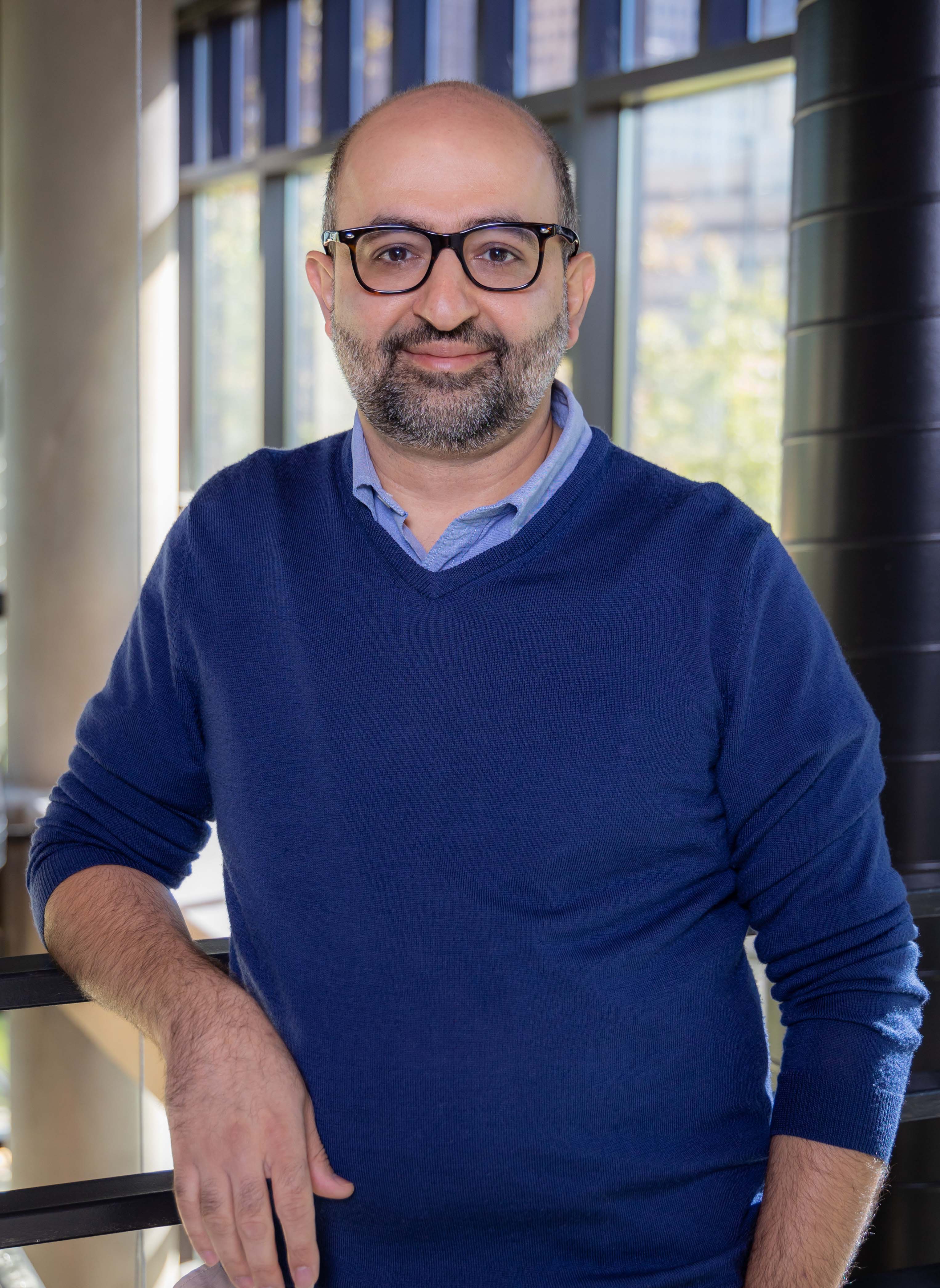
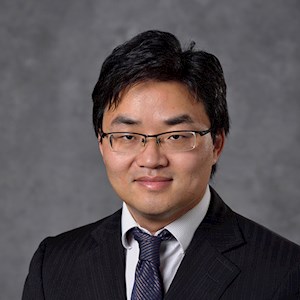
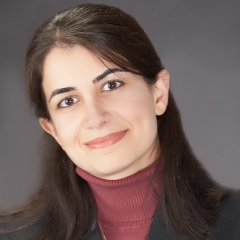
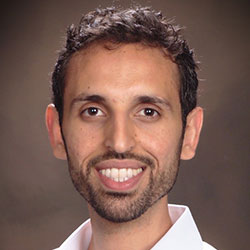
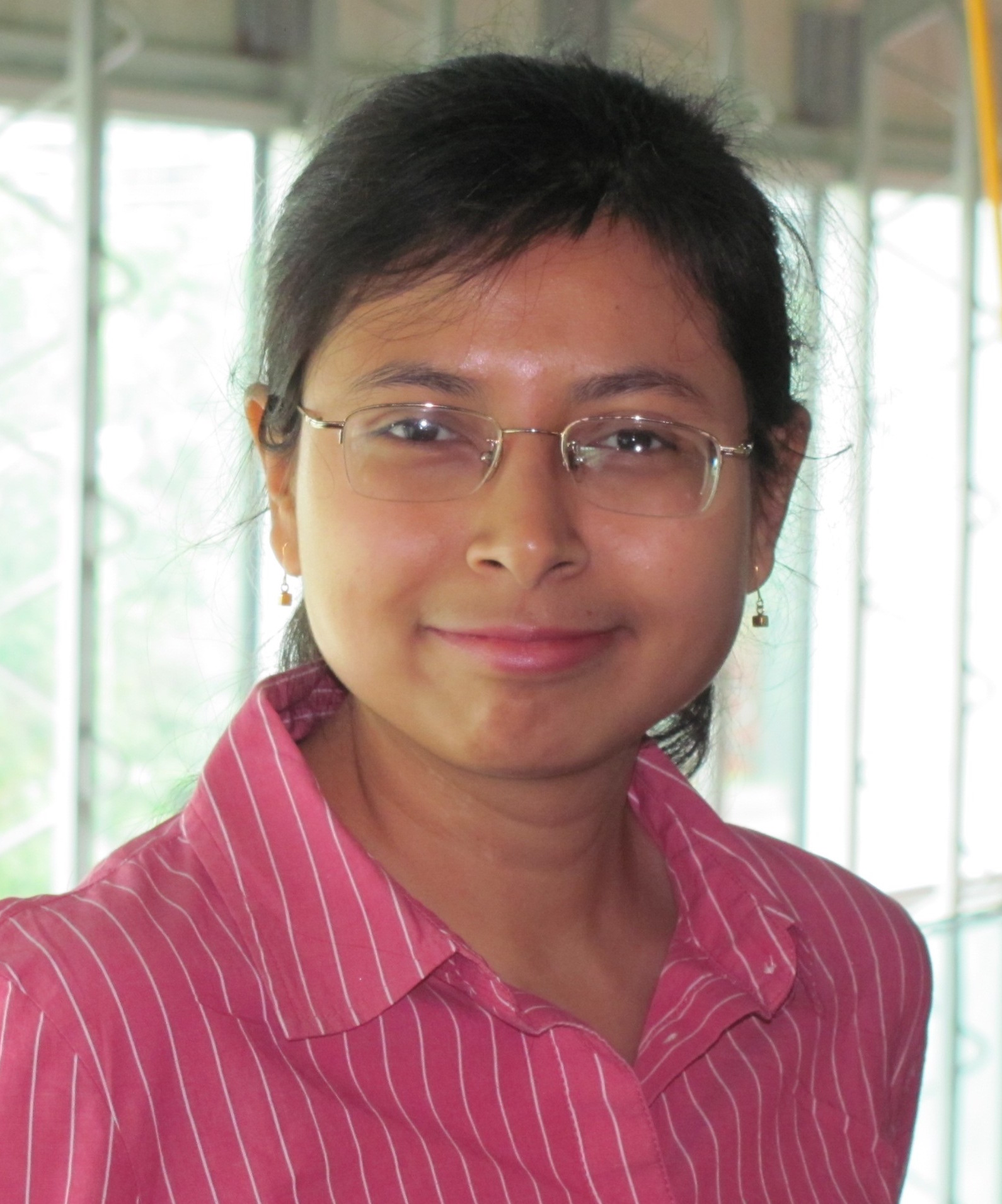
Maher Elshakankiri is an Assistant Professor, Teaching Stream at the University of Toronto's Faculty of Information. He holds a Ph.D. in Computer Engineering from Ain Shams University (Egypt), followed by a postdoctoral fellowship at the University of Regina. His research focuses on IoT, Wireless Sensor Networks (WSN), and pedagogical integration of technology and gaming. He has supervised over 100 student projects and authored a book on WSNs. Education: Ph.D. in Computer Engineering, Ain Shams University, Egypt M.Eng., B.Eng. in Engineering, Ain Shams University, Egypt Postdoctoral Fellowship, University of Regina, Canada Research Interests: IoT in healthcare, agriculture, and sports Active learning classrooms and technology in education Wireless communication protocols (V2V, UAV, RFID) Leadership & Grants: Director, Bachelor of Information (BI) Program (2024–present) Coordinator, Information Systems and Design (ISD) Concentration (2023) SSHRC Grant: 'Gaming in teaching towards a more inclusive class' (2022–2023) Professional Activities: Member, SCC IoT & Digital Twins Standards Committee Reviewer for journals including Wireless Networks , Telematics and Informatics , and Computational Intelligence Technical Program Committee member at multiple conferences Teaching: Courses include INF1340 (Programming for Data Science), INF1005/1006 (IoT Workshops), and INF452 (Information Design Coding).
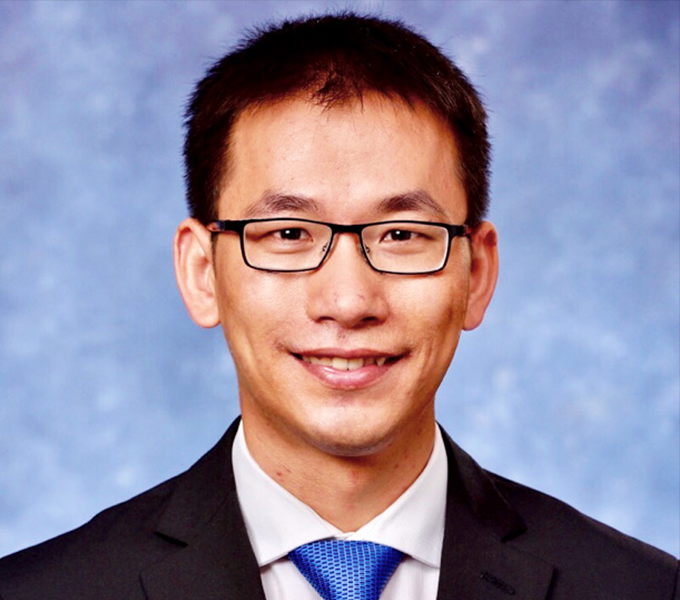
Yanzhi Wang is a Professor in the Department of Electrical and Computer Engineering at Northeastern University , affiliated with the Institute for Experiential AI and the Institute for the Wireless Internet of Things . He holds a PhD from the University of Southern California (2014). His research focuses on real-time AI systems, deep neural network compression, neuromorphic computing, and non-von Neumann architectures. Notable projects include NSF-funded initiatives on age-inclusive urban design, superconducting computing (DISCoVER), and edge device optimization (PatDNN). He has received prestigious awards such as the Army Research Office Young Investigator Award and the Constantinos Mavroidis Translational Research Award. His work emphasizes algorithm-hardware co-design for energy efficiency, with grants from NSF, ARO, and industry partners like Google. Recent research trends reflect his focus on accelerating vision transformers, diffusion models, and large language models for edge computing. He has pioneered methods like AutoViT and Fastcar, addressing latency and resource constraints in mobile platforms. Collaborations span academia and industry, driving innovations in superconducting circuits and neuromorphic systems.
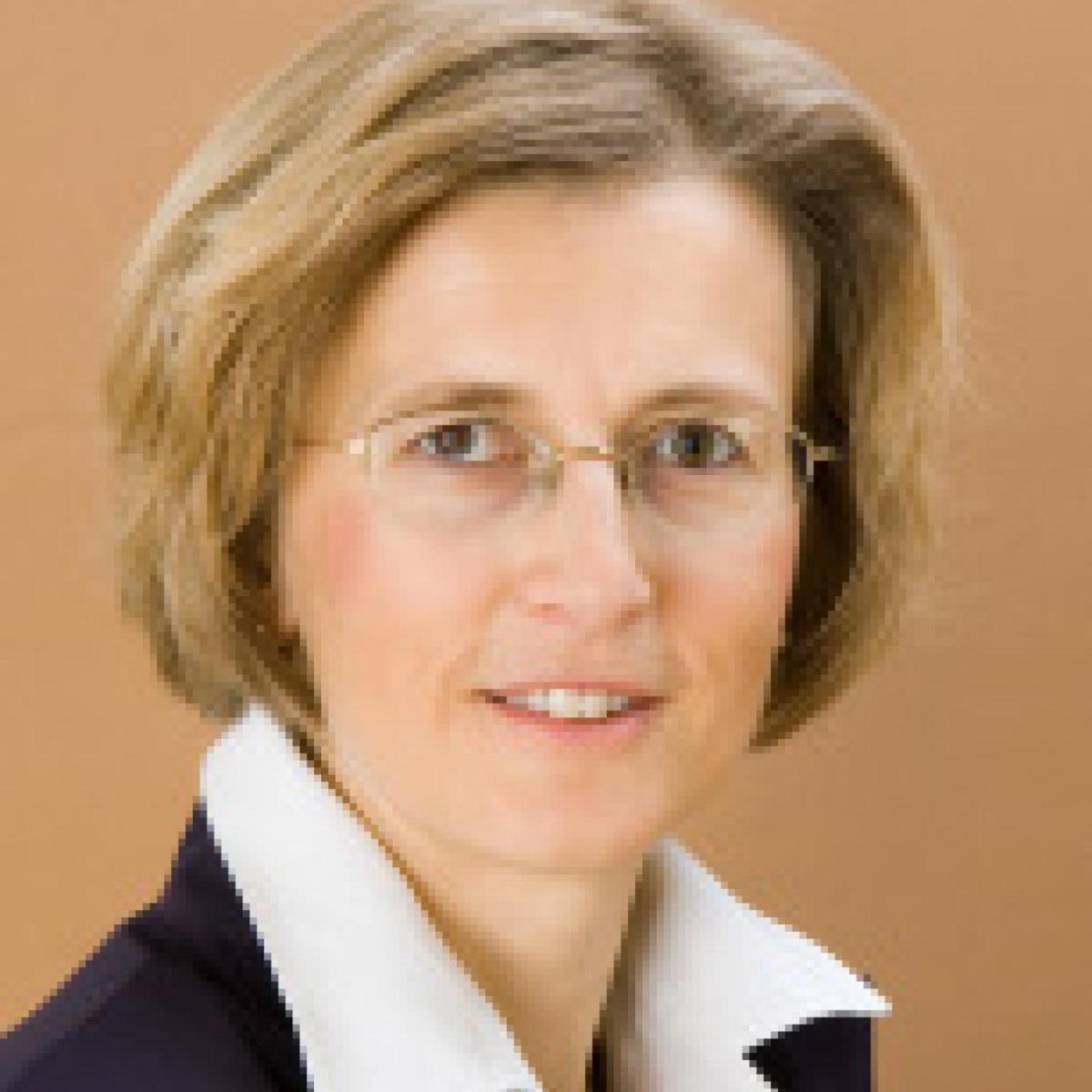
Monika Henzinger is Professor at the Institute of Science and Technology Austria (ISTA), heading the research group of Theory and Applications of Algorithms. She also serves as Vice President for Technology Transfer at ISTA since 2024. Previously, she held professorships at the University of Vienna (2009-2023) and EPFL, Switzerland (2005-2009), was Director of Research at Google (1999-2005), and served as Assistant Professor at Cornell University. Professor Henzinger's research centers on efficient algorithms and data structures with three main thrusts. First, she investigates dynamic settings where program inputs are repeatedly updated, seeking solutions faster than restarting computations. Second, she develops privacy-preserving algorithms that add minimal noise to protect input data while maintaining efficiency. Third, she translates theoretically optimal algorithms into practical implementations for dynamically changing inputs. Her work consistently addresses resource conservation in data processing, particularly computing time and memory space, while exploring the theoretical limits of possible savings. Henzinger's recent publications (2024-2025) reveal strong trends in dynamic algorithms, differential privacy, and graph theory. Her research consistently bridges theoretical computer science with practical applications, focusing on algorithms that adapt to changing inputs while preserving computational efficiency and data privacy. She has made significant contributions to problems like dynamic matching, minimum cut computation, and privacy-preserving data analysis across various domains. Professor Henzinger has received numerous prestigious awards and honors: Wittgenstein Award (2021) Two ERC Advanced Grants (2014, 2021) Carus Medal of the German Academy of Sciences Leopoldina (2019) SIGIR Test of Time Award Fellow of the Association of Computing Machinery (2016) Member of the Austrian Academy of Sciences (2017) CAREER Development Award of the National Science Foundation Best paper Award at the Symposium on Discrete Algorithms (2024) Professor Henzinger currently advises PhD students Bardiya Aryanfard, Antoine El-Hayek, and Roodabeh Safavi Hemami, along with postdocs Anamay Chaturvedi and Niklas Hahn. Her research is supported by multiple significant grants including an ERC Advanced Grant for 'Design and Evaluation of Modern, Fully Dynamic Data Structures,' the FWF Wittgenstein Prize, and the WEAVE Project on 'Static and dynamic hierarchical graph decompositions.' She also serves as Principal Investigator for the FWF project 'Fast algorithms for a reactive network layer,' providing substantial funding for her innovative work in algorithms and data structures. Professor Henzinger leads the Theory and Applications of Algorithms research group at ISTA, which focuses on developing practical algorithms for dynamic environments. Her team investigates resource conservation in data processing, specializing in dynamic algorithms that efficiently handle changing inputs, privacy-preserving algorithms that minimize noise while protecting data, and translating theoretical algorithms into practical implementations. The group maintains a strong presence in theoretical computer science through regular publications in top conferences and journals, and collaborates extensively with institutions worldwide to advance algorithmic research.
Jingtong Hu is an Associate Professor at the Swanson School of Engineering, University of Pittsburgh, where he also holds the William Kepler Whiteford Faculty Fellowship. His research focuses on Cyber-Physical Systems and Infrastructure Security, with significant contributions to embedded systems, non-volatile memory architectures, and hardware/software co-design for energy-constrained environments. Dr. Hu received his PhD from the University of Texas at Dallas (2007-2013) and his Bachelor of Engineering from Shandong University (2003-2007). His research spans multiple interdisciplinary areas including energy harvesting systems, non-volatile processors, FPGA acceleration, and machine learning at the edge. His recent publications demonstrate a strong focus on algorithm-hardware co-design, particularly for vision transformers, federated learning, and non-volatile memory systems. His work often addresses the challenges of implementing AI on resource-constrained edge devices, with emphasis on energy efficiency, reliability, and performance optimization. The trend in his publications shows increasing focus on sustainable AI processing, heterogeneous computing architectures, and personalized machine learning for IoT applications. Selected Awards: IEEE Transactions on Computer-Aided Design Donald O. Pederson Best Paper Award (2021) ACM SIGDA Meritorious Service Award (2019) Multiple Best Paper Award nominations at top conferences including DAC, ASP-DAC, and CODES+ISSS Dr. Hu's research has been supported by multiple grants focusing on energy-efficient computing, non-volatile memory systems, and hardware acceleration for machine learning. His collaborative work spans numerous institutions and involves interdisciplinary teams working at the intersection of computer architecture, embedded systems, and artificial intelligence. His publications show extensive collaboration with researchers at the University of Pittsburgh, particularly with Albert K. Jones and Yiyu Shi. His laboratory work focuses on implementing practical systems for energy harvesting powered devices, non-volatile processors, and hardware accelerators for machine learning applications. Current projects appear to emphasize sustainable AI processing at the edge, heterogeneous FPGA acceleration, and personalized federated learning for health monitoring applications.
Oana Balmau is an Assistant Professor in the School of Computer Science at McGill University, where she leads the Data-Intensive Storage and Computer Systems Laboratory (DISCS Lab). She also holds a status-only appointment at the University of Toronto and serves as a working group chair for MLPerf Storage. Her research focuses on creating storage infrastructure that enables fast and energy-conscious insights from data, with particular emphasis on storage and persistent memory technologies for machine learning, data science, and edge computing workloads. Dr. Balmau's research interests span computer systems, with specific focus on: Design and implementation of efficient key-value stores Storage systems for machine learning workloads Edge computing infrastructure Persistent memory technologies Performance optimization of data-intensive systems Her recent work has led to significant contributions in storage benchmarking through the MLPerf Storage benchmark and in edge computing frameworks. The MLPerf Storage benchmark has become an industry standard for evaluating storage performance in machine learning environments, while her work on hierarchical edge computing addresses security and performance challenges in distributed edge environments. Her publications show consistent high-impact contributions to top systems venues, with recent work focusing on processing-in-memory virtualization, stream processing reconfiguration, and efficient data preprocessing pipelines. Dr. Balmau has received numerous awards for her research, including: SEC 2024 Best Paper Award for "Falcon: Live Reconfiguration for Stateful Stream Processing on the Edge" MLCommons Hero Award 2023 for leadership as MLPerf Storage working group chair ACM SIGOPS Dennis M. Ritchie Doctoral Dissertation Award 2021 Honorable Mention CORE John Makepeace Bennett Award 2021 for the best Computer Science doctoral dissertation in Australia and New Zealand USENIX ATC 2019 Best Paper Award for "SILK: Preventing Latency Spikes in Log-Structured Merge Key-Value Stores" As an educator, Dr. Balmau teaches courses on advanced computer systems, operating systems, and principles of computer systems design at McGill University. She has served on program committees for top systems conferences including SOSP, SIGMOD, FAST, and EuroSys, and has co-organized workshops on resource-efficient machine learning and edge computing. She leads the DISCS Lab, which focuses on two main research directions: Systems for ML (including the MLPerf Storage benchmark) and Edge computing (including frameworks for fast and secure edge computing in hierarchical edge environments).
Farnoush Banaei-Kashani is an Associate Professor (Tenured) in the Department of Computer Science and Engineering at the University of Colorado Denver. She also holds an Adjunct Associate Professor position in the Department of Mathematical and Statistical Sciences. As the founder and director of the Big Data Management and Mining Lab (BDLab), she leads multiple GAANN Fellowship Programs, including BDSE (Big Data Science and Engineering), DDC (Data-Driven Cybersecurity), and II (Infrastructure Informatics). She directs the 'Data Science in Biomedicine' MS Track and focuses on data-driven decision systems (DDSs), integrating machine learning and big data analytics into healthcare, energy, transportation, and environmental applications. Education: Details not explicitly provided in the text. Her research spans data management cycles for DDSs, addressing challenges like big data volume, velocity, and variety. Key projects include iWatch (crime surveillance), POCM (mobility monitoring), and GeoSIM (urban texture documentation). She teaches courses such as Machine Learning Systems, Big Data Science, and Data Mining. Publications highlight advancements in sea ice classification, federated learning, proteomic networks, and privacy-preserving AI. Her work is funded by NSF, NIH, DOT, and industry partners like Google and IBM. She has advised numerous students and contributes to academic leadership as editor, conference chair (ACM SIGSPATIAL 2018/2019), and program committee member for venues like SIGMOD and KDD.
Yuvraj Agarwal is a Professor in the School of Computer Science at Carnegie Mellon University , where he leads the SYNERGY Labs . His research focuses on Systems and Networking with emphasis on Embedded Systems , Security , and Energy Efficiency in computing environments. He has been recognized with the NSF Expeditions in Computing Award for Computational Decarbonization research and multiple best paper awards. Education : PhD in Computer Science from University of California, San Diego Research Leadership : Founder/Director of SYNERGY Labs; Executive Director of NSF Expeditions in Variability (2010-2013) Research Trajectory : Recent publications highlight his work on Privacy-preserving smart classroom systems (EduSense, ClassID) IoT security labeling frameworks Audio privacy protection mechanisms Computational decarbonization of infrastructure His research combines hardware-software co-design with societal impact considerations. Scientific Recognition : NSF Expeditions in Computing Award for CoDec (2024) Ubicomp/IMWUT Distinguished Paper Award (2024) CHI Best Paper Honorable Mention (2022) Advising & Collaboration : Mentors students in IoT systems , privacy research , and green computing . Collaborates with institutions including University of Massachusetts Amherst and industry partners like Johnson Controls. Grants include NSF funding for multi-university research initiatives.
Jiliang Tang is an MSU Foundation Professor in the Department of Computer Science and Engineering at Michigan State University (MSU), part of the College of Engineering. He holds a PhD from Arizona State University (2015) and previously worked as a research scientist at Yahoo Research. His research focuses on graph machine learning, trustworthy AI, and applications in education and biology. He has received numerous awards, including the 2022 AI's 10 to Watch, IAPR J.K. Aggarwal Award, and NSF CAREER Award. Education: PhD in Computer Science, Arizona State University, 2015 (Advisor: Huan Liu) Research Interests: Graph Neural Networks (GNNs) and Deep Learning on Graphs Trustworthy AI: Safety, Robustness, and Fairness AI+X Applications: Education Technology and Biological Data Analysis His work bridges theoretical advancements and practical applications, with contributions to graph representation learning, privacy in generative models, and educational AI systems. Awards & Recognition: Over 8 best paper awards (or runner-ups) Rock Star Award from Association of Chinese Scholars in Computing Extensive media coverage for innovations in AI education and biology Grants & Projects: NSF CAREER Award (2019) for research on signed networks Co-PI on a $1.7M grant for 5G research Leadership in projects like DSE Lab and Data Science initiatives Labs & Teams: Directs the Data Science and Engineering (DSE) Lab at MSU, focusing on advancing AI for real-world challenges. The lab collaborates with industry leaders and publishes widely in top conferences (e.g., KDD, SIGIR, ACL).
Professor Yasamin Mostofi is a faculty member in the Department of Electrical and Computer Engineering at the University of California, Santa Barbara. She is also affiliated with the Department of Computer Science and the Center for Control, Dynamical Systems and Computation. Her work bridges wireless systems, robotics, and machine learning. PhD, Stanford University MS, Stanford University MS, Sharif University of Technology Research Interests : Her lab focuses on wireless systems and autonomous agents , developing novel mathematical models for RF sensing and communication-aware robotics. Current directions include WiFi/millimeter wave/6G-based imaging and analytics, networked robotics for cellular systems, human-robot collaboration, and machine learning integration. Recent Publications : Her work spans through-wall crowd analytics , robot-assisted connectivity , and vision-aided wireless sensing , with applications in smart health, security, and retail optimization. Key trends include cross-modal integration (WiFi and vision), synthetic data generation, and real-world clinical validation. Scientific Recognition : Presidential Early Career Award for Scientists and Engineers (PECASE) Antonio Ruberti Prize, IEEE Control Systems Society NSF CAREER Award IEEE Region 6 Outstanding Engineer Award IEEE Fellow (2020) Advising and Leadership : She mentors PhD students in systems research, with graduates joining leading companies like Qualcomm and Google. She co-founded NPJ Wireless Technology (Nature Portfolio) and serves on editorial boards including IEEE Transactions on Control of Network Systems .
Heather Zheng is the Neubauer Professor of Computer Science at the University of Chicago, co-directing the SAND Lab (Security, Algorithms, Networking and Data) with Prof. Ben Y. Zhao. She holds IEEE (2015) and ACM (2023) Fellowships, and was recognized as MIT TR35 (2005) for cognitive radio research. Her work bridges mobile/IoT security, adversarial ML, and generative AI ethics. Zheng earned her PhD in Electrical and Computer Engineering from University of Maryland in 1999, with prior roles at Bell-Labs, Microsoft Research Asia, and UCSB. Education: PhD in Electrical and Computer Engineering, University of Maryland, College Park (1999) Research Focus: Explores cutting-edge challenges in: Security implications of mobile/IoT sensors (e.g., bracelet-of-silence countermeasures) Adversarial machine learning defense mechanisms (e.g., Blacklight attack detection) Generative AI governance (Glaze, NightShade copyright tools) Awards: ACM Fellow (2023) IEEE Fellow (2015) World Technology Network Fellow Labs & Collaborations: Leads SAND Lab focusing on security, ML, and networked systems. Active in UChicago's Systems Group exploring cloud/edge computing architectures.
Hadi Esmaeilzadeh is an Associate Professor at the University of California, San Diego in the Department of Computer Science and Engineering . He previously served as an Assistant Professor at Georgia Tech (2013-2017) and holds the Halicioğlu Chair in Computer Architecture . As founder/director of the Alternative Computing Technologies (ACT) Laboratory and associate director of UCSD's Center for Machine Integrated Computing and Security (MICS) , his research drives cross-stack solutions for next-generation computer systems. Early tenure recipient at UCSD Coined the term "dark silicon" in computer architecture Developed Tabla/DnnWeaver open-source frameworks Research Interests span: Approximate Computing Neural Acceleration FPGA/ASIC Hardware Design Machine Learning Systems Dark Silicon Challenges Security/Privacy in Accelerated Systems Scientific Recognition : 4 CACM Research Highlights 4 IEEE Micro Top Picks Distinguished Paper Award (HPCA 2016) Inducted to ISCA Hall of Fame (2018) Teaching : Developed courses on accelerator design (CSE 240D) and alternative computing (CS 8803 ACT) Advocates for hands-on FPGA-based learning in Processor Design with FPGAs courses
John F. Canny is the Paul and Stacy Jacobs Distinguished Professor of Engineering at the University of California, Berkeley, in the Department of Electrical Engineering and Computer Science (EECS). He joined the faculty in 1987 and is affiliated with the Berkeley Artificial Intelligence Research Lab (BAIR), Berkeley Center for New Media (BCNM), and other research institutes. His research focuses on artificial intelligence, robotics, human-computer interaction, and computational geometry. Canny is renowned for developing the Canny edge detector and contributions to motion planning, privacy-preserving algorithms, and real-time simulation. Education: B.Sc. in Computer Science and Theoretical Physics (Adelaide University, 1979), B.E. (Hons) in Electrical Engineering (Adelaide University, 1980), M.S. and Ph.D. in Electrical Engineering (MIT, 1983 and 1987). Research Interests: His work spans AI, robotics (including universal planar manipulation), HCI (e.g., MultiView video conferencing), and security (privacy in collaborative filtering). He has pioneered algorithms for edge detection, non-linear FEM simulation, and computational algebra. Awards: ACM Fellow (2020), Okawa Research Grant (2003), AAAI Classic Paper Award (2002), NSF PYI (1989), Packard Fellowship (1988), and ACM Doctoral Dissertation Award (1987). Advising & Grants: Advised over 30 Ph.D. students, many of whom hold prominent roles in academia and industry. His grants include NSF and Packard funding for foundational research in robotics and computational methods. He currently teaches CS188: Introduction to Artificial Intelligence. Labs/Teams: Leads research at the Berkeley Institute of Design (BiD), focusing on RISC robotics, activity-based computing, and privacy-enhanced telepresence systems.
Dr. Kyle Jamieson is a Professor of Computer Science at Princeton University, leading the Princeton Advanced Wireless Systems (PAWS) lab within the Department of Computer Science. He is also Affiliated Faculty in the Department of Electrical and Computer Engineering. His research focuses on wireless networking systems, 5G architecture, IoT networks, and quantum computing applications in wireless communication. He has pioneered work in reconfigurable intelligent surfaces, MIMO detection algorithms, and metamaterials for millimeter-wave networks. Dr. Jamieson has developed courses such as COS 597S: Recent Advances in Wireless Networks (graduate seminar), COS 463: Wireless Networks , and COS 418: Distributed Systems . His teaching emphasizes interdisciplinary approaches to networking challenges, including physical-layer design, computational structures for wireless processing, and cross-layer optimization. His lab’s research spans smart surfaces for 5G networks, quantum annealing for MIMO processing, and edge computing for live video analytics. Recent work includes deploying reconfigurable metamaterials for enhanced mmWave networks and developing tools like NR-Scope for 5G telemetry. While no awards are listed in the provided text, his contributions to wireless systems have advanced both academic and industrial applications in areas such as network resilience, IoT scalability, and quantum-enabled wireless processing. Dr. Jamieson’s advising focuses on graduate and undergraduate students working in wireless systems, though specific advisee names are not provided. His lab collaborates on projects like Wall-Street for roadside networking and Spider for multi-hop mmWave video analytics. External collaborations include work with Microsoft Research and guest lecturing roles at Berkeley. His research bridges theoretical foundations with practical implementations, often addressing real-world challenges in wireless infrastructure and next-generation communication systems.
Nabil Alshurafa is an Associate Professor at Northwestern University, holding joint appointments in the McCormick School of Engineering (Computer Science and Electrical and Computer Engineering) and the Feinberg School of Medicine (Preventive Medicine). He directs the HABits Lab, which focuses on developing mHealth systems to address health behaviors such as overeating, stress, and UV exposure. His work integrates wearable sensors, machine learning, and behavioral science to create passive sensing solutions. Education: PhD in Computer Science and Wireless Health (UCLA), MS and BS in Computer Science (UCLA). Research Interests: Body sensor networks, activity recognition, embedded systems, and health informatics. His lab designs wearable devices (e.g., neck-worn sensors, UV patches) and AI frameworks to detect behaviors like eating patterns and stress levels. Collaborations include domain experts in medicine and engineering to translate technical innovations into clinical interventions. Recent Projects: Developing systems for stress monitoring via ECG-PPG patches, UV exposure tracking, and just-in-time interventions for overeating. The lab emphasizes ethical design, privacy preservation, and user-centered technology. Students and Lab Team: Supervises PhD, MS, and undergraduate researchers in areas like machine learning, embedded systems, and health data analytics. Notable advisees include Rawan Alharbi (PhD candidate), Shibo Zhang (PhD student), and Wilson Wang (MS student). Labs/Teams: HABits Lab collaborates with experts in Preventive Medicine, Psychiatry, and Dermatology to advance interdisciplinary health research. Current projects include predictive analytics for weight loss and interventions targeting maternal stress during pregnancy.
Sushmita Ruj is an Associate Professor in the School of Computer Science and Engineering at the University of New South Wales (UNSW), Sydney. She serves as the Faculty of Engineering Lead for the UNSW Institute for Cybersecurity (IfCyber) and as the Taste of Research (ToR) Coordinator within the School of Computer Science and Engineering. Her academic journey includes previous positions as a Senior Research Scientist at CSIRO's Data61 (2019-2022), Associate Professor at the Indian Statistical Institute, Kolkata, and Assistant Professor at the Indian Institute of Technology (IIT), Indore. Dr. Ruj's primary research interests focus on applied cryptography, post-quantum cryptography, cybersecurity, blockchains, and data privacy. She designs practical, efficient, and provably secure protocols for real-life applications, with particular emphasis on critical infrastructure including smart grids, cloud computing, ad hoc networks, and data sharing frameworks. As quantum technology advances, her work increasingly focuses on developing quantum-safe algorithms to ensure a more secure Internet infrastructure. Her research spans multiple domains including cryptographic key management, proofs of storage, verifiable computation, vector commitments, and privacy-enhancing technologies for cloud and IoT environments. Her recent publications demonstrate a strong trend toward post-quantum cryptography solutions, with particular emphasis on blockchain applications, DNS security, and privacy-preserving protocols for industrial IoT. The research shows increasing focus on practical implementations of theoretical cryptographic concepts, with applications across multiple sectors including finance, healthcare, and critical infrastructure. Her work bridges the gap between theoretical cryptography and real-world security challenges, with growing emphasis on the transition from classical to quantum-resistant systems. Best Paper Award at ACISP 2024 JNCA Best Survey Award (2023) NSW Innovation Award (iAward) Merit Winner (2022) Women in Science Award from CSIRO (2020) ACM Senior Member (2016) IEEE Senior Member (2015) Samsung GRO award (2014) Dr. Ruj has successfully mentored numerous PhD and Master's students, with many of her former students now holding academic positions at institutions like IIT Indore, TU Wien, and CISPA Helmholtz Center. She has secured significant competitive funding including multiple Australian Research Council (ARC) grants, Samsung GRO Award, NetApp Faculty Fellowship, Cisco Academic Grant, and IBM Research grant. Her current research portfolio includes projects on blockchain-based quantum-safe digital medical passports, embedding trust in digital IDs, and resilience of supply chain unstructured data. As Faculty of Engineering Lead for IfCyber, Dr. Ruj plays a key role in UNSW's cybersecurity research initiatives. She has served on editorial boards for prestigious journals including IEEE Transactions on Information Forensics and Security and has held leadership positions in major conferences such as ACISP 2021 and Indocrypt 2020. She was also a member of the working group on "Blockchain For Cybersecurity" for the National Blockchain Roadmap of Australia and the first Blockchain Working group set up by the Reserve Bank of India.