Dr. C. (Chrysa) Papagianni is an Assistant Professor at the Informatics Institute within the Faculty of Science, Mathematics and Computer Science at the University of Amsterdam . She holds a Ph.D. in Electrical and Computer Engineering from the National Technical University of Athens and has held academic and research positions at institutions including the University of Maryland, Hellenic Open University, and Nokia Bell Labs (Belgium). Ph.D., Electrical and Computer Engineering, NTUA (2009) M.Sc., Information Systems (2017-2019), Hellenic Open University Her research focuses on network softwarization , SDN , network slicing , and AI/ML-driven network intelligence for next-generation networks. Recent work explores machine learning for resource allocation , programmable data planes , and intent-based networking . Her publications span journals like IEEE Transactions on Network and Service Management and conferences including IEEE ICC and IEEE CoNEXT . Key projects include NSF FABRIC , H2020 FED4FIRE+ , and 5Growth platform development. She contributes to technical standards in edge computing and cloud-native networks via 5GPPP white papers.
Maria Smizanska is a Senior Research Fellow in the Physics Department at Lancaster University, actively contributing to the ATLAS experiment at the Large Hadron Collider (LHC). Her research program focuses on high-energy particle physics phenomena through analysis of proton-proton and heavy ion collision data to explore fundamental aspects of the Standard Model and search for physics beyond it. Dr. Smizanska's research spans multiple frontiers of experimental particle physics, with particular emphasis on precision Higgs boson measurements, top quark physics, and innovative searches for new particles. Her work involves sophisticated data analysis techniques including neural simulation-based inference methods. She contributes to various aspects of the ATLAS experiment from detector performance and trigger systems to physics analysis across multiple channels. Analysis of her recent publications reveals a strong focus on precision measurements of Standard Model processes (particularly involving Higgs and top quarks) as well as extensive searches for physics beyond the Standard Model. Her work spans collider physics with proton-proton collisions at 13 TeV and heavy ion collisions to study the quark-gluon plasma, employing advanced analysis techniques including machine learning approaches for data reconstruction and interpretation. Dr. Smizanska has been involved in the Consolidated Grant from 2019-2022, indicating sustained research funding for her work. She is an active member of the ATLAS collaboration, contributing to numerous physics analyses and detector performance studies across multiple publication types including journal articles and conference proceedings.
Andrew Wharton is a Senior Research Associate in the Department of Physics at Lancaster University, specializing in experimental particle physics. He contributes extensively to the ATLAS experiment at CERN's Large Hadron Collider (LHC), with particular focus on B -> J/psi X decays for new physics searches and detector performance studies. Development of complex multi-dimensional fits for B decay analysis Investigation of miss-reconstructed physics background processes Performance studies of ATLAS's primary vertexing toolchain (TIDE) Design of novel seeding strategies for vertex fitting in high pile-up environments His research spans multiple high-energy physics domains, including Higgs boson studies, top quark analysis, dark matter detection, and quark-gluon plasma investigations. While working extensively on detector simulation and reconstruction algorithms, he also applies machine learning techniques to improve parameter estimation and signal identification. Wharton's recent publications demonstrate strong engagement with ATLAS collaborations across various research fronts: from testing lepton flavor universality to exploring exotic vector boson production. His work contributes significantly to both fundamental physics investigations and technical advancements in detector capabilities.
Roma Kačinskaitė is a Professor at the Department of Mathematics and Statistics within the Faculty of Informatics at Vytautas Magnus University. Her research focuses on analytic number theory, probability theory, and gender equality policies in education. Doctor of Sciences (2002) ORCID: 0000-0003-2656-1052 Scopus ID: 6504101661 Her work spans zeta function theory (Riemann, Hurwitz, Matsumoto classes), joint universality theorems, and computational mathematics. Recent supervised theses explore topics like: ICT integration in calculus pedagogy Discrete universality theorems for zeta function classes Functional independence of periodic zeta functions Public-key cryptographic algorithms Computer-assisted evaluation of Hurwitz zeta function values Student advising emphasizes mathematical olympiads, zeta function analysis, and computational methods. Publications reflect interdisciplinary approaches combining pure mathematics with educational innovation and cryptographic applications.
Dr. Erika Pakštienė is a senior researcher at the Institute of Theoretical Physics and Astronomy (ITPA) at Vilnius University, Lithuania. Her research spans astrophysics, asteroseismology, variable stars, and exoplanet detection through photometric methods. She is actively involved in doctoral supervision, international summer schools, and science outreach. Education: While specific degrees are not listed, her senior researcher title and publication record indicate advanced academic training in astronomy and astrophysics. Research Interests: Asteroseismology and stellar oscillations Photometric studies of variable stars and exoplanets Gravitational microlensing events Chemical composition of stars and star-planet connections Trans-Neptunian objects and stellar occultations Scientific Contributions: Her recent work includes high-impact studies using TESS data to analyze solar-type stars and their planets, detailed chemical abundance analyses of northern hemisphere stars, and contributions to international collaborations on microlensing and occultation events. Supervision and Teaching: She supervises PhD student Rūta Urbonavičiūtė on variable stars in eclipsing binaries and has mentored numerous master's and bachelor's students during international summer schools and observational training programs. Outreach and Service: Dr. Pakštienė is active in science popularization through media interviews, public lectures, and authoring encyclopedia articles. She serves on the Academic Ethics Commission of the Faculty of Physics and is a member of the Molėtai Astronomical Observatory inventory commission.
Dr. Justas Zdanavičius is a Senior Researcher at the Institute of Theoretical Physics and Astronomy (ITPA) within Vilnius University's Faculty of Physics. His research spans multiple areas of observational astronomy and astrophysics with a focus on galactic structure and stellar phenomena. Dr. Zdanavičius specializes in galactic open clusters, interstellar reddening and extinction, interstellar clouds, stellar classification, black holes, galactic structure and evolution, and the search and positional observations of comets, asteroids and near-Earth objects. His work combines theoretical approaches with observational data from major astronomical surveys and missions, particularly utilizing Gaia mission data for precision astrometry and photometry. His recent publications demonstrate a strong focus on gravitational microlensing events, stellar cluster analysis, and interstellar medium studies. His research often involves multicolor photometry techniques and collaboration with international teams across Europe. The work shows consistent contributions to understanding galactic structure through observational astronomy, with particular emphasis on stellar populations and their environments. Dr. Zdanavičius is actively involved with the Molėtai Astronomical Observatory, which is mentioned in the institutional sidebar as part of the research infrastructure. His work on asteroids and near-Earth objects suggests involvement with observational programs at this facility.
Tom Barbette is an Assistant Professor in the Computer Engineering Center (INGI) department at the Louvain Polytechnic School (EPL) of Université catholique de Louvain (UCLouvain), Belgium. He leads the Efficiency of Networked Systems Group , focusing on programmable networks, SmartNICs, NFV, data-centers, and high-speed packet processing. PhD (2018) from Université de Liège (advisor: Laurent Mathy) Post-doctoral research at KTH, Sweden (2018-2021) and UCLouvain (2021-2022) His research explores redefining internet communication paradigms through programmable infrastructure like SmartNICs and P4. Key themes include: High-speed networking and load-balancing Sub-atomic communication models for disaggregated systems KERNEL bypass techniques for performance optimization He has contributed to major conferences like SIGCOMM, NSDI, and CoNEXT, with patents on network interface optimization. His group collaborates on projects such as: ASNI (SmartNICs programming interface) HIRT (High-speed Forward Erasure Correction) Reframer (Network stream optimization)
Professor Hadi Khabbaz is a distinguished academic at the School of Civil and Environmental Engineering, University of Technology Sydney (UTS), where he has served since 2008. Holding a PhD in Geotechnical Engineering from UNSW (1997), MSc in Geo-environmental Engineering, and BSc (Honours) in Civil Engineering from Shiraz University, he serves as Head of Discipline for Geotechnical & Transport Engineering and Deputy Head of School (Research). Current academic appointment: Professor at UTS Key roles: Head of Discipline, Deputy Head of School (Research) Professional memberships: Chair of Australian Geomechanics Society (Sydney) His research program focuses on unsaturated soil mechanics , ground improvement techniques , and railway geomechanics , with particular emphasis on soil behavior modeling and problematic soils . Recent work explores machine learning applications in geotechnical analysis and smart infrastructure development . Article trends reveal expertise in geotechnical modeling using advanced computational methods, recycled material applications for sustainable infrastructure, and machine learning integration in geotechnical engineering. His work spans landfill mechanics , pile foundation analysis , and environmental geotechnics . Scientific recognition includes 1999 Joint Section Award for outstanding paper Three best paper awards with colleagues and students As an academic leader, he supervises research students and has developed courses like Advanced Soil Mechanics and Foundation Design and Geotechnical Aspects of Landfill Design . His funded research portfolio includes projects with ARC Discovery Grants and industry partnerships addressing infrastructure challenges.
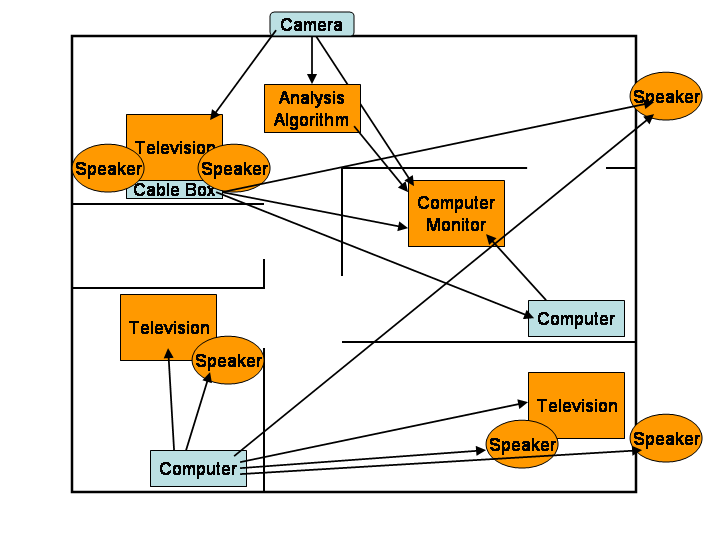
Umakishore Ramachandran is a Professor in the School of Computer Science at Georgia Institute of Technology's College of Computing, where he directs the Embedded Pervasive Lab. He received his Ph.D. from the University of Wisconsin-Madison in 1986 and has led transformative initiatives including the Online MS in Computer Science (OMSCS) program. His research spans distributed systems, edge computing, and real-time sensor networks, with applications in smart surveillance and connected vehicles. His research interests include architectural design of parallel/distributed systems, large-scale situation awareness using camera networks, cloud-edge continuum optimization, and latency-sensitive applications for geo-distributed infrastructures. Recent work focuses on elevating edge computing to parity with cloud resources. His publications show strong emphasis on edge computing innovations (MicroEdge, FogStore), real-time video analytics (EVA, ClairvoyantEdge), and adaptive mobile systems (Foresight). Trends include multi-tier architectures, quality-of-experience optimization, and scalable processing for IoT workloads. Major Awards: IEEE Fellow (2014) NSF Presidential Young Investigator (1990) ACM/IFIP Middleware Best Paper (2022) 3x College of Computing Dean's Awards He has advised 40+ PhD students, with recent graduates at Google, Microsoft, and academia. Current NSF/CPS grants support his work on geo-distributed latency-sensitive applications. He co-leads the STAR Center and Samsung-funded embedded software programs. His Embedded Pervasive Lab develops systems like Stampede (stream processing) and DFuse (sensor fusion), with testbeds in the Aware Home and transportation networks. Teams collaborate with Intel, Microsoft, and Bosch on edge-AI deployments.
Professor Gabriella Andersson is a leading materials physicist at Uppsala University , serving as Professor of Materials Physics within the Department of Physics and Astronomy. She has held numerous leadership roles including Deputy Head (2015-2020), Section Dean of Physics (2020-2023), and Director of Studies for the doctoral program in physics since July 2023. Education & Qualifications: FD (PhD) in Physics Docent in Physics Excellent Teacher Award (2013) Research Focus: Professor Andersson's research centers on the magnetic properties of thin films, multilayers, and nanostructures. Her work particularly emphasizes magneto-optical domain imaging using Kerr microscopy and the fine-tuning of magnetic properties through atomic-level engineering. She investigates how combinations of elements can create tailored magnetic effects, focusing on applications in micro- and nanometer-scale materials. Research Methodology: Her experimental approach includes sample fabrication using combinatorial sputtering and characterization through X-ray diffraction, magneto-optical Kerr effect (MOKE), and neutron scattering techniques. She has developed expertise in strain engineering and interface control to manipulate magnetic anisotropy and domain structures. Key Research Themes: Magnetism in amorphous and crystalline thin films Exchange coupling in magnetic multilayers Magnetic anisotropy engineering Domain imaging and magnetization dynamics Rare-earth-lean magnetic materials All-optical switching phenomena Scientific Recognition: Excellent Teacher Award (2013) Professor of Materials Physics (2015) Coordinated VR Graduate School in Materials Science (2008-2015) Funding & Grants: Her research has been supported by prestigious organizations including the Royal Swedish Academy of Sciences, the Royal Physiographic Society of Lund, Magnus Bergvall Foundation, Göran Gustafsson Foundation, STINT, Carl Tryggers Foundation, and the Swedish Research Council (Vetenskapsrådet). Teaching & Supervision: Professor Andersson teaches undergraduate courses in mechanics, electromagnetism, and measurement technology. She has coordinated the VR graduate school in materials science and serves as director of studies for the doctoral program in physics. Her teaching philosophy emphasizes activating problem-solving exercises and has contributed to educational literature on physics education. Laboratory & Facilities: Her research is conducted at the Ångström Laboratory, one of Europe's most advanced materials research facilities, equipped with state-of-the-art deposition systems, magnetic characterization tools, and neutron/X-ray scattering capabilities.
Dr. Grigorios Chrysos is a faculty member in the Department of Electrical & Computer Engineering at the University of Wisconsin-Madison. His research focuses on reliable machine learning, emphasizing robustness to noise, out-of-distribution generalization, and theoretical understanding of neural/polynomial networks. Education: PhD in Machine Learning, Imperial College London (2020) M.Eng. in Electrical Engineering, National Technical University of Athens (2014) Key research interests include robustness in deep networks , inductive bias analysis , and polynomial network design for high-order input interactions. His work explores adversarial robustness, fair model generalization, and extrapolation properties in generative frameworks. Recent awards include the prestigious DAAD AInet Fellowship (2023), Best Reviewer Awards at NeurIPS (2022), ICLR (2022), and IMCL (2021), alongside Amazon Cloud Credits and Nvidia GPU donations (2019). Scientific Contributions: Advancing tensor methods in machine learning Developing polynomial networks for robustness Designing efficient EEG seizure analysis algorithms
Charles E. "Chick" Woodward is Full Professor of Astronomy in the School of Physics and Astronomy at the University of Minnesota , and a core faculty member of the Minnesota Institute for Astrophysics (MIfA). He serves as Program Director for the University of Minnesota– Large Binocular Telescope (LBT) / Steward Observatories partnership, Vice-Chair of the LBT Observatory Board of Directors, and Associate Director of the MLOF & OBO observatories. Additional affiliations include membership in the Large Binocular Telescope Observatory (LBTO) consortium. Education: Ph.D. in Physics and Astronomy, University of Rochester, 1987 M.A. in Physics, University of Rochester, 1982 A.B. in Physics, Dartmouth College, 1980 Research Interests: Woodward is an international authority on XUVOIR (X-ray–UV–Optical–IR) observational astrophysics . His work addresses the physics of interstellar and circumstellar dust grains , the energetic and chemical evolution of classical nova explosions , the life cycles of evolved stars , and the thermal and compositional behaviour of comets and small Solar-System bodies . A parallel strand of research involves telescope and instrumentation development , including leadership roles in Spitzer Space Telescope legacy science planning, SOFIA airborne observatory utilisation, and interferometric exoplanet surveys with the LBT Interferometer . Recent Publication Themes (2010–2011): Recent refereed works demonstrate a breadth of inquiry spanning high-redshift galaxy spectroscopy, detailed mid-infrared analyses of cometary fragments, chemical and dust evolution in novae, multi-epoch studies of supernova remnants, and large-scale infrared surveys of evolved stellar populations and asteroids. Honours & Awards: National Science Foundation – White House Presidential Faculty Fellow National Science Foundation – Young Investigator Award Smithsonian Institution Faculty Fellow – Air & Space Museum Ford Foundation Minority Fellow Multiple University of Wyoming teaching awards (1992–1999) Advising, Grants & Infrastructure: Woodward currently mentors one post-doctoral researcher, two graduate students, and three undergraduates within the Minnesota Infrared Lab . Research is supported competitively by the NSF and NASA . The group operates a dedicated 30 TB data server and over 15 client workstations, maintained by an in-house systems administrator, for intensive data reduction and remote telescope control. Labs, Teams & Facilities: The Minnesota Infrared Lab serves as the primary research unit. Extensive access is provided to the Spitzer and SOFIA archives, the Large Binocular Telescope , Gemini Observatory , Steward Observatory facilities, and future James Webb Space Telescope programs. Woodward is also a member of the exoplanet-imaging LEECH collaboration using the LBT Interferometer .
François-Raymond Boyer is an Associate Professor in the Department of Computer Engineering and Software Engineering at Polytechnique Montréal. He holds a B.Sc. and Ph.D. from Université de Montréal and teaches courses in programming and digital audio. His research spans: Computer architecture and VLSI systems Network processing and traffic management Digital audio signal processing Hardware acceleration and optimization He is affiliated with ReSMiQ (Strategic Cluster for Microsystems) and OICRM (Music Research Observatory). Recent publications focus on 5G network processing, modular programming frameworks, and high-speed traffic management architectures, primarily in IEEE Access and IEEE Transactions on VLSI Systems. Professor Boyer has supervised 3 PhD and 6 Master's students, with research topics including network architecture, audio processing, and hardware design. No scientific awards are mentioned in the available records.
Nate Foster is a Professor of Computer Science at Cornell University's Bowers Computing and Information Science college. He also serves as a Visiting Professor at EPFL's Data Center Systems Laboratory during the 2023-24 academic year and as a Visiting Researcher at Jane Street. His research focuses on developing languages and tools that make it easy for programmers to build secure and reliable systems, with particular emphasis on software-defined networking. Dr. Foster's educational background includes: PhD in Computer Science from the University of Pennsylvania MPhil in History and Philosophy of Science from Cambridge University BA in Computer Science from Williams College Nate Foster's research spans multiple areas within programming languages and systems. His current work focuses on the design and implementation of languages for programming software-defined networks. He has also made significant contributions to bidirectional languages (also known as "lenses"), database query languages, data provenance, type systems, mechanized proof, and formal semantics. His interdisciplinary approach combines theoretical foundations with practical systems building, seeking to bridge the gap between formal methods and real-world network programming. An analysis of Foster's recent publications reveals a strong focus on network programming languages, particularly NetKAT and P4. His work consistently applies formal methods to networking problems, with increasing emphasis on verification, equivalence checking, and symbolic execution techniques. The research trajectory shows progression from foundational language design to practical verification tools, demonstrating how theoretical programming language concepts can solve real-world networking challenges. Dr. Foster has received numerous prestigious awards for his contributions: Sloan Research Fellowship NSF CAREER Award ACM SIGPLAN Robin Milner Young Researcher Award (2023) Most Influential POPL Paper Award Tien '72 Teaching Award Google Research Award Yahoo! Academic Career Enhancement Award Cornell Engineering Research Excellence Award Morris and Dorothy Rubinoff Award ACM SIGCOMM Rising Star Award As an active member of the programming languages community, Foster has advised numerous graduate students and secured significant research funding through his NSF CAREER award and Google Research Award. He has served in leadership roles for major conferences including PLDI, POPL, and ICFP, demonstrating his commitment to mentoring the next generation of researchers through programs like PLMW@PLDI. His collaborative approach is evident in his extensive co-authorship network across academia and industry. Foster leads research in the area of programming languages for networking, with particular focus on the NetKAT framework for network verification. His work bridges the gap between formal methods and practical networking systems, creating tools that have influenced both academic research and industry practice in software-defined networking. His collaborations with institutions like EPFL and industry partners like Jane Street demonstrate the real-world impact of his research agenda.
Panagiotis Papadimitriou serves as an Associate Professor at the Department of Applied Informatics, University of Macedonia in Thessaloniki, where he leads the NetCloud research group. Previously, he held positions as Assistant Professor at Leibniz University Hanover's Institute of Communications Technology and as a Post-Doctoral Researcher at Lancaster University (UK) and Telecom SudParis (France), with additional research experience at the University of Cambridge. His research spans Internet architectures and technologies with emphasis on Network Function Virtualization (NFV), Software-Defined Networking (SDN), Time-Sensitive Networking (TSN), Internet-of-Things (IoT), and Edge Computing. His work includes ML-assisted NFV orchestration (SFC-graph embedding, transformation, and multi-domain partitioning), network slicing orchestration, programmable dataplanes with P4, deterministic networks, datacenter network fabrics, and edge computing. Notable research outcomes include distributed network processing architectures (MIDAS, DistNSE), multi-provider service mapping mechanisms (Nestor), open-source NFV orchestration platforms (TeNOR), and orchestration platforms for cross-slice communication (MESON). His recent publications show a strong focus on In-Band Network Telemetry, Service Function Chain optimization, Time-Sensitive Networking implementations, and cross-slice communication systems, demonstrating his leadership in network virtualization and edge computing research areas. His work consistently addresses practical implementation challenges while advancing theoretical foundations in network management. Scientific Recognition: Senior Member of IEEE Associate Editor of IEEE Transactions on Network and Service Management Counselor of the IEEE Student Branch at University of Macedonia As Principal Investigator of the Horizon Europe NEPHELE project and previous EU-funded projects (NECOS, T-NOVA, CONFINE), he has secured over 1M euro in research funding. He actively contributes to the academic community through conference organization roles including IEEE ICC NGNI 2025, IEEE ICIN 2024, and IFIP/IEEE CNSM 2022 as General Co-Chair. The NetCloud research group he leads maintains a dedicated edge computing facility used for both research and teaching, and is known for its commitment to open-source software and community service through academic network resources. His educational background includes a Ph.D. in Electrical and Computer Engineering from Democritus University of Thrace (2008), an M.Sc. in Information Technology from University of Nottingham (2001), and a B.Sc. in Computer Science from University of Crete (2000).