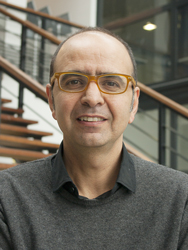
Sonya HillView profile
Senior Lecturer
Sonya Hill serves as Deputy Head of the School of Natural Sciences at the University of Chester, where she also holds the position of Senior Lecturer in Animal Behaviour and Welfare. Her extensive administrative responsibilities include serving as Timetabling Contact, Disability Link Tutor for the School, Chair of Student Voice Meetings for biological sciences programmes, and Co-chair of the Faculty Student Success Subcommittee. Her academic credentials include: PhD in Veterinary Medicine from University of Cambridge (2000-2005) MPhil in Biological Anthropology from Durham University (1997-1999) BA (Hons) in Anthropology from Durham University (1993-1996) Hill's research program centers on scientific assessments of animal welfare, particularly for zoo- and sanctuary-housed wild animals, and behavioral adaptations across various taxa. With substantial focus on non-human primates (especially great apes), her work bridges theoretical understanding with practical applications for improving welfare standards in zoological collections. She teaches across multiple biological sciences degree programmes with emphasis on animal welfare and ethics, conservation, research methods, and behavioral science. Her publication history reveals a significant research trajectory shift from operations research and mathematical optimization (1985-2003) to animal welfare science (2009-present). Recent publications demonstrate methodological sophistication in studying zoo animal behavior, with particular expertise in primate welfare assessment, abnormal behaviors like regurgitation and reingestion, and evaluating visitor effects on animal welfare. This evolution reflects integration of her practical zoo experience with academic rigor. Sonya actively supervises postgraduate research students and contributes significantly to academic administration within the School of Natural Sciences. Her work exemplifies the translation of scientific findings into practical zoo management strategies that enhance animal welfare while supporting conservation objectives.