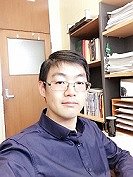
Yao Zhu is a Visiting Professor at the Chair of Information Theory and Data Analytics, RWTH Aachen University . His research focuses on advanced wireless communication systems, particularly in Edge Computing , Ultra-Reliable Low-Latency Communication (URLLC) , and Physical Layer Security , leveraging Finite Blocklength Codes for next-generation network optimization. Key research areas include: Optimization of resource allocation and task scheduling in distributed edge learning and fog computing environments Reliability and energy efficiency trade-offs in Industrial IoT and V2X networks Novel applications of NOMA (Non-Orthogonal Multiple Access) and short-packet communication for secure and fresh data transmission Integration of physical layer deception with semantic reliability models His work explores the interplay between telecommunications and computer science principles to address challenges in low-latency, high-reliability networked systems. The Chair of Information Theory and Data Analytics serves as his academic base, focusing on theoretical and practical advancements in data-driven communication frameworks.
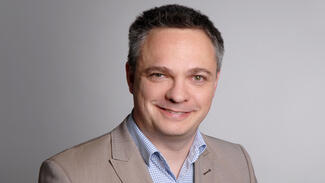
Zheng Chang is a Professor at the Institute of Computing Technology, School of Computer Science and Technology, University of Chinese Academy of Sciences in Beijing, China. With a PhD from the University of Jyväskylä (2013), Chang has established a prolific research career with over 240 publications spanning from 2011 to 2025. Chang maintains strong collaborative ties with researchers at the Chinese Academy of Sciences' Shenyang Institute of Automation and has developed significant international collaborations, particularly with Finnish researchers including Timo Hämäläinen. Chang's research focuses on cutting-edge areas at the intersection of wireless communications, artificial intelligence, and edge computing. Their work prominently features federated learning, UAV networks, resource allocation, and privacy-preserving techniques for IoT applications. Recent publications demonstrate a strong emphasis on vehicular edge intelligence, split learning architectures, and RIS-assisted communications. The research output shows consistent growth with 42 publications in 2024 alone, indicating an active and expanding research program. Chang's 15 most recent publications reveal a clear research trajectory toward addressing the challenges of resource-constrained edge environments through innovative learning architectures. The work spans theoretical frameworks for privacy preservation in federated learning to practical implementations for UAV networks and vehicular systems. A notable trend is the integration of AI-generated content techniques with traditional federated learning approaches to overcome data scarcity issues in edge environments. While specific awards aren't documented in the provided text, Chang's extensive publication record in top-tier IEEE journals including IEEE Transactions on Wireless Communications, IEEE Internet of Things Journal, and IEEE Transactions on Vehicular Technology demonstrates significant scholarly impact. The research has been widely cited, with multiple highly cited co-authors including Timo Hämäläinen (66 co-authored papers), Zhu Han (38 papers), and Geyong Min (31 papers). Chang's work shows strong practical applications across multiple domains including intelligent transportation systems, smart agriculture, healthcare IoT, and next-generation 6G networks. The research program appears well-funded through collaborations with major institutions and demonstrates clear translational potential for real-world deployment in edge computing environments.
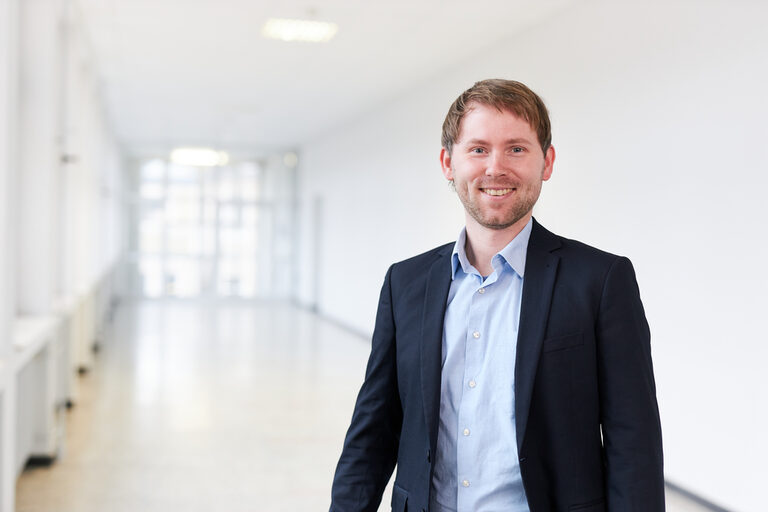
Dr. Hai Dong is a Senior Lecturer at the School of Computing Technologies, RMIT University in Melbourne, Australia, with promotion to Associate Professor scheduled for 2026. He serves as the Founding Director of the CloudTech-RMIT Green Cryptocurrency Joint Research Laboratory (GreenCryptoLab) and Leader of the Smart Sensing and Services Research Area. Previously, he held research fellow positions at both RMIT University and Curtin University. Dr. Dong is a Senior Member of IEEE and chairs the IEEE Computational Intelligence Society Task Force on Deep Edge Intelligence. Dr. Dong's research spans several cutting-edge domains including Service-Oriented Computing, Edge Intelligence, Blockchain, AI Security, Cyber Security, and Machine Learning. His work bridges theoretical foundations with practical applications, particularly in secure and efficient computing systems. He has developed innovative approaches for smart contract security, edge computing optimization, federated learning, and blockchain applications with a strong focus on sustainability and real-world impact. His publication record demonstrates consistent high-impact contributions across top venues including AAAI, ASE, ICML, TSE, and TSC. Dr. Dong's research shows a clear trajectory toward increasingly sophisticated integration of AI with edge computing and blockchain systems, with growing emphasis on security, privacy, and resource efficiency. Recent work highlights his leadership in addressing emerging challenges in LLM-generated smart contracts and secure federated learning systems. Best Research Paper Award at ICSOC 2016 Best Paper Award at IEEE ICBC 2025 2023 RMIT Award for Research Engagement and Impact - Industry Engagement in Graduate Research Dr. Dong has successfully supervised numerous PhD and Master's students to completion, with many going on to prestigious positions. He has secured over $5 million in research funding as Chief Investigator from sources including ARC, CRC, QNRF, and industry partners like ANZ, CloudTech, and Telstra. His GreenCryptoLab research facility represents a significant industry-academic partnership focused on sustainable blockchain technologies. Dr. Dong maintains active collaborations with researchers worldwide and serves on committees for over 100 international conferences.
Mirco Stern is a researcher at the Institute of Information Management (IPD Böhm) at Karlsruhe Institute of Technology. His work focuses on sensor networks, database systems, and service composition technologies. Key research areas include distributed query processing, data quality guarantees, and optimization of join operations in resource-constrained environments. Role : Researcher, Institute of Information Management Location : Karlsruhe, Germany Research trends highlight his expertise in sensor network optimization (join processing, wavelet transforms) and service composition (semantic matchmaking, automated integration). Publications span ACM SIGMOD, VLDB, and ECOWS conferences, emphasizing algorithm design and system efficiency.
Dr. rer. nat. Stefan Lankes is an academic researcher at the Chair of Automation of Complex Power Systems, RWTH Aachen University's Faculty of Electrical Engineering and Information Technology. His work focuses on operating systems, high-performance computing (HPC), cloud computing, and lightweight virtualization techniques for embedded and real-time systems. Stefan holds a PhD in Electrical Engineering (2003) for his dissertation on real-time distributed platforms. His career spans roles from Scientific Assistant (1998-2004) to Academic Director (since 2019), with key contributions to HPC infrastructure and simulation environments. Research highlights include Rust-based OS development ( HermitCore unikernel ), GPU virtualization in distributed systems, and energy-efficient embedded computing paradigms. He pioneered the FlippedOS digital teaching platform using virtual workstations for operating systems education. Scientific awards include the 2016 Digital Teaching Fellowship and the 2021 RWTH Lecturer distinction. His publications cover topics from NUMA memory management to real-time CORBA protocols, with recent works addressing unikernel security and CUDA virtualization. Stefan leads simulation infrastructure and HPC virtualization projects, with affiliations to the E.ON Energy Research Center and involvement in European workshops like Euro-Par. His work bridges system software innovation with practical applications in energy systems and supercomputing.
Winfried Lamersdorf is a full professor in the Department of Computer Science at the University of Hamburg , leading the Distributed Systems (VSIS) research unit. His career spans from IBM's European Networking Centre to leading numerous DFG, EU, and industry-funded projects. Major research interests include: Service-oriented computing (SOA, Web Services) Mobile and ubiquitous systems Agent-oriented software construction Self-organizing systems Context-aware middleware Cloud/edge computing Applications in E-Health, Smart Cities, and Industrial Informatics Recent projects like SANE (Smart Networks for Citizen Participation), CloudAware (context-adaptive mobile cloud systems), and FYPA²C (future production automation) highlight his focus on urban data spaces, energy-efficient mobile systems, and evolutionary software management. His scientific contributions span 200+ publications, with 15 recent articles covering topics such as: Complex event processing Decentralized blockchain coordination Context-aware computation offloading Model-driven production system evolution BDI agent architectures Service composition patterns Advising over 20 PhD students including Heiko Bornholdt (Smart Cities), Philipp Kisters (Distributed Platforms), and Gabriel Orsini (Mobile Clouds, 2016), Lamersdorf has shaped research in distributed applications through long-term collaborations with institutions like TU Munich, HSU Hamburg, and international IFIP committees.
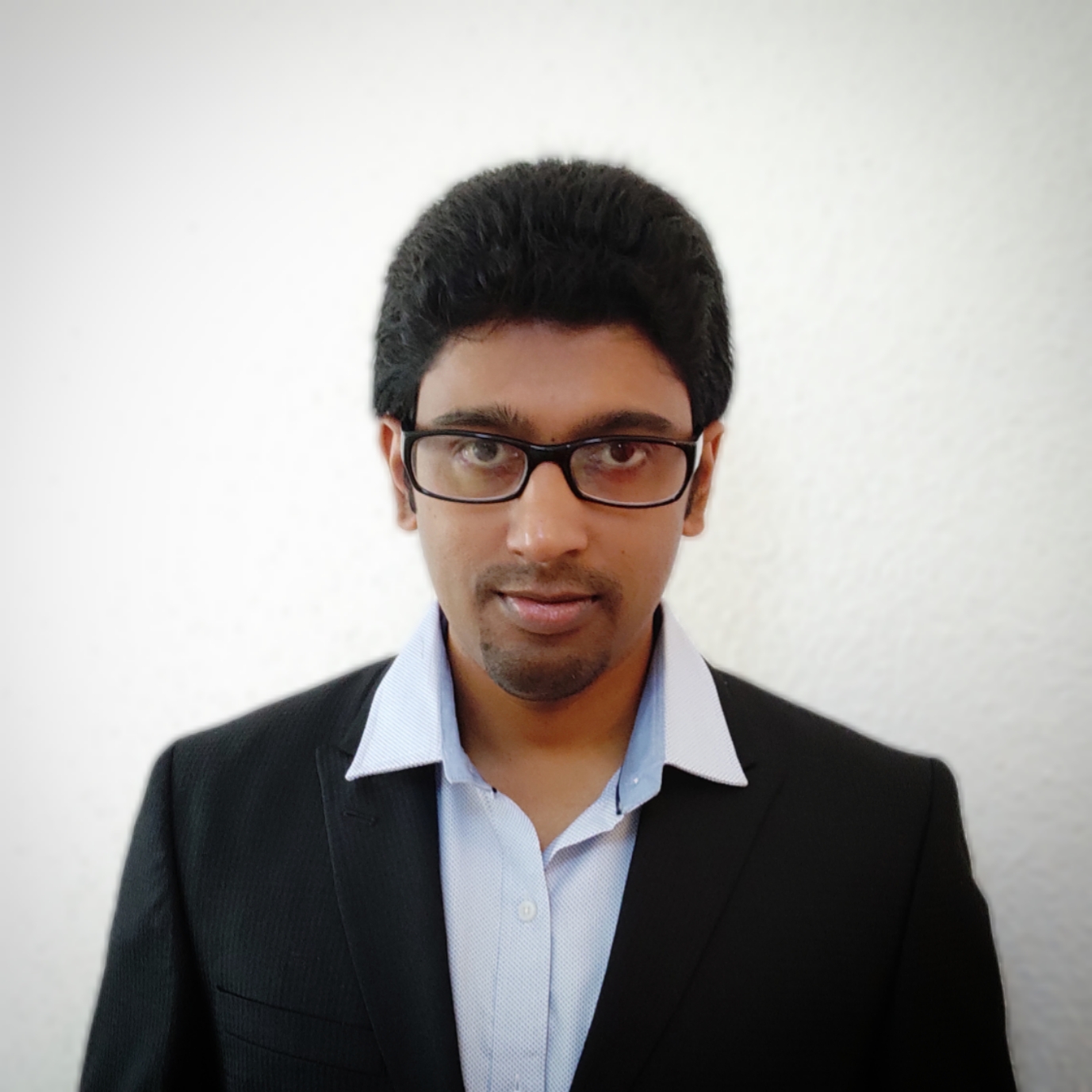
Muhammad Bilal is an Associate Professor at Zhejiang University's School of Computer Science, Department of Computer Science and Technology. His research spans multiple cutting-edge domains in computer science and engineering, with a particular focus on edge computing, Internet of Things, and vehicular networks. His research interests include Edge Computing , Internet of Things , Vehicular Networks , Federated Learning , Digital Twins , and Cloud Computing . His work addresses critical challenges in resource allocation, latency optimization, privacy preservation, and intelligent decision-making in distributed computing environments. He has made significant contributions to developing novel frameworks for service caching, computation offloading, and secure data processing in next-generation networks. His recent publications reveal a strong trend toward integrating artificial intelligence with edge and cloud infrastructure, particularly focusing on privacy-preserving techniques and resource-efficient algorithms. His work spans applications from intelligent transportation systems to healthcare monitoring and meteorological services, demonstrating the versatility and real-world impact of his research. Dr. Bilal has established a prolific publication record with numerous high-impact papers in top-tier journals and conferences, reflecting his active engagement in the academic community. His collaborative approach is evident through extensive co-authorship networks, particularly with researchers in China, Pakistan, and internationally.
Pubudu N. Pathirana is a Professor at the University of Melbourne's College of Engineering, specializing in Blockchain Technology, Edge Computing, Federated Learning, and Machine Learning for Healthcare . His work bridges theoretical advancements with practical applications in smart cities, cyber-physical systems, and medical diagnostics. Education : PhD in Electrical Engineering, Monash University His research focuses on privacy-preserving machine learning and blockchain integration with edge networks , demonstrated through collaborations with Dinh C. Nguyen, Minh K. Quan, and Bipasha Kashyap. Key contributions include quantum-enhanced models for acoustic classification and federated learning frameworks for IoT environments. Recent publications (2025) highlight advancements in spatio-temporal traffic modeling , adaptive privacy clipping , and secure client aggregation . Earlier work (2021-2024) explored applications in Covid-19 detection , Friedreich Ataxia severity classification , and entropy-based cerebellar ataxia analysis . He mentors students like Ali Reza Sattarzadeh and Kanishka Ranaweera, with grants supporting projects on blockchain-enhanced federated learning and quantum-inspired edge computing . His lab collaborates with institutions such as Monash University and the Florey Institute of Neuroscience.
Tudor Cioara is a Professor at the Department of Computer Science, Faculty of Mathematics and Computer Science, Babeș-Bolyai University in Romania. With over 100 publications spanning from 2008 to 2025, his research establishes him as a leading academic in the intersection of computer science and energy systems. His research interests focus on blockchain technology applications in energy systems, smart grid optimization, distributed computing, and AI-driven energy management. Cioara's work bridges theoretical computer science with practical energy applications, developing novel approaches for peer-to-peer energy trading, virtual power plants, and data center energy optimization. His recent work has expanded into federated learning, edge computing, and large language models applied to energy systems. Cioara's publication portfolio shows a consistent trajectory of increasing impact, with significant contributions in 2023-2025 focusing on AI-driven energy solutions, blockchain applications, and healthcare technology integration. His work demonstrates strong interdisciplinary connections between computer science, electrical engineering, and healthcare domains. He has received recognition through numerous collaborations with international researchers and institutions, particularly in European energy and computing projects. His work on blockchain-based energy trading systems and AI optimization for smart grids represents some of the most influential contributions in his field. Cioara leads a research group that has produced significant work on data center optimization, energy flexibility management, and digital twin applications for energy systems. His team has developed innovative approaches for integrating renewable energy sources, managing electric vehicle charging, and creating secure energy trading platforms using blockchain technology.
PD Dr. Josef Weidendorfer is a qualified private lecturer at Technische Universität München (TUM) and leads the Future Computing Group at the Leibniz Computing Centre (LRZ). He holds a dual affiliation with TUM's Department of Informatics, Chair of Computer Architecture and Parallel Systems (Prof. Schulz), and the Leibniz Rechenzentrum der Bayerischen Akademie der Wissenschaften. His work focuses on developing smooth migration strategies for future HPC systems and evaluating novel technologies to improve system-level and workload analysis tools. Weidendorfer's research interests encompass Parallel Computer Architectures, High Performance Computing, Multi-/Manycore architectures, GPGPU, Performance analysis and optimization, Cache Simulation, Virtual Machines, and dynamic code generation. He is particularly interested in strategies for improving computational efficiency across various hardware structures, including specialized accelerator hardware for HPC codes. He regularly organizes the UCHPC workshop (since 2010 with Euro-Par) about unconventional hardware for HPC computing and is co-organizer of the PSTI workshop series. His recent publications reveal a strong focus on HPC system optimization, with particular emphasis on load balancing techniques, cache partitioning, application malleability, and performance monitoring. The research trajectory shows increasing attention to practical implementation challenges in modern heterogeneous computing environments, especially regarding GPU utilization, resource partitioning under power constraints, and phase-aware system monitoring. Weidendorfer maintains the open-source tools Callgrind/KCachegrind for cache simulation and has supervised numerous student projects across bachelor's, master's, and guided research programs. He teaches courses including Virtualization Techniques, Parallel Programming Systems, and Advanced Computer Architecture, demonstrating strong commitment to both research and education in computer architecture and parallel systems. As principal investigator for multiple large-scale projects including EU Project SEANERGYS (2025-2028) and BMBF Project ScalNext (2022-2025), he leads significant research initiatives focused on future computing technologies and HPC system development.
Vittorio Cozzolino is a PhD Researcher at the Technical University of Munich since 2015, supervised by Professor Jörg Ott. His work focuses on edge-cloud infrastructures , unikernels , and distributed orchestration frameworks . He previously worked at AgileLab (Turin, Italy) as a Technical Lead and completed an ERASMUS internship at IMDEA Networks (Madrid, Spain) studying MANETs. M.Sc. in Computer Science and Engineering, University Federico II of Naples (2014) His research interests include edge computing architectures , lightweight virtualization , and computer vision for mobile augmented reality . Publications highlight trends in edge-cloud collaboration , unikernel-based systems , and IoT security . He actively contributes to teaching courses on edge computing , recommender systems , and networking fundamentals .
Prof. Jens Rettkowski is a leading academic specializing in advanced computing architectures, particularly focusing on multi-core systems, reconfigurable hardware (FPGAs), and networks-on-chip (NoC). His work bridges theoretical computer architecture with practical applications in embedded systems, real-time processing, and autonomous technologies. Research Interests: Multi-Core Architecture Design and Optimization Networks-on-Chip (NoC) for High-Performance Systems Reconfigurable Computing and FPGA-Based Systems Hardware-Software Co-Design for Embedded Applications Real-Time Systems and Energy Efficiency Sensor Data Fusion and Autonomous Driving Publications reflect a strong focus on optimizing communication and computation in heterogeneous systems, with recent work emphasizing power savings in multi-core architectures and event-based debugging frameworks. His contributions include frameworks like MPSoCSim for simulating reconfigurable systems, and software-defined FPGA approaches for adaptive computing. He has led research in robotics applications for assisted living environments, combining navigation algorithms with real-time sensor processing. His work also addresses security aspects of FPGA configuration and partial bitstream analysis using machine learning.
Dr. Dirk Bade is a Researcher at the University of Hamburg , affiliated with the Department of Informatics under the Faculty of Mathematics, Informatics and Natural Sciences. His work focuses on Mobile and Ubiquitous Computing , Internet of Things , Context-Aware Systems , and Blockchain Applications . He is actively involved in projects such as SANE (Smart Networks for Urban Citizen Participation), CloudAware (Context-adaptive Middleware), and ContAgency (Context Data Brokerage). Research Guest at VSYS, University of Hamburg (since 2013) PhD in Informatics (2013), University of Hamburg Diploma (2007) and Bachelor (2003) in Informatics, University of Hamburg His research explores smart city infrastructures , context-aware computation offloading , and security implications of sensor data . Key contributions include CloudAware (middleware for mobile cloud adaptation) and Incolum (citizen-centric sensor data marketplaces). Publications highlight trends in mobile edge computing (2015-2016), smart cities (2019-2021), and context-aware middleware (2011-2013). His work bridges agent-oriented software engineering with blockchain-based information markets . Dirk has supervised over 50 theses, including studies on blockchain reputation systems , mixed-reality negotiation tools , and sensor-supported indoor localization . He teaches courses on mobile computing , smart cities , and context-aware systems , with a focus on practical software development and ubiquitous applications .
Debopam Bhattacherjee is a Senior Researcher at Microsoft Research, Bangalore, focusing on AI Systems, Networked Systems, and Low-Earth Orbit (LEO) Satellite Networks. He holds a PhD in Computer Science from ETH Zürich (2021) and a dual Erasmus Mundus Master's in Security and Mobile Computing. His work has been recognized with the IRTF Applied Networking Research Prize (2020) and multiple Best Paper/Dataset Awards. Research interests include LEO satellite networks, sustainable AI systems, network topology design at hypersonic speeds (27,000 km/hour), and green computing via modular data centers. His publications span ACM SIGCOMM, USENIX ATC, IEEE COMSNETS, and arXiv, with recent patents on AI-driven LLM training and inference systems. Key awards: IRTF Applied Networking Research Prize (2020) Best Paper Award at ACM IMC 2020 Best Dataset Award at ACM IMC 2020 He has supervised numerous PhD/Master's students at ETH Zürich and Microsoft Research, including Tella Rajashekhar Reddy, Shubham Tiwari, and Saksham Bhushan. His educational background includes a B.E. in Computer Science & Engineering from Jadavpur University (2009) and a research fellowship at the Max Planck Institute (2019).
Dr. Xiaopeng Yuan serves as a Researcher at the Chair of Information Theory and Data Analytics within the Faculty of Electrical Engineering and Information Technology at RWTH Aachen University, Germany. His work focuses on advancing UAV-assisted wireless communication systems and energy transfer mechanisms, with publications appearing in top-tier IEEE journals and conferences since 2019. His research centers on UAV trajectory optimization, wireless power transfer (WPT), finite blocklength (FBL) communications, and resource allocation for ultra-reliable low-latency communication (URLLC) systems. Key contributions include modeling nonlinear energy harvesting in UAV networks, developing covert communication techniques under detection constraints, and optimizing multi-UAV coordination for data collection and power transfer efficiency. His methodology frequently combines analytical optimization with deep reinforcement learning for complex network scenarios. Analysis of his 15 most recent publications (2024-2025) reveals three dominant research thrusts: (1) UAV path planning for energy-constrained networks emphasizing 3D trajectory optimization and directional antenna integration; (2) Finite blocklength regime analysis for short-packet communications in URLLC and WPT systems; (3) Security-aware resource allocation for covert data collection and secrecy throughput maximization. His work consistently addresses practical implementation challenges like nonlinear energy harvesting and no-fly zones.