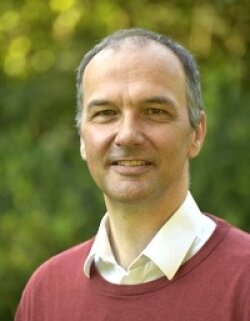
Henry A. Kautz is a Professor at the University of Rochester, New York, USA, with a distinguished career in artificial intelligence, machine learning, and social media analysis. His research spans interdisciplinary applications in healthcare informatics, urban mobility, and computational modeling of human behavior. Research Focus : Integrates AI with public health surveillance (e.g., mental health monitoring via search engine logs), social media analysis for disease transmission modeling, and multimodal data interpretation for activity recognition. Key Contributions : Pioneered nEmesis for foodborne illness detection via social media, developed Markov logic frameworks for complex event recognition, and advanced privacy-preserving systems for cognitive disabilities support. His recent work explores hardware-accelerated SAT solving, explainable AI for deep learning, and longitudinal behavioral analysis during the COVID-19 pandemic. Publications emphasize practical AI applications in health, urban planning, and computational epidemiology.
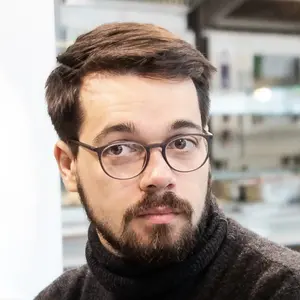
András A. Benczúr is a prominent researcher affiliated with the Hungarian Academy of Sciences, specifically with SZTAKI (Institute for Computer Science and Control). He has maintained a prolific research career spanning multiple decades with over 160 publications documented in the dblp database. His work primarily focuses on data science, machine learning, and network analysis, with significant contributions to recommender systems and big data analytics. Dr. Benczúr's research interests include Data Science, Machine Learning, Recommender Systems, Network Analysis, Big Data Analytics, Graph Theory, Information Systems, Web Mining, Stream Processing, and Artificial Intelligence. His work demonstrates a consistent focus on developing theoretical foundations while addressing practical applications in various domains. He has made significant contributions to understanding information networks, developing efficient algorithms for data streams, and creating novel approaches to recommendation systems. His recent publications (2023-2025) show a continued focus on cutting-edge topics including neural network uncertainty, AI-driven communication for 6G networks, network embedding applications for public health, and theoretical evaluations of explainable AI methods. These works demonstrate his ability to bridge theoretical computer science with practical applications across multiple domains including telecommunications, public health, and blockchain technology. Dr. Benczúr has collaborated extensively with researchers across Hungary and internationally, with notable long-term collaborations with Bálint Daróczy (30 joint publications), Róbert Pálovics (27 joint publications), and Domokos Kelen (14 joint publications). His work appears in prestigious venues including IEEE Access, ICLR, WWW, RecSys, and numerous IEEE and ACM conferences. His research has practical applications in diverse areas including social network analysis, telecommunications infrastructure, public health monitoring, and blockchain technology. The Hexa-X project publications indicate his involvement in shaping the future of 6G communication standards through AI integration, while his work on network embeddings has been applied to vaccine skepticism detection, demonstrating the societal impact of his research.
Alsayed Algergawy is a researcher at the Institute of Computer Science , Friedrich Schiller University Jena . His work focuses on ontology alignment , schema matching , and knowledge graph integration . Affiliation: Friedrich Schiller University Jena, Institute of Computer Science Research interests span semantic web technologies , machine learning for data integration , and ontology engineering , with applications in biodiversity and invasion biology . He has developed tools like OAPT for ontology partitioning and DREIFLUSS for table matching. His recent publications emphasize LLM-driven knowledge graph completion , semantic annotation of scientific datasets , and clustering-based ontology matching . Collaborative projects include BiodivNERE for NLP in biodiversity and INBIO (Invasion Biology Ontology).
Shuai Ma is a researcher at Beihang University , School of Computer Science and Engineering, China. His work spans database systems , machine learning , and natural language processing , focusing on temporal knowledge graphs, graph neural networks, and privacy-preserving federated learning. He received his PhD from the University of Edinburgh , UK, in 2011. Research interests include graph theory , spatiotemporal data analysis , data mining , and anomaly detection . His recent publications address: 2025 : Technology mapping for ASICs, temporal network motifs, and 3D geometry compression. 2024 : Knowledge graph completion, scene mining for e-commerce, and secure aggregation for federated learning. Article trends reveal expertise in graph neural networks , temporal data processing , and privacy-aware systems . Collaborations with institutions like Concordia University and industry leaders underscore his interdisciplinary impact.
Michail Vlachos is a researcher affiliated with the University of Lausanne, Switzerland, with a focus on data mining, machine learning, and interpretable AI. His work spans algorithm design, time-series analysis, and data privacy, often intersecting with applications in recommender systems and neural network transparency. Research Interests: Data mining, machine learning, XAI (Explainable AI), time-series analysis, clustering algorithms, privacy-preserving data publishing, and recommender systems. Publication Trends: Recent work emphasizes interpretable deep learning architectures (2024), detection of deceptive AI explanations (2023), and neural recommender systems for educational platforms (2024). Earlier contributions include compressive data mining (2015), clustering preservation techniques (2017), and trajectory analysis (2009). Collaborations: Regularly works with Johannes Schneider, Ahmad Ajalloeian, and teams from institutions like IBM Research, ETH Zurich, and University of Lausanne.
Giacomo Fiumara is a distinguished Professor at the University of Messina, Department of Mathematical and Computer Sciences, where he has established himself as a leading researcher in complex network analysis and its applications. With over 90 publications spanning nearly two decades, his work demonstrates significant contributions to network science, particularly in the analysis of criminal organizations, social networks, and quantum approaches to community detection. His extensive collaborations with researchers like Pasquale De Meo (61 co-authored papers), Emilio Ferrara (36 papers), and Salvatore Catanese (27 papers) highlight his central role in an influential research network focused on network science applications. Dr. Fiumara's research interests center on the theoretical and practical aspects of complex network analysis. His work explores how network structures influence information flow, community formation, and resilience in various contexts. He has made significant contributions to understanding the structure and dynamics of criminal networks, particularly Mafia organizations, applying sophisticated network analysis techniques to identify key actors and develop disruption strategies. His recent work increasingly integrates machine learning approaches with traditional network analysis, developing novel methods for community detection, influence maximization, and node identification in complex systems. His research bridges theoretical computer science with practical applications in security, social media analysis, and infrastructure planning. The analysis of his recent publications reveals a clear evolution in his research focus toward integrating advanced machine learning techniques with network science. While maintaining his expertise in criminal network analysis, he has expanded into quantum computing applications for community detection, heterogeneous graph neural networks, and sophisticated methods for influence identification. His work shows a consistent pattern of addressing both theoretical challenges in network science and practical applications across diverse domains including social media, transportation infrastructure, and security systems. The interdisciplinary nature of his research is evident in publications spanning computer science journals, physics publications, and security-focused venues. Dr. Fiumara's work has significant implications for law enforcement strategies, social media analysis, and infrastructure planning. His research on Mafia network disruption provides concrete methodologies for identifying critical nodes in criminal organizations, while his work on information propagation has applications in marketing and public health campaigns. The integration of quantum computing concepts with traditional network analysis represents a cutting-edge direction that could revolutionize how we understand complex systems.
Gabi Dreo Rodosek is a distinguished researcher and faculty member at Bundeswehr University Munich , Germany. With a prolific publication record spanning over three decades, she has contributed extensively to the fields of network security, cyber-physical systems, BGP routing security, and software-defined networking (SDN). Research Interests: Network Security & Intrusion Detection BGP Routing Security & RPKI Software-Defined Networking (SDN) Malware Analysis & Adversarial Machine Learning Mobile Ad-hoc Networks (MANETs) Content Delivery Networks & IP Geolocation Her recent work focuses on advanced BGP security mechanisms, including path plausibility algorithms and RPKI deployment strategies. She has also explored adversarial techniques in machine learning, particularly in the context of malware detection and evasion. Her research in SDN-based defenses includes novel frameworks for DDoS mitigation and anomaly detection in 5G networks. Scientific Contributions: Over 159 peer-reviewed publications (1991–2025) Key contributions to BGP security, including RPKI validation and route leak mitigation Pioneering work in adversarial machine learning for cybersecurity Development of SDN-based intrusion detection and threat hunting frameworks Collaborations & Advising: She has mentored and collaborated with numerous researchers, including Nils Rodday, Peter Hillmann, Florian Steuber, and Raphael Labaca Castro. Her work often involves interdisciplinary teams tackling challenges in network security, AI-driven defense mechanisms, and resilient communication systems. Labs & Teams: While specific lab affiliations are not detailed in the provided text, her extensive collaboration network and affiliation with Bundeswehr University Munich suggest involvement in leading cybersecurity and networking research initiatives.
Mohamed F. Mokbel is a Professor at the University of Minnesota with a distinguished career in spatial databases and big spatial data management. His research spans over two decades with more than 260 publications in top-tier venues including ICDE, SIGMOD, VLDB, and GIS conferences. He has established himself as a leading researcher in trajectory data management, mobility data science, and scalable spatial processing systems. Dr. Mokbel's research interests focus on the intersection of spatial databases, big data, and machine learning. He has pioneered work in trajectory data management systems, developing frameworks like ST-Hadoop for processing spatio-temporal data at scale. His recent research explores the application of large language models to trajectory analysis, spatial data cleaning systems with spatial awareness, and innovative approaches to mobility data science. His work addresses fundamental challenges in handling massive spatial datasets while maintaining efficiency and accuracy. His publication record reveals significant trends toward integrating machine learning with spatial data management, particularly in trajectory imputation using BERT models (KAMEL system) and applying NLP techniques to trajectory analysis. Recent work shows increasing focus on urban mobility applications, privacy considerations in location data, and the development of specialized frameworks for processing different types of spatial data at scale. Dr. Mokbel has mentored numerous students who have become productive researchers in their own right, with many publications featuring students as first authors. His collaborative network is extensive, with frequent co-authorship with researchers like Walid G. Aref, Ahmed Eldawy, and Amr Magdy, indicating strong research group leadership. He has contributed significantly to the spatial database community through systems like RASED for monitoring OpenStreetMap updates, KAMEL for trajectory imputation, and Sparcle for spatial data cleaning. His work bridges theoretical database concepts with practical applications in transportation, urban planning, and location-based services.
Philip S. Yu is a distinguished Professor in the Department of Computer Science at the University of Illinois at Chicago's College of Engineering. He received his PhD from Stanford University and has established himself as a leading researcher in data mining, machine learning, and artificial intelligence. His research spans multiple domains including graph neural networks, recommendation systems, fake news detection, and large language models. Professor Yu's research interests primarily focus on Data Mining , Machine Learning , Artificial Intelligence , Graph Neural Networks , Recommendation Systems , Fake News Detection , and Large Language Models . His work addresses fundamental challenges in knowledge discovery from complex data structures, with particular emphasis on developing robust algorithms for real-world applications. His recent publications demonstrate strong interest in the intersection of traditional data mining techniques with emerging large language model architectures. Analysis of Professor Yu's 2025 publication record reveals significant contributions across multiple high-impact venues including IEEE Transactions, ACM journals, and top conferences. His work shows a clear trend toward integrating traditional data mining approaches with large language models, particularly in areas like recommendation systems, fake news detection, and privacy-preserving technologies. Many publications take the form of comprehensive surveys, indicating his role as a thought leader synthesizing emerging trends in the field. While specific awards aren't listed in the current data, Professor Yu's extensive publication record in top-tier venues and his position as senior author on numerous collaborative projects demonstrate significant recognition within the research community. Professor Yu maintains active research collaborations across multiple institutions, as evidenced by his co-authorship on numerous papers with researchers from different universities. His work often involves interdisciplinary approaches, bridging computer science with applications in security, healthcare, and social media analysis.
Akon Dey is a researcher affiliated with the University of Sydney , Australia. His career spans database systems, distributed transactions, and scholarly knowledge graphs, with a PhD thesis titled Cherry Garcia: Transactions across Heterogeneous Data Stores (2015). He has extensively published in conferences like CIDR, ICSOC, IC2E, and TPCTC, focusing on scalable transactions, benchmarking frameworks, and cloud processing. Education : PhD in Computer Science, University of Sydney (2015) Research Interests include heterogeneous data stores, cloud computing, FAIR data principles, and knowledge graphs. His work addresses transaction scalability, benchmarking standards, and semantic publishing of research artifacts. Article Trends (2023–2025) reveal a shift toward large language models (LLMs), knowledge graph question answering, software engineering metadata, and open science practices. He contributes to FAIR digital objects, RO-Crate, and machine-actionable metadata standards.
Prof. Dr. Laurenz Wiskott is a full Professor (W3) at the Institute of Neuroinformatics within the Faculty of Computer Science at Ruhr University Bochum. He leads the Theory of Neural Systems research group, which bridges computational neuroscience and machine learning to explore principles of self-organization in neural systems. His research spans from artificial neural networks to hippocampal memory systems, focusing on how representations useful for goal-directed learning can be extracted from data. His research interests include reinforcement learning, deep learning for visual data and graphs, model-based agents capable of planning, and computational modeling of memory encoding, storage, and recall. He has made significant contributions to Slow Feature Analysis and its applications in both neuroscience and machine learning. His work aims not only to improve algorithmic performance but also to develop more interpretable, explainable and human-friendly AI. His recent publications demonstrate a strong interdisciplinary approach, combining neuroscience with machine learning across 15 recent articles that span computer vision, reinforcement learning, memory systems, and educational applications of AI. These works show consistent themes in developing interpretable representations, understanding memory processes, and applying computational models to both artificial and biological systems. Best Paper Award (2024) - Improving Reinforcement Learning Efficiency with Auxiliary Tasks in Non-visual Environments Best Paper Nominee (2024) - Gaining Insights into Course Difficulty Variations Using Item Response Theory Prof. Wiskott actively supervises master's theses and has developed educational tools like an interactive dashboard for university student guidance. He teaches courses in machine learning, computational neuroscience, and mathematics, demonstrating his commitment to both research and education. His work is supported by multiple affiliations including the Research Department of Neuroscience, International Graduate School of Neuroscience, and Center for Mind and Cognition at Ruhr University.
Colin Allen is a Professor in the Department of Philosophy at the University of California, Santa Barbara , with a distinguished career spanning institutions including the University of Pittsburgh and Indiana University. His research focuses on Philosophy of Cognitive Science , Animal Minds , Cognitive Evolution , Machine Morality , and Computational Humanities . Allen's educational background includes a PhD in Philosophy from the University of California, Los Angeles (1989) and a BA in Philosophy from University College London (1982). He has held visiting professorships at Ruhr-University Bochum, Eötvös Loránd University, and Xi'an Jiaotong University. Research interests include: Philosophy of Cognitive Science : Investigating foundations of cognition, mental representation, and computational models. Animal Consciousness : Pioneering work on animal minds, cognitive ethology, and ethics of non-human cognition. Machine Morality : Co-author of Moral Machines , exploring bottom-up/top-down approaches to AI ethics. Computational Humanities : Leading projects like the Internet Philosophy Ontology Project (InPhO) and Stanford Encyclopedia of Philosophy as Associate Editor. Scientific awards include: 2020 Fellow of the American Association for the Advancement of Science 2017-2020 Changjiang Chair Professorship (China) 2013 Jon Barwise Prize (American Philosophical Association) 2010 Alexander von Humboldt Research Prize 2008 Indiana University Mentor of the Year Allen's grant history features major awards from the National Science Foundation and Templeton World Charity Foundation , including $3.2M for cognitive evolution studies. He has mentored numerous advisees in cognitive science and philosophy, though specific student names are not listed in the provided materials.
Jonas Troles is a Researcher at the University of Bamberg , affiliated with the Cognitive Systems Group within the Faculty of Information Systems and Applied Computer Sciences. As AI Project Lead for BaKIM (UAV-Assisted Tree Health Assessment by AI), he focuses on applying human-centered AI to environmental monitoring and fairness in AI systems. His work bridges machine learning with interdisciplinary applications in forestry and education. Education: M.Sc. in Computing in the Humanities (University of Bamberg, Germany) B.Sc. in Psychology (University of Bamberg, Germany) Voluntary Year of Social Service: Language Promotion for Refugee Children (Johannesschule Anrath, Germany) Research interests include gender bias in machine learning , fairness in AI , and environmental monitoring using UAV data . He has contributed to datasets and architectures for tree crown segmentation and developed intelligent tutoring systems for SQL education. Recent publications explore the intersection of AI ethics, computer vision, and environmental science. Active in academic service as TAO-SFZ Representative and former elected member of the University of Bamberg's student convent, Troles combines technical rigor with social responsibility in his research and teaching practices.
Christoph Wehner is a doctoral candidate and Research Assistant at the Faculty of Information Systems and Applied Computer Sciences, Otto-Friedrich-Universität Bamberg. He works in the Cognitive Systems Group on interactive and interpretable machine learning methods applied to knowledge graphs. PhD research focuses on integrating human knowledge and preferences into AI systems Active in industrial AI applications for manufacturing and automotive sectors Specializes in reinforcement learning with rule-based expert feedback His work combines knowledge graphs with explainable AI techniques to solve real-world problems in root cause analysis and failure mode detection. Current research trends include: Developing hybrid human-AI systems for link prediction Creating interpretable structures from knowledge graph embeddings Applying causal discovery algorithms to industrial processes Thesis advising focuses on practical implementations of knowledge graph-based AI systems in production environments.
Dr. Harald König is a Researcher at the Institute for Technology Assessment and Systems Analysis (ITAS), Karlsruhe Institute of Technology, where he has worked since 2011. He leads the research group 'Health and the Technization of Life,' focusing on ethical and societal implications of emerging biotechnologies. Education includes: Diploma in Biology, University of Karlsruhe (1982-1989) PhD in Biology, University of Karlsruhe (1989-1992) Postdoc at Center for Molecular Biology Heidelberg (1992-1994) Habilitation in Genetics, University of Karlsruhe (1999) His research examines societal dimensions of synthetic biology, genome editing, and AI in genomics, emphasizing risk governance and policy frameworks. Recent work analyzes biosecurity challenges, technology assessment methodologies, and regulatory needs for gene drives and bacteriophage applications. Publications demonstrate consistent focus on: Governance of emerging biotechnologies Ethical frameworks for AI in biomedicine Policy development for genetic engineering Socio-technical implications of life science innovations No awards or supervised students are documented. He maintains active research collaborations on European technology assessment projects.