Chrianna Bharat is a Post-doctoral Research Fellow and applied biostatistician at UNSW Sydney's National Drug & Alcohol Research Centre. Awarded her PhD in 2023, her research utilizes person-level data linkage and analytical methods to study prescribed medicine use among opioid-dependent populations. Her epidemiological studies include population-linked investigations of substance use disorders and treatment outcomes. Research focuses on opioid dependence treatment, mortality risk factors, and predictive modeling using administrative health data. Publications demonstrate consistent focus on pharmacoepidemiology, with meta-analyses examining treatment effectiveness and mortality outcomes across global populations over the past five years.
Stephen Drinkwater is a Professor of Economics at the University of Roehampton’s Business School and Deputy Dean of the Faculty of Business and Law. He holds research fellowships at the Institute for Labor Economics (IZA), the Centre on Dynamics of Ethnicity (CoDE), WISERD, and CReAM (UCL). His research focuses on applied microeconomics, labour markets, migration, and regional issues. Notable projects include analyses of EU migration impacts, ethnic minorities in labour markets, and civil society dynamics through WISERD’s £12.5M projects (2014-2024). He has secured funding from the European Commission, Joseph Rowntree Foundation, Welsh Government, and ESRC. Consultancy includes OECD, Government Office for Science, and local authorities. Teaching expertise spans Labour Economics and Research Methods. Recent activities include co-leading projects on ethnic pay gaps in public sectors and presenting at academic conferences. Media engagements include analysis of Brexit impacts and immigration policy debates.
Professor Joan Morris is Professor of Medical Statistics at St George's University of London's Population Health Research Institute. Her research focuses on the epidemiology of congenital anomalies and medication safety during pregnancy. She leads the EUROlinkCAT study, coordinating 22 European registries to analyze health outcomes of children with congenital anomalies through data linkage with hospital, mortality, prescription, and education records. Morris serves as scientific leader of EUROCAT (European network of congenital anomaly registries) and contributes to the ConcePTION project improving medication safety in pregnancy. Her work combines advanced statistical methodologies with clinical insights to inform public health policy, particularly regarding folic acid fortification and teratogen detection. Her recent publications demonstrate consistent focus on pediatric epidemiology, with particular attention to survival analysis, healthcare utilization patterns, and pandemic impacts on vulnerable populations. Research frequently utilizes multinational registry data to identify geographical variations in care and outcomes.
Dr Witold Bagniewski is a Research Associate in the Department of Geography at the University of Cambridge, UK. His research focuses on climate feedback processes and their role in amplifying/diminishing climate change. He employs Earth system models and paleoclimate data assimilation to reconstruct past climate dynamics, particularly the carbon cycle over the last 50,000 years. Bagniewski collaborates with the Cambridge Computational Paleoclimatology group and researchers like Drs Francesco Muschitiello and Matt Osman. Education: PhD in Climate Science, University of New South Wales, Australia MSc in Oceanography, University of Maine, USA BSc in Geosciences and Astrophysics, Jacobs University Bremen, Germany His research interests include nonlinear climate dynamics, abrupt climate transitions, and the interplay between astronomical forcing and climate systems. Bagniewski’s work integrates interdisciplinary approaches, combining paleoclimate data with advanced modeling techniques to understand long-term climate evolution. Awards: None explicitly listed. Grants & Advising: No specific grants or advising roles detailed in the text. His primary focus is on collaborative research projects within the department and international partnerships. Labs/Teams: Active member of the Cambridge Computational Paleoclimatology group, specializing in computational methods for paleoclimate reconstruction.
Claudia Offner is a researcher and PhD student at the University of Cambridge, affiliated with the Department of Geography and the British Antarctic Survey. Her work bridges climate science, public health, and food security, focusing on the impacts of extreme weather events on health systems in the UK and India. Educational Background: PhD in Geography (2024-2028), University of Cambridge MSc in Geospatial Sciences (GIS) (2020-2022), University College London MA in Psychology and Business (2015-2019), University of Edinburgh Associate Fellow in Higher Education (2024), Higher Education Academy Her research explores methodological integration between climate and health disciplines, using geospatial tools to analyze seasonal flooding effects on dietary outcomes and climate-food-mental health linkages. She has contributed to evidence mapping on climate-food-nutrition-health intersections and mentored postgraduate nutrition and climate change modules at the London School of Hygiene & Tropical Medicine. Scientific Awards: NERC Cambridge Climate, Life and Earth (C-CLEAR) studentship (2024-2028) Conferences & Outreach: Claudia has presented at international conferences (ANH, EGU, CORE) and co-organized workshops on climate-nutrition-health data integration. She volunteers with MapAction and the ANH Academy.
Dr. Alexander Whittaker is a Reader in Landscape Dynamics at the Department of Earth Science & Engineering, Imperial College London. His research focuses on the interplay between tectonics, climate, and sedimentation processes in landscapes. He holds affiliations with the Basins Research Group, Grantham Institute, and Imperial Centre for Geohazards. Whittaker's work integrates field observations, remote sensing, and numerical modeling to study active faulting, fluvial dynamics, and sediment routing systems. Education: PhD (2007), University of Edinburgh M.A. (2005), University of Cambridge MSci. (2002), University of Cambridge B.A. (2001), University of Cambridge Research Interests: Active tectonics and geohazards Climate-driven erosion and sedimentation Fluvial and submarine channel systems Quantitative paleohydrology Source-to-sink sediment flux analysis Recent publications highlight his focus on sediment dynamics in the Pyrenees during the Paleocene-Eocene Thermal Maximum (PETM), fluvial intermittency under climate change, and induced seismicity mechanisms. His work bridges geology, geophysics, and environmental science, addressing both natural hazards and anthropogenic impacts. Whittaker’s grants include funding for projects on flood risk assessment in the Ganga Basin and machine learning applications in seismology. He leads the Earth Observation Network and collaborates with international teams on sedimentary basin studies.
Guimin Gao is a researcher with expertise in statistical genetics and bioinformatics. His research focuses on applying statistical methods to analyze genetic and genomic data, including collaborations in clinical and translational science. He has developed methods for haplotyping, gene mapping in admixed populations, and analyses of GWAS, methylation, and DNA sequencing data. He holds a Ph.D. in Biostatistics from Sun Yat-sen University of Medical Sciences and has completed postdoctoral training at Virginia Tech and Creighton University. His work spans diverse areas such as epigenetic biomarker identification in schizophrenia and statistical methodologies for genomic association studies. Education: Ph.D. (Biostatistics, 2000), Postdoc in Statistical Genetics (2001-2005) Research interests include statistical genetics, bioinformatics, and the application of computational methods to biomedical data. His publications demonstrate contributions to haplotype analysis, admixture mapping, and epigenetic studies. Gao has collaborated on projects involving family-based studies, meta-analyses, and the development of tools like MethylPCA for confounder control in methylome-wide studies.
Michelle L. Redmond, Ph.D., M.S., serves as an Associate Professor in the Department of Population Health at the University of Kansas School of Medicine-Wichita Campus. Her academic leadership includes directing two Master of Public Health courses: PRVM 845 (Health, Society, and Culture) and PRVM 849 (Qualitative Methods in Public Health). As a community psychologist, she bridges academic research with community-based interventions to address critical health disparities. Her educational foundation comprises: Bachelor of Science from Fisk University Master of Science in Clinical Psychology from Emporia State University (2001) Ph.D. in Community Psychology from Wichita State University (2006) Postdoctoral Fellowship in Behavioral Health at the University of Michigan, Ann Arbor Additional Postdoctoral Fellowship at the University of Michigan Substance Abuse Research Center Dr. Redmond's research program centers on health disparities among racial and ethnic minorities, with emphasis on digital health interventions for diabetes management, infant mortality prevention, food insecurity/chronic disease linkages, and women's health. Her methodological expertise in community-based participatory research and qualitative design enables deep exploration of self-efficacy barriers in underserved populations. Current projects investigate problem-solving approaches for diabetes self-management in African American communities and prenatal health behaviors among at-risk women. Analysis of her recent publications reveals a consistent focus on health equity through three interconnected strands: (1) maternal/infant health disparities in Kansas, particularly Black maternal experiences; (2) culturally tailored digital interventions for chronic disease management; and (3) structural determinants of food insecurity and cardiovascular risk. Her work increasingly employs mixed-methods approaches to translate community insights into actionable interventions, with strong emphasis on African American populations across the lifespan. Her competitive research funding includes: NIH/NHLBI K01 Career Development Award (1K01HL135472-01A1) as Principal Investigator for the eDECIDE project NIH/NHLBI Diversity Supplement Award (3R01HL098909-04S1) examining physical activity in older African American women Collaborative grants on prenatal nutrition (United Methodist Health Ministry Fund) and pregnancy barriers (KBA) Dr. Redmond actively mentors MPH students and early-career researchers through her NIH-funded projects and course instruction. Her eDECIDE team includes graduate research assistants Kara Knapp and Amanda Perkins, while her community partnerships span governmental organizations like the Sedgwick County Fetal Infant Mortality Review Board and statewide initiatives including the Kansas Birth Equity Network. She integrates program evaluation expertise to strengthen community-based health initiatives. Her laboratory infrastructure centers on the eDECIDE digital health platform, now expanded as Digital Health S.T.U.D.I.E.S. of Kansas (DHS). This web-based intervention ecosystem delivers problem-solving training for diabetes management while generating real-world data on behavioral outcomes. She collaborates with the Society of Behavioral Medicine's Health Equity Special Interest Group to advance methodological rigor in disparity-focused research, maintaining strong ties to Kansas Public Health Association for policy translation.
Dr. Richard Kliman is a Professor in the Department of Biological Sciences at Cedar Crest College, joined in 2002 after teaching at large public universities. He holds a Ph.D. from Wesleyan University and postdoctoral fellowships at Rutgers University and Harvard University. His research focuses on evolutionary and ecological genetics, particularly population genomics of invasive species and marine ecology. He collaborates on studies like the Belize marine reserve analysis and has been funded by NIH and Conservation International. Education: A.B. in Biology and Music (Colby College), Ph.D. in Biology (Wesleyan University) Research interests include molecular evolution, speciation mechanisms, and evolution education advocacy. He serves as chair of the Education and Outreach Committee for the Society for the Study of Evolution and previously held roles at the NSF and as editor of the Encyclopedia of Evolutionary Biology. He developed the EvolGenius simulation tool for teaching population genetics. His publications span evolutionary biology, genetics, and computational methods. He has held administrative roles including Department Chair (2017-2022) and Faculty Council President at Cedar Crest.
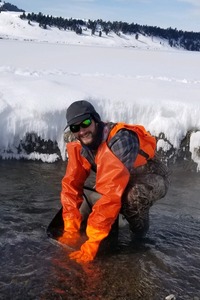
Jeremy M. Brooks is a Postdoctoral Researcher at Idaho State University's Department of Biological Sciences and an Adjunct Professor at the University of Montana's W.A. Franke College of Forestry. He specializes in stream-riparian ecology, food web dynamics, and biology education. His research focuses on climate change impacts, riparian vegetation resilience, and ecological linkages in Yellowstone's ecosystems. Brooks holds a PhD from Idaho State University (2024) and a BS from the University of Montana (2017). Lead Researcher: NSF RAPID grant ($99,882) investigating climate-induced flooding effects on Yellowstone stream-riparian systems Co-PI for proposed David H. Smith Fellowship ($182,100) on pyrodiversity biodiversity links Teaching roles include co-instructing Fish Biology & Management (UM) and contributing to ecology/entomology courses at ISU. Awards include the Andy Sheldon Endowment Award (2023) and Best Student Presentation (2023). He actively collaborates with the Stream Ecology Center and US Forest Service researchers.
Dr. Gabrielle String is an Assistant Professor at Lehigh University holding joint appointments in the Department of Civil and Environmental Engineering and the Department of Community and Population Health within the College of Health. Her research focuses on applied evaluations of water, sanitation, and hygiene (WASH) programs in developing countries and humanitarian crises. She combines laboratory-based efficacy studies with field implementation evaluations to address evidence gaps in rural Water Safety Plans (WSPs), household water storage practices, and outbreak response disinfection strategies. Education: PhD in Mechanical Engineering, Tufts University (2017) MS in Mechanical Engineering, Tufts University (2013) BS in Mechanical Engineering, Clarkson University (2011) Research Interests: WASH program effectiveness in emergency contexts Chlorination acceptability and optimization Surface disinfection for viral pathogens Community-managed water systems Cross-cultural implementation challenges Her 15 most recent publications (2021-2025) demonstrate increasing focus on: AI-driven water quality modeling Chlorination efficacy across diverse settings Alternative disinfection methods using sunlight Context-specific cholera prevention strategies Multi-country humanitarian response evaluations Collaborations include UNICEF, charity: water, Solidarités International, USAID OFDA, and the Research for Health in Humanitarian Crises (R2HC) program. Her work emphasizes practical solutions that bridge laboratory science with real-world implementation challenges in low-resource settings.
Núria Rodríguez-Planas is a Professor of Economics at Queens College, CUNY (since 2014) and Doctoral Faculty at the CUNY Graduate Center (since 2019). She holds prestigious roles as Distinguished Researcher at the Barcelona Institute of Economics (IEB, Universitat de Barcelona, since 2024) and Director of the IEB’s Gender, Institutions, and Culture Program (since 2024). Her research focuses on gender economics, labor economics, domestic violence, and education policy, with notable work funded by the ERC Advanced Grant (WomEmpower Project) examining the causal effects of motherhood, gender norms, and cash transfers on intimate partner violence. Her work explores topics such as pandemic impacts on low-income urban college students, gender disparities in financial literacy, and legislative effects on domestic violence norms. Key affiliations include the Russell Sage Foundation as a Visiting Scholar (2023–24), CESIfo Research Fellow (since 2024), and IZA Research Fellow (since 2004). Her publications span over two decades, addressing issues like labor market segmentation, education policy interventions, and the intergenerational transmission of gender norms. Education: While not explicitly stated, her roles imply advanced training in economics and policy analysis. Labs/Teams: Leads the IEB Gender, Institutions, and Culture Program, focusing on cultural and institutional drivers of gender disparities. Her research combines quasi-experimental methods with policy analysis, contributing to UN Sustainable Development Goals (SDGs) on inequality reduction and gender equity. Recent work highlights pandemic-era challenges faced by marginalized student populations and the long-term consequences of educational policies on gender norms.
Humberto Nuno Rito Ribeiro is a Professor at the University of Aveiro's School of Technology and Management (ESTGA), Portugal. He holds a PhD in Business and Management Research from Leicester Business School, UK, alongside master's degrees in Accounting & Corporate Finance and Quantitative Methods, and a bachelor's in Economics. His research focuses on mergers & acquisitions, sustainability, healthcare management, accounting/auditing, and corporate finance. He is a core member of the Governance, Competitiveness, and Public Policies (GOVCOPP) research unit. Key contributions include studies on AI's impact on auditing, digital retail transformation, and startup incubation benefits. Recent work explores customer satisfaction-loyalty dynamics in retail, EU-Panama trade linkages, and olive oil market dynamics. He frequently publishes in journals like Economic and Social Development and Administrative Sciences , emphasizing practical applications of management research in public and private sectors. Education: PhD (Leicester Business School), Master's (Accounting & Corporate Finance, Quantitative Methods), Bachelor's (Economics) Research Unit: GOVCOPP (Governance, Competitiveness, and Public Policies) Key Themes: Innovation in traditional sectors, regulatory compliance, and public health management
Christabel Ihedike is a Lecturer in Public Health at the University of Sunderland , holding a PhD and Postgraduate Certificate in Higher Education (PGCert). She is a Fellow of the Higher Education Academy (FHEA) and delivers modules on the MSc Public Health and BSc (Hons) Public Health Practitioner Degree Apprenticeship programmes. BSc, MSc, PhD, PGCert in Higher Education Dr. Ihedike’s research focuses on the intersection of air quality and public health, including health impacts of air pollution, disparities in exposure among vulnerable populations, ethnic minorities, and developing countries, and climate change-public health linkages. She specializes in neglected tropical diseases and cardiopulmonary conditions through a global health lens. Her recent publications analyze PM10 and NOx effects on respiratory diseases in Nigeria, air pollution management policies in Sub-Saharan Africa, and awareness of air pollution impacts on cardiopulmonary health. These works emphasize environmental health, air quality monitoring, and policy evaluation. Scientific Awards : President’s NYSC Honours’ Award (Nigeria’s highest youth award) State Honours’ Award University of Sunderland’s Plus Award for outstanding student support Dr. Ihedike supervises MSc Public Health dissertations and leads modules like HSSM72 – Social Determinants of Global Health and Health Systems and PHP301 – Green Policy Versus Economic Reality: Clean Air For All . She previously worked as a Scientific and Public Health Officer at Nigeria’s Ministry of Health.
Professor Morag Treanor is a Professor of Social Policy and Inequality at the University of Glasgow, affiliated with the Division of Urban Studies and Social Policy. She holds roles as Co-Director of the Scottish Centre for Administrative Data Research (funded by UKRI) and Research and Knowledge Exchange Director for her division. Her expertise focuses on poverty, socioeconomic inequalities, and their impacts on children, young people, and families, employing longitudinal methods using birth cohort and administrative data. Research highlights include analyzing educational exclusions, poverty's mental health effects, and digital equity in education. She has contributed to high-impact reports such as Destitution in the UK and digital exclusion studies. Her work informs policy via roles on the Scottish Government's Poverty and Inequality Commission (2019–2023) and The Promise Oversight Board (2021–2024). Key grants include leadership on the Children’s Lives and Outcomes Programme, Nuffield Foundation projects on digital education equity, and ESRC-funded research linking education health/census data. She has published extensively on poverty measurement, child welfare, and policy interventions, including her book Child Poverty: Aspiring to Survive .