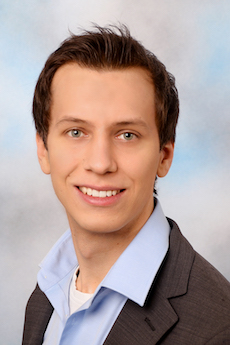
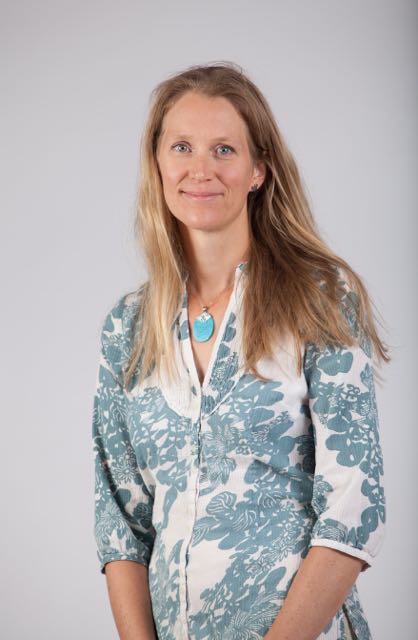
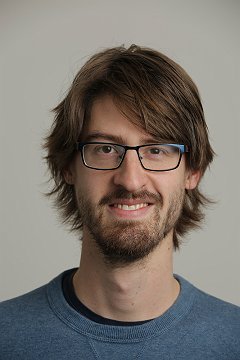
Dominic Henze is a Professor at the Technical University of Munich (TUM), affiliated with the Faculty of Informatics and the Chair of Software Engineering . He leads research initiatives in Cyber-Physical Systems , Smart Environments , and Machine Learning Applications , with a particular focus on Fog Computing architectures. His research spans theoretical frameworks and real-world implementations, including collaborations with institutions like Carnegie Mellon University and industry partners such as Siemens AG and Zeiss IMT . His work addresses challenges in resource allocation , predictive maintenance , and blockchain integration within industrial contexts. Dr. Henze's publications reveal a consistent focus on Fog Computing architectures, IoT resource management, and educational software engineering. Key trends include self-organizing network systems , decentralized supply chain traceability , and smart environment coordination . He has advised numerous students on topics ranging from QoS negotiation to autonomous drone coordination . As an educator, he has taught multiple iPraktikum courses and seminars on iOS development and Agile Project Management since 2014, with publications exploring team composition strategies and distributed programming pedagogy.
Prakash Nadkarni, MD, is a Lecturer at the Yale School of Public Health , specializing in health informatics, clinical research systems, and public health data science. He holds an MD from Bombay University (1982) and contributes extensively to healthcare financial management, medical imaging, and responsible clinical decision-making. Research Focus: Health informatics, clinical data repositories, electronic health records optimization, and machine learning applications in emergency medicine. Key Publications: 2024 works on financial statements in clinical practice, 2023 articles on clinical research information systems and pediatric sedation, and 2022 studies on tuberculosis diagnostics. Collaborations: Frequent partnerships with Perry Miller, Cynthia Brandt, and Yale colleagues in biostatistics and clinical computing.
Ricardo J. Machado is a Full Professor of Information Systems Engineering at the University of Minho, where he founded this disciplinary area. He currently serves as President of the CCG/ZGDV Institute and has held strategic roles including Vice-Rector of UMinho. He is a member of the Board of GraphicsVision.AI, the leading academic network in Europe in computer graphics and vision. DEng in Electrical and Computer Engineering (U.Porto) MSc and PhD in Computer Science and Engineering Dr. Habil in Information Systems Engineering (UMinho) Certified Software Product Manager (ISPMA) Cybersecurity and Crisis Management programme from Portuguese National Defence Institute Professor Machado's research focuses on modeling and requirements engineering, systems architecture, process and project management, information semantics, ontologies, and cognitive computing. He has developed several methods and tools including the 4SRS method and the shobi-PN meta-model for requirements analysis, software architecture, ontology computation, and project portfolio management. His work bridges theoretical frameworks with practical industrial applications across various sectors. His recent publications demonstrate a strong trend toward digital transformation across multiple domains including smart cities, healthcare systems, industry 4.0, and higher education. The research shows increasing integration of semantic interoperability, logical architecture design, and data management frameworks. His work consistently addresses the challenges of aligning business processes with technical implementations while focusing on practical applications in real-world settings. IEEE MGA Achievement Award APLOG Excellence Award TAA Textbook Award nomination by Springer Professor Machado has supervised nearly one hundred PhD and MSc students, many of whom now hold leadership roles in academia and industry. He has led over 50 R&I projects funded by FCT, ANI, IAPMEI, and the European Union, partnering with institutions including Carnegie Mellon University, MIT, Fraunhofer, and Bosch. His project portfolio spans requirements engineering, systems architecture, and digital transformation initiatives across multiple sectors including healthcare, manufacturing, and smart cities. He founded the SEMAG research group at ALGORITMI and the EPMQ department on Software Engineering and Intelligent Data at CCG/ZGDV. As Director of the ALGORITMI Research Centre, he coordinated UMinho's participation in strategic initiatives such as CEDT, CMU | Portugal, EIT Digital, EUHubs4Data, and Gaia-X Portugal. He also co-founded DTx and ProChild CoLabs, and TICE.pt and CSCP Clusters.
Dr. Christian Troost is a Senior Researcher and Lecturer at the Department of Land Use Economics at the University of Hohenheim . His work combines agent-based modeling and bioeconomic simulation to analyze agricultural adaptation to climate variability and resource use decisions across diverse farming systems in Germany, Chile, and Ethiopia . Education : BSc in Geography (Bochum, 2006), MSc in Agricultural Economics (Hohenheim/Wageningen, 2009), PhD in Agricultural Sciences (Hohenheim, 2014) Methodology : Specializes in uncertainty analysis , high-performance computing , and model validation protocols for complex agricultural systems Troost's research advances the MPMAS software package for integrated land system modeling. His 2025-2024 work focuses on pesticide reduction policies , hybrid intelligence systems for biodiversity-productivity tradeoffs, and agroforestry as climate adaptation in Ethiopia. Scientific Recognition : Gerhard-Fürst Prize (2015) Südwestbankpreis (2015) As an educator, he teaches farm system modeling and environmental economics at PhD, MSc, and BSc levels. His collaborative projects span DFG-funded climate change research , BMBF biodiversity initiatives , and German-Ethiopian CLIFOOD graduate programs .
Dr. Yining Hu is a Lecturer at the School of Computer Science , University of Technology Sydney since January 2024. Her research and teaching focus on Artificial Intelligence , Blockchain , Cloud Computing , and Wearable Technology . She holds a PhD from the University of New South Wales and has collaborated with industry partners on blockchain applications for IoT security and sustainability. PhD: University of New South Wales Current role: Lecturer at UTS School of Computer Science Key research areas: Wearables, Blockchain, Cloud Computing Dr. Hu's publications demonstrate her technical expertise in blockchain-IoT integration, with notable works on secure transaction frameworks and carbon offset management. Her recent 2025 paper in Electronics explores blockchain-DNN synergy for IoT security. Earlier works cover wearables' security protocols and adaptive fitness tracking frameworks. She contributes to academic service as a member of the Editorial Board for the International Journal on Data Science and Technology (2024-2027). Her teaching portfolio includes advanced cloud computing and software development courses, with availability for Masters/PhD supervision . Current funded research includes blockchain for food traceability and a 2025-2028 LLM-driven text-to-SQL grant with Hampton Capital.
Fabrizio Giuliano is a Researcher at the University of Palermo in the School of Mathematics and Computer Science , focusing on Wireless Networks , Internet of Things (IoT) , and Network Protocols . His academic activities include teaching courses like Computer Networks , Internet of Things , and IoT and Cloud Security to students in Informatics, Biomedical Engineering, and Cyber-Physical Systems programs. Research Interests : Giuliano's work spans Wireless communication (LoRaWAN, Sigfox, WiFi, ZigBee) Smart water distribution systems and energy-autonomous IoT Interference detection and cross-technology coexistence 5G network infrastructure Augmented Reality for accessibility Privacy-preserving smart grid systems Publication Trends : His recent articles (2025–2023) focus on AI integration in IoT testbeds Scalable water distribution monitoring Information-theoretic analysis of fNIRS signals Interference mitigation in LPWANs Context-aware 5G architectures Hybrid VLC/WiFi networks Academic Contributions : Giuliano has edited theses on fNIRS signal analysis and IoT-integrated biosensors , reflecting his interest in biomedical applications of wireless systems.
Martin Slepicka is a researcher at the Chair of Computing in Civil and Building Engineering at the Technical University of Munich. His work focuses on bridging Building Information Modeling (BIM) with additive manufacturing and digital twinning technologies. Department: Civil and Building Engineering Research Group: Digital Twinning, Construction Robotics Research Highlights: Slepicka specializes in: Integrating BIM with digital fabrication workflows Developing closed-loop systems for additive manufacturing Real-time data exchange in construction robotics Automated parameter calibration using machine learning Semantic enrichment of BIM through multi-sensor platforms Academic Contributions: Recent publications demonstrate expertise in: Extrusion-based additive manufacturing control Non-planar path planning for 3D-printed components Autonomous robot grasping solutions From fabrication models to simulation frameworks Laboratories: Active in: BIM-Lab Robotic Fabrication Lab Mobile Machinery development
Sebastian Brüggemann is a German legal scholar specialising in Internet, data-protection and IT law. Since 2013 he has been a part-time lecturer (Lehrbeauftragter) at the Faculty of Law of Eberhard Karls University of Tübingen, and he holds parallel teaching appointments in data-protection and IT law at the Universities of Applied Sciences in Kehl and Ludwigsburg as well as at ZHAW School of Management and Law in Winterthur, Switzerland. In private practice he works as in-house counsel (Syndikusrechtsanwalt) for a large international IT company, focusing on data-protection and technology law. Education: 2003-2011: Studies of Law and General Rhetoric, Eberhard Karls University of Tübingen 2009: First State Law Examination, Tübingen 2011: Magister Artium in General Rhetoric, Tübingen 2010-2012: Legal clerkship (Referendariat), including stages at the German University of Administrative Sciences Speyer and eco – Verband der Internetwirtschaft 2012: Doctorate in Law (Dr. iur.), Tübingen – dissertation on third-party disclosure claims against Internet providers in copyright enforcement 2013: Admission as attorney (Rechtsanwalt) 2013-2015: Part-time LL.M. in Information Technology Law, Carl von Ossietzky University of Oldenburg Research interests span the intersection of law and digital technology: data-protection compliance under the GDPR, cybersecurity regulation, copyright in digital media, network neutrality, M2M/IoT legal issues, and the legal framework of behavioural advertising. His work frequently analyses German, European and comparative US developments. He has authored a monograph, numerous commentaries to GDPR/BDSG provisions, model IT contracts, and more than two dozen peer-reviewed articles and case notes since 2013, identifying recurring themes such as data portability, ISP liability, streaming and copyright, and the challenges of Industrie 4.0. Professional memberships & science communication: editorial board of Privacy in Germany , core team member of the Telemedicus IT-law portal, member of IAPP, DGRI and GRUR, and co-author of sector guidelines issued by Bitkom and eco association. There is no indication of supervised doctoral or master’s students in the supplied material; his teaching activities concentrate on specialised continuing-education courses and part-time lectures.
Herwig Mayr is a Professor at the University of Applied Sciences Upper Austria, affiliated with the Research Center Hagenberg AIST (Applied Information Systems and Technology). His research bridges healthcare informatics, software engineering, and educational innovation, with a strong focus on practical applications in the Austrian healthcare sector. Research Focus: Healthcare IT systems interoperability (IHE standards, radiology data exchange) Telemedicine frameworks for clinical workflows Innovative pedagogical methods in software engineering education Sustainable ICT solutions and cross-platform accessible interfaces Recent Projects: KIMBO (2015-2016): Collaborative medical board systems for tumor diagnosis WIRE (2013-2014): Radiology image prefetching workflows for ELGA IHE-FIT (2011-2012): Intelligent feedback systems in telehealth Publication Trends: His recent works (2013-2018) demonstrate a consistent focus on healthcare data interoperability standards, telemedicine infrastructure in Austria, and experimental teaching methodologies using tools like LEGO® Serious Play™ for software engineering education.
Karen Eilbeck is Professor of Biomedical Informatics and Adjunct Associate Professor of Human Genetics at the University of Utah , where she directs a bioinformatics research lab focused on precision medicine and genomic data management. Education B.S., University of Salford, United Kingdom Ph.D., University of Manchester, United Kingdom Research Interests The Eilbeck lab leverages computer science and ontology engineering to address contemporary questions in genomics and molecular biology. Central themes include: Development of ontologies such as the Sequence Ontology (SO) and Non-Coding RNA Ontology (NCRO) to standardize and structure biological data. Design of ontology-enabled software tools that enhance data sharing, variant interpretation, and precision medicine workflows. Metagenomic pathogen detection, clinical genome interpretation, and integration of multi-omics datasets to advance personalized healthcare. Publication Trends Recent publications (2023-2025) emphasize AI-driven clinical decision support, standardized genomic terminology, and large-scale infectious-disease risk modeling. Earlier works (2005-2018) established foundational ontologies and data formats (GVF, VCF) now widely adopted by the genomics community. Contact & Resources Email: keilbeck@genetics.utah.edu Lab website: available via University of Utah Department of Biomedical Informatics Full publication list: PubMed search | Google Scholar
Thorsten Vitt is a Researcher at the Chair of Computational Philology and Modern German Literary History within the Faculty of Philosophy at the University of Würzburg . His role includes academic advising for Digital Humanities degree programs, IT support for the Chair, and technical leadership in digital edition projects such as the Faust Edition and TextGrid . He is affiliated with the ZPD (Zentrum für Philologie) and works on computational methods for literary analysis. Current Projects : Faust Edition, ESF-ZDEX, TextGrid, DARIAH-DE Technical Expertise : Markup Languages, Linguistic Query Languages, Database Systems Research Interests : Digital Humanities, Computational Philology, Authorship Attribution, Topic Modeling, Digital Editions, Data Visualization, Software Development for Humanities. His work bridges computer science with literary studies, focusing on algorithmic analysis of historical texts and digital scholarly editions. Publications highlight his contributions to computational analysis of Goethe's Faust, topic modeling tools, and distance measures like Burrows' Delta. He has developed software libraries for stylometric analysis and collaborates on infrastructures like TextGrid and DARIAH-DE. Education : Completed a diploma thesis on "Queries to Complex Corpora" (2005) and a student research paper on "Storing Linguistic Corpora in Databases" (2004) at Humboldt University Berlin. Technical Leadership : Deputy IT support for the Chair, contributor to GitHub repositories including pydelta and faust-web , and developer of tools for topic modeling and digital editions.
Jesper Cockx is an Assistant Professor in the Programming Languages group at Delft University of Technology . His research focuses on the theory and implementation of dependently typed languages , particularly Agda , and he is a core contributor to Agda's development. His work bridges Type Theory , Pattern Matching , and practical Compiler Design through tools like agda2hs . Research Interests : Type Theory and Dependently Typed Programming Pattern Matching and Unification Agda and Compiler Implementation Erasure Annotations for Verified Compilation Generic Programming and Language Design Formal Verification of Functional Code Scientific Awards : NWO Veni Grant (2020) for a Trustworthy and Extensible Core Language for Agda Conference Contributions : He serves on program committees for CPP , WITS , POPL , and ICFP . Recent publications analyze erasure annotations , correct-by-construction compilers , and dependent (co)pattern matching in Agda. His work often intersects with Haskell and functional programming education in the Netherlands.
Andreea Costea is an Assistant Professor in the Programming Languages Group within the Faculty of Electrical Engineering, Mathematics & Computer Science (EEMCS) at Delft University of Technology. She joined TU Delft in October 2024 after completing her PhD at the School of Computing, National University of Singapore (NUS), where she worked in the Programming Languages and Software Engineering lab collaborating with the Automated Program Repair team, Trustworthy and Secure Software group, and VERSE lab. Her primary research focuses on programming languages design and implementation, with particular emphasis on software verification for critical code, program synthesis, and automated program repair. She maintains strong connections with industry while pursuing formal methods research, especially in the context of Rust programming language safety and interoperability. Dr. Costea's publication record demonstrates consistent contributions to software engineering and programming languages research, with recent work focusing on automated program repair techniques, Rust language safety mechanisms, and communication protocol verification. Her research shows a clear trajectory from theoretical foundations in session types and separation logic toward practical applications in memory safety and program repair. She actively serves the research community as Program Committee member for major conferences including ASE, ICSE, ICFP, and APLAS. Her service includes chairing publicity committees for SPLASH and artifact evaluation for ESOP. Regular Journal Reviewer: CACM, TOSEM, TSE Panel discussions: PLMW @ POPL'22, PLDI'21, PLMW @ PLDI'21, POPL'21 Extensive reviewing for top-tier conferences including POPL, OOPSLA, CAV, VMCAI Dr. Costea supervises multiple Master's students working on Rust-related safety projects and is actively recruiting PhD students to work on software interoperability, particularly focusing on how to restore Rust's safety guarantees when integrating with legacy C code and ensuring correct interaction between components written in different languages.
Haipeng Cai serves as an Associate Professor in the Department of Computer Science and Engineering at the University at Buffalo, SUNY. His academic work spans software engineering, program analysis, and software security with particular emphasis on adaptive analysis techniques for mobile and distributed systems. His research interests center on adaptive/data-driven static and dynamic analysis for security applications targeting mobile apps, distributed systems, and multilingual software. Current work focuses on enhancing vulnerability detection, cross-language bug analysis, and automated security tooling through machine learning approaches. His lab produces tools like VinJ for vulnerability data generation and PolyFax for multilingual software characterization. Recent publications reveal strong trends in multilingual system security and AI-enhanced analysis , with 15+ papers since 2022 addressing cross-language vulnerabilities, Android security, and learning-based vulnerability detection. His work bridges theoretical program analysis with practical security applications in real-world software ecosystems. As an active academic contributor, he serves on program committees for major conferences including ASE, ICSE, and FSE, and will deliver a keynote at PROMISE 2025. His leadership includes journal-first paper chair roles and session chair positions at top software engineering venues. Dr. Cai maintains an active research presence through his personal website , GitHub repository ( github.com/chapering ), and academic social media profiles, with consistent contributions to the software engineering research community since 2018.
Matthias Stürmer serves as a Professor at Bern University of Applied Sciences (BFH) within the School of Management and Head of the Institute for Public Sector Transformation (IPST). He concurrently holds a lecturer position at the University of Bern. His professional identity centers on Swiss digital governance initiatives, with active leadership roles in @Parldigi, @DigitalImpactCH, @CH_Open, and @OpendataCH advocating for open source, open data, and transparent public sector innovation. His research program bridges legal technology and digital governance, specializing in multilingual (German/French/Italian) processing of Swiss jurisprudence. Core focus areas include developing AI systems for judicial summarization and criticality prediction, advancing digital sovereignty frameworks, and analyzing sustainable public procurement practices. He investigates the tension between open justice principles and privacy preservation in court documentation, while pioneering methods for anonymizing legal texts against re-identification threats from large language models. Stürmer's publication trajectory reveals a strategic shift toward legal AI applications since 2020, with 12 of his 15 most recent works addressing multilingual legal processing challenges. His scholarship consistently targets Swiss institutional contexts, creating specialized datasets like Multilegalpile and Lextreme while examining practical implementation barriers for open source adoption in public administration. As director of IPST at BFH, he leads institutional efforts to transform public sector services through open standards and collaborative governance models. His team develops practical frameworks for digital sovereignty implementation and sustainable ICT procurement, directly influencing Swiss federal policies on open data and public sector technology adoption.