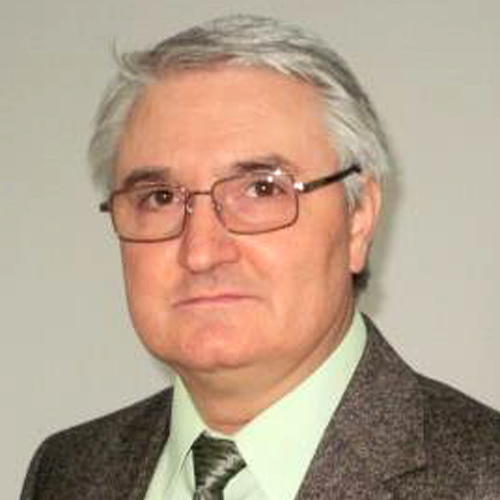
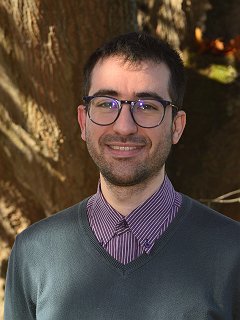
Joaquín Ángel Triñanes Fernández serves as a Professor in the Department of Languages and Computer Systems at the University of Santiago de Compostela. He teaches core courses including Business Intelligence, Software Engineering, and Environmental Data Analysis and Mining across multiple programs such as the Bachelor’s Degree in Informatics Engineering and Master in Massive Data Analysis Technologies. His research focuses on data-intensive systems, with primary interests in Big Data architectures, Data Science methodologies, and Software Engineering practices. These themes directly align with his teaching portfolio and affiliation with the SYSTEMS LABORATORY research group, where he contributes to computational solutions for environmental engineering and business intelligence applications. As an active member of the SYSTEMS LABORATORY, he participates in research initiatives centered on scalable data processing frameworks and real-world implementations of analytics systems, particularly emphasizing environmental data mining and enterprise-level business intelligence solutions.
L.J.N. Franken is affiliated as a Researcher in the Data-Intensive Systems group under the Faculty of Electrical Engineering, Mathematics and Computer Science . Research Focus Franken’s work centers on data-intensive systems, with interests in distributed computing , big data technologies , and scalable system design . The field_of_interest reflects expertise in data science and computer systems .
J.A. Pouwelse is a Professor at the Data-Intensive Systems department within the Electrical Engineering, Mathematics and Computer Science school at Delft University of Technology . With 125 research outputs and 4 supervised works, his work focuses on Blockchain , Decentralized Systems , Federated Learning , and Peer-to-Peer Networks , particularly for Web3 applications. His recent publications analyze topics such as: Decentralized adaptive ranking Serverless federated learning Green smart contracts Search index optimization Zero-trust frameworks Notable recognition includes the LCN Best Paper Award 2021 . Research spans decentralized infrastructure design, privacy preservation, and scalable system implementation.
Dr. Gang Mei is an Associate Professor in Scientific Computing within the School of Engineering and Technology at China University of Geosciences (Beijing), where he has held academic positions since 2014. His career progression includes Postdoctoral Researcher (2014-2016), Lecturer (Oct-Dec 2016), and current Associate Professor (since Jan 2017). His research bridges computational science and engineering applications with significant editorial contributions to computer science literature. Education: Ph.D. in Computer Science, University of Freiburg, Germany (2014) Research Interests: Dr. Mei specializes in Numerical Simulation and Computational Modeling, GPU Computing, Machine Learning, and Data Mining, with strong applications in Network Science and Spatial Information Systems. His work integrates Distributed and Parallel Computing techniques for large-scale scientific simulations, particularly in geospatial modeling and network analysis. The research demonstrates consistent focus on computational efficiency through hardware acceleration and algorithmic optimization across diverse domains including satellite imagery processing, financial event detection, and medical image classification. Publication Trends: His editorial portfolio reveals strong interdisciplinary patterns connecting computer science fundamentals with domain-specific applications. Recent works emphasize GPU-accelerated methods for data-intensive problems (2020-2022), spatial-temporal modeling (2019-2020), and network science applications (2021). The publications consistently address computational scalability challenges while maintaining practical relevance across geospatial, financial, medical, and engineering contexts. Professional Recognition: As an IEEE Member, Dr. Mei serves on editorial boards for IEEE Access and PeerJ Computer Science, reflecting peer recognition in computational fields. His editorial contributions span 15+ publications demonstrating expertise in evaluating cutting-edge computer science research. Academic Service: Beyond editorial work, Dr. Mei's service includes advising on computational methodology across multiple disciplines. His role as Academic Editor demonstrates commitment to scholarly communication, particularly in bridging theoretical computer science with practical engineering applications. No grant funding details were specified in available materials.
Christian Brinch Mollerup serves as a Forensic Chemist in the Section of Forensic Chemistry at the University of Copenhagen. His research is centered on nanomaterial development, particularly DNA-stabilized silver nanoclusters, for forensic analytical applications. He maintains an active publication record in high-impact journals spanning structural characterization, optical properties, and practical integration of nanomaterials into forensic workflows. His core research domains include Forensic Chemistry , Analytical Chemistry , and Nanotechnology , with specialized focus on: Synthesis and stabilization of DNA-silver nanoclusters Optical property analysis and stability testing Bioconjugation techniques for biomedical probes Analytical method development for forensic toxicology SQL-based data processing pipelines for metabolomics Analysis of his 2023-2025 publications reveals a cohesive research trajectory advancing nanomaterial-based forensic tools. His work bridges atomic-scale structural insights with practical forensic applications, demonstrating significant contributions to nanocluster characterization and metabolomics data analysis. This research directly impacts drug detection methodologies and toxicological screening protocols. As part of the University of Copenhagen's forensic chemistry infrastructure, Mollerup operates within collaborative networks that integrate chemical synthesis, spectroscopic analysis, and computational data science to address complex forensic challenges.
Harris Papadakis serves as an Assistant Professor in the Department of Electrical and Informatics Engineering at the Hellenic Mediterranean University, specializing in Distributed Services and Networks. His academic position places him at the forefront of systems research and engineering education within the institution. His educational credentials include: PhD in Computer Science from the University of Crete Undergraduate Degree in Computer Science from the University of Crete Postgraduate MSc Diploma in Computer Engineering from the University of Patras Professor Papadakis' research program centers on advanced computing systems with emphasis on scalability and network efficiency. His work spans Parallel and Distributed Systems, Peer Systems architectures, Large-Scale Distributed Systems design, Computer Networks optimization, Recommender Systems development, and Graph Analysis methodologies. The research demonstrates practical applications in data-intensive environments, evidenced by over 500 citations, an h-index of 8, and an i10-index of 7. His active participation as both researcher and project head indicates sustained grant funding and leadership in collaborative technical initiatives. As an Assistant Professor, he maintains regular office hours (Wednesdays 11:00-13:00) and engages in academic mentorship. While specific student supervision details aren't provided, his research profile suggests opportunities for graduate students to contribute to funded projects in distributed systems and network technologies.
Prof. Dr. Sach Mukherjee serves as a Group Leader at the German Center for Neurodegenerative Diseases (DZNE) in Bonn, Germany, where he leads research at the critical intersection of computational statistics, machine learning, and biomedical science with a dedicated focus on neurodegenerative disorders. His research interests include: High-Dimensional Statistical Methods Machine Learning for Biomedicine Systems Biology Approaches Disease Stratification and Prediction Molecular Network Analysis Integrative Multi-Omics Data Analysis Mukherjee's work centers on developing principled yet scalable statistical frameworks to address complex challenges in neurodegenerative disease research. His group pioneers methods for building context-specific molecular networks and conducting integrative analyses of diverse high-dimensional datasets, aiming to transform disease subtyping, prediction, and biological understanding. He actively collaborates with fundamental, clinical, and population researchers across DZNE and international partners to advance data-intensive biomedical discovery. Based at Venusberg-Campus 1 (Building 99) in Bonn, his research group operates at the statistical frontier of next-generation biomedicine, focusing on scalable solutions for real-world biomedical challenges.
Marius Călin serves as a Lecturer in the Department of Exact Sciences at the Faculty of Horticulture, University of Agricultural Sciences and Veterinary Medicine of Iasi, Romania. His academic profile bridges computational science with agricultural applications through expertise in Information Technology, Applied Mathematics, and E-learning systems development. His research portfolio centers on five core domains: Soft Computing in Agricultural Sciences: Pioneering fuzzy logic applications for plant breeding and greenhouse management Decision Making under Uncertainty: Developing models for agricultural scenarios with incomplete data Decision Support Systems: Creating tools for land suitability assessment and resource optimization E-learning Applications: Designing specialized platforms for agricultural education Graph Databases: Implementing knowledge representation systems for agricultural data Analysis of his publication trajectory reveals an evolution from foundational fuzzy decision models (2000-2007) toward increasingly interdisciplinary work. Recent publications (2015-2022) demonstrate strong convergence between e-learning infrastructure development and agricultural informatics, particularly through Moodle-based systems for remote education during the pandemic and computational models for soil management. His work consistently emphasizes practical implementation of grid computing and soft computing techniques in agricultural contexts. Dr. Călin has secured significant research funding through seven major contracts, including leadership as USAMV Iasi responsible for the CEEX 1801 grid computing project (2006-2008) and contributions to sustainable soil management initiatives (ECOSEUMET, CNCSIS 738). His grant portfolio demonstrates sustained focus on translating computational research into agricultural solutions. Within the university ecosystem, he serves as Moodle platform administrator and coordinates Informatics discipline activities, fostering cross-departmental collaboration. His professional affiliations include ESNA (European Society for New Methods in Agricultural Research) and ROMAI (Romanian Society of Applied and Industrial Mathematics), reflecting his commitment to interdisciplinary scientific exchange.
Luciano Baresi is a Full Professor at the Polytechnic University of Milan (Politecnico di Milano), Italy, affiliated with the Department of Electronics, Information and Bioengineering. He earned his laurea (MSc) and PhD in Computer Science from the same institution and has held visiting positions at the University of Oregon (USA), Tongji University (China), and the University of Paderborn (Germany). His research spans software engineering, with current focuses on self-adaptive systems, edge computing, and AI/ML-based software. His work integrates formal methods with practical applications, emphasizing autonomous systems, cloud-edge continuum, and federated learning. Recent publications highlight AI-driven advancements in software testing, resource optimization, and educational tools. Key research themes include: AI/ML for autonomous driving testing and data augmentation Serverless computing at the edge Federated learning system architectures Containerization and cloud resource management Awarded for impactful contributions: RE 2020 Most Influential Paper ICSOC 2020 Best Paper SEAMS 2022 Best Paper He advises 14+ PhD students and leads projects like Ketonet (health app), WHO's Essential Items Estimator, and dynaSpark. As Editor-in-Chief of Proceedings of the ACM on Software Engineering and senior editor for multiple journals, he shapes academic discourse in adaptive systems and software engineering.
Djamel Eddine Khelladi is a CNRS Researcher at the IRISA laboratory within the DIVERSE team at University of Rennes, specializing in software engineering with emphasis on model-driven techniques and empirical validation. His work bridges theoretical frameworks and industrial-scale applications, particularly in evolving software ecosystems. His academic foundation includes a Ph.D. from Sorbonne University (formerly University Pierre et Marie Curie) at the Laboratory of Computer Science of Paris 6 (LIP6), followed by postdoctoral research at Johannes Kepler University Linz's Institute for Software Systems Engineering. This trajectory established his expertise in software evolution and model-driven approaches. Khelladi's research centers on software evolution challenges, particularly model-code co-evolution in highly-configurable systems like the Linux kernel. He develops scalable analysis tools (e.g., HyperAST, HyperDiff) and investigates empirical phenomena in build systems, configuration management, and polyglot programming environments. Recent work increasingly integrates large language models for automated co-evolution tasks while maintaining rigorous empirical validation. His publication trends reveal a consistent focus on practical tooling for software evolution, with growing exploration of AI-assisted engineering. Key themes include scalability in software history analysis, reproducibility in configurable systems, and debugging multi-language environments, often using Linux kernel ecosystems as testbeds. As an active community contributor, Khelladi serves on program committees for ASE, ICSE, and ESEC/FSE while advancing research through the DIVERSE team at IRISA. This group specializes in variability-intensive software systems, providing the collaborative environment for his empirical and tool-building research.