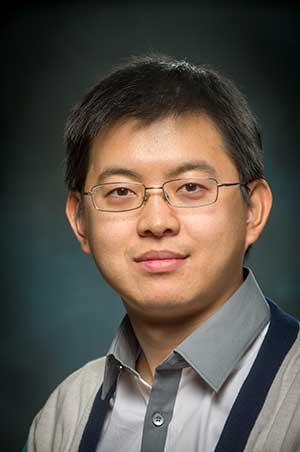
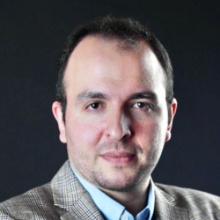
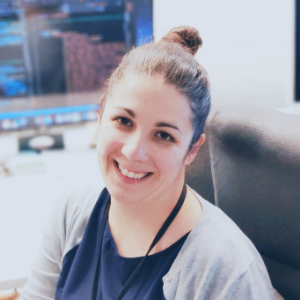
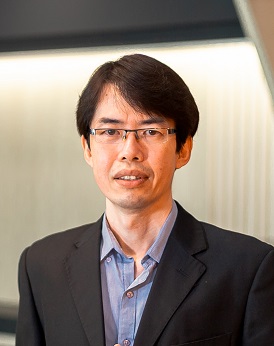
Dustin Richmond is an Assistant Professor in the Department of Computer Science and Engineering at the Baskin School of Engineering, University of California, Santa Cruz. His work focuses on secure, usable hardware systems with applications in FPGA acceleration, RISC-V architectures, and side-channel analysis. Email: drichmond@ucsc Office: Engineering 2, Room 221 Research Interests: Secure hardware systems FPGA-based computing Manycore processors High-level synthesis Side-channel vulnerabilities Notable Article Trends: Recent publications emphasize cloud FPGA security, manycore design optimization, and hardware security. Earlier works focus on RISC-V acceleration, OpenCL compiler enhancements, and heterogeneous computing systems. GitHub Contributions: Maintains open-source projects like RISC-V-On-PYNQ and PYNQ-HLS, addressing FPGA programming challenges and RISC-V integration. Active in resolving community issues related to toolchain compatibility and hardware-software interfaces.
Kaikai Liu is an Associate Professor and Cisco Corporate Chair Professor in the Department of Computer Engineering at San José State University, Charles W. Davidson College of Engineering. He is actively engaged in research, teaching, and leadership in intelligent and autonomous systems, cyber-physical systems, and AIoT. His work bridges academia and industry, with collaborations involving NSF, Intel, Cisco, Arista, and the Department of Health of Hawaii. Research Interests: Intelligent and Autonomous Systems Mobile and Cyber-Physical Systems (CPS) Artificial Intelligence of Things (AIoT) Smart Sensing and Data Mining Edge Computing and Next-Generation Communication Systems His research spans both theoretical and applied domains, focusing on real-world deployments in smart cities, emergency response, behavioral health, and assistive technologies. He emphasizes system prototyping, data-driven analytics, and human-centered design. Recent Research Trends: His recent publications and projects show a strong focus on integrating AI with edge computing and sensing, particularly in cooperative perception (RINGS), mental health (OHANA), disaster communication, and intelligent urban infrastructure. There is a clear trajectory toward multi-modal, data-intensive systems that operate in real-time and support societal resilience. Scientific Awards: IEEE SWC 2017 Best Paper Award IEEE SECON 2016 Best Paper Award ACM SenSys 2016 Best Demo - Runner-up 2020 College of Engineering Award for Excellence in Scholarship Faculty Mentoring Award for CSU Student Competition 2018 Apple WWDC Scholarship (2013, 2014) National Scholarship of China Multiple University of Florida and SJSU Research Professor Awards Advising and Grants: Dr. Liu has mentored student teams to national recognition, including a first prize in the 2017 Juniper SDN Throwdown. He has secured significant research funding as Principal Investigator from the National Science Foundation (NSF), Knight Foundation, Intel, Cisco, Arista, and the U.S. Department of Health. Notable grants include the five-year OHANA Center (SAMHSA), RINGS (NSF), and multiple industry-funded projects on edge AI and smart infrastructure. Labs and Teams: He leads a research group focused on intelligent systems and edge computing, with a history of developing full-stack prototype systems like the SJGateway. He has led teams in the NSF Big Learning Center and the OHANA Center of Excellence, fostering interdisciplinary collaboration across engineering, public health, and social sciences.
Amin Totounferoush serves as a Researcher within the Analytic Computing group at the University of Stuttgart, Germany. His institutional affiliation places him at Universitätsstraße 32, room 2.201, 70569 Stuttgart, with office hours available by appointment. Contact is facilitated through direct phone lines +49 711 685 88409 and +49 711 685 78409. His research portfolio centers on advanced computational methodologies, with primary expertise in data-intensive systems and scalable computing architectures. Key focus areas include: Algorithm optimization for distributed environments Parallel processing frameworks Large-scale data analytics pipelines High-performance scientific simulations As a core member of the Analytic Computing research unit, Dr. Totounferoush contributes to developing next-generation computational tools for complex scientific problems. His work integrates theoretical computer science with practical engineering solutions for data-intensive challenges across academic and industrial applications.
Prof. Dr.-Ing. Florian Marquardt serves as a Professor in the Department of Computer Science and Media at Brandenburg University of Technology, Brandenburg an der Havel, Germany. His office is located in Building C, Room C.0.15 at Magdeburger Straße 50. His primary research focus centers on Cloud Computing within the broader discipline of Computer Science. His expertise spans infrastructure design, distributed systems, and scalable computing solutions critical to modern data-intensive applications. Contact information includes telephone +49 3381 355-463 and professional email florian.marquardt@th-brandenburg.de.
Ganggang Xu is an Associate Professor (with tenure) in the Department of Management Science at the Miami Herbert Business School , University of Miami . He specializes in advanced statistical methodologies, particularly in nonparametric and semiparametric modeling, spatial statistics, and point process theory. Education: Ph.D. in Statistics, Texas A&M University (2011) B.S. in Statistics, Zhejiang University (2006) Research Interests: His research spans several key areas in modern statistics and data science. He has made significant contributions to nonparametric and semiparametric regression , particularly in the context of functional data analysis and spatial-temporal modeling . His work on point processes includes marked, multivariate, and clustered point processes, with applications ranging from neuroscience to social media behavior. He also explores Bayesian hierarchical models and model selection techniques, often integrating computational efficiency with theoretical rigor. Publications Overview: His recent publications (2023–2025) reflect a strong focus on machine learning-enhanced statistical modeling , including tree-based estimation of intensity functions, network autoregressive models, and quantized inference. He has also contributed to applied domains such as medical imaging and inventory control , demonstrating the broad applicability of his methodological work. Grants & Collaborations: While specific grants are not listed in the provided text, his extensive publication record with multiple co-authors across institutions suggests active collaboration and possible funding from NSF or NIH-equivalent bodies in statistics and data science. Labs & Teams: Though no specific lab is mentioned, his affiliations and co-authorships imply involvement in interdisciplinary research teams at the University of Miami, especially within the business analytics and statistical modeling domains.
Prof. Achim Streit is a Professor for distributed and parallel high-performance systems at the Karlsruhe Institute of Technology (KIT) and has served as one of the directors of the Steinbuch Centre for Computing (SCC) since 2010. He actively leads national and international initiatives including the Helmholtz program "Engineering Digital Futures", the National Research Data Infrastructure (NFDI), and the European Open Science Cloud (EOSC), with SCC operating GridKa—the German data hub for particle physics and a Tier 1 center of the Worldwide LHC Computing Grid. His research centers on secure, distributed management of large-scale scientific data, emphasizing metadata standards, AI-driven knowledge extraction, and quantum machine learning. He develops scalable solutions for data-intensive fields like climate research, materials science, and particle physics while prioritizing energy efficiency on heterogeneous computing systems. Streit champions open science, ensuring freely accessible software and datasets through rigorous research software engineering practices. The SCC under his direction implements federated IT services across Helmholtz platforms (HMC, Helmholtz.AI, HIFIS) and NFDI consortia (NFDI4Ing, NFDI-MatWerk, PUNCH4NFDI). His team collaborates extensively with disciplines ranging from energy research to humanities, focusing on distributed authentication infrastructures, data archiving, and resource optimization for global scientific communities.
Nicholas C. Jacobson is an Associate Professor of Biomedical Data Science and Psychiatry at the Geisel School of Medicine, Dartmouth College. He serves as the Director of the Treatment Development & Evaluation Core within the Center for Technology and Behavioral Health (CTBH) and leads the AI and Mental Health: Innovation in Technology Guided Healthcare (AIM HIGH) Laboratory. His work bridges computational methods with clinical applications to transform mental healthcare through technology. Dr. Jacobson earned his PhD in Psychology from Pennsylvania State University in 2019, following an MSc in Psychology from the same institution in 2015. He completed his Postdoctoral and Clinical Fellowships in Psychology at Massachusetts General Hospital/Harvard Medical School in 2019. Dr. Jacobson's research focuses on harnessing artificial intelligence and passive sensor data from smartphones and wearable devices to develop scalable, personalized interventions for anxiety and depression. His work has three main pillars: (1) enhancing precision assessment of anxiety and depression using intensive longitudinal data, (2) conducting multimethod assessment utilizing passive sensor data from smartphones and wearable devices, and (3) providing scalable, personalized technology-based treatments utilizing smartphones. As a computational psychologist, he created the Differential Time-Varying Effect Model (DTVEM), an innovative statistical package in R that allows researchers to discover and model optimal lag times in intensive longitudinal data. His methodological expertise encompasses machine learning, structural equation modeling, multilevel modeling, time-series techniques, and dynamical systems modeling. His recent publications demonstrate a strong focus on digital phenotyping, machine learning applications in mental health, and personalized interventions. The research spans multiple domains including depression symptom networks, anxiety disorder assessment, eating disorder prevention, and the use of passive sensing to understand mental health conditions. A notable trend is the application of advanced computational methods to create more precise and personalized mental health assessments and interventions, with increasing emphasis on real-world implementation and accessibility. Principal Investigator of an R01 Award from the National Institute of Mental Health studying personalized deep learning models to predict rapid changes in major depressive disorder symptoms Secured over $6 million in funding as Principal Investigator and over $20 million as a co-Investigator Featured on NBC Nightly News and CBS Morning News for pioneering work in AI-powered mental health applications Dr. Jacobson has developed several impactful digital tools including Therabot, a generative AI therapy chatbot that demonstrated substantial reductions in symptoms of major depressive disorder, generalized anxiety disorder, and feeding and eating disorders in its first randomized controlled trial. He also developed Mood Triggers, a smartphone sensing platform that integrates ecological momentary assessment and intervention to help users identify and manage anxiety and depression triggers. His suite of smartphone applications has reached over 50,000 users in more than 100 countries. Dr. Jacobson is actively recruiting team members and encourages interested individuals to contact him through his personal website. He directs the AIM HIGH Laboratory, which focuses on advancing AI applications in mental healthcare. The lab develops innovative computational approaches to enhance mental health assessment and treatment through technology. Current projects include using passive sensor data to predict symptom changes, developing personalized just-in-time adaptive interventions, and creating quantitative tools that enable precision mental healthcare.
Nyo Thiri Aung is a Postdoctoral Researcher at the Insight Centre for Data Analytics, affiliated with the Decision Making RC 6 research group. Her work focuses on interdisciplinary applications of artificial intelligence in vehicular networks, metaverse, and recommender systems. Fields of Interest: Machine Learning, Edge Computing, Metaverse, Blockchain, Vehicular Networks, and Recommender Systems Key Contributions: Pioneering research on deep reinforcement learning for metaverse-edge integration, hybrid recommendation systems in social IoT, and trust management in IoT networks Recent publications highlight her expertise in deploying AI for: Optimizing inference accuracy in distributed environments Developing blockchain-based solutions for vehicular networks Creating personality-aware recommendation systems Advancing 3D medical imaging techniques
Erika Duriakova serves as a Postdoctoral Research Fellow at the Insight Centre for Data Analytics, specializing within the Recommender Systems research group. Her current research centers on pioneering secure decentralised marketplaces for data sharing, integrating her expertise in distributed computing and machine learning to address critical privacy challenges in modern data ecosystems. Her academic credentials include: PhD in Computer Science, University College Dublin, 2018 Duriakova's research spans foundational work in parallel and distributed systems, with significant contributions to scalable graph processing architectures and machine learning applications. Her earlier investigations into distributed recommender systems established frameworks for efficient large-scale recommendation engines, while her current focus on secure data marketplaces explores cryptographic techniques and decentralised protocols to enable trustworthy data exchange without compromising user privacy. This trajectory demonstrates a consistent emphasis on solving scalability bottlenecks in data-intensive computing environments through innovative system design. Within the Recommender Systems research group, she collaborates on advancing algorithmic approaches that balance personalization with ethical data handling, contributing to the Centre's mission of developing human-centric data analytics solutions. No scientific awards, student mentorship records, or grant funding details are documented in the available materials.
Mats Rynge is a Computer Scientist at the University of Southern California's Information Sciences Institute (ISI), where he contributes to the Science Automation Technologies group. He specializes in distributed and high-performance computing, with active roles in national cyberinfrastructure initiatives including the Open Science Grid and XSEDE, providing user support, software engineering, and system administration for large-scale scientific communities. His research centers on advancing computational infrastructure through grid computing, software middleware development, and cyberinfrastructure deployment. Work spans optimizing scientific workflows via projects like the RENCI Science TeraGrid Gateway, NSF Middleware Initiative, and Community Driven Improvement of Globus Software, focusing on scalable solutions for data-intensive research. Rynge's efforts are supported by U.S. National Science Foundation funding (Grant #2127548), though specific advising roles or student mentorship are not detailed in available records. His collaborations extend across national projects requiring cross-institutional coordination for scientific computing resources. He operates within ISI's Science Automation Technologies group, which develops automated systems for scientific workflow management and computational resource integration, directly enabling research across multiple disciplines through robust infrastructure.
Marco Console is a tenured Assistant Professor (Ricercatore a Tempo Determinato di cat. B) at the Department of Computer, Control and Management Engineering (DIAG) of Sapienza University of Rome. His research focuses on knowledge representation, ontology-based data management, and the quality of data preparation, with recent emphasis on querying incomplete and heterogeneous data. Education: PhD in Engineering in Computer Science, Sapienza University of Rome, 2017 Research Interests: Console investigates foundational and practical aspects of Knowledge Representation and Reasoning , especially ontology-mediated query answering and data quality . His work spans semantic technologies , incomplete data , and explainable AI , aiming to provide users with meaningful and informative answers over large, heterogeneous knowledge bases. Across his latest publications he explores informativeness measures for query results, disaggregated data architectures for scalable workflows, and semantic explanations of machine-learning classifiers through ontologies, demonstrating a cohesive agenda that bridges symbolic AI and data management. Scientific Awards: Best Paper Award, International Conference on Principles of Knowledge Representation and Reasoning (KR), 2018 Editorial Service: Guest Editor, ACM Journal of Data and Information Quality (JDIQ), Special Issue on Quality Aspects of Data Preparation, 2022.
Sally Ellingson is an Assistant Professor at the University of Kentucky with affiliations in the Department of Internal Medicine , Center for Computational Sciences , Institute for Biomedical Informatics , and Markey Cancer Center . Her work bridges computational methods with biomedical applications. Doctor of Philosophy, University of Tennessee-Knoxville (2014) Bachelor of Science in Computer Science, Florida Institute of Technology (2009) Her research focuses on high-performance computing (HPC) for computational biology , particularly in drug discovery and cancer therapeutics. She develops mathematical models using differential geometry and graph theory to analyze biomolecular data, targeting resistance mechanisms in lung and prostate cancers through EGFR mutations and androgen receptor pathways . Recent computational work spans drug resistance prediction , ligand-receptor binding models , and AI bias in pathology , with applications to precision oncology and open data transparency . Her articles demonstrate interdisciplinary integration of machine learning , molecular dynamics , and structural biology . Recipient of the COMP-Chemical Computing Group Excellence Award for Graduate Students (2013) Ellingson leads NSF-funded projects on robust biomolecular data modeling and collaborates on TP53 mutation studies at the Markey Cancer Center. Her work aligns with UN Sustainable Development Goals, emphasizing scientific innovation for global health and computational sustainability .
M. Tamer Ozsu serves as a Professor at the University of Waterloo within the Faculty of Mathematics and the David R. Cheriton School of Computer Science, where he has established himself as a global leader in data management research and education. His pioneering work focuses on large-scale distributed data management systems engineered to address grand societal challenges, with significant contributions spanning database theory, system architecture, and practical implementation. Ozsu's research bridges fundamental computer science principles with real-world applications, emphasizing scalable infrastructure for data-intensive domains. His educational impact extends through definitive textbooks and encyclopedias that have shaped data science curricula worldwide for decades. Ozsu's exceptional service to the computing community earned him the ACM Presidential Award in 2024, recognizing his dual impact on research and knowledge dissemination, alongside his 2006 ACM Fellowship for distributed data management contributions. As an educator, he has profoundly influenced generations beyond direct PhD supervision through co-authored foundational texts like the Encyclopedia of Database Systems and the ACM Books series, which continue to mentor researchers and practitioners globally. His leadership in ACM publications and SIGMOD has strategically shaped scholarly communication in computer science.
Sim Kwan Hua serves as Head of Department for Computer Science and Software Engineering and Lecturer at Swinburne University of Technology Sarawak Campus's Faculty of Engineering, Computing and Science. Joining the institution in 2007 after 6 years in ICT academia, he became Computer Science Program Coordinator in 2011 and has established himself as a key researcher in data-intensive computational fields. His academic credentials include: Bachelor of Information Technology in Computer Science (Honours), Universiti Malaysia Sabah Master of Science in Information Technology, Universiti Malaysia Sarawak Dr. Sim's research program centers on advanced analytical methodologies: Time Series Analysis for dynamic system modeling Time Series Pattern Recognition in complex datasets Data Mining techniques for knowledge discovery Statistical frameworks for data interpretation Predictive Analytic systems for real-world applications His research impact is demonstrated through significant grant funding: Smart Waste Collection System with Intelligent Data Optimization (SDEC TRG 2021, MYR 121,800.00, 2022-2024) Scalable Pattern Recognition in Financial Time Series Data (FRGS 2020, MYR 58,390.00) Prospective graduate students are encouraged to contact Dr. Sim via email to explore research opportunities in his data analytics specialization areas, where he actively mentors the next generation of computational scientists.
Rajiv Gupta is a Distinguished Professor and the Amrik Singh Poonian Professor of Computer Science at the University of California, Riverside (UCR), where he serves as Associate Dean for Academic Personnel in the Bourns College of Engineering (BCOE). He is a member of the RIPLE research group and has co-authored 327 papers with an h-index of 69 and over 16,600 citations. His extensive service includes chairing major conferences such as FCRC 2015, PPoPP 2020, ASPLOS 2011, and PLDI 2008. Professor Gupta's research focuses on Programming, Compiler, Runtime & Architectural Support for Parallel & Distributed Heterogeneous Systems and Software Tools for Monitoring and Managing Runtime Behavior . His work spans graph analytics with scalability and performance, understanding and managing the dynamic behavior of parallel programs, software speculation for irregular parallelism, dynamic program analysis for secure and reliable computing, and compiler optimizations with architectural support. His research has significant applications in high-performance computing, GPU programming, and distributed systems. Analysis of his recent publications reveals a strong focus on graph processing systems, with particular emphasis on evolving and streaming graph analytics. His work addresses critical challenges in memory management for large-scale graph processing, hardware acceleration for graph algorithms, and optimization techniques for concurrent and distributed graph computations. The research demonstrates a progression from foundational compiler and architecture work to increasingly sophisticated systems for handling modern data-intensive computing challenges. Fellow of the ACM (2009) Fellow of the IEEE (2008) Fellow of the AAAS (2011) NSF Presidential Young Investigator Award (1991) UCR Doctoral Dissertation Advisor/Mentor Award (2012) Multiple best paper awards across major conferences Two students won ACM SIGPLAN Outstanding Doctoral Dissertation Award Five advisees received NSF CAREER Award Professor Gupta has supervised 42 PhD students to completion and currently advises several doctoral candidates. His advising success is reflected in his students' achievements, including multiple award-winning dissertations and significant career accomplishments in academia and industry. His research has been supported by numerous grants from NSF, DARPA, and industry partners, enabling sustained investigation into parallel computing systems. The RIPLE research group under his leadership has produced influential work that bridges theoretical foundations with practical system implementations. As the leader of the RIPLE research group at UC Riverside, Professor Gupta oversees a vibrant team focused on innovative approaches to parallel and distributed computing. The group maintains strong collaborations with industry partners and other academic institutions, contributing to the development of next-generation computing systems. Current projects include GRASP (Graph Analytics with Scalability & Performance) and research on understanding and managing the dynamic behavior of parallel programs, reflecting the group's continued focus on cutting-edge computing challenges.