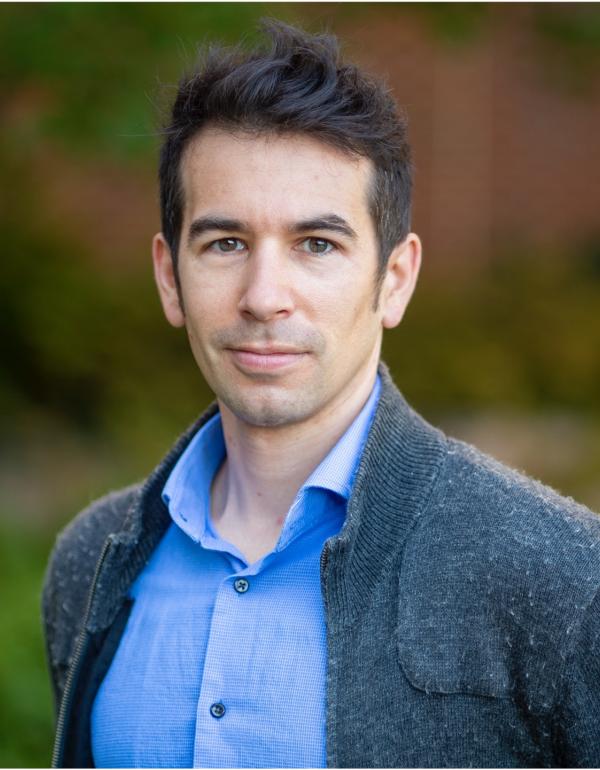
Diego Rossinelli is an Adjunct Professor at Stanford University specializing in advanced computational methods for aerospace and biomedical systems. His research integrates high-performance computing with complex fluid dynamics, particularly in combustion systems and biomechanics.
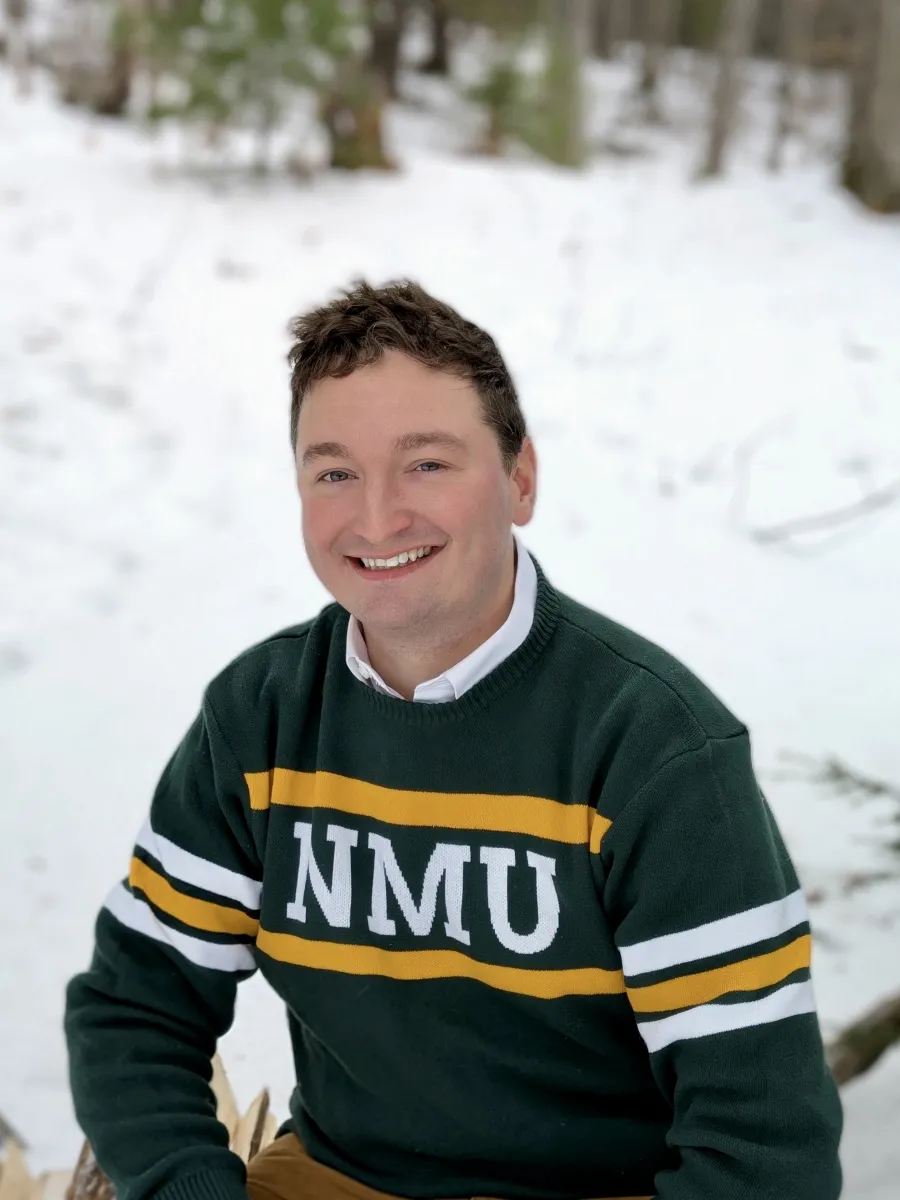
Dr. Forrest Toegel is an Assistant Professor in the Department of Psychological Science within the College of Arts and Sciences at Northern Michigan University (NMU). He directs the Toegel Laboratory, where he and his team investigate basic and applied questions in behavior analysis, with a strong emphasis on substance-use disorders, contingency-management interventions, and community health initiatives. Education B.A. in Psychology, University of Wisconsin–Eau Claire (2014) M.S. in Psychology (Behavior Analysis), West Virginia University (2014–2018) Ph.D. in Psychology (Behavior Analysis), West Virginia University (2014–2018) Post-doctoral Fellowship, Johns Hopkins University School of Medicine (2019–2022) Research Focus Dr. Toegel’s research integrates experimental and applied behavior analysis to address socially significant problems such as substance abuse, relapse, and failures in self-control. His lab employs sophisticated operant methodologies, behavioral pharmacology, and community-based intervention designs to translate laboratory findings into scalable public-health solutions. Core themes include: Impulsivity and self-control in decision-making Behavioral mechanisms of addiction and relapse Contingency-management and incentive-based treatments Technology-enhanced training for therapists and caregivers Health-economic evaluations of behavioral interventions Publication Trends Across more than 30 peer-reviewed articles since 2017, Dr. Toegel’s scholarship demonstrates a clear trajectory from basic experimental work on reinforcement schedules and choice behavior to large-scale randomized clinical trials evaluating the cost-effectiveness of abstinence-contingent wage supplements and therapeutic workplace models. His 2024–2025 publications emphasize translational applications: driving-simulator paradigms for undergraduate pedagogy, anti-anxiety medication screening using rich-lean transitions, and comprehensive economic analyses of incentive programs for homeless populations with alcohol use disorder. Scientific Recognition While explicit awards are not enumerated in the provided text, Dr. Toegel’s consistent federal funding record (implied via NIH-supported trials) and leadership roles in multi-site studies underscore the high impact of his work on addiction science and behavioral economics. Student Mentorship & Grants Through the Toegel Laboratory, Dr. Toegel provides intensive, hands-on training to both undergraduate and graduate students in experimental design, data analysis, and dissemination. Students routinely co-author publications and present at national conferences such as ABAI and APA. External funding from NIH and other agencies supports student stipends, conference travel, and community-based research initiatives. Laboratory & Team The Toegel Laboratories occupy dedicated space in the Weston Science Building (WSTN 1119) at NMU. The facility houses operant chambers, computer-based training modules, and data-collection systems for both human and non-human research. A collaborative team of graduate research assistants, undergraduate honors students, and community partners ensures a vibrant, interdisciplinary research environment aimed at improving the human condition through the science of behavior.
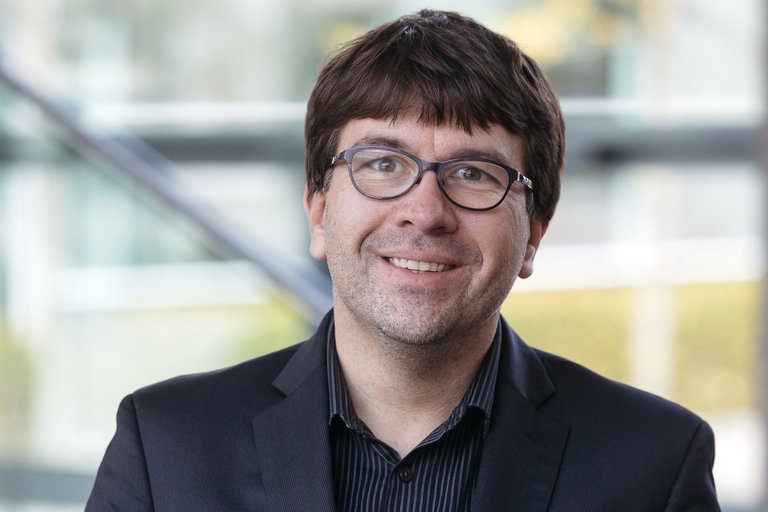
Dr. Ioana Karnstedt-Hulpus is an Assistant Professor in the Data Intensive Systems group at the Department of Information and Computing Science, Utrecht University. Her research focuses on scalable graph-based methods for financial fraud detection in collaboration with ING Bank. She holds a PhD from Digital Enterprise Research Institute (DERI), Galway, Ireland, and completed postdoctoral work at the University of Mannheim, Germany, where she investigated natural language argumentation and financial graph analysis. Educations: PhD in Computer Science (DERI, National University of Ireland Galway) Postdoctoral Research at University of Mannheim Research Interests: Combines network analysis with text analysis techniques to address challenges in financial systems and natural language processing. Specializes in semantic web applications, knowledge networks, and moral dimensions in argumentation frameworks. Active in applying graph analytics to VC investment networks and fraud detection. Teaching: Developed Network Analysis course for Master of Business Informatics and Data Science programs at University of Mannheim. Currently involved in courses like Computer Architecture and Networks. Industry Collaboration: Partnership with ING Bank for fraud detection research Work Location: Tuesdays at ING Amsterdam headquarters
Kotidis Ioannis serves as an Associate Professor in the Department of Informatics at the Athens University of Economics and Business (AUEB). His academic journey began with a Diploma in Electrical and Computer Engineering from the National Technical University of Athens, followed by Master's and Ph.D. degrees from the University of Maryland. His research focuses on several critical areas of database systems and data management, including On Line Analytical Processing (OLAP) and data warehousing, data mining, Sensor/P2P networks, mobile data management, data fusion & dissemination, data streams, RFID data management, approximate query answering, ranking, and database preservation and integration. His work bridges theoretical database concepts with practical applications in emerging technologies. Professor Kotidis' publication record demonstrates consistent contributions to database research over two decades, with notable work in dynamic view management, stream processing, sensor network data management, and more recently, blockchain-based OLAP view management and complex event processing. His research has evolved from traditional data warehousing to address challenges in modern data-intensive applications. best paper award at ACM SIGMOD International Conference on Management of Data for DynaMat paper Throughout his career, Professor Kotidis has supervised numerous students on projects related to database systems, including work on complex event processing, decentralized OLAP view management using blockchains, and graph similarity learning. His research projects include DeLorean (time-series management), RECOST (complex stream management), DBSENSE (wireless sensor networks), and INFORE (extreme-scale analytics). His laboratory work focuses on creating efficient, scalable solutions for data management challenges across various domains, with particular emphasis on making advanced data processing techniques accessible and practical for real-world applications.
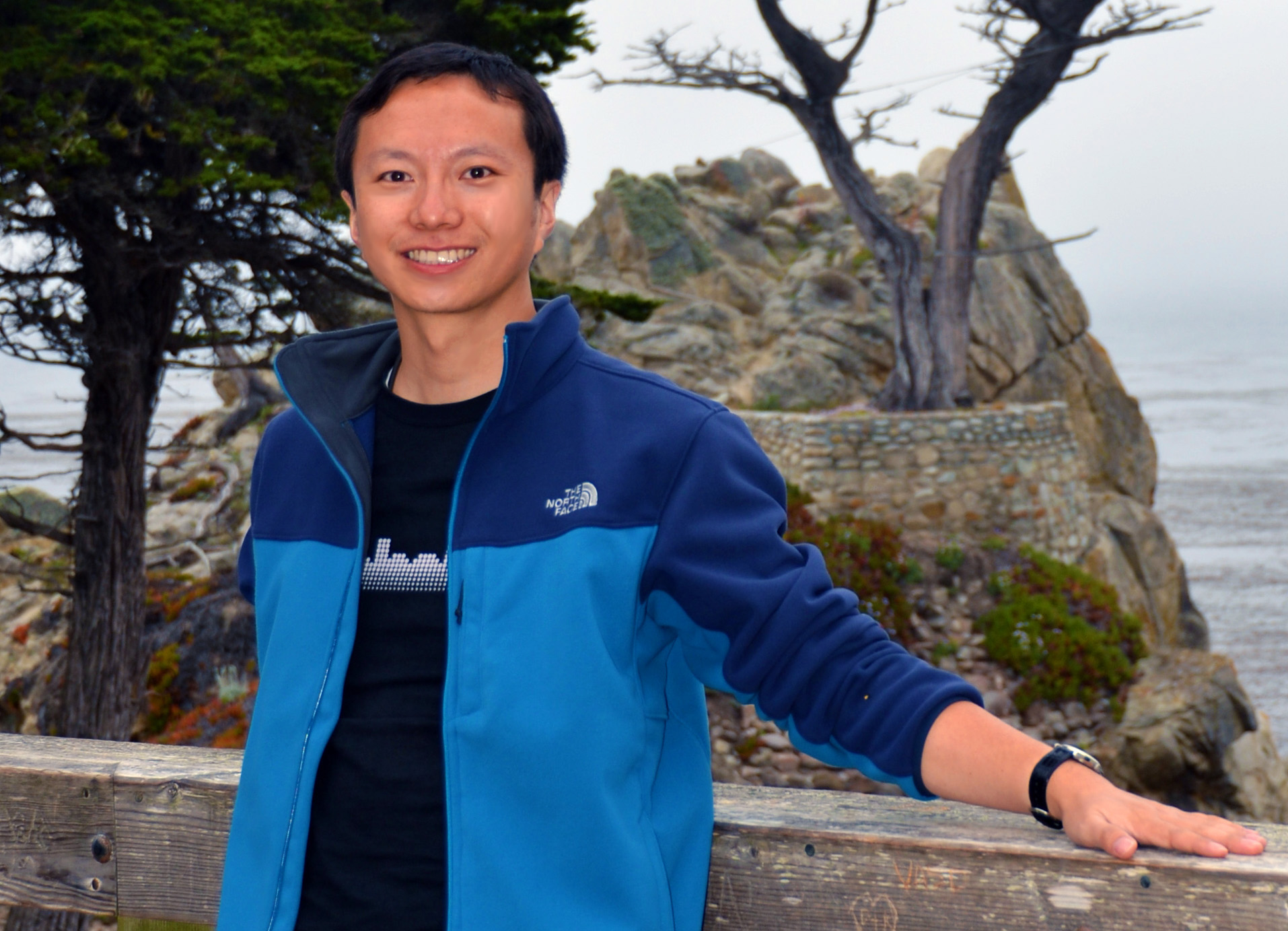
Ananta Tiwari is a researcher specializing in High-Performance Computing (HPC), energy efficiency, and parallel system optimization. His work focuses on optimizing HPC applications, workload management, and resource allocation strategies to enhance both performance and energy efficiency. Tiwari has collaborated extensively with institutions like the University of Maryland, UC San Diego, and Lawrence Livermore National Laboratory through his research activities. Education: PhD in Computer Science, University of Maryland, College Park (2011) Research Interests: Energy-efficient HPC systems Parallel application auto-tuning frameworks Workload characterization and extrapolation Node-sharing and resource pricing models ARM architecture optimization for HPC Key Contributions: Tiwari's research spans energy optimization techniques for large-scale MPI applications, colocation strategies for HPC workloads, and binary instrumentation tools for program analysis. His work on auto-tuning frameworks and multi-objective modeling with machine learning addresses critical challenges in balancing performance, power consumption, and scalability in modern HPC environments.
Prof. Dr. Patrick Mäder is a University Professor and head of the Group of Data-intensive Systems and Visualization at TU Ilmenau's Department of Computer Science and Automation. He previously served as an Assistant Professor in Software Engineering for Safety-Critical Systems. His career includes doctoral research on software traceability (earning the Thuringian STIFT Prize), a Lise Meitner Fellowship at Johannes Kepler University Linz, and research stays at DePaul University Chicago. Bachelor/Master studies at TU Ilmenau PhD in 2005 on software traceability Postdoc at Johannes Kepler University Linz (2010-2012) Research focuses on secure/reliable software systems, scalable machine learning, explainable AI, computational biology/ecology, and interdisciplinary projects like the award-winning Flora Incognita plant identification app. He has coordinated numerous third-party funded projects in software engineering and machine learning, expanding his team to 18 researchers by 2020. Awards include the 2020 Thuringian Research Prize for applied research and the STIFT Prize for his dissertation on software traceability.
René Widera is a researcher at the Helmholtz-Zentrum Dresden-Rossendorf (HZDR), specifically within the Laser Particle Acceleration department of the Institute of Radiation Physics. His work focuses on advancing high-performance computing (HPC) techniques for plasma simulations, particularly leveraging GPU architectures and exascale computing frameworks. He contributes to the development and optimization of the PIConGPU code, a leading particle-in-cell (PIC) simulation tool. His research integrates machine learning for real-time data analysis, parallel algorithms for HPC scalability, and cross-platform visualization strategies. Areas of expertise include laser plasma acceleration, high-energy-density physics, and the design of efficient numerical methods for large-scale simulations. He explores hardware-agnostic solutions for computational challenges, including memory access optimizations and DAG-based parallelism. Collaborations involve international HPC initiatives and open-source software projects like openPMD and alpaka . Key projects include the TWEAC initiative to overcome limitations in laser-wakefield acceleration and the development of in-situ visualization pipelines for real-time simulation insights. He also evaluates modern GPU architectures (e.g., AMD, ARM-based systems) for scientific workloads. His contributions bridge theoretical plasma physics with practical computational advancements, aiming to enable next-generation high-intensity laser experiments.
Ernad Bešlagić is an Assistant Professor at the Department of Automation and Metrology, Faculty of Mechanical Engineering, University of Zenica (UNZE BA). He holds a Dr. Sc. degree in Polytechnics from the Faculty of Mechanical Engineering in Mostar, awarded in 2021. His academic journey includes a Master's in Metrology (2013) and a Bachelor's in Mechanical Engineering (2002), both from UNZE BA. He has been a faculty member since 2008, transitioning from roles like Senior Assistant to his current position since 2022. Bešlagić’s research focuses on additive manufacturing precision, wind energy systems, and metrology. He has contributed to projects involving 3D printing accuracy, wind tunnel testing for Darrieus turbines, and fatigue analysis of mechanical components. As a co-author of university textbooks and peer-reviewed papers, his work bridges theoretical concepts with practical engineering solutions. He also leads the Citizens' Association 'Education for the new age - STEAM education,' promoting interdisciplinary learning. His professional activities include mentoring students across mechanical engineering disciplines and contributing to national/international conferences. He has collaborated on hardware/software development for wind turbine prototyping and metrology systems, emphasizing real-world applications of engineering principles.
Diego Perez-Palacin is a Senior Lecturer in the Department of Computer Science and Media Technology at Linnaeus University, Sweden. He holds a PhD in Computer Science from the University of Zaragoza, Spain. Previously, he served as a postdoctoral researcher at Politecnico di Milano (2013-2016) and a Senior Researcher at the University of Zaragoza (2017), contributing to European (FP7/H2020) and Spanish national research projects. Research Interests: His work focuses on software quality properties, self-adaptive systems, model-based analysis using formal methods, and resilience engineering. Key areas include cyber-physical systems, digital twins, and uncertainty management in adaptive systems. His research groups include AdaptWise (self-adaptive software), Cyber-Physical Systems (CPS), and Engineering Resilient Systems (EReS). Projects: Current projects include developing Digital Twins of Organizations (DTO) and aligning architectures for DTO (Aladino). Completed projects include Smart-Troubleshooting in the Connected Society. His work often involves collaboration with interdisciplinary teams in data-intensive applications and smart industry. Publications: Over 30 peer-reviewed articles in journals like ACM Transactions on Autonomous and Adaptive Systems, IEEE Access, and Journal of Systems and Software. Recent work emphasizes digital twin frameworks, antifragile systems, and uncertainty propagation in adaptive systems.
Jonas Lundberg is a Senior Lecturer in Computer Science at Linnaeus University since 2000, holding a Ph.D. in Theoretical Physics (Umeå University, 1994) and a second Ph.D. in Computer Science (Linnaeus University, 2012). He teaches foundational and advanced courses in programming, machine learning, and compiler design. His research focuses on data-intensive computing, program analysis, and cross-disciplinary projects like the Nordic Tweet Stream (NTS), analyzing social media data from Nordic countries. He leads the Computer Engineering program and participates in CDIO initiatives. Education: Ph.D. in Theoretical Physics, Umeå University (1994) Ph.D. in Computer Science, Linnaeus University (2012) Research interests include machine learning applications in software engineering, program analysis techniques for large codebases, and digital humanities projects leveraging big data. He co-founded the DISA research center (2016) to address challenges in data collection, analysis, and utilization. Recent work involves developing memory-efficient program analysis frameworks and detecting anti-democratic discourse in social media. Key projects include managing the Master's program in Computer Science and advancing self-adaptive systems engineering. His contributions span 70+ publications in venues like IEEE Transactions, Journal of Systems and Software, and conferences such as SAC and DHN. He is affiliated with research groups like Data Intensive Software Technologies (DISTA) and co-leads the Nordic Tweet Stream initiative. His work bridges computational methods with humanities, emphasizing real-time data analysis and cross-disciplinary collaboration.
Eva Giralt Steinhauer serves as a Visiting Scientist at TU Wien within the Faculty of Informatics, specifically affiliated with the Databases and Artificial Intelligence research group (Institute of Logic and Computation, E192-02). She is categorized under both External Lecturers and Guest Professors at the institution, indicating her dual role in academic instruction and research collaboration. Her research centers on database systems and artificial intelligence, with particular emphasis on machine learning integration, semantic data modeling, and knowledge representation frameworks. These interests align with contemporary challenges in data-intensive computing, focusing on scalable architectures for AI-driven information systems and advanced query processing techniques. While no specific advising activities or grant projects are documented in the source material, her position within this specialized research unit suggests active participation in collaborative projects addressing next-generation database technologies and AI applications. The Databases and Artificial Intelligence group provides the primary operational context for her scholarly work at TU Wien.
Jonathan Poterjoy is an Associate Professor in the Department of Atmospheric and Oceanic Science at the University of Maryland, serving as Graduate Program Director. He holds a Ph.D. in Meteorology from Pennsylvania State University and a BS in Meteorology and Applied Mathematics from Millersville University. His research focuses on advancing data assimilation techniques for Earth system models, particularly addressing challenges in probabilistic forecasting of hazardous weather like tropical cyclones and severe storms. He has held postdoctoral positions at NOAA’s Hurricane Research Division and NCAR’s Mesoscale and Microscale Meteorology Laboratory. His current projects include improving NOAA’s Global Forecast System through enhanced parameterization and sea ice data assimilation, as well as developing methods for quantifying uncertainty in novel atmospheric measurements. Notable grants include NSF CAREER Award AGS1848363 and NOAA grants NA19NES432000 and NA22OAR4590184. His work emphasizes interdisciplinary collaboration with modelers, observation specialists, and uncertainty quantification experts to enhance environmental prediction systems.
Prof. Weikuan Yu is a Professor in the Department of Computer Science at Florida State University. His research focuses on computer architecture, high-performance computing (HPC), cloud computing, parallel file systems, and deep learning applications. He holds the role of Chair and can be contacted via yuw@cs.fsu.edu or (850) 644-5442. His expertise includes optimizing storage systems and I/O behaviors in scientific workflows, developing scalable distributed systems, and applying machine learning to improve computational efficiency. Notable projects include work on burst buffer systems (e.g., BurstFS, TRIO), persistent memory management (PHAST), and distributed deep learning frameworks (e.g., compression techniques for time-evolutionary data). Recent research trends emphasize enhancing HPC storage efficiency through novel file systems and I/O emulation, as well as leveraging machine learning for fault tolerance and configuration tuning. His work bridges hardware-software co-design to address challenges in exascale computing and big data analytics. Prof. Yu has contributed to multiple open-source projects and frameworks, including OpenSHMEM-based key-value stores and MapReduce optimizations. His publications highlight advancements in parallel processing, distributed algorithms, and energy-efficient memory architectures.
Peixiang Zhao is an Associate Professor in the Department of Computer Science at Florida State University (FSU). He holds a Ph.D. from the University of Illinois at Urbana-Champaign (UIUC) and completed his M.S. and B.S. at Peking University. His research focuses on data/network science, database systems, and graph analytics, with particular emphasis on managing and analyzing large-scale networked data. His work has been supported by AFOSR-YIP, ARO-YIP, NSF, and industry grants. He advises several doctoral and master’s students and teaches courses like Advanced Data Mining and Advanced Database Systems. His research group explores topics such as graph query optimization, graph summarization, and scalable computation in dynamic graph streams. Education: Ph.D., Computer Science, University of Illinois at Urbana-Champaign (2012) M.S., Computer Science, Peking University (2004) B.S., Computer Science, Peking University (2001) Research Interests: Graph query processing and optimization Graph summarization and learning Scalable computation in dynamic graph streams Data-intensive systems and analytics Awards: AFOSR-YIP (2021) ARO-YIP (2020) Teaching: CAP5778 Advanced Data Mining, COP5725 Advanced Database Systems.
Laurynas Siksnys is an Academic Officer at the Department of Computer Science, Aalborg University, affiliated with The Technical Faculty of IT and Design. He is part of the Daisy - Center for Data-intensive Systems and the Data Engineering, Science and Systems group. His research focuses on energy systems, particularly energy flexibility, smart grids, and renewable energy integration. Education details: Not explicitly provided in the text. His work emphasizes scalable flexibility modeling in energy systems, including device-independent FlexOffer frameworks and uncertainty-aware approaches. He has contributed to projects like GOFLEX, demonstrating flexibility aggregation for 500+ prosumers across Europe. His research bridges technical systems and user expectations through participatory design studies. Notable projects include the EU-funded GOFLEX and MIRABEL initiatives addressing energy demand distribution and data collection systems. He collaborates extensively in international consortia, including the IT4BI-DC Erasmus Mundus Doctoral College. He has advised on projects involving energy flexibility trading mechanisms and participated in grant-funded research spanning 2010-2023. His lab affiliations include Daisy Center and data engineering teams focused on energy system optimization.