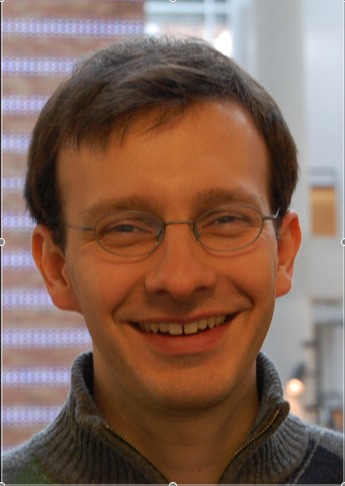
Michael J. Cafarella is an Associate Professor in the Computer Science and Engineering department at the University of Michigan . His research focuses on databases, information extraction, data integration, and data mining, with applications in economics, social media analysis, and combating human trafficking. He leads the Software Systems Lab and Michigan Database Group . Scientific Awards NSF CAREER award Sloan Research Fellowship (2016) 2018 VLDB Ten-Year Best Paper award Research Impact : Cafarella co-founded the Hadoop open-source project and Lattice Data (acquired by Apple). His work on DeepDive and DARPA MEMEX was featured on 60 Minutes and in Scientific American . Funding from The Census Bureau, DARPA, Google, NSF, Yahoo!, General Electric, and Dow.
Zhou Tong serves as an Assistant Professor in the Computer Science Department at Wheaton College in Norton, MA. His academic foundation includes a Ph.D. in Computer Science from Florida State University and a B.S. in Computer Science from Millsaps College. His educational background: Ph.D. in Computer Science, Florida State University B.S. in Computer Science, Millsaps College Dr. Tong specializes in parallel computing and high performance computing (HPC), with significant contributions to performance modeling of HPC applications, workload characterization, and interconnect topology design. His secondary research domains include Machine Learning and Natural Language Processing, where he explores computational efficiency in data-intensive systems. His publication record reveals a concentrated focus on HPC networking innovations from 2016-2021, particularly in adaptive routing algorithms for dragonfly topologies, software-defined networking integration, and MPI application classification using logical clocks. These works consistently address performance optimization challenges in large-scale parallel computing environments. No scientific awards are documented in the available materials. Information regarding student advising, research grants, and laboratory facilities remains unspecified in current records.
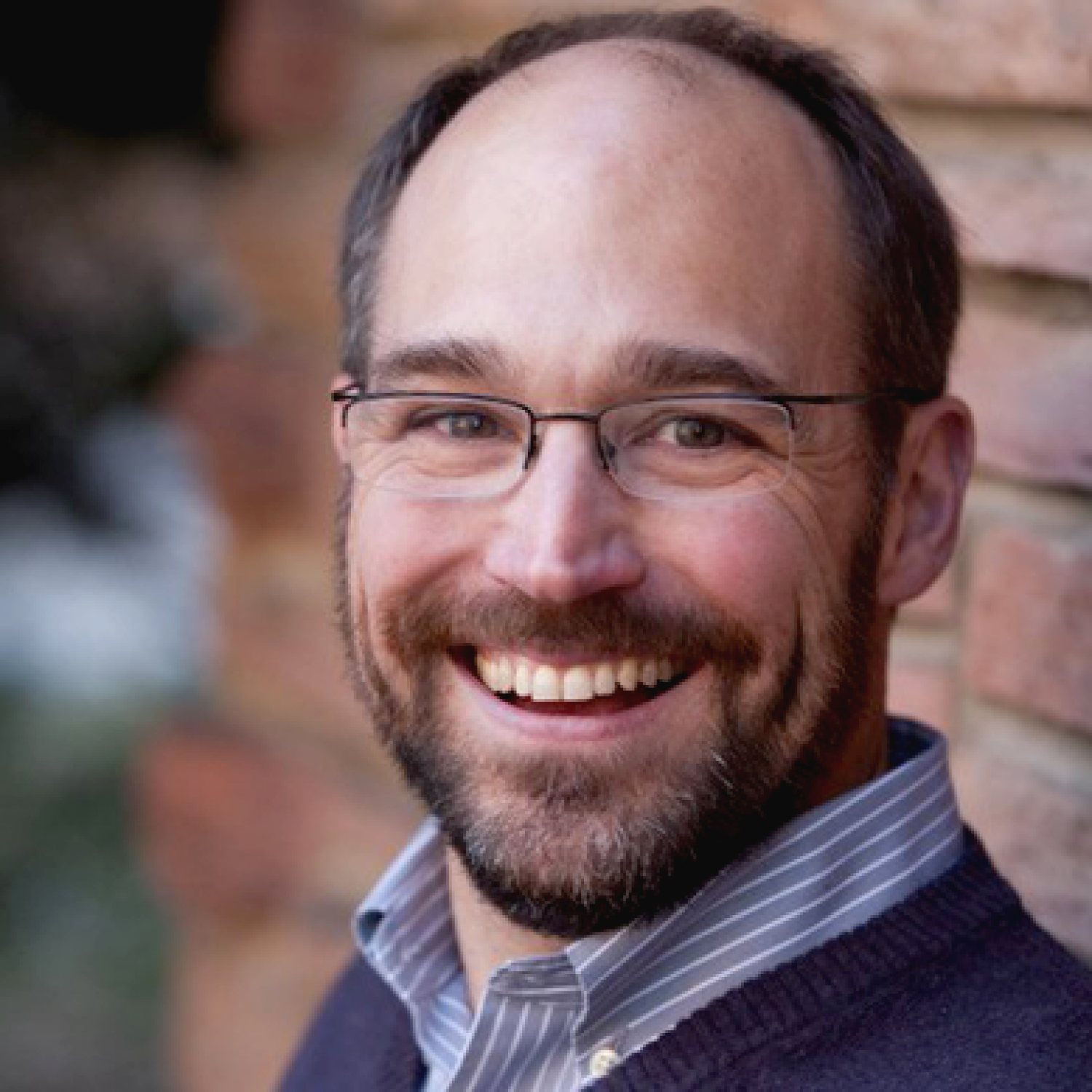
Professor Kenneth M. Anderson is Chair of the Department of Computer Science and holds the Palmer Endowed Chair at the University of Colorado Boulder's College of Engineering & Applied Science. He co-directs Project EPIC, a $4M NSF-funded initiative on social media use during mass emergencies, and serves as Co-Director of the Center for Software and Society. Ph.D. in Computer Science, University of California, Irvine (1997) Joined CU Boulder in 1998; tenured in 2005 Former Associate Dean for Education (2016-2019) Former Associate Chair (2010-2013) His research bridges software engineering, crisis informatics, and human-computer interaction. Current projects focus on large-scale social media analytics, crisis response systems, and software architecture for data-intensive environments. Recent publications explore multilingual social media analysis (ML-EPIC), bug fix patterns in software development (FIXR), and collaborative big data platforms. Themes include disaster risk communication, data modeling challenges, and asynchronous analysis tools. ATLAS Fellow (2010) As department chair, he spearheaded initiatives for inclusivity, including creating a Bachelor of Arts in Computer Science and establishing the NSF Broadening Participation in Computing plan. He oversees major academic reforms and departmental operations.
Robert J. Brunner is a Professor at the University of Illinois with primary appointments in the Gies College of Business (Department of Accountancy) and the School of Information Sciences. He holds affiliate roles across multiple departments including Astronomy, Computer Science, and Statistics, as well as research centers like the Beckman Institute and NCSA. His research focuses on applying statistical/machine learning to solve complex problems in astronomy, finance, and large-scale data science. Education: Ph.D. in Astrophysics from Johns Hopkins University (advisor: Alex Szalay). Postdoctoral work at Caltech on the Digital Sky project. Research Interests: Machine learning applications, computational techniques, data management/visualization, and observational cosmology. His work bridges astrophysical data analysis with modern data science methodologies. Recent work includes developing spatio-temporal neural networks for forecasting, evaluating AI-driven financial analysis tools, and planning for the Vera C. Rubin Observatory. He collaborates internationally on large-scale surveys like the Dark Energy Survey and SDSS. Labs/Teams: Leads data science initiatives at the University of Illinois Research Park. Active in interdisciplinary teams at NCSA and Beckman Institute focusing on algorithm optimization and data-intensive research.
Simon Colreavy Donnelly is an Associate Professor in the Department of Computer Science & Information Systems at the University of Limerick. He is a member of the Interaction Design Centre and focuses on interdisciplinary research at the intersection of artificial intelligence, educational technology, and healthcare informatics. His work spans machine learning applications in medical data analysis, virtual reality (VR) and extended reality (XR) for inclusive education, and deep learning techniques in chemical analysis and spectroscopy. Research Interests: His primary areas of investigation include generative AI for education equity, semisupervised learning algorithms, virtual learning environments design, and the ethical deployment of immersive technologies in healthcare and palliative care. He also explores NMR spectroscopy analysis using deep learning and develops tools for nutritional content estimation through image processing. Collaborations: His recent collaborations span international teams addressing challenges in toxicity-free online discourse (PAN 2024), semisupervised learning distribution mismatches, and VR applications for post-pandemic blended learning. His work integrates computational methods with real-world applications in education, healthcare, and chemical analysis. Labs/Teams: Active within the Interaction Design Centre at UL, his research group develops practical solutions for accessibility in digital education and healthcare systems, emphasizing user-centered design principles for extended reality applications.
Dr. Madhushi Bandara is a Lecturer at the School of Computer Science, University of Technology Sydney (UTS), specializing in knowledge representation, complex system modeling, and data analytics. She leads the data management research stream at the UTS DigiSAS lab and is a core member of the Biomedical Data Science Laboratory within the UTS Australian Artificial Intelligence Institute. Her industry collaborations include Telstra, Cancer Australia, and Capsifi, focusing on AI integration in healthcare and finance. She coordinates the Business Information Systems major in UTS's Master of Information Technology program and convenes the Future Generation Enterprise Architecture Community of Practice. Education PhD in AI Systems Engineering, University of New South Wales (2020) BSc (Hons) in Engineering, University of Moratuwa, Sri Lanka (2015) Research Interests Madhushi's work bridges machine learning, knowledge graphs, and enterprise architecture to address challenges in data governance for SMEs, ESG metric management, and healthcare pathway analysis. Her research emphasizes translating cutting-edge AI into industry solutions through contextual domain knowledge integration. Scientific Awards UNSW-UTS Trustworthy Digital Society Scholarship Teaching & Leadership She teaches enterprise information systems, digital strategy, and AI for enterprises in UTS's online postgraduate programs. Her service roles include co-chairing tracks at the Australasian Conference on Information Systems and reviewing for Expert Systems with Applications.
Jukka K Nurminen is a Professor of Computer Science at the University of Helsinki (since 2019) and a Research Professor at VTT. He leads the Empirical Software Engineering research group and supervises doctoral students in the Doctoral Programme in Computer Science. His career spans academia and industry, including roles as Adjunct Professor at Aalto University (part-time, 2016-2021) and Principal Scientist at VTT (2016-2019). His research focuses on efficient software systems , particularly energy-efficient software , mobile cloud computing , and data-intensive systems . Recent work addresses AI system testing , ethical decision-making in software , and quantum computing software . His publications highlight trends in quantum algorithms , machine learning for edge computing , and ethical AI . Best Paper Award (2023) Nurminen has supervised 6 PhD theses, 48 MSc theses, and 21 BSc theses. He has secured over 1 MEUR in research funding, including projects like FrameQ and EM4QS for quantum middleware. His teaching innovations include hackathons and summer schools, with excellence recognized in tenure-track evaluation (2018) and adjunct professorship (2015).
Dr. Udayanto Atmojo is a Staff Scientist in the Department of Electrical Engineering and Automation at Aalto University. His research focuses on industrial automation systems, distributed control architectures, and IEC 61499 standard implementation. He holds a doctoral degree in Engineering from the University of Auckland. Research Focus: Distributed control systems using IEC 61499 standard OPC-UA integration for industrial interoperability Cybersecurity in Industry 5.0 environments Digital twin applications in industrial settings His publications demonstrate strong emphasis on industrial automation standards, secure data exchange, and virtual commissioning. Recent work addresses security challenges in human-intensive automated factories and confidential data sharing for life cycle assessments in process industries. Projects and Recognition: Principal investigator for TwinFlow project on distributed control systems (2024-2026) Contributor to CloViC project on cloud virtual commissioning Finalist in World Challenge Finland 2018 competition He develops laboratory test procedures for industrial applications and contributes to open science initiatives including FAIR principles for research software.
Kevin Vinsen is a Senior Research Fellow at the University of Western Australia, working in the Data Intensive Astronomy (DIA) Program of the International Centre for Radio Astronomy Research (ICRAR) since 2009. He is also affiliated with the UWA Defence and Security Institute and holds an ORCID ID of 0000-0001-5332-3784. His work focuses on translating ICRAR software capabilities into practical industry applications across diverse domains. His research interests include: Peta-scale systems High-performance Computing Machine Learning applications in multiple fields Wave and weather forecasting Digital Assistive Technologies Agricultural applications of ML Large language models Vinsen heads the Translation and Impact work of the DIA team and leads the development of Machine Learning systems. His current projects include ML for wave forecasting on the NW shelf, wind and temperature forecasting, honey traceability and provenance, and digital assistive technology for people with disabilities. His work contributes to UN Sustainable Development Goals related to industry, oceans, agriculture, food, disability, and defense. His research output demonstrates a strong trend toward applying machine learning techniques to solve real-world problems across astronomy, environmental science, agriculture, and disability support. This interdisciplinary approach showcases the versatility of his computational expertise across scientific and social domains. Vinsen has an h-index of 11 with 621 citations across 33 research outputs. As the ICRAR/UWA Summer Studentship Co-ordinator, he mentors emerging researchers and contributes to building research capacity. His collaborative network spans multiple institutions and research areas, reflecting his ability to bridge academic research with practical applications.
Eileen Martin is an Associate Professor in the Department of Geophysics and Applied Math and Statistics at the Colorado School of Mines. Her research focuses on near-surface geophysics, environmental monitoring, and the application of distributed acoustic sensing (DAS) technology. She leads projects involving fiber-optic sensing for permafrost degradation, urban seismic monitoring, and mining safety. Martin has developed open-source tools like DASCore and contributes to scalable computational methods for geophysical data analysis. Education: PhD (2018) in Computational and Mathematical Engineering from Stanford University; MS (2017) in Geophysics from Stanford; BS (2012) in Mathematics and Physics from UT Austin. Research interests include fiber-optic sensing systems, seismic imaging, data-intensive computing, and applications in environmental science. Her work bridges geophysics with computational methods, emphasizing real-world deployment in challenging environments like arctic permafrost sites and underground mines. Her recent work explores DAS for glacier monitoring, mine seismicity detection, and urban infrastructure assessment. Collaborative projects include Arctic permafrost monitoring and developing public datasets for geoscience research (PubDAS repository). Grants and lab activities include NSF CAREER funding for scalable computational seismology and partnerships with industry on fiber-optic monitoring solutions.
Heather Miller is a tenure-track Assistant Professor in the Software and Societal Systems Department within Carnegie Mellon University's School of Computer Science. Her academic journey includes prior roles as an Assistant Clinical Professor at Northeastern University's College of Computer and Information Science and as Executive Director of the Scala Center at EPFL. Miller's research centers on distributed and concurrent computation through the lens of programming languages, with particular emphasis on data-centric systems, big data processing, and edge computing. A defining theme throughout her work is composability - enabling construction of complex distributed systems through composition of components that are correct by construction. Her projects span distributable closures, flexible serialization techniques, futures and promises for asynchronous programming, and deterministic concurrent dataflow models. Her recent publications demonstrate strong trends in applying programming language theory to practical distributed systems challenges, with increasing focus on WebAssembly instrumentation, microservice resilience, and language model pipelines. This evolution reflects her commitment to bridging theoretical foundations with real-world system requirements. Dahl-Nygaard Junior Prize (2023) Mentorship forms a significant component of Miller's academic work. She actively supervises multiple PhD, MS, and undergraduate researchers at CMU, including Christopher Meiklejohn, Matthew Weidner, Huairui Qui, Ria Pradeep, and Luke Dramko. Her service contributions span numerous top-tier conferences including PLDI, SPLASH, ECOOP, and ICSE where she has served as committee member, chair, and keynote speaker. Miller co-founded the Curry On conference to foster industry-academia dialogue, hosting successful editions in Prague, Rome, Barcelona, Amsterdam, and London. She leads research groups focused on distributed programming models and maintains strong industry connections through Two Sigma, where she holds an affiliation. Her work consistently emphasizes practical open-source implementations, primarily within the Scala ecosystem where she's been a core contributor since 2011.
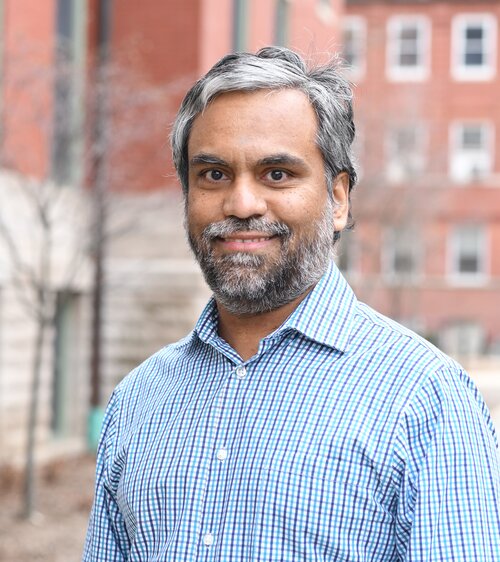
Anand Padmanabhan is a Research Associate Professor in the Department of Geography & Geographic Information Science at the University of Illinois at Urbana-Champaign (UIUC), affiliated with the School of Earth, Society & Environment within the College of Liberal Arts & Sciences. He holds a Ph.D. in Computer Science from the University of Iowa, alongside an MS in Computer Science (University of Iowa) and a BE in Computer Engineering (University of Mumbai). His research focuses on advanced cyberinfrastructure, cyberGIS, geospatial data science, and high-performance computing. He leads the spatial algorithms and systems team at the CyberGIS Center for Advanced Digital and Spatial Studies, developing cyberGIS capabilities to leverage advanced computing for geospatial innovation. His work emphasizes scalable geocomputation, cloud-based frameworks, and reproducible research environments, with contributions to tools like CyberGIS-Compute and EasyScienceGateway. Recent publications highlight advancements in science gateway frameworks, middleware systems, and geospatial education platforms. He serves as Online MS Program Adviser and has secured NSF and EPA grants for interdisciplinary projects. His work spans transdisciplinary training programs, urban sensing analytics, and integration of social media with geospatial data.
Bettina Kemme is a faculty member at McGill University in Montreal, Canada. Her research focuses on database systems , distributed computing , and cloud data management . She has made significant contributions to database replication, consistency models, and middleware frameworks for scalable applications. Research Themes : Database replication, distributed systems, cloud computing, and software engineering. Notable Collaborations : Jörg Kienzle, Joseph Vinish D'silva, Yunjia Zheng, and Marta Patiño-Martínez. Publications span critical areas such as graph database view management, transactional recovery in key-value stores, and latency-aware publish/subscribe systems. Her work is published in venues like VLDB , ICDE , Middleware , and SRDS .
Dr. Alexandra Fedorova is a Professor in the Department of Electrical and Computer Engineering at the University of British Columbia (UBC), with an Associate Member role in the Computer Science department. She leads the Systopia systems research group, focusing on system software design, memory/storage management, and accelerator-centric computing. Her work emphasizes performance optimization, energy efficiency, and hardware-software co-design. She holds a PhD from Harvard University (2006), where she researched operating system scheduling under Margo Seltzer. Prior to UBC, she was an Associate Professor at Simon Fraser University (2006–2015). Fedorova is a recipient of the Alfred P. Sloan Research Fellowship and the Anita Borg Early Career Award. She consults for MongoDB's storage engine team and collaborates with industry on storage and performance challenges. Her research spans tools like Non-sequitur for program trace visualization, studies on storage-class memory (e.g., Optane), and frameworks for GPU acceleration. Recent efforts include Sunstone (spatial accelerator scheduling) and ExtMem (application-aware memory management). Her work bridges low-level systems with high-performance computing needs. Key contributions include optimizing NUMA systems, improving storage engine performance, and exploring processing-in-memory architectures. Fedorova’s projects often involve open-source collaboration, reflected in her GitHub repositories such as vividperf and perf-logging , which support performance analysis tools.
Dr. Axel Lubk is a Group Leader at the Institute for Solid State Research (IFW Dresden) , specializing in advanced electron microscopy techniques for materials science. His research spans four key areas: (1) TEM method development (high-resolution imaging, tomography, holography, and in-situ techniques), (2) charge particle optics and scattering theory , (3) magnetic nanotextures (domain walls, skyrmions), and (4) plasmonics (mode hybridization in heterogeneous structures and semiconductor heterostructures). Dr. Lubk’s work focuses on three-dimensional magnetic texture analysis using electron holography and tomography, particularly in systems like skyrmion tubes , FeGe , and Cr2O3 thin films . He has pioneered techniques for vector-field electron tomography and phase retrieval under varying boundary conditions, advancing nanoscale magnetic imaging. His recent studies include plasmonic properties in AgAu nanosphere chains , thermoelectric multilayer systems , and topological insulators like NiRh2Sb and TaTMTe4 . Dr. Lubk has published extensively in high-impact journals such as Nature Communications and Advanced Materials , with a focus on TEM instrumentation and quantitative analysis . He frequently presents at international conferences like the International Microscopy Congress and European School of Magnetism , emphasizing applications in spintronics , quantum materials , and nanostructured systems . His contributions to holographic vector-field electron tomography and machine learning for spectrum-image data have set new standards in electron microscopy.