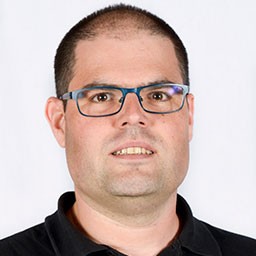
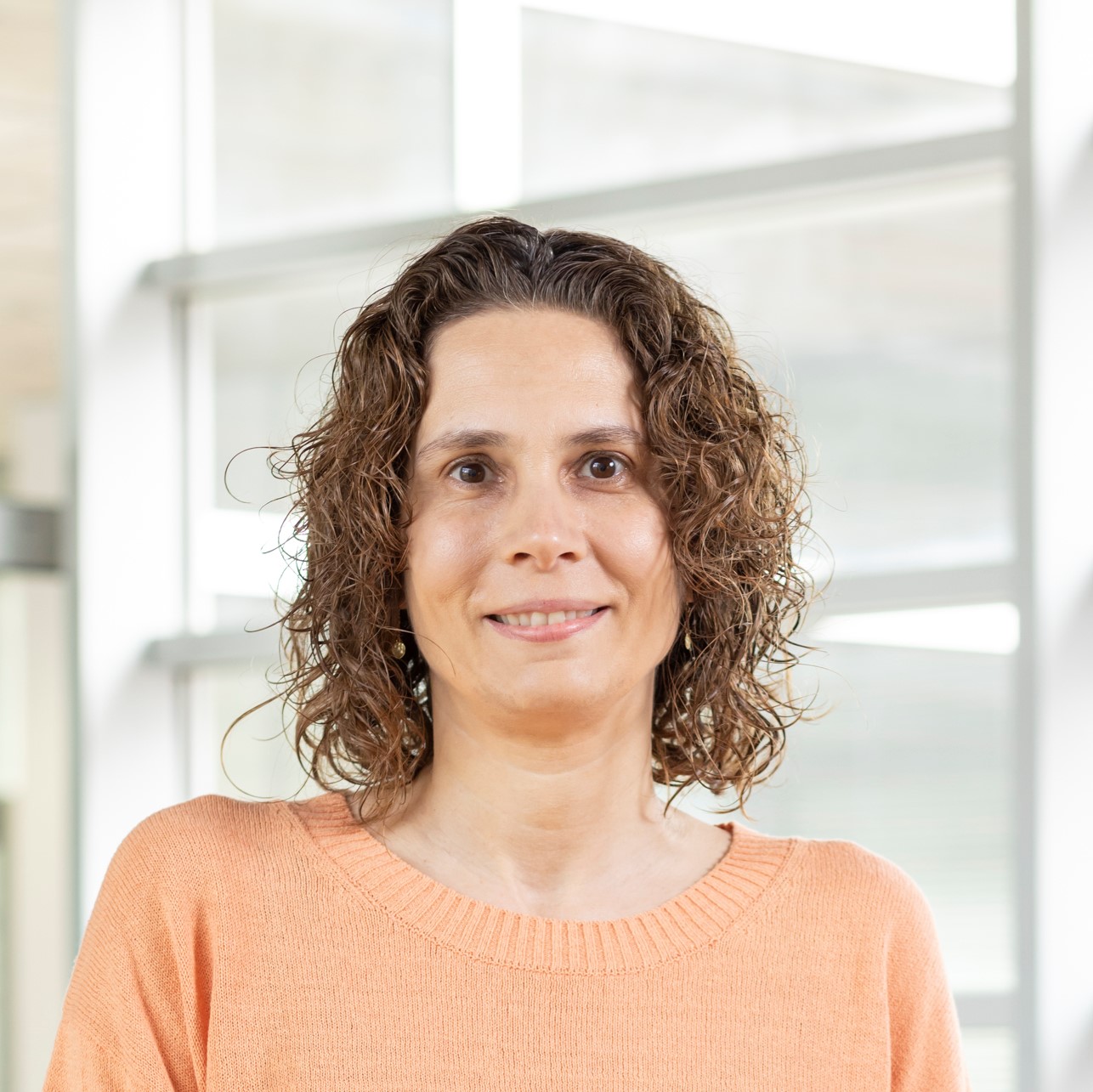
David Carrera is an Associate Professor in the Department of Computer Architecture at the Faculty of Informatics of Barcelona (FIB), Universitat Politècnica de Catalunya (UPC), and serves as the head of the Data-Centric Computing group at the Barcelona Supercomputing Center (BSC-CNS). His research focuses on holistic integration of emerging supercomputing technologies, infrastructure management and optimization for data-intensive workloads, and collaboration with global industry leaders in Computer Science. Areas of expertise include task placement strategies, performance modeling for heterogeneous workloads, and data location strategies for data analytics. He founded the start-up NearbyComputing SL (2018), specializing in orchestration of 5G and IoT services. His work emphasizes technology transfer and industrial collaboration. Scientific Awards & Grants: Agustín de Betancourt y Molina Medal (2018) ERC Starting Grant (HiEST project, 2014) ICREA Acadèmia Award (2015) ERC Proof of Concept (Hi-OMICS, 2017) MIT-Spain "la Caixa" Seed Fund (2018)
Clemens Huemer is a professor affiliated with the Department of Mathematics at the Escola d'Enginyeria de Telecomunicació i Aeroespacial de Castelldefels (EETAC), part of the Universitat Politècnica de Catalunya (UPC). He is a key member of the DCCG (Discrete, Combinational, and Computational Geometry) research group, where he contributes extensively to theoretical and applied geometric research. His work spans computational, discrete, and combinatorial geometry with strong ties to graph theory and combinatorics. His primary research interests include computational geometry, discrete and combinatorial geometry, Voronoi diagrams (especially higher-order variants), geometric graphs, point set configurations, and algorithmic geometry. He investigates structural properties of geometric objects, combinatorial configurations, and optimization problems in discrete settings. His recent publications emphasize Voronoi constructions, matching problems in colored point sets, spectral properties of token graphs, and production matrices for enumerating geometric graphs. The trends in his recent articles (2021–2024) reflect a deep focus on higher-order Voronoi diagrams, geometric matching, and combinatorial properties of point sets and graphs. His work combines theoretical depth with algorithmic insights, often involving polynomial representations, spectral analysis, and geometric enumeration. The recurring themes include structural analysis of geometric arrangements, extremal problems in point sets, and algebraic-combinatorial methods in geometry. Clemens Huemer has been involved in multiple competitive R&D projects, including those funded under the Spanish State Research Plans and Horizon 2020, often in collaboration with leading researchers in computational geometry. He has served on scientific committees of conferences such as the Workshop on Geometric Networks and the Intensive Research Program on Discrete, Combinatorial and Computational Geometry, indicating leadership in the academic community. He advises and collaborates with numerous researchers and students, though specific advisees are not listed in the provided data. His research is supported through national and European grants, and he actively contributes to the dissemination of results via conference presentations and journal publications in top venues such as Discrete and Computational Geometry , Computational Geometry: Theory and Applications , and European Workshop on Computational Geometry . Clemens Huemer is based at the Baix Llobregat campus of UPC and is deeply embedded in the UPC research network, with extensive collaborations across institutions in Spain and internationally. His work is central to the DCCG group’s efforts in advancing the theoretical foundations of discrete and computational geometry.
Luis Martinez Lopez serves as a Professor in the Department of Computer Science at the University of Jaén, affiliated with the Andalusian Interuniversity Institute for Data Science and Computational Intelligence. He leads the research group focused on Intelligent Systems Based on Fuzzy Decision Analysis within the Computer Languages and Systems domain. He earned his Doctorate from the University of Granada in 2000 with the thesis "A new model of representation of linguistic information based on 2-tuples for the aggregation of linguistic preferences," supervised by Dr. Francisco Herrera Triguero. His educational background established foundational expertise in linguistic information processing and preference aggregation. Research centers on Fuzzy Systems and Decision Analysis, with significant contributions to Computational Intelligence applications. His work integrates linguistic information modeling with decision support systems, emphasizing practical implementations in data science contexts through the Intelligent Systems research group. Key methodologies involve 2-tuple fuzzy representations for handling imprecise human preferences in computational environments. Dr. Martinez Lopez actively directs the Intelligent Systems Based on Fuzzy Decision Analysis research group, fostering collaborations within the Andalusian Interuniversity Institute. This team specializes in developing novel fuzzy logic frameworks for real-world decision problems, particularly focusing on linguistic information aggregation techniques applicable to data-intensive domains.
Dr. Lisa Kobayashi Frisk is a Postdoctoral Researcher in the Medical Optics Office at ICFO – The Institute of Photonic Sciences. She holds a PhD in Photonics from Universitat Politècnica de Catalunya (Spain). Her research focuses on developing and applying diffuse optical methods for non-invasive assessment of cerebral hemodynamics in clinical settings, particularly in stroke and critical care patients. Key areas include speckle contrast optical tomography, cerebral autoregulation monitoring, and translational biomedical engineering. Her work bridges optical physics and clinical medicine, with applications in neonatal cardiac surgery monitoring, stroke unit diagnostics, and post-stroke rehabilitation. Recent studies emphasize optimizing fiber-based systems for deep tissue imaging and validating workflows for bedside hemodynamic assessments. Dr. Frisk’s innovations aim to improve personalized therapies through real-time physiological data. Key research directions include: Optical monitoring of cerebral blood flow dynamics Multi-modal hybrid diffuse optical techniques Clinically relevant stroke biomarker identification Development of compact, portable optical devices Her publications (2021–2024) reflect a trajectory toward high-resolution neuroimaging solutions and translational applications in critical care. Current projects explore fiber-based tomography system optimization and multi-wavelength spectroscopy for enhanced diagnostic accuracy.
Martín Martínez Villar is a Research Fellow at the University of Navarra's Faculty of Education and Psychology (FEP), Department of Psychology, and member of the MIPAC research group (Methods and Research in Affective and Cognitive Psychology). Contact: mmvillar@unav.es. He earned his PhD from the University of Navarra in 2015 with a thesis on Parkinson's disease locomotion analysis under Dr. María Pastor Muñoz. His educational background: PhD in Psychology, University of Navarra (2015). Thesis: 'Locomotion movements in Parkinson's disease: kinematic analysis and functional magnetic resonance imaging'. Martín's research centers on developing methodologies and experimental designs to understand human behavior at affective and cognitive levels . Key areas include educational psychology (teacher efficacy, evidence-based pedagogy), neuroscience (Parkinson's biomarkers via MRI), and mental health (self-care during pandemics). He integrates virtual reality and AI tools for innovative interventions in education and healthcare. His 2023-2025 publications reveal three dominant trends: educational assessment (teacher efficacy, special education quality), neurodegenerative biomarkers (nigrosome-1 imaging), and pandemic mental health (cross-cultural self-care models). Emerging work explores VR applications and AI-driven socioemotional competency evaluation. No scientific awards were documented in the source material. Martín has no listed doctoral advisees. His PORTIONS-4 Pilot Study (2024) indicates involvement in weight management research, though specific grants remain unreported. Collaborative projects span Parkinson's research, educational evaluation, and pandemic response initiatives. He actively contributes to the MIPAC research group, focusing on methodological innovation across cognitive, affective, and educational domains through interdisciplinary projects and European collaborations like the PLEXUS Intensive Course.
Jose Antonio Sanchez Espigares is a Senior Lecturer in the Department of Statistics and Operations Research at the Universitat Politècnica de Catalunya (UPC), affiliated with the Faculty of Mathematics and Statistics. He is a member of the ADBD research group (Analysis of Complex Data for Business Decisions) and has a long-standing record of research and teaching in applied statistics and data science. His research interests include: Statistical Modeling and Mixed-Effects Models Computer-Intensive Methods and Bootstrapping Environmental and Public Health Applications Urban Mobility and Transportation Analytics Business Decision Support Systems Food and Agricultural Engineering Statistics His recent publications reflect a strong trend in applying advanced statistical techniques to real-world problems, particularly in urban sustainability, environmental monitoring, and public health. He frequently collaborates on interdisciplinary projects involving soil science, epidemiology, and transportation systems. Scientific awards and recognitions include: Ajuts per al finançament de projectes per a la millora de la qualitat docent a les universitats de Catalunya (2002) Mejora del rendimiento académico de la asignatura Estadística 2 en la Facultad de Informática de Barcelona He has advised doctoral students, including Alexandra Piedad Cortez Ordoñez, and has participated in multiple competitive R&D+i projects. His work often involves collaboration with researchers in environmental engineering, computer science, and public health. While no dedicated lab is explicitly mentioned, his involvement in research groups like ADBD and LIAM indicates active participation in collaborative data science and modeling teams.
Juan Aranda López is a senior academic at the Universitat Politècnica de Catalunya (UPC), affiliated with the Department of Systems, Automatic Control, and Industrial Informatics within the College of Industrial Engineering (ETSEIB). He leads research activities in intelligent robotics and health technologies through the GRINS and TecSalut research groups and is also associated with the Institute of Health Research and Innovation. His work bridges engineering and healthcare, focusing on robotic systems for rehabilitation, telemedicine, and industrial automation. Research Interests: His research spans intelligent robotics, automation, health technologies, and industrial informatics. He develops robotic systems for medical rehabilitation, implements AI and IoT for healthcare monitoring, and optimizes industrial processes using predictive maintenance and smart sensors. His work emphasizes real-world applications in healthcare logistics, prosthetics, and surgical robotics. Publication Trends: Over the past decade, his research has shifted toward interdisciplinary applications, particularly at the intersection of robotics and healthcare. Recent publications highlight the integration of AI, IoT, and secure data systems in medical and industrial environments, reflecting a strong trend toward smart, connected, and human-centered systems. Scientific Awards: No awards explicitly mentioned in the provided text. Advising and Grants: While specific students are not listed, his involvement in doctoral theses and multiple competitive R&D projects indicates an active role in mentoring and securing research funding. He has led both competitive and non-competitive research initiatives, particularly in robotics and health technology innovation. Labs and Teams: He is a key member of the GRINS (Intelligent Robotics and Systems) and TecSalut (Health Technologies) research groups at UPC, contributing to collaborative projects that integrate robotics, automation, and digital health solutions.
Alberto Abello Gamazo is a full professor at the Facultat d'Informàtica de Barcelona (FIB), Universitat Politècnica de Catalunya (UPC), where he is affiliated with the Department of Services and Information Systems Engineering. He coordinates the Erasmus Mundus Doctoral Program in Information Technologies for Business Intelligence and leads research within the inSSIDE and inLab FIB groups. His work bridges computer science and healthcare, focusing on data-intensive systems and their real-world applications. Research Interests: His expertise spans databases, big data, NoSQL, OLAP, data storage, and data science. He investigates automated data pipelines, federated data management, feature selection, and AI-driven analytics. His work increasingly integrates healthcare applications, particularly in automated diagnosis using AI and digital microscopy for diseases such as malaria and schistosomiasis. Publication Trends: His recent articles (2023–2025) emphasize automated data science pipelines (e.g., Hyppo), fairness and interpretability in machine learning, efficient data management in document stores, and the application of AI to medical diagnostics. A strong trend is the development of low-cost, open-source robotic microscopy systems for global health challenges. Scientific Awards: Premiada (recognized activity) XXV Congreso Nacional de la Sociedad Española de Enfermedades Infecciosas y Microbiologia Clínica Advising and Grants: He has advised numerous PhD students and leads multiple competitive R&D+i projects funded by national and European programs (e.g., HORIZON 2020, Plan Nacional). His projects include 'Graph-driven federated data management,' 'EXPeriment driven and user eXPerience oriented analytics,' and health-focused initiatives like 'For an improvement of Health through rapid and economic diagnosis (iH-red).' He collaborates extensively with institutions like the Hospital de la Vall d'Hebron and Fundació PROBITAS. Labs and Teams: He is a core member of the inSSIDE (integrated Software, Services, Information and Data Engineering) and inLab FIB research groups, both affiliated with CIT-UPC. These groups focus on cutting-edge data engineering, information systems, and their societal applications.
Pere Pau Vázquez Alcocer is an Associate Professor in the Department of Computer Science at Universitat Politècnica de Catalunya (UPC), affiliated with the ViRVIG research group and the School of Informatics (FIB). With a PhD in Software from UPC (2003), he specializes in Scientific Visualization , Data Visualization , and Virtual Reality applications. His work bridges Computer Graphics with Medical Data Visualization and Molecular Visualization , emphasizing AI applications to visualization . His research spans two decades, focusing on Interactive volume rendering VR-based biomedical analysis Perceptual optimization in visualizations Urban mobility data modeling with recent publications in Computer Graphics Forum , IEEE CG&A , and arXiv on AI-driven visualization frameworks and molecular interaction techniques. His 15 most recent publications (2025-2023) demonstrate trends in AI integration for data visualization, immersive analytics for biomedical applications, and optimization of rendering techniques on mobile and VR platforms, with keywords spanning Computer Science , Neuroscience , and Urban Planning . Awarded the Best PhD thesis (2003) and Best Paper at international conferences, he has supervised 8 PhD students including Pedro Hermosilla (now Assistant Professor at TU Wien) and Jesús Díaz (now Associate Professor at Universitat de Vic). Teaching for over 20 years at UPC across five schools, he currently leads courses in Data Visualization , Scientific Visualization , and Virtual Reality .
Antonio Chica is an Associate Professor at the Department of Computer Science, Universitat Politècnica de Catalunya (UPC), specializing in geometry processing, real-time rendering, and virtual reality applications. His research focuses on 3D reconstruction, procedural landscape generation, and LiDAR data optimization. Teaching at Terrassa School of Engineering and Barcelona School of Informatics Member of the Modeling, Visualization, Interaction and Virtual Reality Group Key research areas include: Geometry processing techniques for signed distance fields Procedural generation of 3D landscapes and vegetation Game development frameworks and VR training systems Efficient algorithms for massive point cloud rendering His recent publications emphasize Bayesian reconstruction methods, adaptive SDF approximations, and optimized VR training tools. He actively collaborates on LiDAR data calibration, terrain modeling, and cultural heritage visualization projects. Antonio Chica's work integrates advanced graphics algorithms with practical applications in urban modeling, medical training, and historical preservation. He develops open-source tools like MeshPipe to simplify geometry processing workflows.
Imanol Munoz-Pandiella is an assistant professor in the Computer Science Department at Universitat Politècnica de Catalunya – BarcelonaTech (UPC) and a core member of the ViRVIG research center . His work bridges computer graphics and cultural-heritage science, with a focus on 3-D reconstruction, appearance modeling, and interactive visualization of historical artefacts. Education Ph.D. in Computer Graphics (2017) – joint programme between Université de Limoges and Universitat de Girona (supervisors: Stéphane Mérillou, Xavier Pueyo, Carles Bosch, Nicolas Mérillou) Pre-doctoral stay – Yale University (supervisor: Holly Rushmeier) Research Interests Dr Munoz-Pandiella investigates the intersection of Computer Graphics and Cultural Heritage . Current themes include: Appearance change and weathering analysis in architectural heritage High-fidelity 3-D reconstruction from sparse data Interactive narrative frameworks for 4-D (time-varying) heritage models Physically-based rendering and differentiable inverse rendering Color constancy and illumination-robust imaging for conservation science Publication Landscape His 2024–2025 output is dominated by 4-D cultural-heritage visualization , digital restitution of lost or weathered artworks , and real-time rendering techniques . Earlier work (2021–2022) concentrated on LiDAR intensity correction and neural colorization . Collectively, these publications map onto broad disciplines of Computer Graphics , Computer Vision , and Digital Heritage , with sub-fields spanning differentiable rendering, mural-painting restoration, and interactive 3-D exploration. Scientific Awards & Grants Assistant Professor position award – UPC, 2023 Post-doctoral fellow award – DTIC, Universitat Pompeu Fabra, 2023 Participant and grantee – European Cloud for Heritage OpEn Science (ECHOS), 2024 Service & Leadership Program Chair, CEIG 2026 (with Elena Garces) Program Co-Chair, Web3D 2023 Guest Editor, Computers & Graphics special issue on Web3D 2023 Program Committee member, CEIG 2023 Laboratory & Collaborations Dr Munoz-Pandiella conducts his research within the ViRVIG research center at UPC, collaborating closely with cultural-heritage stakeholders across Europe. His interdisciplinary teams integrate art historians, conservation scientists, and graphics engineers to deliver open-source tools and datasets for heritage documentation and dissemination.
Juan Jose Carrasco Fernandez is a Doctoral Researcher at the Faculty of Physiotherapy, Universitat de València (UV), Spain, where he contributes to advanced research in physiotherapy and data science. He is actively involved in two prominent research groups: IDAL (Intelligent Data Analysis Laboratory) and PTinMOTION (Physiotherapy in Motion. Multispeciality Research Group), reflecting his interdisciplinary expertise. His research focuses on the integration of machine learning and intelligent data analysis in physiotherapy and environmental modeling. Key areas include predictive modeling of climate variables , visualization techniques , and data-driven rehabilitation systems . His work bridges computational methods with clinical applications, promoting innovation in multispecialty physiotherapy. He completed his doctoral studies at the Universitat de València in 2020 with a thesis titled "Visualización, predicción y análisis de variables climáticas del océano atlántico mediante técnicas de aprendizaje automático" (Visualization, prediction, and analysis of Atlantic Ocean climate variables using machine learning techniques), supervised by Dr. Joan Vila Francés, Dr. Antonio Geraldo Ferreira, and Dr. Juan Gómez Sanchís. Juan Jose Carrasco Fernandez has not yet published articles listed in the provided data, but his research trajectory suggests strong contributions in data-intensive health sciences. He has not received any scientific awards mentioned in the source text. He is engaged in collaborative research within structured teams rather than individual student supervision. His work is embedded within institutional research groups, emphasizing team-based inquiry and cross-disciplinary projects. He is a core member of the IDAL - Intelligent Data Analysis Laboratory and the PTinMOTION - Physiotherapy in Motion. Multispeciality Research Group , where he applies data science to clinical and environmental challenges.
Maite Pijuan Vilalta is a Research Scientist at the Catalan Institute for Water Research (ICRA) since 2010 and Head of the Area of Technologies and Evaluation since 2019. Her work focuses on Wastewater treatment technologies Mitigation of greenhouse gas emissions Circular economy applications in water systems She earned her PhD in Environmental Engineering from the Autonomous University of Barcelona (2004) and completed postdoctoral research at the University of Queensland (2005-2010). Research Trends from her 15 most recent publications show: Intensive use of graphene-based materials for contaminant removal Development of microbial community analysis tools (MiDAS 4 database) Optimization of anaerobic digestion for biogas production Investigation of nitrous oxide and methane emission mechanisms Her work bridges nanomaterials, microbial ecology, and climate-friendly water treatment solutions. Project Leadership includes SMARTWATERTWIN (2021-2024) GENCON (2022-2024) ANTARES (2019-2023) She serves as Editor for Water Research and has organized international conferences like the 6th IWA Ecotechnologies Conference (2023).
Rodrigo I. Silveira is an Associate Professor in the Department of Mathematics at Universitat Politècnica de Catalunya (UPC), where he conducts research in computational and combinatorial geometry. He is a member of the UPC research group on Discrete, Combinatorial and Computational Geometry and has a strong academic background, having earned his PhD at Utrecht University under Marc van Kreveld and completed prior studies at the Universidad de Buenos Aires. His research focuses on Computational Geometry , particularly problems arising from Geographic Information Science (GIS) , such as map construction, trajectory analysis, and visibility. He also works on Graph Drawing and algorithms for geometric structures. His work combines theoretical algorithm design with practical applications in spatial data. His recent publications reflect a consistent trend in geometric algorithms, including shortest paths in complex environments (e.g., portalgons), Voronoi diagrams with color constraints, robot motion coordination, and map inference from GPS data. These works appear in top-tier journals and conferences such as Algorithmica , Computational Geometry: Theory and Applications , SoCG, WADS, and LATIN. He has received scientific recognition, including a Best Paper Award at AGILE 2009 and another at SpatialGems 2021. He has supervised several PhD students to completion, including Guilermo Esteban (2024) and Pilar Cano (2020), and continues to advise current students. Rodrigo has been deeply involved in the academic community, organizing major events such as the European Workshop on Computational Geometry (EuroCG 2023), Graph Drawing 2018, and the Intensive Research Program on Discrete Geometry (2018). He has served on the program committees of SoCG, WADS, LATIN, and CCCG, and has chaired tracks for EGC and CG:YRF. His work is supported by collaborations with leading researchers such as Kevin Buchin, Maarten Löffler, Prosenjit Bose, and Vera Sacristán, and he contributes to both theoretical advances and practical implementations in geometric computing.
Miguel Ángel Oviedo Caro is a researcher affiliated with the Department of Sports and Computing, specializing in physical education and sport sciences. He completed his PhD at Universidad Pablo de Olavide in 2017 with a thesis on lifestyle factors and cardiorespiratory fitness in pregnant women. His research focuses on: Physical activity interventions for prenatal health and mental wellbeing Exercise impacts on psychiatric disorders through the PsychiActive Project Technology-enabled health promotion strategies Adolescent sports performance and mental health relationships Validation of assessment tools in health education Recent publications demonstrate strong emphasis on innovative exercise interventions, particularly exploring: mHealth applications for prenatal care and young adults High-intensity interval training (HIIT) for mental health management Sport-specific factors affecting sleep and recovery Multicenter studies on fitness biomarkers in clinical populations Educational technology for health behavior change Dr. Oviedo Caro contributes to the research group AFSD (Physical Activity, Health and Sport) and participates in projects spanning pregnancy health (PregnActive), mental health interventions (PsychiActive), and educational innovation. No information is available regarding awards, supervised students, or external funding.