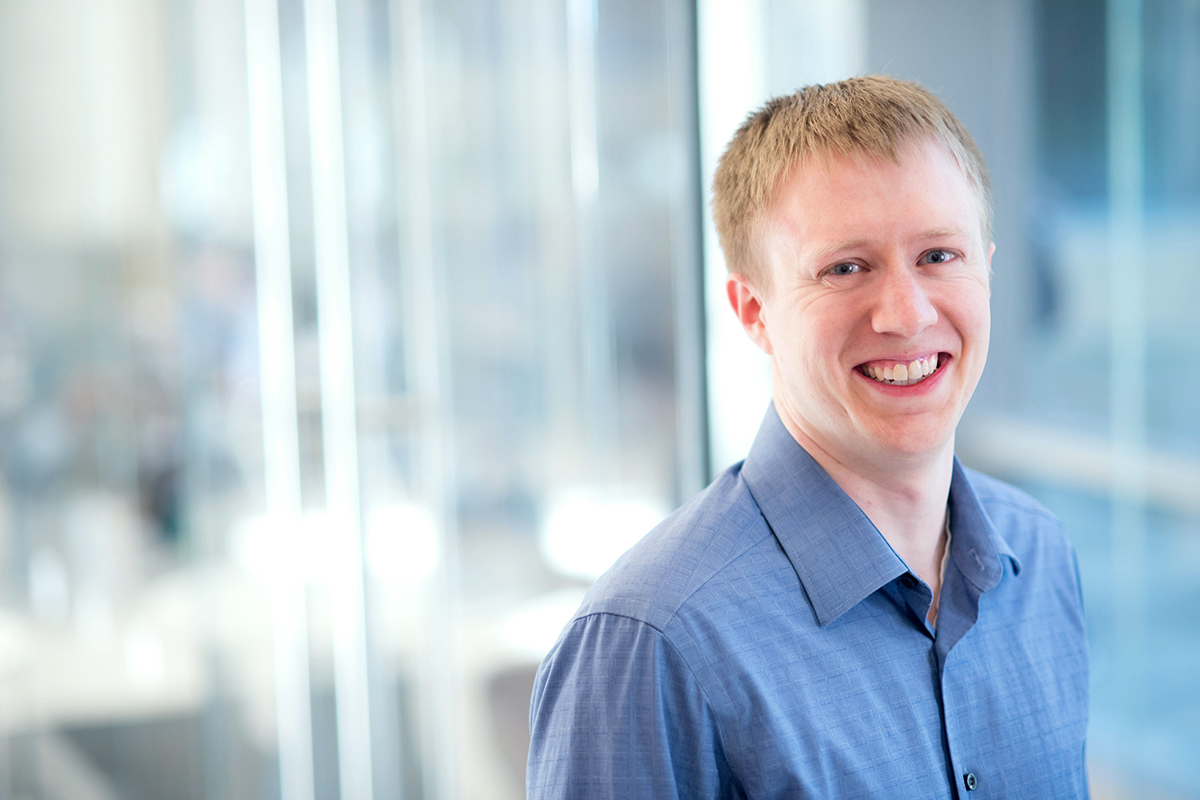
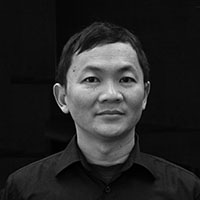
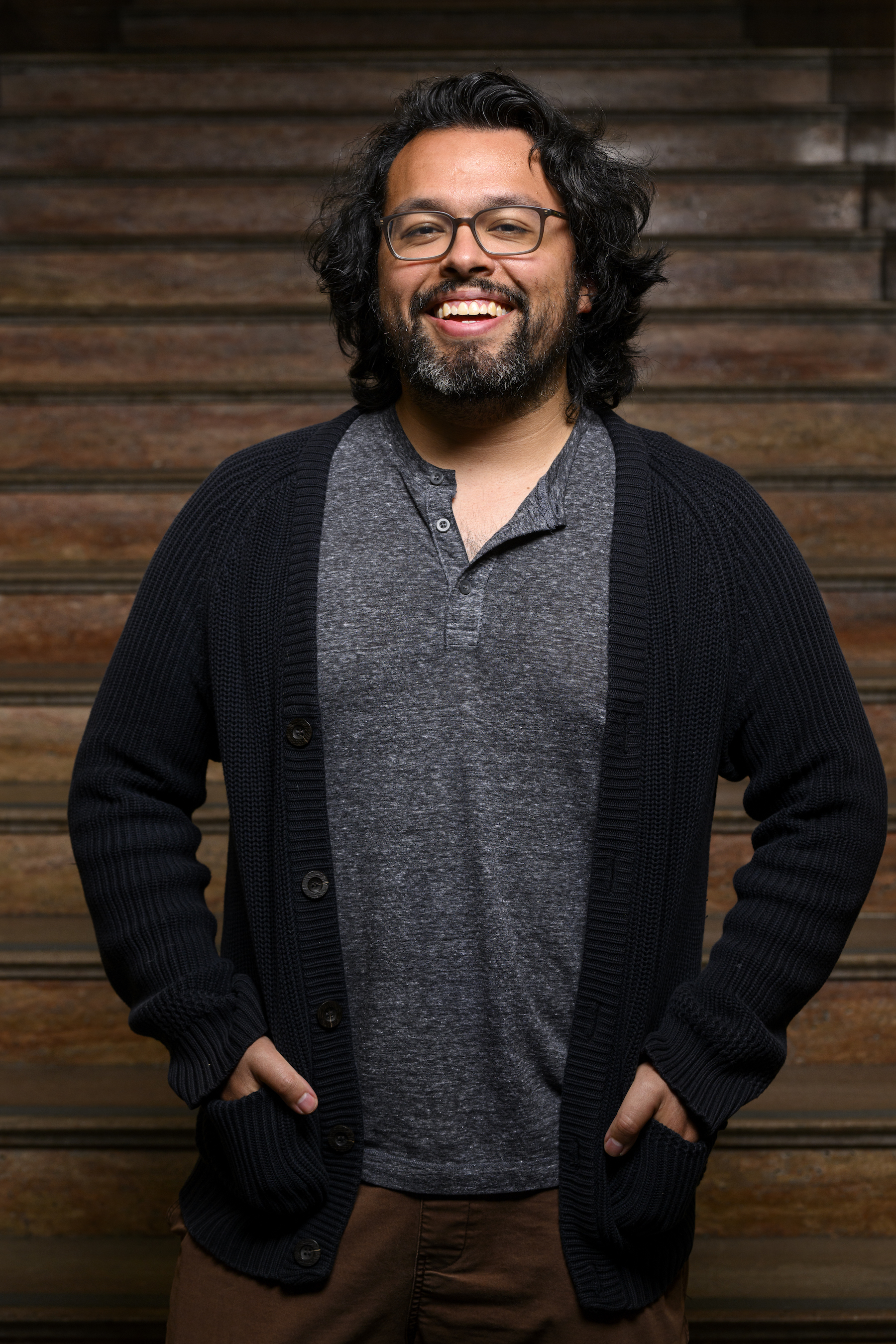
Greg Durrett is an Associate Professor in the Department of Computer Science at University of Texas at Austin, leading the TAUR Lab (Text Analysis, Understanding, and Reasoning ). His research focuses on advancing Large Language Models (LLMs) for knowledge-intensive tasks in medical information processing scientific discovery legal reasoning . He received his B.S. in Computer Science and Mathematics from MIT (2010) and Ph.D. in Computer Science from UC Berkeley (2016). His work develops techniques to train LLMs with new capabilities augment models for reliability assess model outputs improve reasoning frameworks . His 15 most recent publications (2021-2025) span knowledge propagation in LLMs chain-of-thought reasoning code generation benchmarks multi-modal reasoning fact verification discourse analysis . Scientific honors include NSF CAREER Award (2024) NSF grants (2018, 2024) Bloomberg Data Science Grant (2017) Facebook Fellowship (2014) Best Paper Finalist (EMNLP 2013) . Teaching: CS388: Natural Language Processing (graduate) CS371N: NLP (undergraduate) High school NLP module .
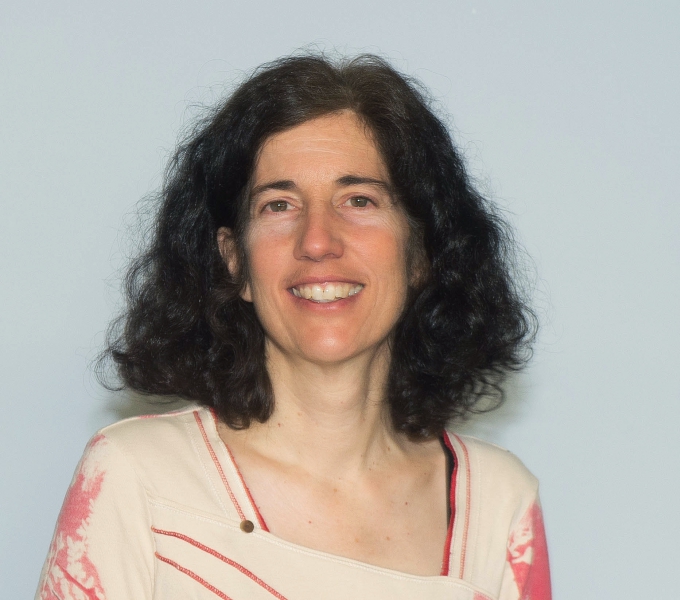
Ann B. Lee is a Professor and Co-Director of the PhD Program in Statistics at Carnegie Mellon University , with a joint appointment in the Department of Statistics & Data Science and the Machine Learning Department. Prior to joining CMU, she held positions as a J.W. Gibbs Assistant Professor at Yale University and a visiting research associate at Brown University. PhD in Physics, Brown University MSc/BSc in Engineering Physics, Chalmers University of Technology, Sweden Her research focuses on statistical methodology for complex data in the physical sciences , emphasizing trustworthy inference, uncertainty quantification, and integration of classical statistics with machine learning. Recent work includes likelihood-free inference, calibrated forecasting, and diagnostics for generative models. The STAMPS research group , which she co-founded in 2018, hosts weekly meetings and public webinars. In Fall 2024, STAMPS will transition into a CMU Research Center. Recent publications span likelihood-free inference , climate modeling , and astronomy . Notable collaborations include applications to hurricane intensity guidance , galaxy redshift estimation , and cosmological parameter biases . She mentors PhD students and has advised multiple award-winning researchers, including ASA Best Student Paper Award winners. Her teaching includes advanced courses on probability, regression, and AI for climate sciences.
Tamás Budavári is an Associate Professor in the Department of Applied Mathematics and Statistics at Johns Hopkins University (JHU), with joint appointments in Physics and Astronomy and a secondary appointment in Computer Science. He is affiliated with the Whiting School of Engineering and the Institute for Data-Intensive Engineering and Science (IDIES). His research focuses on computational and statistical methods for big data in astronomy and interdisciplinary applications such as urban blight analysis. Education: PhD in Astrophysics (2001), Eötvös Loránd University, Budapest Master’s in Theoretical Physics (1997), Eötvös Loránd University Research Interests: Budavári develops algorithms for handling large astronomical datasets, including Bayesian inference, streaming algorithms, and GPU-accelerated processing. His work includes SkyQuery (an online astronomy data tool), photometric redshift estimation, and cross-matching catalogs. He also applies computational methods to urban planning, such as optimizing strategies to address vacant housing in Baltimore City. Publications & Tools: Budavári’s recent work spans topics like deep learning for astronomical image restoration, combinatorial optimization for urban policy, and probabilistic catalog matching. His tools, such as CUDAHM and NWAY, enable scalable analysis of multi-epoch survey data and N-way catalog cross-identification. Awards & Grants: Recipient of the Gordon and Betty Moore Fellowship and SAMSI Research Fellowship Funded by NSF, STScI, NIH, and others Leadership & Outreach: He serves on the Steering Committee of the 21st Centuries Cities Initiative and is a founding editor of the Journal of Astronomy and Computing. His interdisciplinary work bridges astrophysics, data science, and urban systems.
Donna Naples is a Professor in the Department of Physics & Astronomy at the University of Pittsburgh, affiliated with the Dietrich School. Her research focuses on neutrino physics, particularly their fundamental properties and oscillations. She is involved in major experiments such as NOvA, MicroBooNE, and the upcoming DUNE project at Fermilab. Her work contributes to understanding neutrino masses, mixing matrices, and potential sterile neutrinos. Naples has been recognized as a Fellow of the American Physical Society (2018). Research Interests: Neutrino oscillations and cross-section measurements High-intensity neutrino beam experiments (NuMI) Detector development for neutrino physics Search for sterile neutrinos and beyond-Standard-Model interactions Key Contributions: Leadership in the MicroBooNE detector design Analysis of MINERvA neutrino interaction data Role in planning the DUNE experiment Awards: Fellow of the American Physical Society (2018) Advising & Collaboration: Advises graduate student Fan Gao Collaborates with international teams on neutrino experiments
Peter Oppeneer is a Professor in the Materials Theory group within the Department of Physics and Astronomy at Uppsala University, Sweden. His research program focuses on theoretical condensed matter physics with emphasis on ultrafast phenomena and magnetic materials. His research interests span femtosecond magnetism, ultrafast spin and orbital currents, out-of-equilibrium magnon and phonon dynamics, unconventional superconductivity, multipolar and hidden order parameters, and orbitronics. The group develops both analytical theories and numerical simulation codes, combining ab initio methods with model Hamiltonian approaches. Key research thrusts include ultrafast demagnetization mechanisms, spin-crossover materials, molecular spintronics, and topological quantum states in magnetic materials. Analysis of recent publications reveals strong focus on altermagnetism, terahertz spin dynamics, Dirac semimetals, and laser-induced phase transitions. The group's work bridges fundamental quantum theory with applications in next-generation spintronic devices and ultrafast magnetic switching technologies. Collaborative activities include work with experimental groups on ultrafast spectroscopy, X-ray magnetic circular dichroism, and terahertz emission studies. The group maintains active collaborations across Europe and internationally, particularly in the areas of femtosecond magnetism and topological materials. Research infrastructure includes development of specialized computational codes for Eliashberg theory, dynamical mean field theory, and ultrafast spin dynamics simulations. The group contributes to major international facilities including synchrotron and free-electron laser sources for time-resolved studies.
Andreas Wicenec is a Professor and Senior Principal Research Fellow at the University of Western Australia (UWA), leading the Data Intensive Astronomy Program (DIA) at the International Centre for Radio Astronomy Research (ICRAR). He specializes in data-intensive astronomy, high-performance computing, and large-scale data management systems. His work supports the Square Kilometre Array (SKA) and other major observatories. Education: PhD in Astronomy from the University of Tübingen (1994), Physics Diploma (1989). Professional roles include Archive Scientist at the European Southern Observatory (ESO) and leadership in the International Virtual Observatory Alliance (IVOA). Research focuses on petascale data flows, reproducible science workflows, and next-generation archive systems like NGAS. Current projects include the DALiuGE engine, SKA data handling, and gravitational wave detection pipelines using deep learning. Key Projects: SKA Science Data Processing (7M AUD contract), Data Activated Flow Graph Engine (DALiuGE), and NGAS archive system Awards: ACM Gordon Bell Prize 2020 finalist Grants: Includes SKA Bridging Design (2019–2021), ICRAR IV (2025–2030) Labs/Teams: Active in ICRAR's Data Intensive Astronomy group, collaborating internationally on large-scale astronomy initiatives.
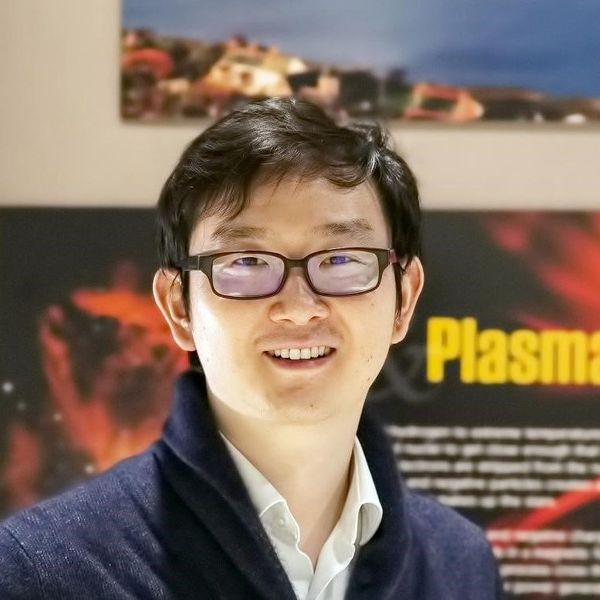
Wenbin Lu is an Assistant Professor in the Department of Astronomy at the University of California Berkeley, where he conducts theoretical research on high-energy transient phenomena. He is also affiliated with the Theoretical Astrophysics Center at UC Berkeley. PhD in Astronomy, University of Texas at Austin (2018) Bachelor in Physics, Peking University (2013) Professor Lu specializes in extreme astrophysical events that serve as natural laboratories for studying physics under conditions of high energy density, strong gravity, and intense magnetic fields. His work integrates multiple physical domains including plasma physics, relativistic hydrodynamics, radiative transfer, and stellar dynamics. He maintains active collaborations with researchers worldwide and encourages student involvement in his projects. Analysis of his recent publications reveals a strong focus on tidal disruption events and fast radio bursts, with increasing emphasis on multi-messenger approaches and theoretical modeling of observational data from facilities like JWST, Chandra, and radio telescopes. His work demonstrates consistent theoretical innovation in explaining complex transient phenomena. Burke Fellow at Caltech (2018-2021) Lyman Spitzer Fellow at Princeton University (2021-2022) Professor Lu actively mentors students and postdocs, with many projects originating from discussions with junior researchers. He teaches courses in Radiation and Stars at UC Berkeley. His research is supported by multiple grants that enable computational modeling and observational collaborations across various wavelengths. His theoretical work often involves complex numerical simulations of astrophysical phenomena, particularly focusing on the hydrodynamic evolution of stellar debris in tidal disruption events and plasma processes in fast radio burst emission mechanisms.
Chuanfei Dong is an Assistant Professor of Astronomy at Boston University's College of Arts & Sciences and of Electrical and Computer Engineering at the College of Engineering. His research focuses on understanding plasma physics and its applications to space science, planetary atmospheres, and fusion energy. Dong joined BU in January 2023 after working as a staff scientist at the Princeton Plasma Physics Laboratory. Education: B.S. in Space Science from University of Science and Technology of China M.S. in Earth and Atmospheric Sciences from Georgia Institute of Technology M.S.E. in Nuclear Engineering and Radiological Sciences from University of Michigan M.S. in Planetary and Space Sciences from University of Michigan Ph.D. in Scientific Computing from University of Michigan Research Interests: Dr. Dong's research spans multiple disciplines within space physics and plasma science. His primary interests include Star-Terrestrial Planet Interactions in our Solar System and beyond, magnetic reconnection and turbulence phenomena, wave-particle interactions in space plasmas, and applications of physics-informed machine learning to plasma problems. He also investigates high-intensity laser-plasma interactions with applications to fusion energy research. His work bridges the gap between theoretical plasma physics and observational space science, with particular focus on planetary atmospheres, solar wind interactions, and exoplanet habitability. Dong's interdisciplinary approach combines computational modeling, observational data analysis, and theoretical frameworks to address fundamental questions in space physics. Research Trends: Dong's recent publications demonstrate a strong focus on applying advanced computational techniques to space plasma physics problems. His work spans solar system bodies including Earth, Mars, Mercury, and the Moon, with increasing attention to exoplanet systems. A notable trend is the integration of machine learning approaches with traditional plasma physics modeling, particularly for complex phenomena like Landau damping and magnetic reconnection. His research has significant implications for understanding atmospheric evolution, space weather, and potential habitability of planetary bodies. Scientific Awards: DOE Early Career Research Award (2023) - $875,000 grant for plasma turbulence research Alfred P. Sloan Research Fellow (2024) Metcalf Travel Award Advising and Grants: Dr. Dong mentors undergraduate research assistants and plans to expand his research group with the support of his DOE Early Career Award, which will fund a graduate student and postdoctoral researcher. His research is supported by the Department of Energy and has connections to NASA missions including MAVEN (Mars) and BepiColombo (Mercury). Dong is also involved with the Mauve telescope project as BU institutional PI. His work has been featured in numerous media outlets including Phys.org, Science Daily, and German TV program zdf/3sat. Labs and Teams: Dr. Dong leads a research group focused on computational plasma physics at Boston University. He collaborates with researchers at Princeton Plasma Physics Laboratory and is involved with multiple NASA missions. His team develops advanced computational models to simulate space plasma phenomena, with particular expertise in magnetohydrodynamics (MHD), particle-in-cell methods, and physics-informed machine learning approaches. Dong is also affiliated with BU's Hariri Institute for Computing.
Ue-Li Pen is a Professor at the Canadian Institute for Theoretical Astrophysics (CITA), which is part of the Faculty of Arts & Science at the University of Toronto. His research focuses on theoretical astrophysics where basic physical effects can be isolated from astronomical complexities. His research interests include n-body and hydro simulations, origin of galaxy spin, dark energy studies through 21cm cosmology, baryon acoustic oscillations (BAO), absorber acceleration, and research on Fast Radio Bursts (FRBs) and pulsars related to gravitational waves, wave optics, and lensing. Current projects involve the non-linear dynamics of the cosmic neutrino background, 21cm intensity mapping, pulsar VLBI scintillometry, and the Canadian Hydrogen Intensity Mapping Experiment (CHIME). Analysis of recent publications shows Pen's work spans multiple cutting-edge areas in astrophysics, particularly focused on radio astronomy techniques, gravitational wave detection methods, black hole imaging, and cosmological measurements using 21cm radiation. His research often involves innovative applications of wave optics and interferometry to solve astrophysical problems. Professor Pen maintains an active research program with numerous recent publications in top astrophysics journals, demonstrating his continued leadership in the field of theoretical astrophysics and cosmology.
Robert J. Brunner is a Professor at the University of Illinois with primary appointments in the Gies College of Business (Department of Accountancy) and the School of Information Sciences. He holds affiliate roles across multiple departments including Astronomy, Computer Science, and Statistics, as well as research centers like the Beckman Institute and NCSA. His research focuses on applying statistical/machine learning to solve complex problems in astronomy, finance, and large-scale data science. Education: Ph.D. in Astrophysics from Johns Hopkins University (advisor: Alex Szalay). Postdoctoral work at Caltech on the Digital Sky project. Research Interests: Machine learning applications, computational techniques, data management/visualization, and observational cosmology. His work bridges astrophysical data analysis with modern data science methodologies. Recent work includes developing spatio-temporal neural networks for forecasting, evaluating AI-driven financial analysis tools, and planning for the Vera C. Rubin Observatory. He collaborates internationally on large-scale surveys like the Dark Energy Survey and SDSS. Labs/Teams: Leads data science initiatives at the University of Illinois Research Park. Active in interdisciplinary teams at NCSA and Beckman Institute focusing on algorithm optimization and data-intensive research.
Dr. Martin L. Kersten is a leading figure in database systems research at the Centrum Wiskunde & Informatica (CWI) in Amsterdam, Netherlands. With over three decades of contributions, his work focuses on column-oriented database architectures, scientific data management, and query optimization. Key Research Areas: Database systems, big data processing, query performance analysis, data-intensive scientific applications Projects: MonetDB, SciQL, TELEIOS, ExaNeSt His recent publications emphasize in-database machine learning , query log mining , and exascale computing . He pioneered database cracking and intermediate recycling techniques to enhance query processing efficiency. 2014 SIGMOD Edgar F. Codd Innovations Award for groundbreaking contributions to database technology Collaborations span institutions like ICDE , VLD , and EuroSys workshops. His work bridges theoretical advancements with practical implementations for scientific and industrial applications.
Kevin Vinsen is a Senior Research Fellow at the University of Western Australia, working in the Data Intensive Astronomy (DIA) Program of the International Centre for Radio Astronomy Research (ICRAR) since 2009. He is also affiliated with the UWA Defence and Security Institute and holds an ORCID ID of 0000-0001-5332-3784. His work focuses on translating ICRAR software capabilities into practical industry applications across diverse domains. His research interests include: Peta-scale systems High-performance Computing Machine Learning applications in multiple fields Wave and weather forecasting Digital Assistive Technologies Agricultural applications of ML Large language models Vinsen heads the Translation and Impact work of the DIA team and leads the development of Machine Learning systems. His current projects include ML for wave forecasting on the NW shelf, wind and temperature forecasting, honey traceability and provenance, and digital assistive technology for people with disabilities. His work contributes to UN Sustainable Development Goals related to industry, oceans, agriculture, food, disability, and defense. His research output demonstrates a strong trend toward applying machine learning techniques to solve real-world problems across astronomy, environmental science, agriculture, and disability support. This interdisciplinary approach showcases the versatility of his computational expertise across scientific and social domains. Vinsen has an h-index of 11 with 621 citations across 33 research outputs. As the ICRAR/UWA Summer Studentship Co-ordinator, he mentors emerging researchers and contributes to building research capacity. His collaborative network spans multiple institutions and research areas, reflecting his ability to bridge academic research with practical applications.
Norm Murray is a Professor at the Canadian Institute for Theoretical Astrophysics (CITA) within the University of Toronto . With a Ph.D. from UC Berkeley (1986), his research spans nonlinear dynamics , planetary formation , solar system evolution , and active galactic nuclei . His work combines theoretical physics with observational data from radio telescopes, X-ray satellites, and cosmological simulations. Recent research focuses on galaxy formation (via FIRE simulations), dark matter interactions in dwarf galaxies, and AGN disk dynamics . He employs machine learning for planetary collision modeling and investigates the interplay of magnetohydrodynamics and radiative transfer in quasar environments. Publications highlight his expertise in computational astrophysics, spanning topics from cosmic molecular gas mapping to the stability of exoplanetary systems.
Emmanuel Fonseca is an Assistant Professor in the Department of Physics and Astronomy at West Virginia University (WVU), joining in Fall 2021. Previously, he was a postdoctoral researcher at McGill University (2016–2021) and completed his Ph.D. in Astronomy at the University of British Columbia (2016). His research focuses on radio astronomy, particularly pulsars and fast radio bursts (FRBs), leveraging facilities like CHIME, the Green Bank Telescope, and NANOGrav. He specializes in using pulsars as laboratories for testing fundamental physics and detecting gravitational waves via pulsar timing arrays. Education: Ph.D. in Astronomy, University of British Columbia (2016) M.Sc. in Astronomy, University of British Columbia (2012) B.Sc. in Physics and Astronomy, Pennsylvania State University (2010) Research Interests: Emmanuel’s work spans three key areas: Compact Objects: Investigating neutron stars and extreme environments using pulsar binaries and relativistic dynamics. CHIME Pulsar/FRB Science: Developing instrumentation and analyzing data from the Canadian Hydrogen Intensity Mapping Experiment to study FRBs and pulsars. Gravitational Waves: Contributing to NANOGrav’s efforts to detect nanohertz gravitational waves via millisecond pulsar timing arrays. Collaborations: He is a core member of NANOGrav and instrumental in maintaining CHIME’s pulsar and FRB backend systems. His work bridges hardware/software development with observational astronomy. Labs/Teams: Involved with the CHIME/FRB Collaboration and the NANOGrav Collaboration, advancing both observational infrastructure and theoretical astrophysics.
Professor Wes Armour is a Professor of Scientific Computing at the University of Oxford and serves as the Associate Head of Department for Research in the Department of Engineering Science. He previously directed the Oxford e-Research Centre, an interdisciplinary research center within the Engineering Science Department. With over £31 million secured as PI or Co-I, his work spans supercomputing, signal processing, machine learning, computational fluid dynamics, and protein crystallography. Professor Armour's research focuses on extracting science from data through fundamental challenges in modeling, simulation, and data processing. His work draws from numerical analysis, signal processing, and machine learning to develop technologies enabling future scientific discoveries, particularly for the Square Kilometre Array (SKA) telescope. Key interests include GPU computing, high performance computing, and machine learning applications across diverse domains from radio astronomy to finance. As Director and Principal Investigator of JADE and JADE2, a 700-GPU machine, he established the UK's first national High Performance Computer facility dedicated to advancing Artificial Intelligence and Machine Learning. His research group has pioneered GPU applications across multiple fields, including Square Kilometre Array data processing, protein crystallography, and graphene simulations. Current projects span energy-efficient machine learning, stock price prediction in finance, prime number prediction in cryptography, and multi-modal CCTV data analysis. Professor Armour has been instrumental in developing real-time signal processing techniques for astronomical observations, including the ARTEMIS system for millisecond radio transient detection. His publications demonstrate consistent innovation in GPU-accelerated computing dating back to early work in 2008 on accelerating conjugate gradient routines for electron transport in graphene.