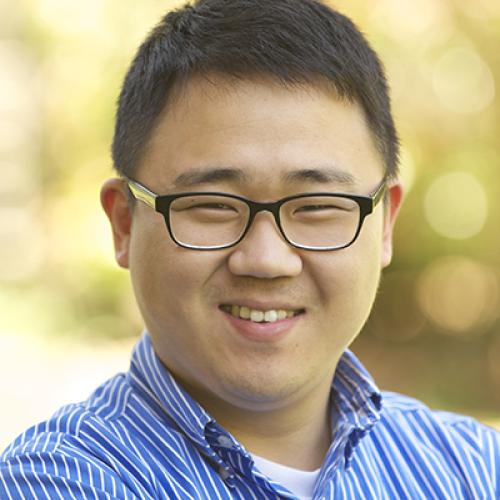
Dr. Heesung Woo is an Assistant Professor of Advanced Forestry at the College of Forestry, Oregon State University , specializing in robotics, sensor integration, and precision forestry. His work focuses on autonomous forestry machinery, AI-driven forest management, and sustainable practices. He advises two graduate students and collaborates internationally through research projects. Research Interests: Autonomous Forest Machinery Development Sensor Integration & ICT Solutions Precision Forestry via Remote Sensing/LiDAR/GIS Machine Learning for Forest Inventory Advanced Forestry Practices for Sustainability Publications emphasize innovative applications of technology in forestry, including LIDAR integration, harvester data analytics, and carbon offset project modeling. His work bridges engineering, environmental science, and policy. Dr. Woo leads the Advanced Forestry Lab at Oregon State, focusing on real-world deployment of cutting-edge technologies to address challenges in forest operations, sustainability, and resource optimization.
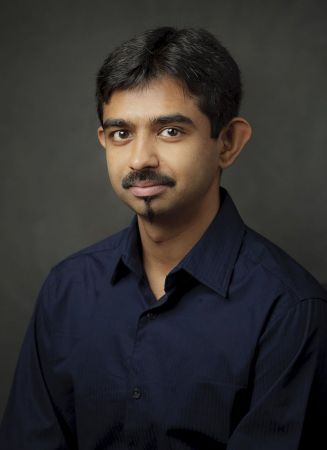
Parv Venkitasubramaniam is a Professor in the Department of Electrical & Computer Engineering at Lehigh University, affiliated with the P.C. Rossin College of Engineering. Previously, he served as a postdoctoral researcher at UC Berkeley under Prof. Venkat Anantharam. His research focuses on theoretical foundations of privacy and security in networks, leveraging statistical signal processing, information theory, and game theory. Key application areas include smart grids, transportation systems, and peer production networks. Education includes a Ph.D. and M.S. in Electrical Engineering from Cornell University, and a B.Tech from the Indian Institute of Technology. His doctoral work concentrated on wireless sensor networks, particularly distributed communication and statistical inference. Research interests span privacy-utility tradeoffs, cybersecurity in control systems, and resilient network design. He explores topics like stealthy attacks on dynamical systems, privacy-aware stochastic games, and resilient energy storage systems. Recent work emphasizes transportation system resilience and cyber-physical system security. His publications address cutting-edge challenges in anonymizing networks, detecting cyber attacks, and optimizing privacy-preserving mechanisms. Notable projects include NSF-funded research on anonymous networking and information-theoretic security frameworks.
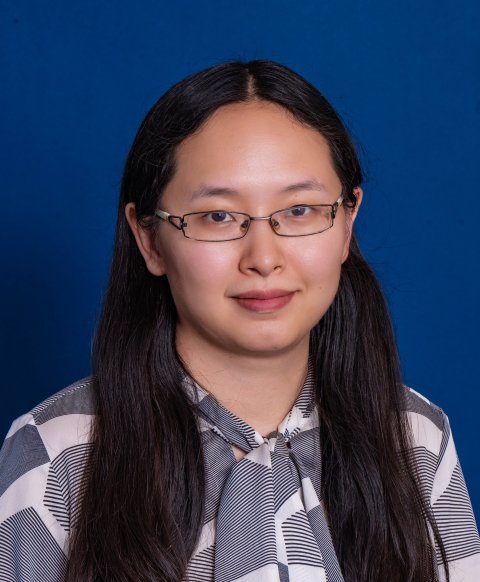
Dr. Lisa Wang is a tenure-track Assistant Professor in the Department of Civil & Environmental Engineering at Old Dominion University (ODU). She holds a Ph.D. and Postdoctoral Fellowship in Structural Engineering from Colorado State University (CSU), with additional research at NIST’s Center for Risk-Based Community Resilience Planning. She is a licensed California Professional Engineer (PE) and has expertise in multidisciplinary community resilience assessment, mitigation strategies, and policy analysis. Her research focuses on integrating physical, socio-economic, and infrastructural systems to enhance disaster resilience in coastal and hazard-prone communities. Education: Ph.D. and Postdoc (CSU, 2022-2024), M.S. in Structural Engineering (University of Colorado Denver & Jilin University, 2015), B.S. in Civil Engineering (Jilin University, 2012). Professional licenses include CA PE #94251 and CO EIT #007558. Research Interests: Community resilience under multi-hazards (tornadoes, floods, climate change), resilience-based design of structural systems, data fusion across disciplines, and equitable decision-making for disaster resilience. Recent grants include $31k for AI-driven coastal resilience strategies and $10k for minimum building portfolio development. Grants & Awards: Principal Investigator (PI): Trustworthy AI in Coastal Resilience (ICAR, $31k), AI-Driven Building Portfolios (ODU PURS, $10k) Awards: O. H. Ammann Fellowship (ASCE), ICAR Travel Grant, AGU NSF Travel Grant, Jack E. Cermak Fellowship Labs & Teams: Wang Research Group and Structural Engineering Research Laboratory at ODU.
Tim Derdenger is an Associate Professor of Marketing and Strategy at Carnegie Mellon University’s Tepper School of Business. He holds a Ph.D. in Economics from the University of Southern California and a B.B.A. from George Washington University. His research focuses on technology markets and sports marketing, including platform dynamics, bundling strategies, celebrity endorsements, and dynamic demand modeling. He coordinates the Technology Strategy and Product Management Track for MBA students. As an Associate Editor for Management Science and editorial board member of Marketing Science , he contributes to academic publishing. His work spans empirical studies on golf equipment endorsements, EV subsidies, and AI regulation. He advises on topics like NIL in college football and generative AI bias. His affiliations include roles in executive education and industry panels on golf and tech strategy.
Professor James Barlow is Co-Director of Imperial College London's Centre for Sectoral Economic Performance and holds a Professorship in the Department of Economics and Public Policy at the Imperial College Business School. He also serves as Academic Director for the MBA programme and Visiting Professor at Halmstad University (Sweden) and Honorary Professor at UCL Bartlett Real Estate Institute. His research focuses on structural challenges in healthcare innovation, housing, and construction sectors, with a particular emphasis on embedding innovations into healthcare systems. Barlow's education includes a background in geography and economics from the London School of Economics. He has held previous roles at the University of Westminster and Policy Studies Institute. His advisory work spans governments, healthcare organizations, and industries including medical technology and pharmaceuticals. He contributes to major initiatives like AGE-WELL (Canada) and the Industry Commons Foundation (Sweden). Research interests include healthcare innovation ecosystems, institutional logics, and frugal innovation. His recent book *Managing Innovation in Healthcare* synthesizes his work. He collaborates across disciplines, addressing challenges in telehealth, AI integration, and regulatory frameworks post-Brexit. Key affiliations include the Centre for Health Economics and Policy Innovation, Policy Innovation Research Unit (PIRU), and the NIHR Health Tech Research Centre. His work bridges academic research with practical policy and industry solutions, emphasizing scalable and sustainable business models.
Prof. Dr.-Ing. Hans-Georg Herzog is a Professor of Energy Conversion Technology at the Technical University of Munich (TUM), School of Engineering and Design. He has headed the Energy Conversion Technology group at TUM since 2002 and is a Senior Member of IEEE and member of VDE and VDI professional organizations. His research focuses on energy-efficient electromechanical drives and related technologies critical for modern electric and hybrid vehicles. Prof. Herzog's research interests encompass energy-efficient electromechanical drives, with key expertise in design and optimization of hybrid-electric and battery-electric powertrains, automated design methods for electromechanical actuators, energy and power management systems, and analysis of loss mechanisms in soft magnetic materials. His work bridges fundamental electromagnetic theory with practical automotive applications, particularly in fault-tolerant systems and reliability engineering for electric propulsion. His recent publication trends show a strong focus on vehicular power systems, with particular emphasis on electronic fuses, fault diagnosis in multiphase machines, wireless power transfer, and reliability analysis of electric aircraft propulsion systems. The research spans from fundamental electromagnetic modeling to practical automotive applications, with increasing attention to autonomous driving power requirements and next-generation vehicle electrical architectures. Prize for Good Teaching of the Free State of Bavaria (2010) Prof. Herzog leads a substantial research team including doctoral candidates and postdoctoral researchers who contribute to his extensive publication record. His research group collaborates with automotive industry partners on various grants focused on electric vehicle technology, power system reliability, and advanced electromagnetic systems. The team regularly develops novel methodologies for machine design, fault tolerance analysis, and power system optimization. The research is conducted within TUM's Energy Technology Workshop with specialized facilities for electrical machine testing, power electronics development, and automotive power system simulation. The team maintains strong connections with industry partners in the automotive and aerospace sectors, facilitating technology transfer from academic research to practical applications.
Sanjeev Dewan is a Professor of Information Systems and Associate Dean of Masters Programs at the Paul Merage School of Business, University of California, Irvine. He also serves as Faculty Director of the Master of Science in Business Analytics program. Prior to joining UCI in 2001, he held faculty positions at the University of Washington and George Mason University. PhD, University of Rochester MS, University of Rochester Bachelor of Technology, Indian Institute of Technology, Delhi His research focuses on the economics of digital platforms , social and mobile analytics , and the valuation of technology investments . He investigates how information technology creates business value, impacts consumer behavior, and influences firm performance. His work spans electronic markets, Web 2.0 technologies, IT productivity, and the digital divide. The most recent publications reveal a strong emphasis on empirical analysis of digital platforms , including studies on gender bias in open source communities, quality certification in the sharing economy (e.g., Airbnb), personalized ranking in app stores, and mobile health applications. His research frequently uses large-scale datasets to examine behavioral patterns, market dynamics, and the economic implications of IT innovations. Faculty Service Award for 2023-24, UCI Paul Merage School of Business Best Paper Award, INFORMS 2019 e-Business Cluster Faculty Service Award for 2016-17, UCI Paul Merage School of Business Best Paper Award, INFORMS Conference on Information Systems and Technology (2009) INFORMS Service Award (2009) INFORMS Certificate of Appreciation (2008) Beta Gamma Sigma Honor Society (1991) University of Rochester Fellowship (1985–1990) Sanjeev Dewan has advised numerous PhD students who have secured faculty positions at leading institutions such as the University of Wisconsin-Madison, HKUST, Penn State, and the University of Hong Kong. His editorial service includes senior editor roles at Information Systems Research and associate editor at Management Science . He has also chaired tracks at ICIS and served as program co-chair for PACIS. There is no indication of external grant funding in the provided text, but his sustained publication record and leadership roles suggest significant research activity and institutional support. He is actively involved in academic leadership and research dissemination, contributing to major conferences and editorial boards. His work bridges theory and practice, particularly in digital platform ecosystems and analytics-driven decision-making.
Patrick Phelan is a Professor and Associate Dean of Graduate Programs at the Ira A. Fulton Schools of Engineering, Arizona State University (ASU). He holds additional roles as a Senior Global Futures Scientist and Editor-in-Chief of Frontiers in Energy Efficiency . His research focuses on sustainable energy systems, thermal management, and energy efficiency, with notable contributions to solar energy, thermal transport processes, and industrial cooling technologies. Phelan has extensive administrative experience, including managing the U.S. Department of Energy’s Emerging Technologies Program and the National Science Foundation’s Thermal Transport Processes Program. Education: Postdoctoral Fellow, Tokyo Institute of Technology (1990–1992) Ph.D., Mechanical Engineering, University of California, Berkeley (1990) M.S., Mechanical Engineering, Massachusetts Institute of Technology (1987) B.S., Mechanical Engineering, Tulane University (1985) Research Interests: Thermal engineering and heat transfer Sustainable energy systems and cooling Energy efficiency in buildings and industry Thermogalvanic systems and advanced materials Decarbonization and community benefit strategies Professional Associations: Fellow, American Society of Mechanical Engineers (ASME) Member, American Society of Heating, Refrigerating and Air-Conditioning Engineers (ASHRAE) Current Activities: Leading the ASU Energy Efficiency Center Contributing to the Energy for Rural Arizona initiative Advancing agricultural cold chain efficiency Teaching courses on heat transfer and energy systems (e.g., MAE 589, MAE 576)
Arpit Gupta is an Associate Professor of Finance at the Leonard N. Stern School of Business, New York University, where he has been a faculty member since 2016. His research lies at the intersection of real estate, household finance, and urban economics, with a strong empirical focus on using large datasets to analyze financial behavior and market dynamics. Ph.D. in Finance and Economics, Columbia Business School B.S. in Mathematics and Economics, University of Chicago His research interests include household finance, real estate markets, mortgage default, bankruptcies, urban economics, and the financial impacts of health shocks and pandemics. He explores how financial constraints affect minority borrowers, how remote work reshapes urban real estate, and how public infrastructure influences property values. His recent publications span top journals such as the Journal of Finance , American Economic Review , Journal of Financial Economics , and PNAS . Themes across his work include the economic consequences of the COVID-19 pandemic, the valuation of private equity, and the spillover effects of foreclosures. His research often combines innovative data sources with rigorous econometric methods. Notable scientific awards include the Brattle Prize First Place (2019) and the 2016 Top Finance Graduate Award from Copenhagen Business School. He has advised on policy-relevant topics such as office-to-residential conversions, housing equity, and bail reform, and has received media attention for his insights on urban development and real estate trends. Professor Gupta collaborates with a wide network of researchers and maintains active engagement through a Substack newsletter and public data repositories. He advises students and contributes to academic discourse through conference presentations and policy discussions. He is affiliated with research labs and teams focused on urban economics and financial innovation, often collaborating with scholars at Columbia, NYU, and other institutions. His ongoing projects continue to explore the evolving dynamics of housing, finance, and urban resilience in the post-pandemic era.
James Alexandre Goulet is a Professor in the Department of Civil, Geological and Mining Engineering at Polytechnique Montréal. His research focuses on Machine Learning Methods for Civil Engineering applications such as structural health monitoring (SHM) and infrastructure maintenance planning. He leads the Canari project for online change point detection in SHM and contributes to open-source libraries like cuTAGI for Bayesian neural networks. Affiliations : Chair in Machine Learning for Infrastructure Monitoring at Polytechnique Montréal, IVADO Institute member, and GRS (Structural Engineering Research Group) member Expertise : Building engineering, structural safety, applied probability, learning theories Recent research trends include Bayesian state-space models, LSTM neural network integration for infrastructure forecasting, and uncertainty quantification in SHM systems. His work emphasizes probabilistic methods and analytical inference over black-box approaches. Teaching includes courses on structural reliability and probabilistic data analysis for civil engineers. He supervises graduate students in topics ranging from damage detection algorithms to stochastic deterioration modeling of infrastructures.
Thomas Le Goff is an Assistant Professor of Law & Technology at Télécom Paris – Institut Polytechnique de Paris, affiliated with the Interdisciplinary Institute of Innovation (i3) and the Digital, Organization and Society (DTOS) research team. His work bridges legal frameworks and technological advancements, focusing on AI regulation, environmental sustainability, data protection, and cybersecurity. Education: PhD in Private Law, Université Paris Cité Master’s in Law, Université Paris Cité LLM, University of Exeter (UK) Licence and Magistère, Université de Rennes 1 His research explores the intersection of AI and sustainability, emphasizing how legal principles can guide environmentally responsible technology. Key themes include the AI Act’s implications, data center energy demands, and regulatory strategies for balancing digital growth with net-zero targets. His work has been presented at international forums like BILETA and contributes to EU think tanks such as CERRE. Recent publications address AI’s environmental footprint, nuclear energy’s role in powering AI, and legal frameworks for sustainable digital infrastructure. Collaborations with institutions like the Center on Regulation in Europe (CERRE) highlight his focus on comparative analyses of global regulatory practices.
Dr. Mary Lacity is a Distinguished Professor of Information Systems at the Sam M. Walton College of Business, University of Arkansas, and holds the David D. Glass Endowed Chair. She is also a Visiting Professor at the London School of Economics for Spring 2025. Director of Walton College’s Blockchain Center of Excellence (2014-2019) Former Curators’ Distinguished Professor at University of Missouri Holds visiting positions at MIT, Washington University, and Oxford University Senior Editor for MIS Quarterly Executive Contributing Editor for Journal of the British Blockchain Association Her research focuses on enterprise adoption of emerging technologies, particularly blockchain, metaverse, service automation, and ethical technology use. She has conducted extensive case studies and surveys on automation and Web3 implementation across hundreds of organizations globally. Recent publications include books like Human Privacy in Virtual and Physical Worlds (2024) and Blockchain Fundamentals for the Web 3.0 (2022). She has over 30 books and 26,300 Google Scholar citations (h-index: 68). 2014: Inducted into IAOP’s Outsourcing Hall of Fame 2024: Recognized as top 2% scholar in Business and Management (Stanford) 2024: Top 1% scholar in Business and Management (ScholarGPS) Fellow of the Association of Information Systems She actively contributes to blockchain standards via the Global Standards Mapping Initiative (GSMI) of the Global Blockchain Business Council and the Linux Foundation’s Trust over IP (ToIP). Her work bridges academic research and practical applications in enterprise technology adoption.
Federico Miretti is an Assistant Professor at the Polytechnic University of Turin, affiliated with the Department of Energy and the interdepartmental center Cars@PoliTo. His research focuses on hybrid and electric vehicles, with emphasis on energy management strategies, battery state estimation, and sustainable transport solutions. PhD in Energetics from Polytechnic University of Turin Research areas include: Optimization-based Energy Management Strategies for hybrid propulsion systems Simulation and digital twinning of hybrid systems Thermal management for electrified vehicles Techno-economic assessment of mobility solutions Recent publications highlight advancements in battery temperature anomaly detection, wireless power transfer feasibility, and control algorithms for energy efficiency. His work aligns with SDGs 7 (Clean Energy) and 9 (Innovation). Teaching roles include: Fluid Machinery (2019-2025) Energy Management in Hybrid/Electric Vehicles (2021-2025) Projects: PRoSIT (2025): Predictive thermal management demonstrator Consulting contract with MIDAC SpA (2025): Battery Digital Twin development EBOAT project (2025-2026): Technical support for Vulkan
Prof. Dr. Silvia Schneider is a distinguished Professor of Clinical Child and Adolescent Psychology at Ruhr University Bochum, where she serves as Director of the Research and Treatment Center for Mental Health (FBZ). She also coordinates the Bochum-Marburg site of the German Center for Mental Health (DZPG). Previously, she held professorial positions at the University of Basel, where she served as Dean of the Psychology Faculty. Her academic career spans over three decades with significant contributions to child and adolescent mental health research. Dr. Schneider earned her doctorate from Philipps-University Marburg in 1992 with highest honors (summa cum laude) for her dissertation on "Psychological Transmission of Panic Syndrome." She completed her habilitation at Technical University Braunschweig in 2002. Her academic qualifications include board certification as a Psychological Psychotherapist (1999) and specialized credentials in behavioral therapy for children and adolescents (1998). Dr. Schneider's research primarily focuses on the etiology, prevention, and treatment of emotional disorders in childhood and adolescence. Her work examines familial transmission of emotional disorders, clinical baby and infant research, and diagnosis of mental disorders across the lifespan. She has pioneered research on anxiety disorders, particularly separation anxiety, and has developed innovative treatment approaches including exposure-based therapies. Her current work increasingly integrates neurobiological perspectives with clinical interventions, examining brain-behavior relationships in anxiety disorders through neuroimaging studies. Her extensive publication record demonstrates a consistent focus on child and adolescent mental health, with recent work expanding into digital interventions, virtual reality therapies, and large-scale multicenter studies examining anxiety disorders from both clinical and neurobiological perspectives. Her research bridges basic science with clinical application, maintaining a strong focus on evidence-based interventions for children and families. Visiting Professor at Anxiety and Depression Research Center, UCLA (2015-2016) Visiting Scholar at Center for the Treatment and Study of Anxiety, University of Pennsylvania (2009-2010) Honorary Professorship at University of Surrey Roehampton (2003-2010) Swiss National Science Foundation Professorship (2003-2006) DFG Habilitation Scholarship (1998-2001) Cassianeum Educational Foundation Dissertation Prize (1994) Dr. Schneider has successfully secured substantial research funding from major German and international funding bodies including the German Research Foundation (DFG), German Federal Ministry of Education and Research (BMBF), and Swiss National Science Foundation. Her current projects include "The Role of Parents in Child Development in the Context of Immigration" (DFG), "Mobile Research Laboratory" (DFG), and "Improving Mental Health in Refugee Families" (BMBF). As Director of the FBZ, she leads a large interdisciplinary team conducting cutting-edge research while providing evidence-based clinical services. As Director of the Research and Treatment Center for Mental Health (FBZ) at Ruhr University Bochum, Dr. Schneider oversees a comprehensive research infrastructure supporting studies from basic developmental science to clinical interventions. The FBZ serves as a hub for interdisciplinary collaboration across psychology, psychiatry, and neuroscience, with particular strengths in anxiety disorders research, early intervention, and innovative treatment approaches including digital health solutions.
Rudy Hirschheim is a Professor at the Stephenson Department of Entrepreneurship & Information Systems within the E.J. Ourso College of Business at Louisiana State University. He previously held faculty positions at the University of Houston, Templeton College - Oxford, London School of Economics, and McMaster University, with visiting appointments at Monash University, University of New South Wales, University of Bayreuth, University of Jyvaskyla, University of Warwick, and University of Paris-Dauphine. PhD in Information Systems, London School of Economics (1985) MS in Computer Science, University of Toronto (1974) BCom in Business Administration, University of Toronto (1975) His research interests span outsourcing, management of information systems, research methods, and philosophical issues in research. His recent publications focus on agile software development, crowdsourcing, social justice in IT, service-oriented architecture maturity, and theoretical critiques of the IS discipline. He emphasizes methodological rigor and philosophical foundations in information systems research. Key scientific awards include the LEO Award for lifetime achievement (2013), two honorary doctorates (University of Oulu, 2006; University of Bern, 2012), and Fellow status from the Association for Information Systems (2007). He has also received multiple best paper awards and LSU's Rainmaker Award (2012).