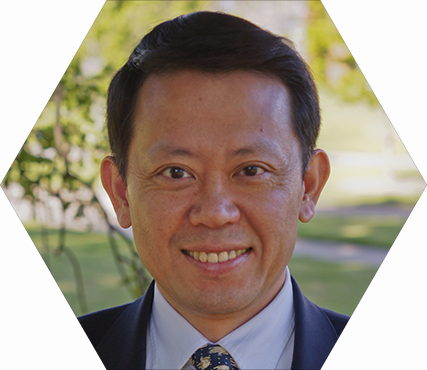
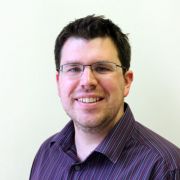
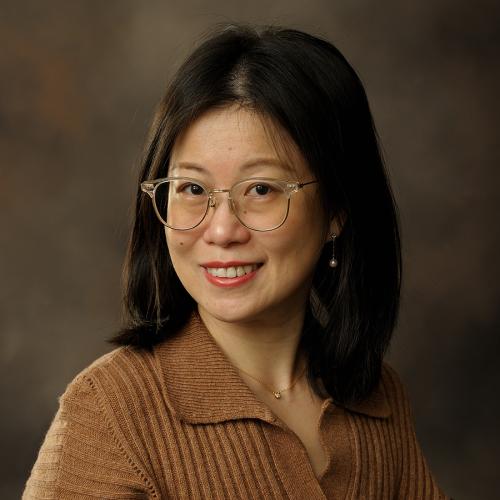
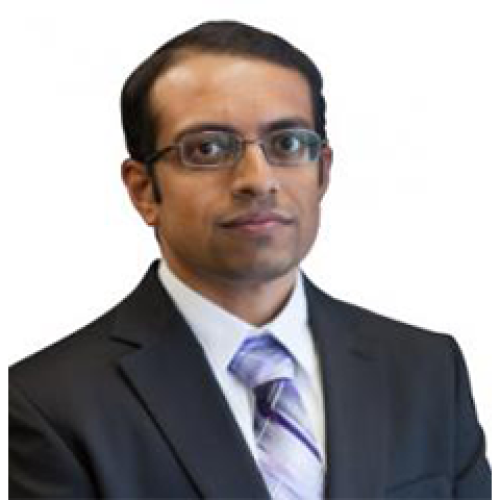
Steven Y. Liang , Regents' Professor at the Georgia Institute of Technology 's Woodruff School of Mechanical Engineering, focuses on precision manufacturing , additive manufacturing , and materials-driven process optimization . His research program bridges materials science and computational mechanics to develop predictive models for advanced manufacturing systems. Ph.D., University of California, Berkeley (1987) M.S., Michigan State University (1984) B.S., National Cheng-Kung University, Taiwan (1980) Dr. Liang's work emphasizes physics-based modeling of thermal-mechanical interactions in machining and additive manufacturing, particularly for Ti6Al4V and Inconel 718 alloys. Recent publications highlight tool wear prediction , laser-assisted micro-milling , and residual stress modeling using machine learning and analytical mechanics. His research has been recognized with the ASME Milton C. Shaw Manufacturing Research Medal (2016) , SME Gold Medal (2021) , and Outstanding Lifetime Service Award of NAMRI/SME (2021) , among others. Funded by federal agencies and aerospace/automotive industries, his work provides scientific foundations for process planning and optimization.
Dr Sean Anderson is a Senior Lecturer at the Department of Automatic Control and Systems Engineering , University of Sheffield , with over 15 years of experience in interdisciplinary research spanning robotics, control systems, and computational biology. He earned his MEng and PhD from the University of Sheffield, focusing on control systems and chemical engineering. Education: MEng in Control Systems Engineering, University of Sheffield (2001) PhD in Chemical and Process Engineering, University of Sheffield (2005) Research Interests include: Bioinspired robotics Adaptive and optimal control in biological systems Nonlinear system identification Computational neuroscience Acoustic and visual sensor fusion for localization His recent publications highlight innovations in robotic localization in hazardous environments, interpretable deep learning for control systems, acoustic sensing technologies, and data-driven modeling of complex systems. Key projects involve autonomous navigation in pipe networks, turbulence modeling, and biomedical signal processing. Grants and Funding: He has secured major grants from EU H2020 (£4M), EU FP7 (£2.9M), and EPSRC (£5.7M), focusing on bioinspired control algorithms, robotic safety, and infrastructure assessment. Teaching: He leads the ACS61011 Deep Learning module, emphasizing practical applications in robotics and signal processing.
Jingrui He is a Professor and MSIM Program Director at the School of Information Sciences, University of Illinois Urbana-Champaign. She holds multiple faculty affiliate positions including with the Department of Computer Science, National Center for Supercomputing Applications (NCSA), Illinois Informatics, Center for Digital Agriculture (CDA), and Mayo Clinic Arizona. Her research spans machine learning with applications in diverse domains including healthcare, agriculture, security, and finance. Dr. He received her PhD in Machine Learning from Carnegie Mellon University in 2010. Her research focuses on heterogeneous machine learning, active learning, neural bandits, and self-supervised learning. She addresses complex data challenges where multiple types of heterogeneity coexist, developing methods for exploring, understanding, characterizing, and predicting real-world data through statistical machine learning techniques. Her recent publications demonstrate a strong focus on graph learning, federated learning, fairness in AI, and neural bandit algorithms. She has developed innovative approaches for class-imbalanced graph learning, Byzantine-robust federated learning, and privacy-preserving graph machine learning. Her work bridges theoretical foundations with practical applications across multiple domains. Her scientific awards include the Amazon Research Award (2025), ACM Distinguished Member (2023), AAAI Senior Member (2023), FAccT Distinguished Paper Award (2022), NSF CAREER award (2016), and multiple IBM Faculty Awards. She has been recognized as an excellent teacher and received Best Paper awards at major conferences including ICDM and SDM. Dr. He directs the iSAIL Lab and leads several major research projects including the AI Institute for Future Agricultural Resilience Management and Sustainability (AIFARMS). She has successfully mentored numerous doctoral students who have become co-authors on her publications. Her research has been funded through prestigious grants including the NSF CAREER award and IBM Faculty Awards.
Sudip Vhaduri is an Assistant Professor in the School of Applied and Creative Computing at Purdue University, where he serves as Director of the mobile Artificial Intelligence (mAI) Laboratory. He holds appointments with several Purdue research centers including the Applied AI Research Center (AARC), Center for Education to Research in Information Assurance and Security (CERIAS), Purdue Institute of Inflammation, Immunology and Infectious Disease (PI4D), and the Institute for a Sustainable Future (ISF). Dr. Vhaduri received his educational training from: Ph.D. in Computer Science and Engineering from University of Notre Dame M.Sc. in Computer Science from University of Memphis B.Sc. in Computer Science and Engineering from Bangladesh University of Engineering and Technology His research focuses on the intersection of artificial intelligence and mobile computing, with particular emphasis on machine learning, deep learning, and federated machine learning approaches. Dr. Vhaduri's work integrates three major application areas: health informatics leveraging smartphone and wearable sensing, continuous user authentication using physiological and behavioral biometrics, and reliable discovery of places of interest using alternative sensor data. His research has been featured in prestigious outlets such as Forbes Magazine. Dr. Vhaduri collaborates extensively with interdisciplinary researchers from medical and nursing schools at institutions including University of Cincinnati and Indiana University, as well as industrial research institutions like IBM Research. He is an active member of multiple IEEE societies including IEEE Computer Society, IEEE Signal Processing Society, IEEE Geoscience and Remote Sensing Society, and IEEE Engineering in Medicine and Biology Society. He teaches courses including Machine Learning for Smart Sensing (F'21-F'24), Data Fusion for Machine Learning (S'23-S'24), and Database Fundamentals (S'22-present). Dr. Vhaduri actively seeks highly motivated PhD students for research in ML/DL/FedML, IoT, and Mobile & Wearable Computing, with multiple funded positions available.
Tae J. Kwon is an Associate Professor in the Department of Civil and Environmental Engineering at the University of Alberta . His research spans Winter Transportation Engineering , Intelligent Transportation Systems (ITS) , Traffic Optimization , and Geospatial Information Science . Developed LoRWIS , a web-based decision support system for road weather sensor optimization Recipient of multiple awards including ITS Canada Excellence in Research and Development Award (2024) , KOFST Scientist of the Year (2024) , and Early Career Research Award (University of Alberta, 3 times) Active in professional committees like the TRB Surface Transportation Weather Research Group (2016–present) Research Highlights : Winter Road Maintenance : Advanced geostatistical and deep learning techniques for road condition monitoring Location Optimization : Pioneered models for RWIS sensor placement using hybrid geostatistical methods Intelligent Transportation Systems : Focused on big data applications for traffic safety and connected vehicles Climate Resilience : Integrated ecological vulnerability into fire hazard modeling Scientific Awards : ITS Canada Excellence in Research (2024) KOFST Scientist of the Year (2024) Donald Stanley Best Paper Award (2023) AKCSE Early Achievement Award (2021) University of Alberta Early Career Research Award (2020) Great Supervisor Award (2019) Teaching & Leadership : Teaches courses like CIV E 419 (Transportation Engineering: Highway Planning and Design) and CIV E 612 (Transportation Planning: Methodology and Techniques) Leads the Geospatial Transportation System & Sensing Solutions Lab (GeoTrans) , mentoring PhD students Juan Cuellar and Jiehao Bi Collaborates with agencies including Alberta Transportation , NSERC , and Iowa DOT
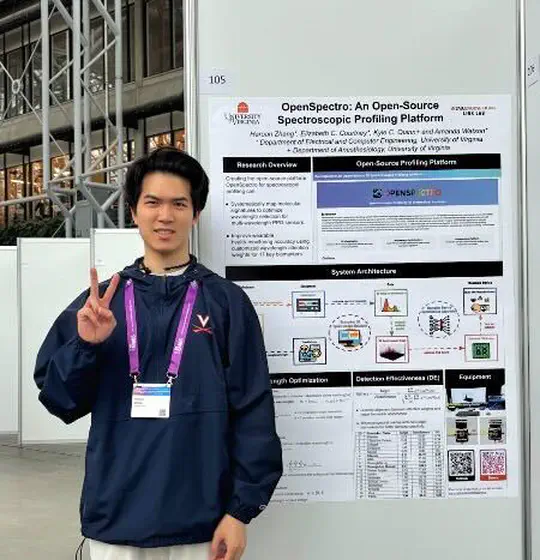
Amanda Watson is an Assistant Professor in Electrical and Computer Engineering at the University of Virginia, with joint appointments in Computer Science. She leads the Watson Research Lab within the UVA Link Lab, a multidisciplinary center for Cyber-Physical Systems (CPS) and Internet of Medical Things (IoMT) research. Her work bridges wearable technology with healthcare and athletic performance applications, focusing on noninvasive monitoring, physiological signal analysis, and safety-critical medical devices. She is also the cofounder and CEO of Luminosity Wearables, commercializing a noninvasive continuous glucose monitor. Education: PhD in Computer Science (2020) - College of William & Mary MSc in Computer Science (2016) - College of William & Mary Bachelors in Computer Science and Mathematics (2014) - Drury University Her research spans multiple domains including: Wearable spectroscopy for nutrition and skin health Machine learning for drug overdose and fall risk detection Biomechanical monitoring in sports medicine Wearable support for visual and neurological impairments IoMT device integration and analytics Recent publications (2024-2025) show strong emphasis on calibration-free physiological monitoring systems, with technical contributions in spectral analysis , multi-wavelength sensing , and rapid prototyping for healthcare wearables. Applications range from maternal health to gerontological social isolation detection. Lab and Team: The Watson Research Lab at UVA develops wearable solutions for clinical and athletic contexts, with ongoing collaborations in the PRECISE Center at University of Pennsylvania and LENS lab at William & Mary alumni network. She works with multidisciplinary teams including engineers, clinicians, and data scientists.
Prof. Hansjörg Kutterer is a Professor and Dean at the KIT-Department of Civil Engineering, Geo and Environmental Sciences at Karlsruhe Institute of Technology (KIT). His primary affiliation is with KIT's Department of Civil Engineering, Geo and Environmental Sciences. He leads geodetic research initiatives focusing on Earth observation systems, atmospheric modeling, and geophysical data analysis. His research emphasizes advanced applications of GNSS, InSAR, and satellite gravimetry for monitoring climate-related phenomena such as water vapor dynamics, terrestrial water storage changes, and ground motion patterns. Key projects include developing machine learning-enhanced models for tropospheric delay corrections and integrated water vapor estimation in the Upper Rhine Graben region. Prof. Kutterer actively contributes to international geodetic frameworks like the Global Geodetic Observing System (GGOS), particularly through DA-CH regional collaborations. His work bridges geodetic methodologies with interdisciplinary challenges in climate science and environmental engineering. He oversees departmental operations as Dean, fostering innovation in geospatial education and infrastructure. His technical expertise spans geodetic deformation analysis, statistical robust estimation, and the integration of geophysical models with observational data.
Jungeun (Jenny) Won is an Assistant Professor of Research in the Department of Biomedical Engineering at the School of Engineering and Applied Sciences, University at Buffalo. Her research focuses on optical imaging , biomedical device development , medical image analysis , and artificial intelligence in OCT . She leads the Translational Biophotonics Laboratory , where she develops advanced OCT techniques for medical applications such as diabetic retinopathy , otitis media , and biofilm analysis . Contact: 215J Bonner Hall, Buffalo NY 14260, jungeunw@buffalo.edu Related Links: CV PDF , Google Scholar , Lab Website Her recent work involves high-resolution OCT for longitudinal studies on retinal degeneration, VISTA OCTA for blood flow analysis, and 3D motion correction algorithms to enhance image quality. She also explores multimodal imaging combining OCT with Raman spectroscopy for bacterial differentiation and microplasma-based therapies for ear infections.
Andrea Garzelli is a Full Professor at the University of Siena's Department of Information Engineering and Mathematical Sciences. His research focuses on remote sensing image processing, particularly in optical and SAR sensor technologies, image fusion, and spatial resolution enhancement. He holds teaching roles in 'Fundamentals of Signal Processing and Telecommunications' and 'Statistical Signal Processing.' He earned his Ph.D. in Computer Science and Telecommunication Engineering from the University of Florence. Notably, he was recognized as a World's Top 2% Scientist by Stanford University for 2019–2023 and his career-long contributions. He served as President of the University of Siena's Quality Assurance Committee (2016–2021) and currently coordinates the graduate program in Computer and Information Engineering. Research interests include satellite data analysis (e.g., Sentinel-2, PRISMA), hypersharpening techniques, and environmental monitoring. His work bridges theoretical advancements (e.g., pansharpening algorithms) and practical applications like urban land classification and vegetation index enhancement. Recent articles emphasize reproducibility, meta-analysis, and synthetic data generation through GANs. Awards: World's Top 2% Scientists (2019–2023 & career). Grants/Advising: Supervises remote sensing theses; no specific grants mentioned. Labs/Teams: Leading research in the department's remote sensing and signal processing groups.
Dr. YANG Guomin is an Associate Professor of Computer Science at Singapore Management University's School of Computing and Information Systems, where he coordinates the BSc Cybersecurity Track. His research focuses on privacy-preserving cryptography, authentication systems, and secure IoT frameworks. Research spans cryptographic protocols for cloud security, blockchain applications, and federated learning with emphases on efficiency and practical implementation. Recent publications demonstrate innovations in threshold authentication, redactable blockchains, and privacy-aware communication protocols. Advisees include LI Huilin and WANG Jiaheng, with research projects examining hardware-enhanced encryption, biometric authentication policies, and space network security. Work consistently addresses tension between security guarantees and computational efficiency in distributed systems.
Matt J. Rutherford is an Associate Professor in the Department of Computer Science at the University of Denver, with a joint appointment in the Department of Electrical and Computer Engineering. He is Deputy Director of the Unmanned Systems Research Institute and a faculty fellow of Project X-ITE. His research focuses on autonomous systems, embedded systems, and software engineering, with extensive contributions to UAV navigation, control systems, and robotics. Rutherford holds a Ph.D. in Computer Science from the University of Colorado Boulder (2006), an MS (2001), and a BS in Civil Engineering from Princeton University (1996). His work emphasizes practical applications of software engineering principles in distributed and embedded systems. Notable projects include radar-based collision avoidance for UAVs, self-leveling landing platforms, and studies on electric vehicle charging impacts on power grids. Rutherford's research bridges theoretical computer science with real-world engineering challenges, particularly in unmanned systems and robotic autonomy. Key publications explore UAV flight control using neural networks, ground/ceiling effects in rotorcraft, and GPU-based real-time pose estimation. His contributions to model-driven systems and distributed testbed automation highlight long-term engagement with software reliability and scalable experimentation frameworks. Rutherford collaborates widely, including with institutions like the University of South Carolina and Politecnico di Torino. His interdisciplinary approach integrates robotics, aerospace engineering, and software engineering to advance autonomous system capabilities.
Prof. Wim Desmet is a full professor at the Faculty of Engineering Science and head of the Department of Mechanical Engineering at KU Leuven . His research focuses on advanced modeling techniques for mechanical systems, including: noise and vibration control in automotive and industrial systems computational acoustics and interval field uncertainty modeling metamaterials for broadband vibroacoustic performance AI-driven diagnostic systems in renewable energy and manufacturing Current research projects address challenges in electric vehicle drivetrains, wind turbine monitoring, and multi-physical digital twin development. He actively contributes to academic governance as: Managing Director of KU Leuven Head of Subdivision HIST Chair of multiple executive committees Member of 15+ academic and administrative councils
Marian Verhelst is a Professor at KU Leuven's Faculty of Engineering Science, renowned for her research in hardware-efficient computing and dedication to STEM education. Her work spans hardware acceleration for machine learning, edge AI, and in-memory computing, with a focus on energy optimization and algorithm-hardware co-design. Her research interests include: Designing flexible hardware for ultra-low-power edge AI systems Optimizing sparsity-aware architectures for deep learning workloads Advancing chiplet-based and 3D memory technologies Co-designing algorithms and hardware for probabilistic AI Pioneering STEM outreach through KU Leuven InnovationLab Recent publications (2023–2025) demonstrate strong trends in: Hardware-software co-optimization for edge ML systems Efficient data movement in heterogeneous accelerators Low-precision and sparse computation techniques RISC-V based customizable SoCs Sustainable AI accelerator design Awards & Honors: Young Academy of Europe Award (2021) for science communication and STEM advocacy She leads significant educational initiatives, including the KU Leuven InnovationLab which has engaged 150 schools and 13,000 students since 2014. The program develops hands-on STEM projects (e.g., AI-powered wheelchairs, sustainable energy systems) and provides teacher training to inspire youth in engineering.
Joshua Garcia is an Assistant Professor in the Informatics Department at the University of California, Irvine (UCI), within the Donald Bren School of Information and Computer Sciences. His research focuses on software architecture, automated testing, and cybersecurity, particularly in autonomous systems and mobile applications. He leads projects like DeltaDroid, Doppelgänger Test Generation, and Darcy, which address software vulnerability management, architectural consistency, and safety-critical systems. Key achievements include an NSF CAREER Award (2025), an NSF CRI Grant (2018), and a DARPA competition win (2024). His work is adopted by organizations like Boeing, Google, and NASA. Garcia collaborates internationally, involving institutions in Padova and researchers like Luca, Jessy Ayala, and Philipp. Research Interests: Software architecture evolution, automated exploit generation, autonomous vehicle testing, and accessibility in software development Grants: NSF CAREER ($500K+), NSF CRI ($1M+) Labs/Teams: HexHive Group, Autonomous Systems Testing Lab
Dr. Armin Mustafa is an Associate Professor in Computer Vision and AI at the University of Surrey, where he holds a prestigious Royal Academy of Engineering Research Fellow position. He is affiliated with the Centre for Vision, Speech and Signal Processing (CVSSP), the School of Computer Science and Electronic Engineering, and the Surrey Institute for People-Centred Artificial Intelligence (PAI). His research focuses on developing AI systems for visual understanding of complex dynamic scenes, with applications in entertainment, autonomous systems, and augmented/virtual reality. Dr. Mustafa completed his PhD in general dynamic scene reconstruction from multi-view videos in 2016 from the University of Surrey under the supervision of Prof. Adrian Hilton. Prior to his doctoral studies, he worked for three years (2010-2013) at Samsung Research Institute in Bangalore, India, in the field of Computer Vision. His research expertise spans Computer Vision, Scene Understanding, 3D/4D Vision, Virtual Reality, Light Fields, Machine Learning, Video Captioning, Augmented Reality, Artificial Intelligence, and Audio-visual Video Understanding. Dr. Mustafa has pioneered advances in 4D vision, NLP, and Scene Understanding over the past decade, with a particular focus on enabling machines to model and interpret real-world environments for socially beneficial applications. His work bridges theoretical advances in computer vision with practical applications in media production, virtual reality, and autonomous systems. Analysis of Dr. Mustafa's recent publications reveals a strong focus on multimodal learning, particularly the integration of audio and visual information for scene understanding. His work spans diverse areas including shadow detection and removal, audio event classification, video captioning, person image generation, and dynamic scene reconstruction. A notable trend is his exploration of transformer architectures for both vision and audio tasks, as well as the application of self-supervised learning techniques to reduce dependency on labeled data. Dr. Mustafa has received numerous prestigious awards: 2018 - Research Fellowship, The Royal Academy of Engineering, UK 2017 - Young Researcher award, CVPR 2016 - Doctoral Consortium grant, CVPR 2015 - BMVA travel grant for ICCV 2014 - Set-Squared Research to Innovator grant 2013 - Overseas Research Scholarship, FEPS, The University of Surrey 2010 - Cadence Silver Medal, Indian Institute of Technology, Kanpur As a dedicated mentor, Dr. Mustafa supervises several PhD students working on cutting-edge topics including multi-person reconstruction, audio-visual scene understanding, and automatic storyboard generation. His research is supported by significant grants including a £15 million UKRI Prosperity Partnership with the BBC (AI4ME), a 5-year Royal Academy of Engineering fellowship (4D Vision for Perceptive Machines), and multiple projects with industry partners such as Figment Productions and Foundry. Dr. Mustafa is an active member of the Centre for Vision, Speech and Signal Processing (CVSSP), one of the world's leading research centers in vision, speech, and signal processing. He also contributes to the Surrey Institute for People-Centred Artificial Intelligence (PAI), where he serves as a Surrey AI Fellow. His work often involves collaboration with industry partners and other academic institutions across Europe.