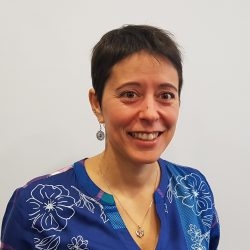
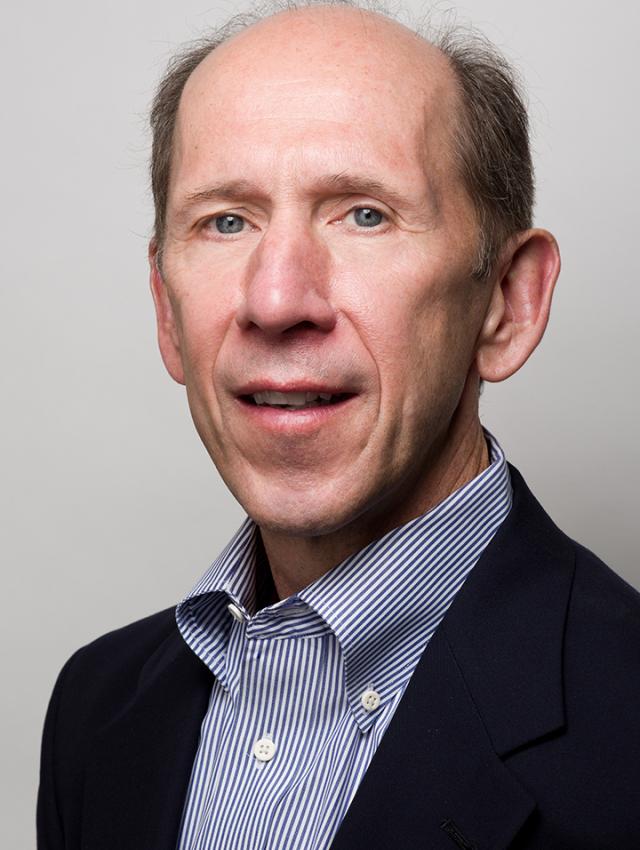
Jan Van Bavel is a full professor at the Faculty of Social Sciences, KU Leuven, with a focus on demography, family dynamics, and climate change impacts. He is a member of LC&Y - KU Leuven Institute for Child and Youth and participates in councils like POC Sociology and POC Master Psychology. Research spans fertility trends, migration, poverty analysis, and adolescent decision-making Active promoter/co-promoter in 8 projects (2021–2028) on climate-family links, migrant deservingness, and wealth inequality Teaches courses on population studies, climate change, and societal transitions His recent work examines climate change's effect on fertility desires, adolescent loyalties, and immigrant integration frameworks, with articles in journals like Demographic Research and Socio-Economic Review . No scientific awards were explicitly mentioned in the provided data.
Katherine L. Milkman (Katy) is the James G. Dinan Professor at the Wharton School of the University of Pennsylvania, with secondary appointments in Penn's Perelman School of Medicine and School of Arts & Sciences. She co-founded and co-directs the Behavior Change for Good Initiative, a research center dedicated to advancing the science of lasting behavior change. Her work integrates economics and psychology to address challenges like savings, exercise adherence, vaccination rates, and discrimination through large-scale field experiments. Education: PhD in Computer Science and Business from Harvard University; Bachelor's degree (summa cum laude) in Operations Research and Financial Engineering from Princeton University. Research Focus: Milkman's research leverages big data and behavioral science to understand decision-making failures (e.g., self-control, discrimination) and design scalable interventions. Her recent work emphasizes: Nudge-based strategies for education, health, and finance Diversity enhancement in organizational settings Habit formation through incentive structures Publication Trends: Her 15 most recent articles (2022-2025) primarily involve megastudies testing behavioral interventions. Key themes include: leveraging email/reminders to improve math education and vaccination rates; addressing loan delinquency through nudges; and using stereotyping dynamics to increase diversity in hiring. Over 80% employ field experiments across healthcare, finance, and education sectors. Awards & Honors: Thinkers50 Top Management Thinker (2021, 2023) Schmidt Futures Innovation Fellow (2022) Fellow, Association for Psychological Science (2020) Multiple teaching awards from Wharton (2015, 2016) William F. O’Dell Award for impactful research (2017) Advisory & Grants: Milkman has advised major organizations including The White House, Google, Walmart, and the U.S. Department of Defense. Her Behavior Change for Good Initiative secures funding for large-scale social impact research. She hosts Schwab's behavioral economics podcast Choiceology and contributes to policy through op-eds in The New York Times and Scientific American . Labs & Teams: Co-directs the Behavior Change for Good Initiative, collaborating with interdisciplinary researchers (e.g., Angela Duckworth, Sendhil Mullainathan) on longitudinal studies. The initiative designs and tests interventions across health, education, and savings domains.
Dr Lynette Pretorius is a Lecturer at Monash University's School of Curriculum Teaching & Inclusive Education, where she has established herself as an award-winning educator and researcher. With extensive experience teaching across undergraduate, postgraduate, and graduate research levels, she supervises PhD students while weaving together interdisciplinary expertise to create inclusive and transformative learning environments. Her work spans multiple academic contexts while maintaining a consistent focus on compassionate, equitable education. Dr Pretorius's research centers on doctoral education, academic identity, student wellbeing, and AI literacy, with particular emphasis on creating more just and creative academic spaces. Drawing from autoethnography and qualitative methodologies, her work interlaces personal narratives with institutional systems to understand how lived experiences and academic structures shape one another. She champions pedagogies of care that prioritize wellbeing, justice, and student growth through reflexive, relational ethics and methodological transparency. Her recent publications reveal a growing focus on AI literacy in higher education, with multiple 2024-2025 works developing frameworks for responsible AI use, examining AI's decolonial potential, and exploring how generative AI transforms academic communication and research practices. Alongside this emerging AI focus, her longstanding work on doctoral education continues through writing groups, wellbeing research, and investigations into academic identity formation. Dr Pretorius has received significant recognition for her contributions, including: Dean's Award for Teaching Excellence (2022) Global Impact Grant (Student Success) (2022) Senior Fellow, Higher Education Academy (2021) Dean's Citation for Outstanding Contribution to Student Learning (2019) Dean's Award for Programs that Enhance Learning (2019) Her research leadership extends to multiple funded projects including 'Behind the Academic Curtain: Doctoral Students and the Hidden Rules of Academia' (2025-2026) and 'Learning about Academic Publishing through Collaborative Online International Learning' (2024-2025). She actively supervises doctoral students and has developed innovative approaches to research and teaching, particularly through her work on doctoral writing groups as transformative spaces. Dr Pretorius maintains a strong public scholarly presence through her Scholar's Way Blog, University Study Made Easy YouTube Channel, and the AI Literacy Lab. These platforms extend her research impact beyond traditional academic boundaries, reaching broader educational communities and providing practical resources for students and educators navigating contemporary academic challenges.
Junzhao Ma is a Senior Lecturer in the Department of Marketing at Monash University. He holds a BA in Economics from Yale University and a PhD in Marketing from the Kellogg School of Management, Northwestern University. Previously, he worked as a marketing analyst at Capital One Financial Corporation and JP Morgan and Co. Education: BA Economics (Yale University), PhD Marketing (Kellogg School, Northwestern University) His research focuses on technology adoption, e-commerce, real estate, and media's social impact, employing novel methodologies and data sources. He has contributed to journals like Journal of Retailing , International Journal of Research in Marketing , and Journal of Business Ethics . His work aligns with UN Sustainable Development Goals related to reduced inequalities and responsible consumption. Recent research highlights include studies on service robot anthropomorphism (2023), sex robots acceptance (2022), and media-driven consumption trends (2020). He has received Dean's Letters for Teaching Excellence in 2020 and 2021. Scientific Awards: Dean's Letter for Teaching Excellence (2020, 2021) Junzhao actively engages in academic service, including peer reviews for Asia Pacific Journal of Marketing and Logistics and presentations at the INFORMS Marketing Science Conference and Australian & New Zealand Marketing Academy Conference. He has served as Chief Investigator in projects like "Bridging the Intention-Behaviour Gap in the Australian Tourism Industry" (2022-2024) and "eBabies: Forecast and Implications for Society" (2020-2021).
Dr. Taylan Acar is a Post-Doctoral Researcher at Goethe University Frankfurt/Main, focusing on the intersection of gender, socio-economic status, and immigrant backgrounds in parenting norms and childcare practices. His work emphasizes the gendered division of labor, attitudes toward gender equality, and external childcare utilization in Germany. PhD in Sociology, University of Wisconsin-Madison Project: Internalized Gender and Parenting Norms (2025) Research areas: Gender Studies, Sociology of Education, Migration Studies His research spans comparative analyses of educational integration, labor dynamics in healthcare, and socio-political factors affecting family processes. Recent publications highlight discrepancies between gender ideology and childcare practices, while older works address subcontracted labor and feminist reimaginings of neoliberal policies. Scientific awards include the Ferhunde Özbay Best Article Award (Turkish Population Studies Association). His work is funded by Boğaziçi University Research Fund (BAP) and contributes to debates on gender equality, migration integration, and educational equity.
Konrad Burchardi is Professor of Economics at the Institute for International Economic Studies (IIES) at Stockholm University. His academic work focuses on understanding economic development processes and the social foundations of economic behavior, with significant contributions to development economics and migration studies. Professor Burchardi obtained his PhD in Economics from the London School of Economics (LSE), with prior studies conducted in Munich, Aix-en-Provence, and at LSE. His educational background reflects a strong international foundation in economic theory and development perspectives. His research primarily centers on productivity growth at early stages of economic development and the social underpinnings of economic interactions. Key contributions include field experiments on sharecropping contracts in developing countries, demonstrating how output-sharing rules affect agricultural productivity, and research showing how migration ancestry influences foreign direct investment patterns. His work spans agricultural economics, migration studies, experimental economics, and economic networks, often employing rigorous field and natural experimental designs to establish causal relationships. Analysis of Professor Burchardi's publication record reveals consistent contributions to top economics journals with a focus on development and labor economics. His work shows an evolution from examining micro-level economic behaviors in developing countries to broader questions about migration networks and their economic impacts. His recent publications indicate increasing attention to historical economic data and financial inclusion, with work scheduled through 2025.
Lakshmi Balasubramanyan is an Associate Professor in the Department of Banking & Finance at Case Western Reserve University's Weatherhead School of Management, joining in 2017. She holds a PhD and MS from Penn State University in quantitative banking analytics, alongside BA/MA degrees from the National University of Singapore. Specializes in AI integration in commercial banking Focuses on credit/operational risk modeling Expert in regulatory frameworks (Dodd-Frank Act) Active media commentator on financial trends Her research bridges traditional banking practices with emerging technologies, particularly through RegTech and FinTech innovations. Key contributions include analyzing bank balance sheet dynamics under liquidity regulations and developing entropy-based approaches to risk heterogeneity. Recent publications explore causal relationships between risk oversight and bank stability, syndicated loan market information asymmetry, and credit market feedback mechanisms. Current projects involve NSF-funded AI-enabled financial ecosystems. Recipient of two CSWEP Research Fellowships Multiple teaching award nominations (2020-2023) 2021 Weatherhead Intramural Grant recipient 2019 UCITE NORD Grant awardee Active in institutional service as Faculty Senate Committee member and Women in Finance advisor. Collaborates with Federal Reserve institutions on banking supervision research.
Adonis Yatchew is a Professor in the Department of Economics at the University of Toronto , where he has held multiple roles including Vice President for Publications at the International Association for Energy Economics and Editor-in-Chief Emeritus of The Energy Journal (2006-2023). His research bridges econometric methodology with critical energy and environmental policy challenges. Ph.D., Harvard University (1980) M.A., University of Toronto (1975) B.A., University of Toronto (1974) Yatchew's research focuses on Econometrics and Energy Economics , particularly nonparametric regression techniques , energy market regulation , and carbon policy frameworks . His work on scalability in energy industries and empirical analysis of electricity distribution productivity has shaped modern regulatory approaches. Recent publications reveal a strong focus on energy transition dynamics , with technical contributions to nonparametric estimation and carbon pricing mechanisms . Notable works include analyses of Alberta's electricity futures market and Ontario's feed-in-tariff programs. Outstanding Contributions to the Profession , International Association for Energy Economics (2018) Senior Fellow , US Association for Energy Economics (2014) Teaching Award , University of Toronto (1987) As a teacher, Yatchew offers courses on Energy and the Environment and Energy and Regulation , exploring geopolitical impacts on energy markets and optimal government intervention strategies. His econometrics courses cover advanced topics like bootstrap inference and nonparametric methods.
Farshad Arvin is a Professor of Robotics in the Department of Computer Science at Durham University. Prior to this, he held academic positions at The University of Manchester (2018-2022) and worked as a Research Assistant at the University of Lincoln (2012-2015). He holds a BSc in Computer Engineering (2004), an MSc in Computer Systems Engineering (2010), and a PhD in Computer Science (2015). His research focuses on Swarm Robotics , Bio-inspired Swarms , and Autonomous Multi-agent Systems . He pioneered the Swarm & Computation Intelligence Laboratory (SwaCIL) at Durham, leading projects like H2020-FET RoboRoyale (€3.27M), Horizon Europe Sensorbees (€3.2M), and BioDiMoBot (€8M), with total funding exceeding £4M. Recent publications highlight advancements in swarm trajectory optimization (T-STAR), collision-free multi-robot coordination, and bio-hybrid environmental monitoring. His work integrates bio-inspired algorithms with practical applications in autonomous vehicles, aerial drones, and hazardous environments. Scientific Awards: Marie Skłodowska-Curie fellowship Notable Projects: EU H2020-FET RoboRoyale (2021-2026) Horizon Europe Sensorbees (2024-2029) Horizon Europe BioDiMoBot (2025-2030) H2020-FET Robocoenosis (2020-2025) Supervision: Mentors 8 postgraduate students at Durham, including Hanadi Alhamdan, Hang Wang, and Honghao Pan.
Dr. Elena Link is a Junior Professor for Science Communication at the Institute of Journalism at Johannes Gutenberg University Mainz since 2023. Her research focuses on health communication, particularly examining information seeking behaviors, information avoidance, and the impact of digital technologies on health communication processes. She has established herself as a leading researcher in understanding how individuals navigate health information in digital environments, with particular attention to trust dynamics and the emerging role of AI tools in health information contexts. Dr. Link's research interests span several key areas in health and science communication: Health information seeking and avoidance behaviors Digital health communication and AI applications Patient-provider communication dynamics Trust in health information sources Gender differences in health information behaviors Science communication regarding medical innovations Her recent publications demonstrate a strong focus on contemporary issues in health communication, particularly the emergence of AI tools in health information seeking, longitudinal analyses of information behaviors during health crises, and nuanced examinations of how physical and mental health conditions influence information practices. Her work often employs mixed-methods approaches, combining survey research with behavioral data analysis to provide comprehensive insights into health information behaviors across different population segments. Dr. Link has received numerous prestigious awards for her research, including: Best Paper Award from the DGPuK Health Communication Section (2024) Sibylle Kalkhof-Rose University Prize 2024 for humanities/social sciences Best Paper Award from the ICA Health Communication Division (2023) Acceptance into the Female Science Talents Program of the Falling Walls Foundation (2022) German Study Prize of the Körber Foundation in the Humanities section (2019) As an active contributor to the academic community, Dr. Link serves as Associate Editor of the European Journal of Health Communication and Co-Chair of the Health Communication Section of ECREA. Her research has significant implications for improving health communication practices, addressing health inequalities, and shaping the digital transformation of health information provision. She is particularly interested in empowering patients through effective communication strategies and combating information disparities in healthcare contexts.
Klaus Wallmann is a Professor and Head of the Research Unit Marine Geosystems at GEOMAR Helmholtz Centre for Ocean Research Kiel and the Christian-Albrechts-University (CAU) Kiel. His research focuses on marine biogeochemistry, particularly gas hydrates, fluid flow, nutrient cycling, and the geochemical evolution of oceans and atmosphere. He leads major research initiatives including the Cluster of Excellence 'The Future Ocean' and coordinates EU projects such as MIGRATE and GEOSTOR. Dipl. Chemistry, Philipps University of Marburg (1986) Dr. Ing., TU Hamburg-Harburg (1990) PD Dr. habil (Geosciences), CAU Kiel (1999) His research interests center on marine biogeochemical processes, including the microbial degradation of organic matter, gas hydrate formation, nutrient recycling, isotopic trends in marine carbonates, and numerical modeling of ocean-atmosphere evolution. He investigates cold seeps, mud volcanoes, and subduction zones to understand volatile cycling and seafloor dynamics. His recent publications reveal a strong focus on carbon cycling and climate mitigation, particularly through sub-seabed CO₂ storage, seafloor alkalinity enhancement, and the impact of anthropogenic activities on marine carbon storage. His work combines field observations, experimental data, and advanced numerical models to explore long-term geochemical trends and modern environmental challenges. Scholarship from the Evangelical Study Foundation, Haus Villigst (1982–1986) Wallmann has supervised numerous students and collaborators, contributing to major discoveries in marine methane dynamics, gas hydrate systems, and ocean deoxygenation. His research is supported by extensive fieldwork, ocean expeditions, and leadership in collaborative programs such as SFB 574 and SFB 754. He has played a central role in assessing the environmental impacts of CO₂ storage and natural gas hydrate exploitation. He leads research in marine geosystems at GEOMAR, focusing on biogeochemical feedbacks, fluid-sediment interactions, and climate-relevant gas cycling. His team integrates geochemical data, isotopic analyses, and modeling to study processes from molecular to global scales.
Jari Eloranta is a Professor at the University of Helsinki , affiliated with the Faculty of Social Sciences and the Department of Economic and Social History . His work bridges economic history, cliometrics, and the analysis of warfare and state formation. Eloranta holds a Ph.D. in Economic History and has served in various external roles, including as President of the Economic and Business History Society (2018–2019) and as a member of the International Economic History Association (2014–2021) . He has edited journals like Configurações and book series for Routledge. Research Focus His research spans the economic history of warfare , Nordic economic convergence , and quantitative methods in business history . Notable projects include Nordic Fiscal States from the 16th to the 21st Centuries and Suomen innovaatioiden historia . Publications and Collaborations Eloranta has published extensively, with recent works appearing in The Routledge Economic History of War and Handbook of Cliometrics . His collaborations span universities in Finland, the US, and Europe, focusing on themes like war economies , state capacity , and security policy . Scientific Awards Recipient of the Eino Jutikkala historiapalkinto (2022). Awarded the Jonathan Hughes Prize for Excellence in Teaching Economic History (2021). Supervision and Editorial Roles Eloranta supervises doctoral candidates in the Doctoral Programme in Political, Societal and Regional Change and serves as an editor for research journals and anthologies, including Small and Medium Powers in Global History (2019) and Economic History Review (2009).
Dr. Carmen Falagan is a Senior Lecturer in Environmental Microbiology at the University of Portsmouth , affiliated with the Faculty of Science and Health and the School of the Environment and Life Sciences . Her work bridges microbial ecology, geomicrobiology, and applied environmental biotechnology. Research Interests: Dr. Falagan investigates how microbial communities thrive in extreme environments such as acidic pit lakes and mine drainage sites. Key areas include: Bioleaching and biomining for metal recovery Bioremediation of mining waste Microbial responses to climate change Discovery of novel acidophilic microorganisms Geochemical impacts of microbial activity Recent Research Trends: Her 2024-2022 publications focus on optimizing bioleaching processes, characterizing microbial roles in lithium extraction, and studying nutrient dynamics in acidic environments. Collaborative projects span interdisciplinary topics like planetary health and sustainable metal recovery. Teaching Roles: She teaches Microbiology, Evolution, Biodiversity, and Environmental Microbiology to undergraduates and MSc students, supervising honors projects on acidophilic microbes and antimicrobial resistance. Labs and Collaborations: Dr. Falagan is part of the Institute of Life Sciences and Healthcare and Institute of the Earth and Environment , collaborating on EU-funded initiatives like H2020-NEMO. Her work integrates field studies, lab experiments, and computational analysis to address mining environmental impacts.
Matthew Fraser is a Professor and Associate Director at Arizona State University's School of Sustainable Engineering and the Built Environment. He is affiliated with the Urban Climate Research Center and serves as a Senior Global Futures Scientist. Education : Ph.D. in Environmental Engineering Science from Caltech (1998), M.S. in Environmental Engineering Science from Caltech (1993), B.S. in Chemical Engineering from Carnegie Mellon University (1991) His research focuses on urban air quality , alternative energy systems , and atmospheric monitoring . Recent work examines wildfire smoke impact, microplastics in desert soils, and ozone behavior in urban regions. Publications span Environmental Science and Technology , Atmospheric Environment , and Science of the Total Environment . Notable scientific awards include Arizona State University's 'Top 5%' Faculty Teaching Award (2018, 2021). Research grants include projects funded by the National Institutes of Health , US Department of Energy , and Semiconductor Research Corporation . Service Roles : Member of University Consortium for Atmospheric Research (2010–Present), Committee Member for ASU Sustainability Minor (2009–Present), and Chair of Science Advisory Board for Mid-Infrared Technologies for Health and the Environment Engineering Research Center (2007–Present)
Kenneth R. French is the Roth Family Distinguished Professor of Finance at the Tuck School of Business, Dartmouth College . He specializes in the behavior of security prices and investment strategies, with a focus on asset pricing models and empirical finance. PhD, University of Rochester (1983) MS, University of Rochester (1981) MBA, University of Rochester (1978) BS, Lehigh University (1975) His research includes pioneering work on the three-factor model (with Eugene Fama), value effect , and the interplay between risk, return, and capital structure. He maintains a comprehensive Data Library with U.S. and international research returns, breakpoints, and factor models. Recent methodological updates to his data include transitions to CRSP Flat File Format 2.0 , revisions to operating profitability calculations, and adjustments for accounting standards like FASB 109 and FASB 106 . His work also extends to momentum factors , reversal effects , and industry portfolios across 5–49 categories. Email: kenneth.r.french@tuck.dartmouth.edu | Phone: 603-646-0797