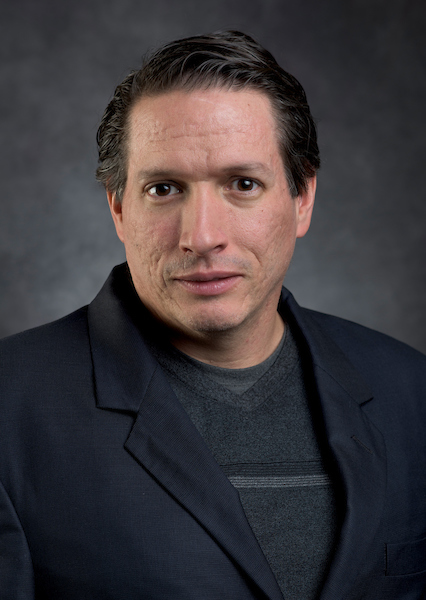
Peter MelchiorView profile
Assistant Professor
Peter Melchior is an Assistant Professor of Astrophysical Sciences at Princeton University, with a joint appointment at the Center for Statistics and Machine Learning. He leads the Princeton Astro Data Lab, where his team develops novel algorithms to extract information from astronomical observations despite instrumental limitations and noise. His educational background includes a Ph.D. in Physics (2010) and a Diplom/M.S. in Physics (2006), both from the University of Heidelberg. Prior to his current position at Princeton, he held postdoctoral positions at The Ohio State University (2011-2015) and the University of Heidelberg (2010). Dr. Melchior's research focuses on statistical methods for large astronomical surveys. His primary interests include: Physics-based machine learning for astronomical data analysis Source separation and data fusion techniques Optimal combination of multiple datasets from different surveys Development of neural network approaches for astronomical problems Application of statistical methods to hydrologic modeling His recent publications demonstrate a strong trend toward interdisciplinary work that combines astronomy with machine learning and environmental science. The research spans from fundamental astronomical data analysis techniques to practical applications in water resource management across the United States. Among his notable achievements: PI of a project funded by the Schmidt Futures Foundation to optimize target selection for the Prime Focus Spectrograph survey Lead developer of the HydroGEN project funded by NSF for hydrologic scenario generation Author of approximately 300 papers in major peer-reviewed journals Developer of open-source software including pyGMMis for Gaussian mixture modeling Dr. Melchior actively mentors students and has organized the Undergraduate Summer Research Program and Data Science Seminar at Princeton. His work bridges astronomy, statistics, and machine learning, with growing applications in environmental science.